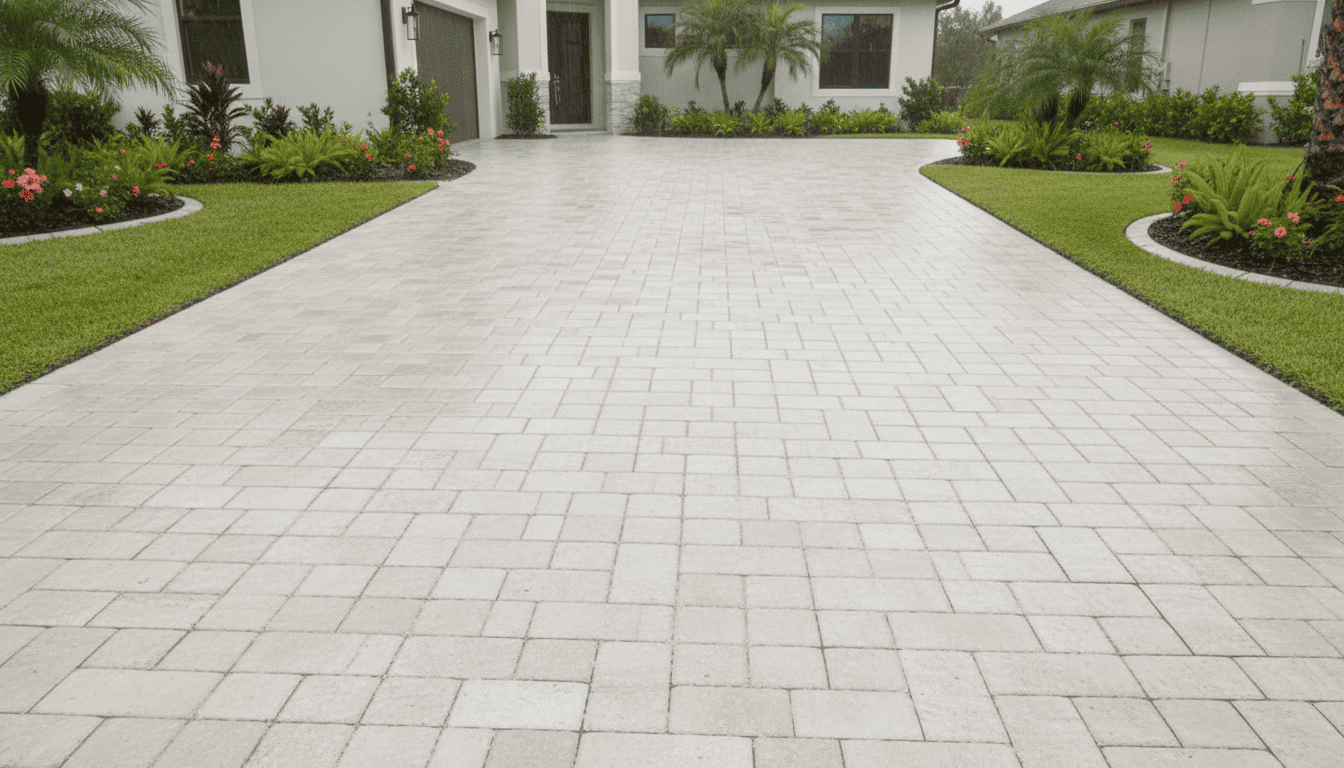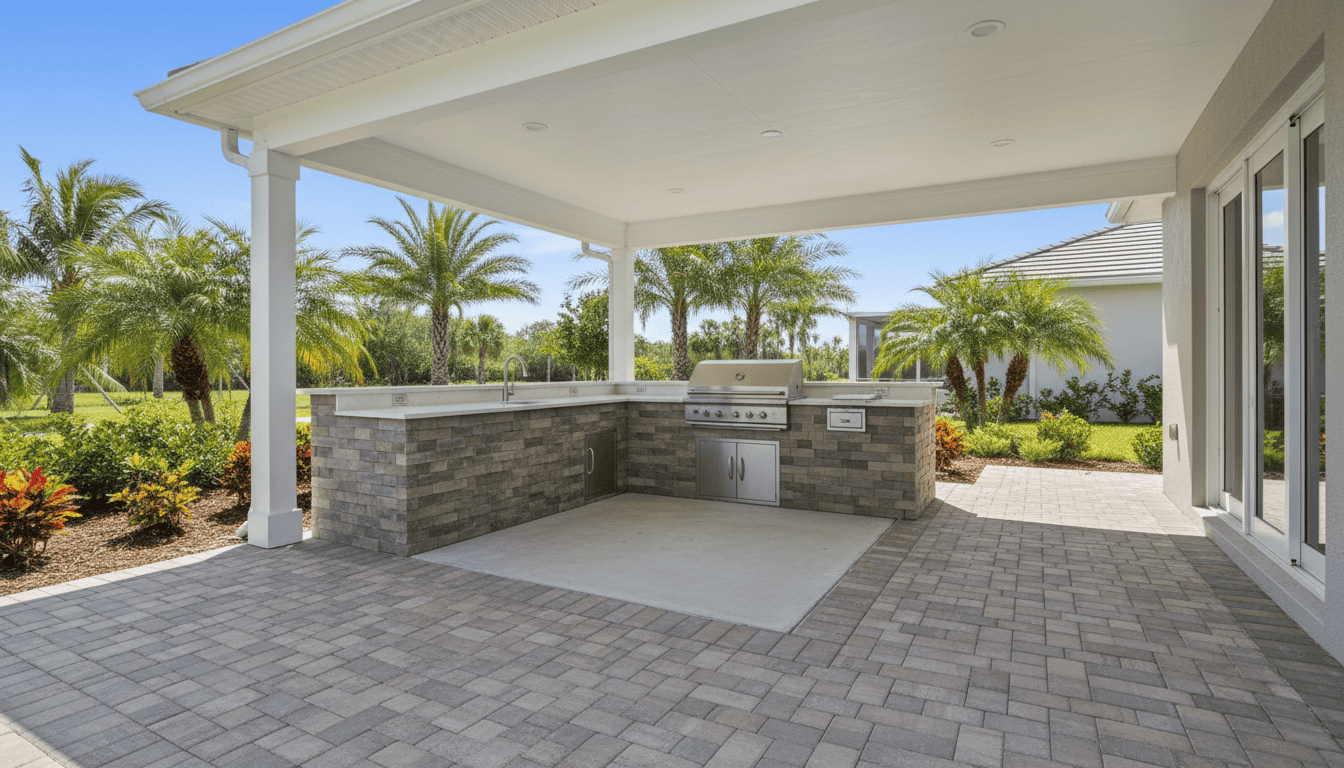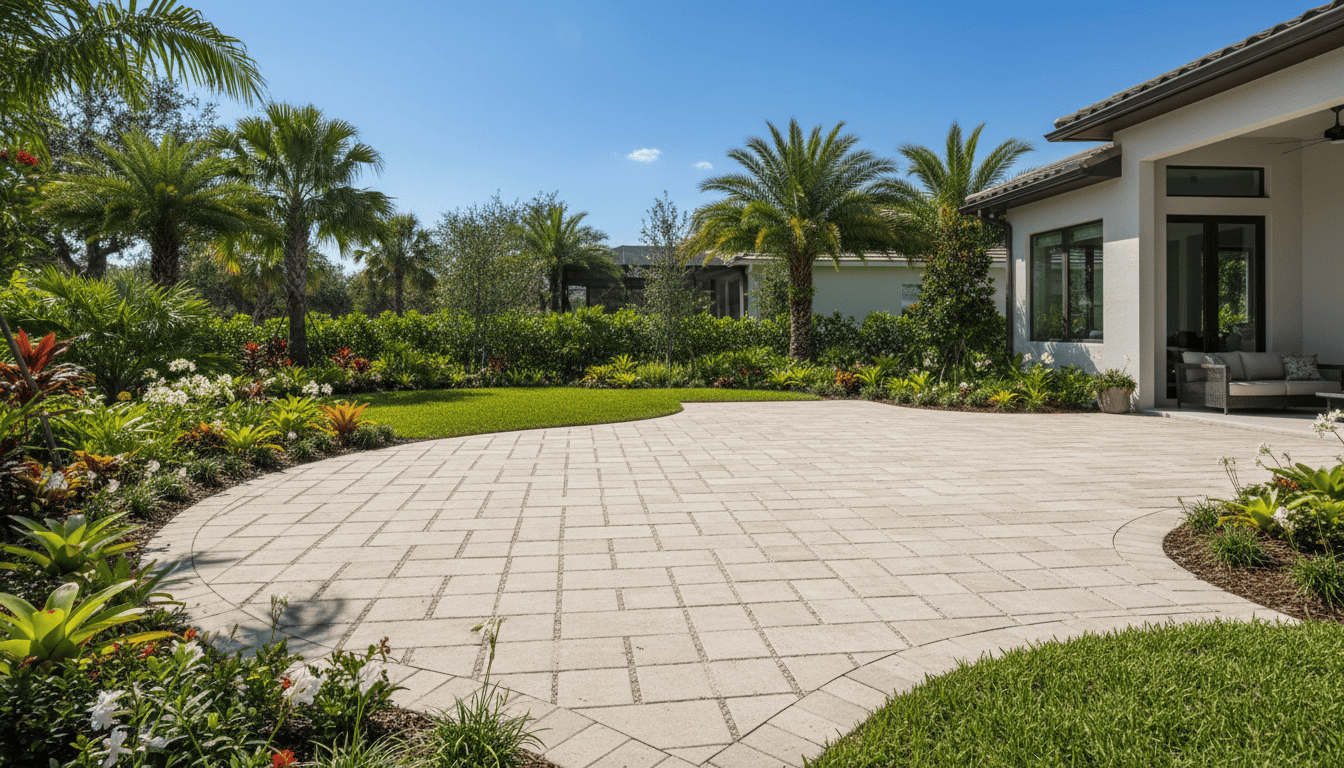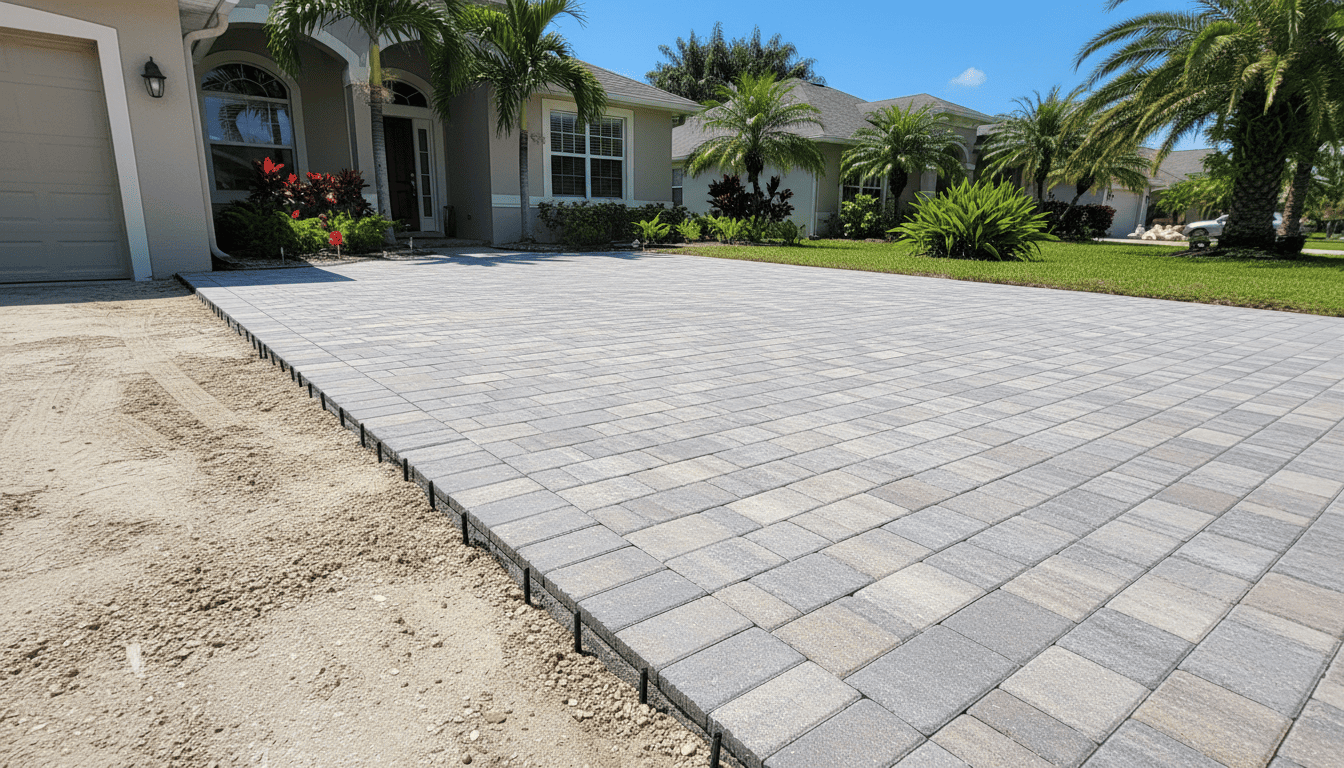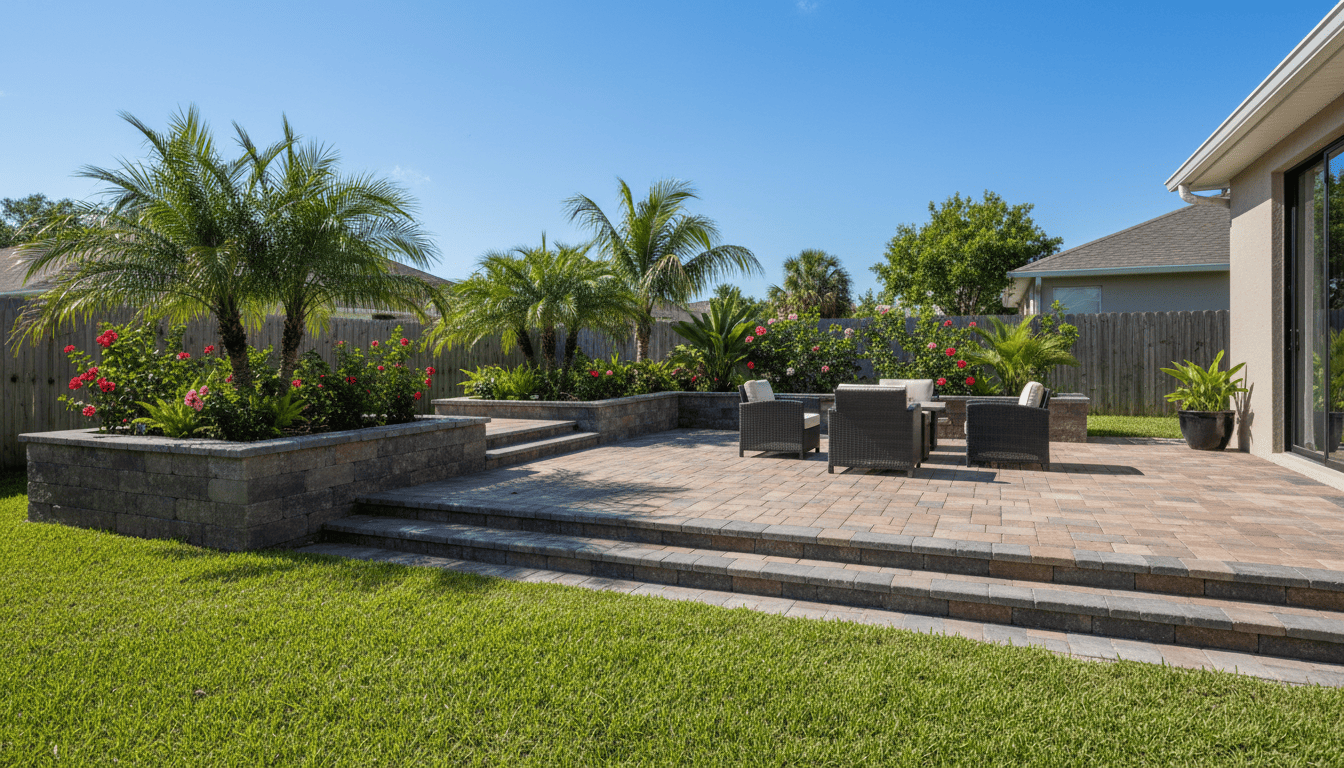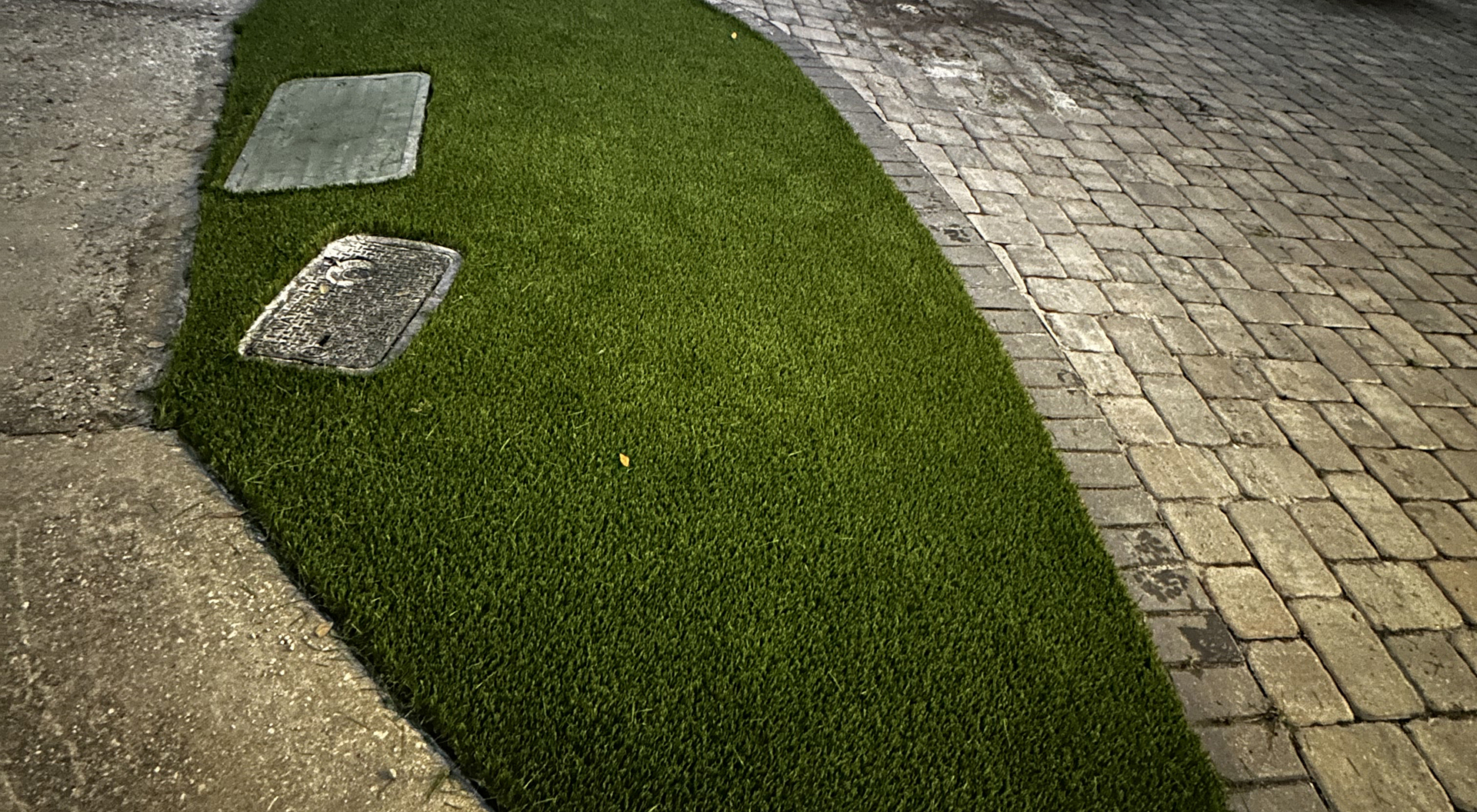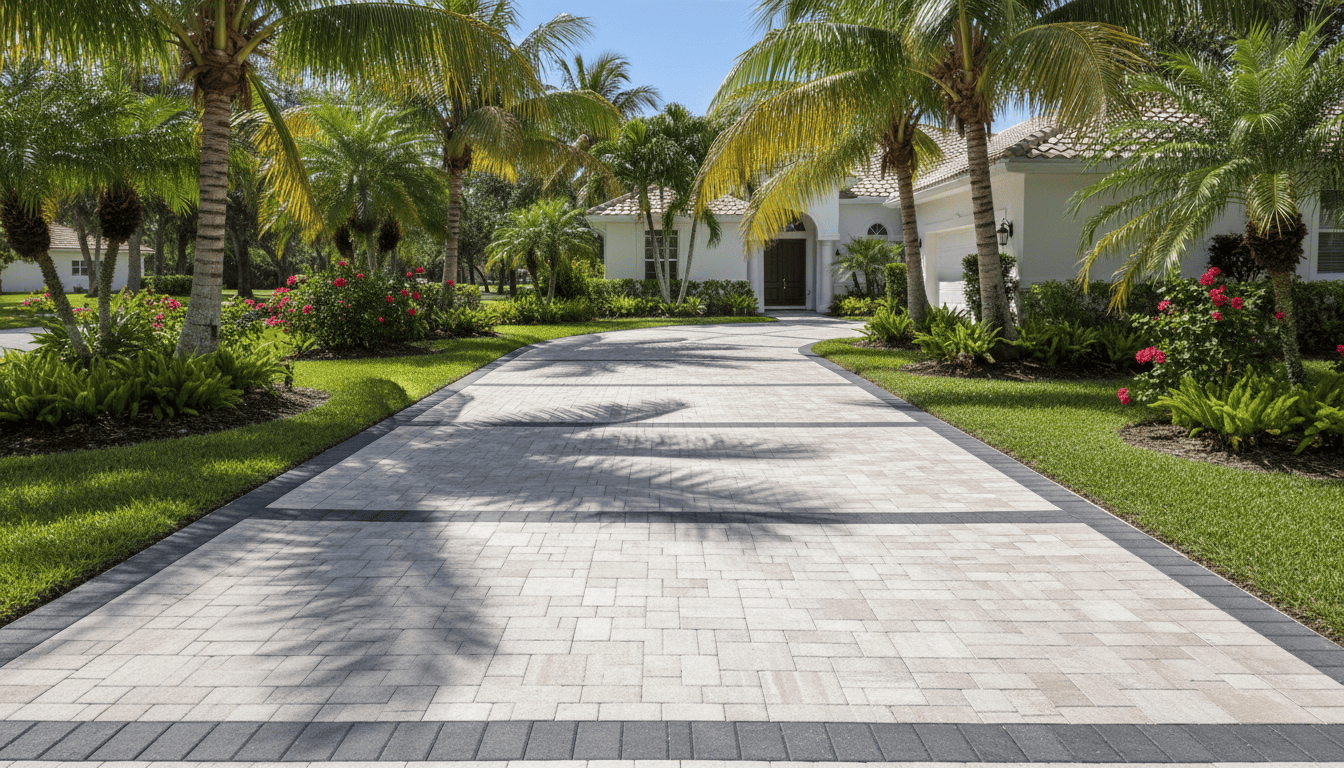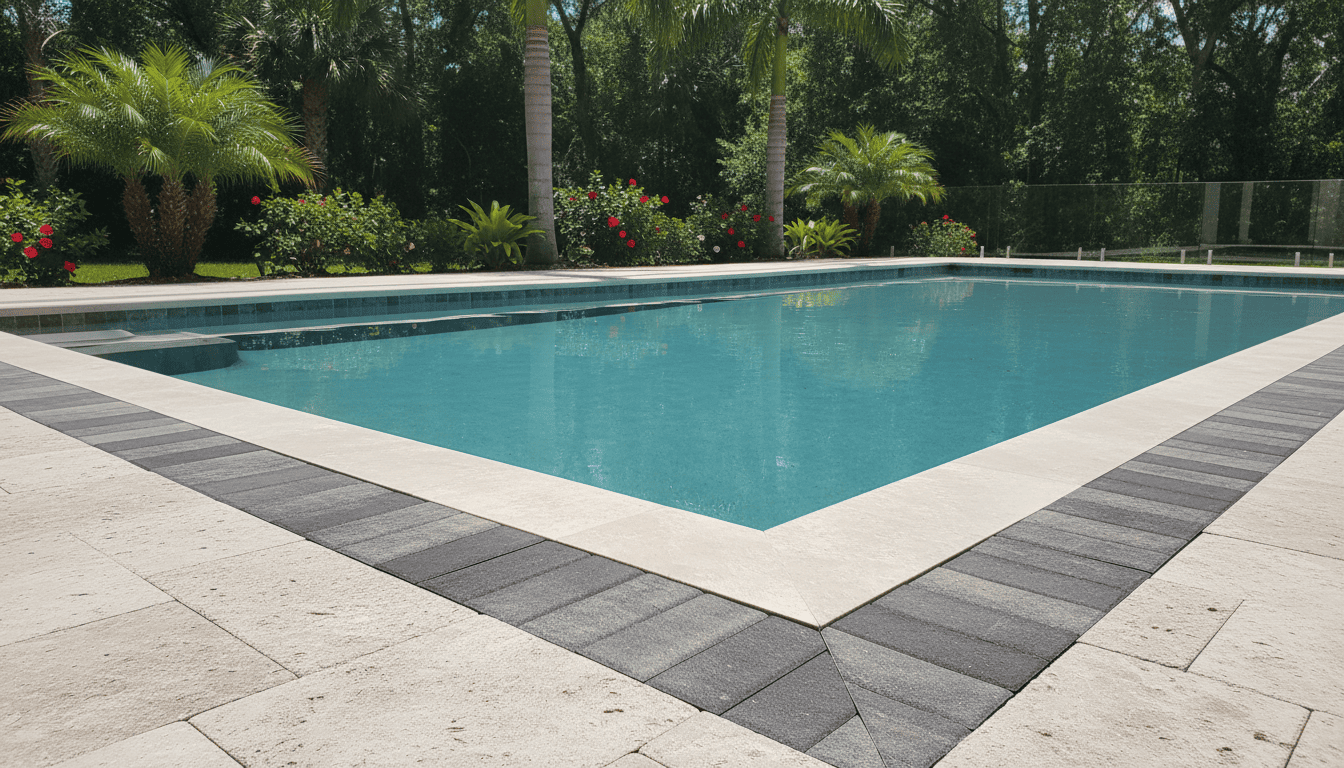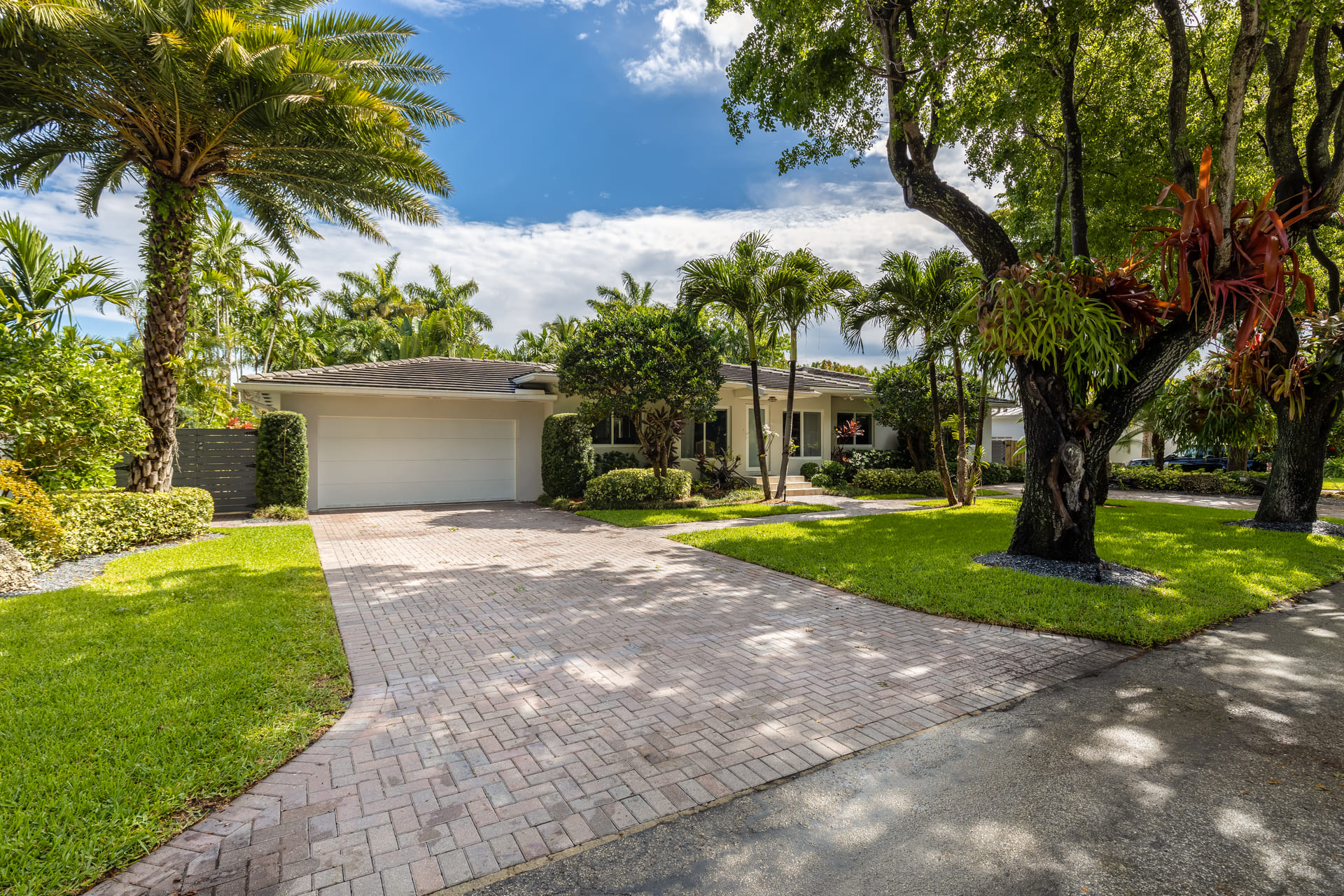
Choosing the right material for your driveway is one of the most important exterior decisions a Florida homeowner can make. A driveway must handle vehicle weight, intense sun, heavy rain, and daily use — all while contributing to curb appeal. That’s why pavers are such a popular choice across Florida.
However, once homeowners decide on pavers, a common question comes up: brick or concrete pavers — which is better for a Florida driveway?
Both options are durable, attractive, and proven in Florida environments. Yet, they differ in performance, appearance, cost, and long-term maintenance. Understanding these differences helps you make a confident decision that fits your home, budget, and lifestyle.
This guide breaks everything down clearly so you can choose the right paver material for your driveway — without guesswork.
Why Pavers Are Better Than Poured Concrete for Driveways
Before comparing brick and concrete pavers, it’s important to understand why pavers outperform poured concrete in Florida.
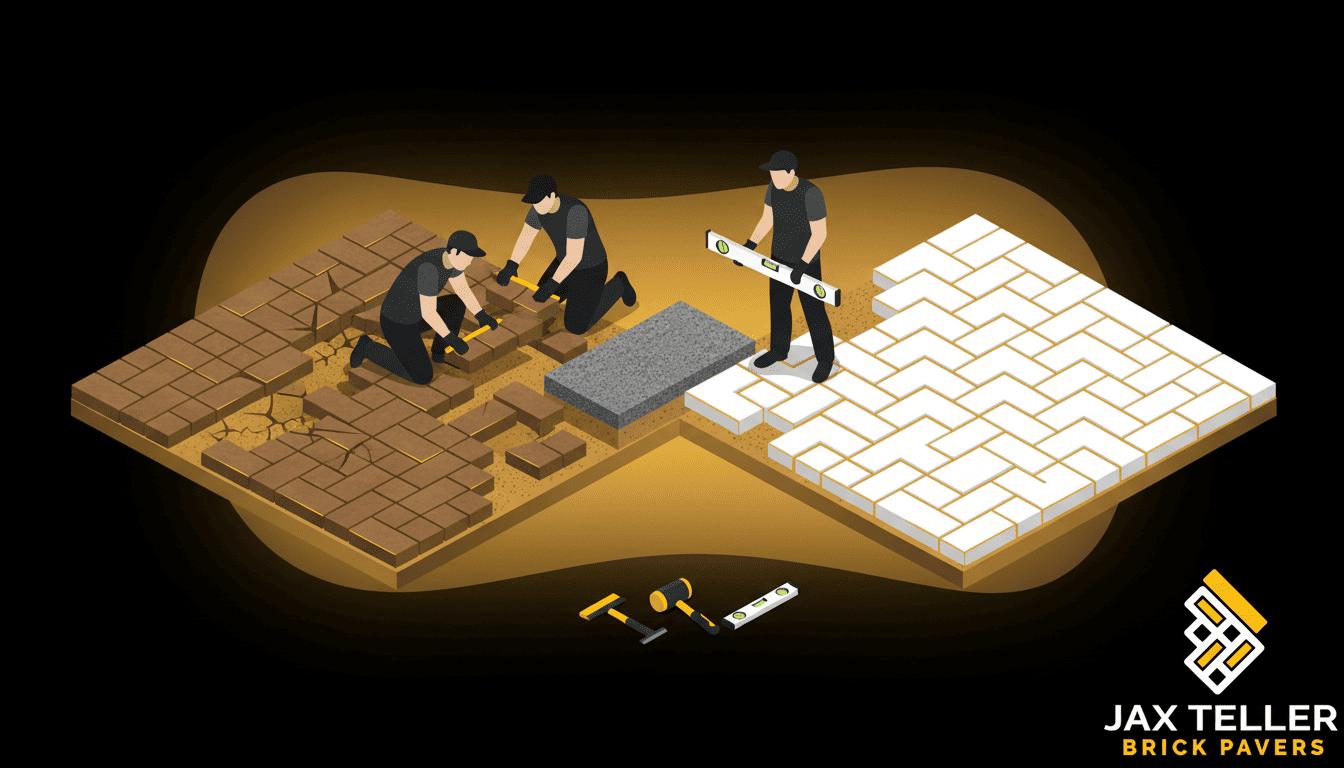
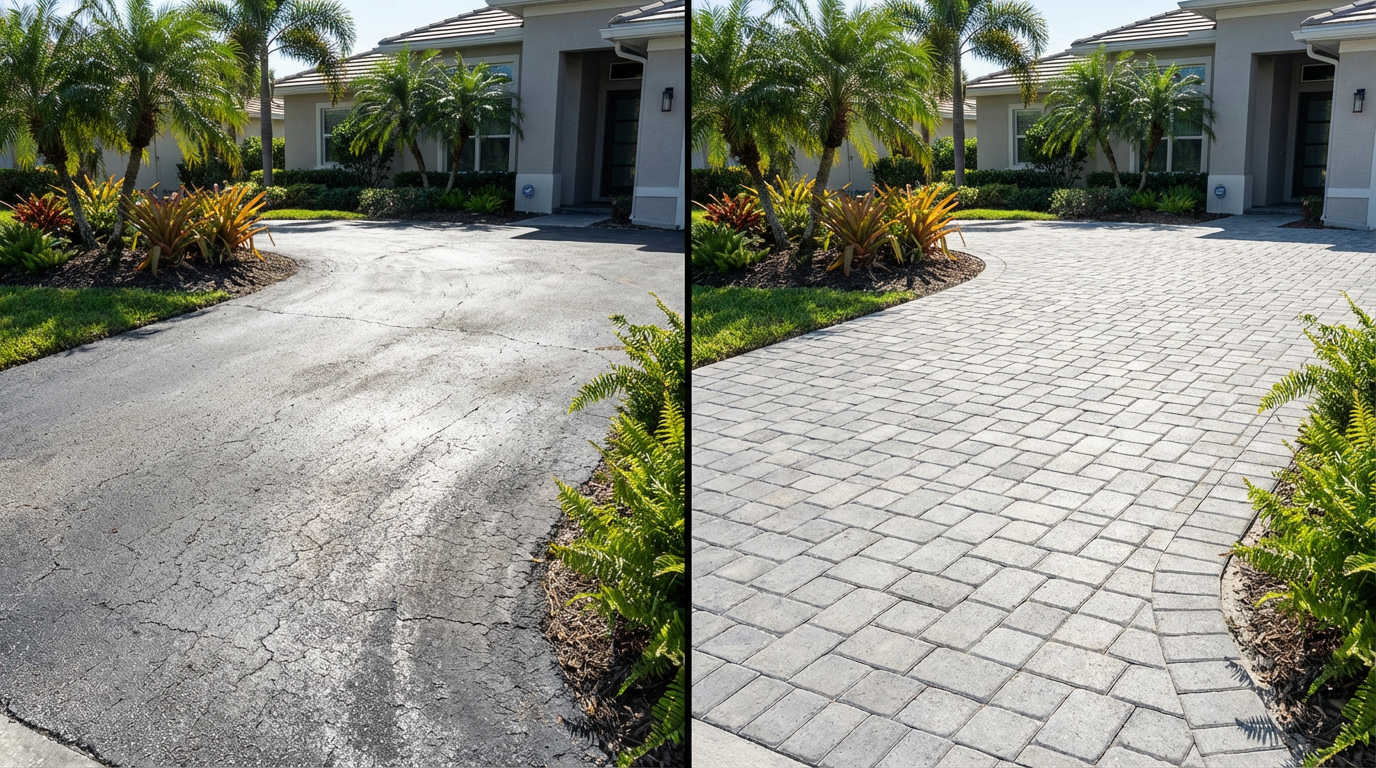
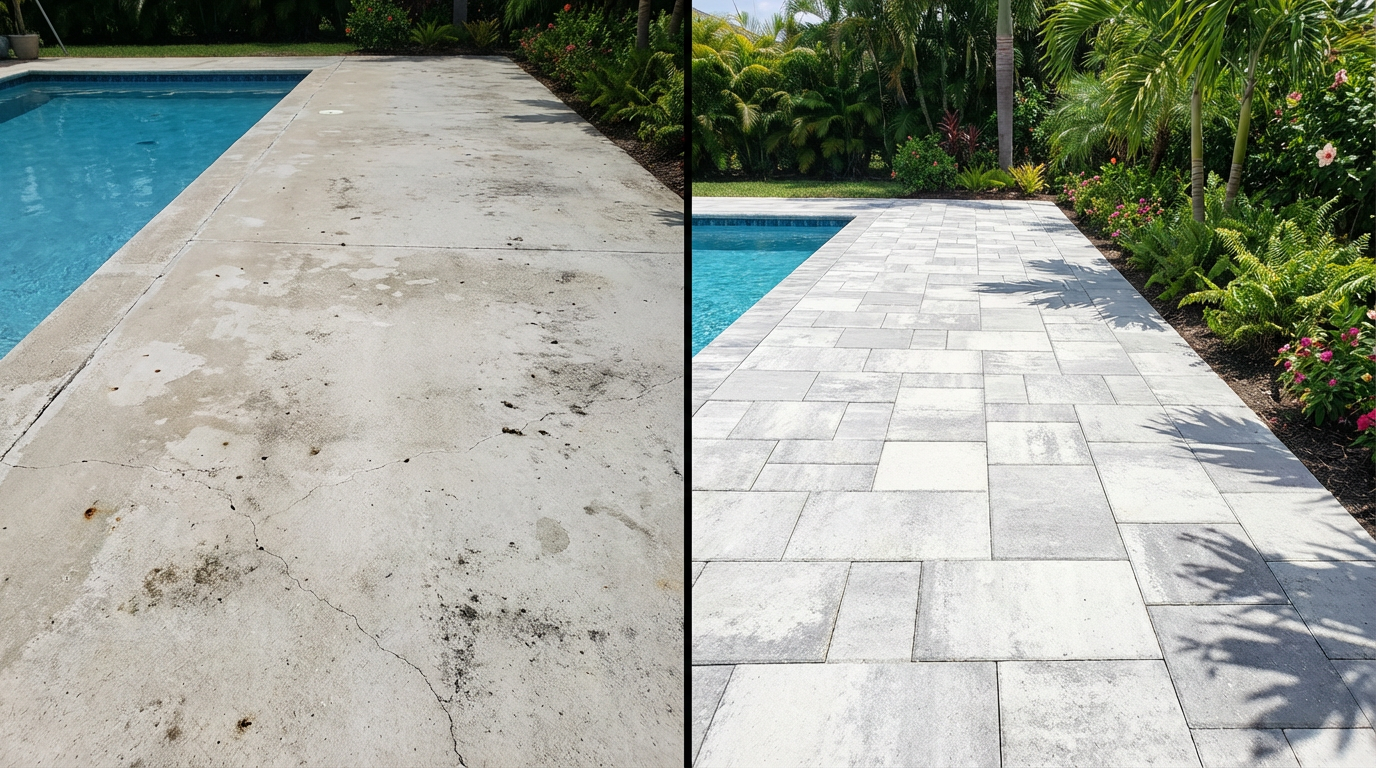
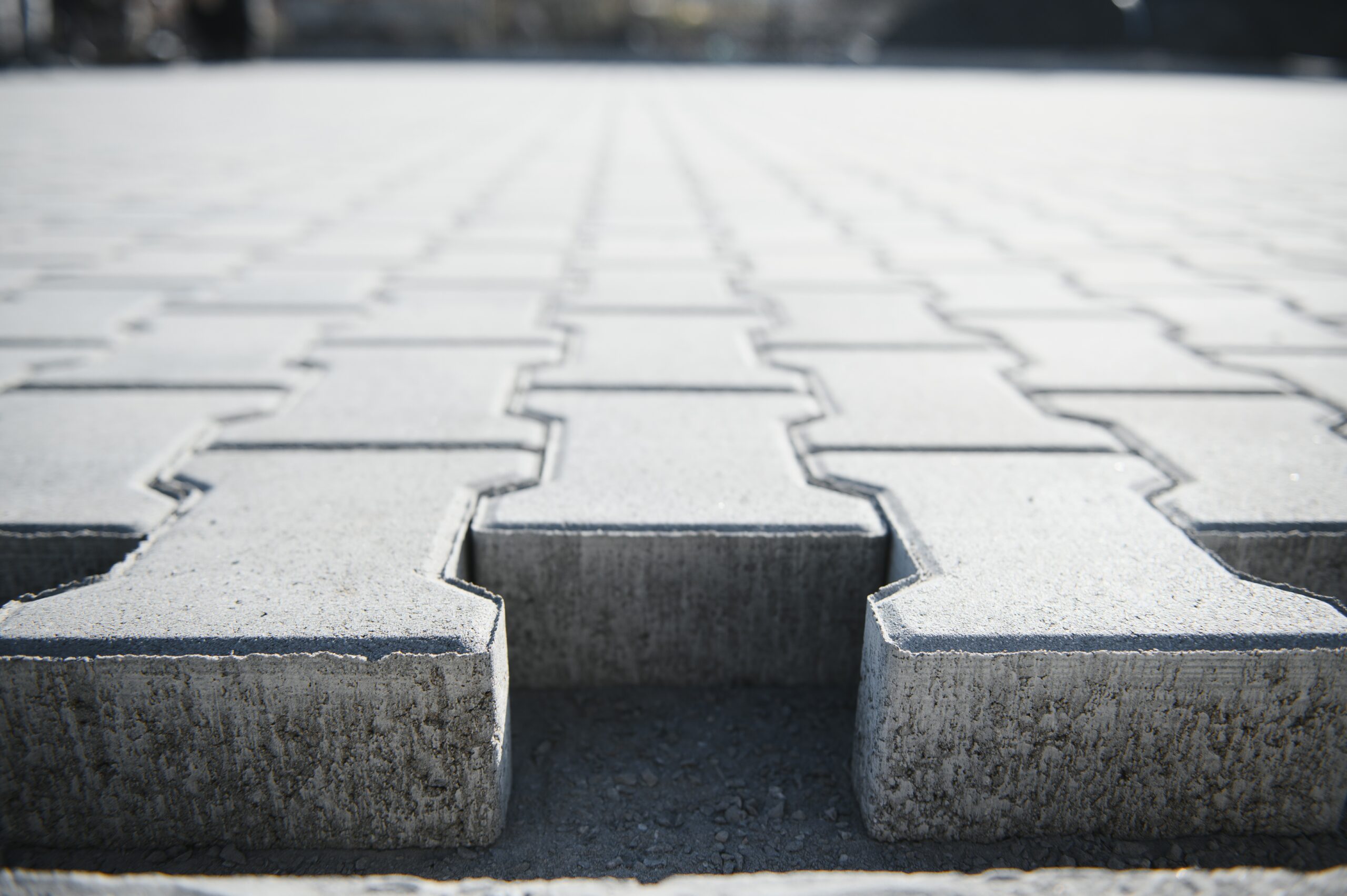
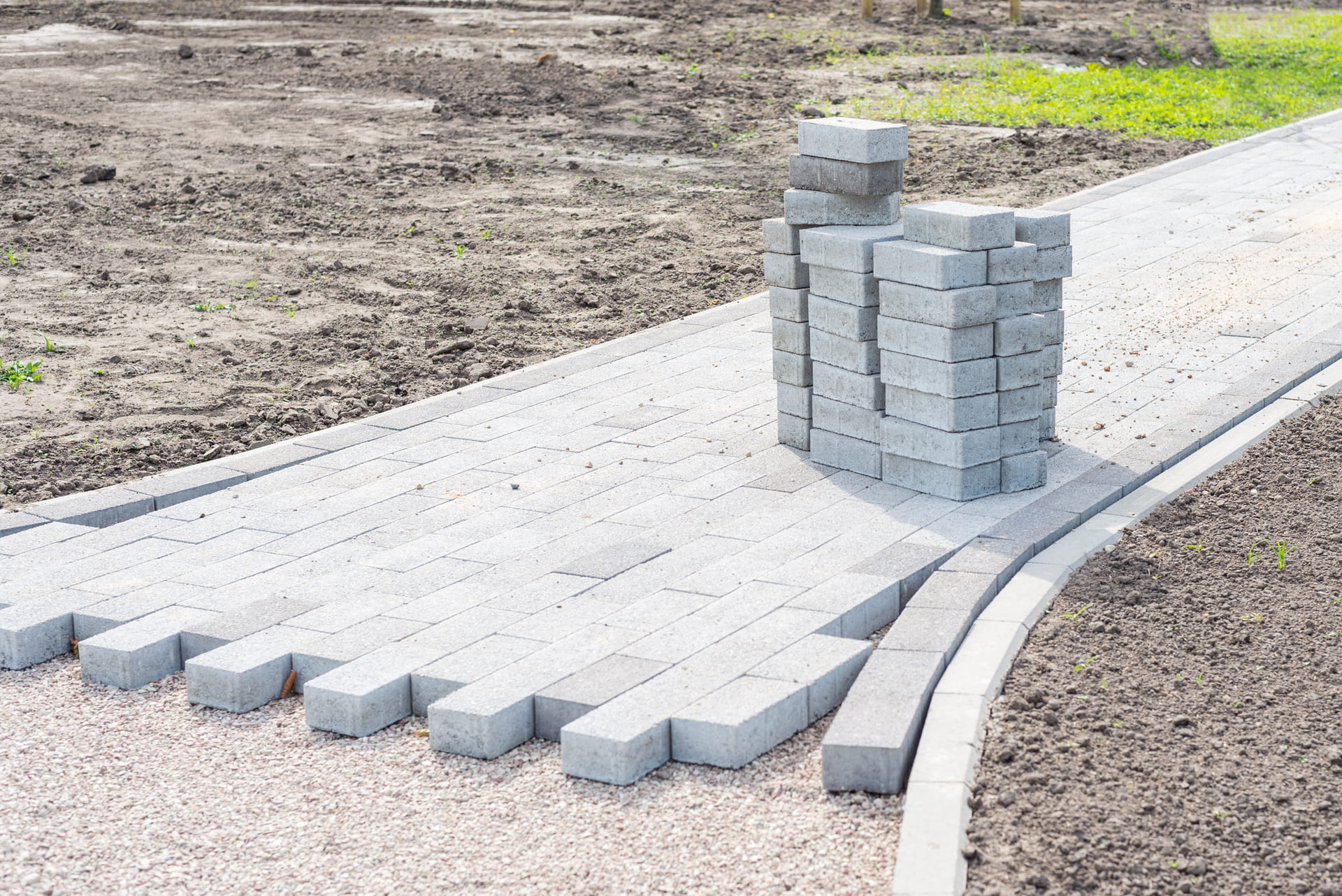
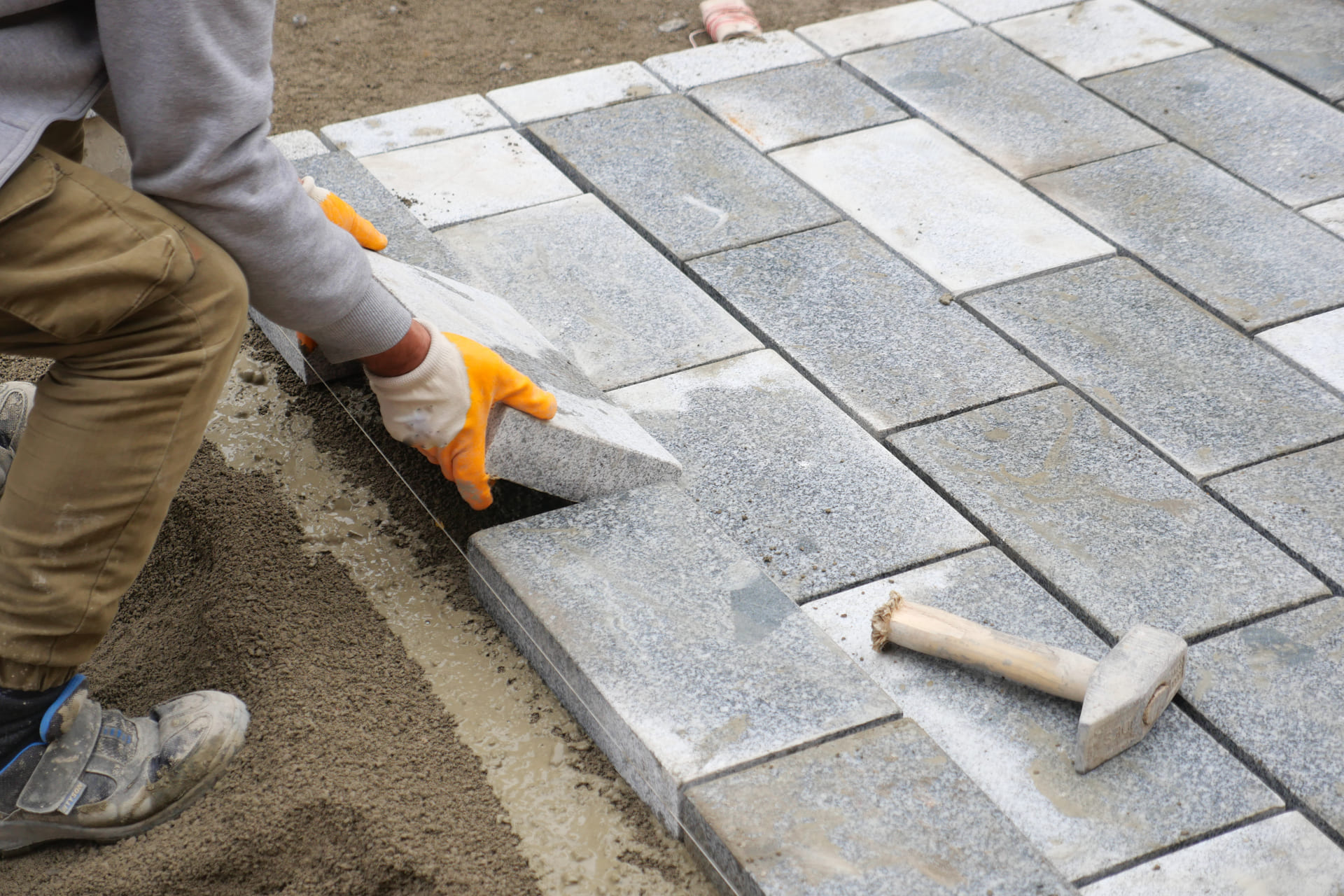
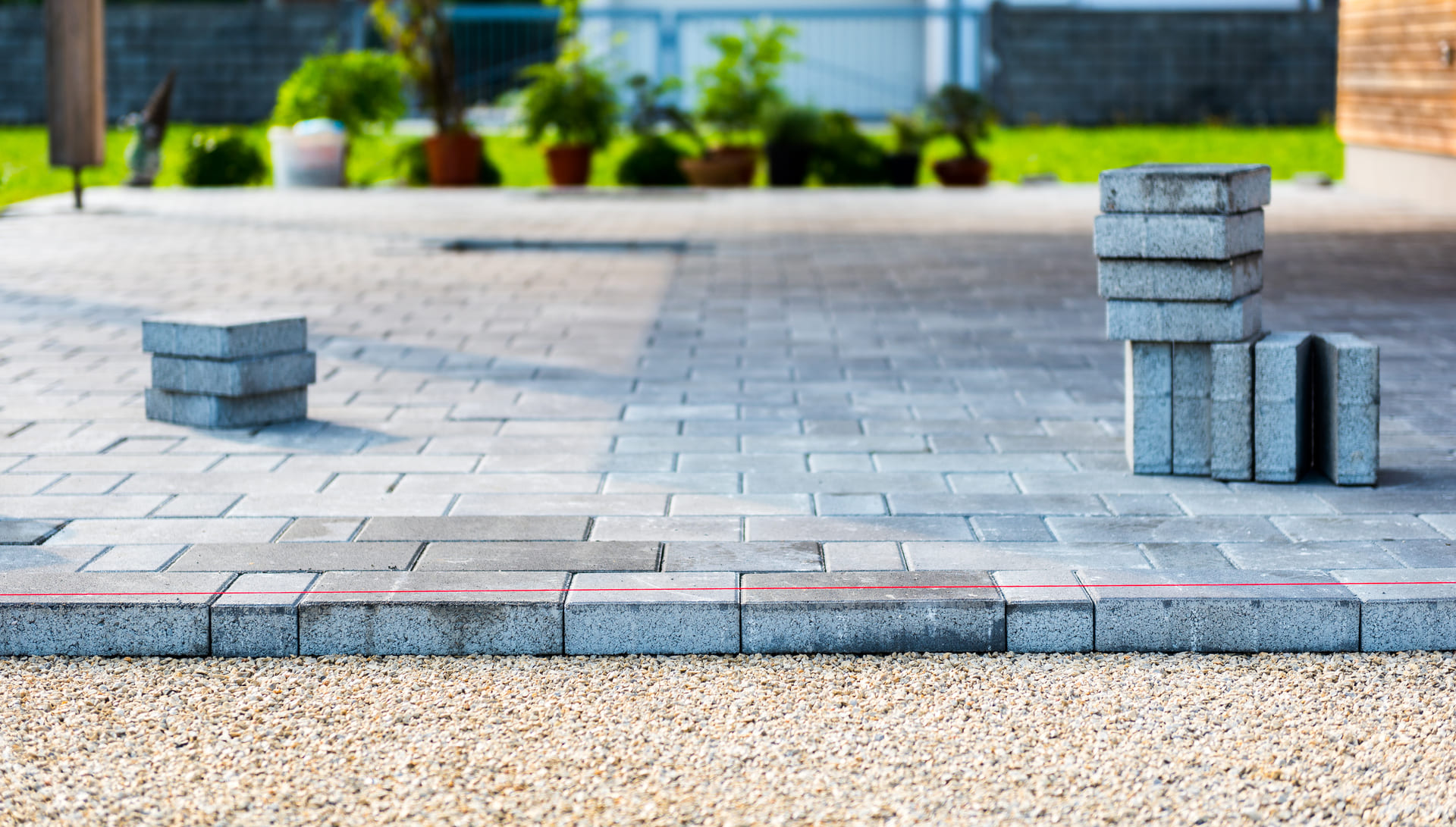
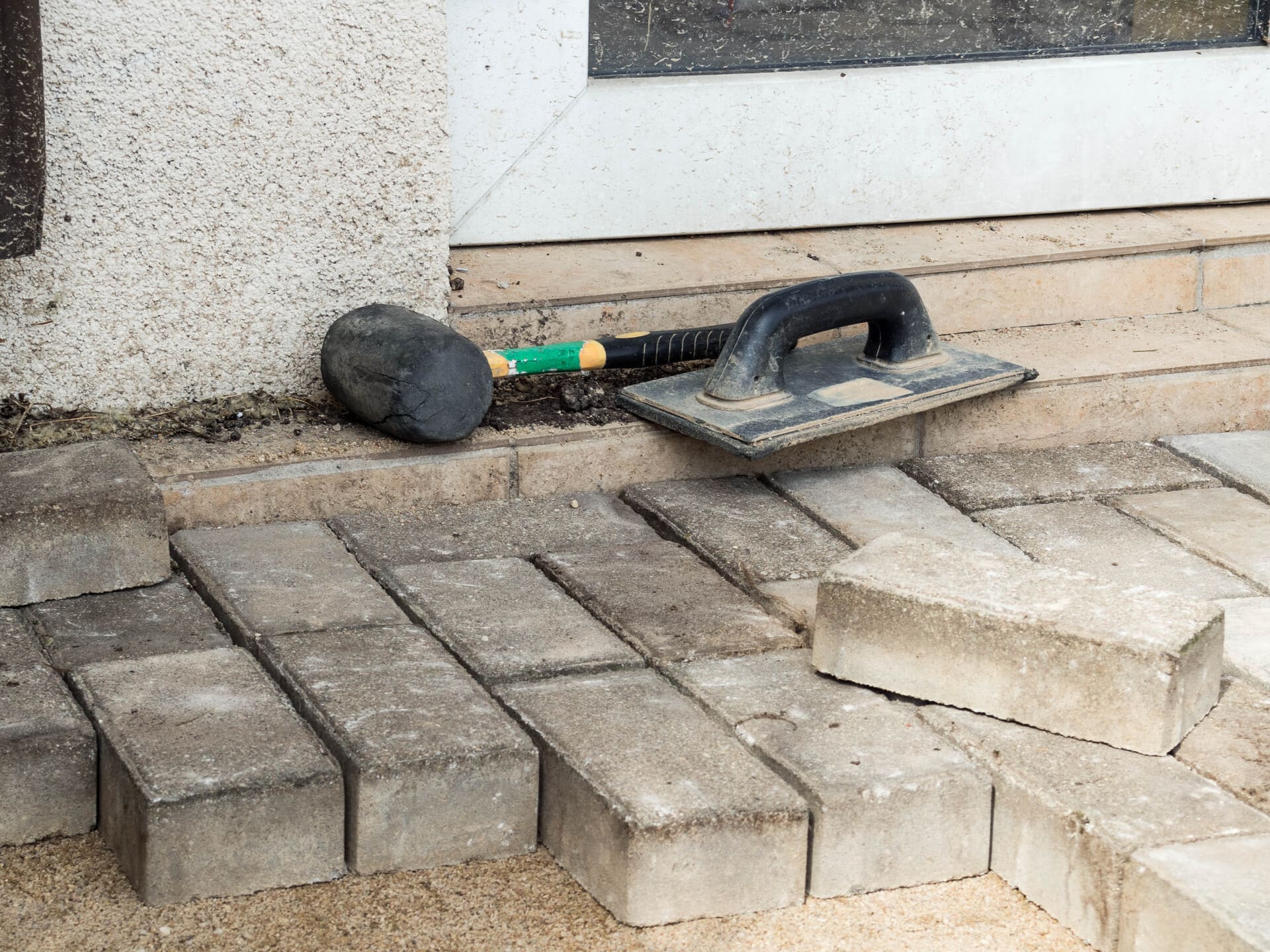
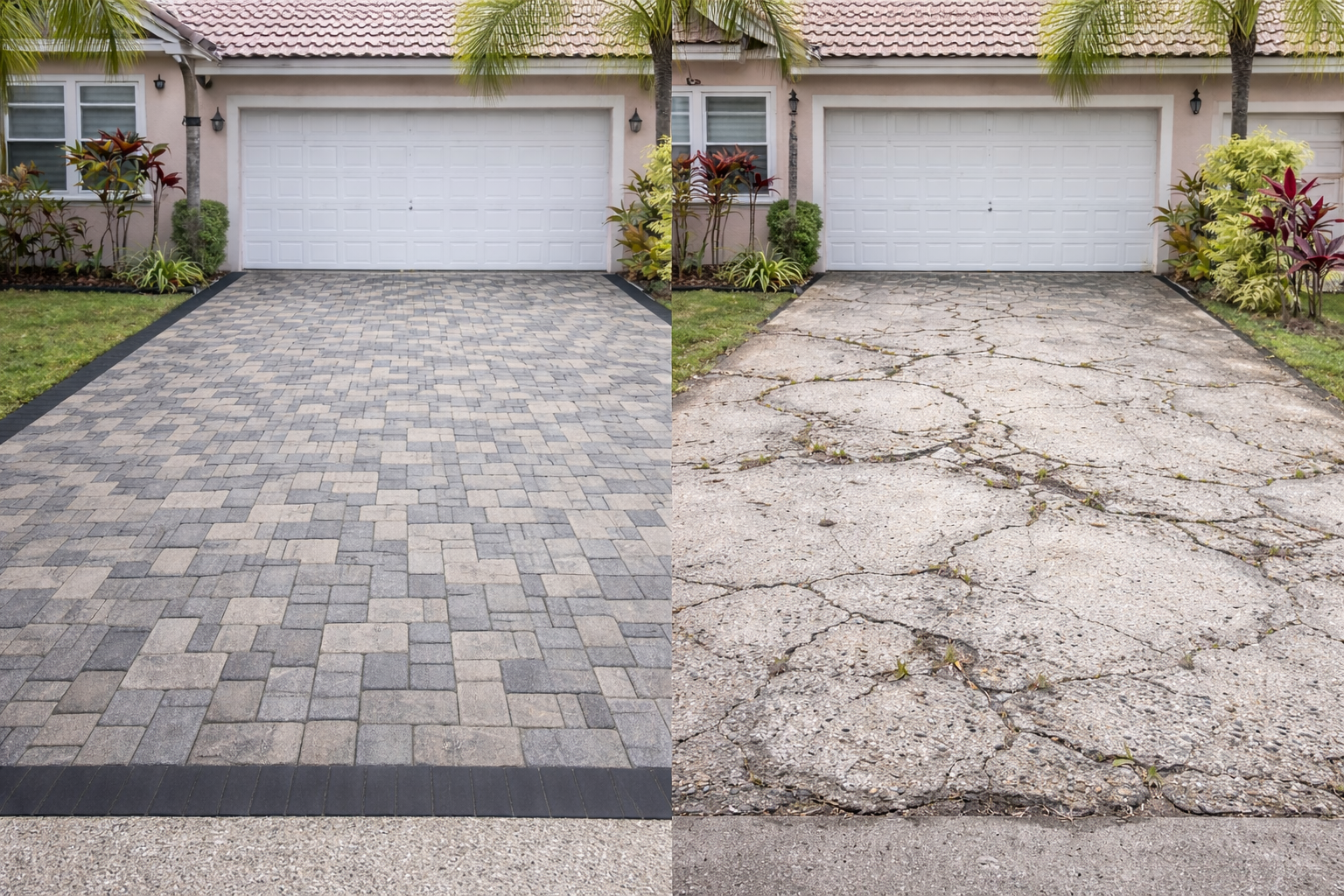
Unlike solid slabs, pavers are installed as individual units over a compacted base. This system allows slight movement without cracking, which is critical in Florida’s sandy soil and frequent rain cycles.
Advantages of pavers over poured concrete
- Less cracking and surface damage
- Easier repairs (replace individual pavers)
- Better traction in wet conditions
- More design flexibility
- Improved drainage options
Once homeowners understand this, the real decision becomes which type of paver works best.
What Are Brick Pavers?
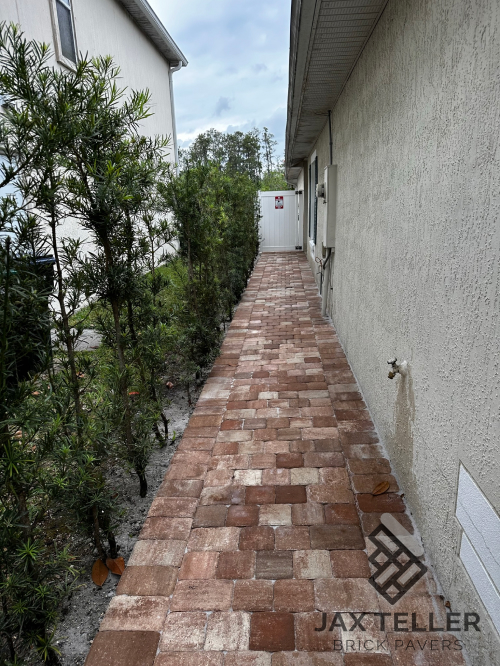
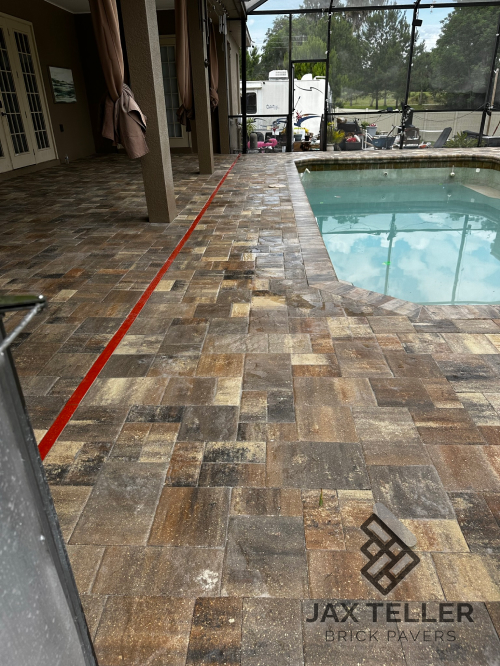
Brick pavers are made from natural clay that is molded and fired at extremely high temperatures. This process creates a dense, durable material with rich, natural color that runs all the way through the paver.
Key characteristics of brick pavers
- Natural clay material
- Color does not fade because it’s inherent to the brick
- Textured surface with classic appeal
- Extremely strong compression rating
Brick pavers are commonly associated with timeless, traditional designs and upscale curb appeal.
What Are Concrete Pavers?
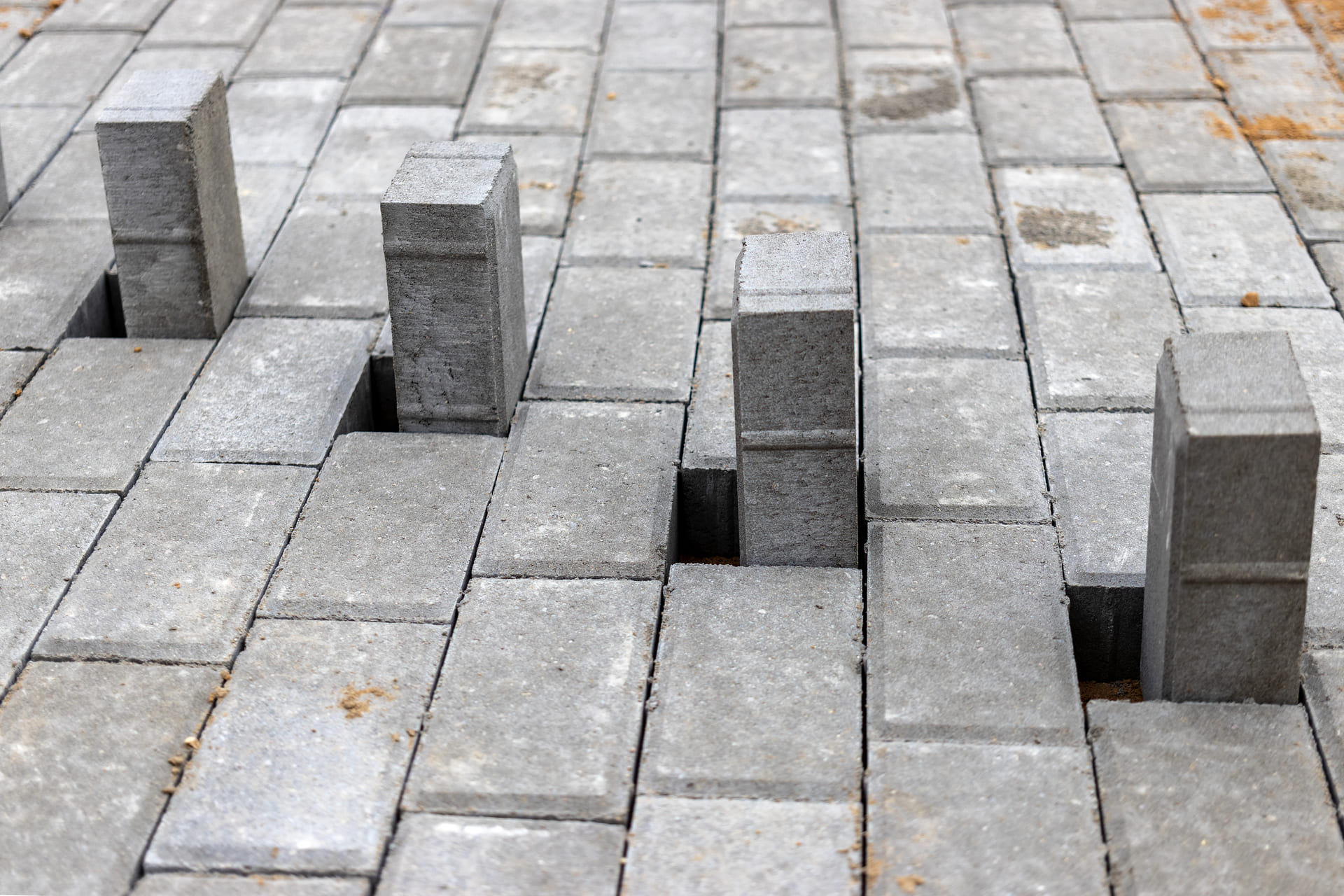
Concrete pavers are manufactured using cement, aggregates, and pigments. They are molded into precise shapes and cured to achieve strength and durability.
Key characteristics of concrete pavers
- Wide variety of shapes, sizes, and colors
- Can mimic natural stone or brick
- Consistent sizing for clean layouts
- More flexible design options
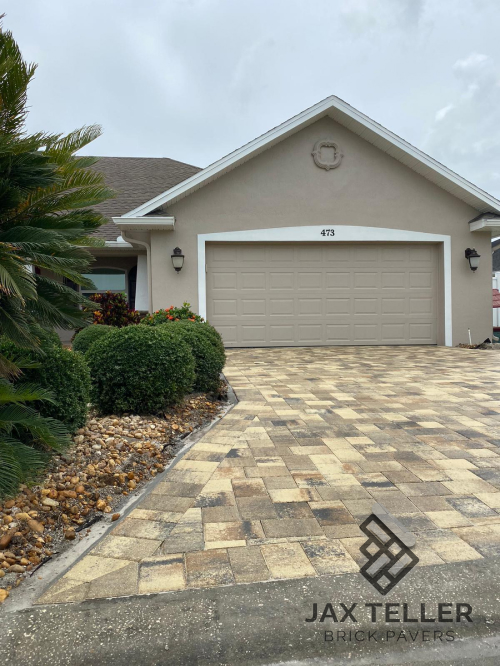
Concrete pavers dominate the modern driveway market because of their versatility and affordability.
Durability in Florida’s Climate
Florida’s environment is demanding. UV exposure, moisture, heat, and sudden temperature shifts all affect driveway materials.
Brick pavers and durability
- Extremely dense material
- Resistant to fading from sunlight
- Performs well in heat and humidity
- Long lifespan when installed correctly
Brick pavers are known for lasting decades, even in harsh climates.
Concrete pavers and durability
- Engineered for high load capacity
- Designed to handle vehicle traffic
- Modern manufacturing produces very strong units
- Color may fade slightly over time without sealing
Both options are structurally sound for Florida driveways, but brick has a slight edge in color longevity, while concrete excels in load distribution and design flexibility.
Appearance and Curb Appeal Comparison
Driveways take up a large portion of the front yard, so visual impact matters.
Brick paver aesthetics
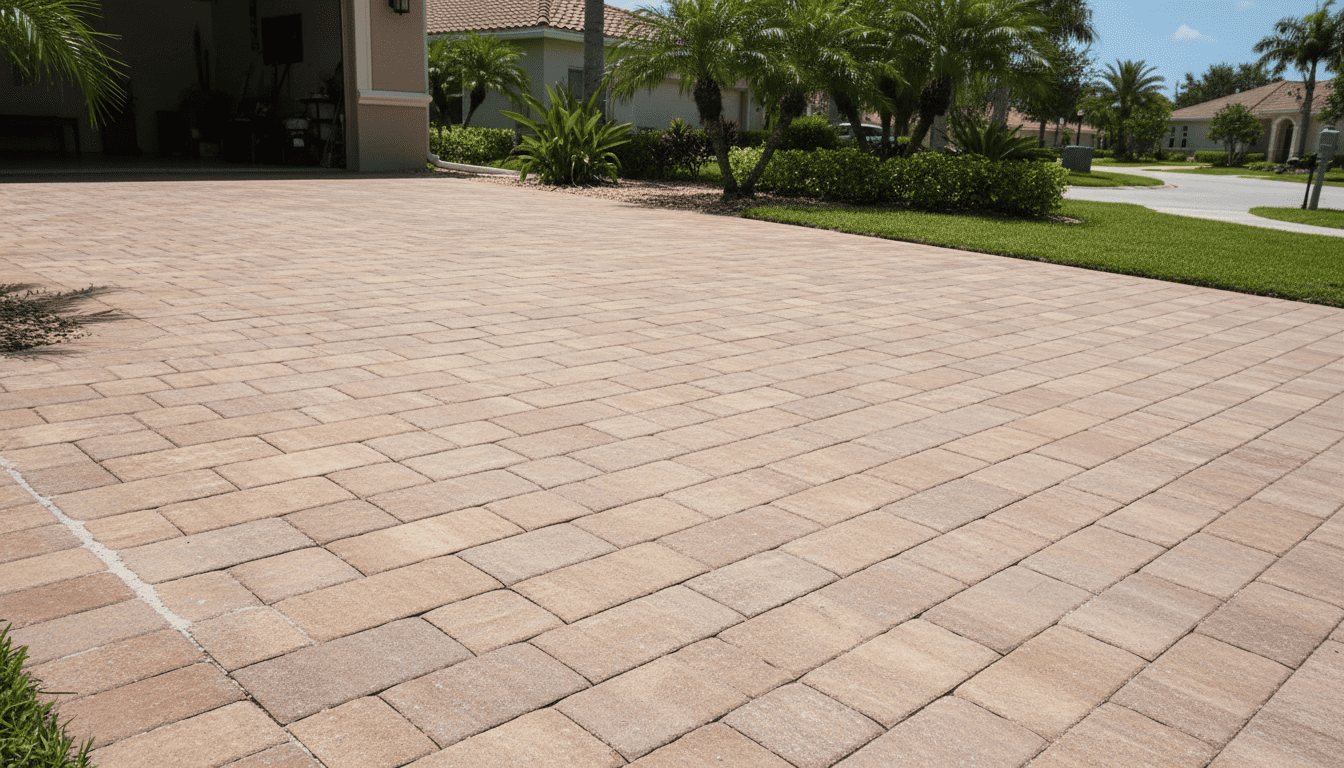
- Warm, classic tones (reds, browns, earth hues)
- Traditional, upscale appearance
- Ideal for Mediterranean, historic, or classic Florida homes
- Develops a natural patina over time
Brick pavers create a timeless look that never feels trendy or outdated.
Concrete paver aesthetics
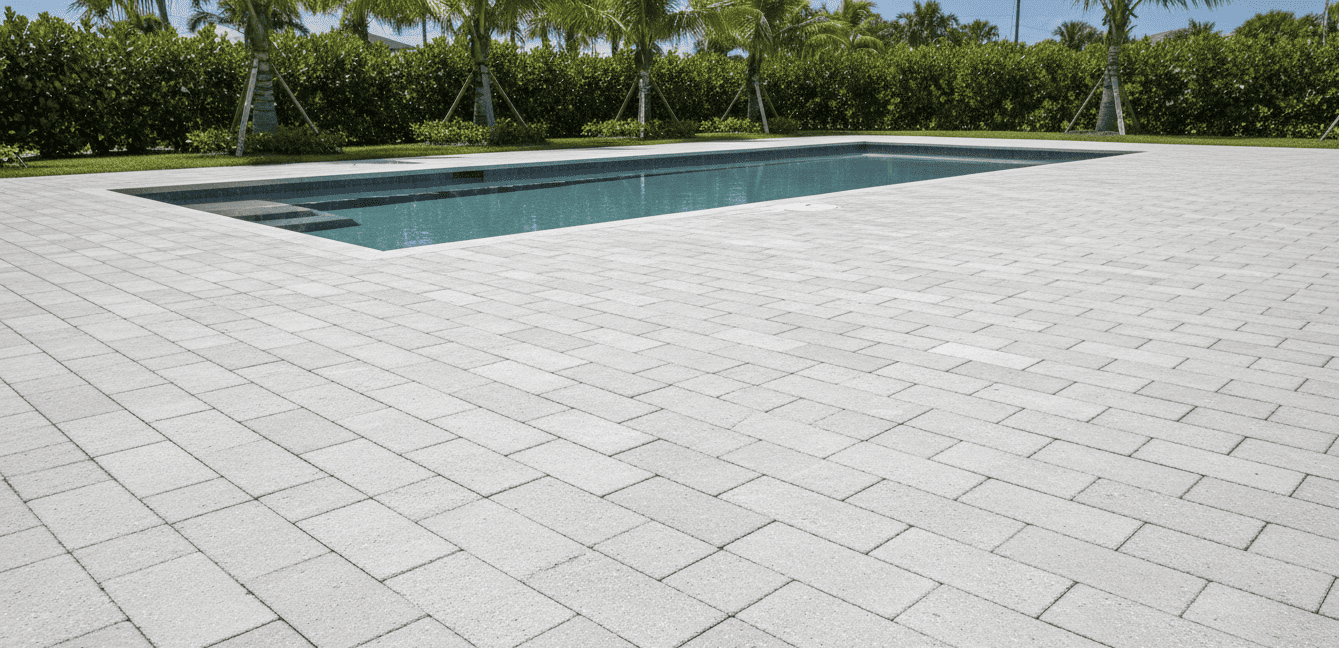
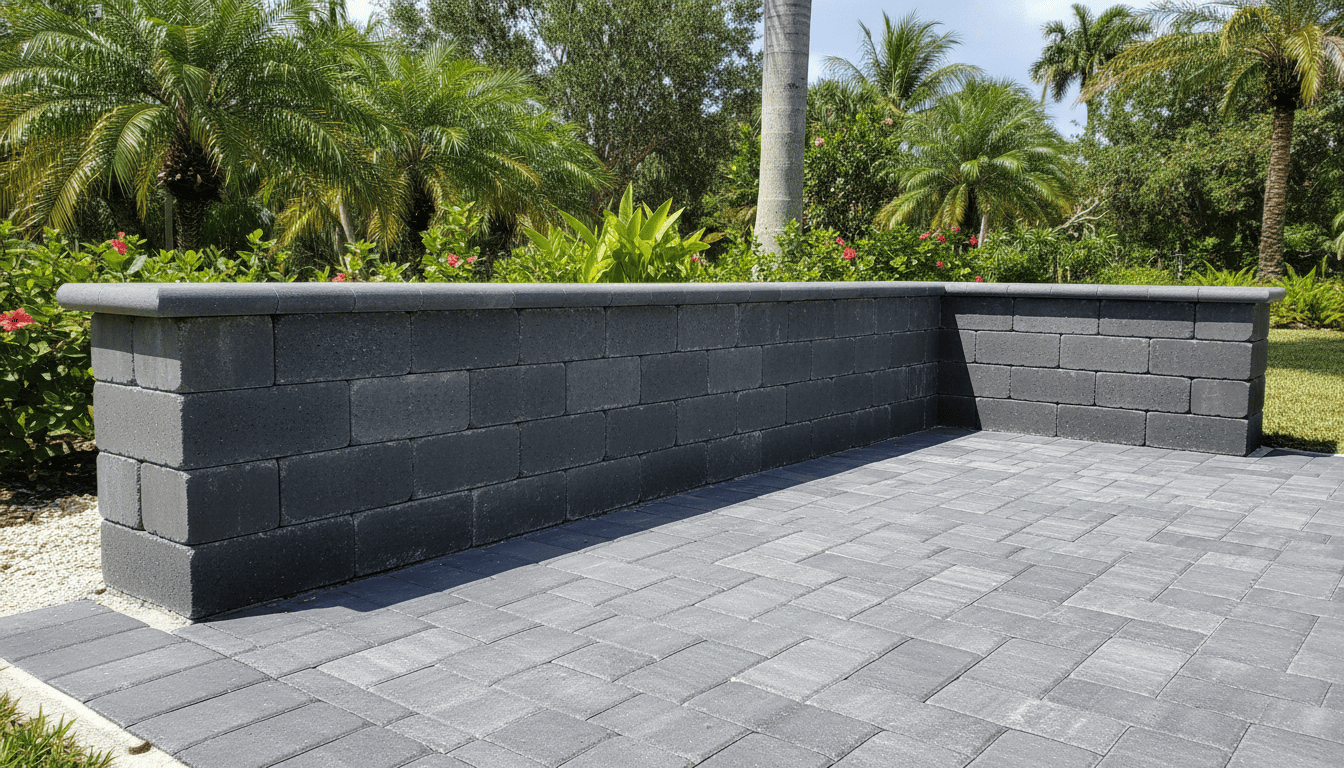
- Modern neutrals (grays, beiges, charcoals)
- Sharp edges and clean lines
- Works well with contemporary architecture
- Can imitate stone, slate, or brick
Concrete pavers are ideal for homeowners who want a clean, modern, or custom-designed driveway.
Pattern Strength and Performance
The material you choose works hand-in-hand with the pattern used.
Best patterns for brick pavers
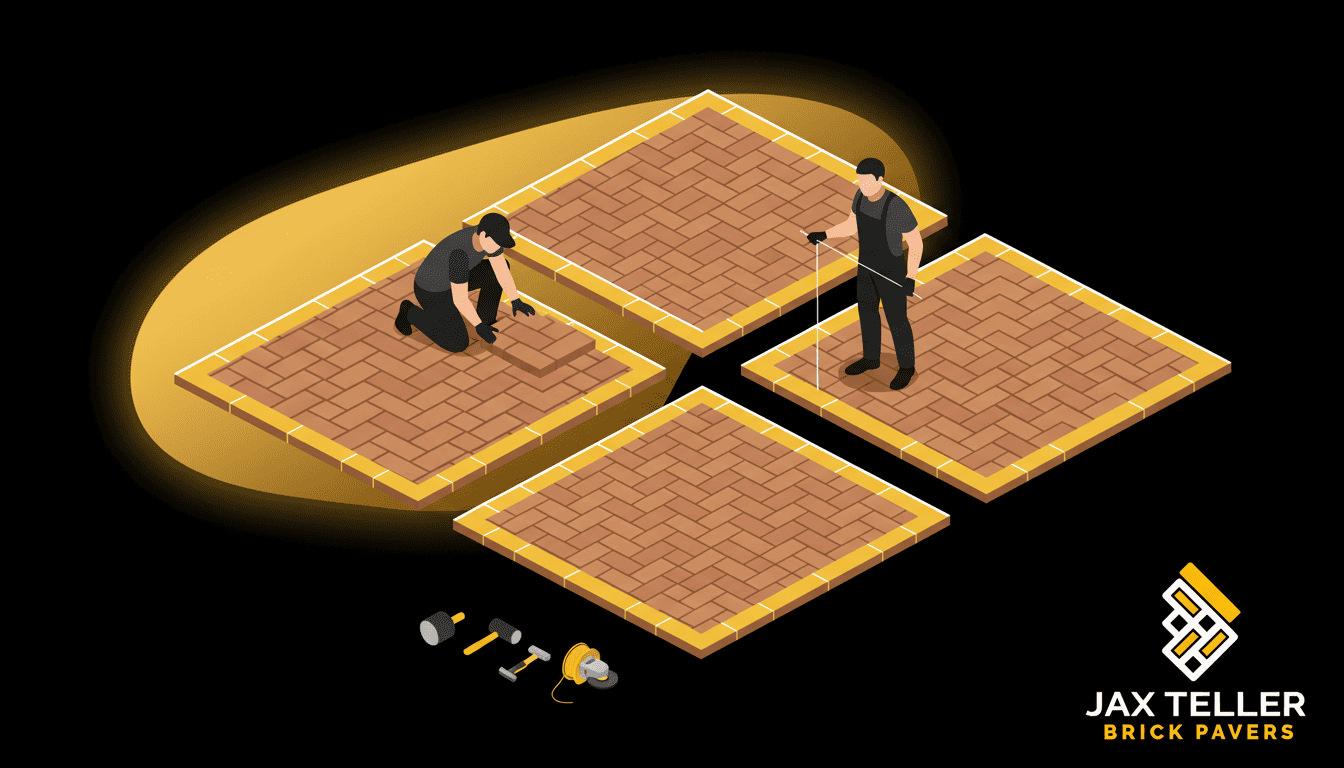
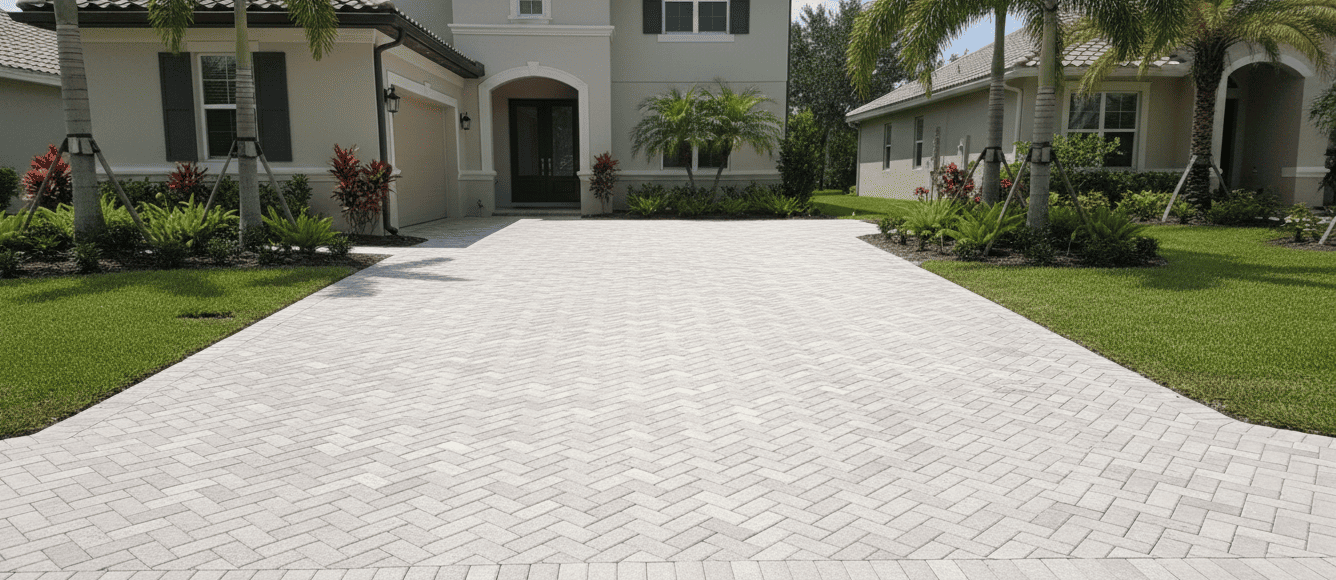
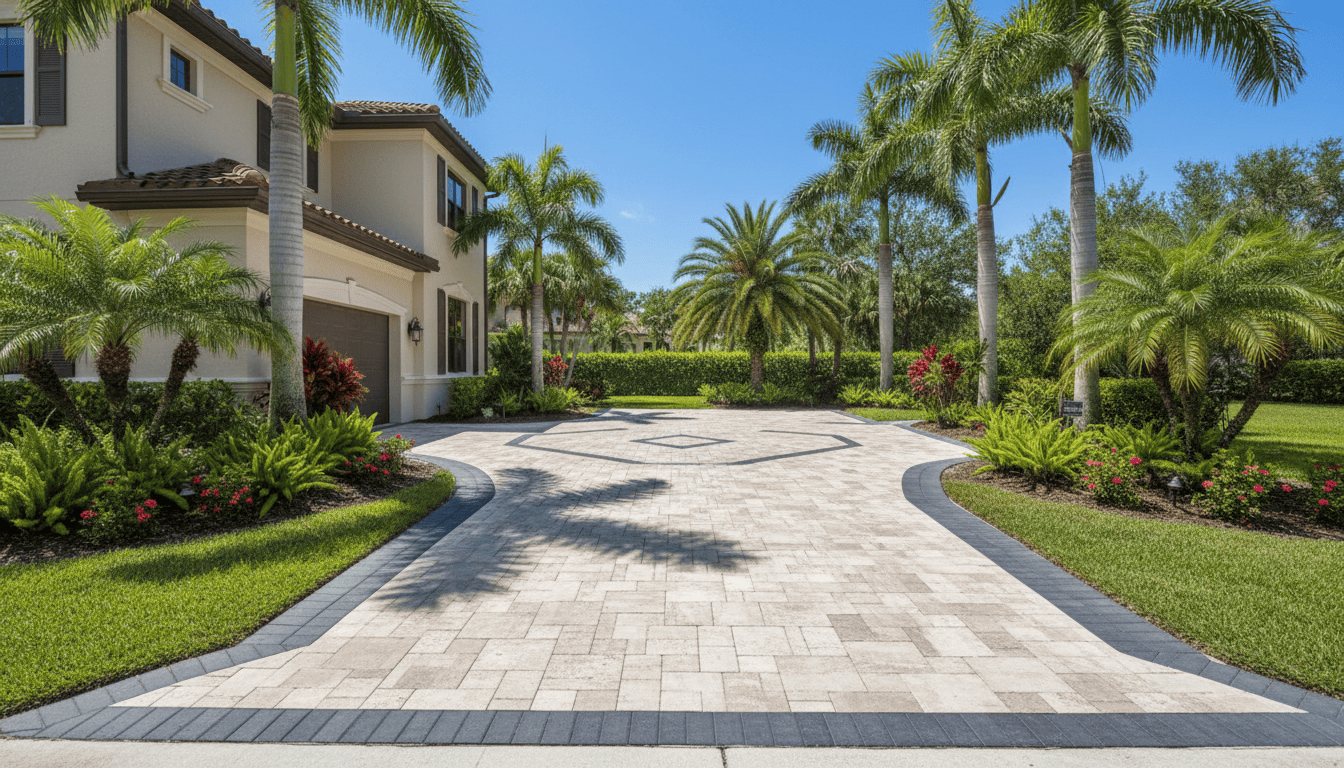
- Herringbone (excellent interlock)
- Basketweave
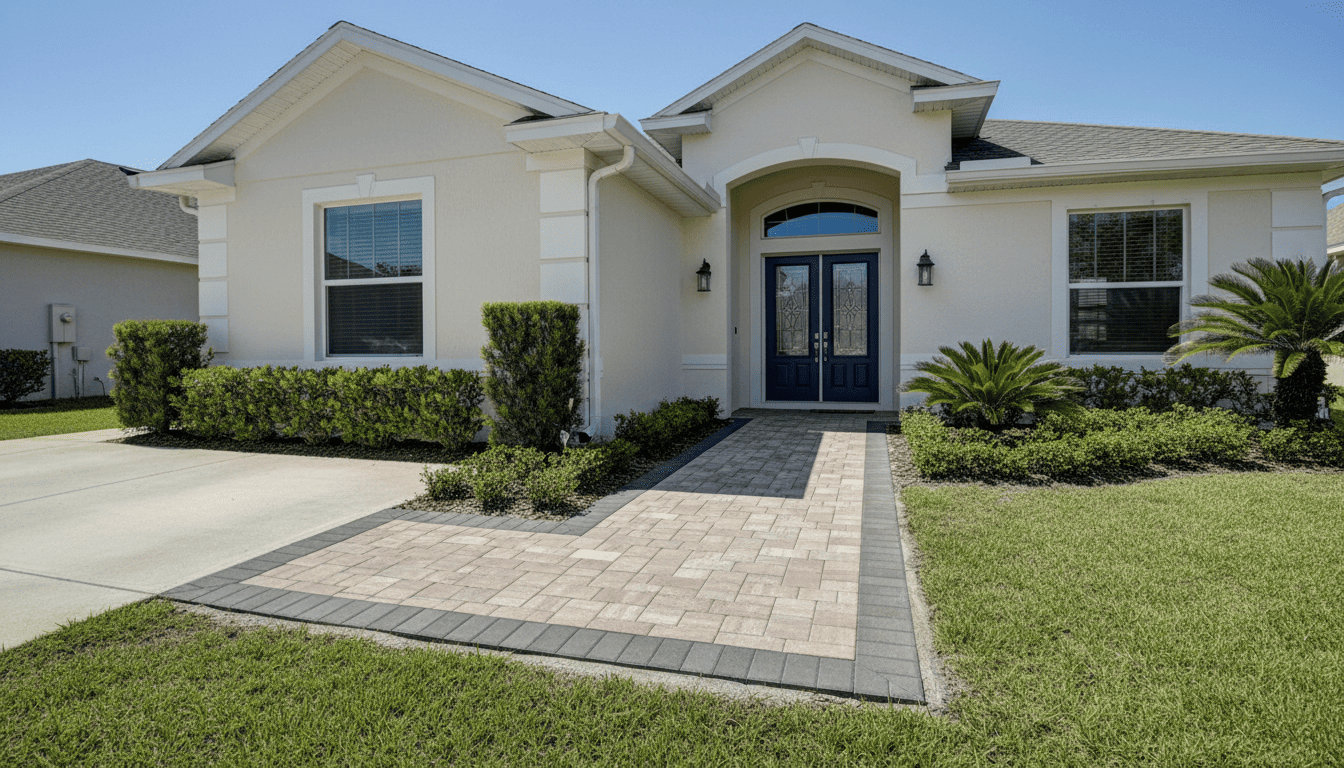
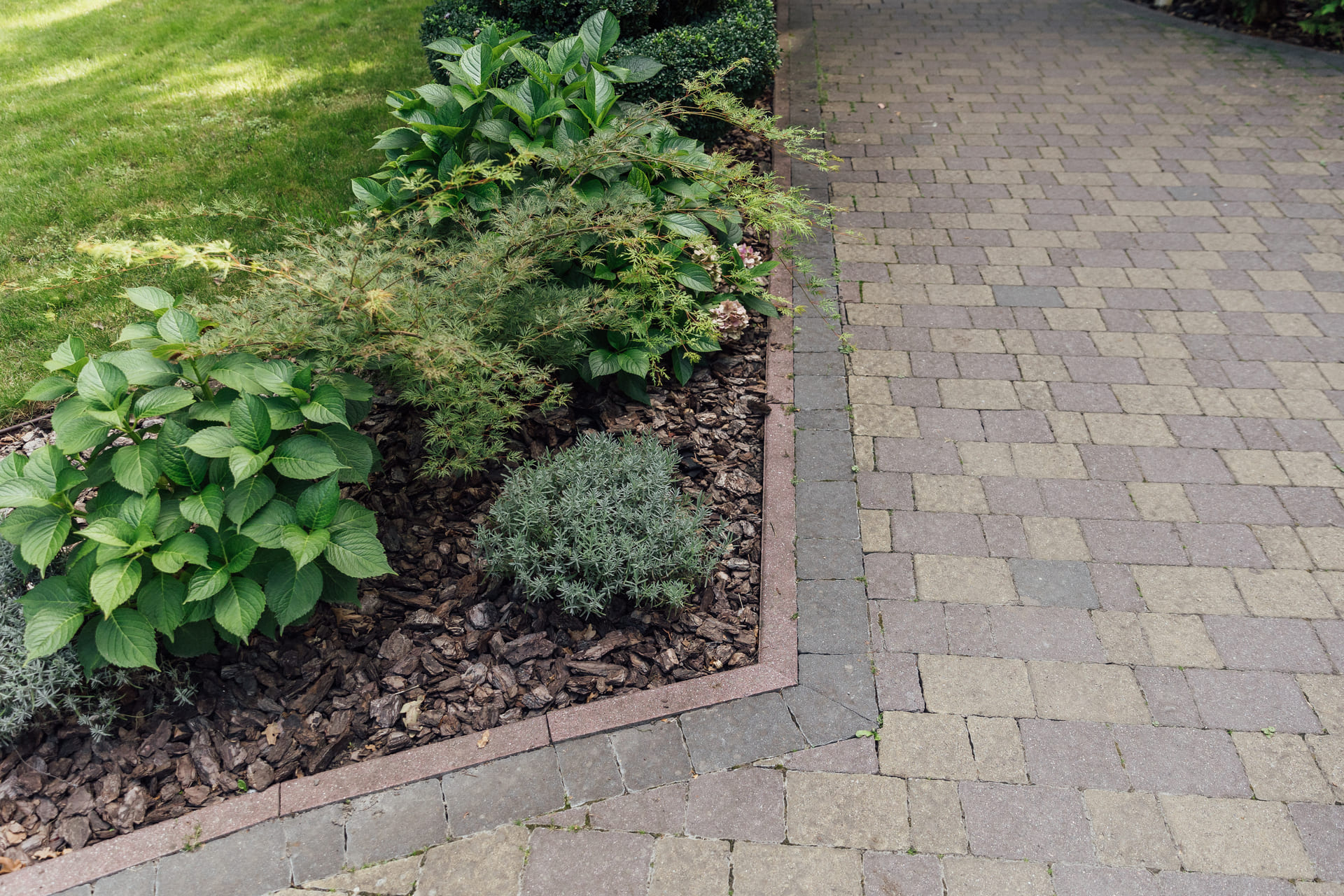
- Running bond with borders
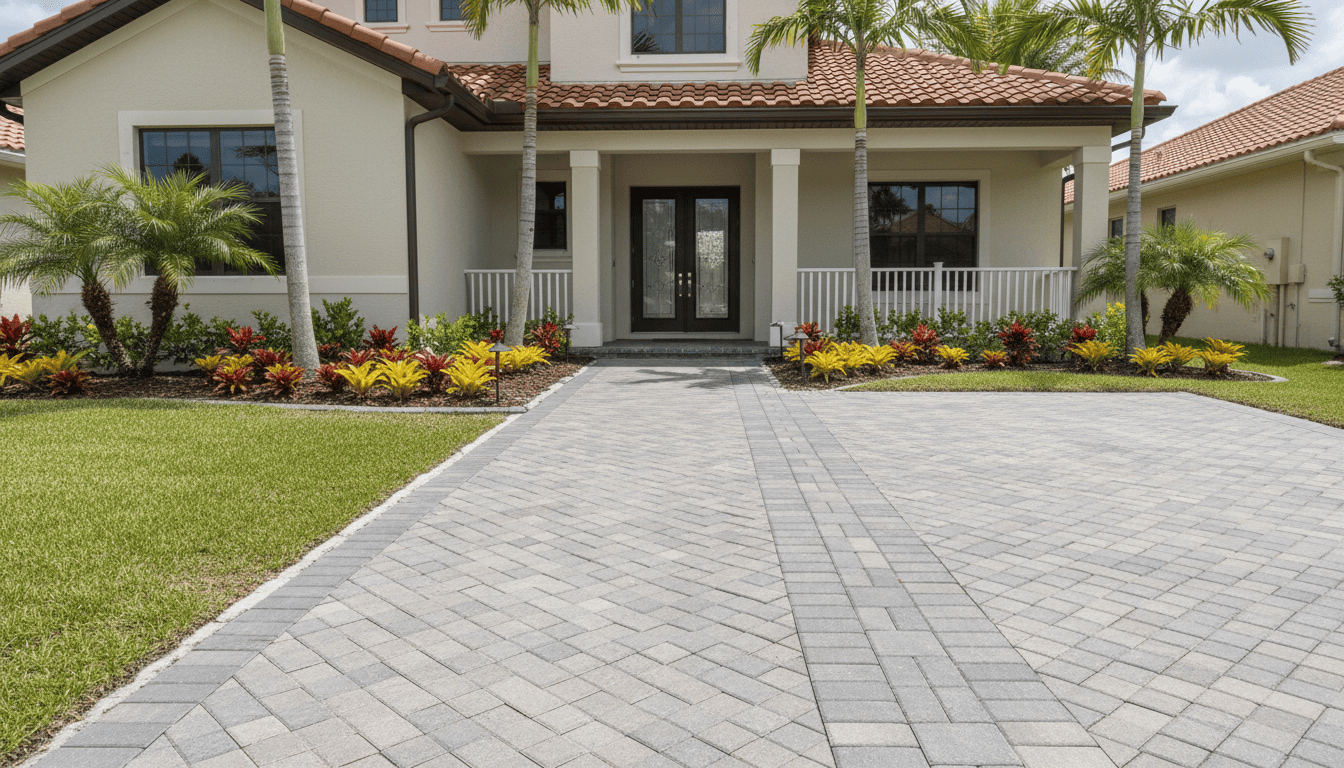
Brick pavers perform especially well in interlocking patterns like herringbone, which makes them ideal for driveways.
Best patterns for concrete pavers
- Herringbone
- Large-format modular layouts
- Random ashlar patterns
Concrete pavers allow for larger sizes, which can reduce joint lines and create a sleek look.
Maintenance Requirements in Florida
Both materials are low maintenance, but there are differences.
Brick paver maintenance
- Minimal fading
- Occasional cleaning
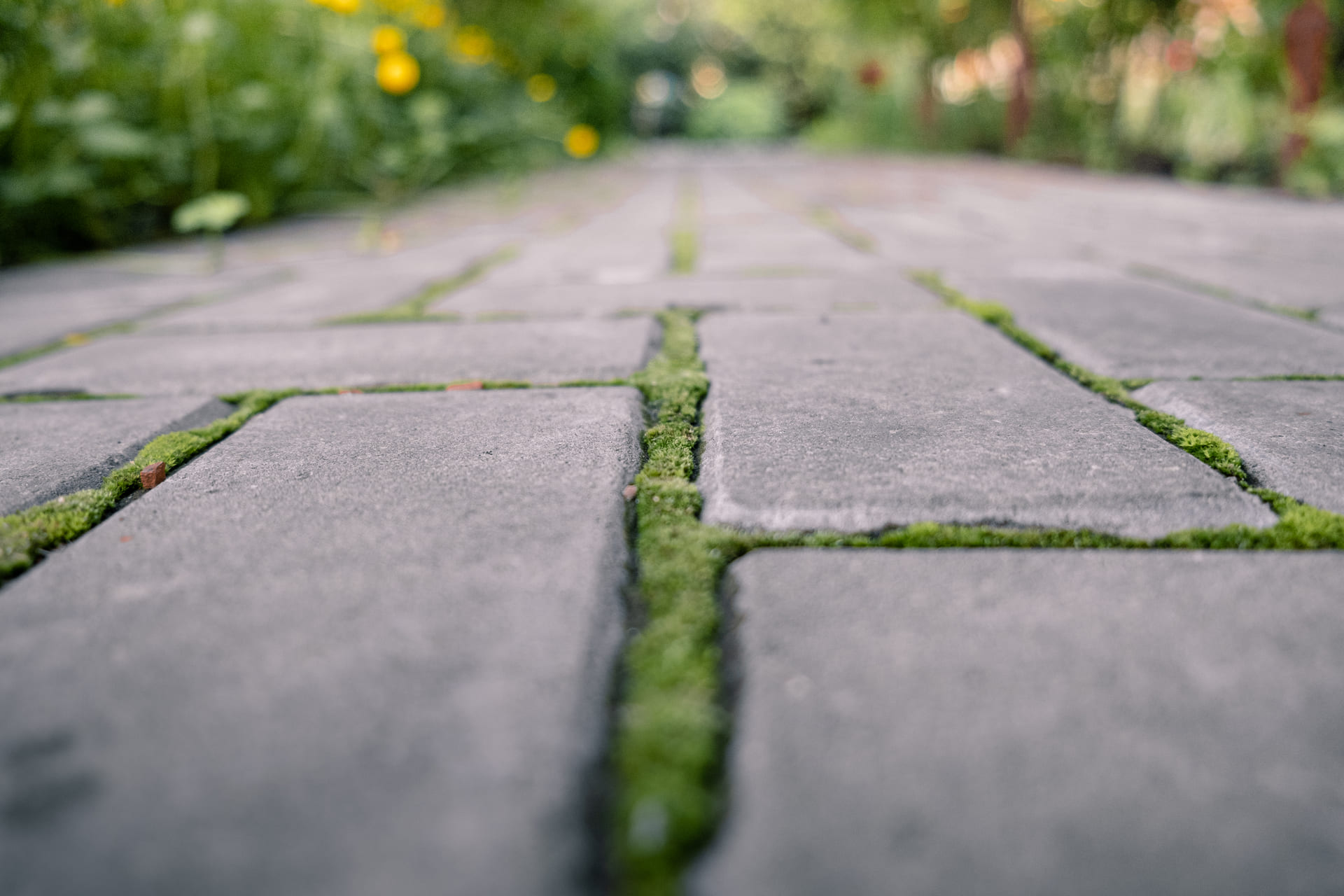
- Re-sanding joints as needed
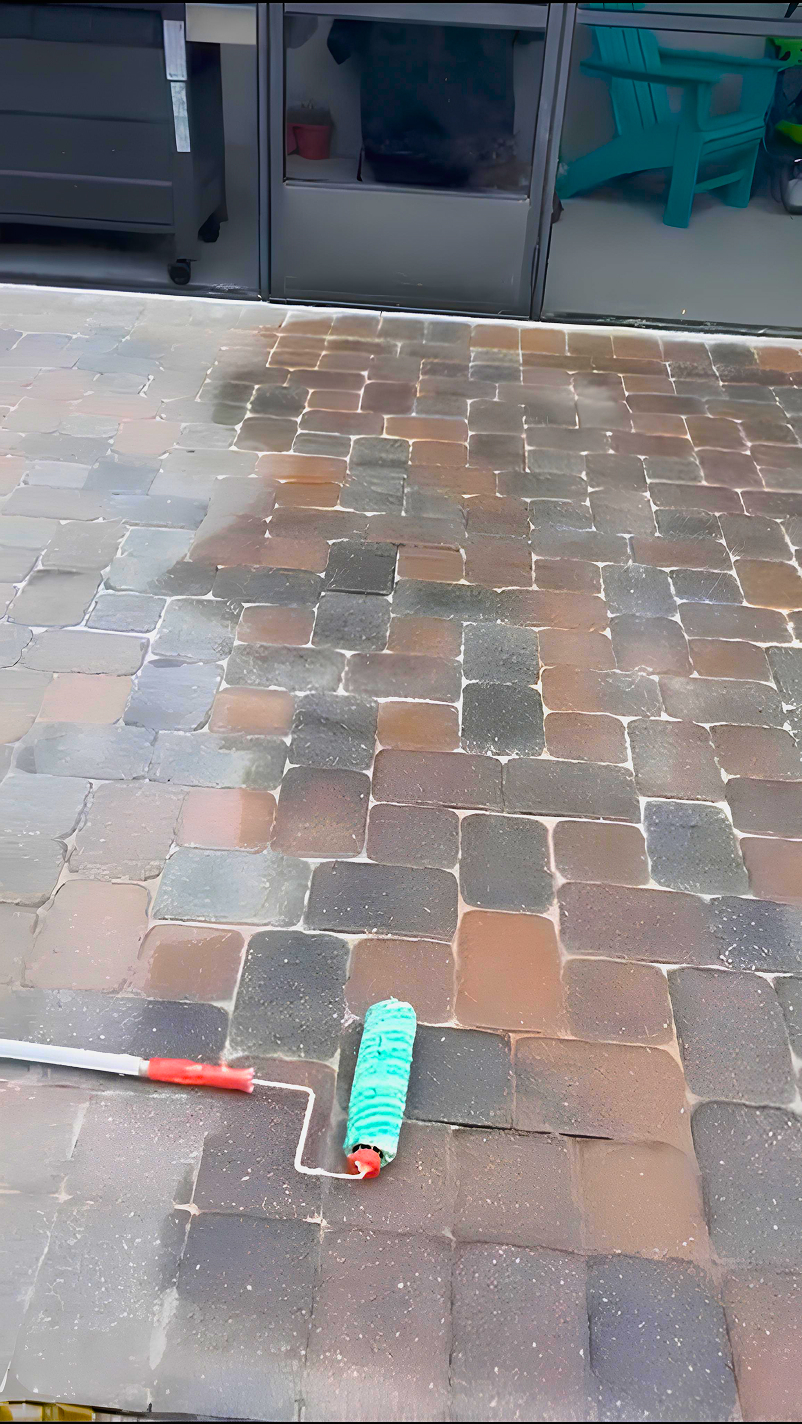
- Optional sealing
Brick naturally hides dirt and wear well.
Concrete paver maintenance
- Periodic cleaning
- Re-sanding joints
- Sealing recommended to maintain color
- Easier stain prevention with sealant
In Florida, sealing is often recommended for both, but it’s more important for concrete pavers to preserve color vibrancy.
Cost Comparison: Brick vs Concrete Pavers
Cost often plays a role in the final decision.
Brick pavers
- Higher material cost
- Longer lifespan
- Premium appearance
- Slightly higher installation cost
Concrete pavers
- More budget-friendly
- Wide range of price points
- Lower upfront cost
- Excellent long-term value
Many homeowners choose concrete pavers for flexibility and price, while brick is often selected for high-end or historic properties.
Drainage and Florida Rainfall
Driveways must handle heavy rain efficiently.
Both brick and concrete pavers:
- Allow water to move through joints
- Reduce surface runoff compared to slabs
- Can be installed as permeable systems
Proper base preparation and slope matter more than material choice when it comes to drainage performance.
Which Is Better for Your Florida Driveway?
Choose brick pavers if you want:
- Timeless, classic curb appeal
- Natural color that won’t fade
- A traditional or Mediterranean look
- Long-term durability with minimal change
Choose concrete pavers if you want:
- Modern or contemporary design
- More color and shape options
- Lower upfront cost
- Custom layouts and patterns
Both are excellent options — the “best” choice depends on your home style and design goals.
Common Mistakes to Avoid
- Choosing based on price alone
- Ignoring home architecture
- Skipping borders and edge restraints
- Poor base preparation
- Not planning drainage correctly
A professional installer helps avoid these issues and ensures long-term performance.
Explore More Paver Projects and Standards
For a deeper dive into driveway paver installations tailored to Florida, explore our project gallery:
https://jaxtellerbrickpavers.com/projects
To review official installation standards, visit the Interlocking Concrete Pavement Institute:
https://www.icpi.org/
Conclusion
Brick vs Concrete Pavers for Driveways in Florida is not about right or wrong — it’s about fit. Both materials perform well in Florida’s climate when installed correctly. Brick offers timeless elegance and color stability, while concrete provides flexibility, modern style, and affordability.
If you’re planning a new driveway or replacing an old one, choosing the right paver material will define your curb appeal for decades.
For expert guidance and professional installation, contact JaxTeller Brick Pavers at +1 407-907-8308 or jaxtellerbrickpavers@gmail.com for a free estimate. 🌞