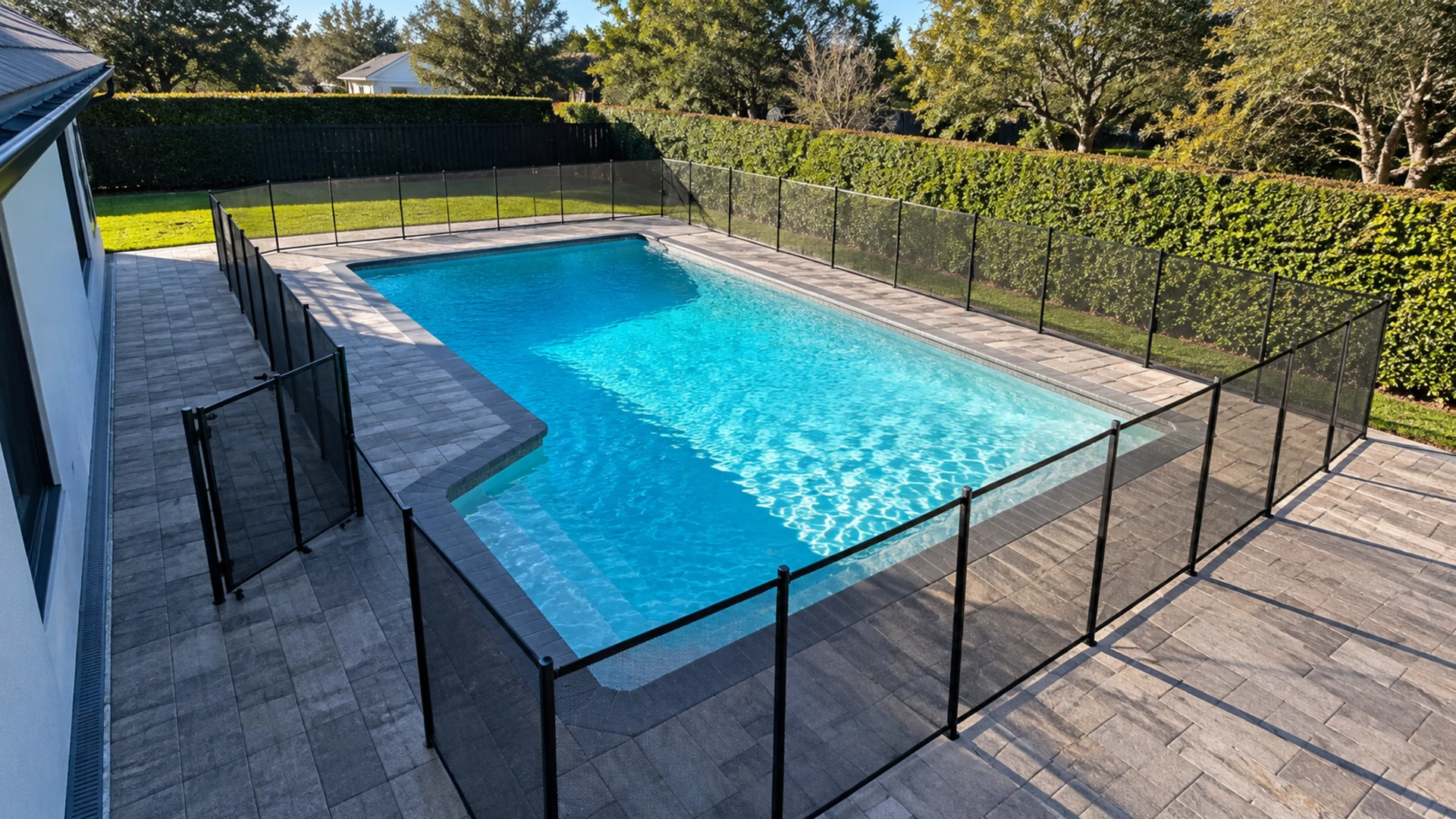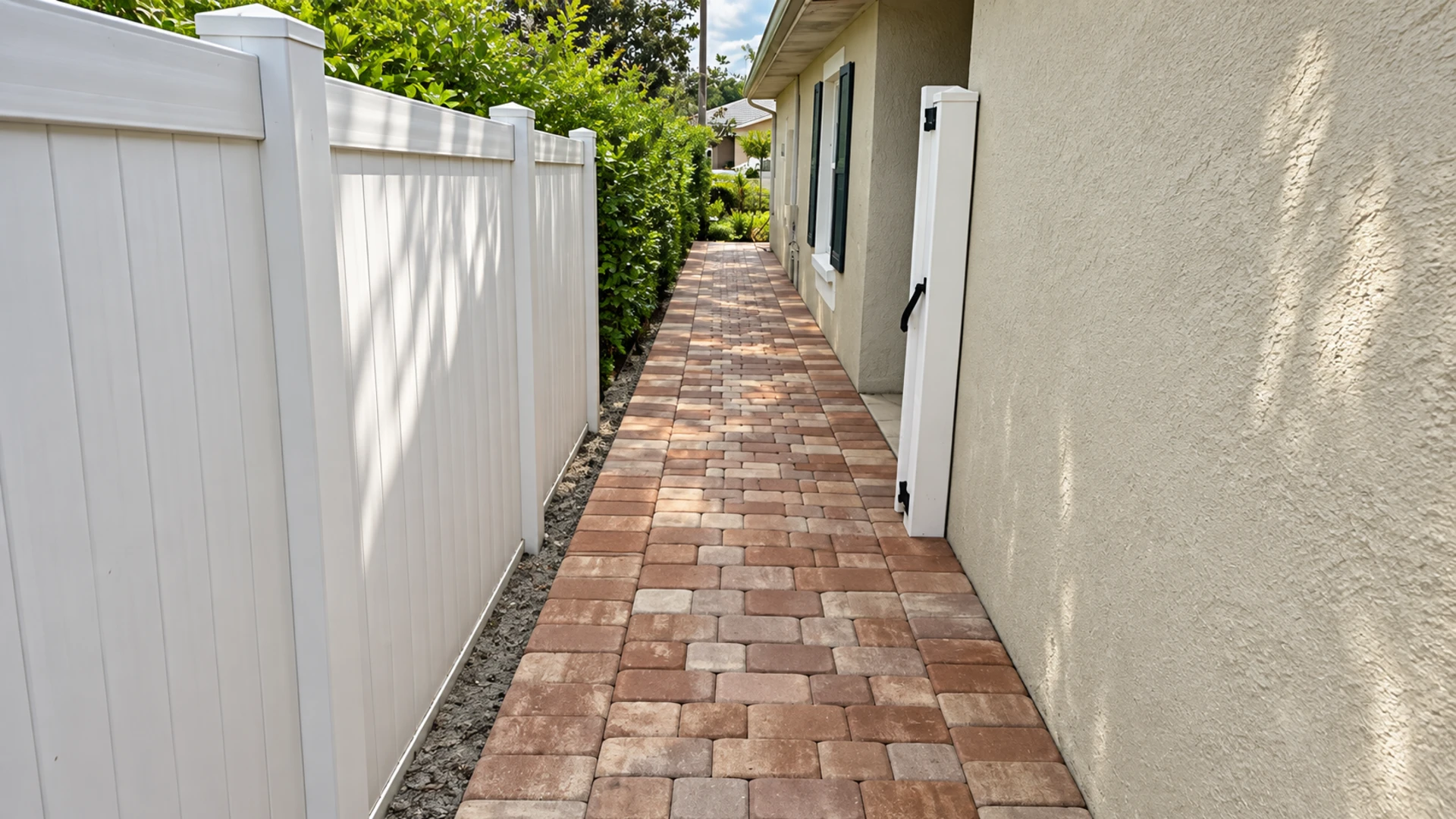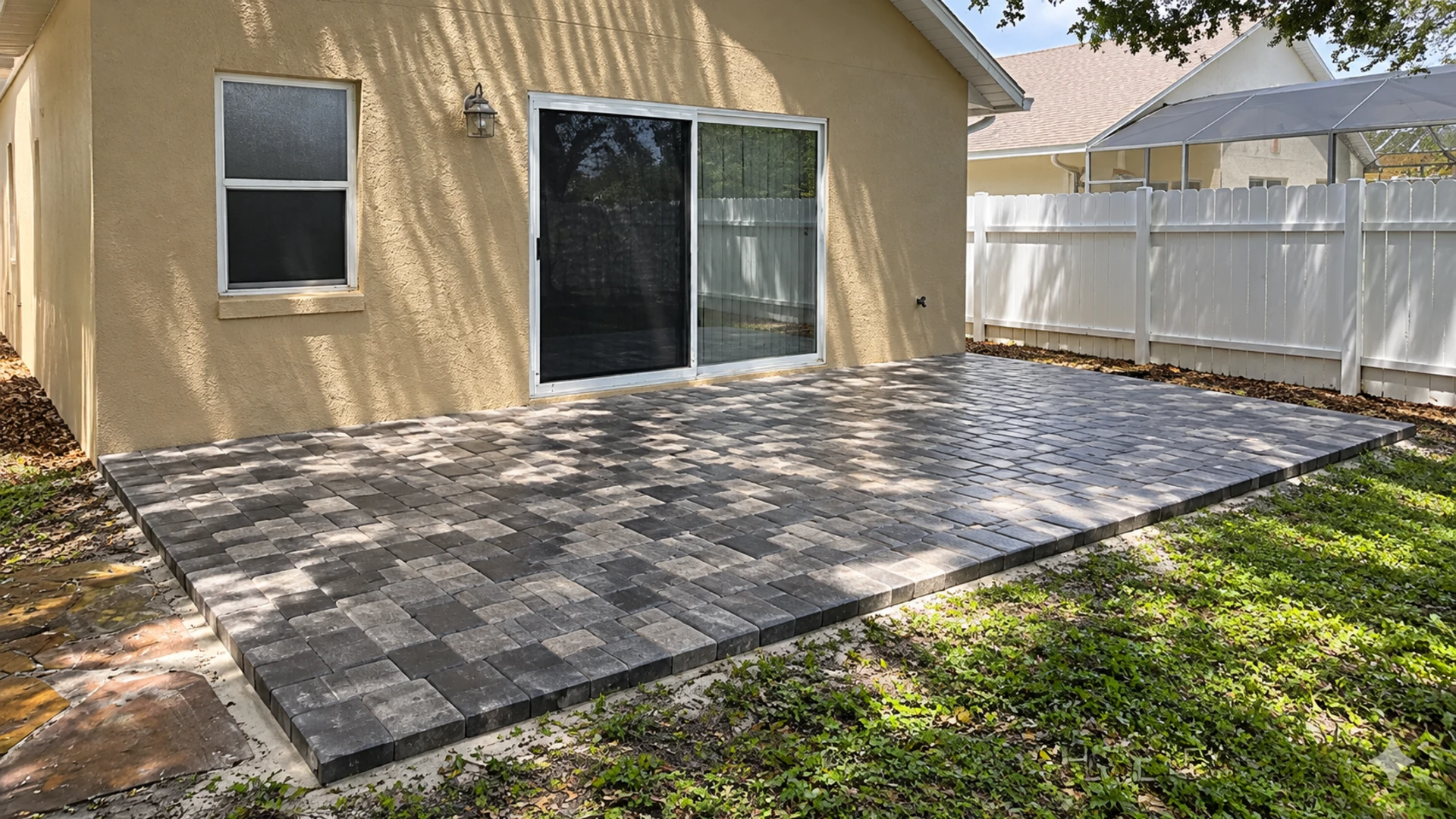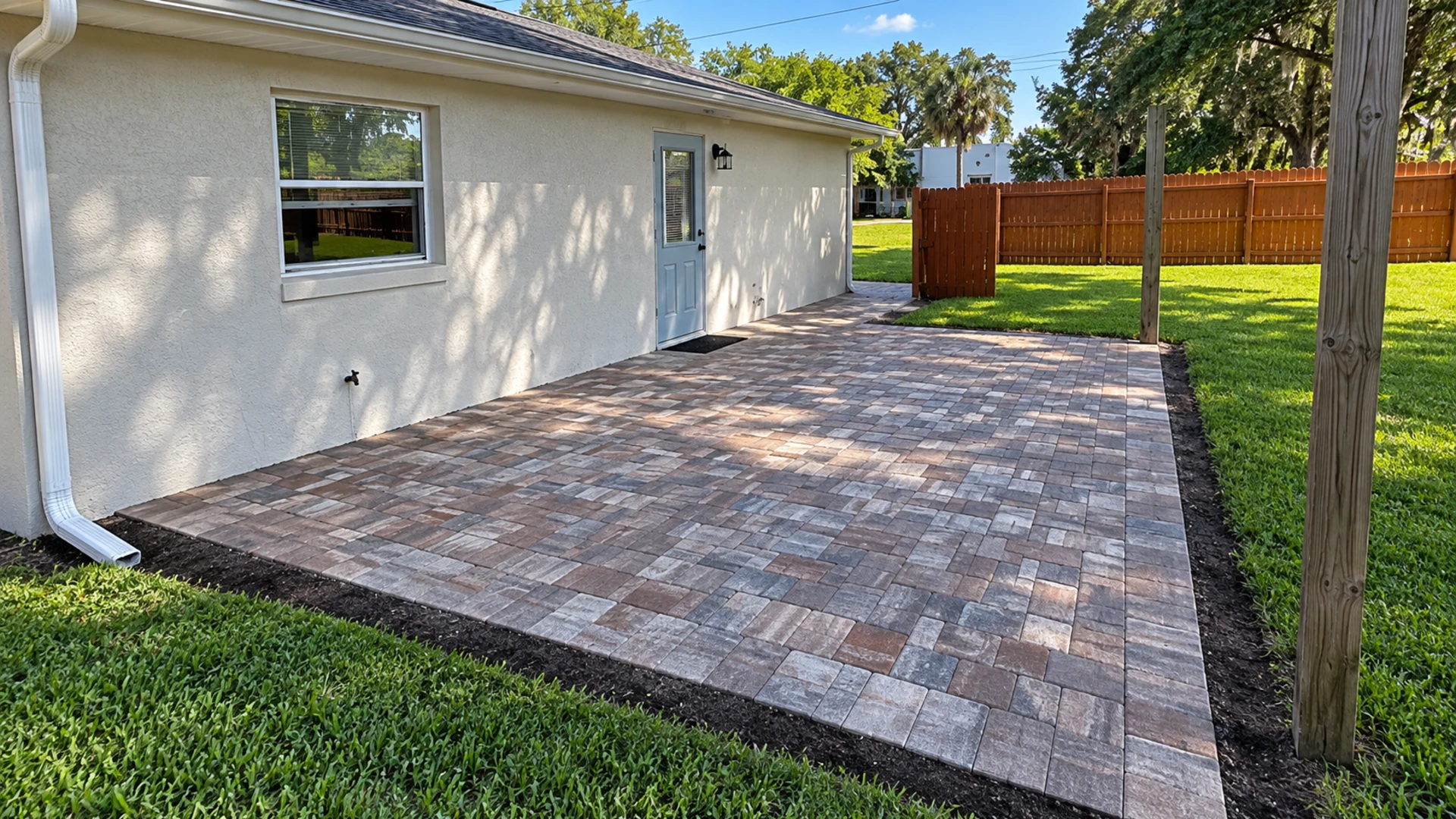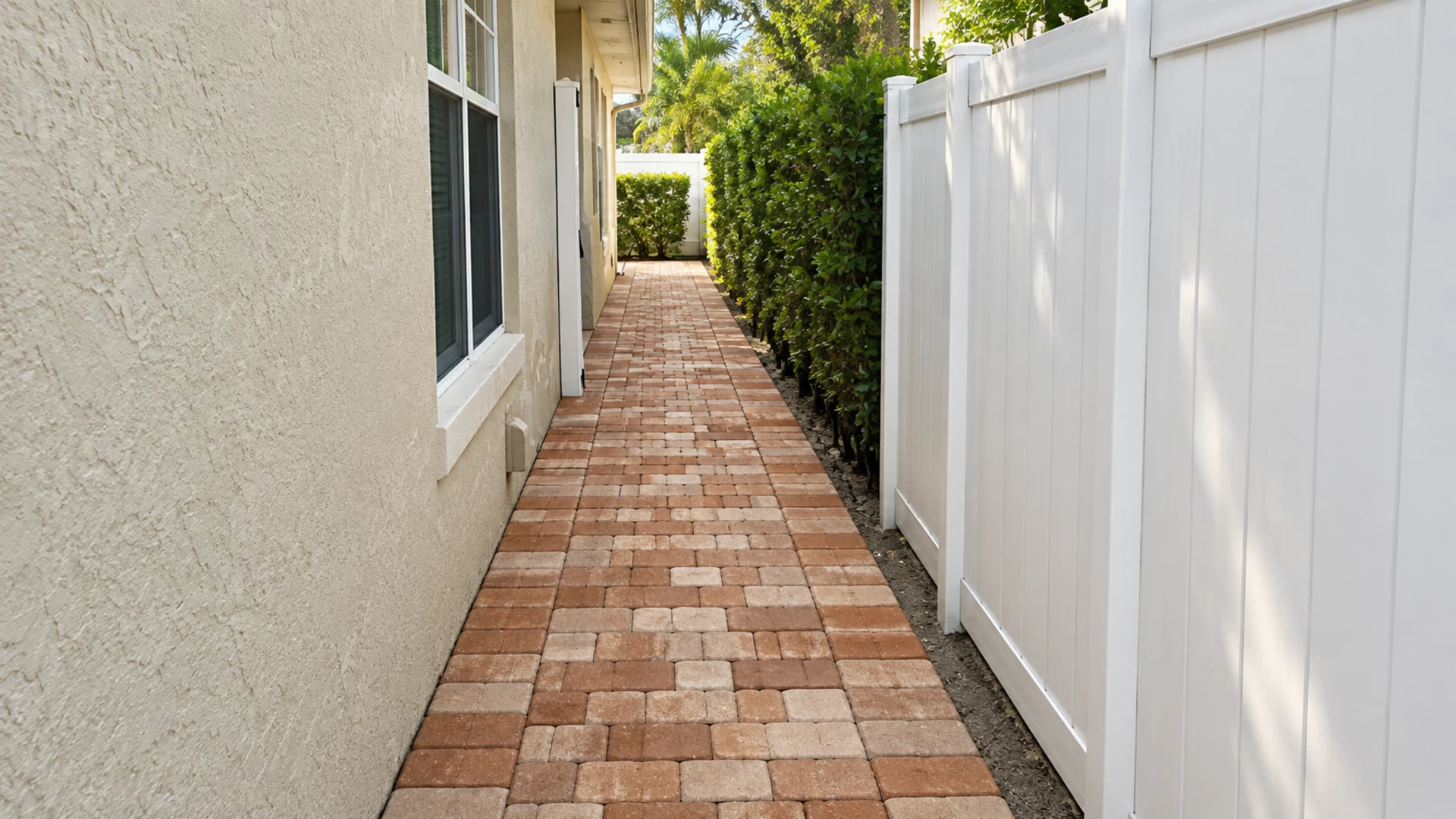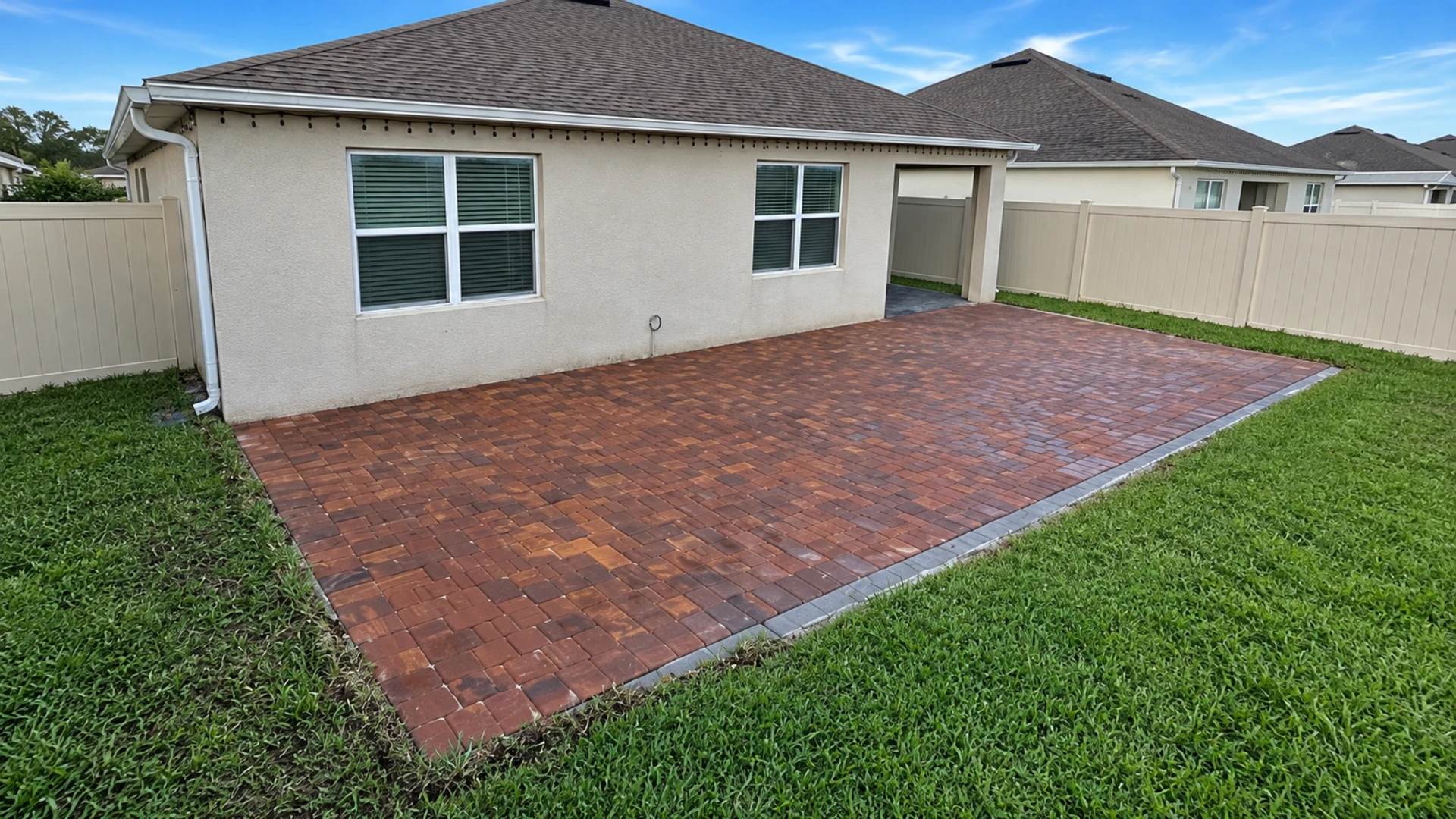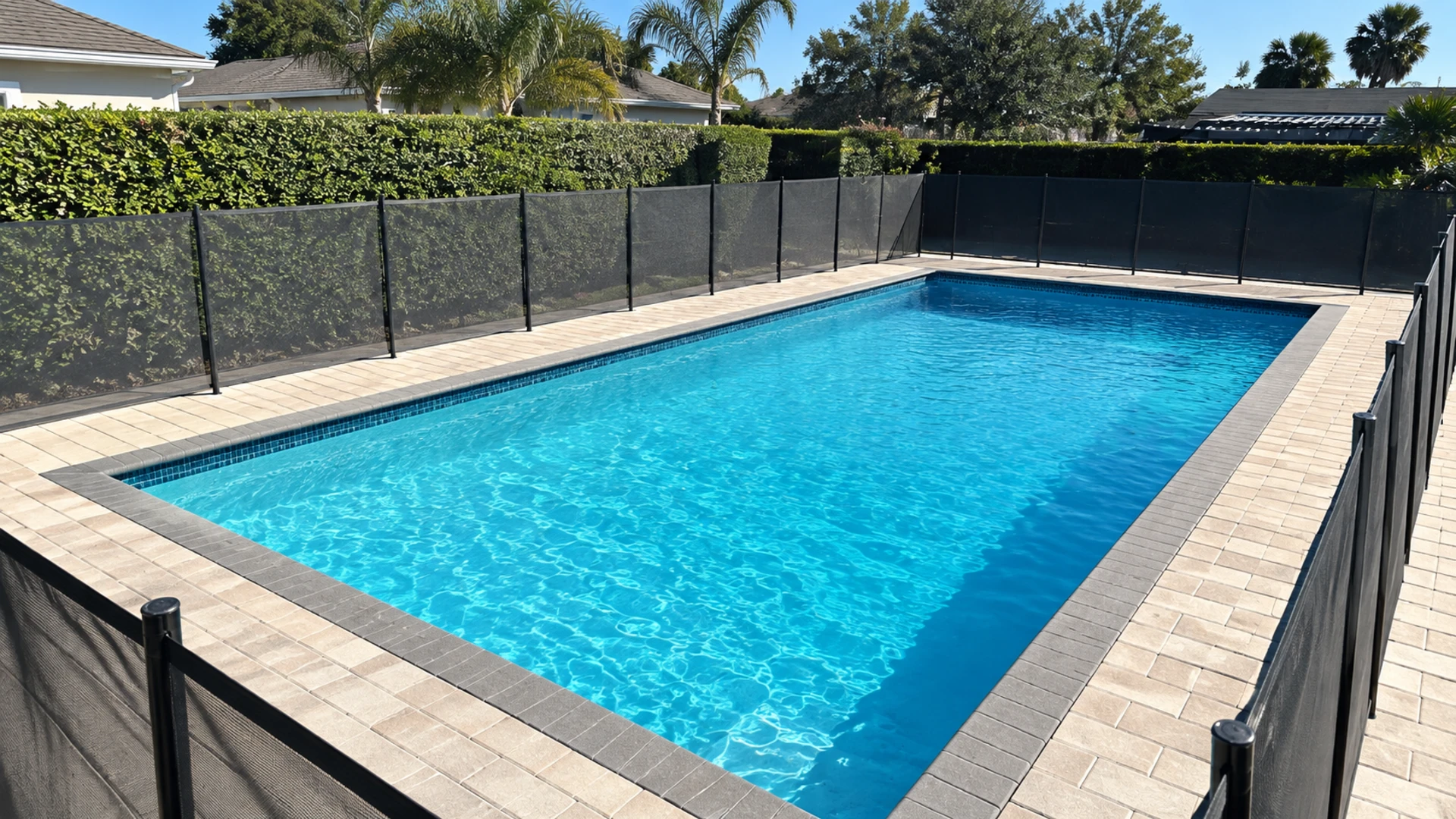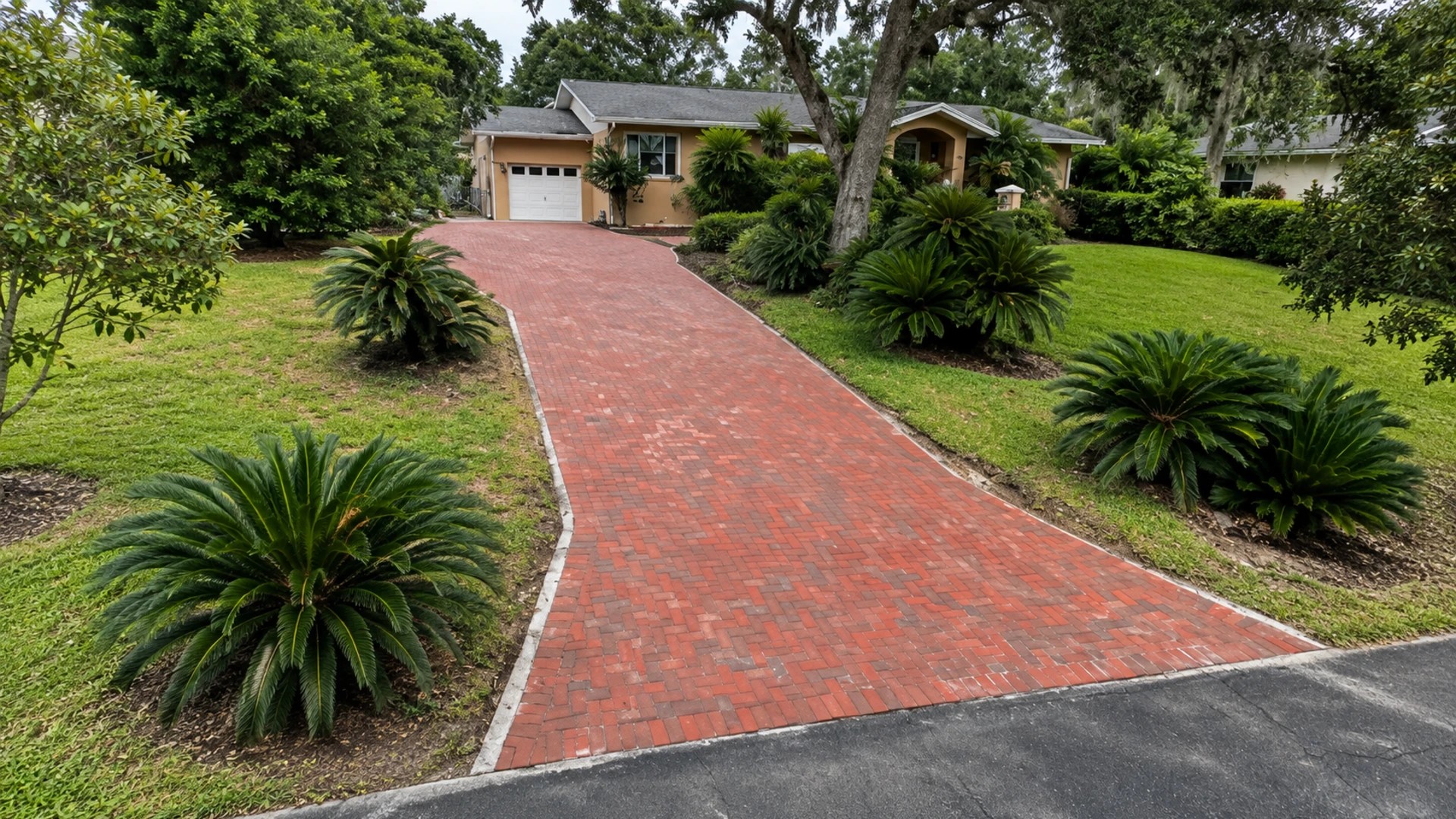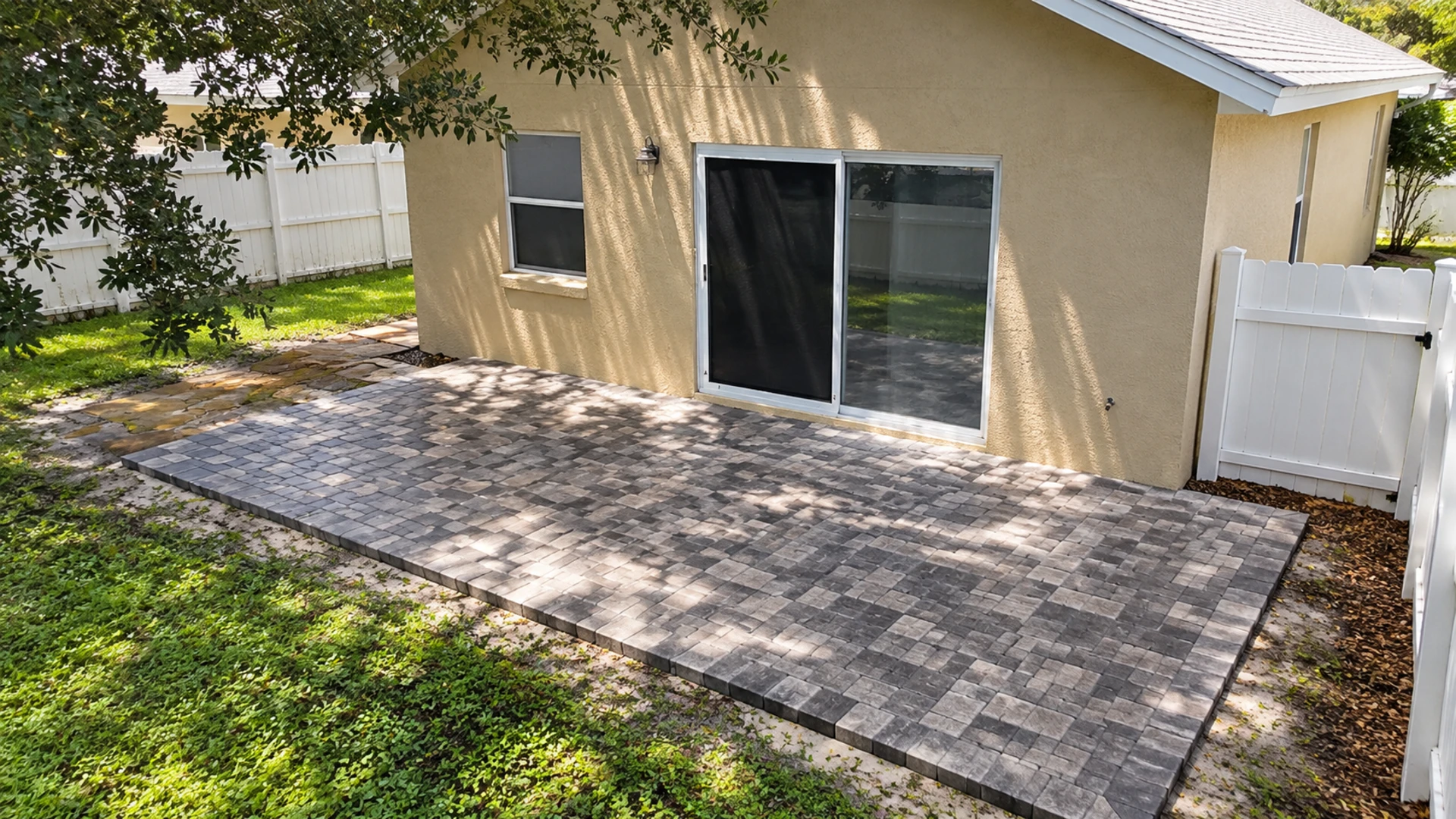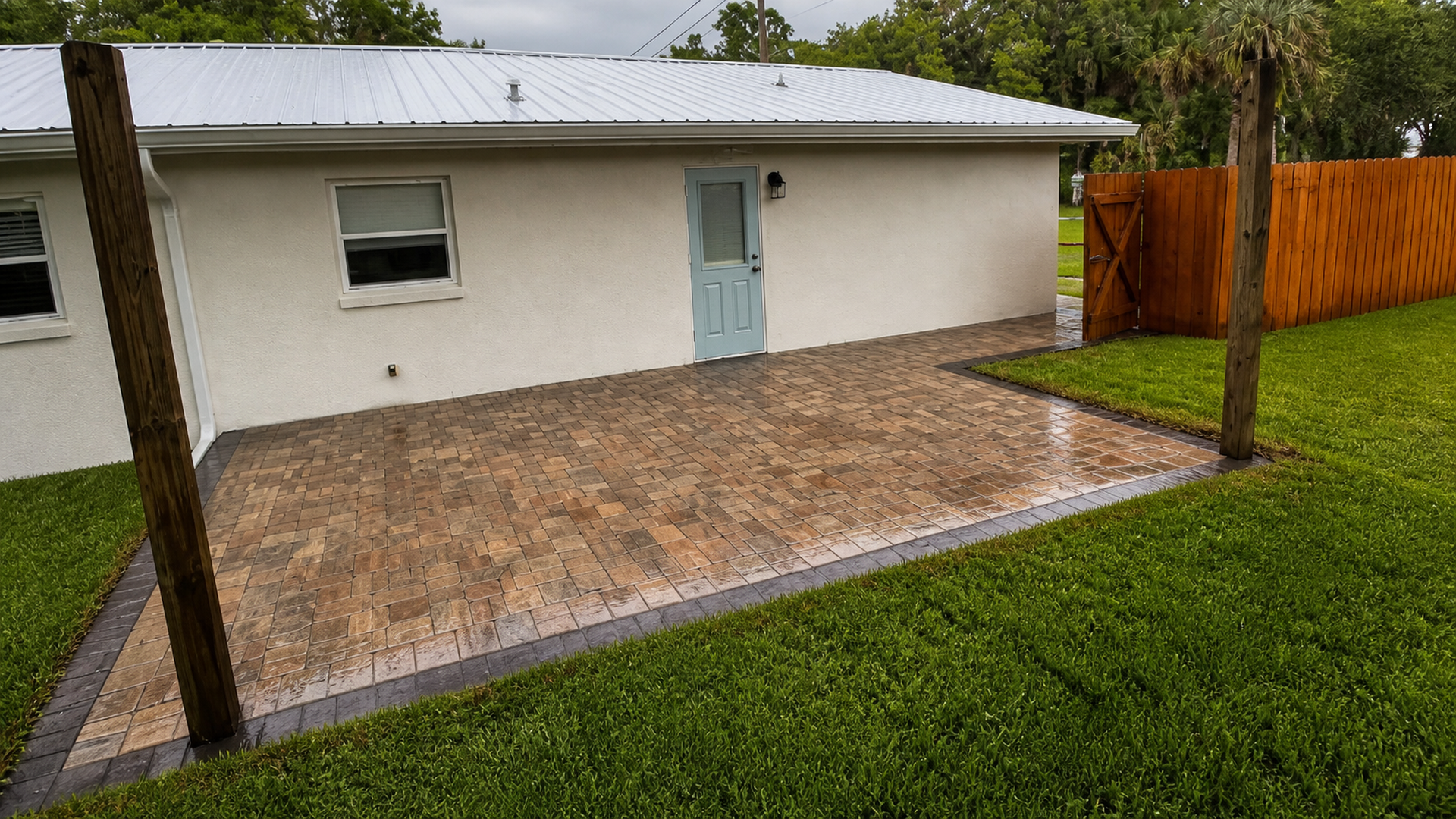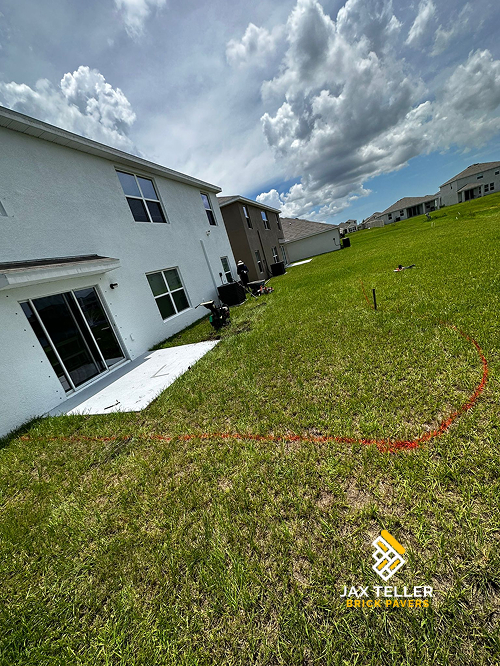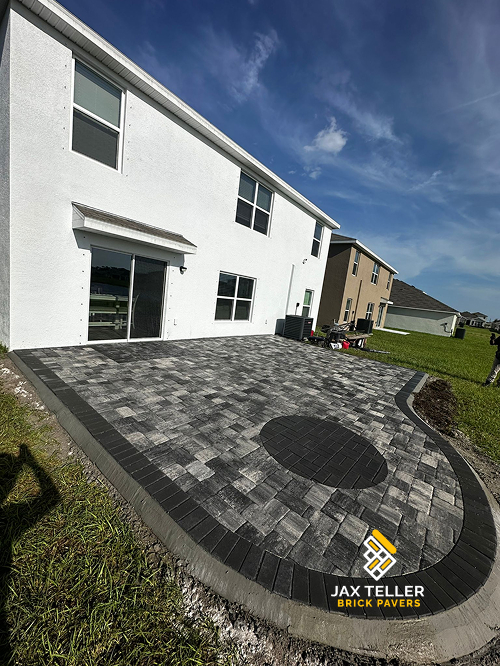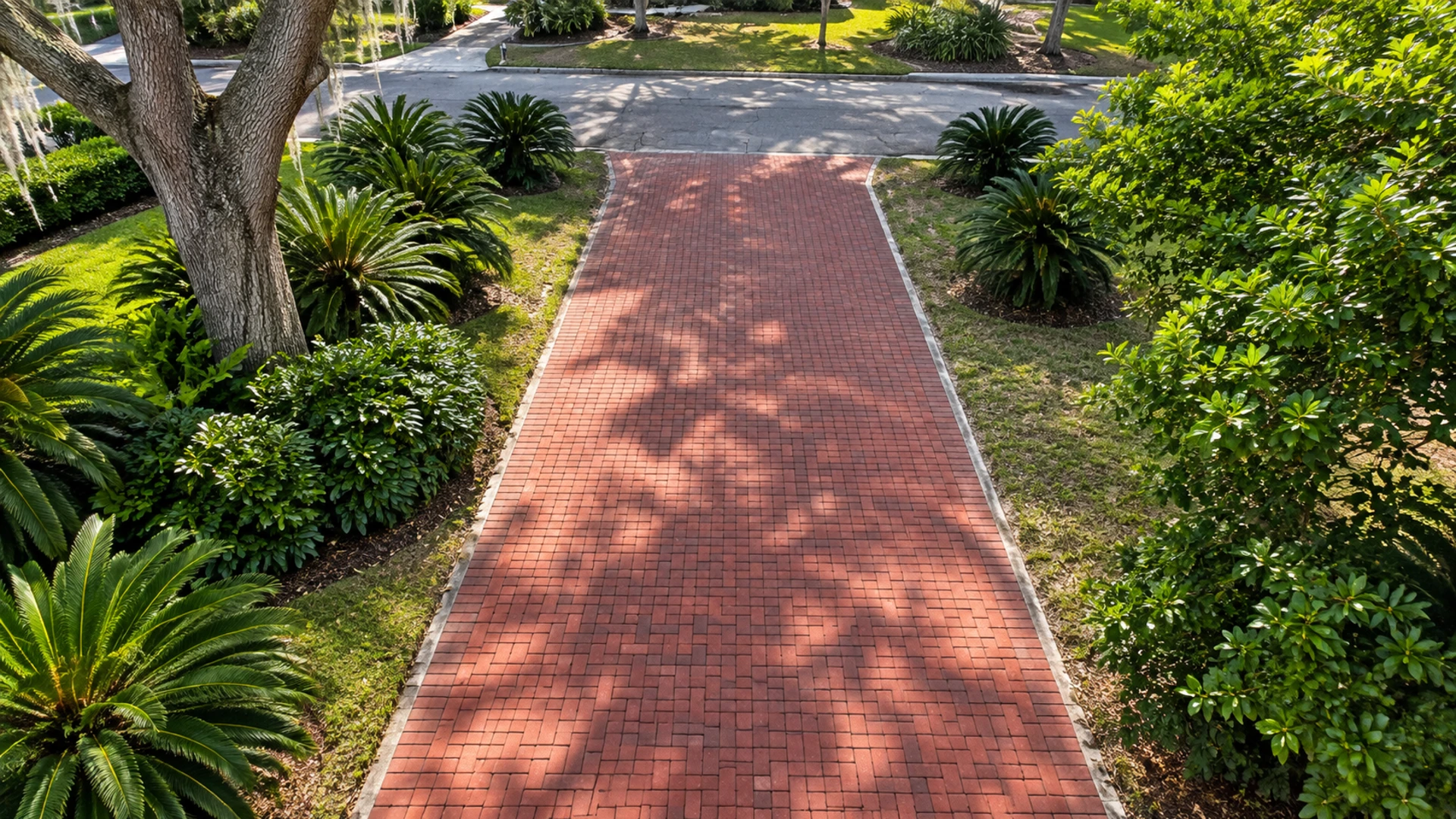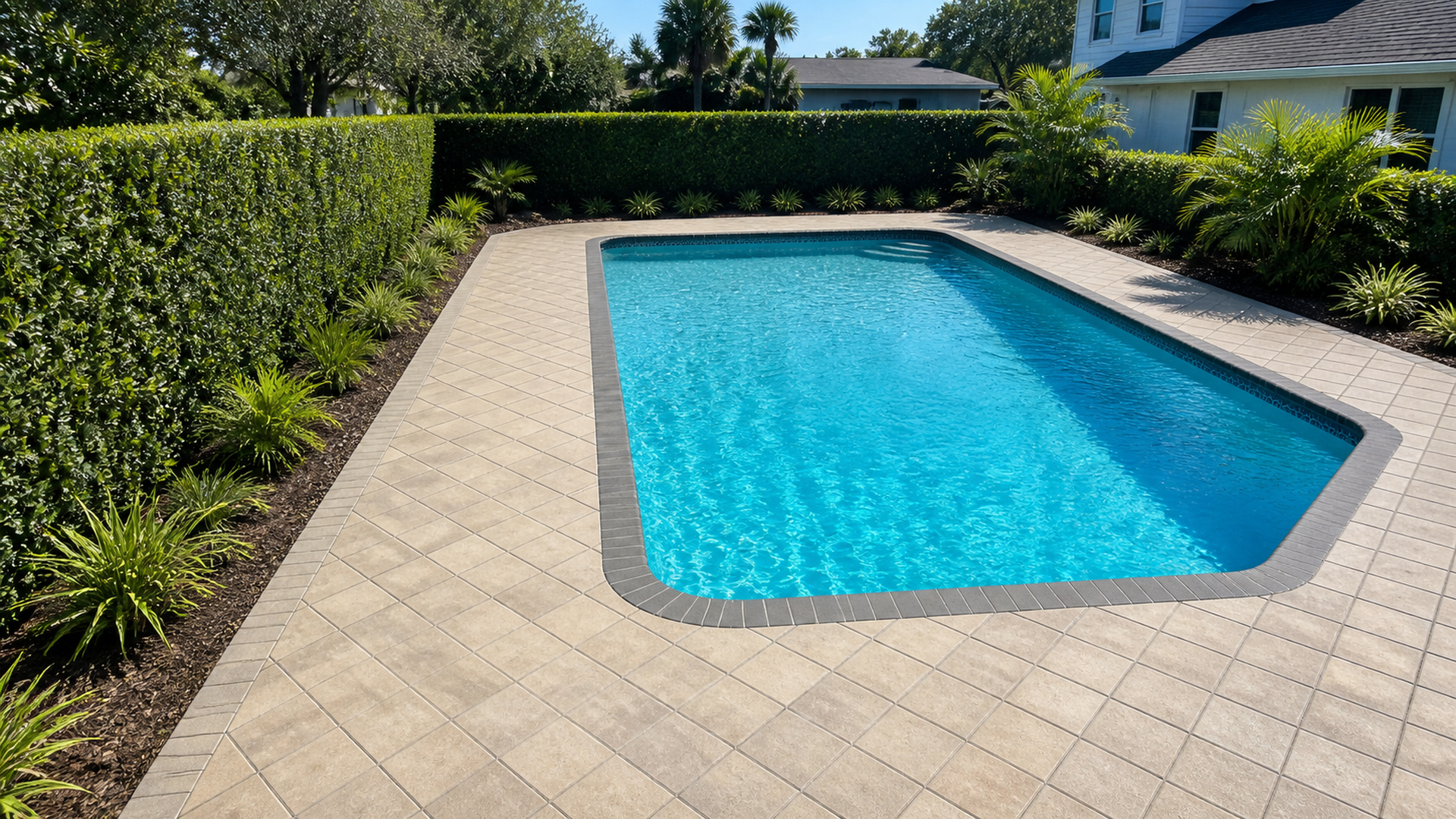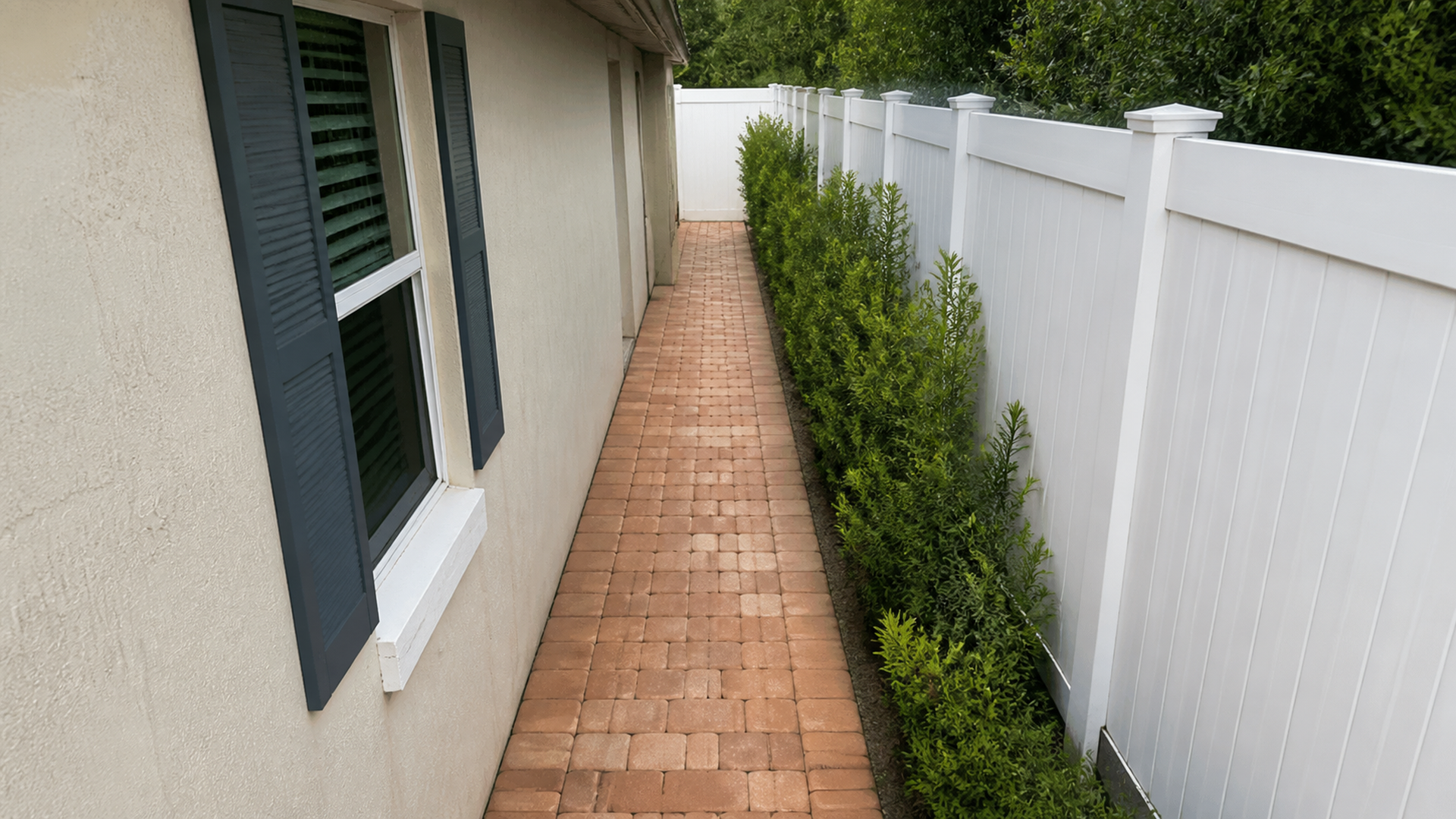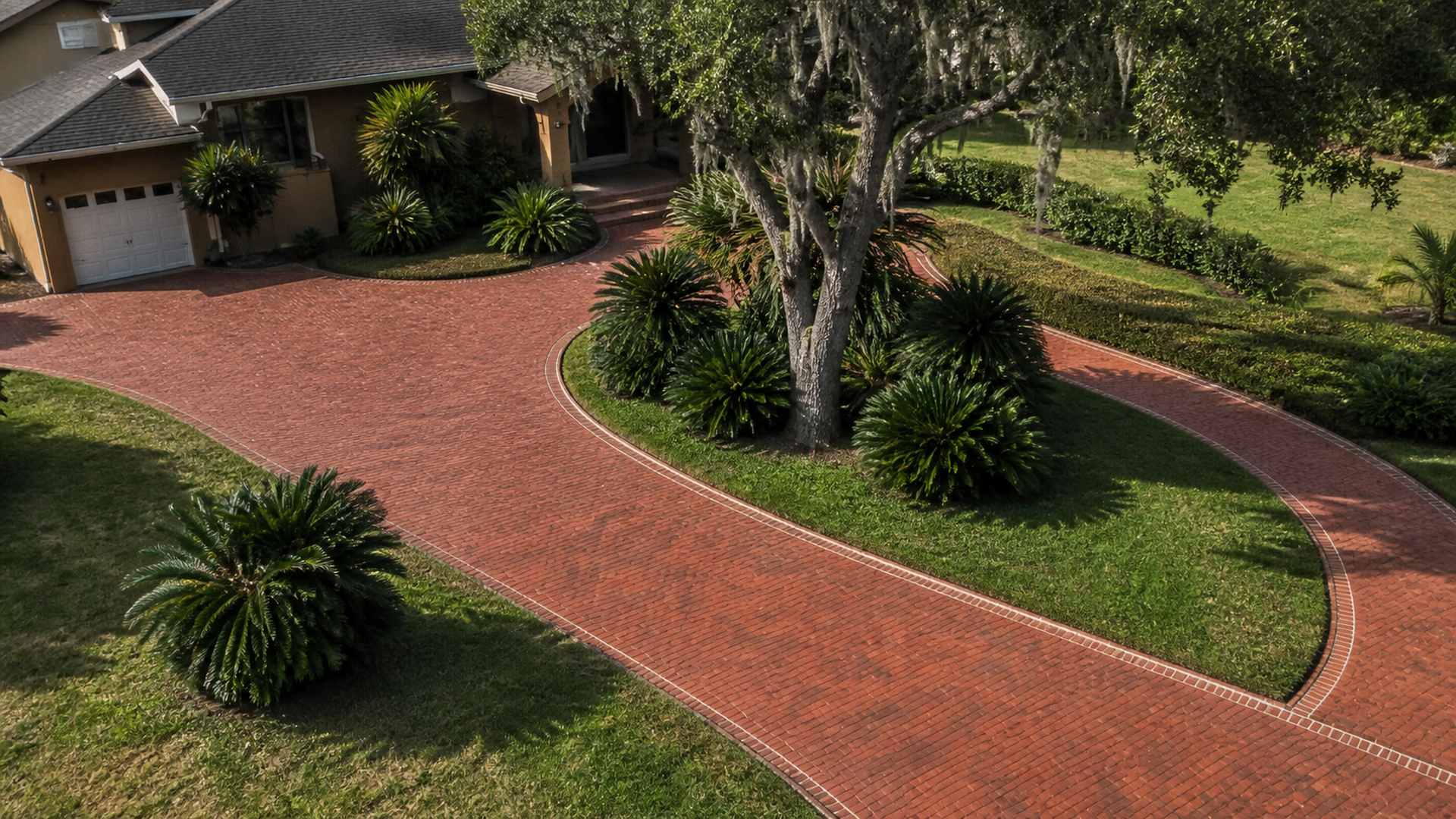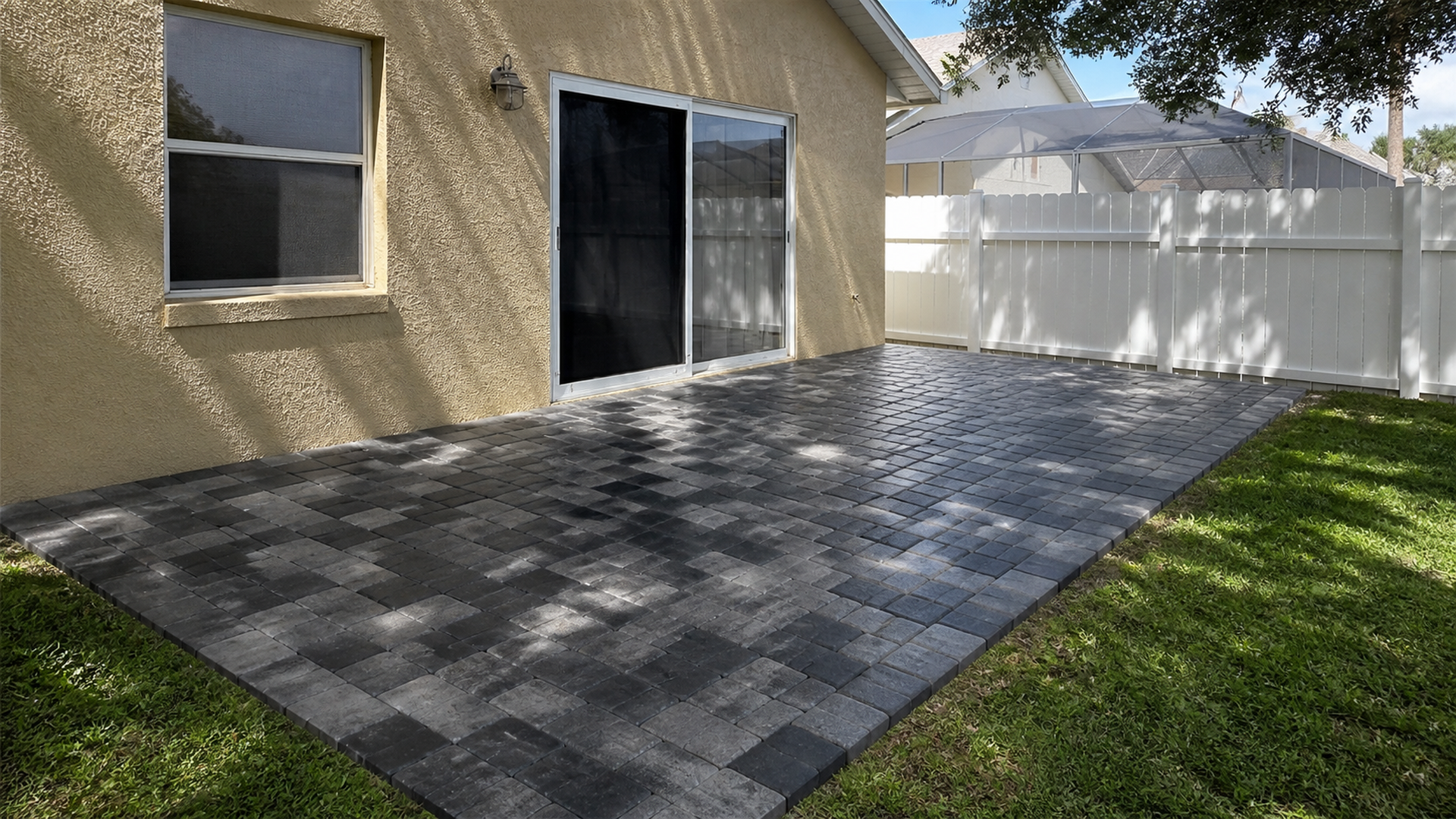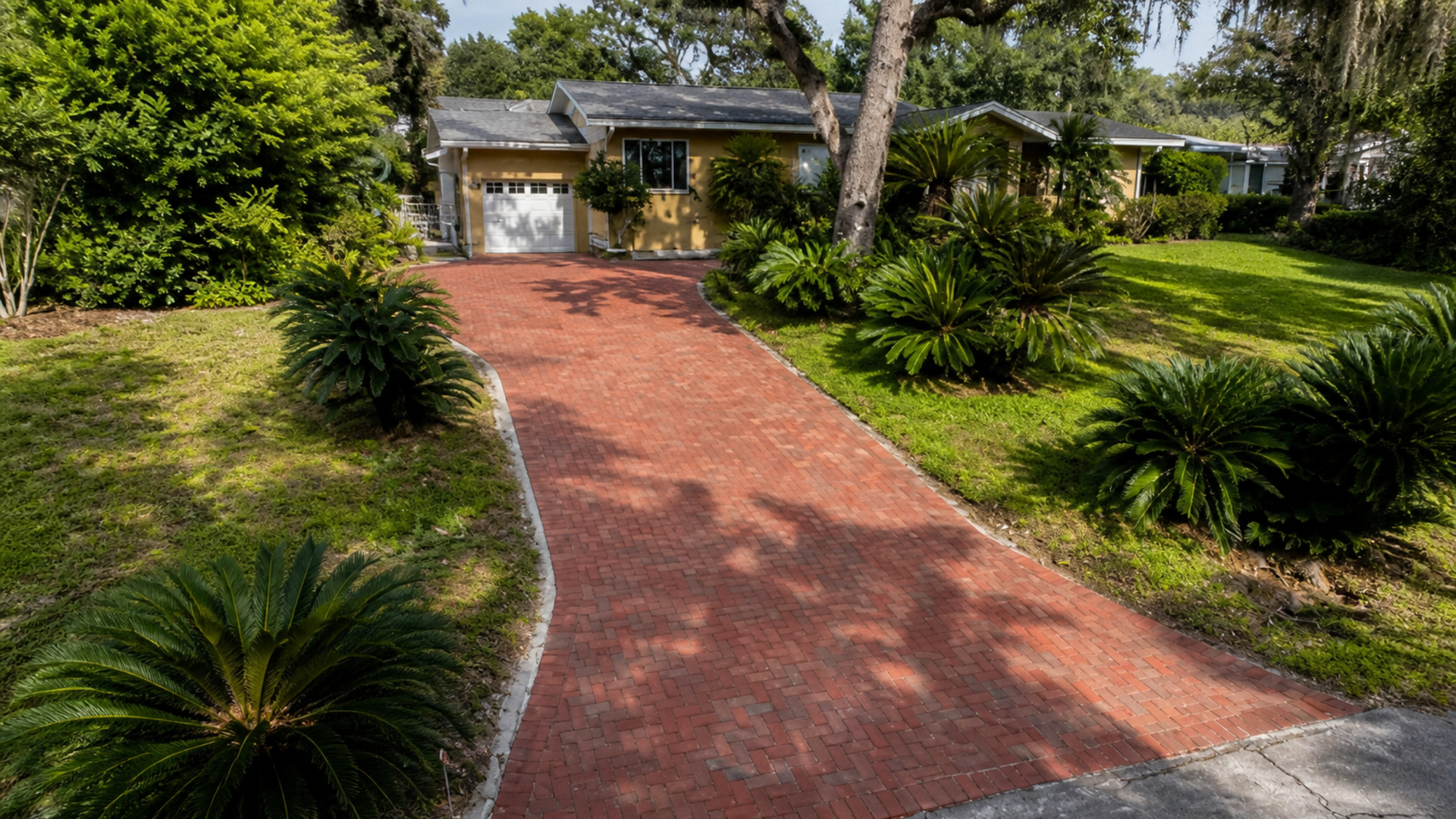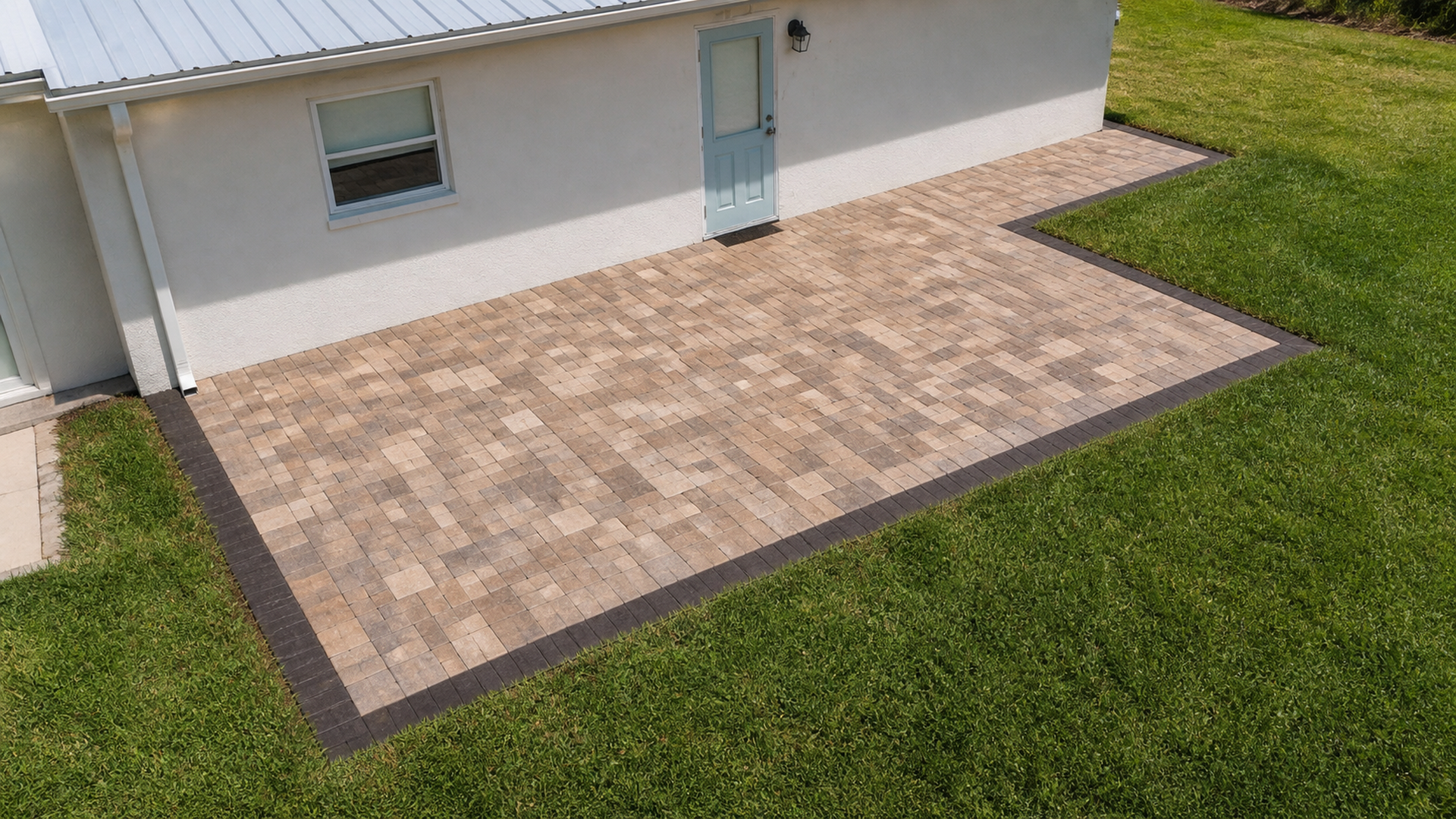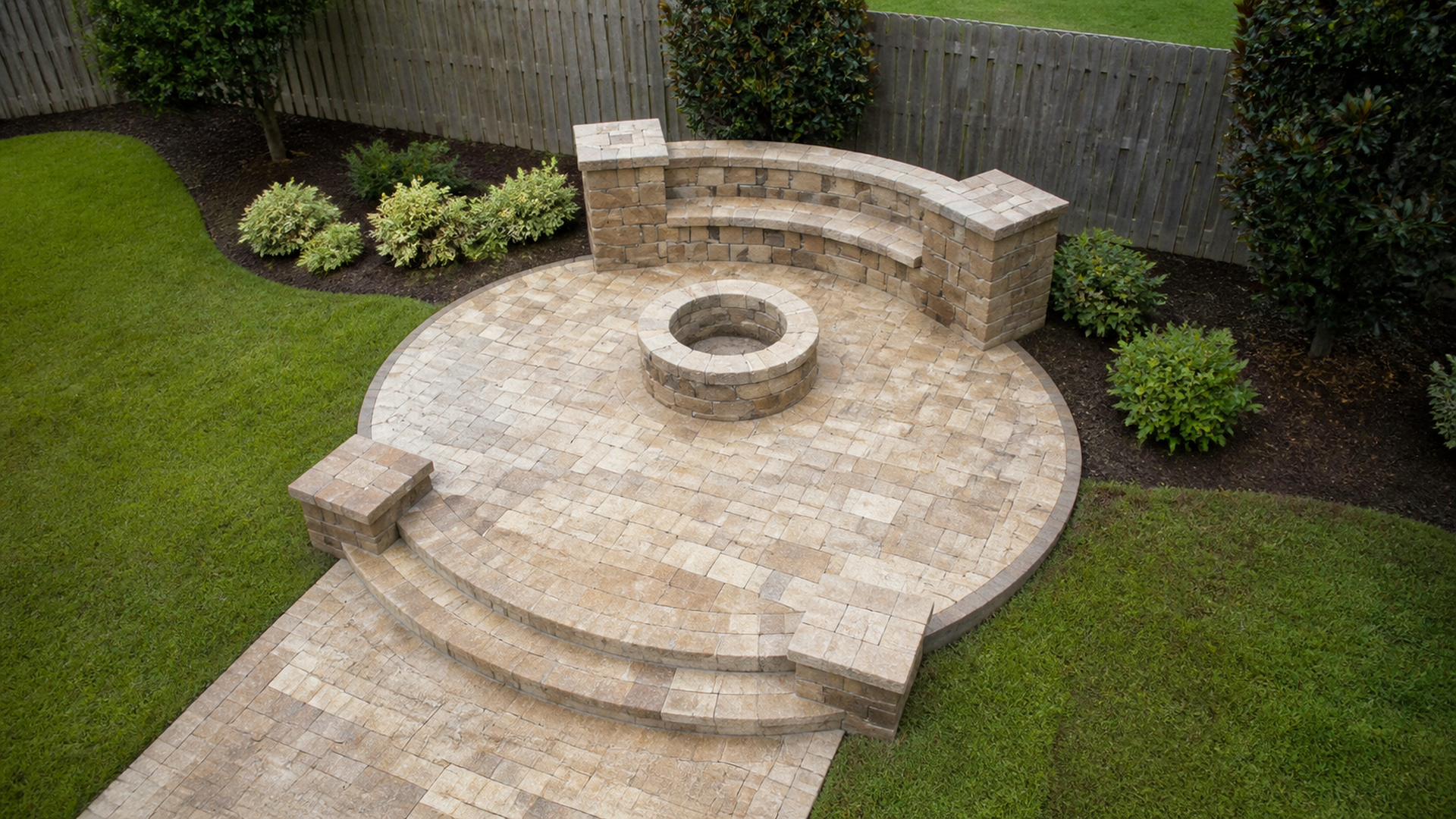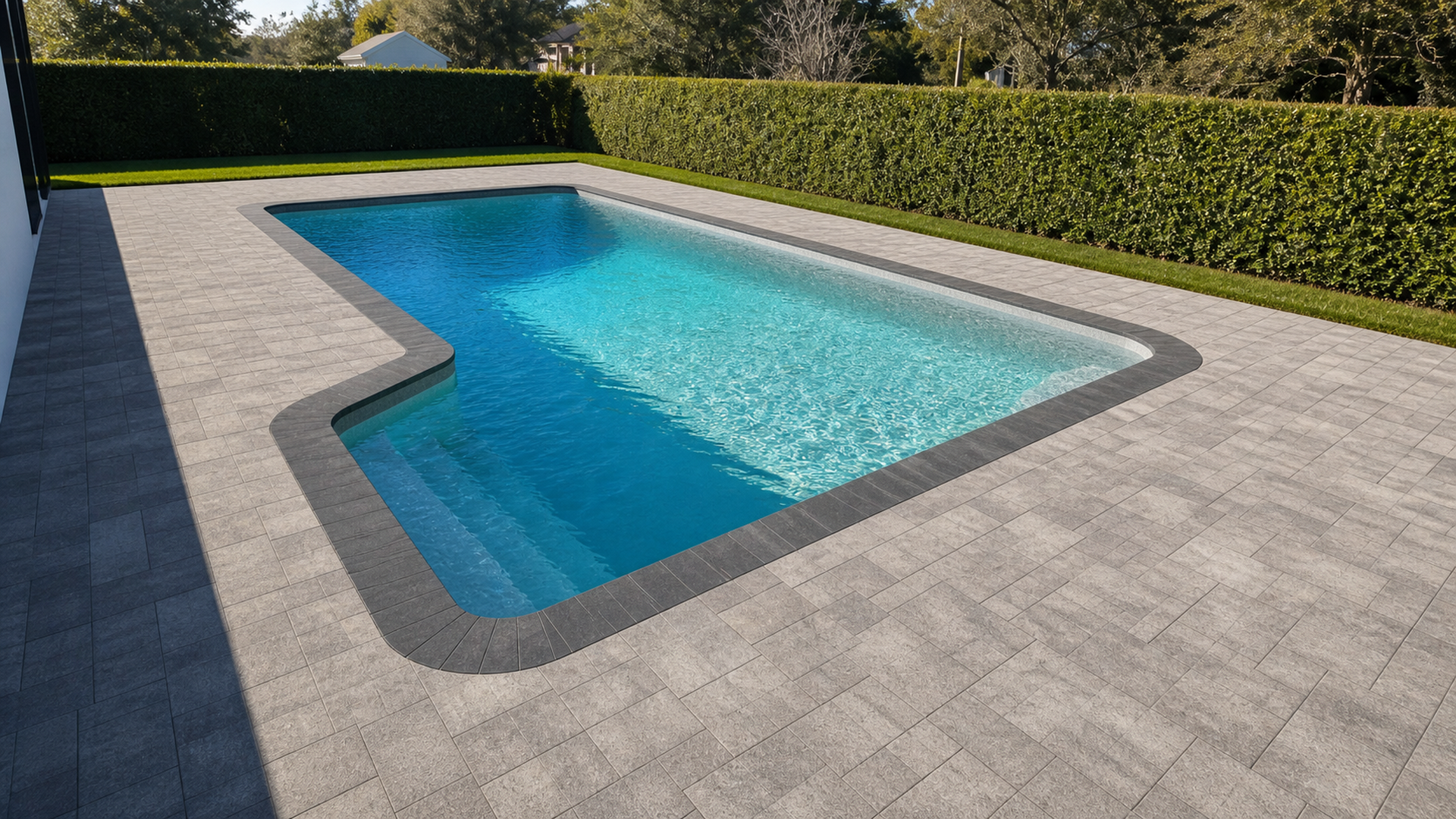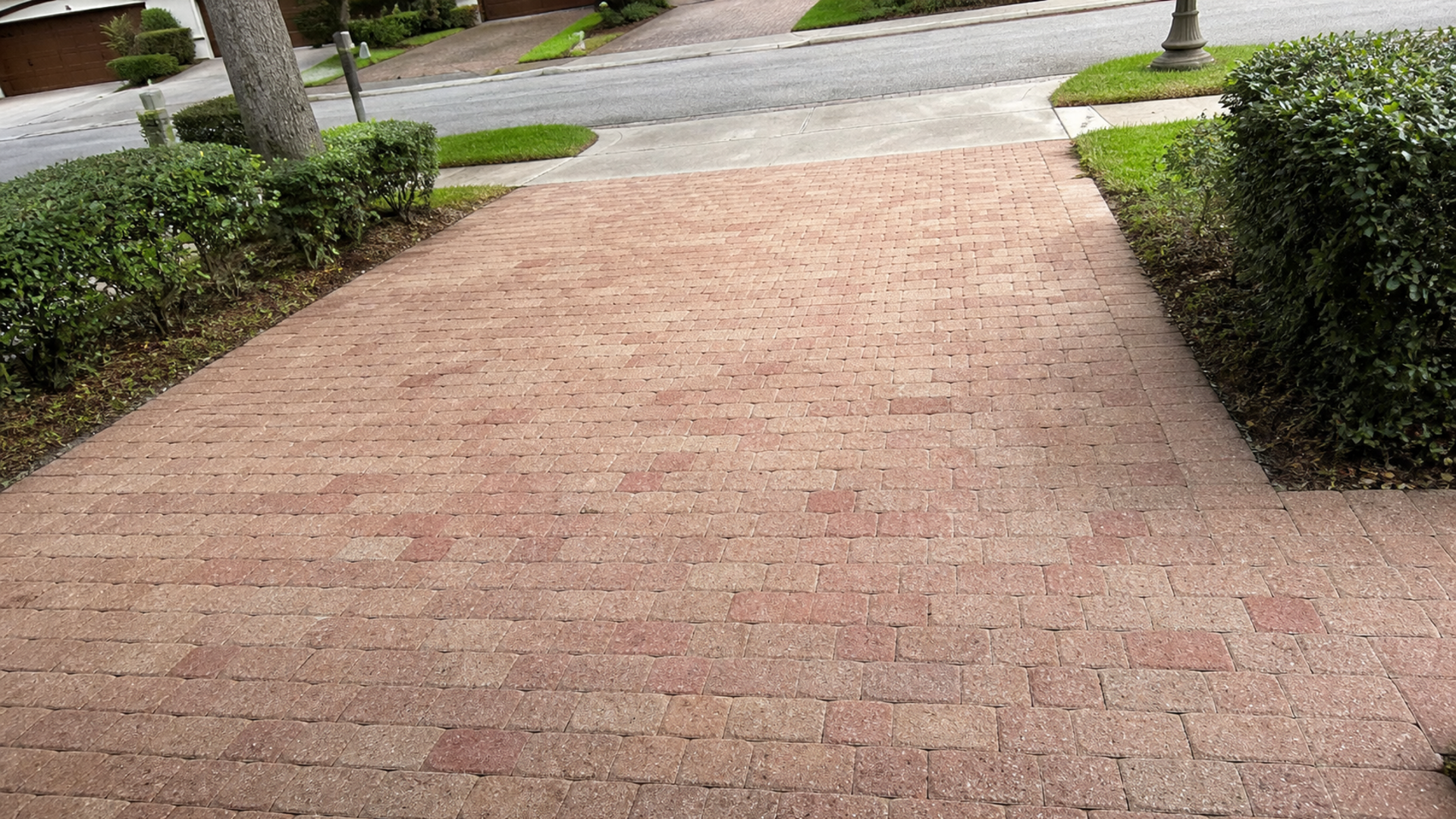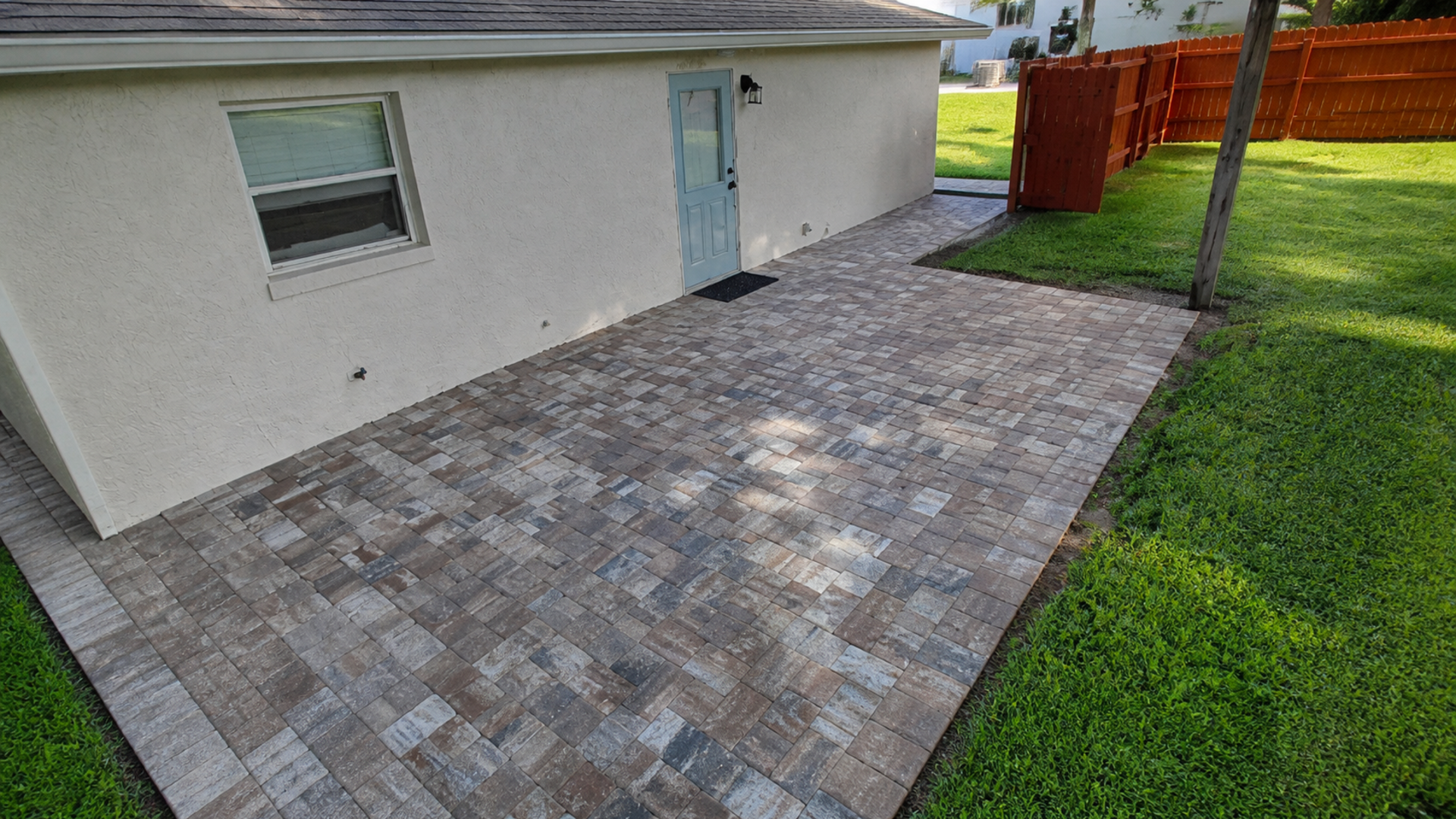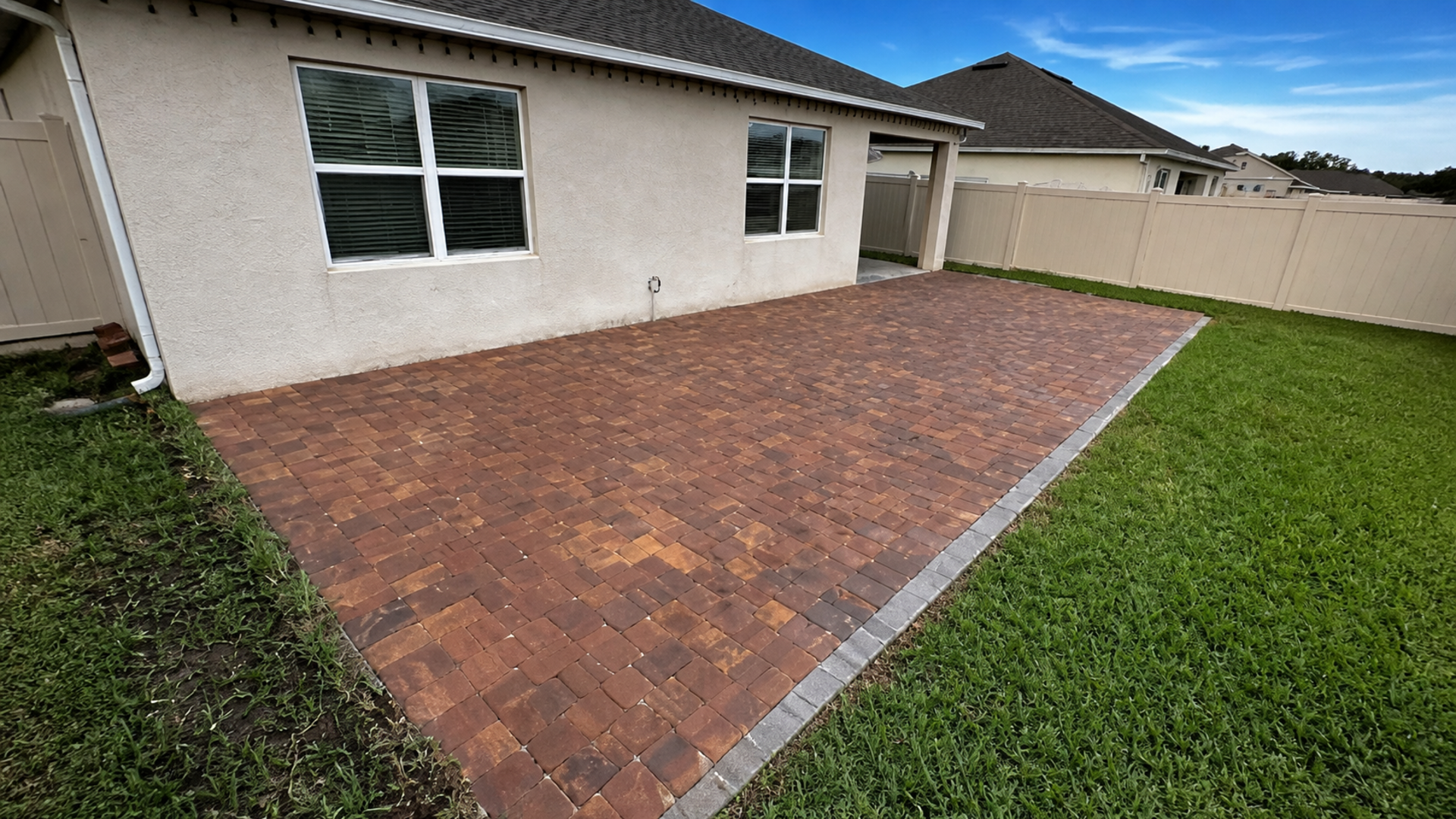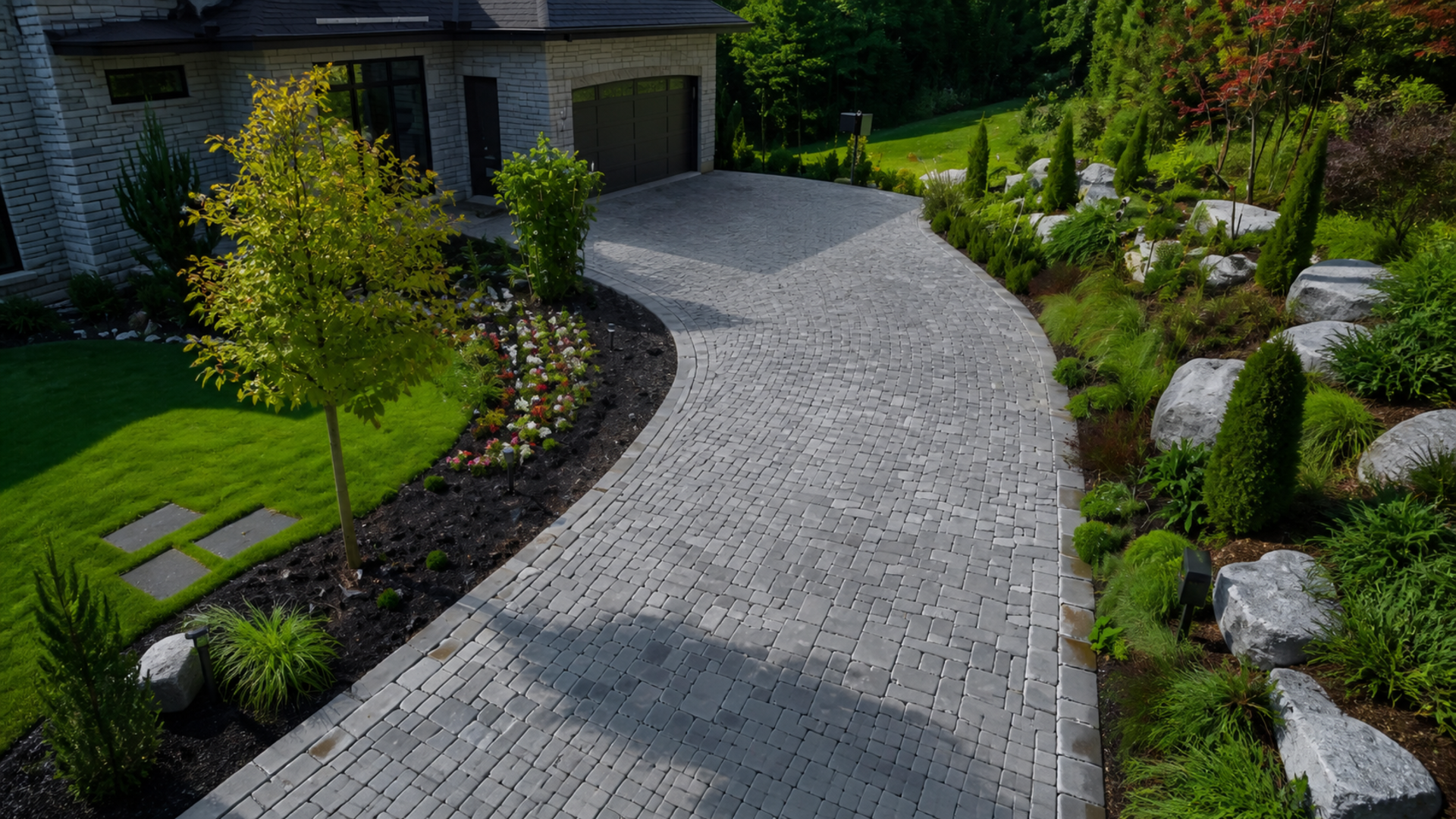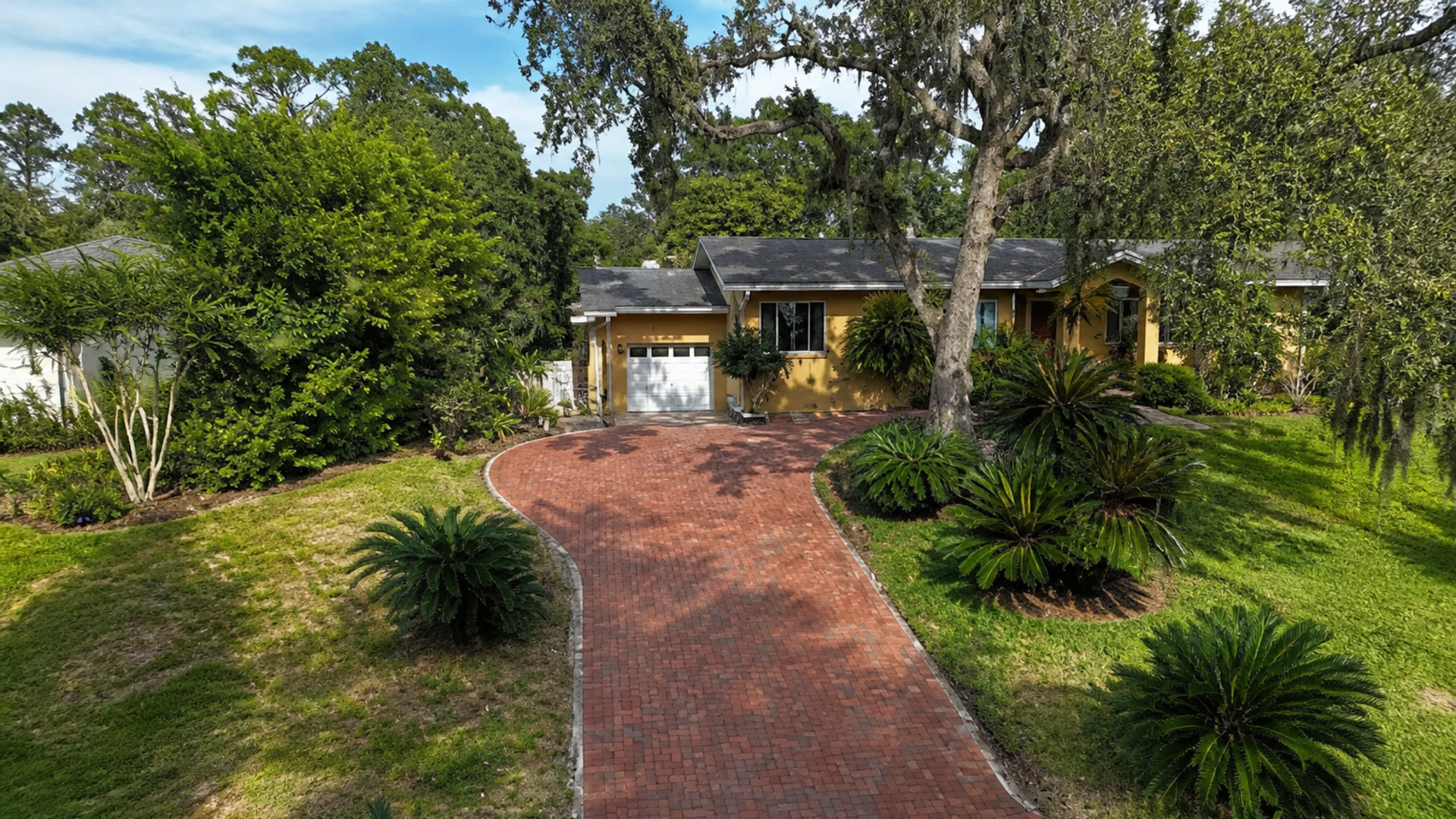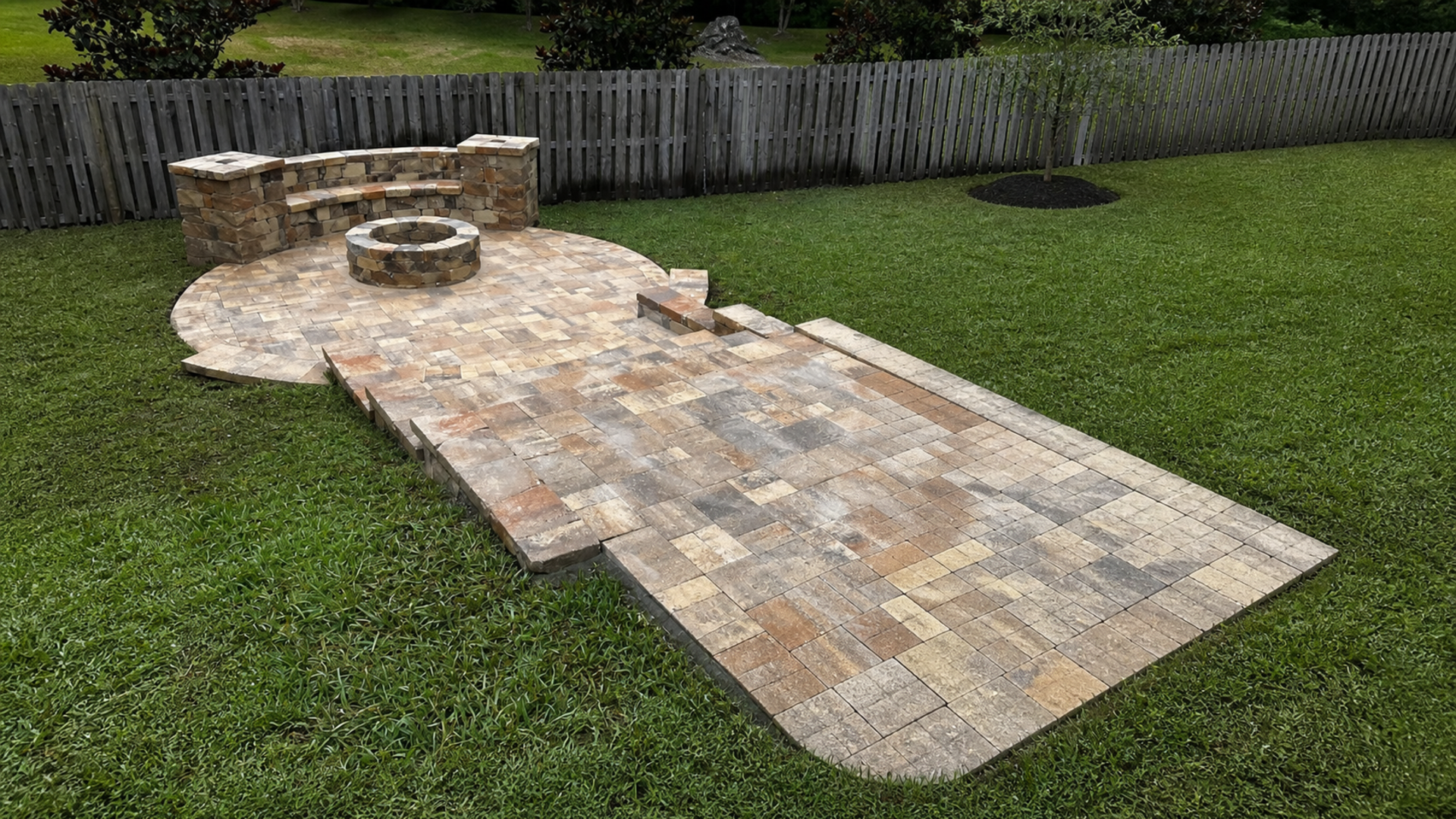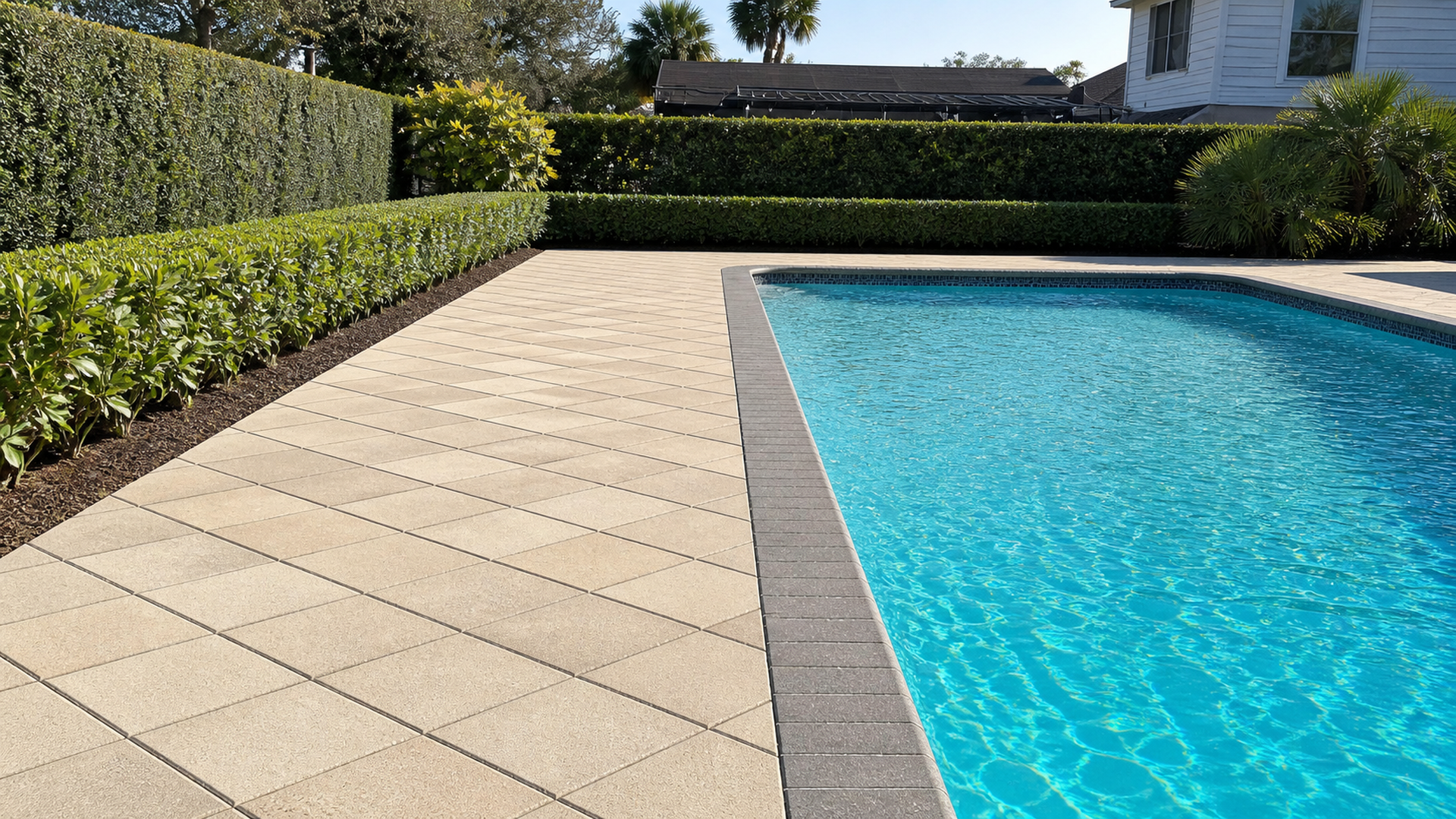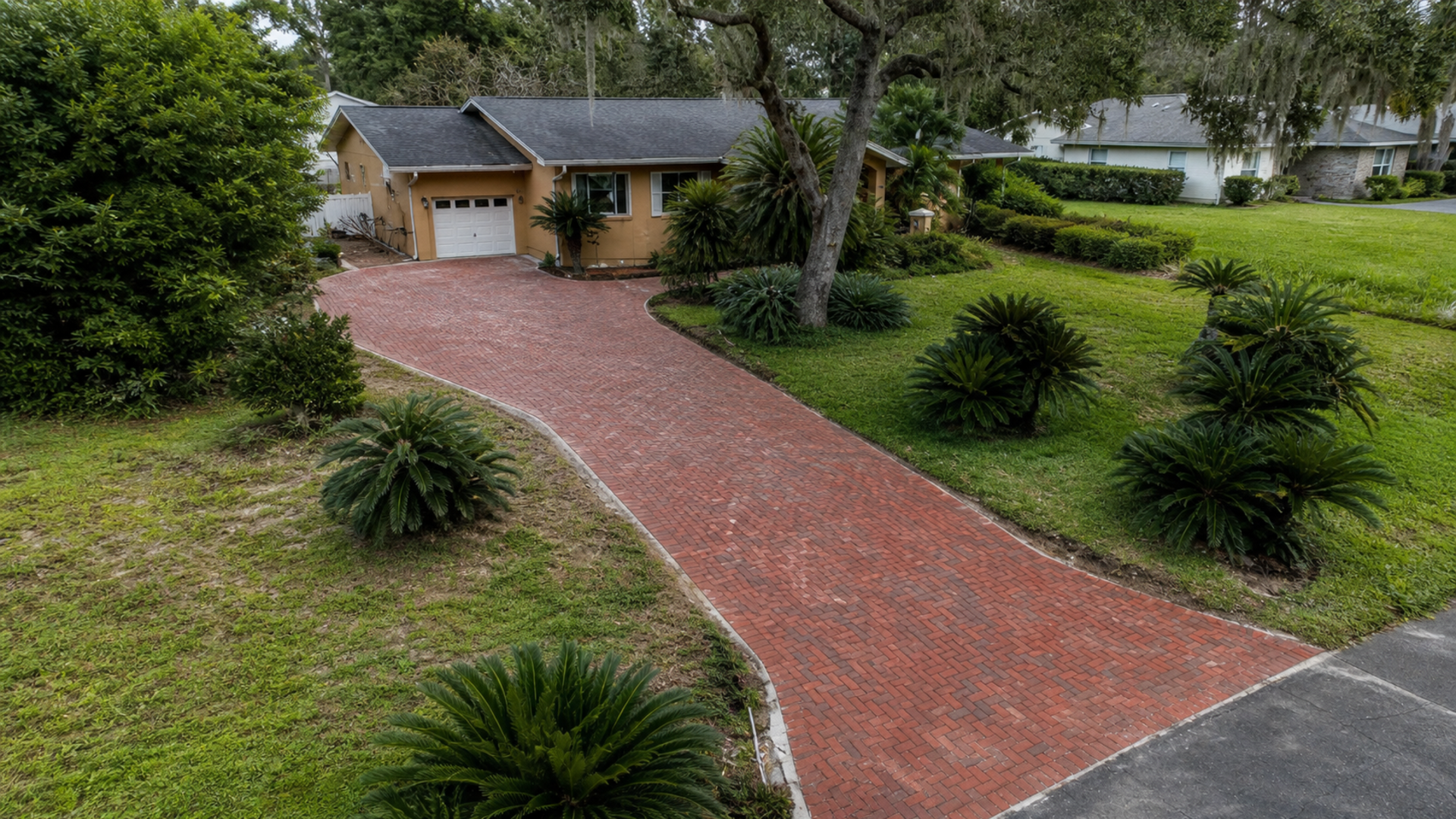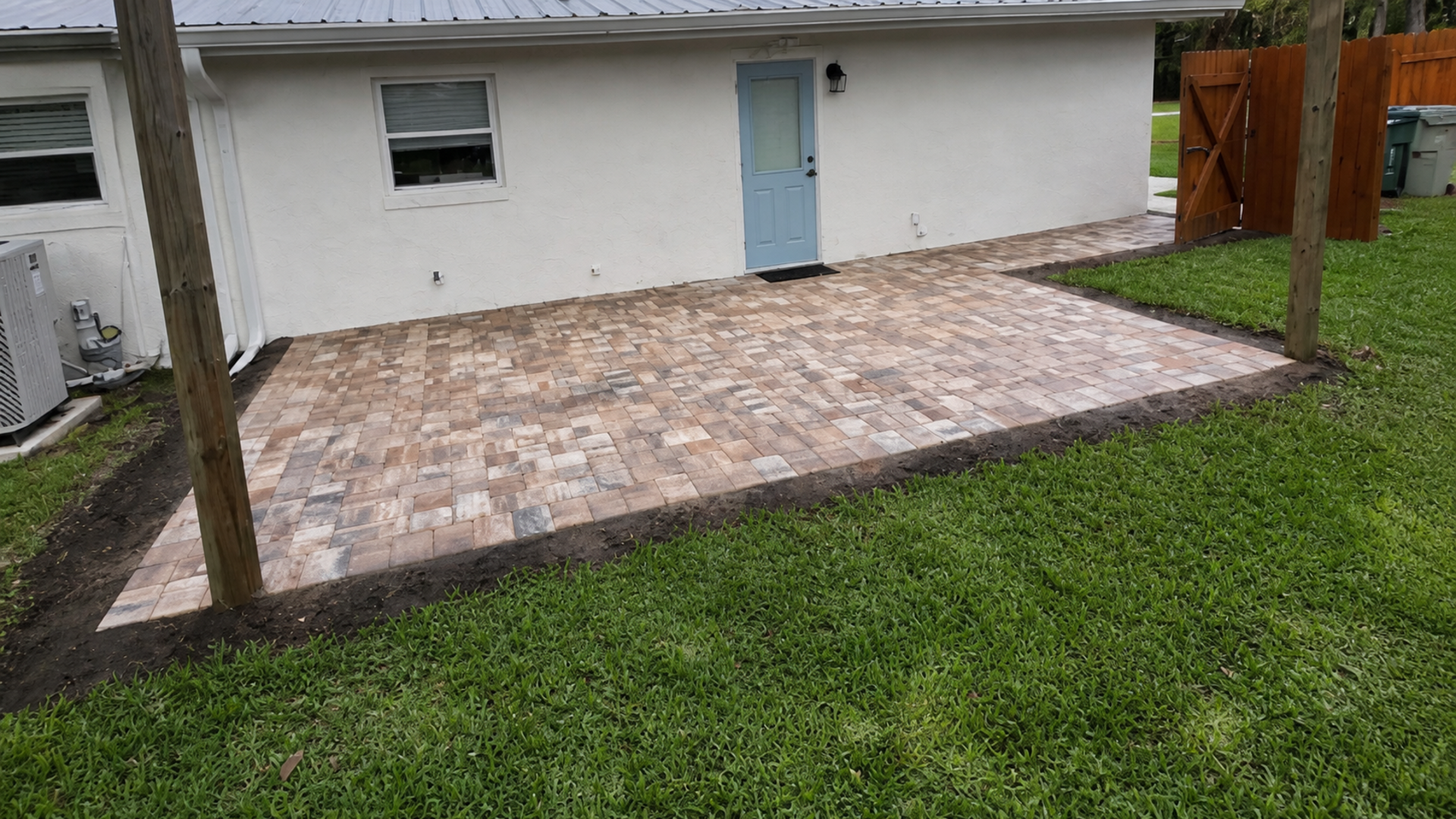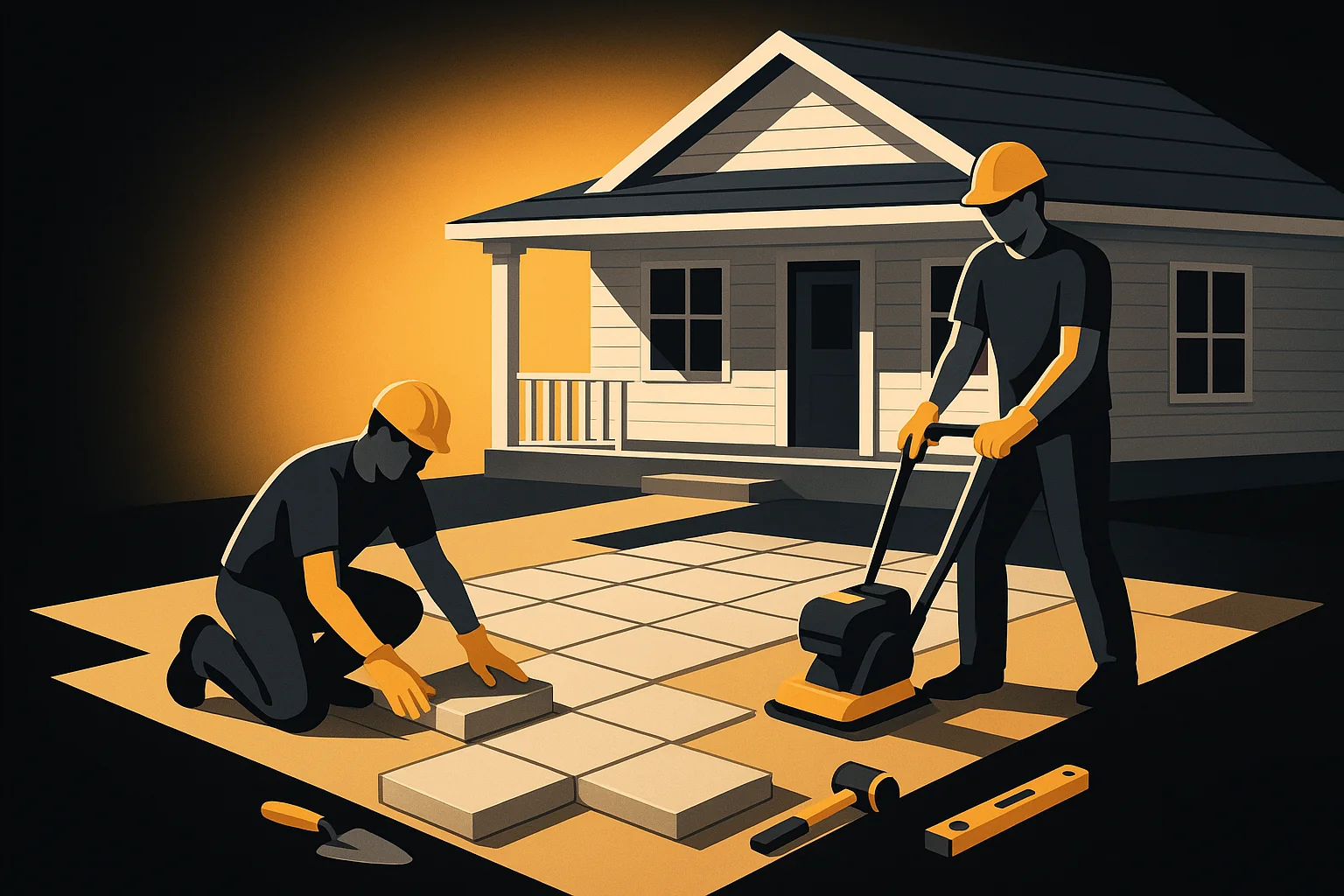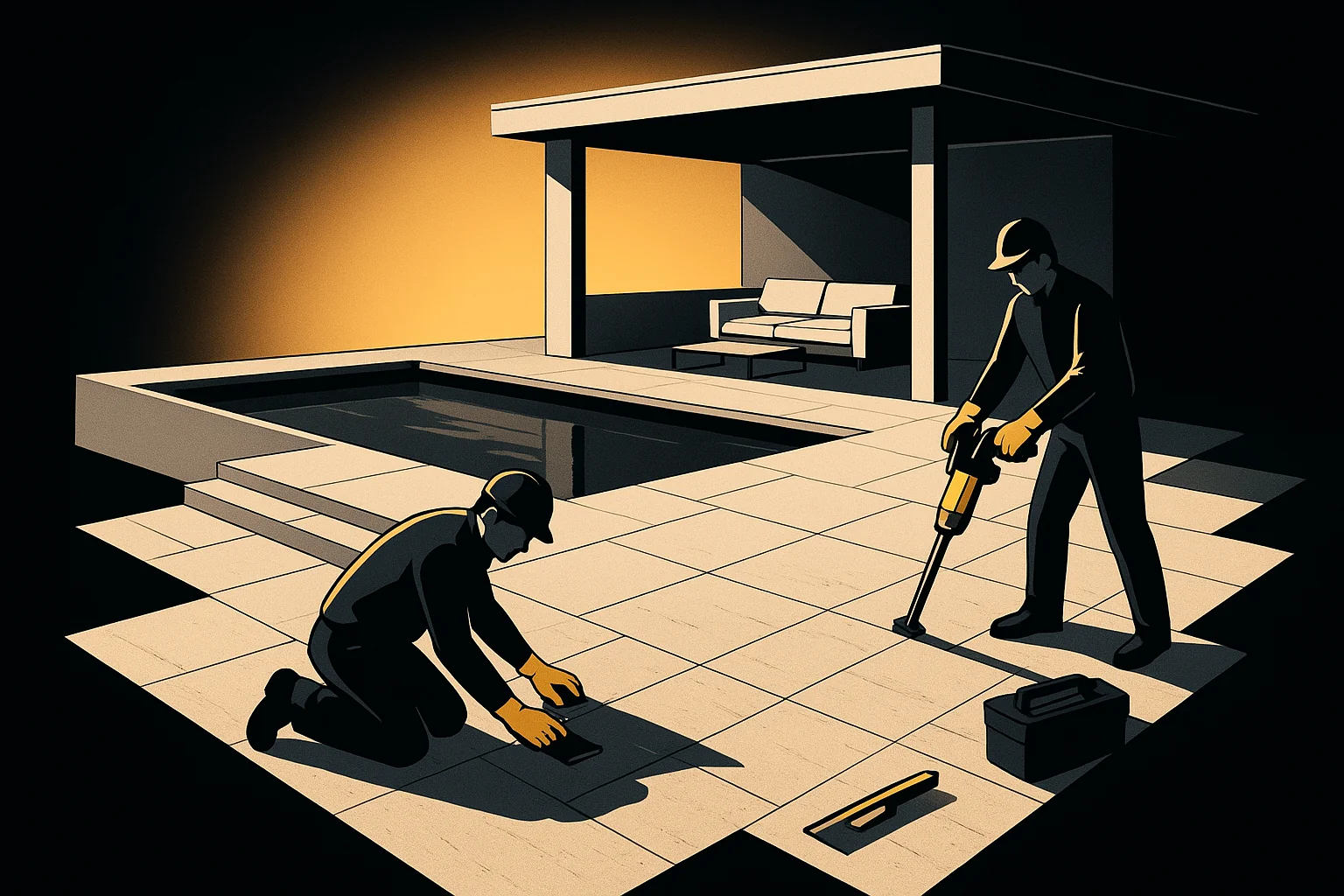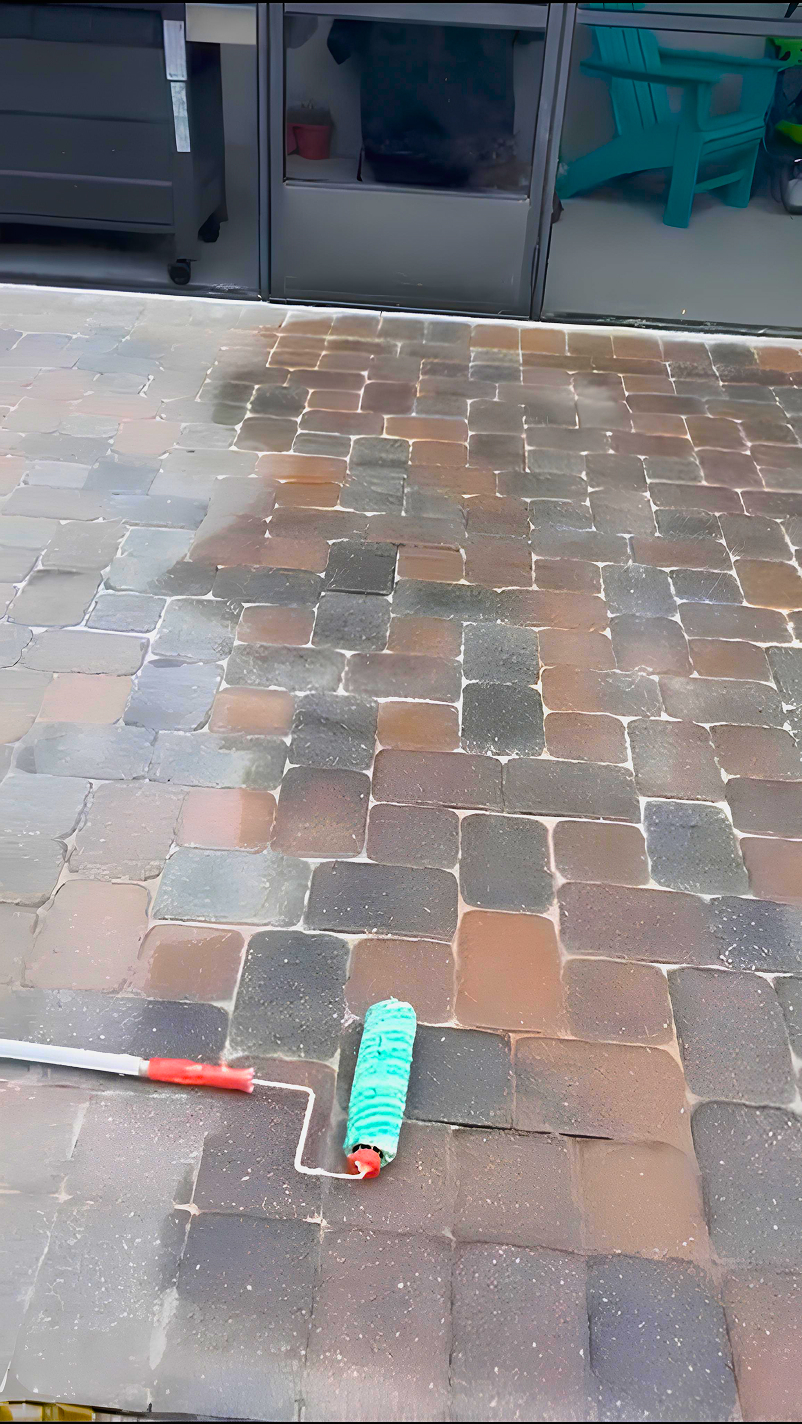

Matte vs wet look paver sealer is an appearance decision that must begin with the actual surface, its exposure, and how people use the area. Therefore, catalog photos should inspire questions rather than settle the choice. Paver color, porosity, prior coatings, joint condition, moisture, and cleaning results can all change the final look. A controlled test area gives better evidence than a finish name.
Florida light makes these differences especially visible. For example, direct sun can emphasize gloss, while shade can deepen an enhanced color without a mirror-like effect. In addition, rain and pool water temporarily change the appearance of untreated pavers. Homeowners should separate that temporary darkening from what a specific sealer product will actually create.
Understand matte vs wet look paver sealer labels
Finish labels do not follow one universal visual scale across every manufacturer. Consequently, one product described as wet look may emphasize color with modest sheen, while another may create a much glossier film. Matte can also mean nearly invisible, color-enhancing with low sheen, or simply less reflective than a companion product. Always read the current technical information for the exact product.
Moreover, the same material can look different on two paver surfaces. Dense concrete, weathered brick, textured units, and previously coated areas absorb or hold products differently. Application rate and number of approved coats matter as well. Therefore, a neighbor’s patio cannot serve as a precise preview for your driveway.
Use matte vs wet look paver sealer samples correctly
A useful test begins on representative pavers after the proposed cleaning and preparation process. First, choose an area that includes typical color variation, joints, and exposure. Then follow the product instructions for dryness, application, and cure before judging it. An immediate wet sample may not represent the settled finish.
- Test each candidate on the same type and condition of paver.
- Include both a sun-exposed and shaded view when practical.
- Observe color, sheen, texture, and joint appearance from several angles.
- Review the sample in morning, midday, and evening light.
- Keep traffic and water off the test for the stated product period.
- Record the exact product, batch, preparation, and application method.
However, do not layer competing samples over one another. A second product applied to a sealed test no longer shows independent performance. Use separate areas or spare matching pavers when appropriate. In addition, get manufacturer guidance before removing or overcoating an unwanted sample.
What a matte finish contributes to the design
A matte finish usually aims for lower visual reflection and a more natural reading of the paver texture. Therefore, it can support understated architecture, rustic brick, or a patio where furniture and planting should remain dominant. It may also make tonal variation feel softer in strong daylight. The exact change still depends on the product and substrate.
Matte does not mean that color will remain completely unchanged. For instance, some low-sheen sealers still enrich faded-looking tones or deepen joint color. Others focus more on protection with limited enhancement. Consequently, homeowners should ask whether the sample changes color, reflection, or both.
Subtle finishes can be forgiving within a layered outdoor design, but they do not hide poor preparation. In contrast, uneven cleaning, residual efflorescence, or previous coating patches may still show through. The surface must reach an acceptable visual baseline first. Sealer should not become a cosmetic shortcut for unresolved conditions.
Where a low-reflection choice often fits
Matte can suit large sun-exposed patios where homeowners want restrained reflections. Similarly, it may complement historic-looking brick or a driveway with strong color variation. However, the choice remains aesthetic rather than automatic. A contemporary home can also use matte successfully when clean geometry provides the visual emphasis.
Consider how the pavers relate to painted walls, glass doors, pool water, and polished outdoor furniture. Then decide whether another reflective plane would add energy or visual competition. In particular, view the sample from indoor rooms that overlook the hardscape. The most important perspective may be through a living-room window.
What a wet-look finish changes
A wet-look product generally seeks stronger color enhancement and may add noticeable sheen. As a result, reds, browns, charcoals, or blended tones can appear richer. Texture and joints may also gain contrast. This effect can revive visual depth, but it can equally emphasize stains, patchy absorption, or mismatched repairs.
Gloss expectations need precise language. Therefore, ask to see a cured sample of the exact system rather than requesting the shiniest option. A homeowner may want deepened color with limited reflection, while another may prefer a more polished appearance. Those are different targets even when both people use the phrase wet look.
Strong enhancement can visually unify some blended pavers, yet it can darken the entire palette more than expected. For example, a cream accent may shift toward tan, while charcoal can become dominant. Review the whole blend, not only the favorite unit. Moreover, account for the color of joint material because the system reads as one surface.
Use enhancement to support architecture
Wet-look finishes can reinforce bold architecture, strong paver borders, or an entertainment area designed for evening light. However, enhancement should connect with the house palette. A very dark surface beside a light coastal exterior can create dramatic contrast, while the same contrast may overwhelm a small courtyard. The test area should include the actual architectural backdrop.
At night, landscape lighting can create highlights that do not appear during the day. Therefore, review a cured sample after dark if evening entertaining matters. Low fixtures near the surface may exaggerate reflection and texture. Adjusting fixture aim may improve the design without changing the sealer choice.
Evaluate traction as a system question
Appearance alone should not decide a finish for pool decks, steps, slopes, or frequently wet paths. Consequently, product suitability, surface texture, application, approved additives, and maintenance conditions all deserve review. A glossy appearance does not provide enough information to predict traction. Likewise, the word matte does not guarantee a particular result.
Ask the manufacturer and installer for current guidance for the specific substrate and use. In addition, disclose whether the area receives pool water, irrigation, vehicle traffic, cooking residue, or frequent shade. These conditions shape the product discussion. Any accessibility or code requirement should receive project-specific review from the relevant qualified professional or authority.
Application consistency matters because excessive or uneven material can alter the surface. Therefore, more product is not automatically better protection. Follow documented coverage, coat, temperature, and cure guidance for the chosen system. A trained applicator should also stop if field conditions no longer match those requirements.
Resolve moisture and efflorescence before sealing
Moisture within or below the paver assembly can affect some coating systems. As a result, trapping moisture or applying outside product limits may contribute to whitening, haziness, bonding problems, or uneven appearance. The remedy is not to choose matte over gloss by default. Instead, diagnose the moisture source and follow product-specific preparation requirements.
Efflorescence appears when soluble salts move and deposit at the surface. However, pale residue can have other causes, so identification matters. Cleaning should use an appropriate method for the paver and the intended sealer. Then the surface needs the required drying and evaluation period before application.
Florida weather creates narrow work windows during rainy periods. Therefore, scheduling should consider recent rain, irrigation, humidity, shade, and the forecast for curing. Turning off sprinklers may be part of site control, while tenting or protection must still follow safety and product guidance. Rushing to beat a storm can compromise the finish.
Do not seal over unresolved visual defects
Oil, rust, organic staining, old coating fragments, and joint contamination can become more prominent after enhancement. Consequently, inspect the dry prepared surface from several directions. Agree in advance on stains that may remain. A realistic pre-application review prevents sealer from receiving blame for conditions it merely revealed.
Repairs also deserve attention because replacement pavers may absorb differently. In addition, freshly replenished joints can change color beside older material. Include both areas in the test when possible. The final surface may become coherent without becoming perfectly uniform.
Confirm compatibility before any recoat
An existing sealed surface changes the decision. Therefore, identify the prior product and its condition before selecting a new finish. Incompatible systems can fail even when each product performs well on a properly prepared fresh surface. If records are missing, testing and manufacturer guidance become especially important.
Do not assume a new wet-look coat can restore every dull or patchy area. The underlying coating may require cleaning, repair, removal, or another approved process. Similarly, switching from glossy to matte may not erase the visual depth already created by a film. The substrate history remains part of the finished appearance.
Furthermore, ask how future maintenance coats should proceed. Some systems accept a compatible refresh after preparation, while others have different limits. Product documentation can change, so rely on current instructions. Keep the product name, batch information, installer record, and photos with the home’s maintenance documents.
A finish-selection checklist
- Define the desired change: separate color enhancement from surface reflection.
- Document the substrate: identify paver type, repairs, stains, joints, and prior coatings.
- Describe exposure: note sun, shade, rain, irrigation, pool water, vehicles, and cooking.
- Review suitability: use current product guidance for the exact surface and application.
- Prepare consistently: complete proposed cleaning and correction before sampling.
- Make separate test areas: compare cured candidates on representative pavers.
- Observe over time: inspect color, sheen, texture, and joints in varied light.
- Confirm compatibility: obtain guidance before coating over any existing system.
- Save the record: retain product details, photographs, preparation notes, and care guidance.
This checklist turns a vague style preference into a documented selection. Moreover, it gives homeowner and contractor the same visual reference. If the prepared test patch does not meet expectations, stop and reassess. Changing direction before full application is the point of testing.
Match the finish to different use zones
One property may contain a shaded entry, sunny driveway, covered patio, and wet pool approach. Therefore, matte vs wet look paver sealer discussions should compare each zone’s substrate and use instead of forcing one visual answer everywhere. A coordinated palette can still use different approved systems when technical requirements justify them. Transitions, however, need planned boundaries rather than irregular application stops.
Review how adjoining zones meet at gates, borders, steps, and doorways. In addition, consider whether a strong enhancement in one area makes an untreated or low-sheen area look unintentionally faded. Separate test patches help establish that relationship. Consequently, the final recommendation can balance whole-property continuity with the performance needs of each surface.
Frequently asked questions
Does wet look always mean high gloss?
No. Product terminology varies, and some wet-look products emphasize color more than reflection. Therefore, compare current technical information and a cured test. Ask for the desired level of enhancement and sheen in separate terms. That language produces a clearer recommendation.
Will matte sealer leave my paver color unchanged?
Not always, because some matte systems still enrich color. In addition, cleaning alone can change how the surface looks. Test the complete preparation and product on representative units. The cured sample provides more reliable evidence than the label.
Can I test sealer on one loose paver?
A spare unit can help, especially when the existing field must remain untouched. However, it may not share the same weathering, contamination, or prior treatment. Therefore, an inconspicuous in-place test can provide better context when product guidance allows it. Discuss the test location with the applicator.
Can a new sealer change an old glossy finish to matte?
It depends on the existing system, condition, and manufacturer-approved process. Consequently, do not apply a matte product as an experiment over unknown gloss. Identification, preparation, and compatibility testing come first. The old coating may still control color depth and surface behavior.
When is the best time to judge a test patch?
Follow the product’s stated cure guidance before making the decision. Then review the patch in the light and use conditions that matter. In addition, keep water and traffic away for the required period. An early wet appearance can be misleading.
Choose the finish on a prepared surface
JaxTeller Brick Pavers offers pressure washing and sealing services for Florida paver areas that need a condition-based recommendation. Therefore, the selection process can include cleaning, inspection, a controlled test area, and a discussion of finish expectations. That sequence helps connect the product choice with the surface that will receive it.
The Masonry & Hardscapes Association provides industry education for segmental hardscape materials and construction. In addition, current sealer manufacturer documentation should guide substrate preparation, application, cure, and compatibility. Site-specific safety, environmental, or code questions require advice from the appropriate qualified professional or authority.
Ready to upgrade your driveway or patio? Request a cleaned test area and finish recommendation through our contact page, and compare completed surfaces in the project gallery. Additionally, follow the team on Instagram and Facebook, or ask a question through WhatsApp.
Finally, call +1 407-907-8308, email jaxtellerbrickpavers@gmail.com, or locate JaxTeller Brick Pavers through Google Maps. Contact JaxTeller Brick Pavers at +1 407-907-8308 or jaxtellerbrickpavers@gmail.com for your free estimate!