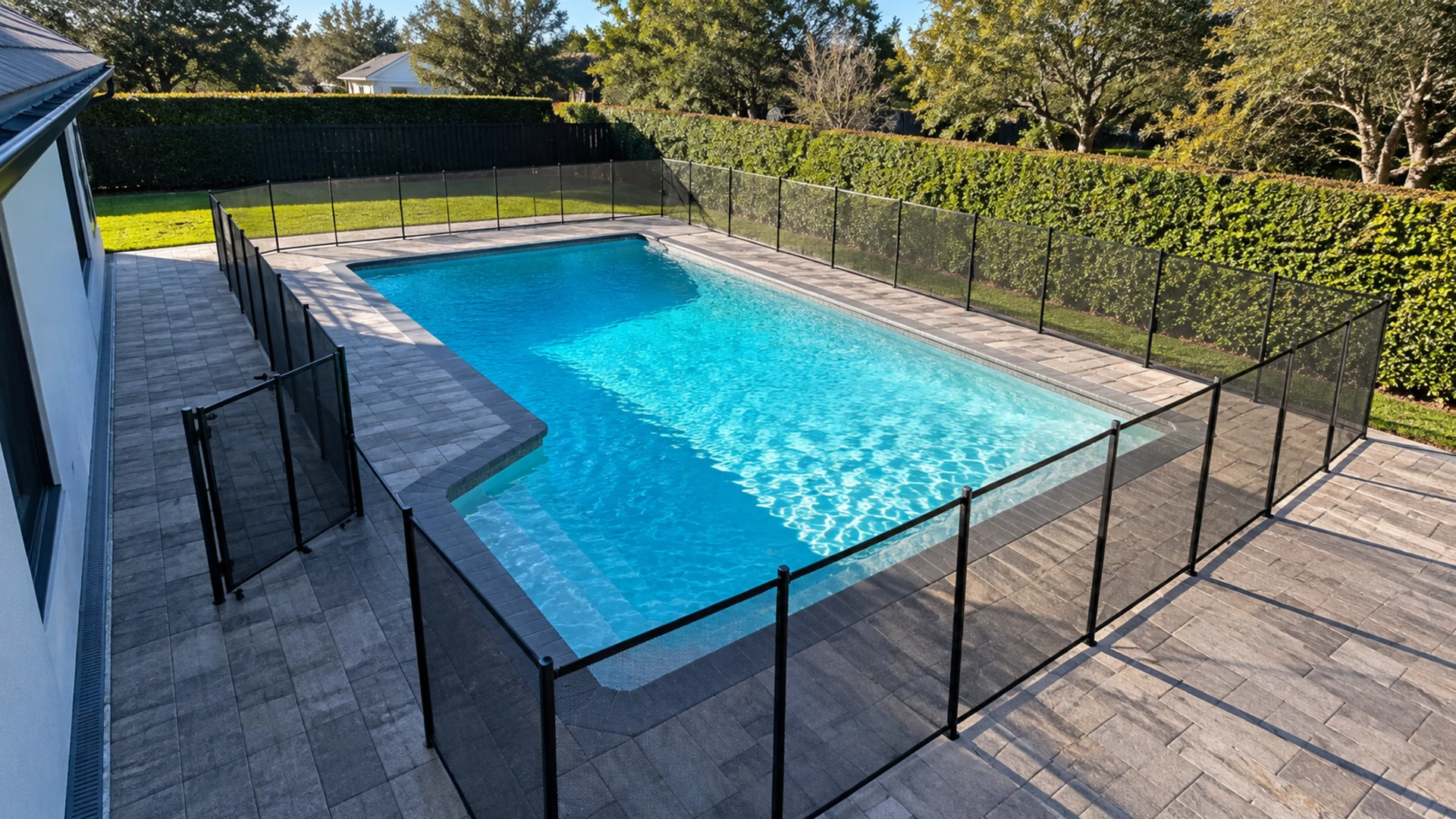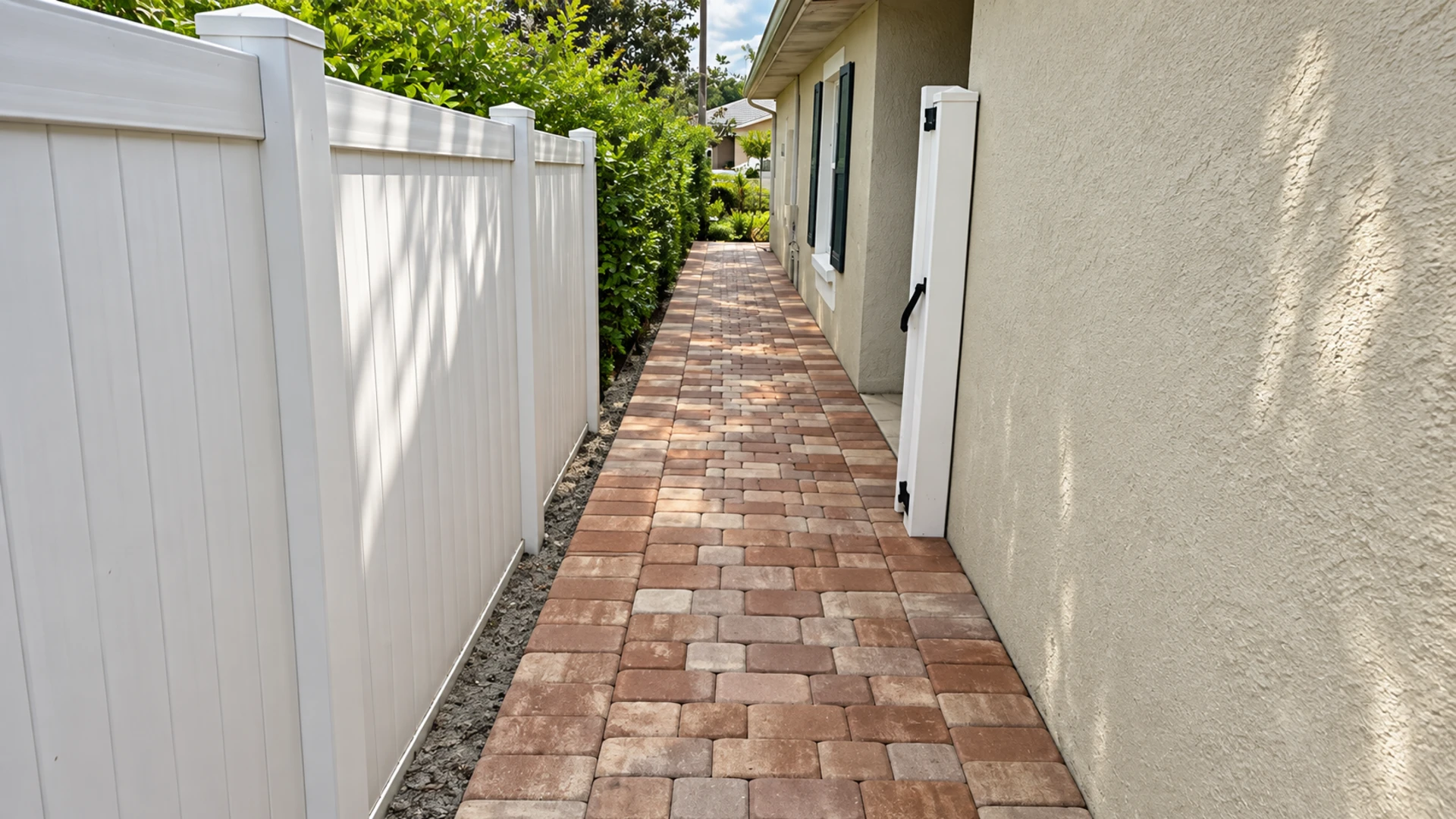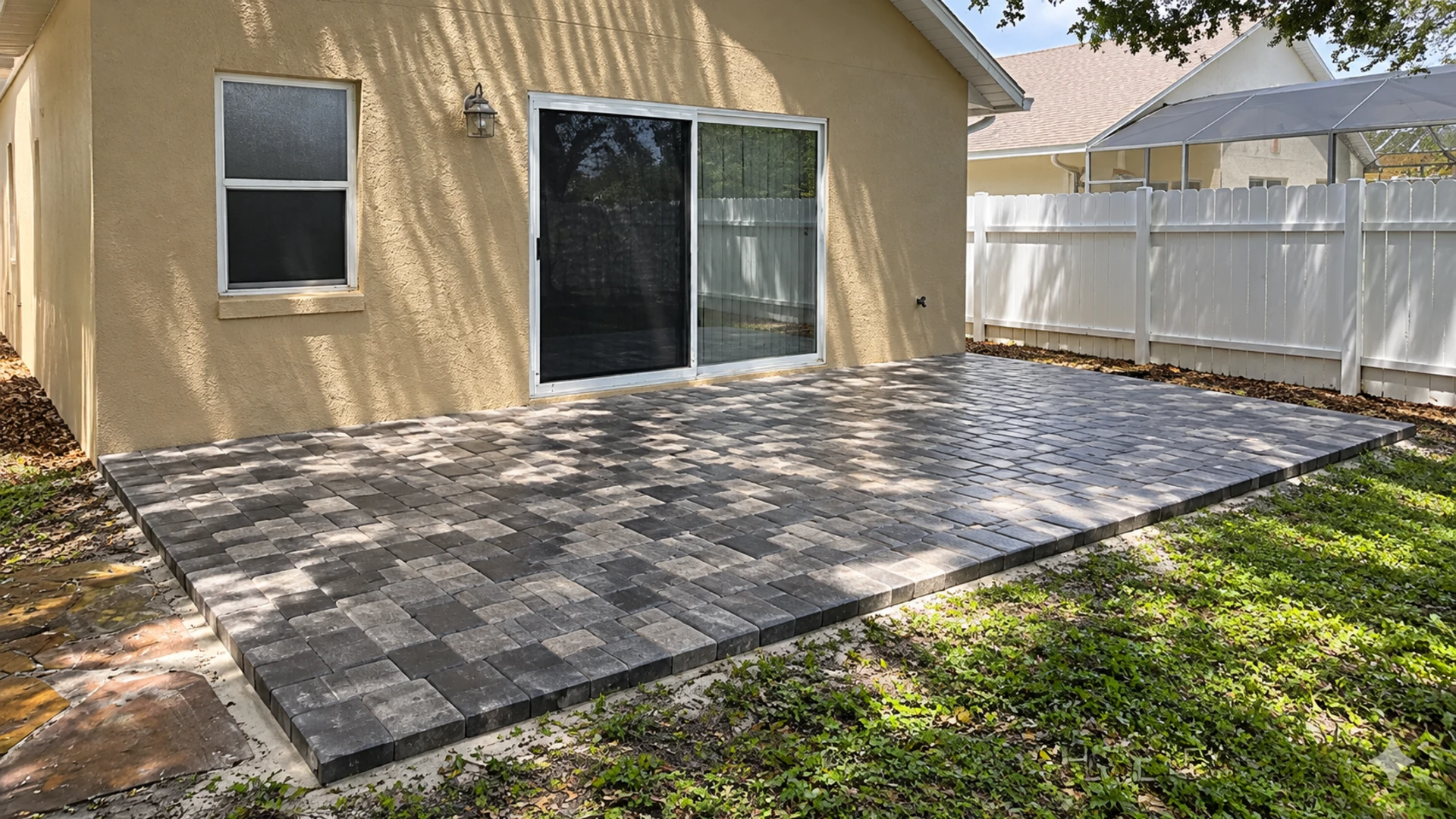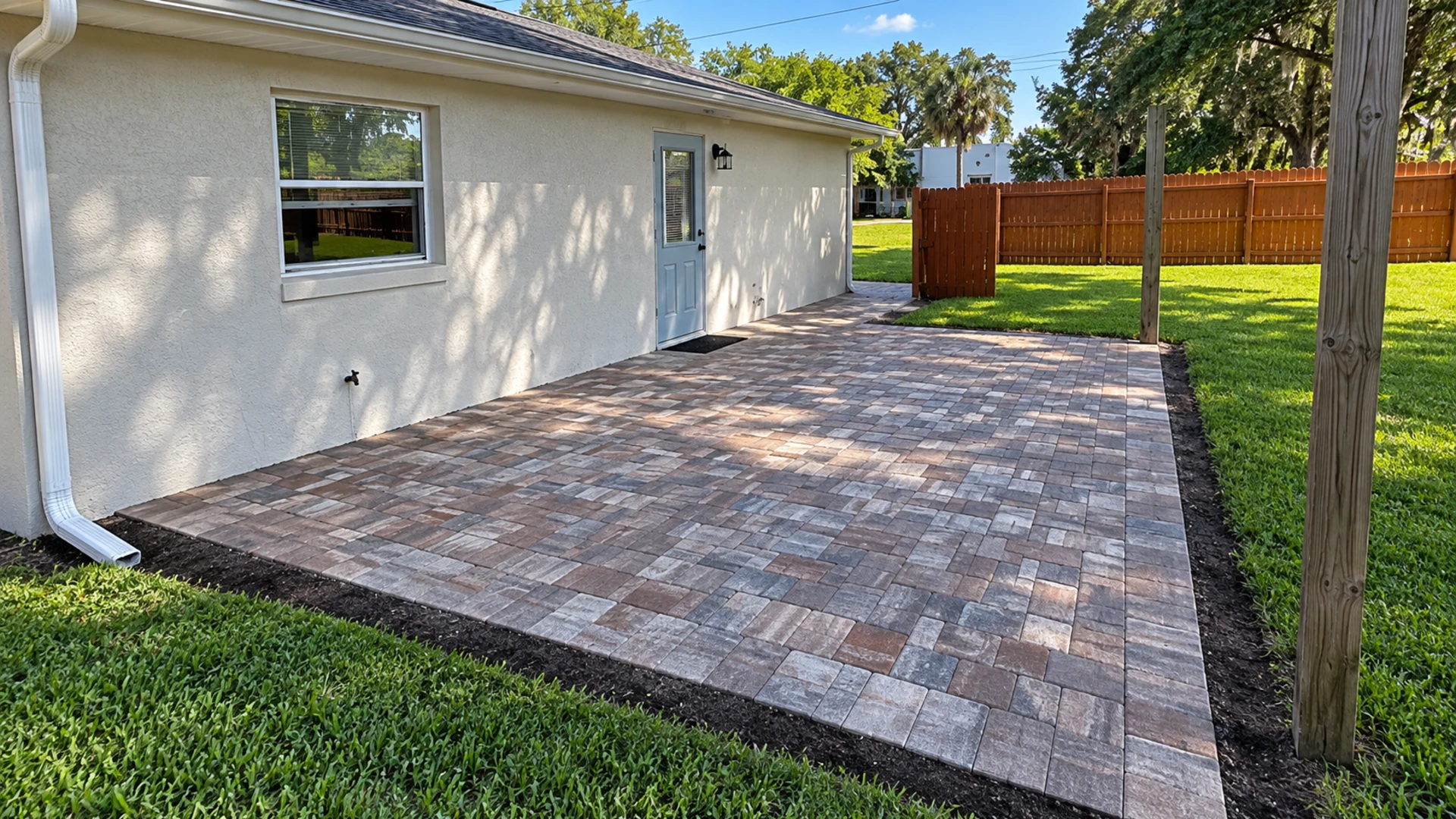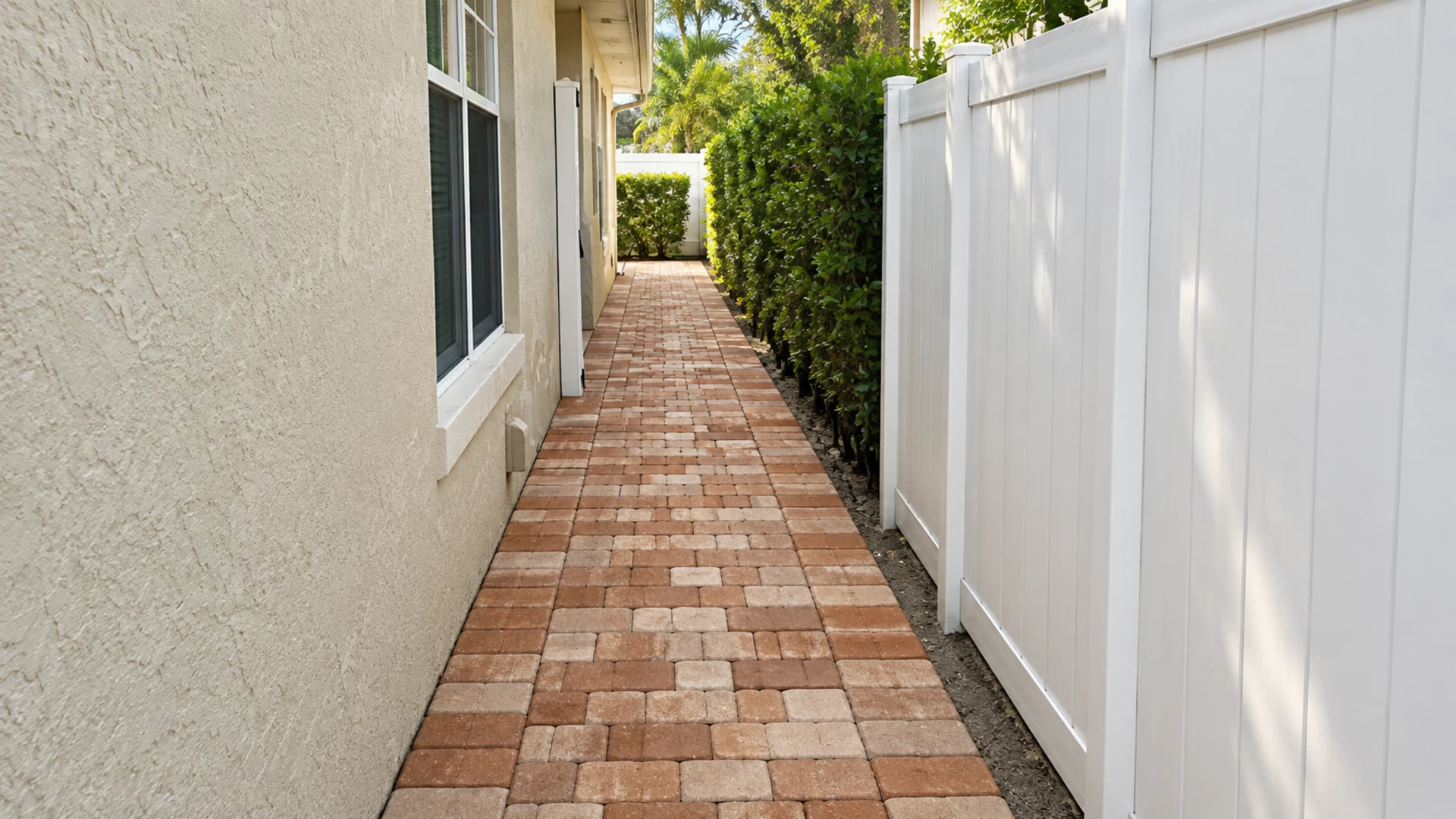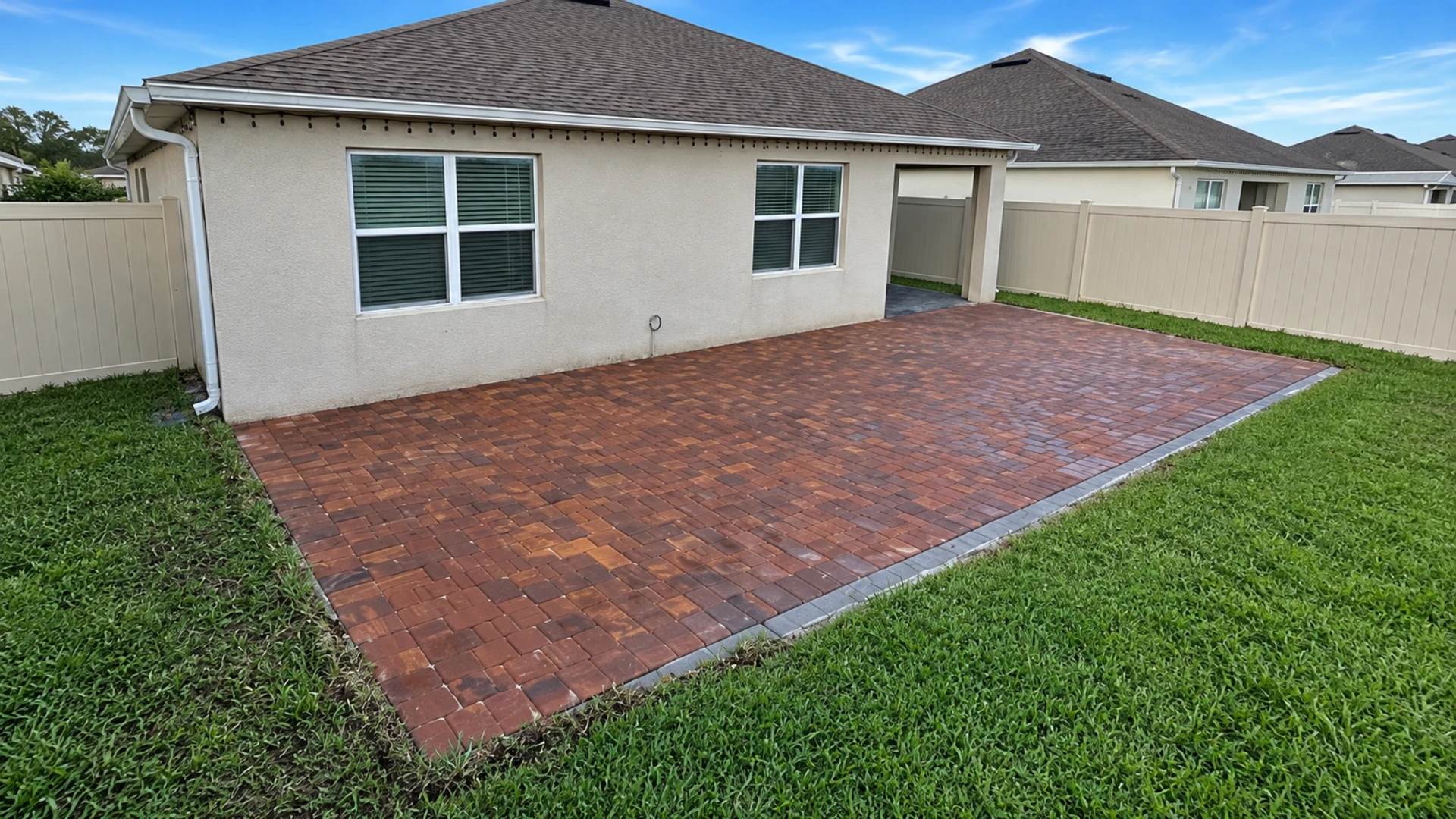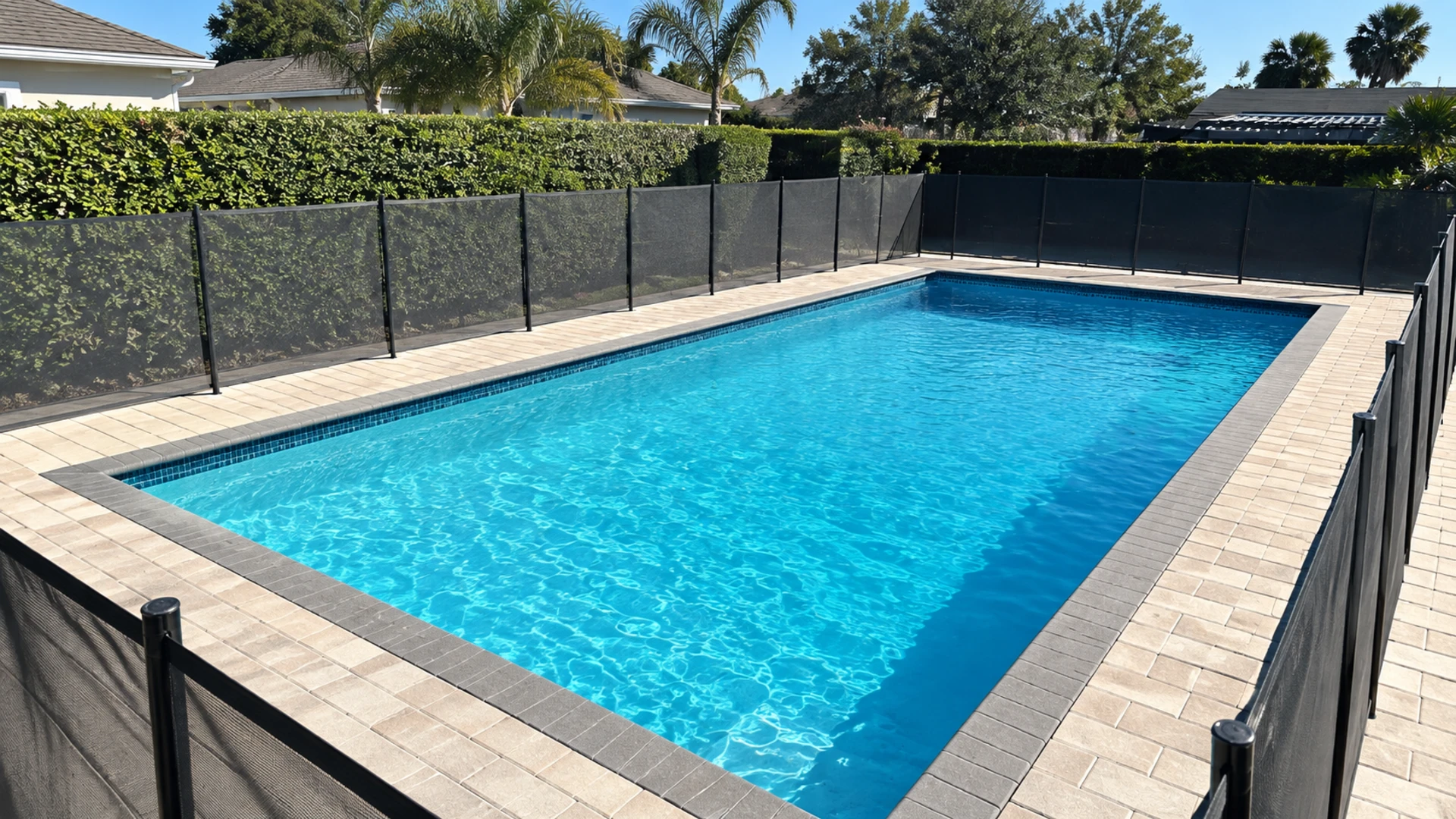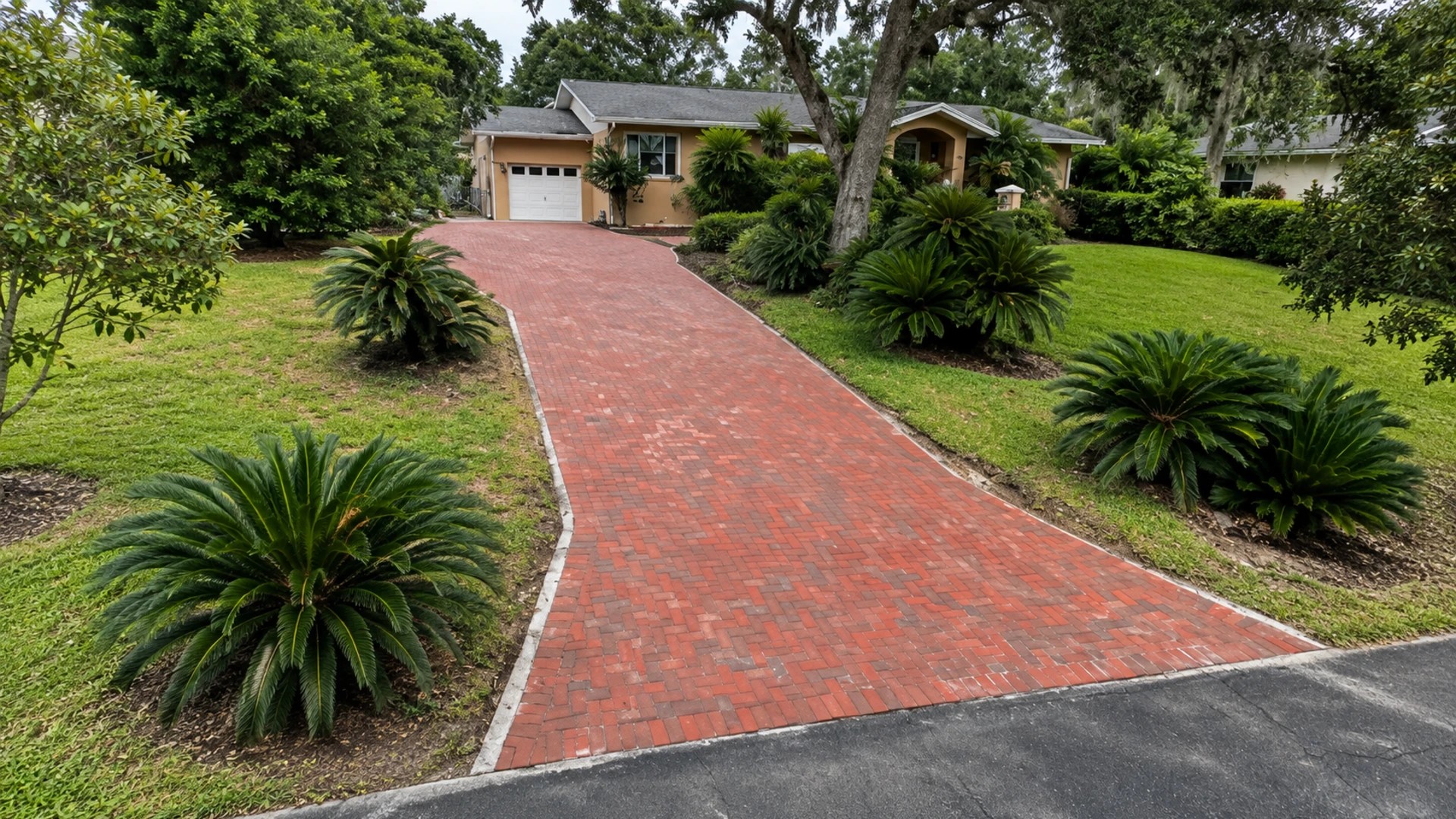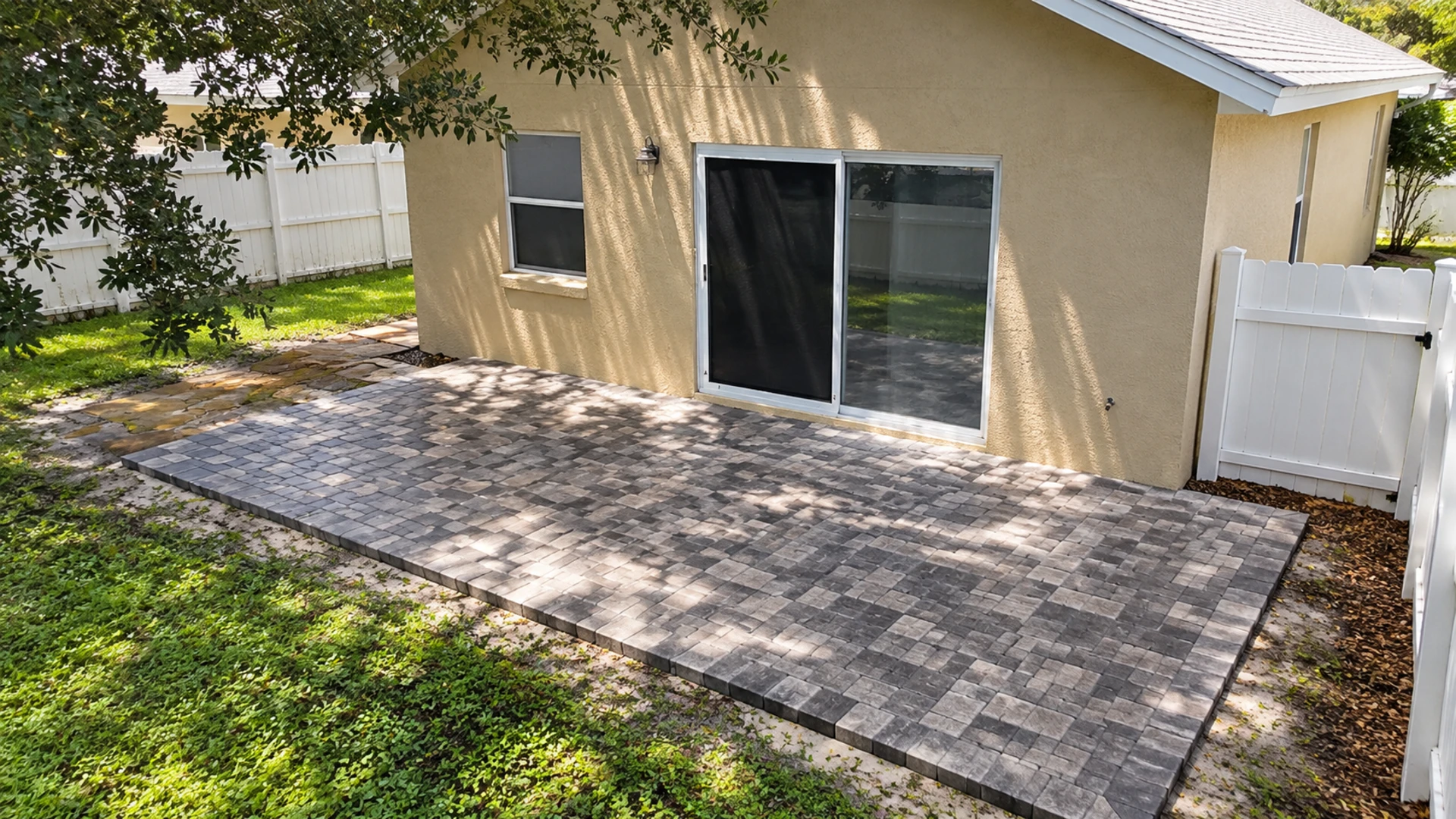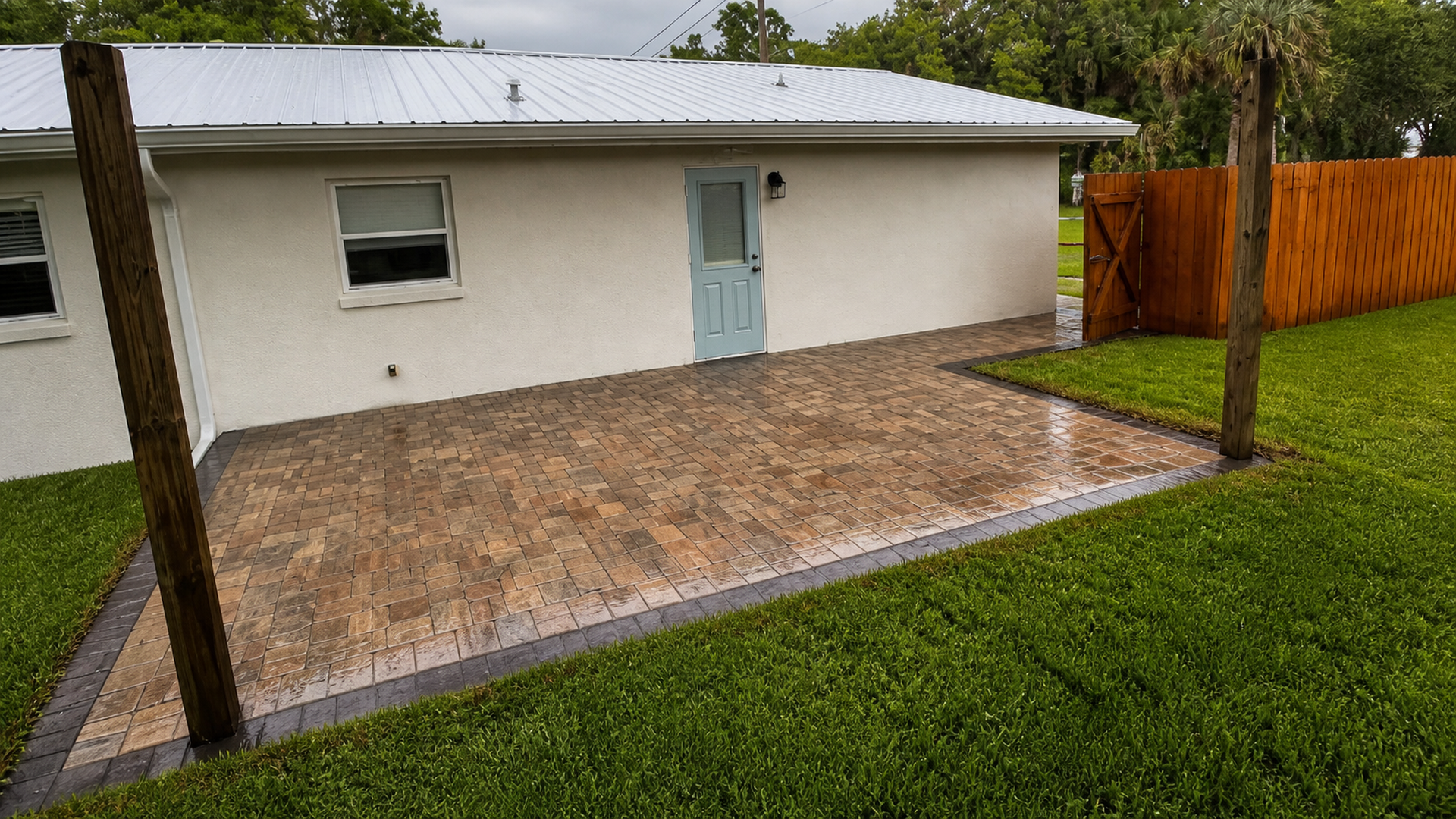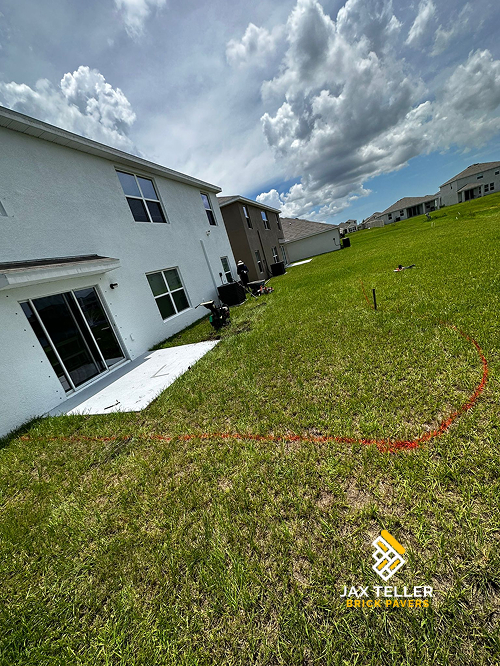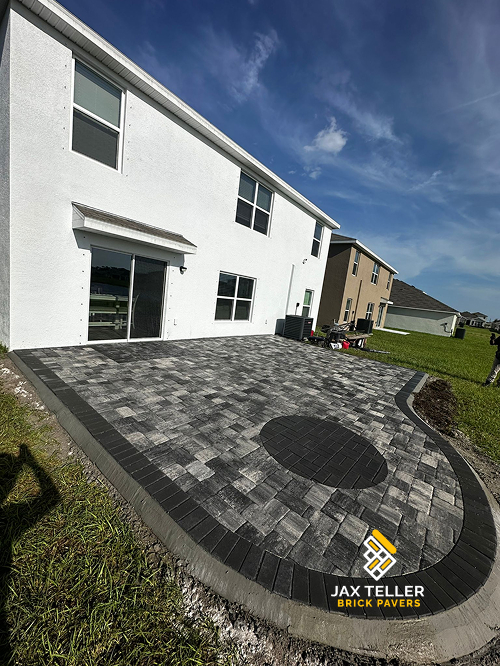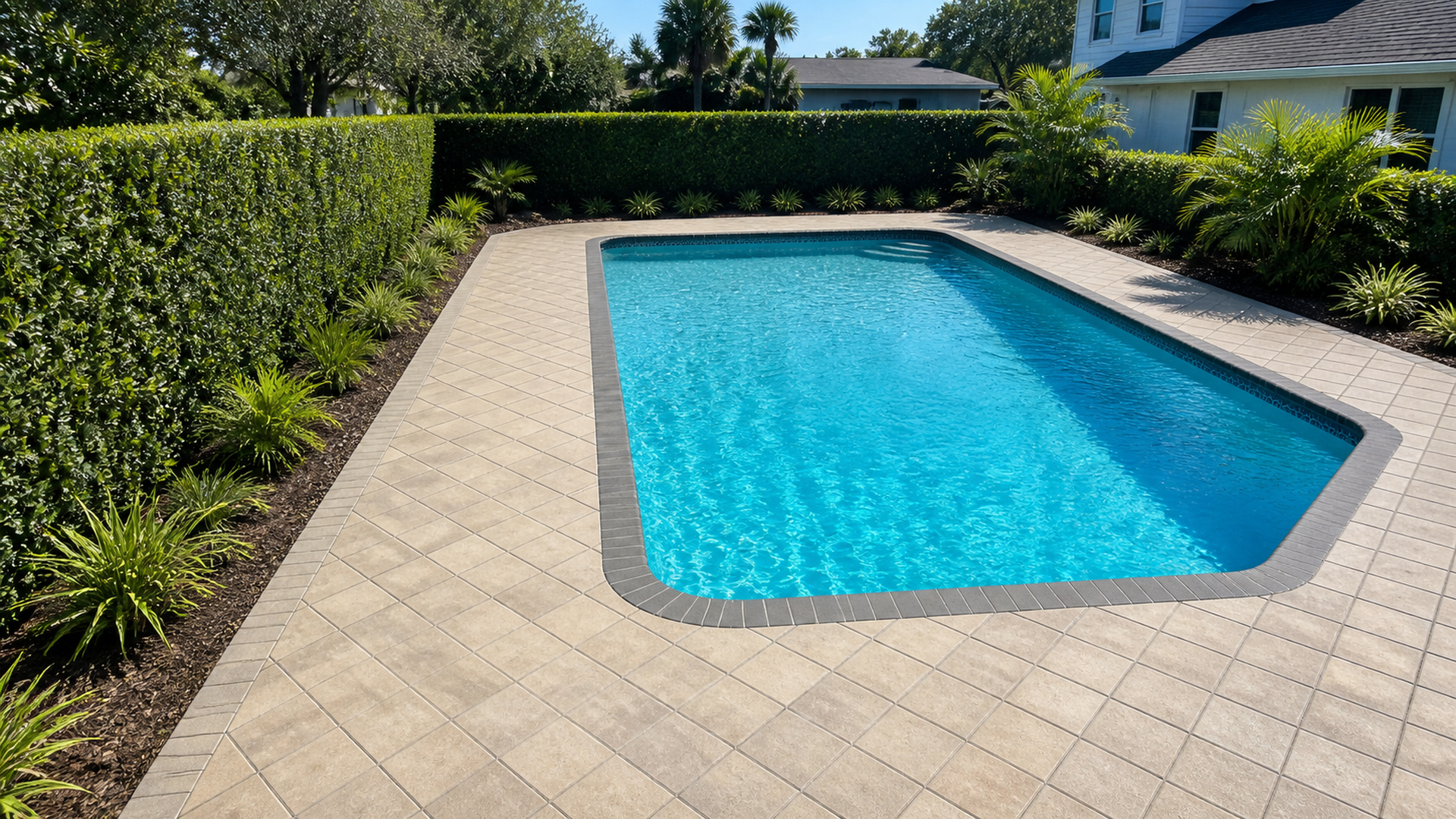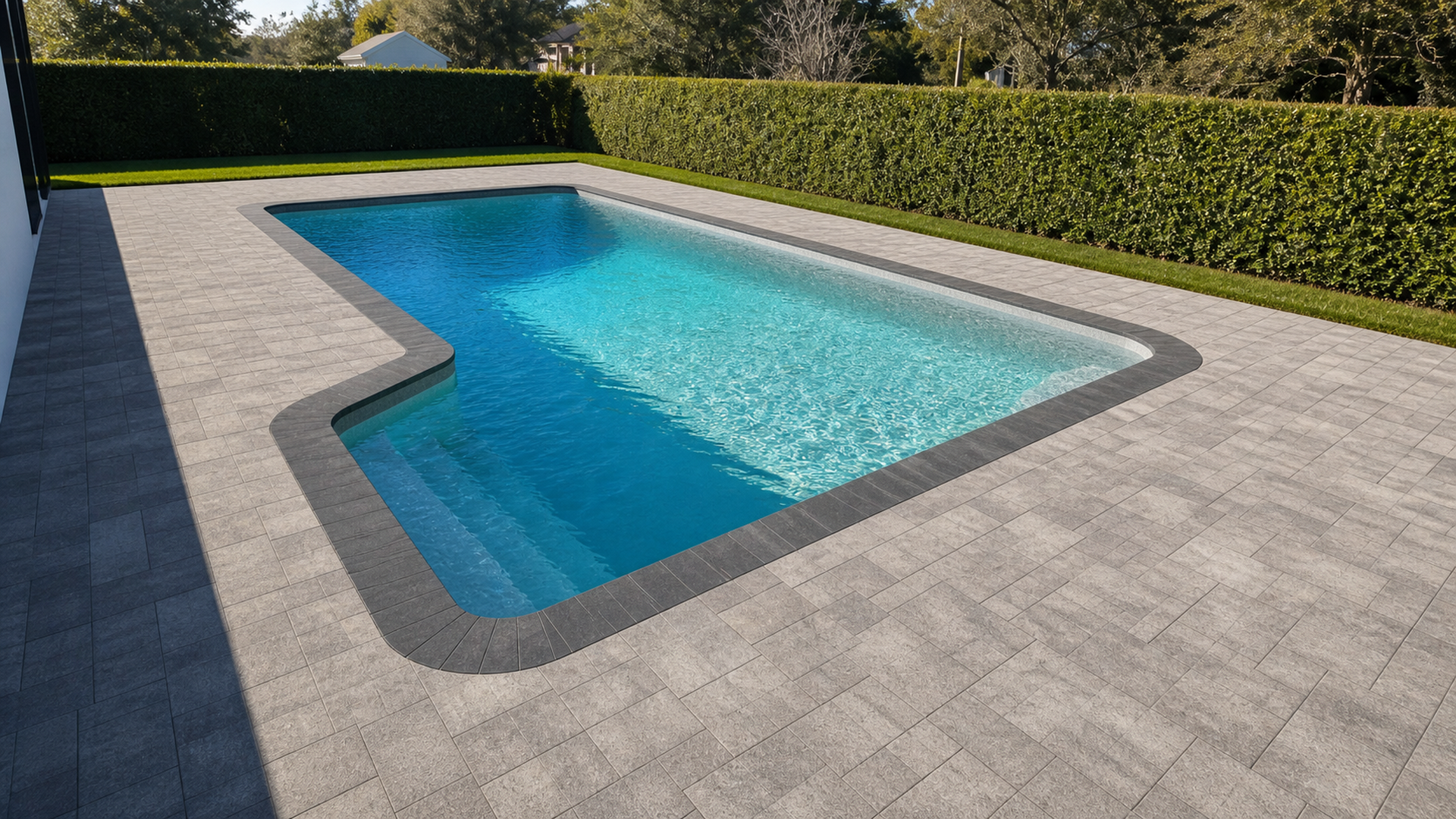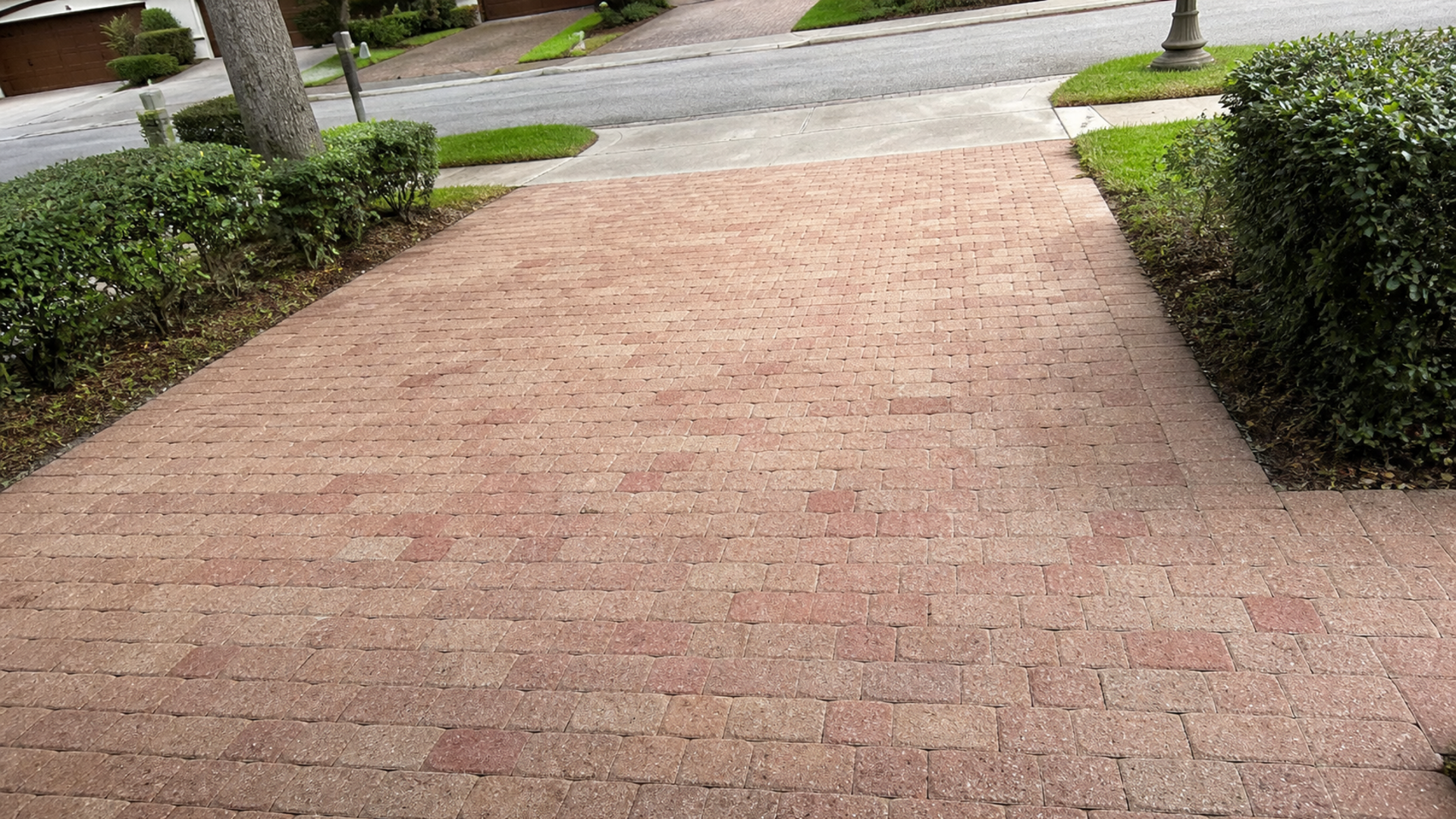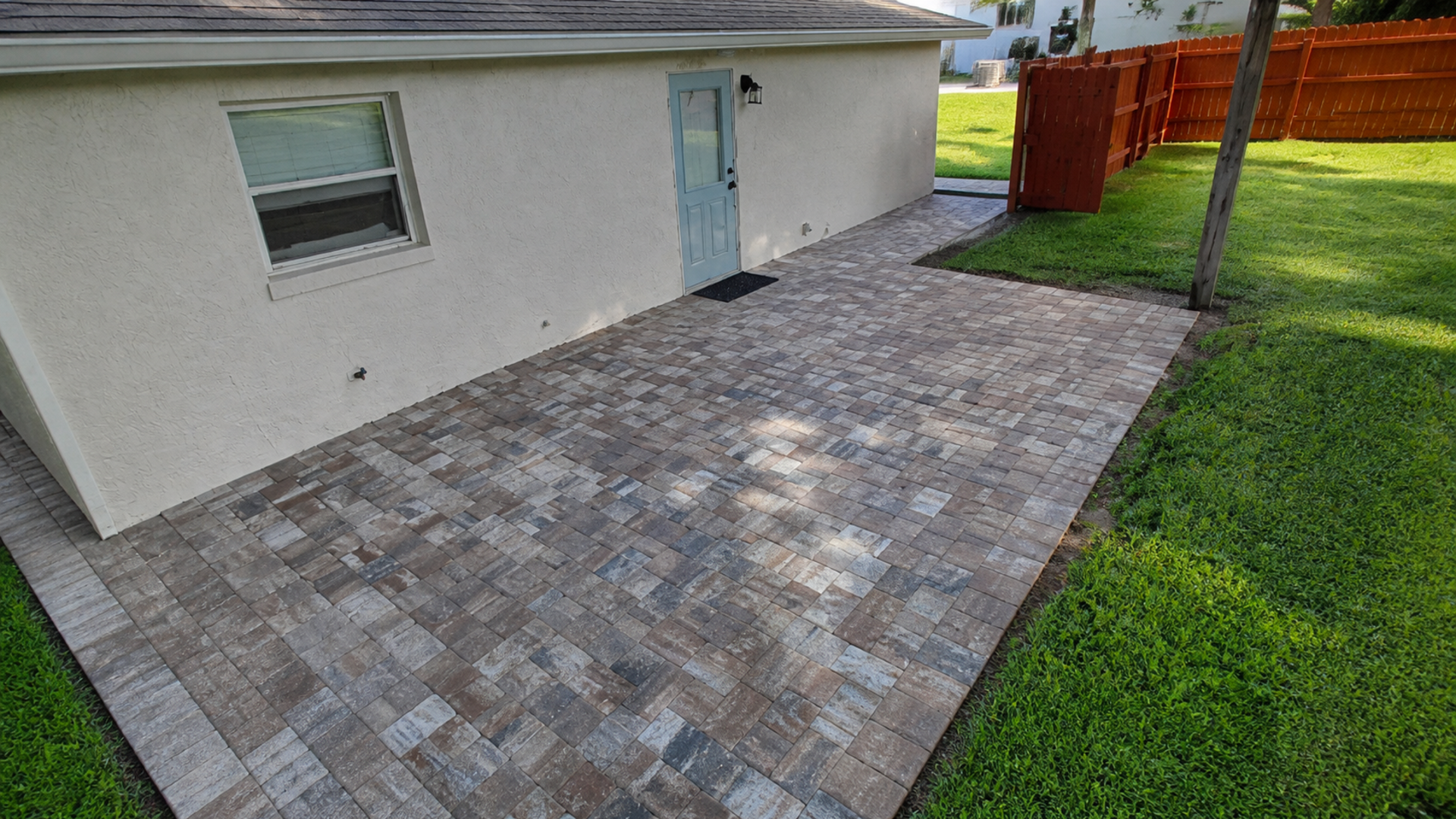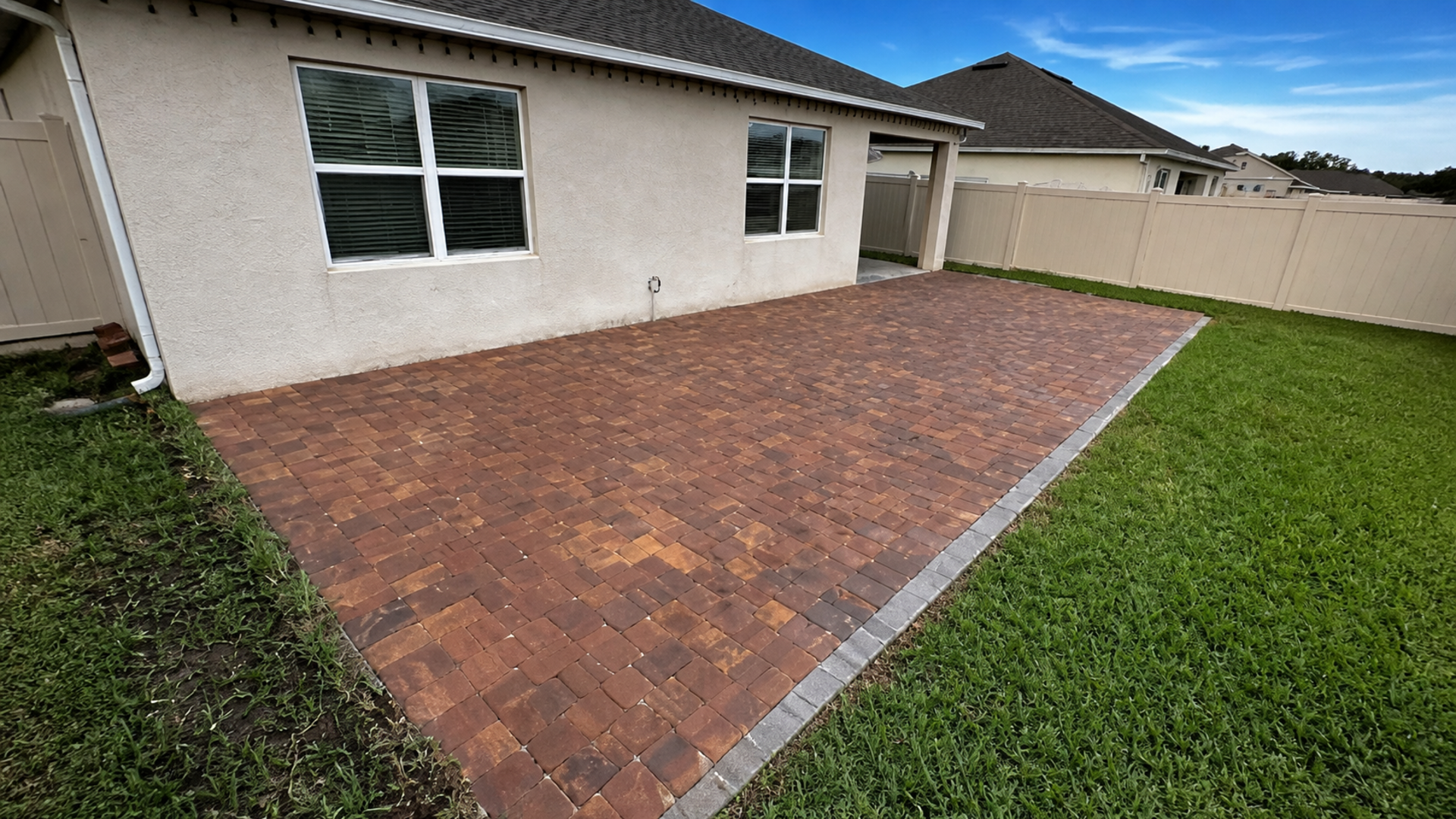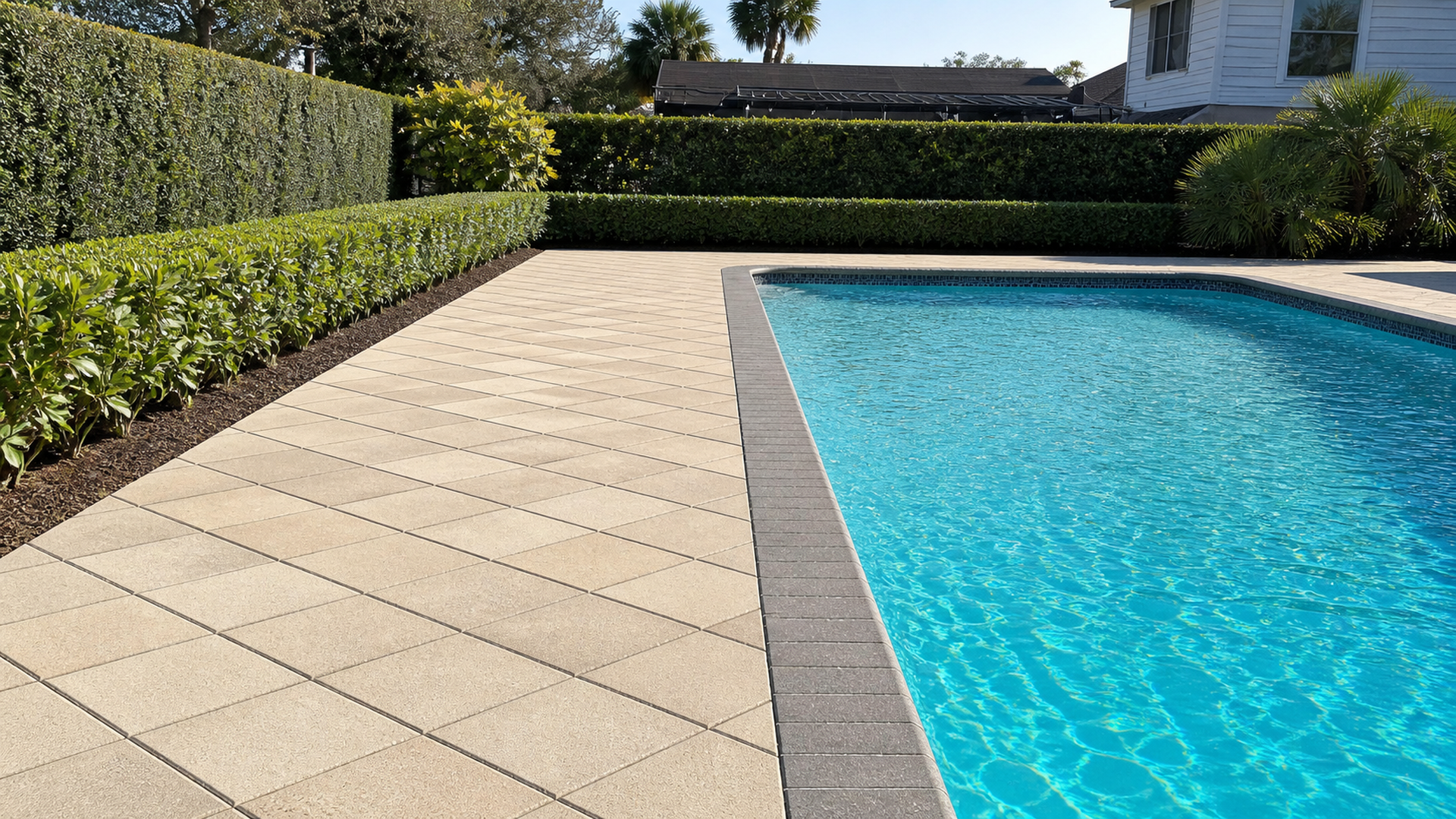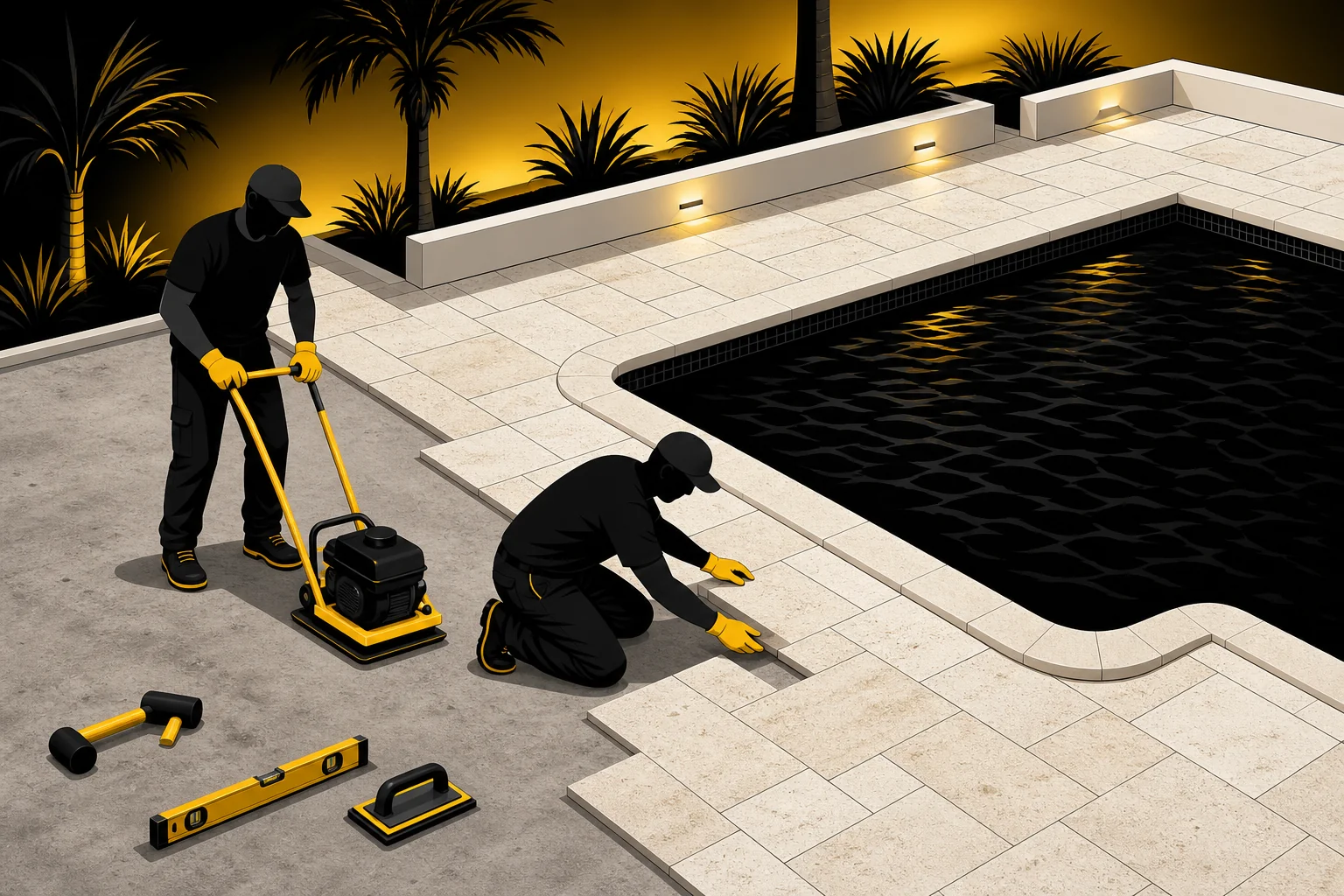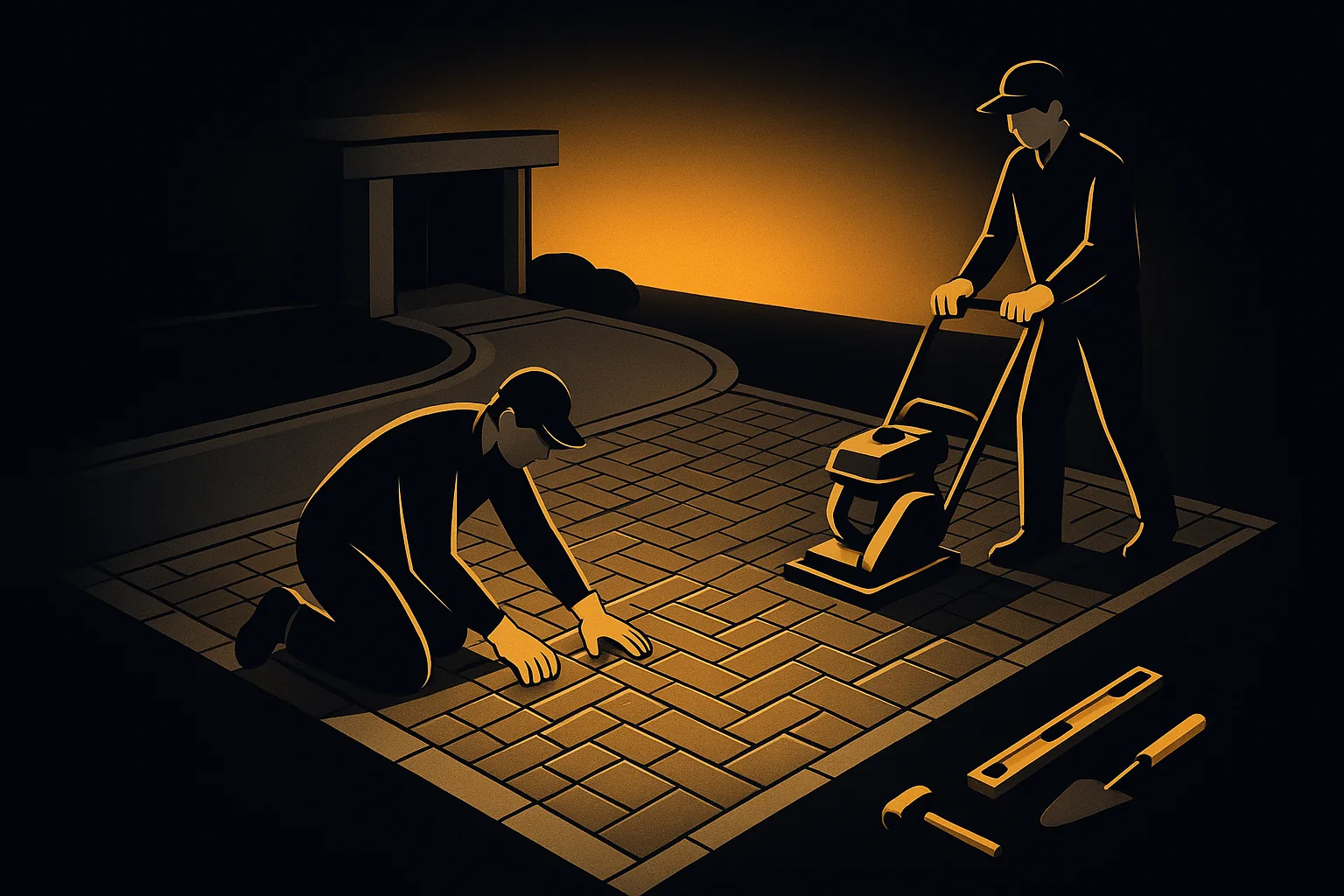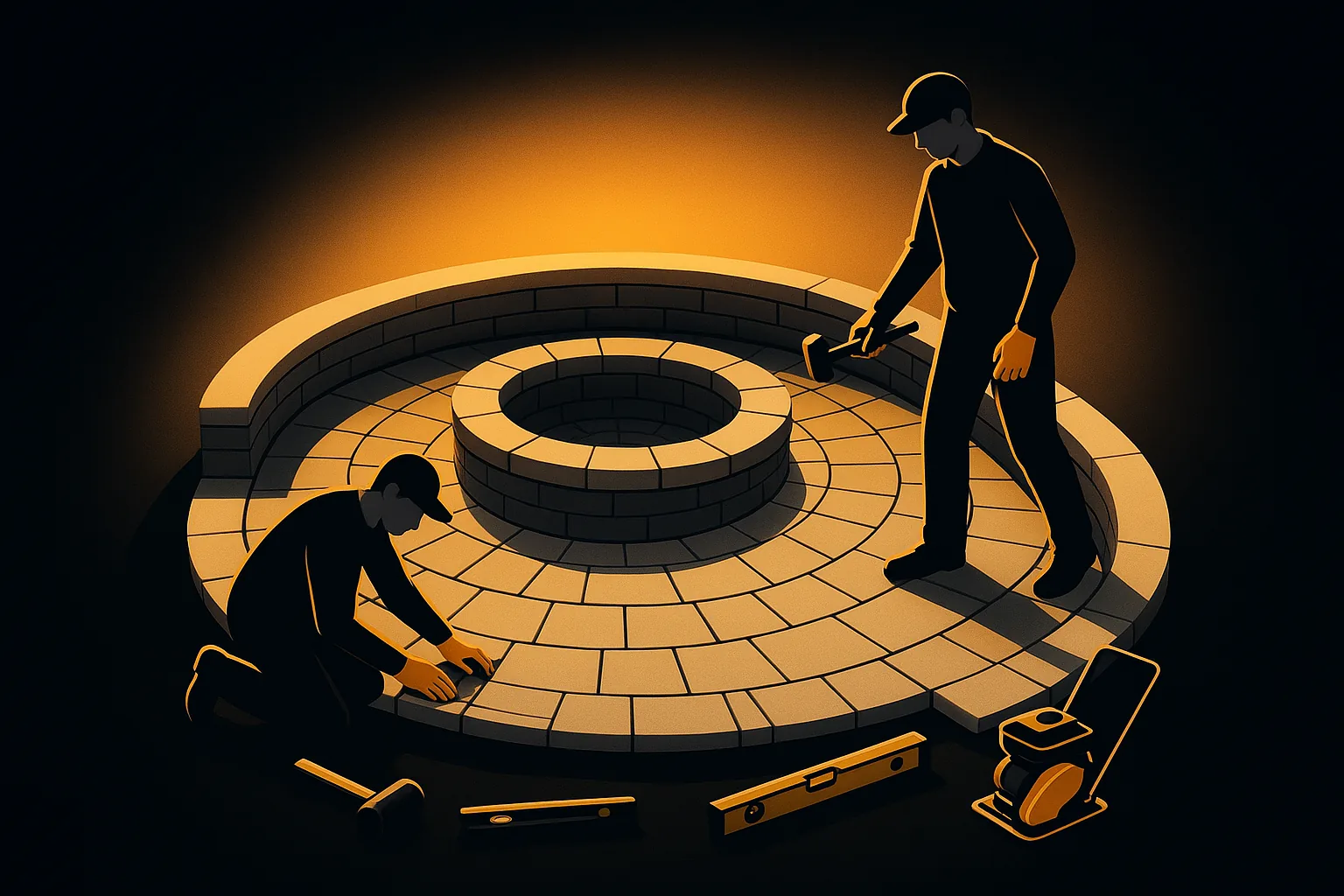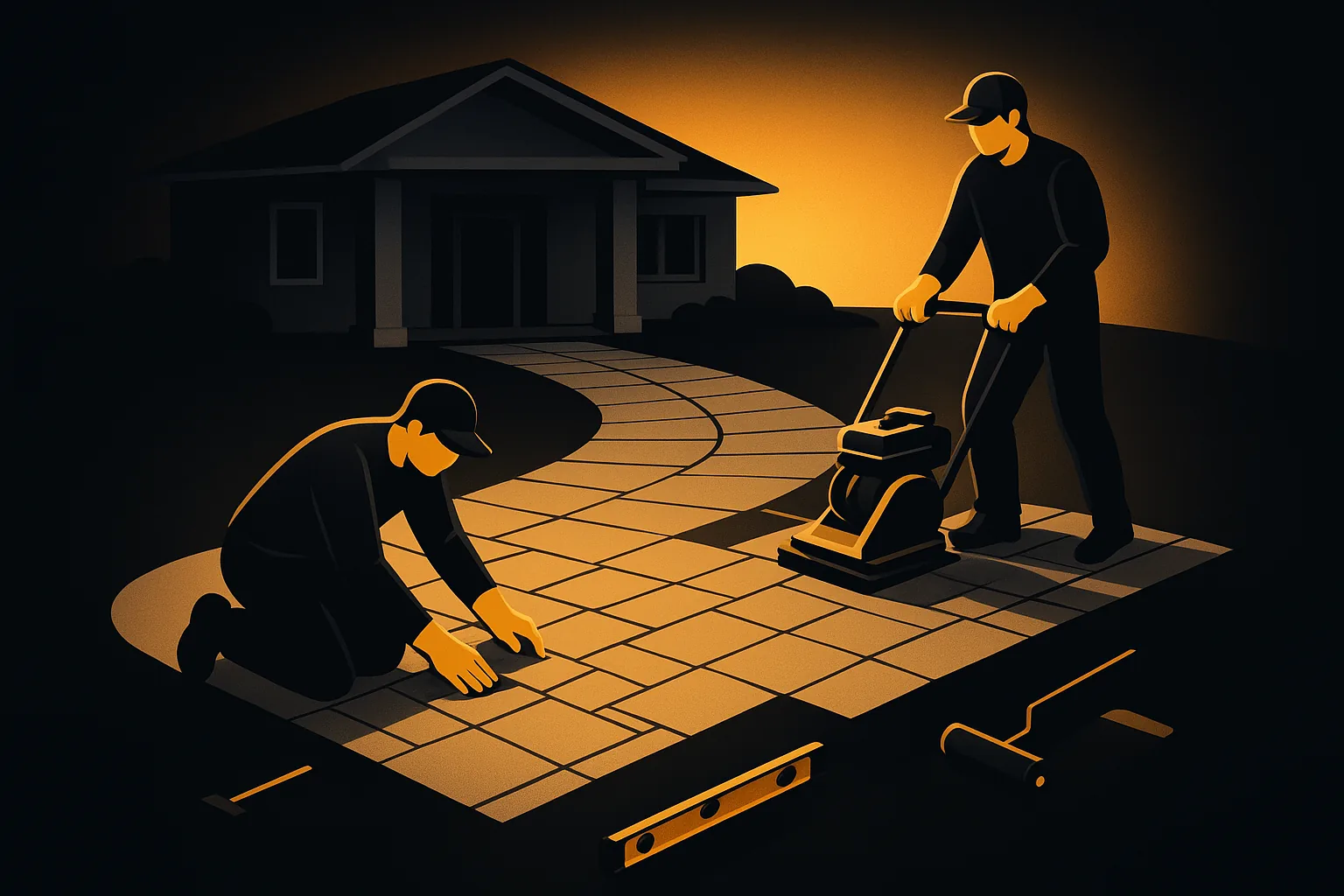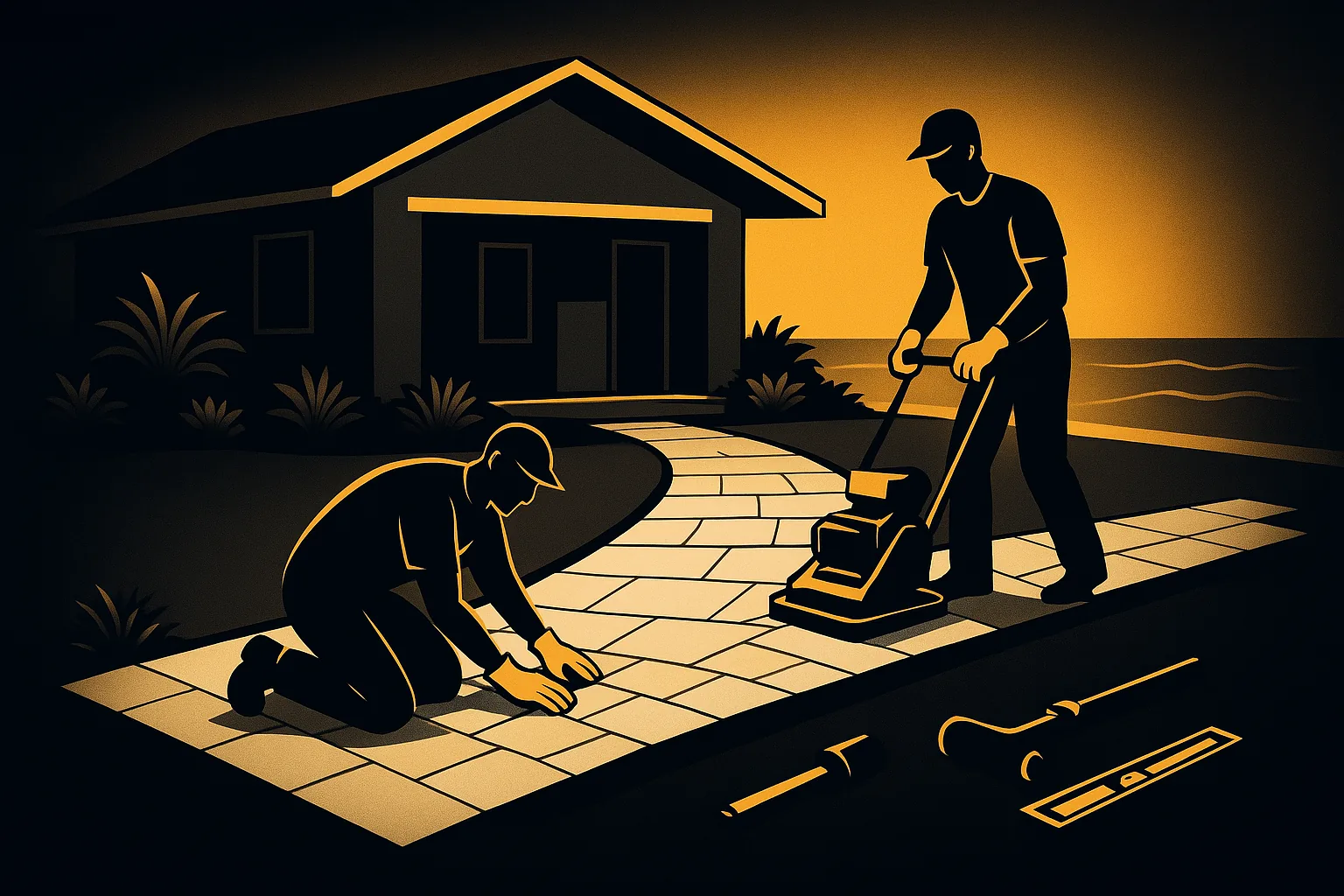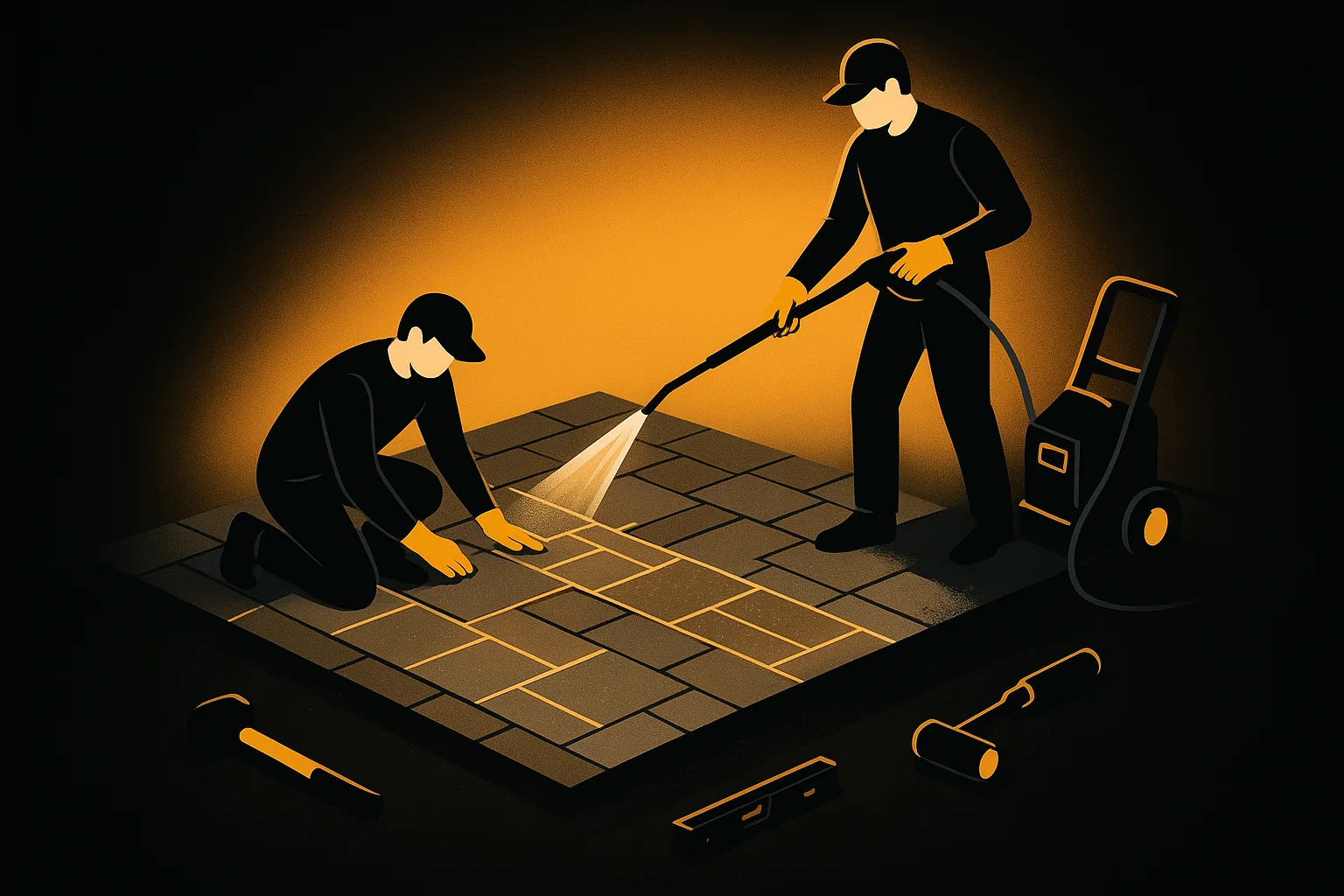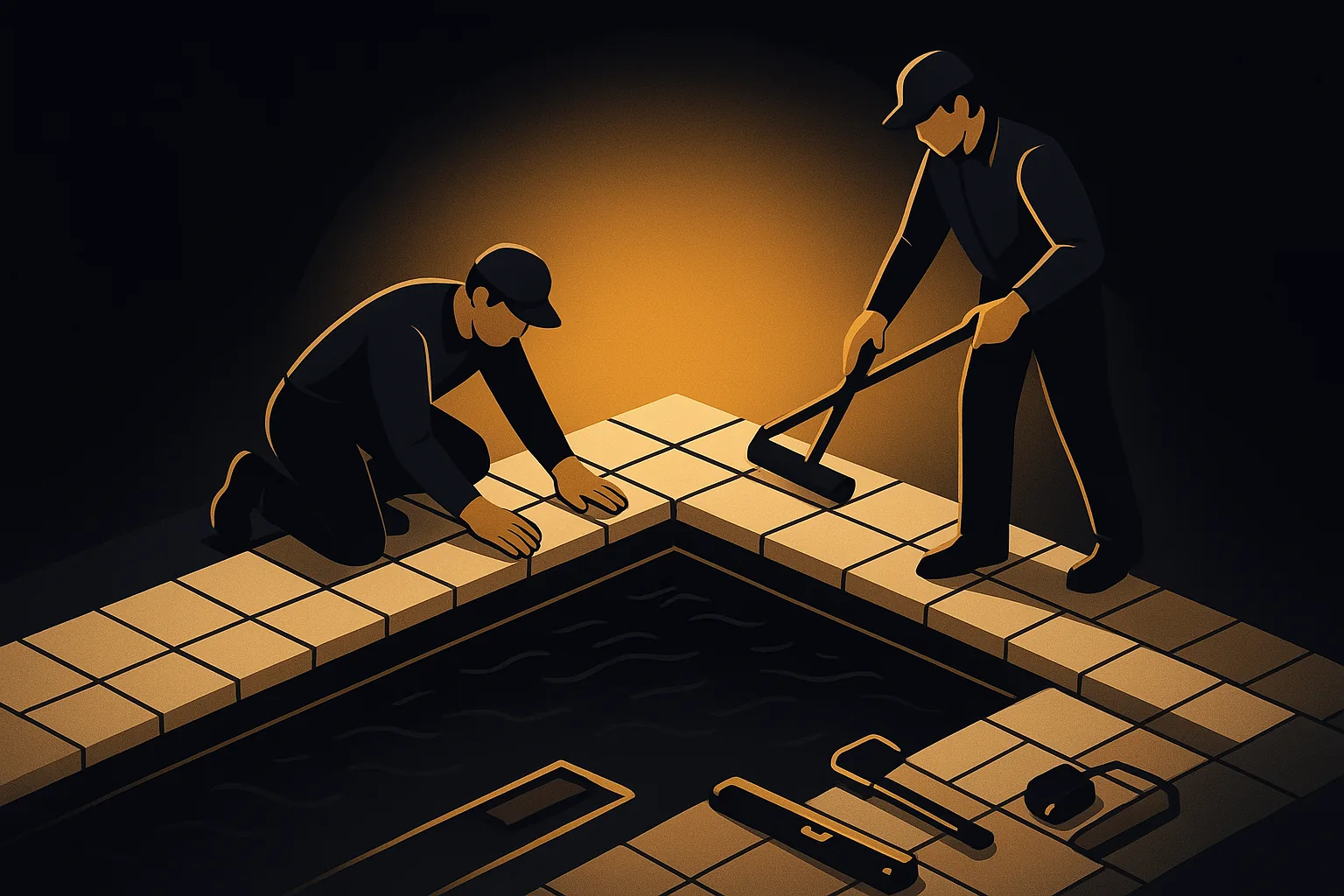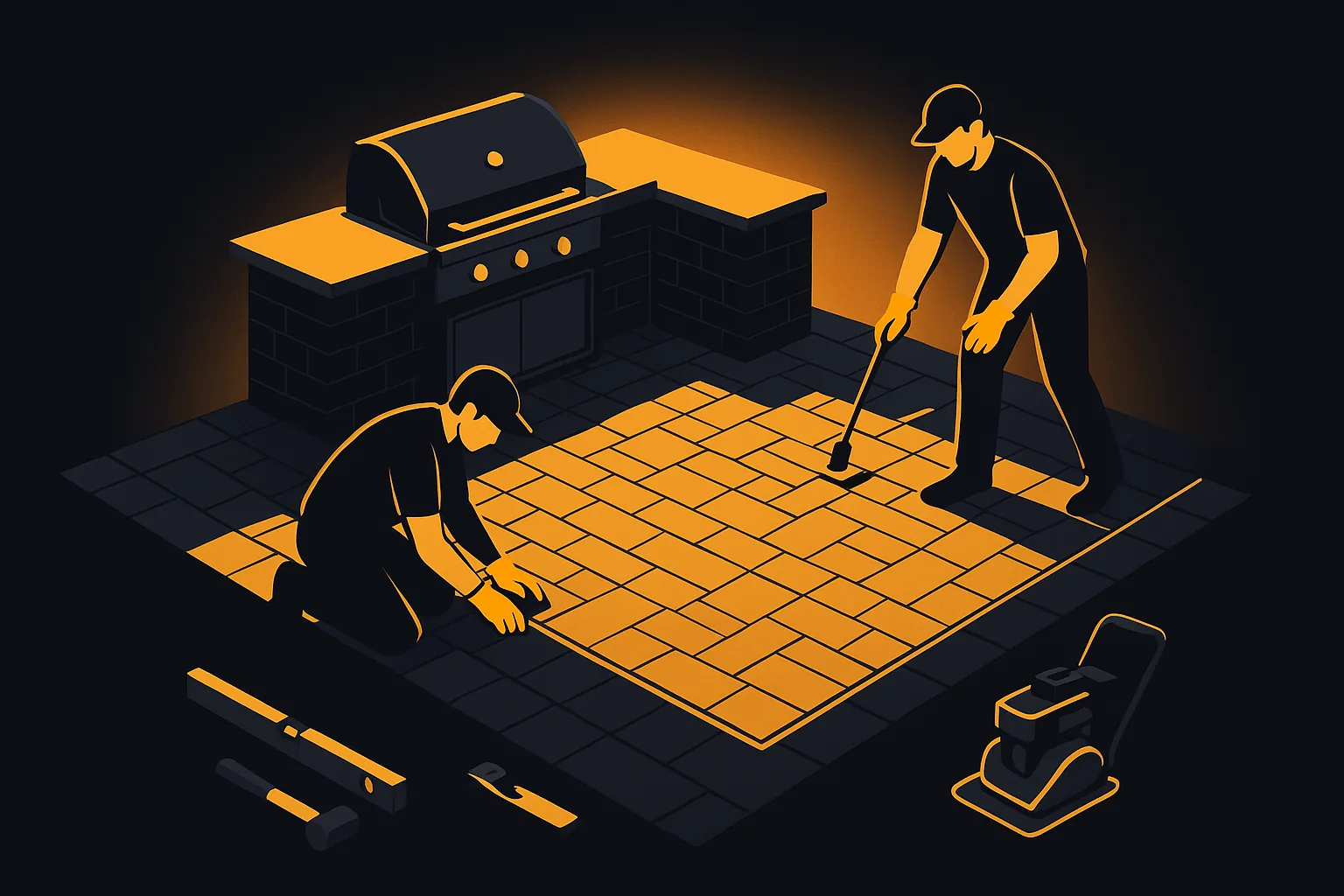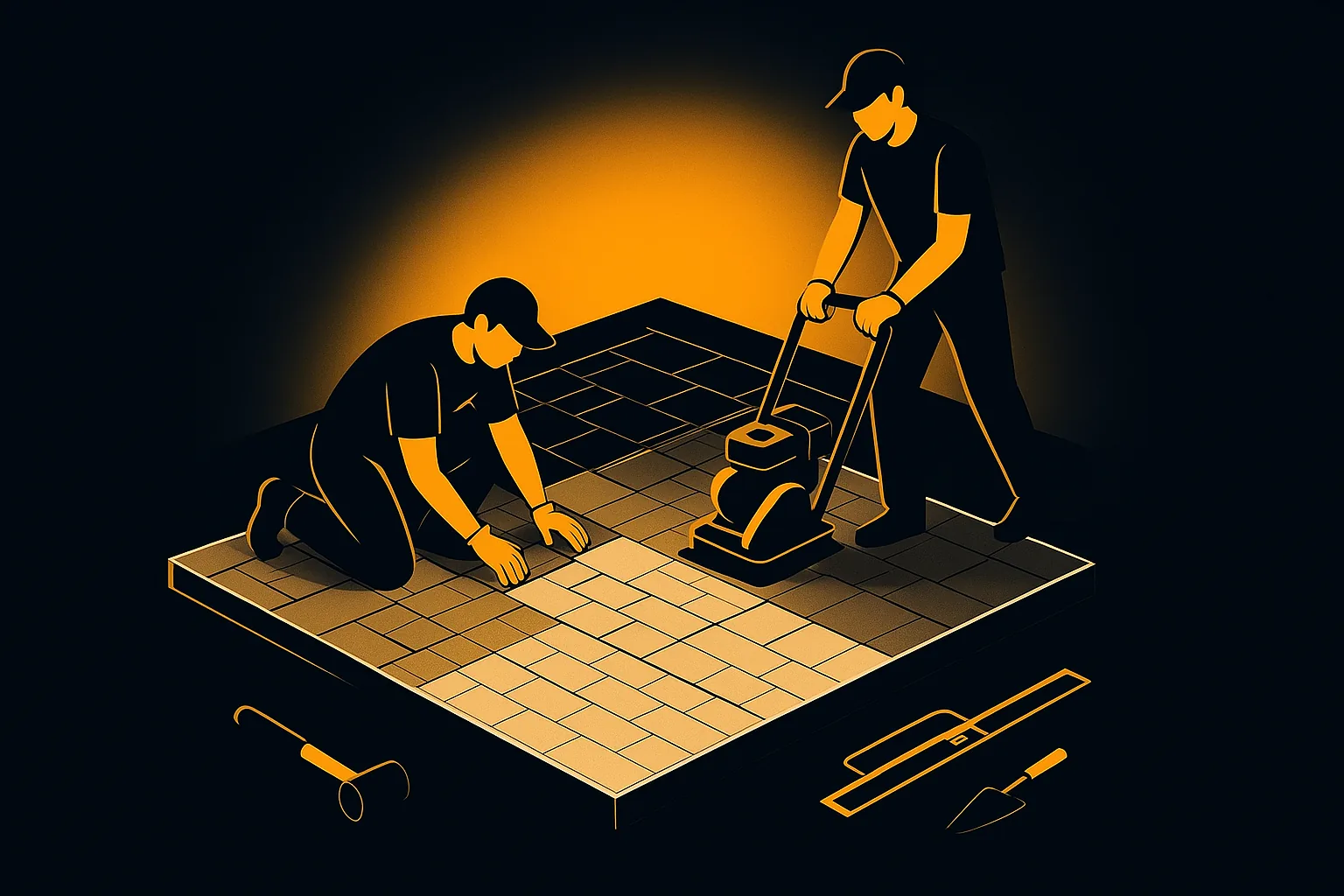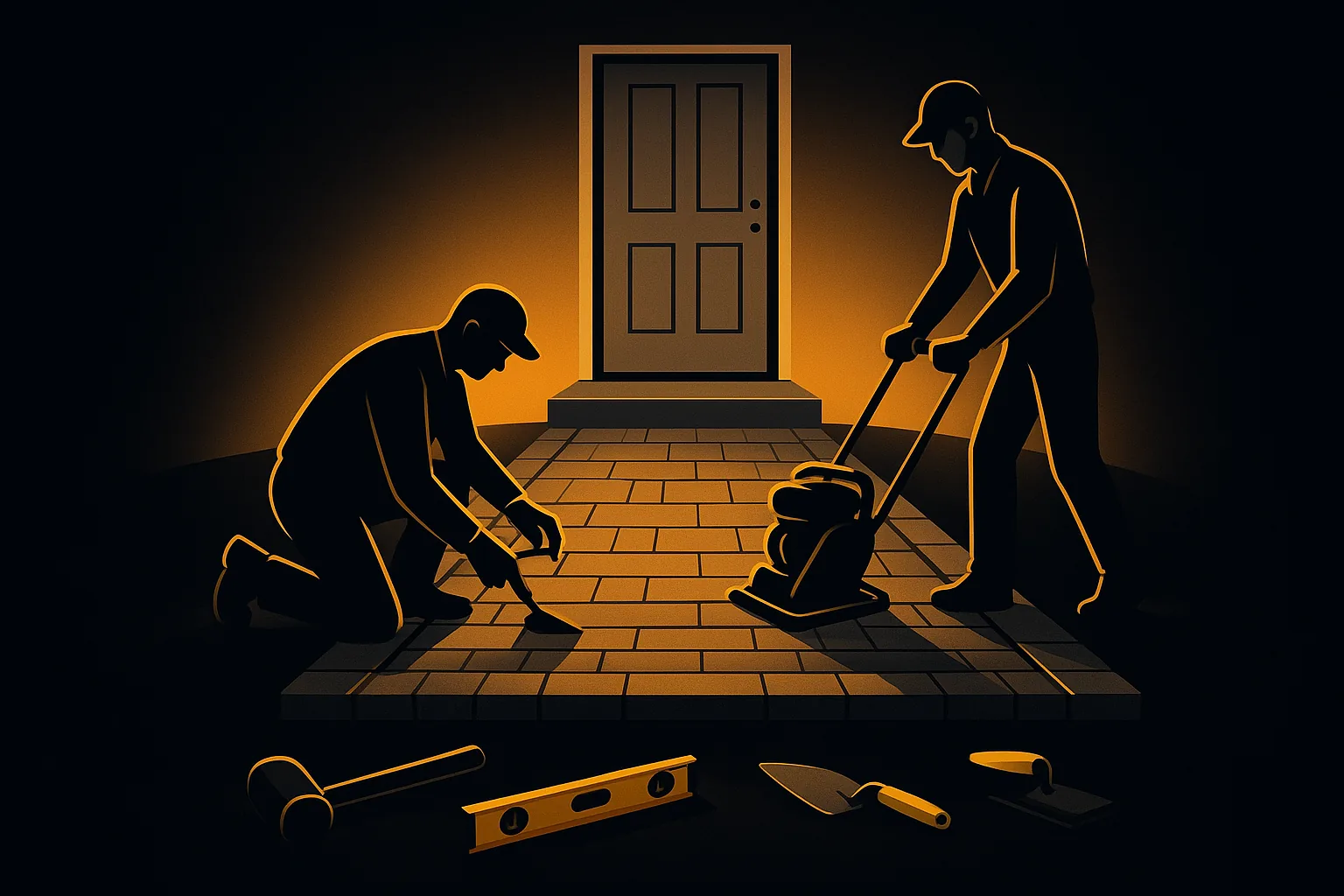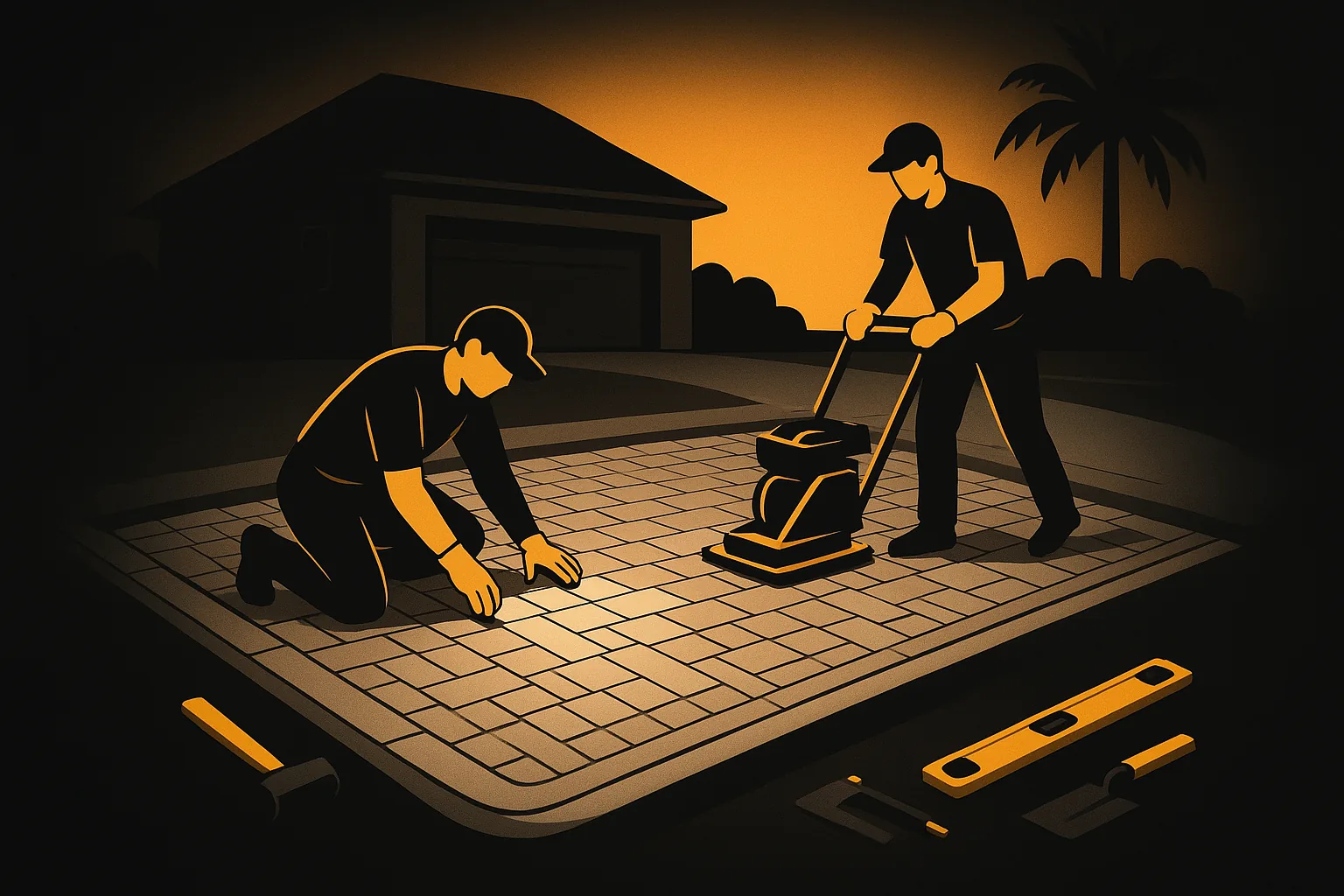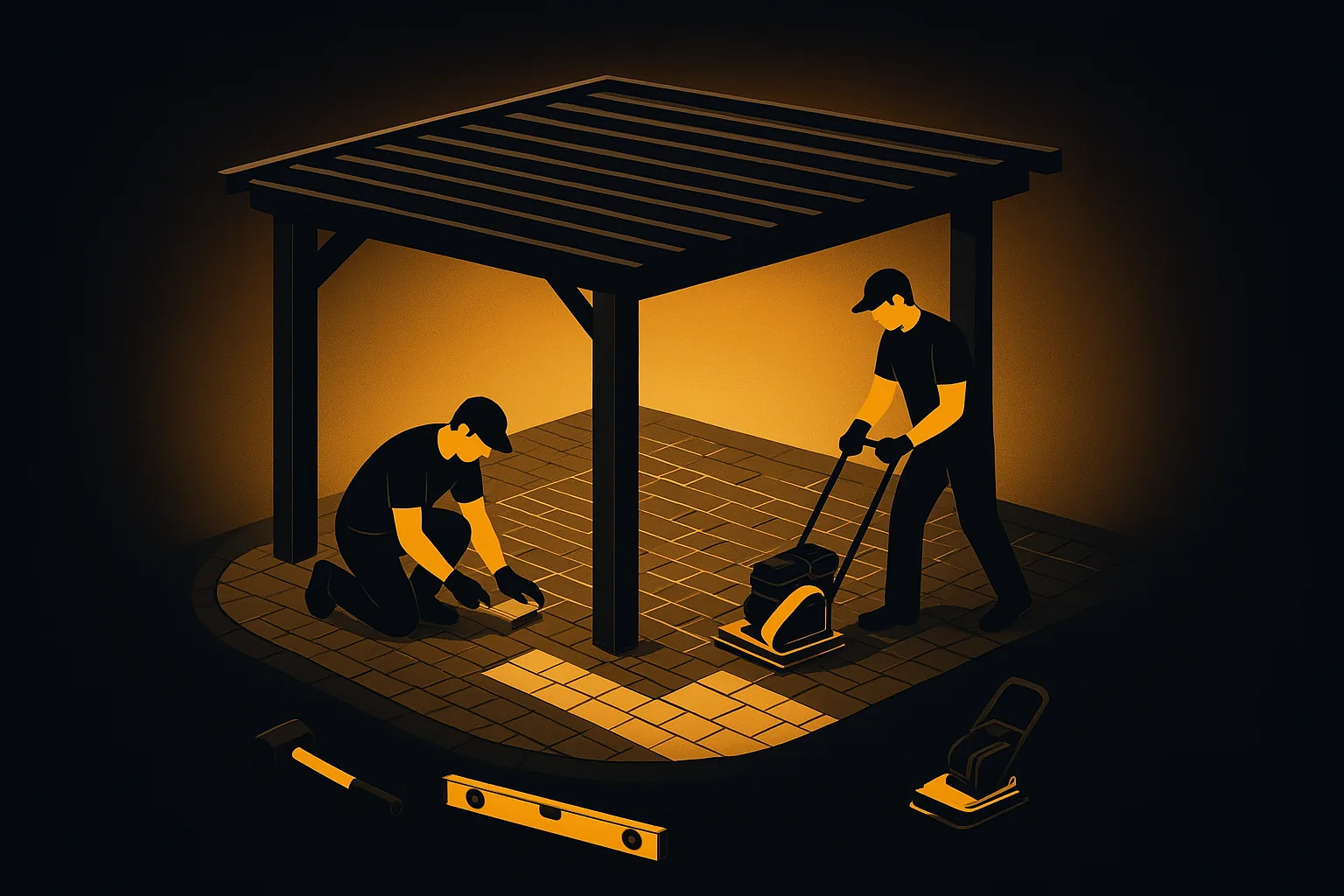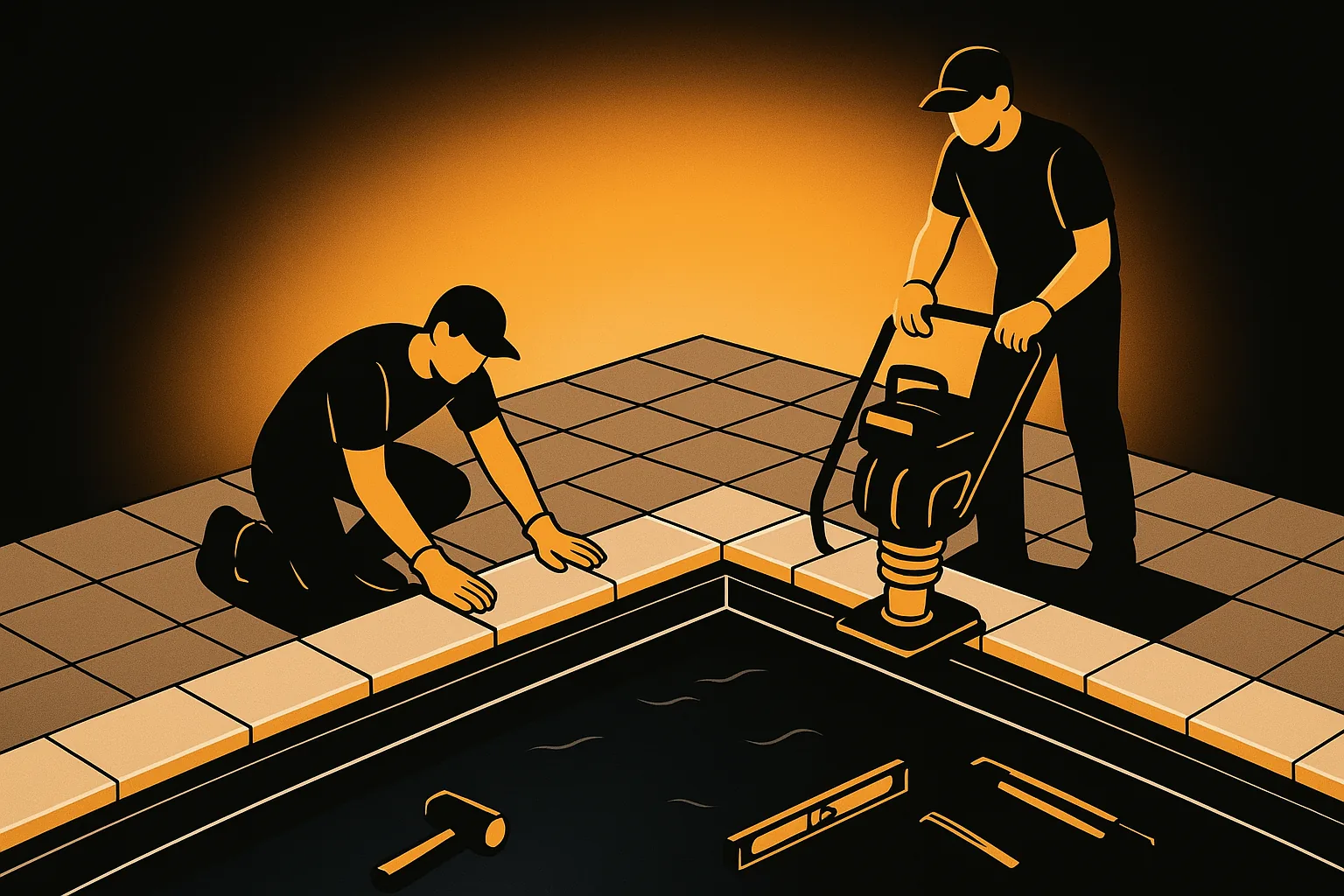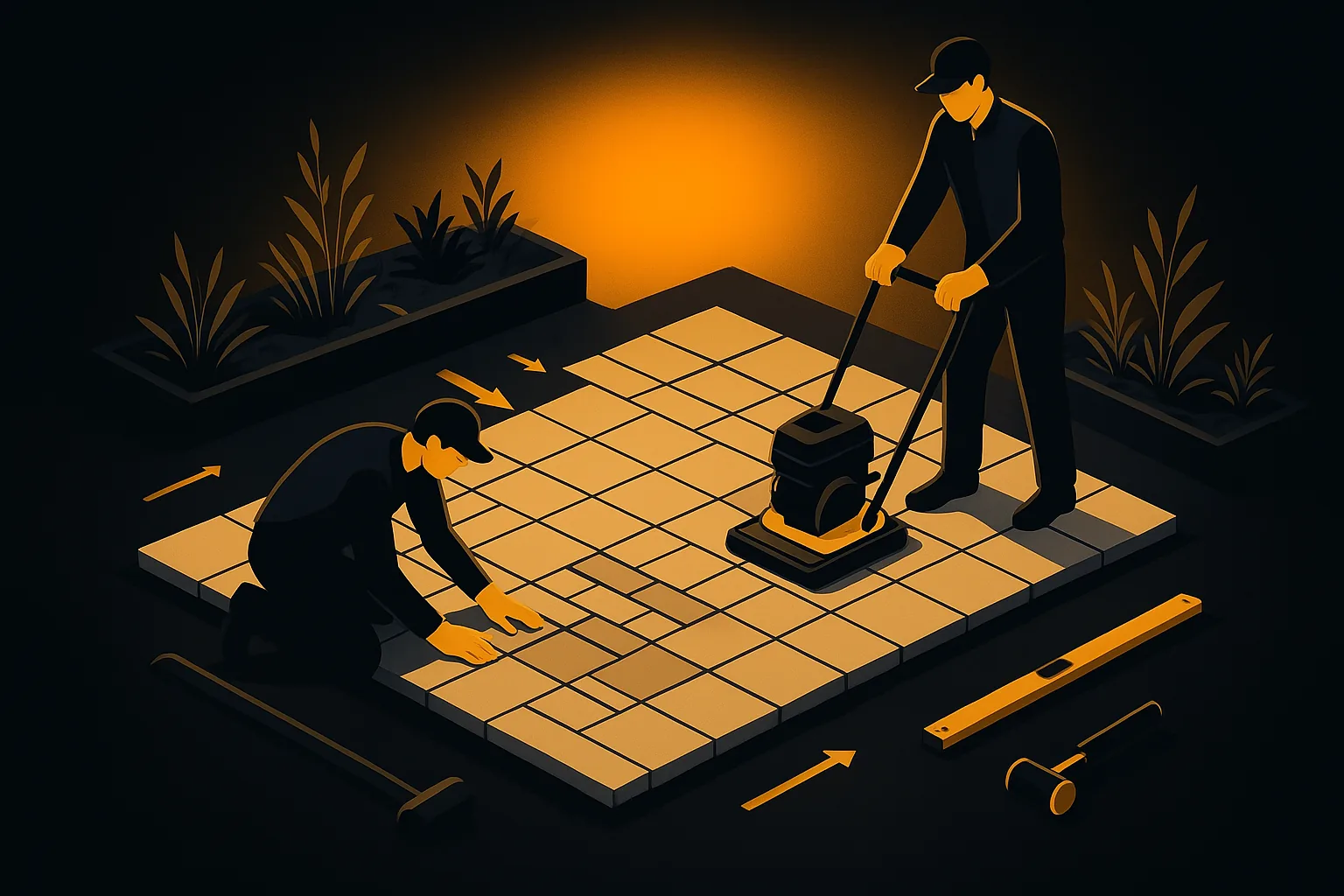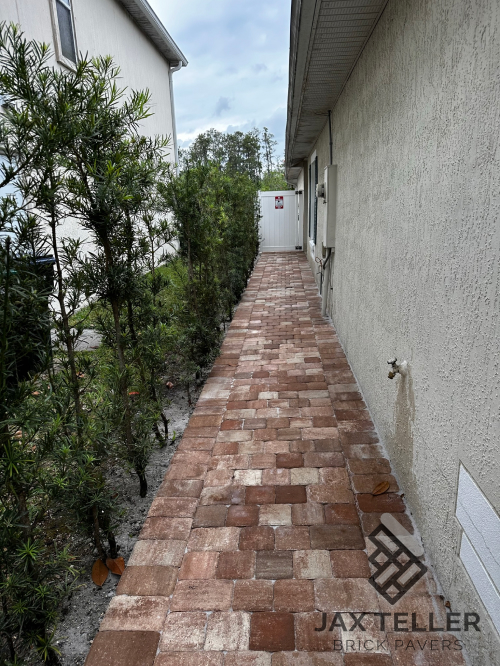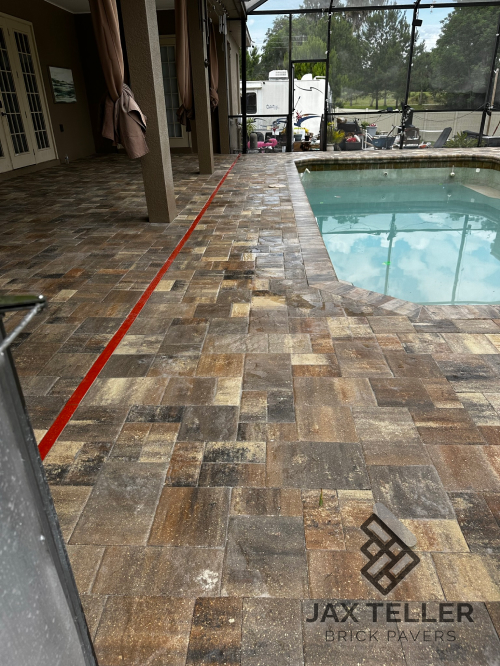

Travertine paver repair benefits begin with separate surface units rather than one continuous pour. Therefore, a qualified crew can open a defined area and investigate changes below it. The crew can then rebuild that zone without automatically replacing the entire pool deck.
That advantage is practical, not magical. In particular, a lifted stone can chip, and a replacement can vary in color. A widespread base problem may also extend beyond the visible symptom. A good repair plan uses modular access to diagnose the cause while setting honest expectations about the finished appearance.
Travertine paver repair benefits come from controlled access
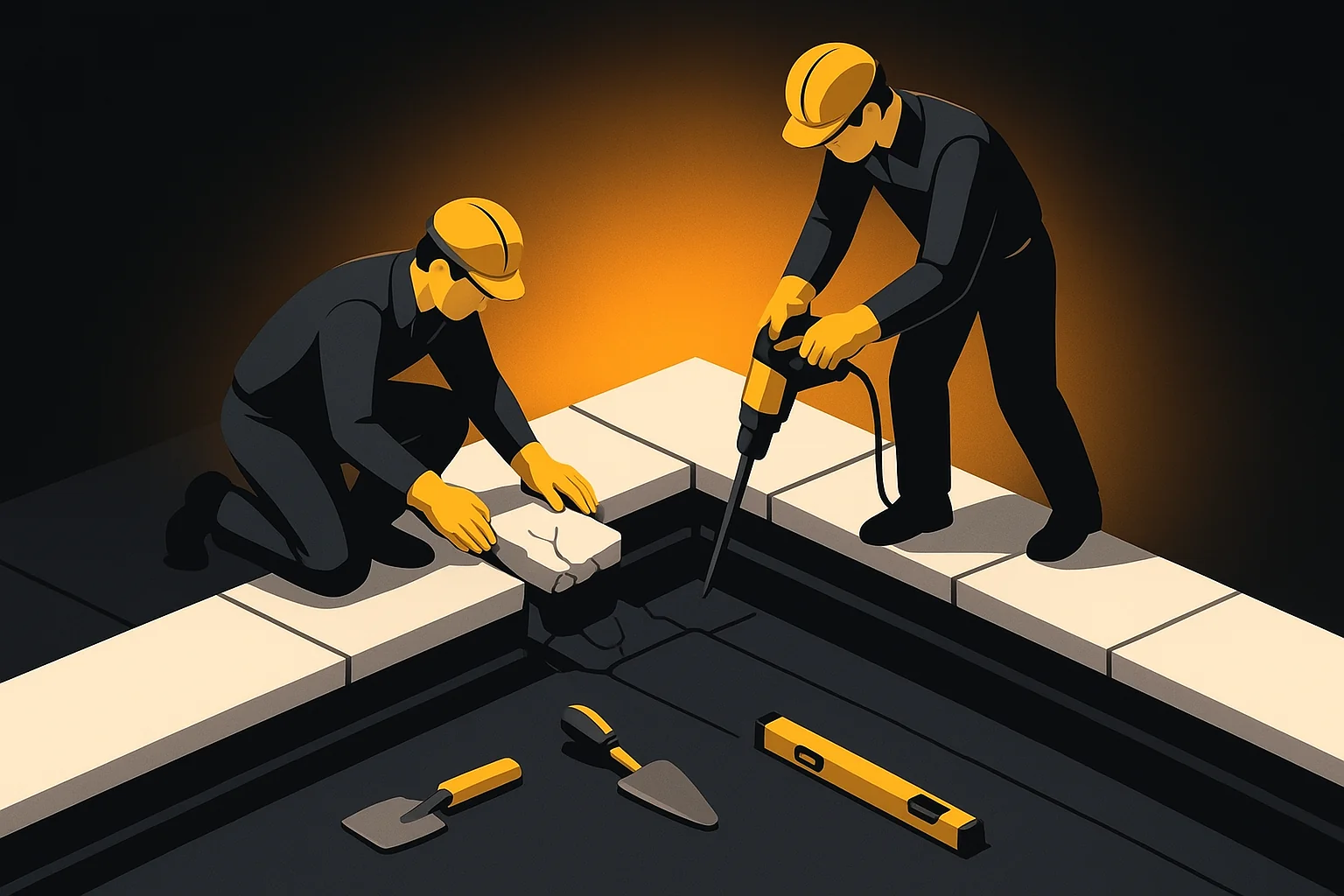
When part of a poured deck needs investigation, opening the surface creates a cut or demolition boundary. That boundary crosses a continuous material. By contrast, a modular travertine field has existing joints around each unit. Crews can use those joints to define a smaller access area. However, the stone, setting system, and surrounding conditions must allow careful removal.
As a result, the first repair question becomes more precise. Is the symptom limited to one stone, one edge, a short utility route, or a broader section of supporting material? That distinction helps the contractor choose an investigation area based on evidence rather than treating every crack, low spot, or loose unit as the same problem.
Individual units create a reversible opening
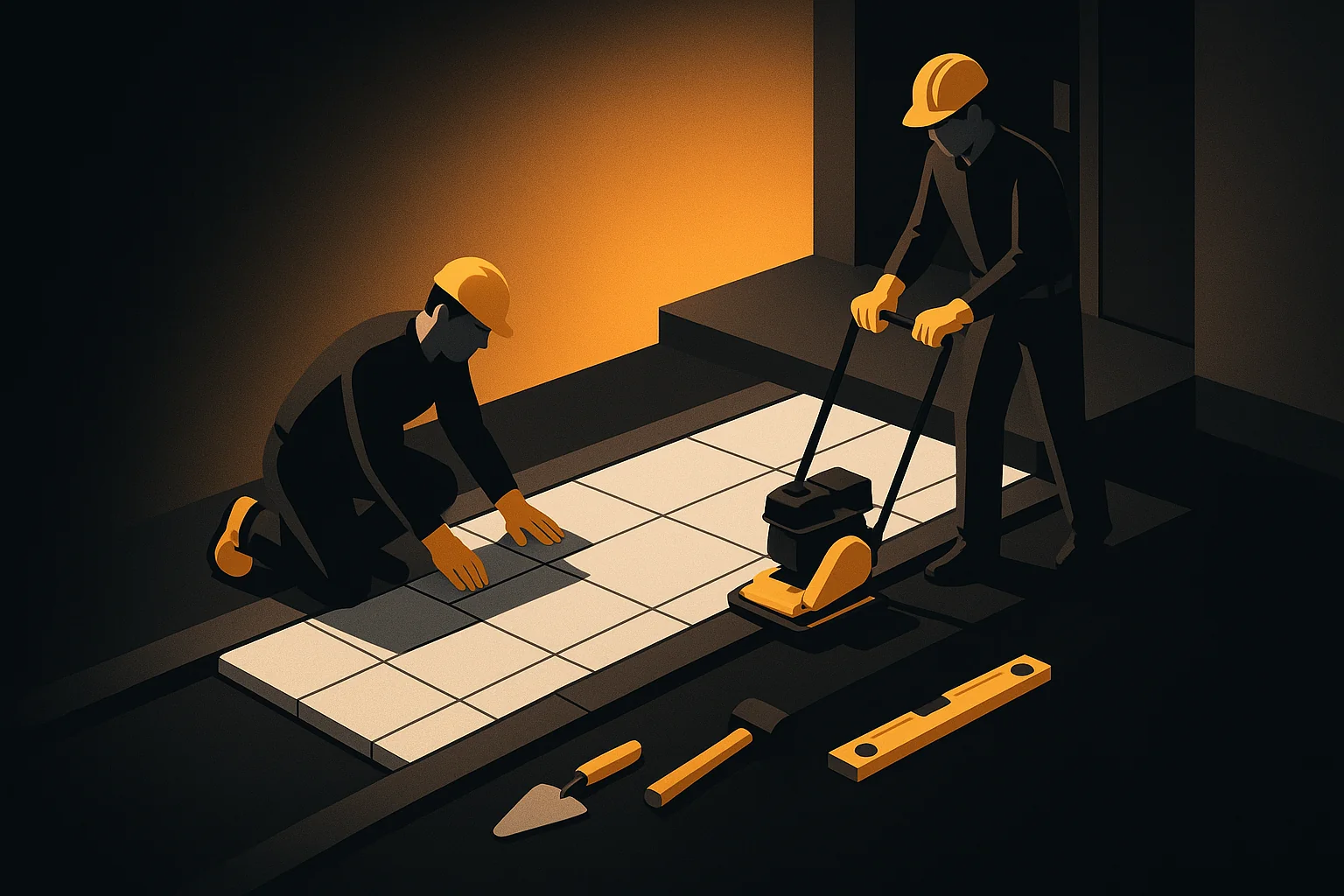
A technician may begin at a joint or removable edge and work inward to reduce damage. However, the exact method depends on the installation assembly and condition of the stone. Some units may come free cleanly, while others may require replacement. Therefore, the repair allowance should include more than the single piece that first drew attention.
Once the area opens, the crew can observe bedding, base elevation, moisture evidence, roots, and utility trenches. In other words, modular access turns a surface symptom into an opportunity for direct inspection. The repair can then address the actual cause rather than merely leveling the top.
Localized access does not mean a cosmetic patch
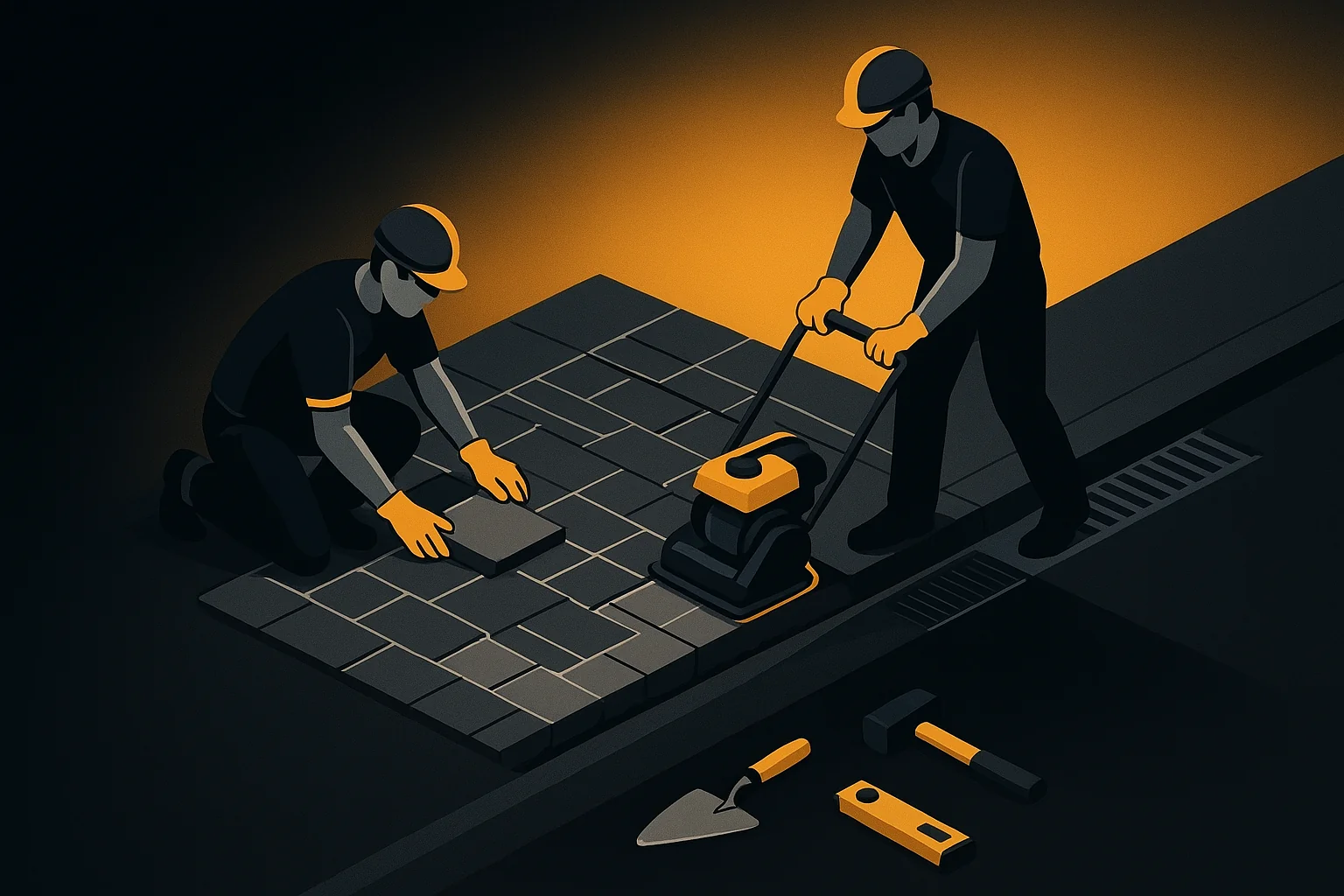
A quick reset may look acceptable for a short time even when weak material remains below. Consequently, a durable localized repair often extends beyond the lowest or loosest unit. The crew needs enough room to remove unsuitable material, rebuild transitions, compact appropriately, and tie the corrected zone into stable surroundings.
Similarly, drainage must stay part of the diagnosis. A depression can result from settlement, but it can also collect water that worsens nearby conditions. Therefore, the contractor should check the intended surface flow, edge discharge, drains, and adjoining deck elevations before restoring the final layout.
Base correction is often the real repair
The visible travertine is only the top layer of a system. Beneath it, the supporting assembly must carry use loads while maintaining the planned elevation. If that support settles or washes into a void, replacing the stone alone will not correct the geometry. Instead, the crew must rebuild the affected layer according to the verified site condition.
For example, a narrow settled line may follow a utility trench that received different compaction from the surrounding area. Elsewhere, water may escape at an unrestrained edge and carry fine material with it. Because the causes differ, the excavation limits and corrective work differ as well.
Travertine paver repair benefits support root-cause work
Travertine paver repair benefits matter most when the opening exposes enough of the system for a sound correction. Accordingly, the technician should document what appears below and compare it with stable areas. The scope should remain flexible until the concealed condition is understood.
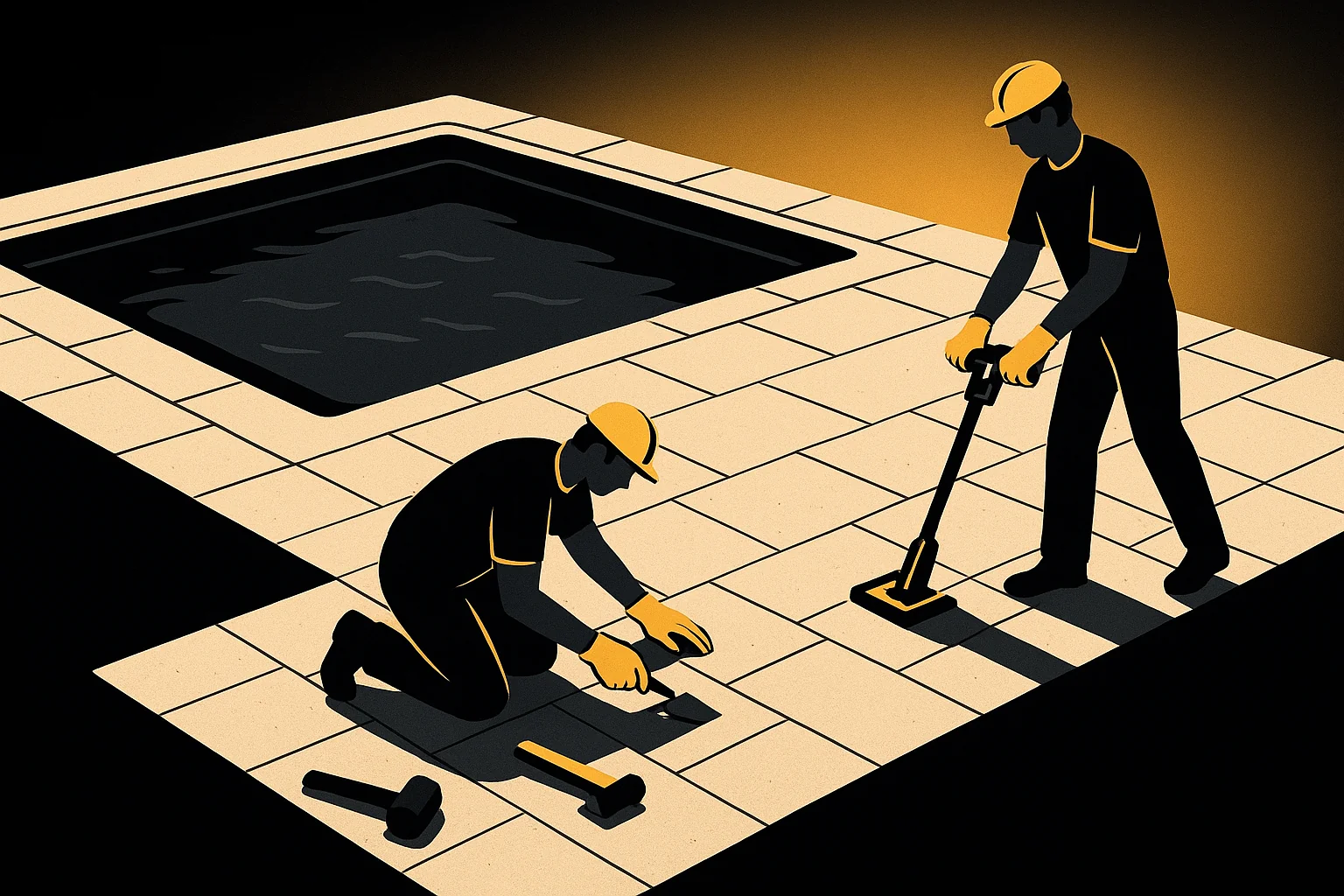
Moreover, the repair should restore the intended relationship among base, bedding, stone thickness, and joints. Adding loose material only at the surface can create uneven support. In turn, a stone may rock or concentrate force at a corner. Careful preparation distributes support across the unit instead.
Edges and transitions can expand the scope
A problem beside coping, a drain, a screen enclosure, or another paving material needs special attention. Specifically, those boundaries control movement, elevation, and water paths. The repair may require work on the adjoining detail, even when most of the travertine field remains undisturbed.
Likewise, movement joints and pool-edge interfaces should remain functional after the units return. A repair that rigidly bridges a designed separation can transfer stress to the stone or adjacent construction. Therefore, the responsible contractor should identify those details before closing the access area.
Modular decks can simplify access to buried components
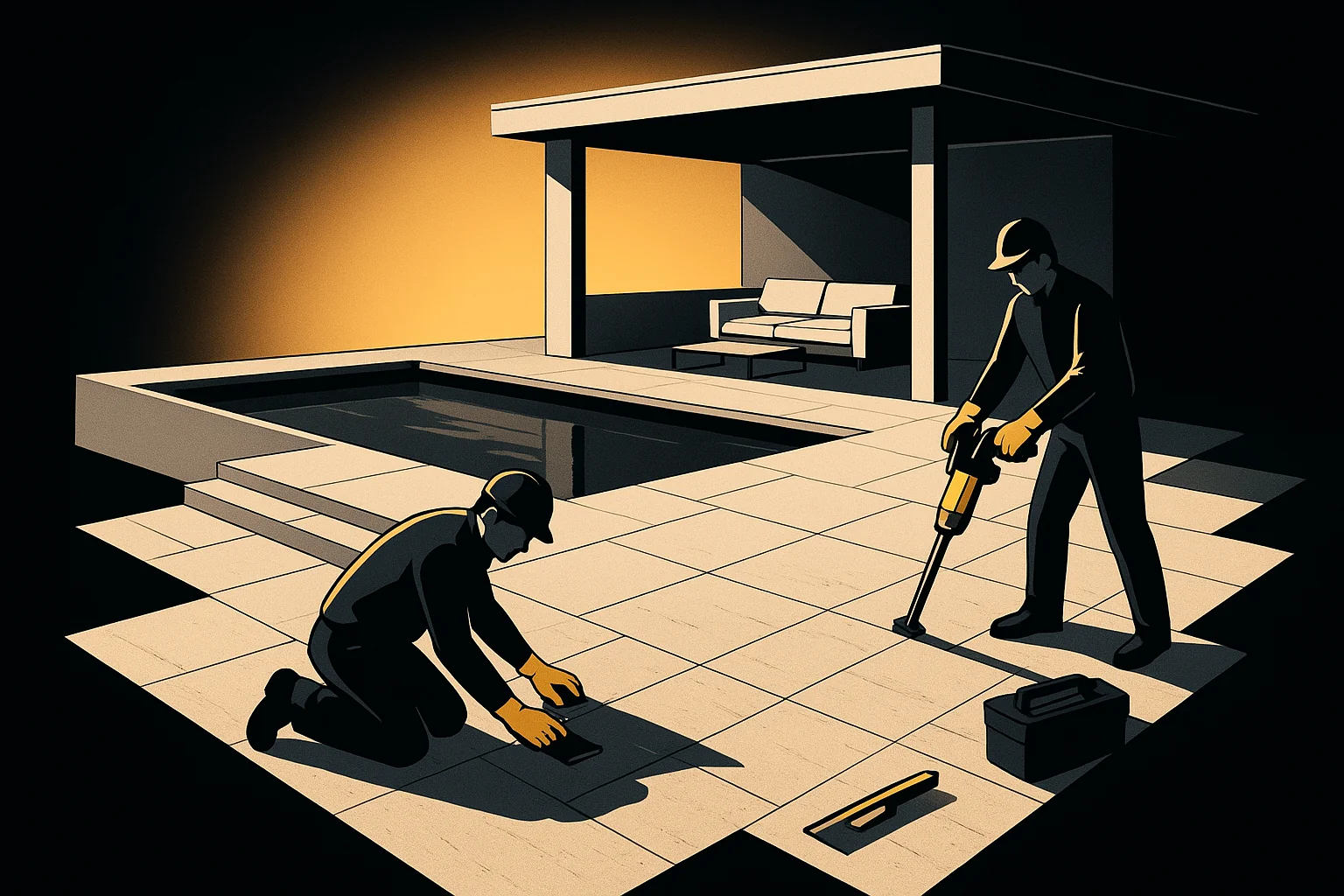
Pool decks often conceal pipes, conduits, bonding components, drains, or sleeves. When a qualified trade needs access, removable units can create a targeted route from the surface. Consequently, the project may avoid a long saw-cut scar across a continuous finish, although stone removal and reinstatement still require care.
Before opening the deck, however, the team should use available plans, service records, and detection methods to narrow the search. Random lifting can damage good work and increase blending challenges. A coordinated access map keeps the opening as purposeful as possible.
Document the route before closing it
After a buried repair, take measured photographs while the route remains visible. Then record fixed landmarks, depth information supplied by the responsible trade, and any new fittings or sleeves. As a result, the next service call can begin with evidence rather than reopening a broad section.
In addition, identify which stones were replaced and where spare material is stored. That record matters because natural stone varies, and future owners may not know the original product or blend. A short project file can preserve information that the finished deck no longer shows.
Color blending is part of repair planning
Travertine contains natural differences in tone, movement, pores, and markings. Therefore, even unused units from the same purchase may not look identical to the stones surrounding a repair. Weather exposure and use can increase that contrast. An honest contractor plans for a reasonable blend rather than promising an invisible replacement.
For this reason, reserve pieces should represent the range installed across the deck, not only one preferred shade. The August guide to travertine paver color variation explains how distribution decisions turn natural differences into a controlled composition. The same thinking helps a repair feel integrated.
Blend a small zone instead of forcing one exact match
If a new unit stands out, the crew may be able to redistribute several compatible stones within the local field. However, every extra lifted piece creates handling risk and labor. The decision should balance visual improvement against unnecessary disturbance to stable work.
Additionally, orientation can affect how veining and shade read from the main viewing direction. Dry-laying candidate pieces in the opening allows the homeowner and installer to compare the blend before final placement. Natural variation will remain, but it can look intentional rather than isolated.
Repairability should influence the original renovation plan
A repair-friendly deck starts long before a problem appears. During a renovation, the team can identify utility corridors, preserve sensible access, order representative spare material, and photograph concealed work. Consequently, later service becomes a planned operation instead of an improvised search.
In addition, the August article on travertine pool deck remodeling benefits explores phased renovation and future access. In this context, repairability becomes one design criterion among drainage, transitions, patterns, and pool-edge coordination.
Build a useful spare-material kit
- Keep full units from the installed batch in more than one representative shade.
- Store pieces flat, dry, and protected from contamination or accidental disposal.
- Record the supplier, product name, nominal size, thickness, finish, and purchase date.
- Photograph the unopened labels and the installed blend in neutral daylight.
- Save a simple plan showing drains, utilities, sleeves, edges, and movement details.
- Retain contractor and trade records with the property documentation.
The Natural Stone Institute offers educational resources about natural stone and industry practices. Nevertheless, general resources cannot diagnose a specific pool deck. A site assessment must account for the actual stone, installation system, pool interface, and concealed condition.
A practical localized-repair decision list
- Mark every visible symptom rather than focusing only on the worst unit.
- Check nearby elevations, drainage paths, drains, edges, and transitions.
- Review utility records and identify any buried route near the affected area.
- Open enough of the modular field to investigate stable boundaries.
- Document the concealed condition before removing or adding material.
- Correct the verified cause and rebuild support through the transition.
- Dry-lay original and spare stones to evaluate the local color blend.
- Record the completed repair and retain remaining representative units.
When settlement, rocking units, or access needs affect a surface, JaxTeller’s paver repair and installation service can evaluate the condition. The team can then define an appropriate investigation. In particular, a measured review helps separate an isolated unit issue from a base, drainage, edge, or utility problem.
Define the repair boundary with evidence
A homeowner may point to one uneven stone, yet the useful repair boundary rarely follows that single outline automatically. First, the contractor should tap, step, and measure the surrounding field using methods appropriate to the surface. A pattern of movement can show whether the visible unit sits at the center or edge of a larger condition.
Next, compare the problem area with stable references. These may include a drain frame, coping line, wall transition, or unaffected section. Relative elevations help distinguish an isolated high piece from a broader settled zone. Consequently, the initial opening can target the most informative location. The scope can still expand when concealed evidence requires it.
Separate investigation allowance from repair allowance
An estimate can describe a planned opening and the known restoration work, but concealed conditions may change the final scope. Therefore, ask how the contractor will communicate discoveries, price additional base correction, and protect open work. A clear process is more credible than a fixed promise made before anyone can see below the stone.
In addition, discuss what happens if removed pieces cannot return. The project may use reserved stone, redistribute nearby units, or obtain a complementary replacement. Each option affects labor and appearance differently, so the homeowner should understand the blending strategy before removal begins.
Recognize where modular access has limits
Separate units make targeted access possible, but they do not guarantee that the supporting problem is small. For example, a failed edge, extensive washout, or long disturbed trench can affect many units that still appear level. Once the area opens, the correction should continue to stable conditions rather than stop at the original visual boundary.
Fixed features can also restrict removal. Screen posts, bonded details, pool-edge assemblies, walls, and equipment pads may trap stones or require another trade. Accordingly, the contractor should identify those constraints during the site review and avoid presenting every location as equally accessible.
Weather and active pool use add practical limits. An open repair area needs protection from rain, foot traffic, and contamination while crews rebuild it. Therefore, scheduling should account for safe access, material handling, and any coordination needed to keep the pool or adjacent systems protected.
Finally, visible variation may remain even after structurally sound work. A repaired zone can look newer, cleaner, or differently blended at first. Overpromising invisibility undermines the real advantage, which is controlled access to correct a defined condition with less unnecessary disturbance to stable surrounding work.
Frequently asked questions
Can every travertine paver be removed without breaking?
No. Although joints create useful access boundaries, stone condition and installation details affect removal. Therefore, the repair plan should allow for damaged units and keep suitable spares available.
Will a replacement stone match perfectly?
Usually, a perfect match cannot be guaranteed because natural variation and exposure affect appearance. However, representative spares, dry layout, and thoughtful redistribution can improve the blend.
Does lifting a low paver solve settlement?
Only when the work corrects the cause and rebuilds support properly. Otherwise, adding material near the surface may hide a weak base, drainage issue, trench, or edge condition without resolving it.
Can a crew access a pool line through travertine?
Potentially, yes, when qualified trades identify the route and the deck assembly permits controlled removal. Even so, the team should locate the target carefully and coordinate restoration before opening the surface.
When is a localized repair too small?
A scope is too small when unstable material or the cause continues beyond its boundary. Consequently, the contractor may expand the opening until the corrected area can transition into stable support.
Plan a pool deck that can be serviced honestly
Ready to transform your pool deck? First, ask JaxTeller Brick Pavers whether a modular travertine renovation fits your long-term repair and access plan. You can contact the team, explore completed projects, and see current work on Instagram or Facebook.
For direct help, send a message through WhatsApp, call +1 407-907-8308, or email jaxtellerbrickpavers@gmail.com. In addition, the Largo location appears on Google Maps. Bring photos, repair history, and any spare stone information to the evaluation.
Finally, use a site evaluation to define the repair honestly today. Contact JaxTeller Brick Pavers at +1 407-907-8308 or jaxtellerbrickpavers@gmail.com for your free estimate!
Evaluate whether a modular travertine renovation fits your long-term repair plan.