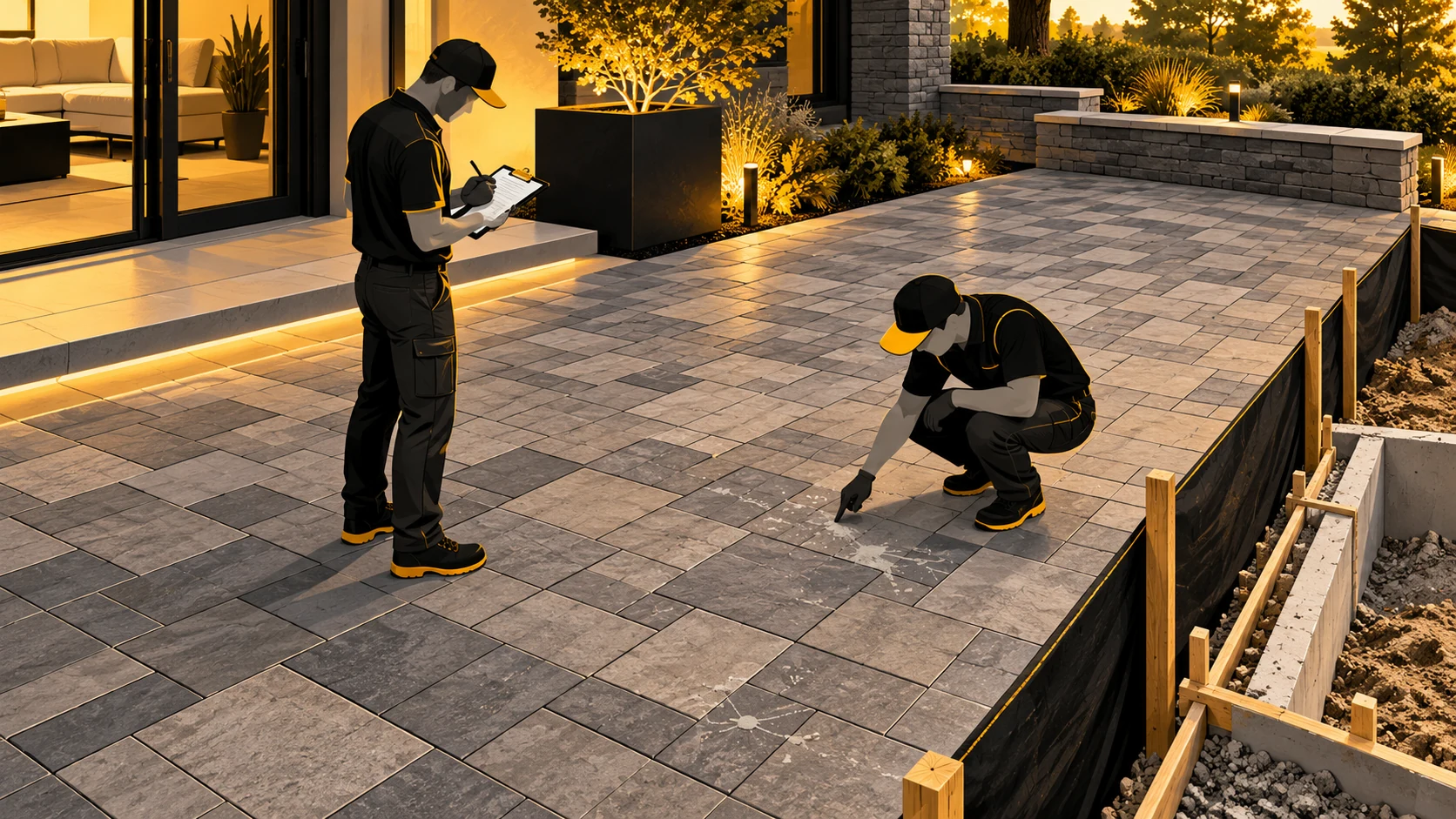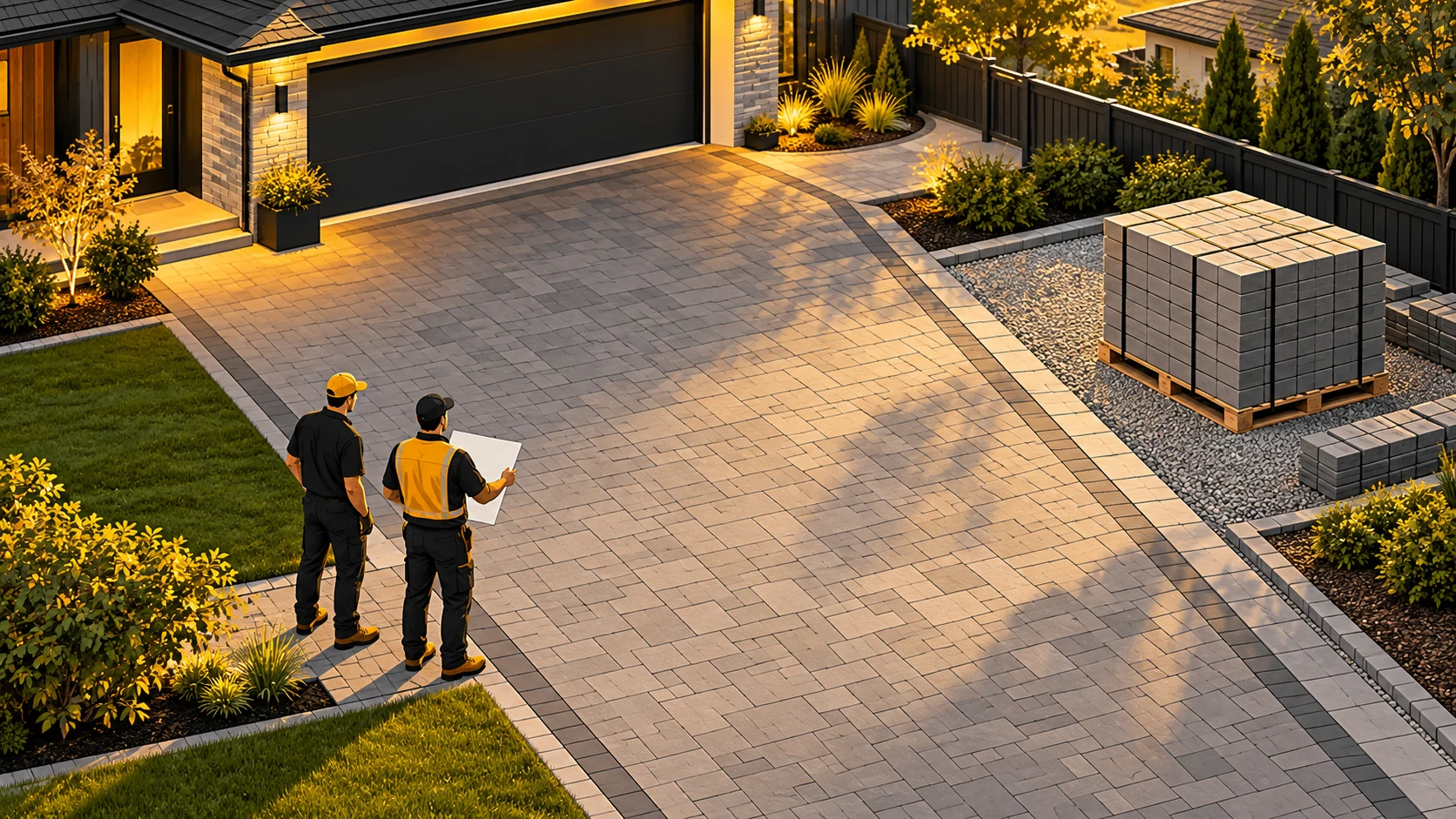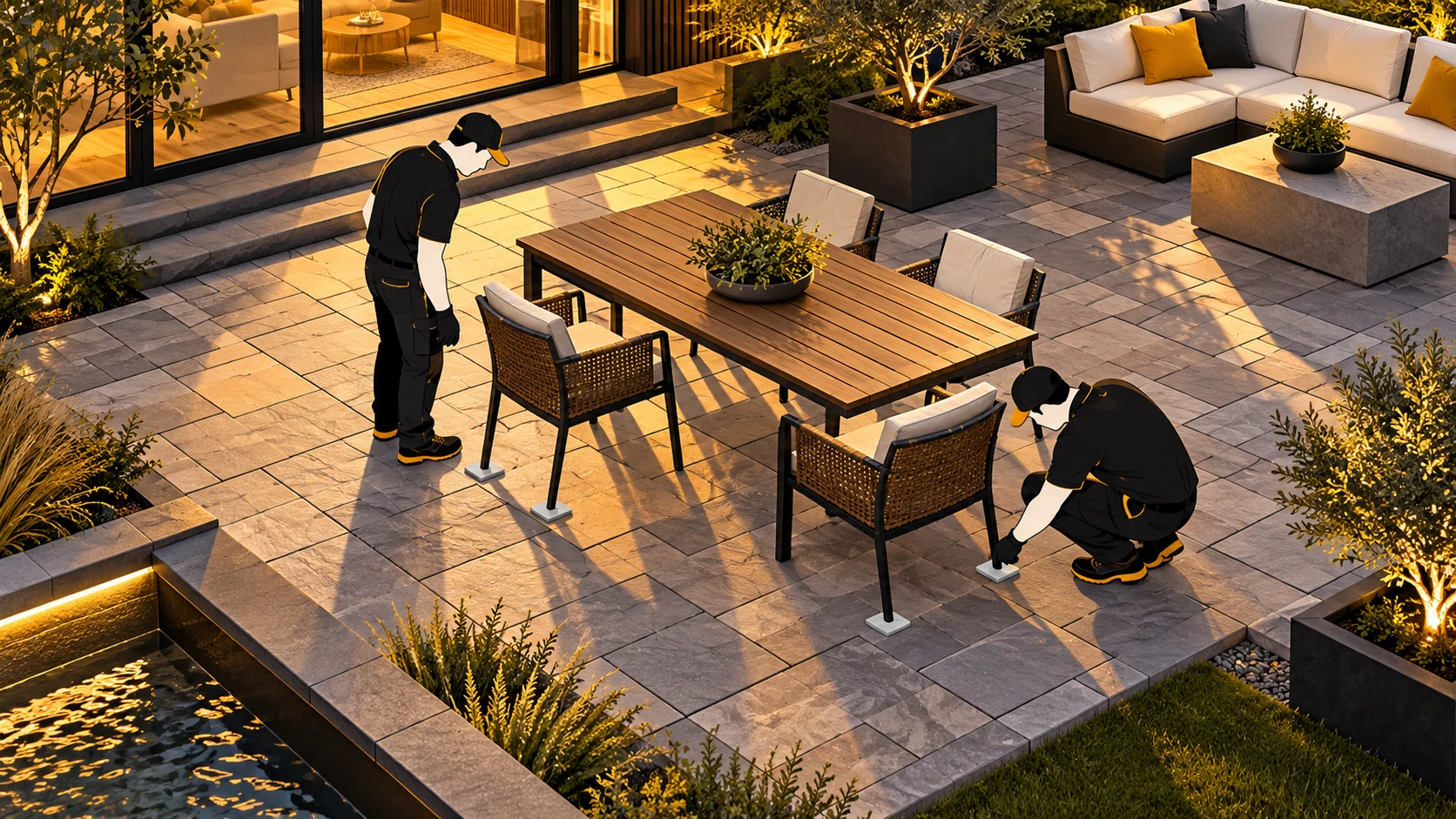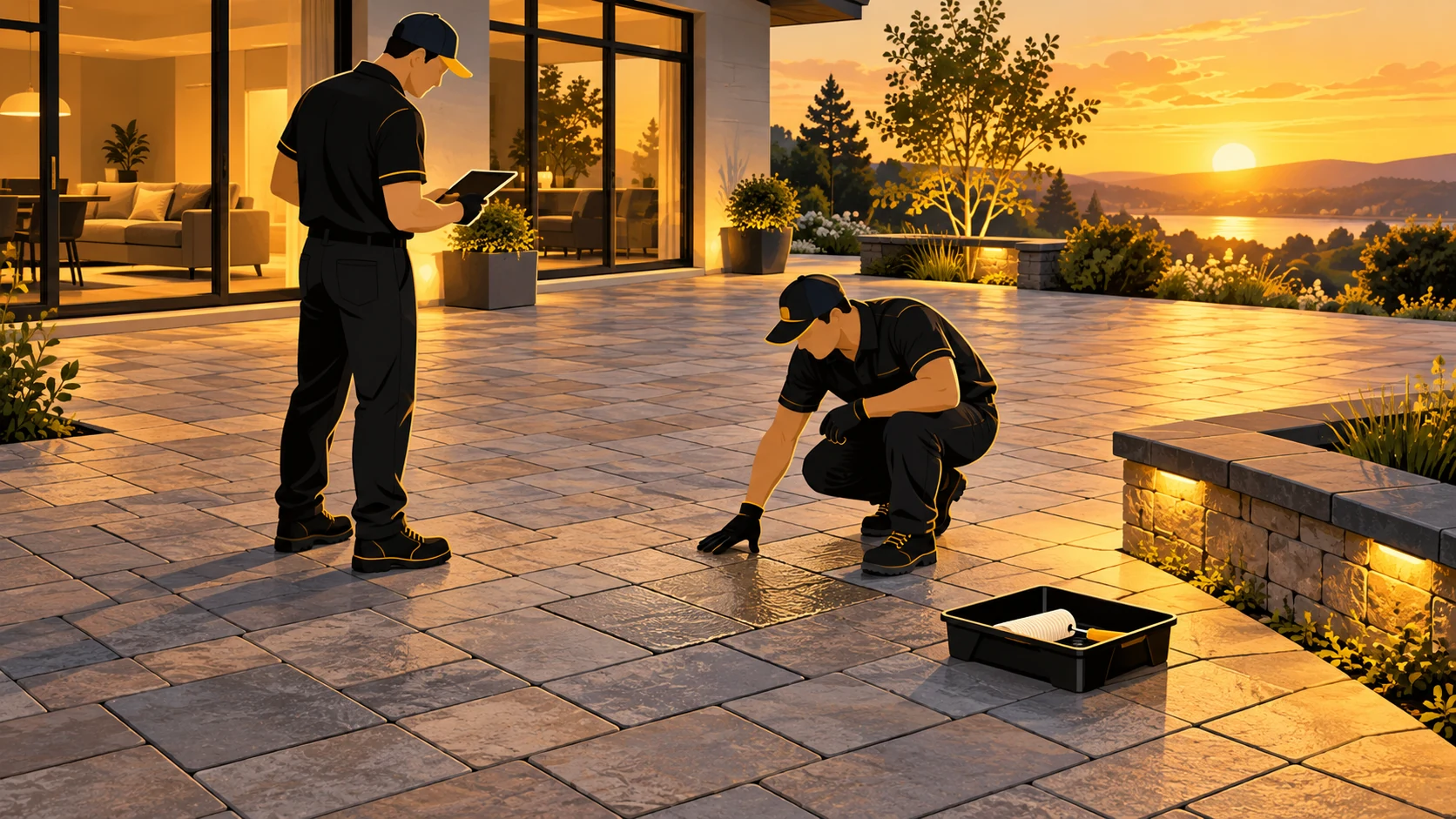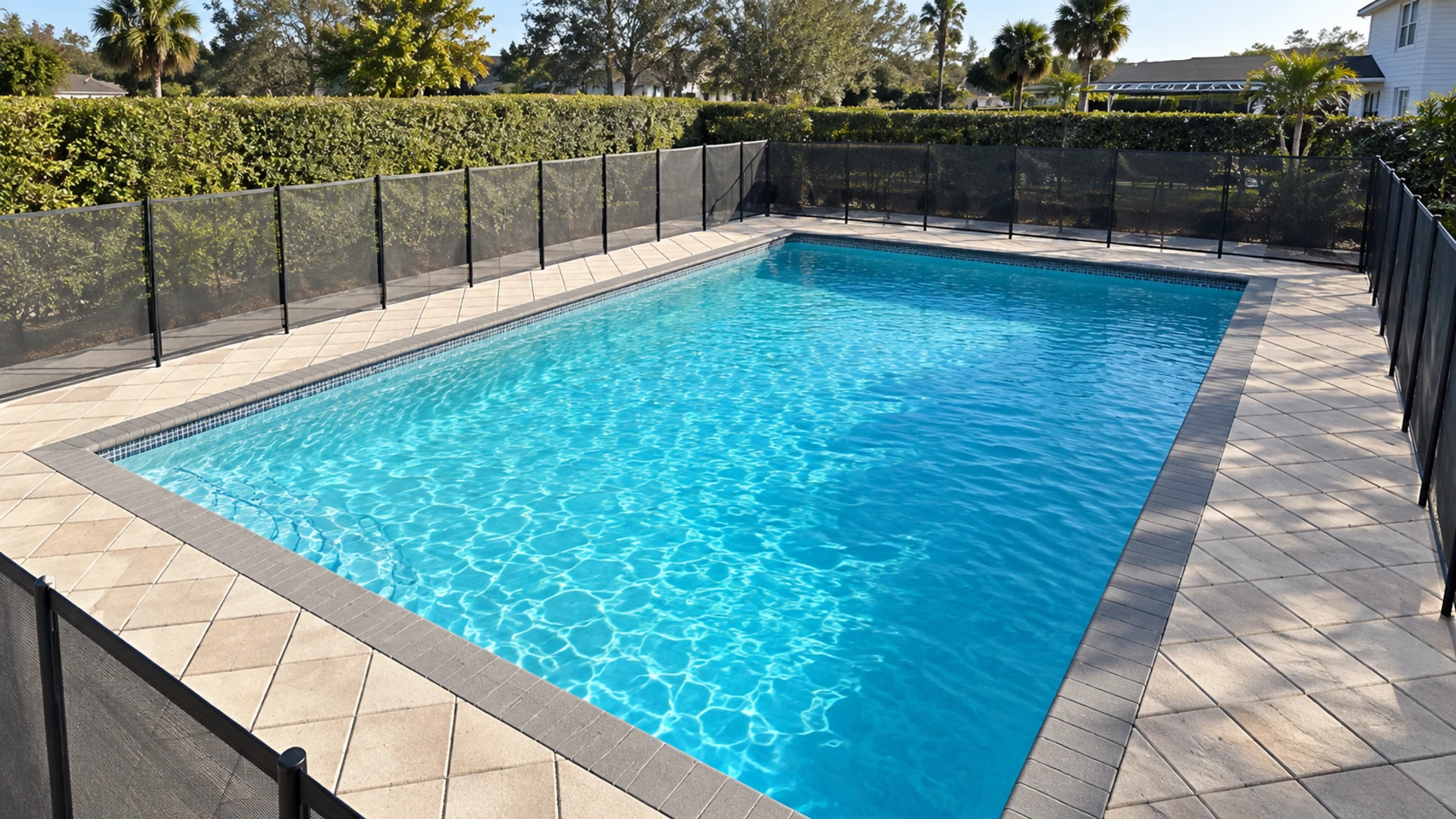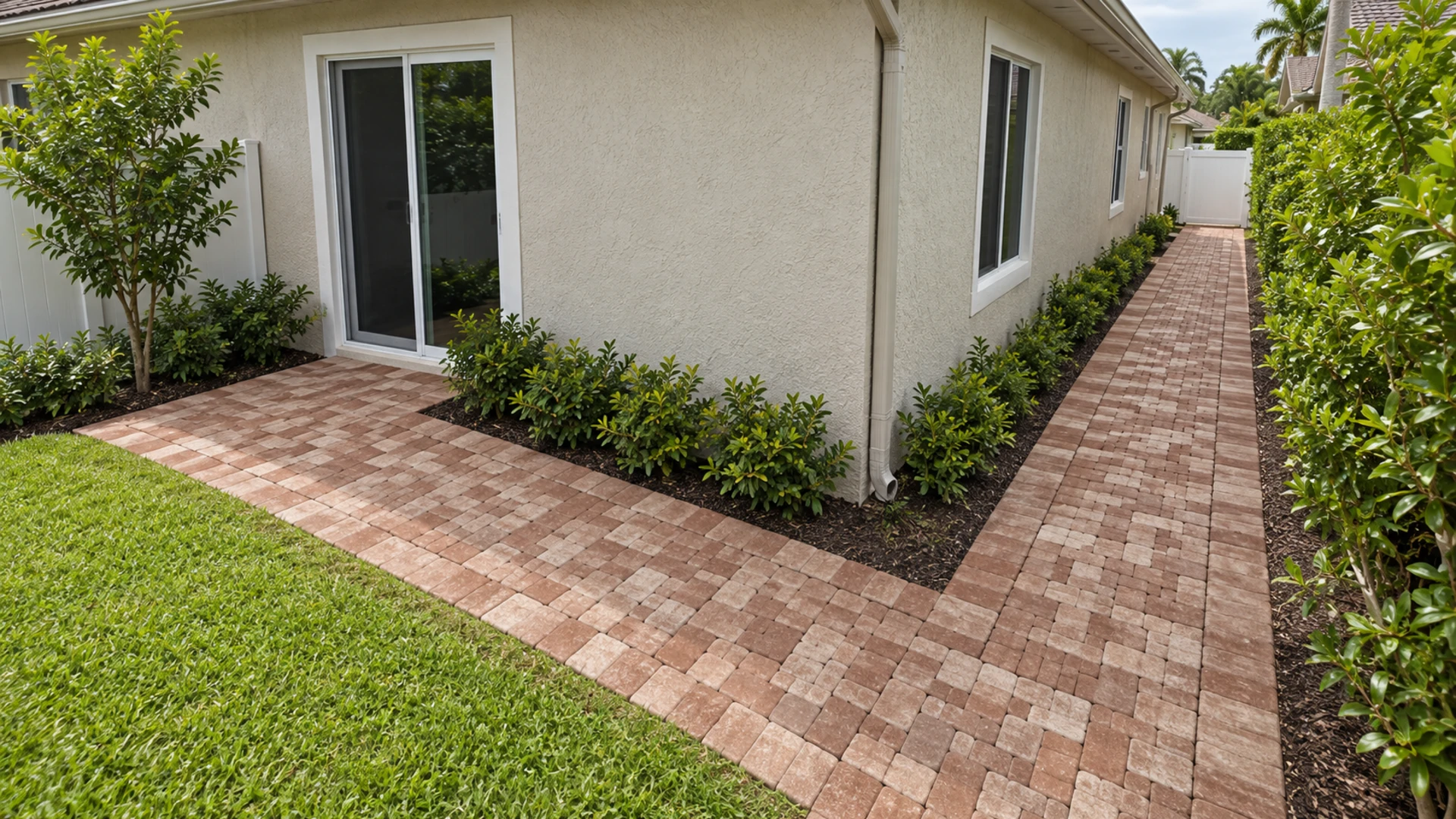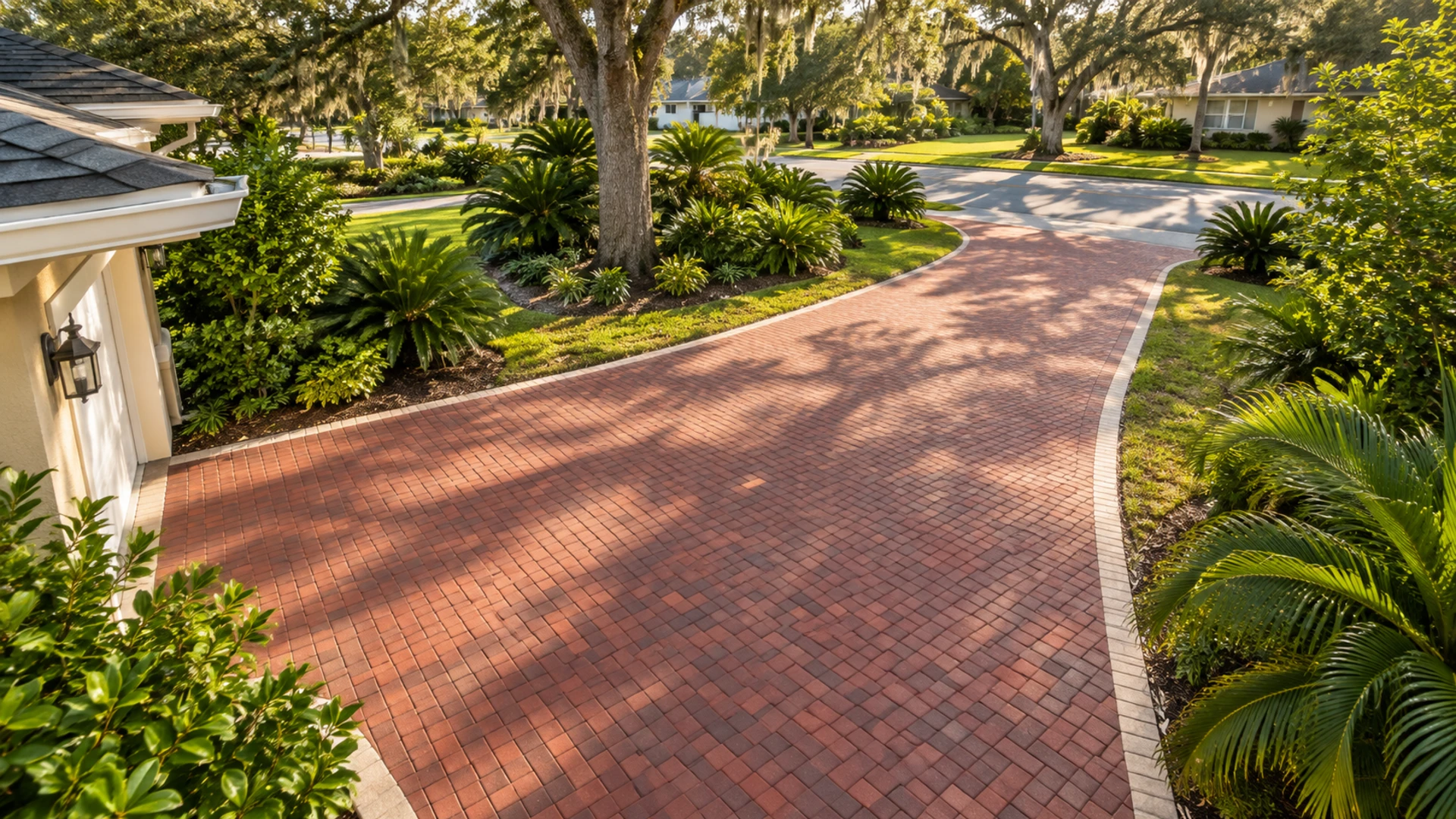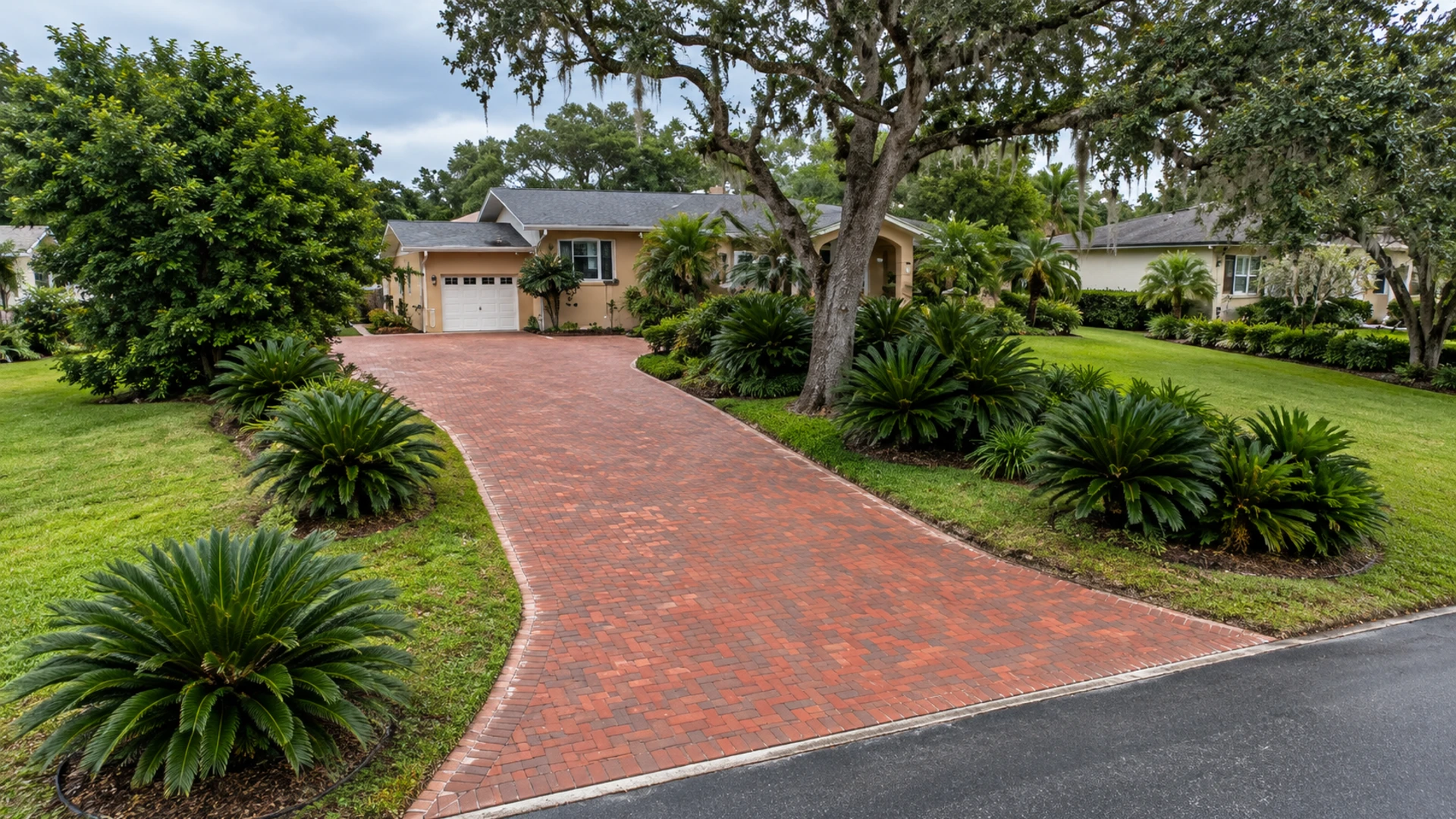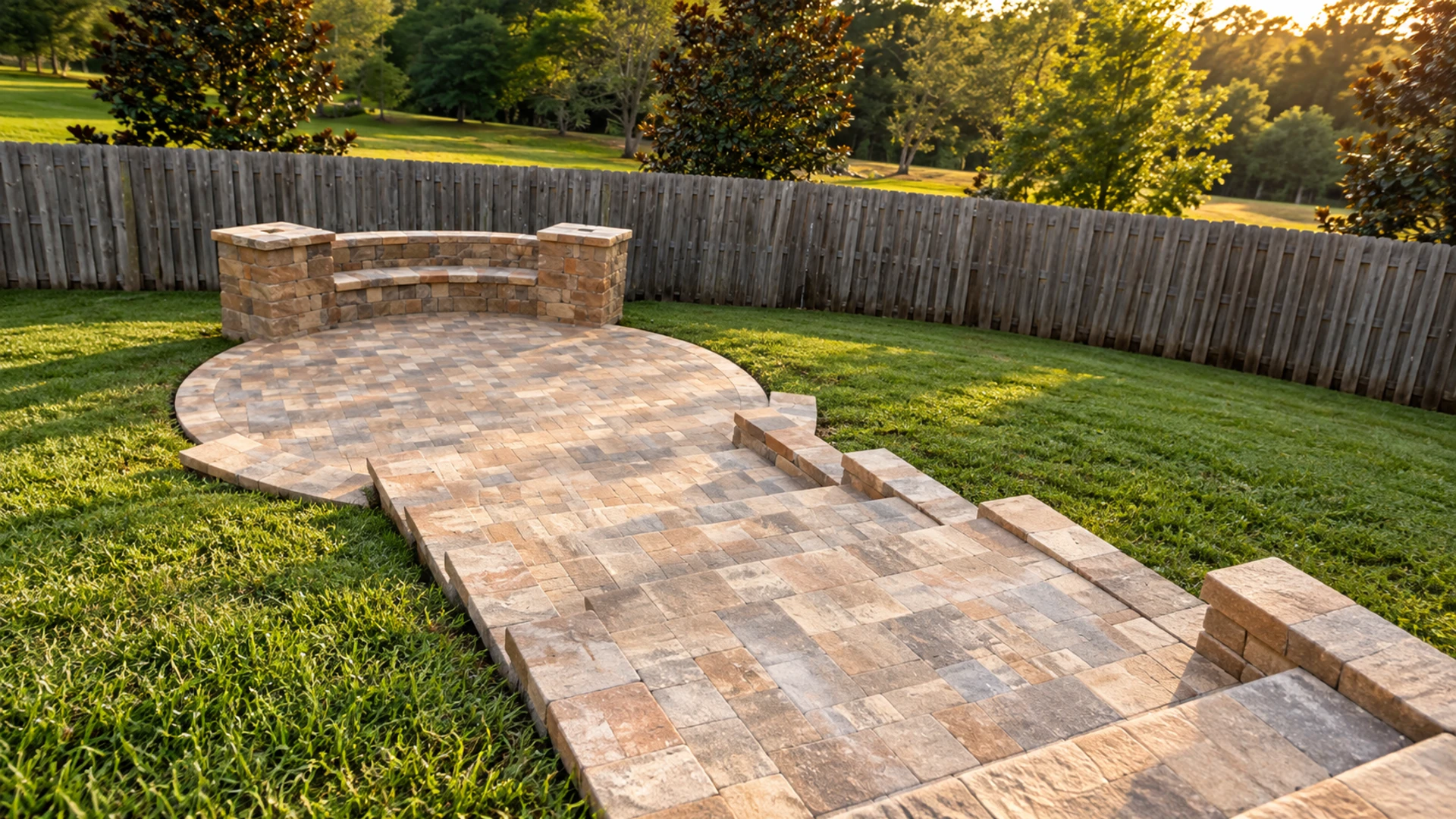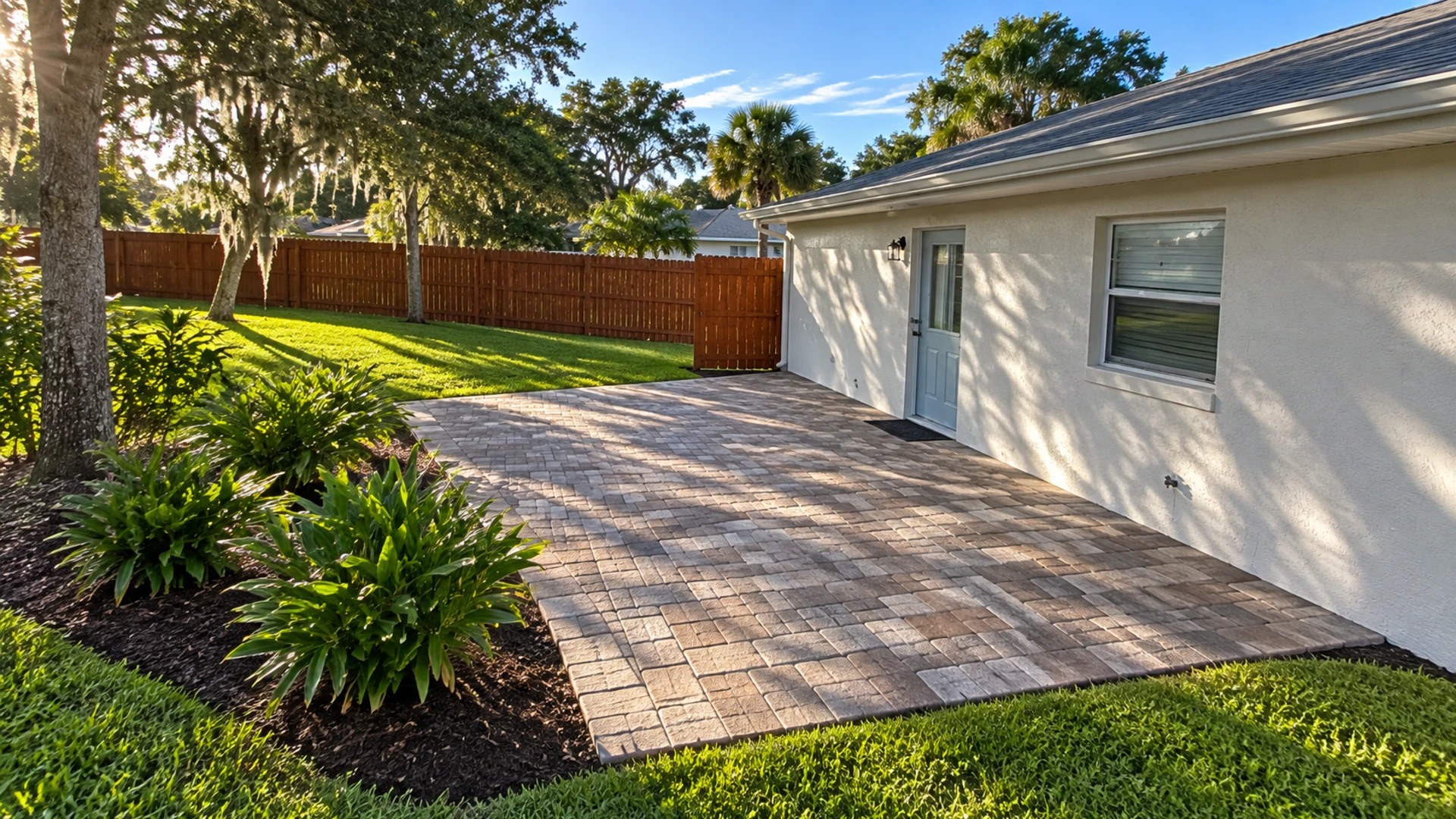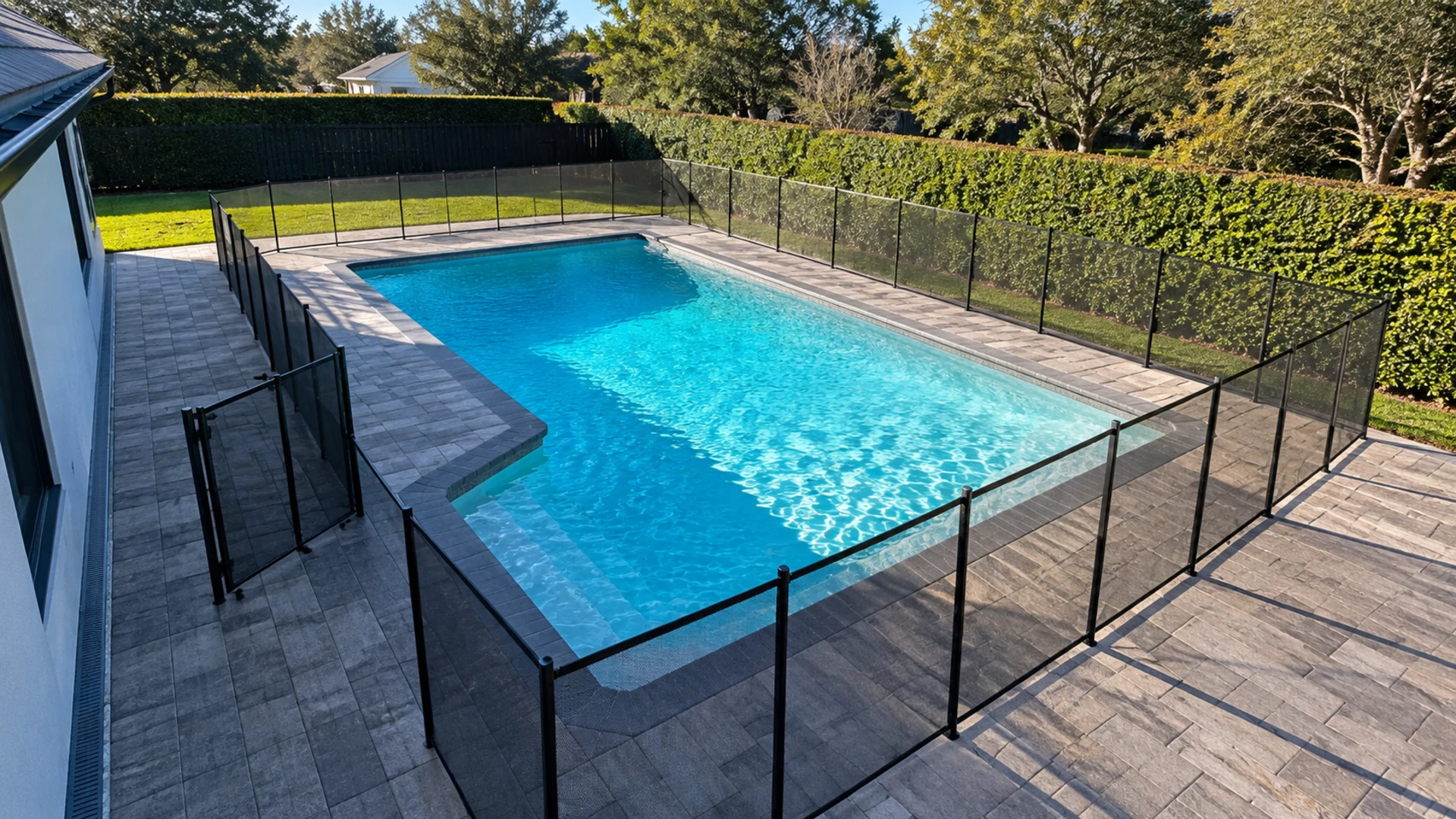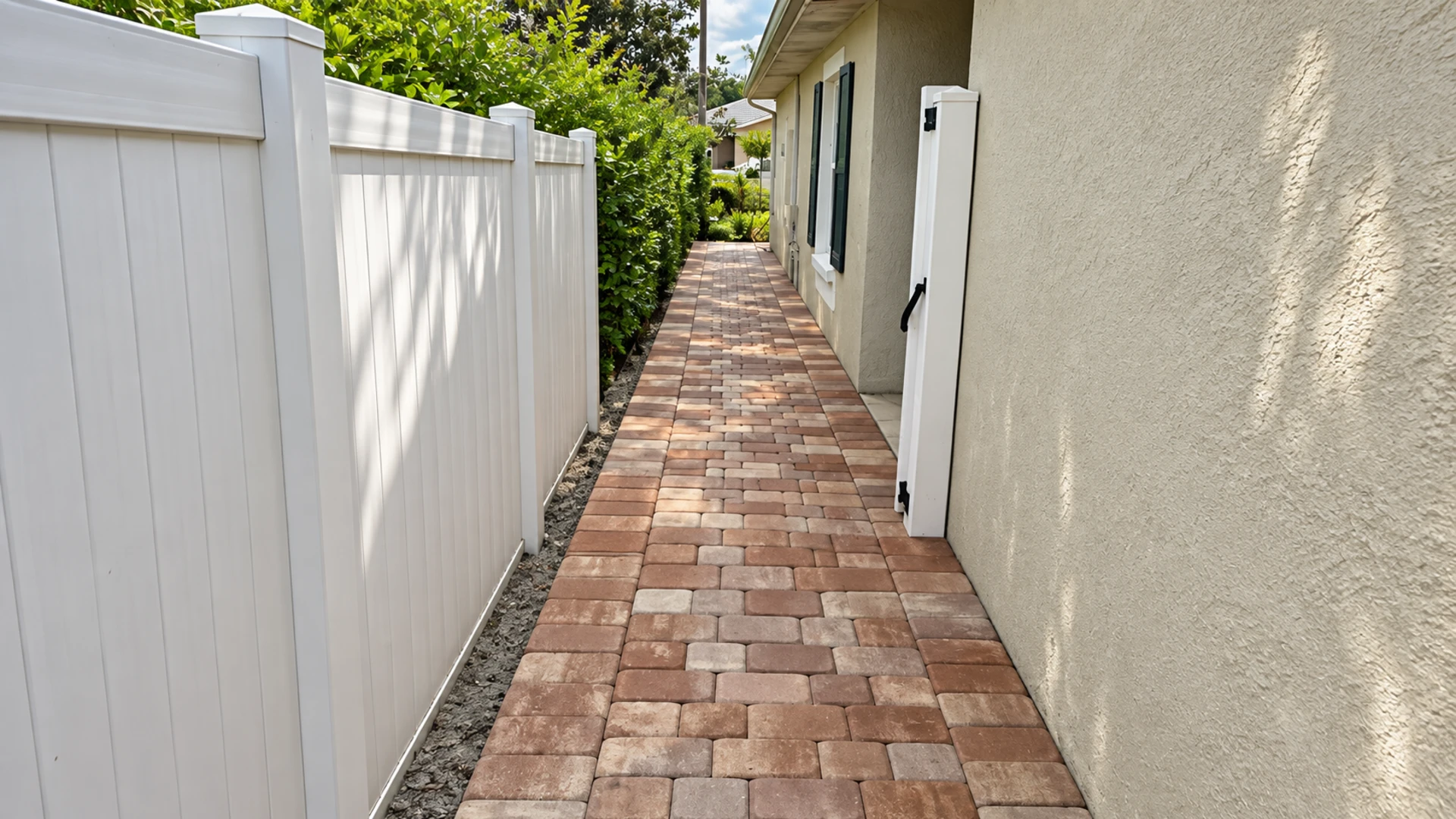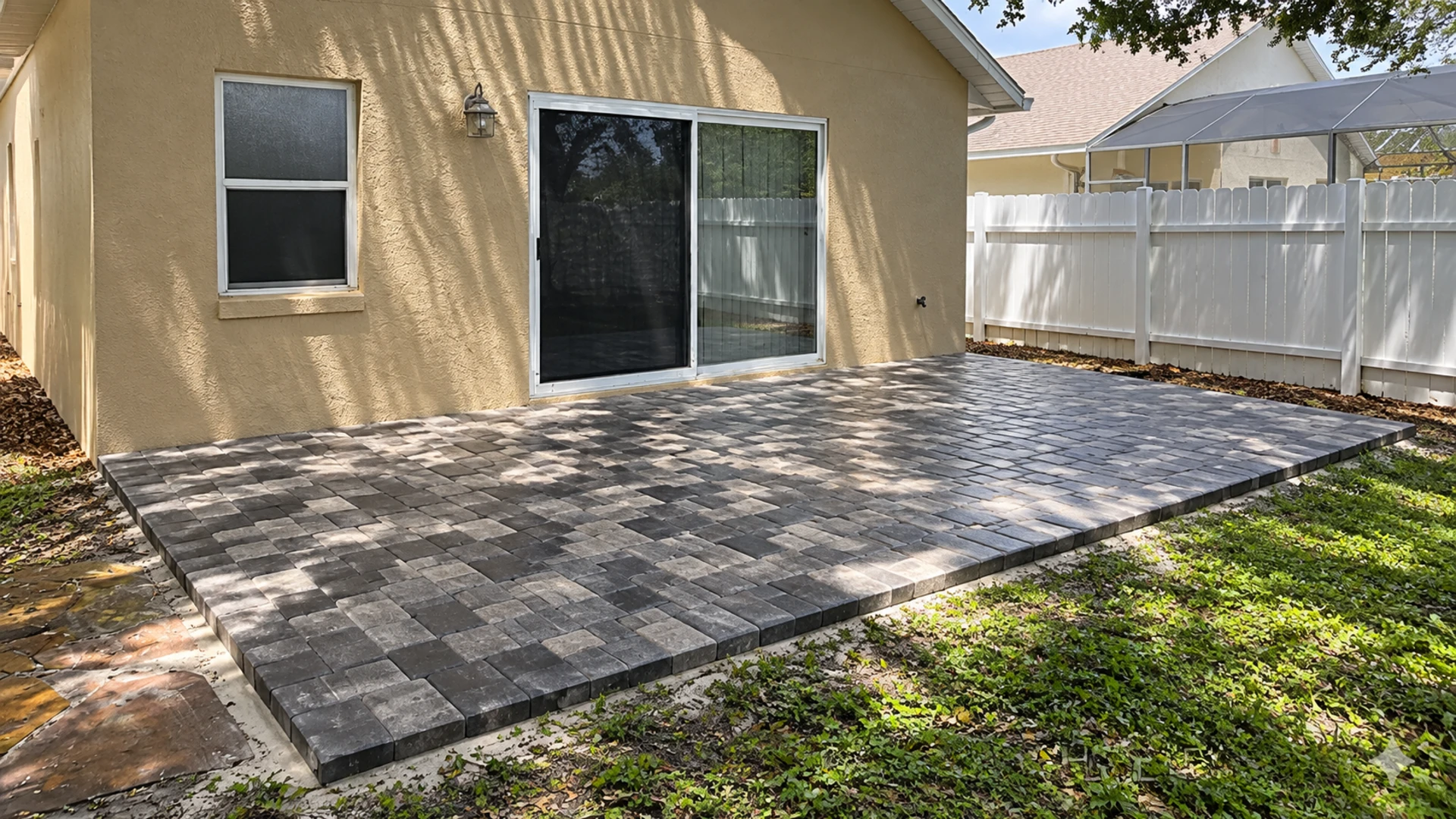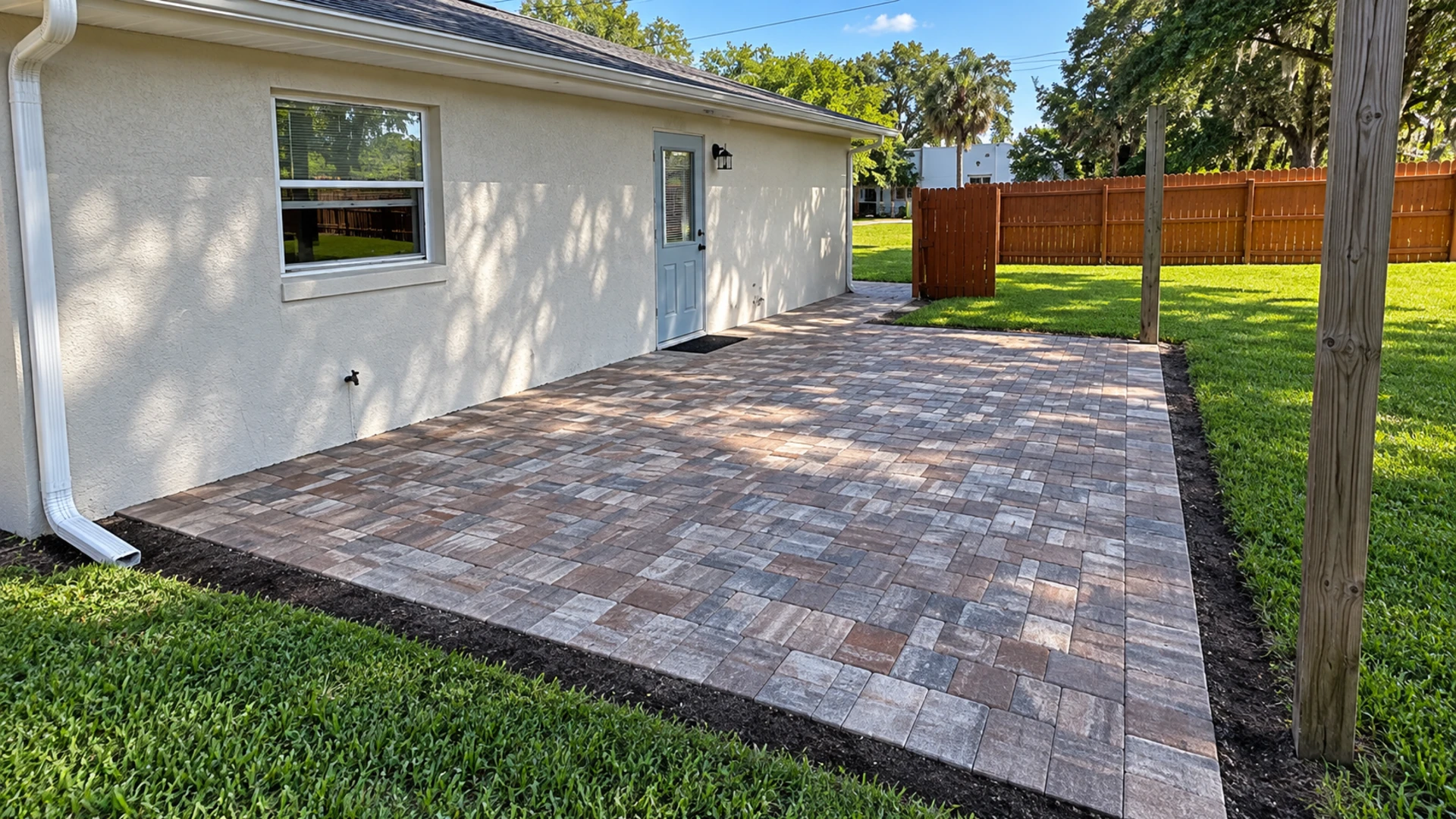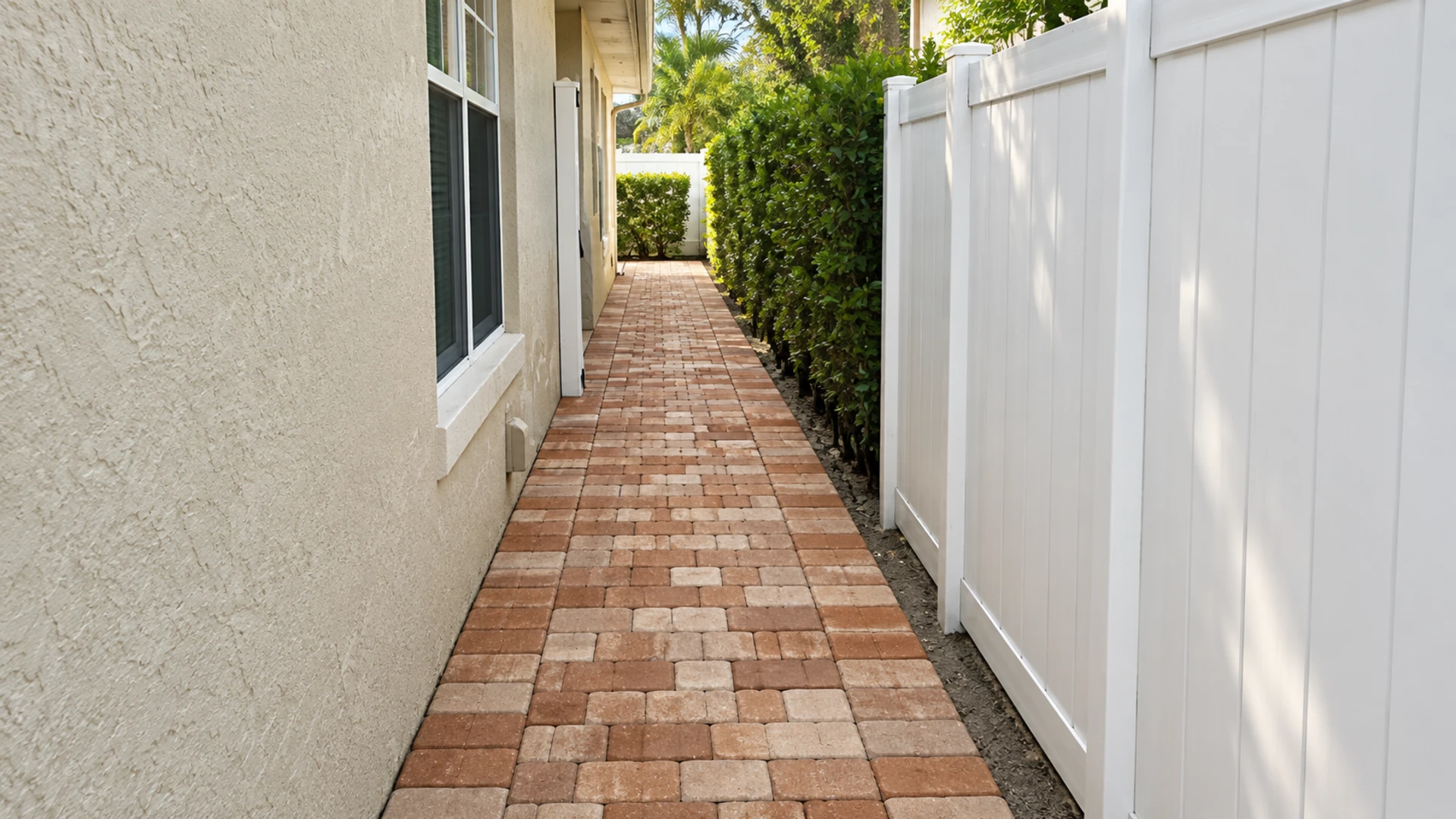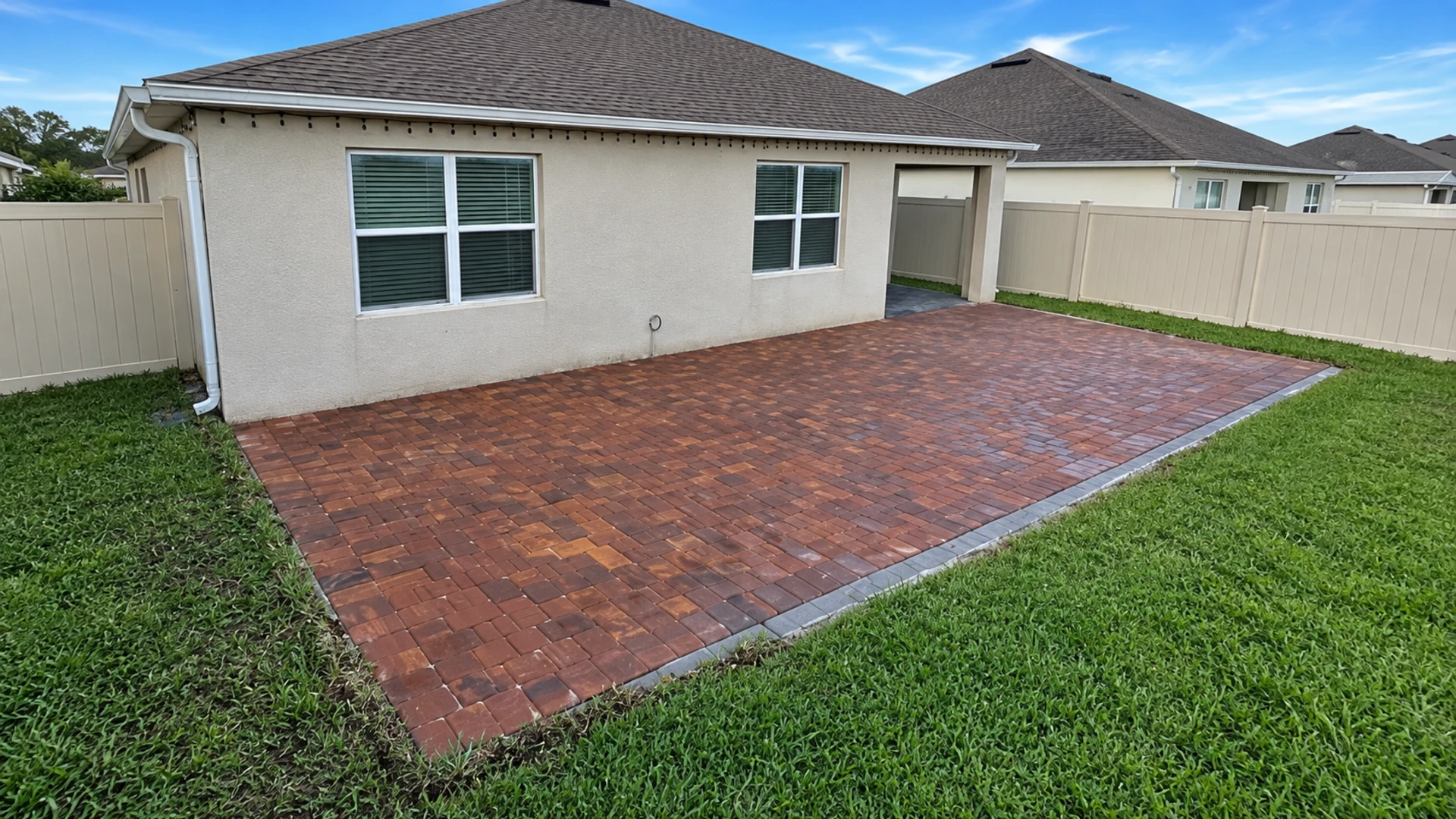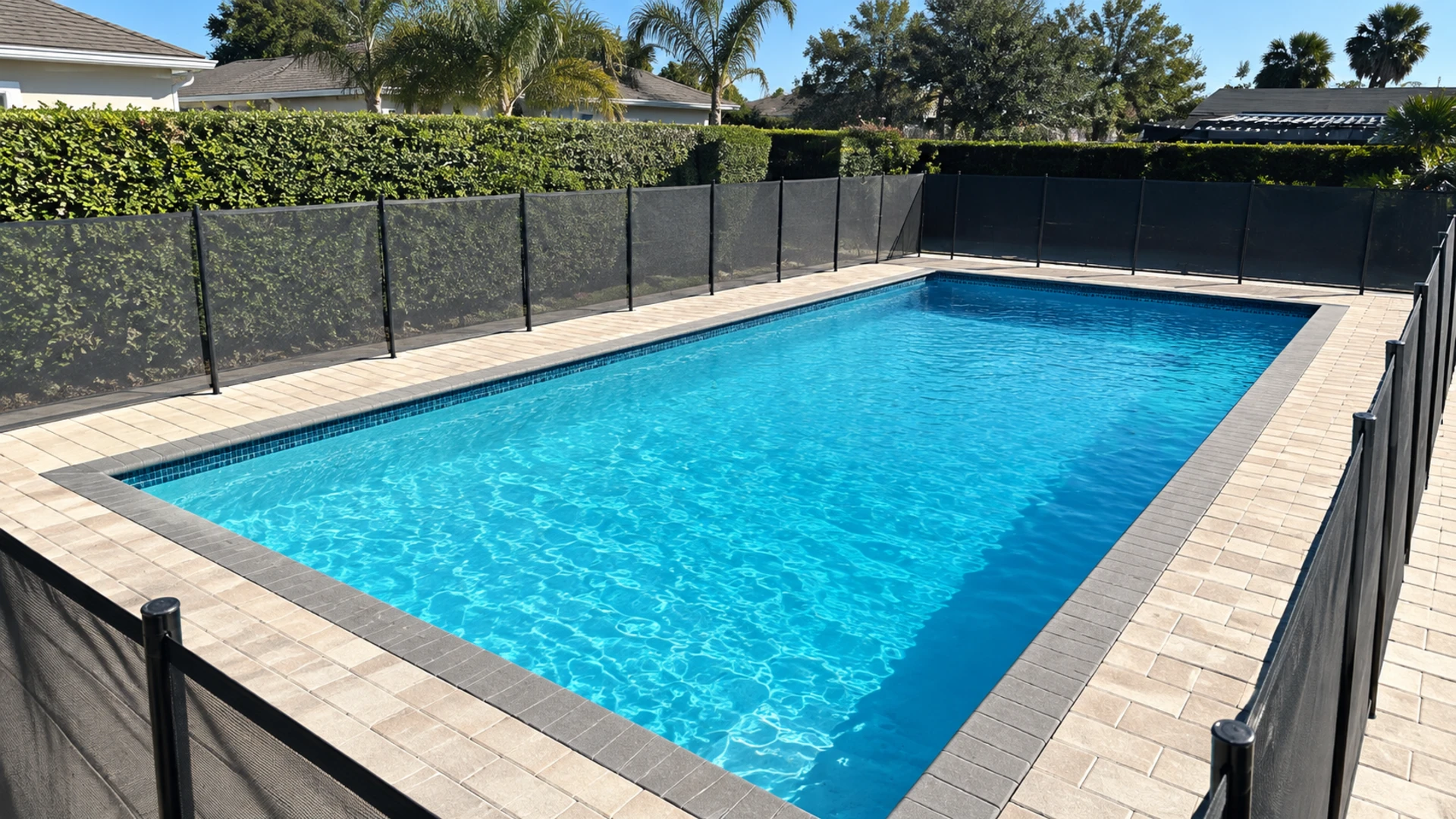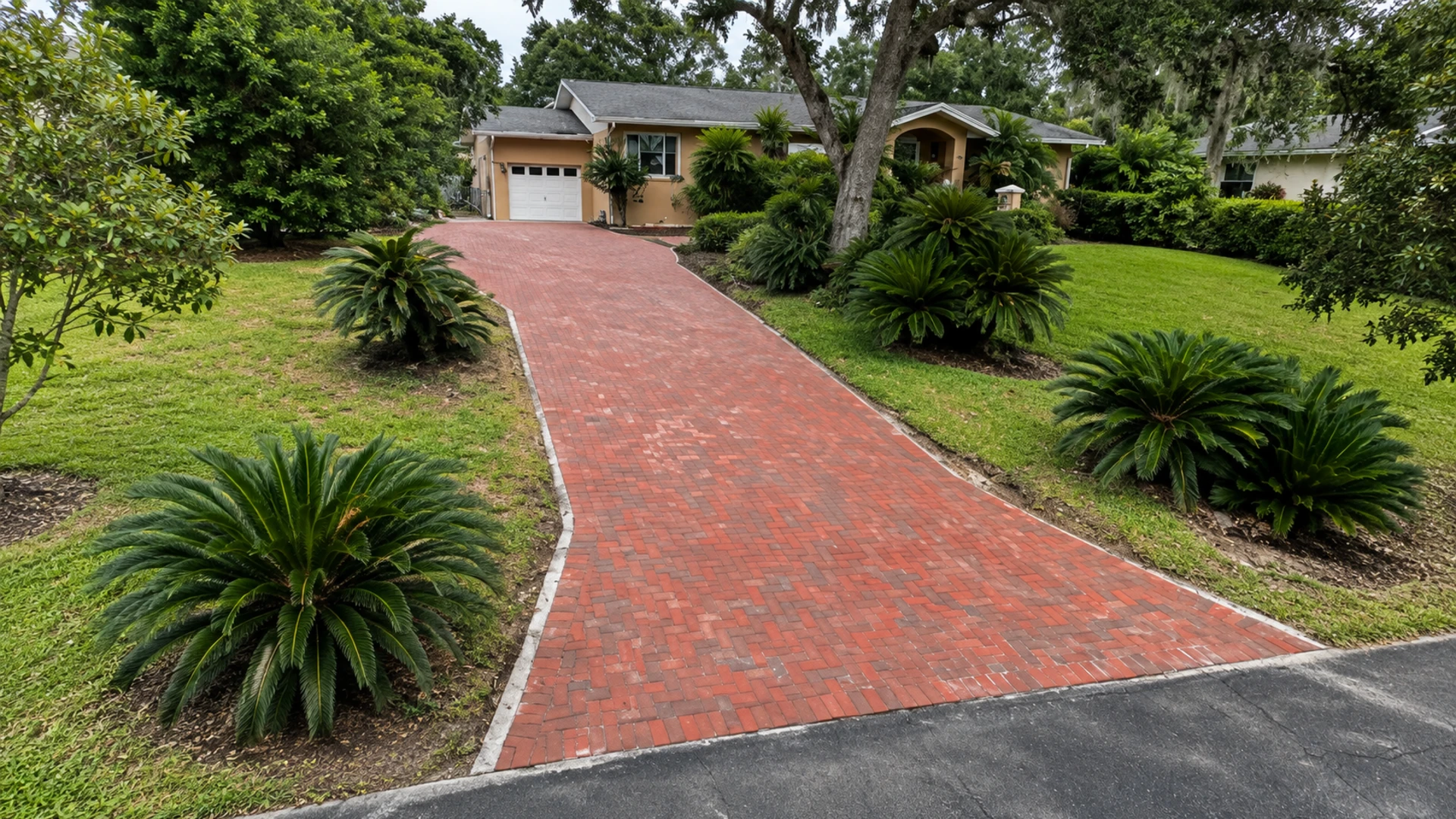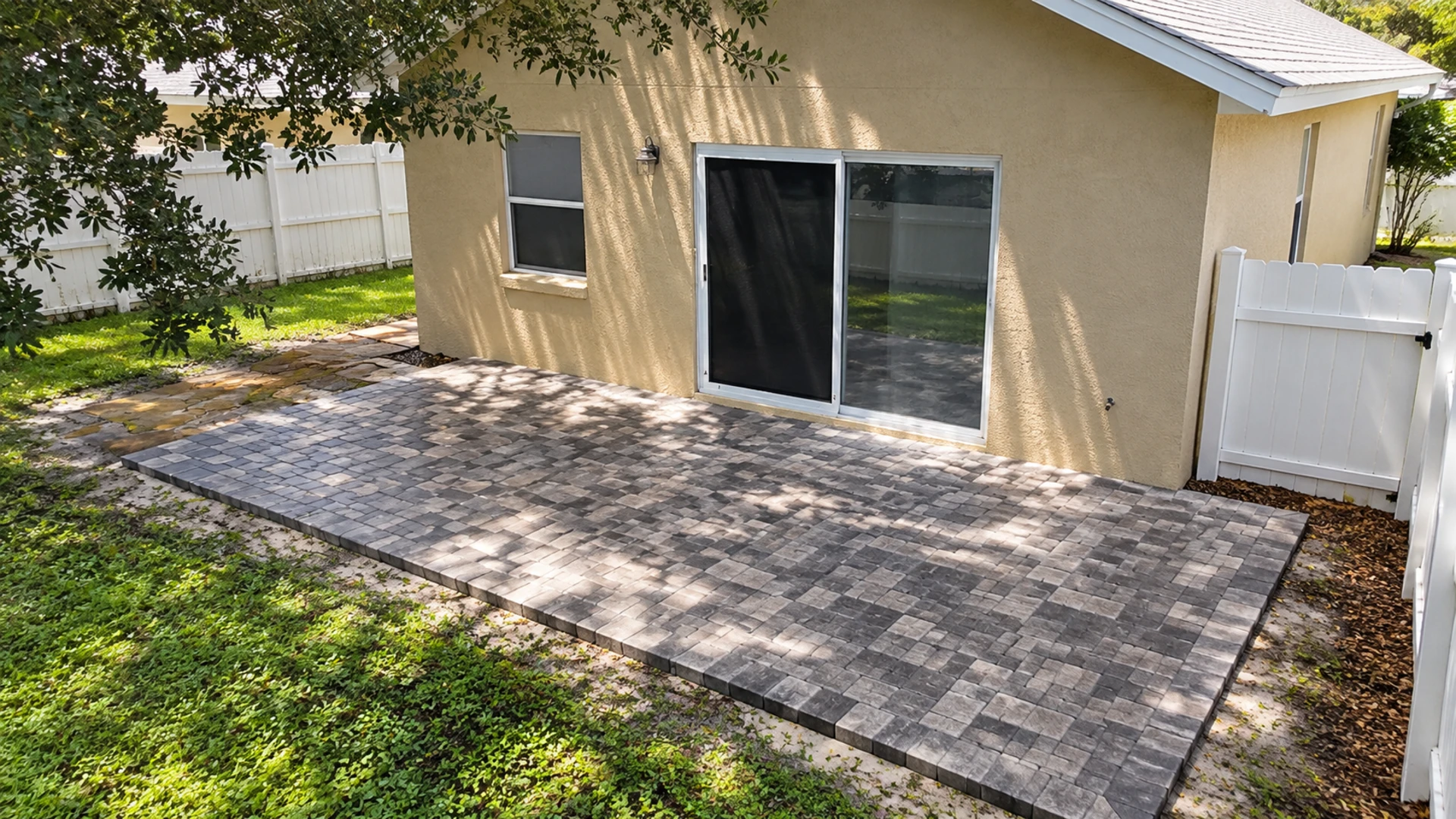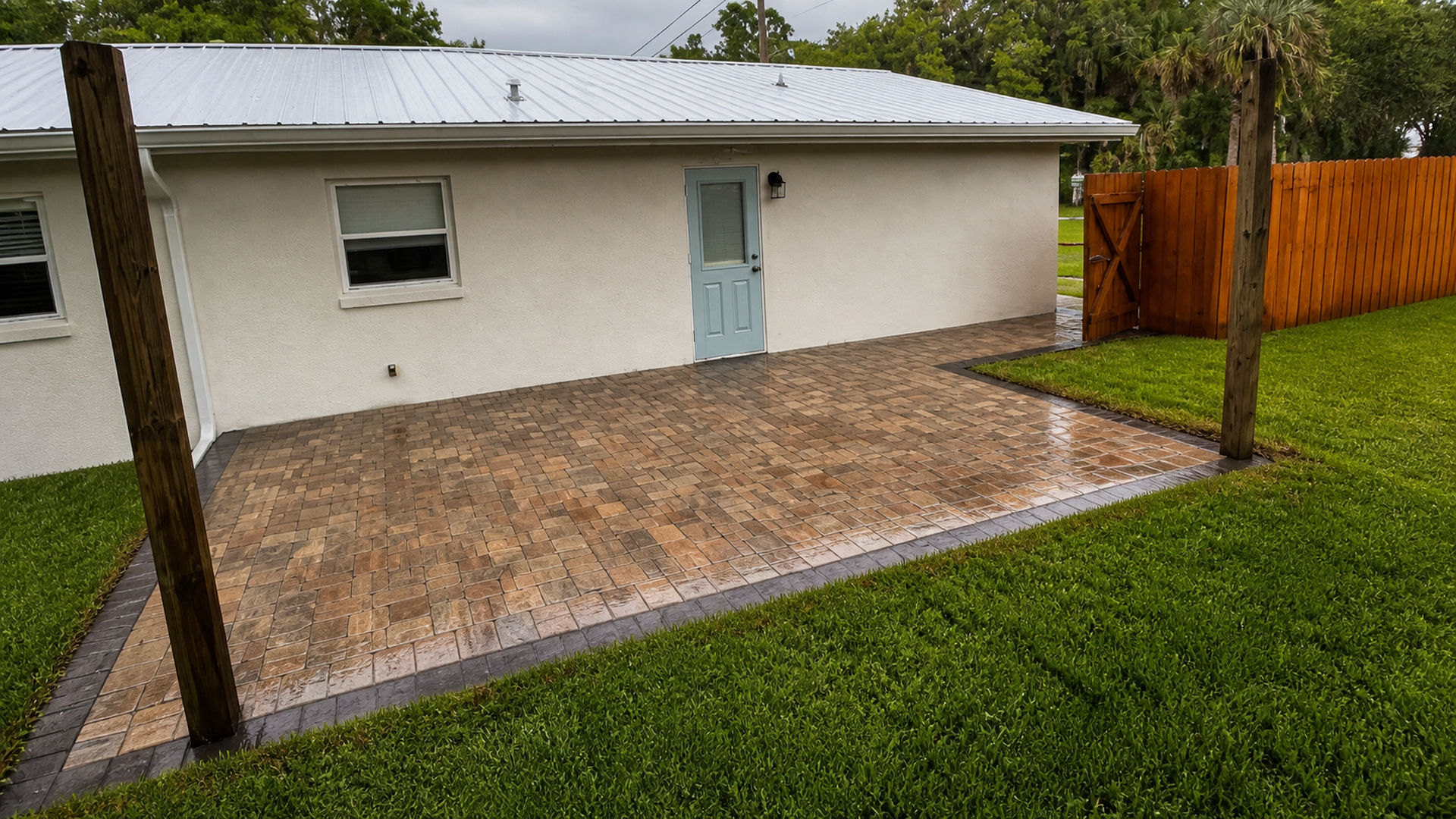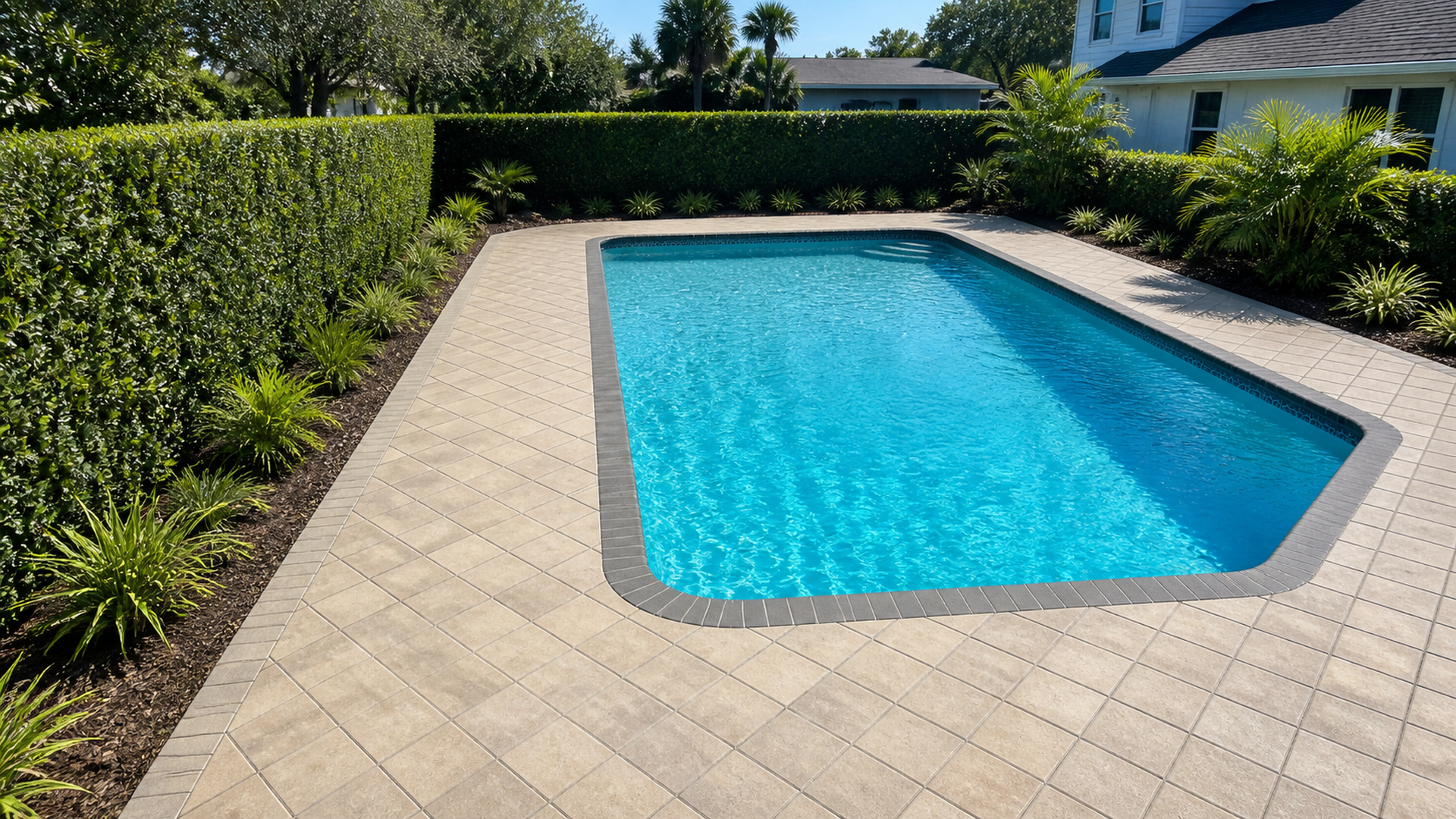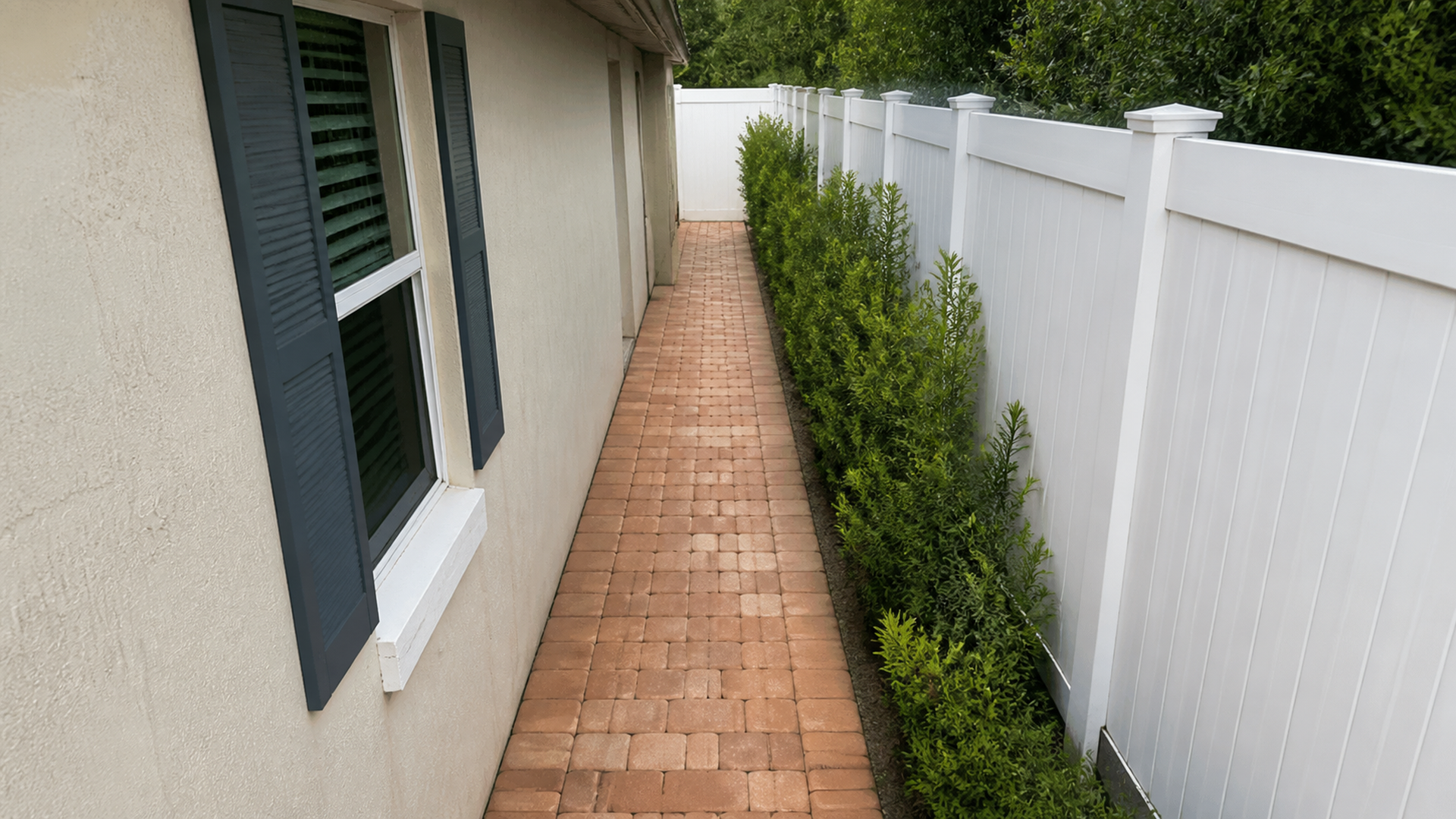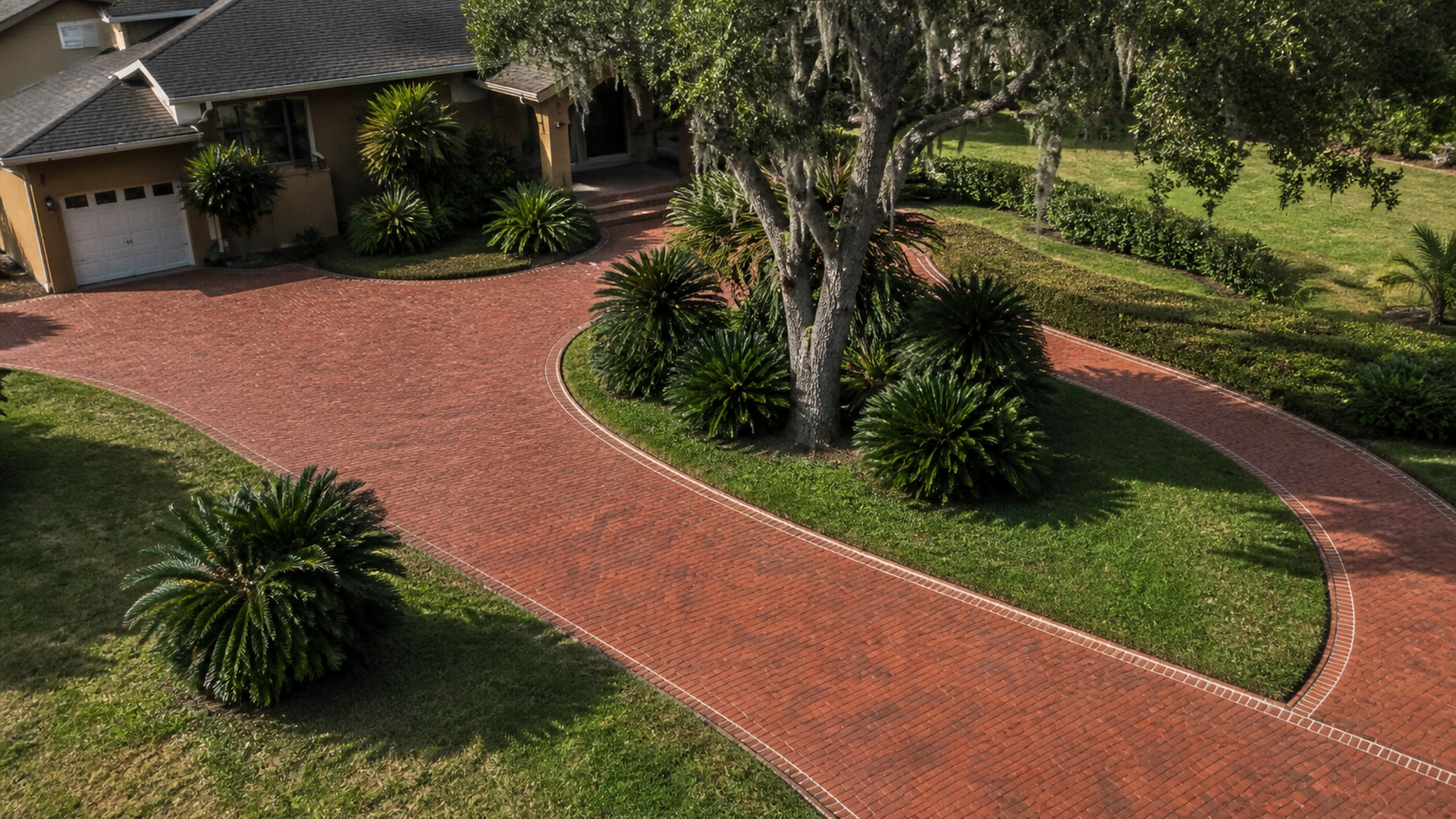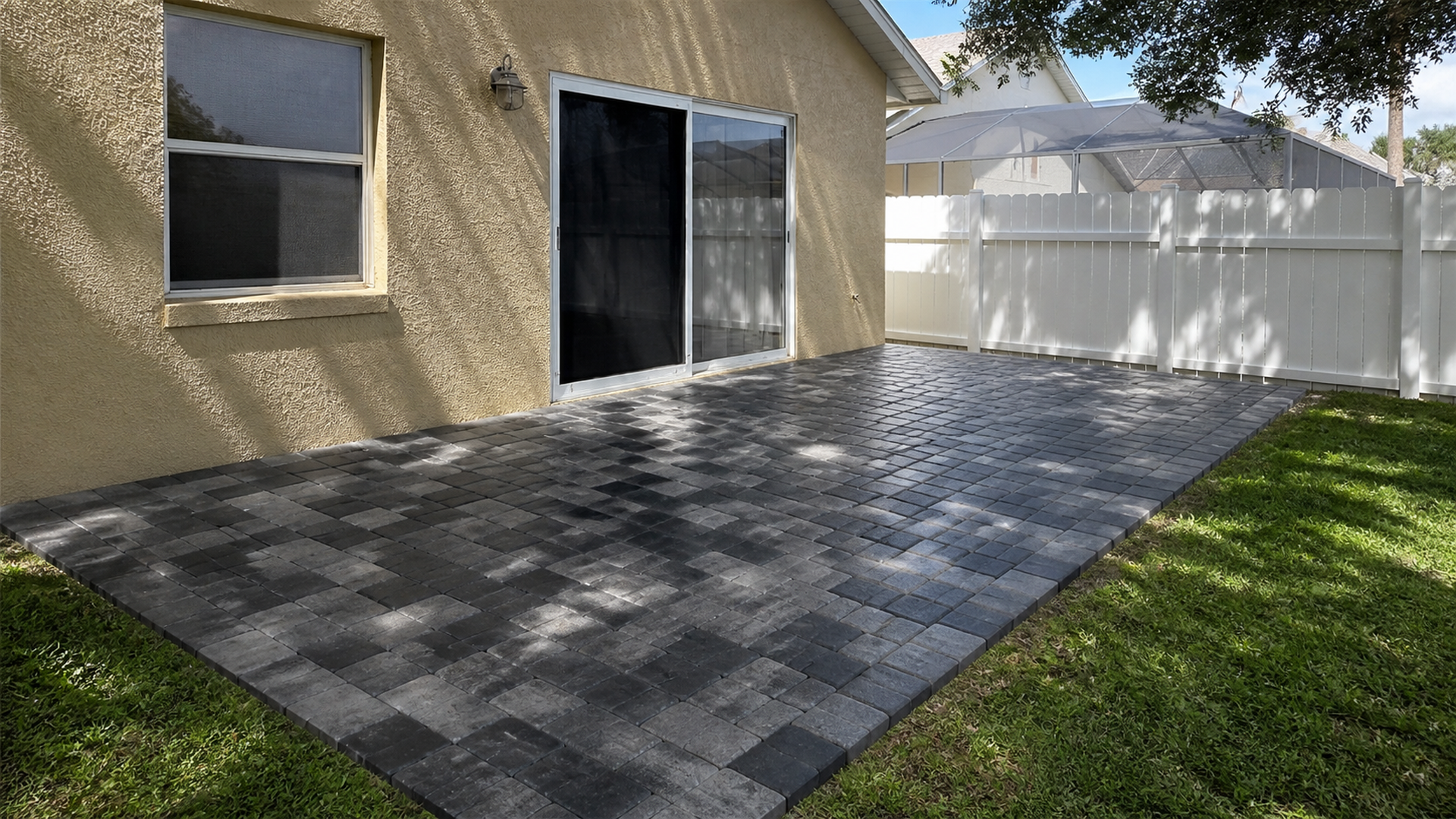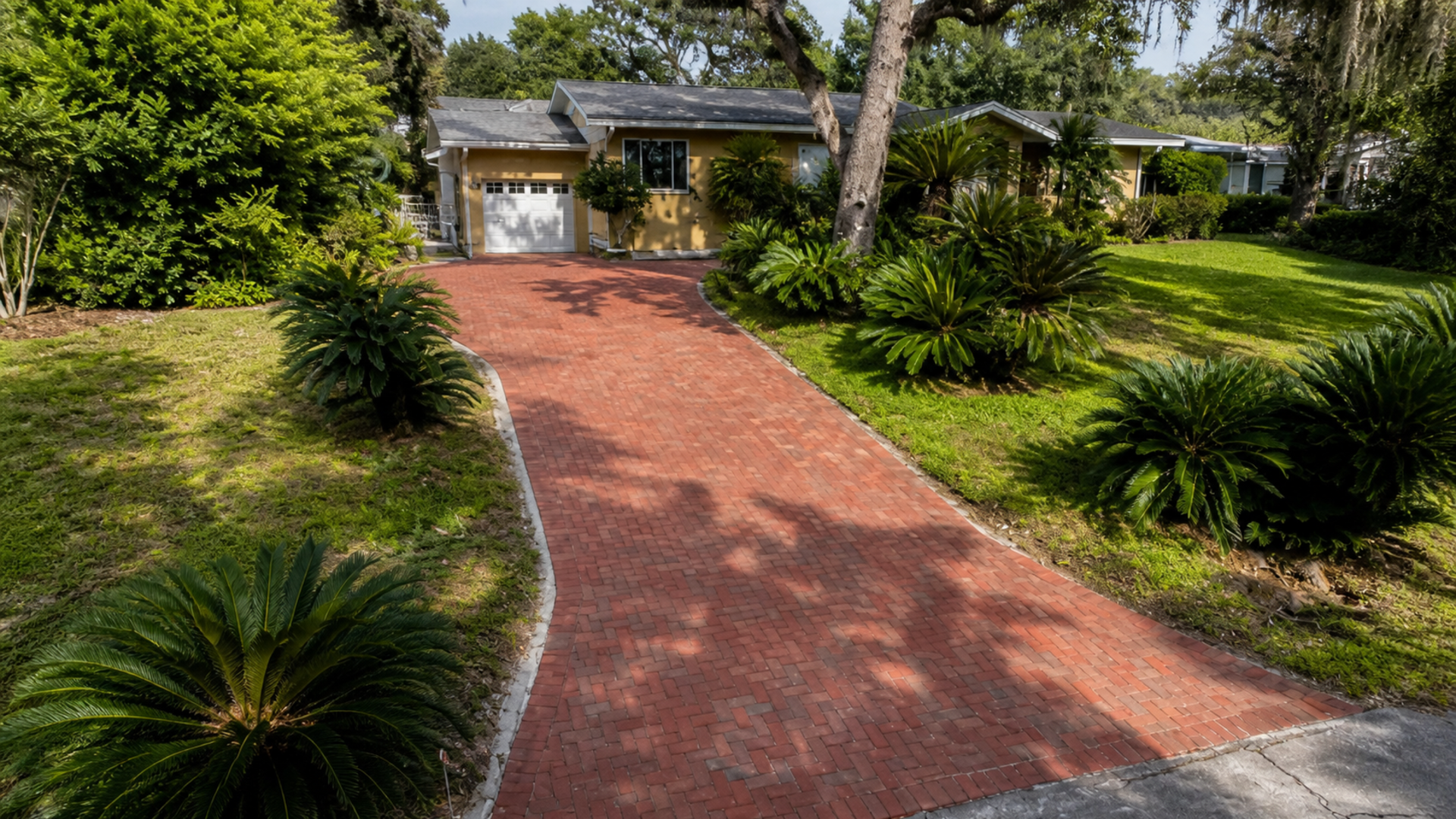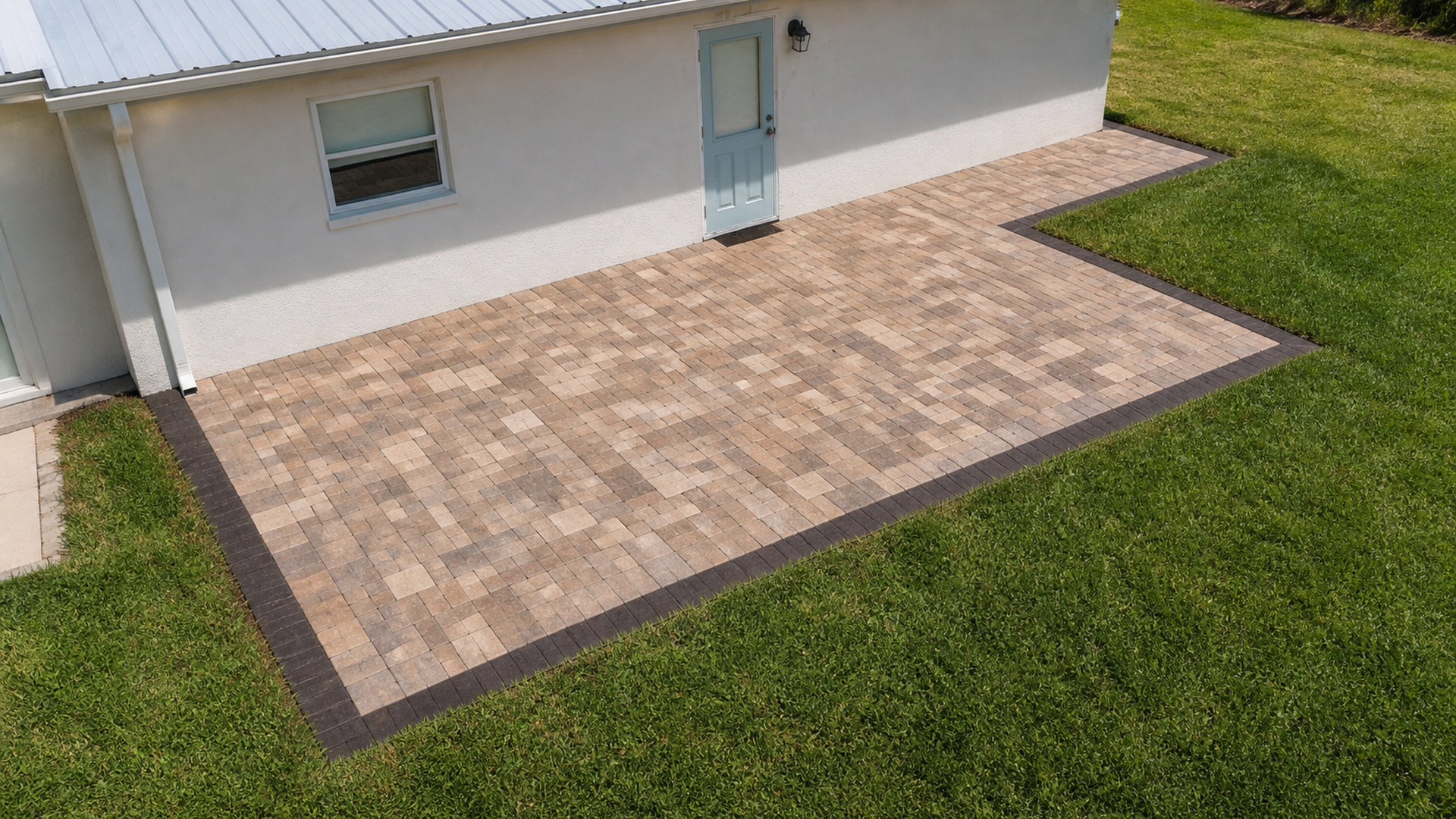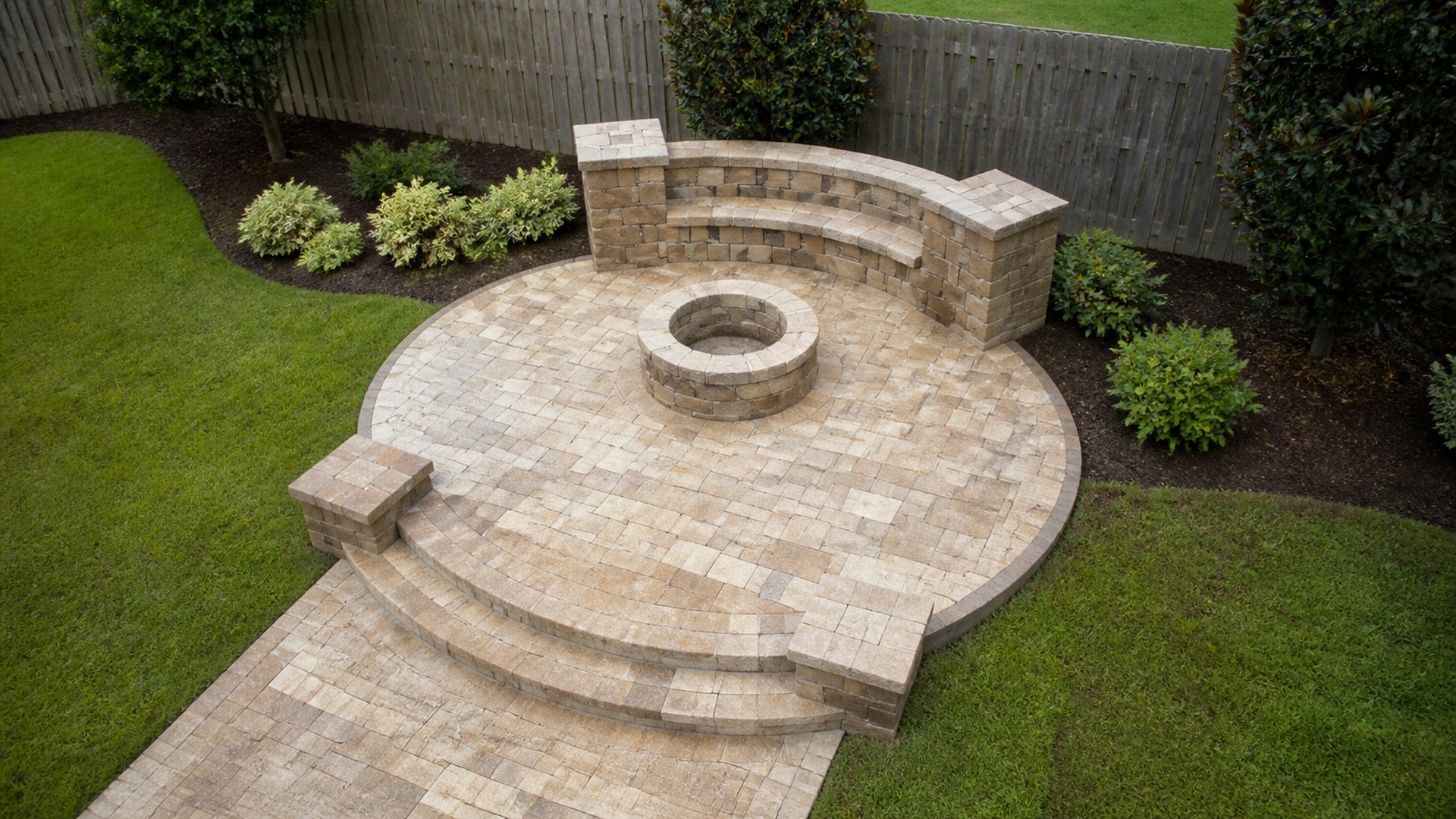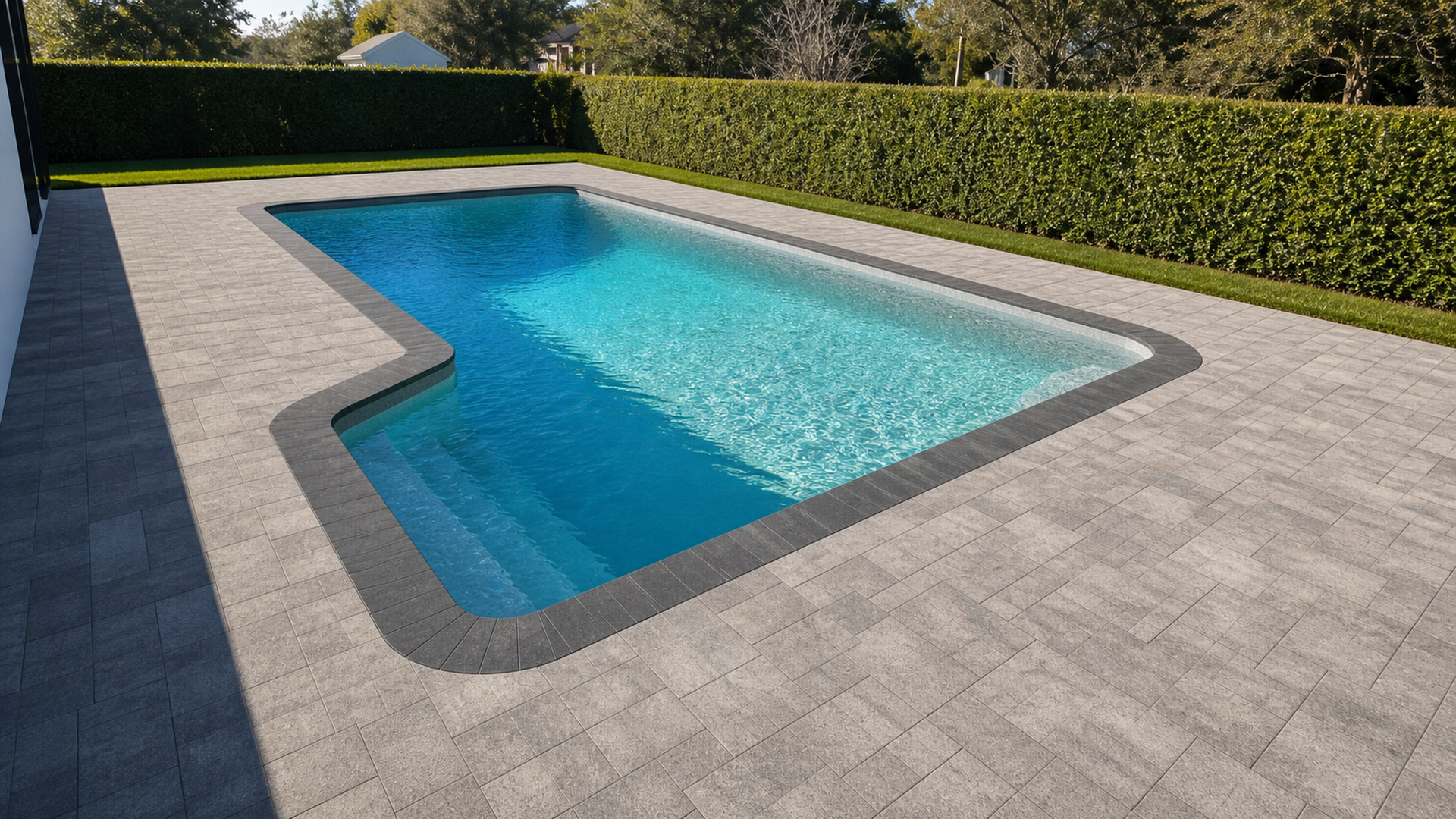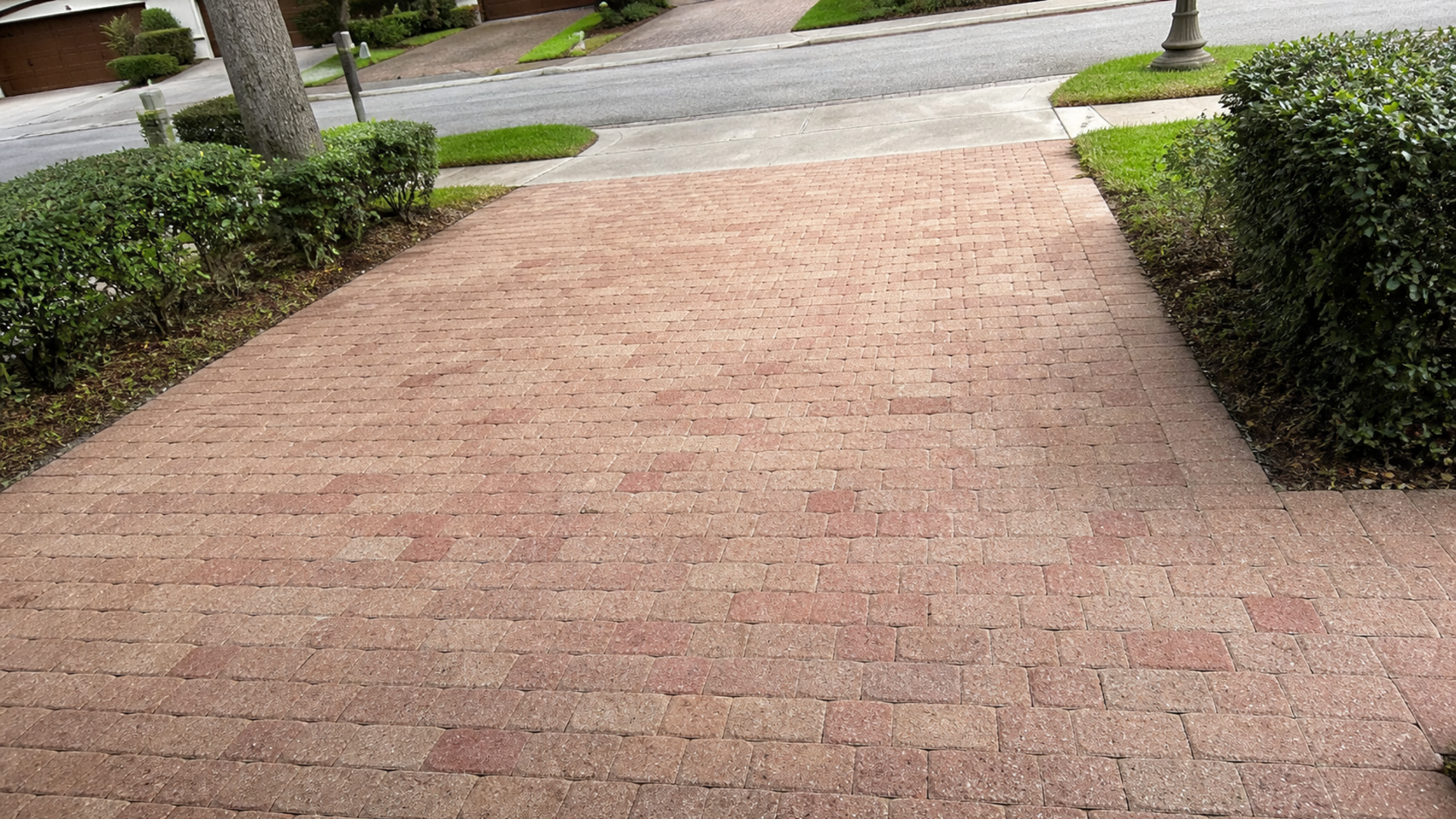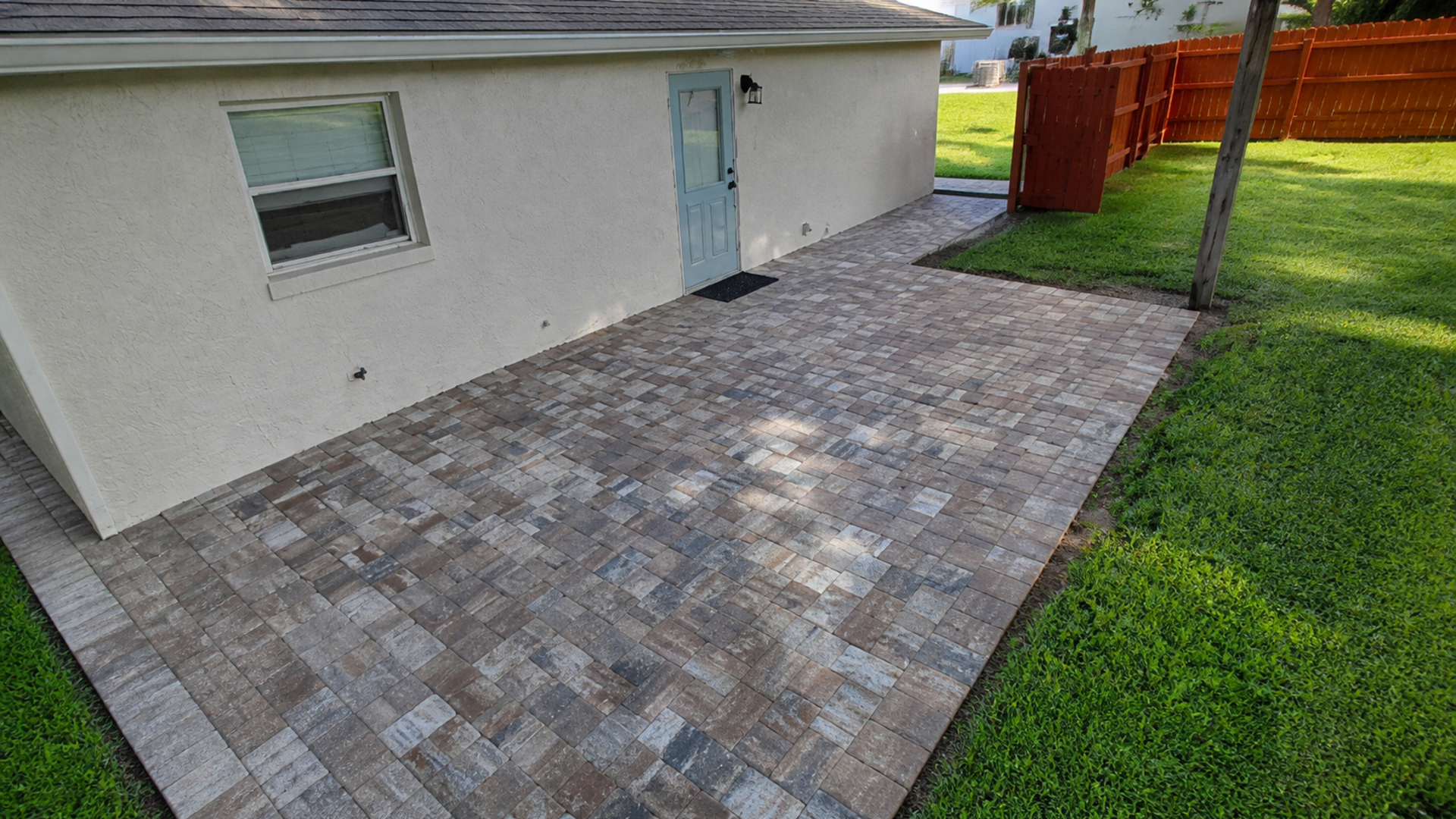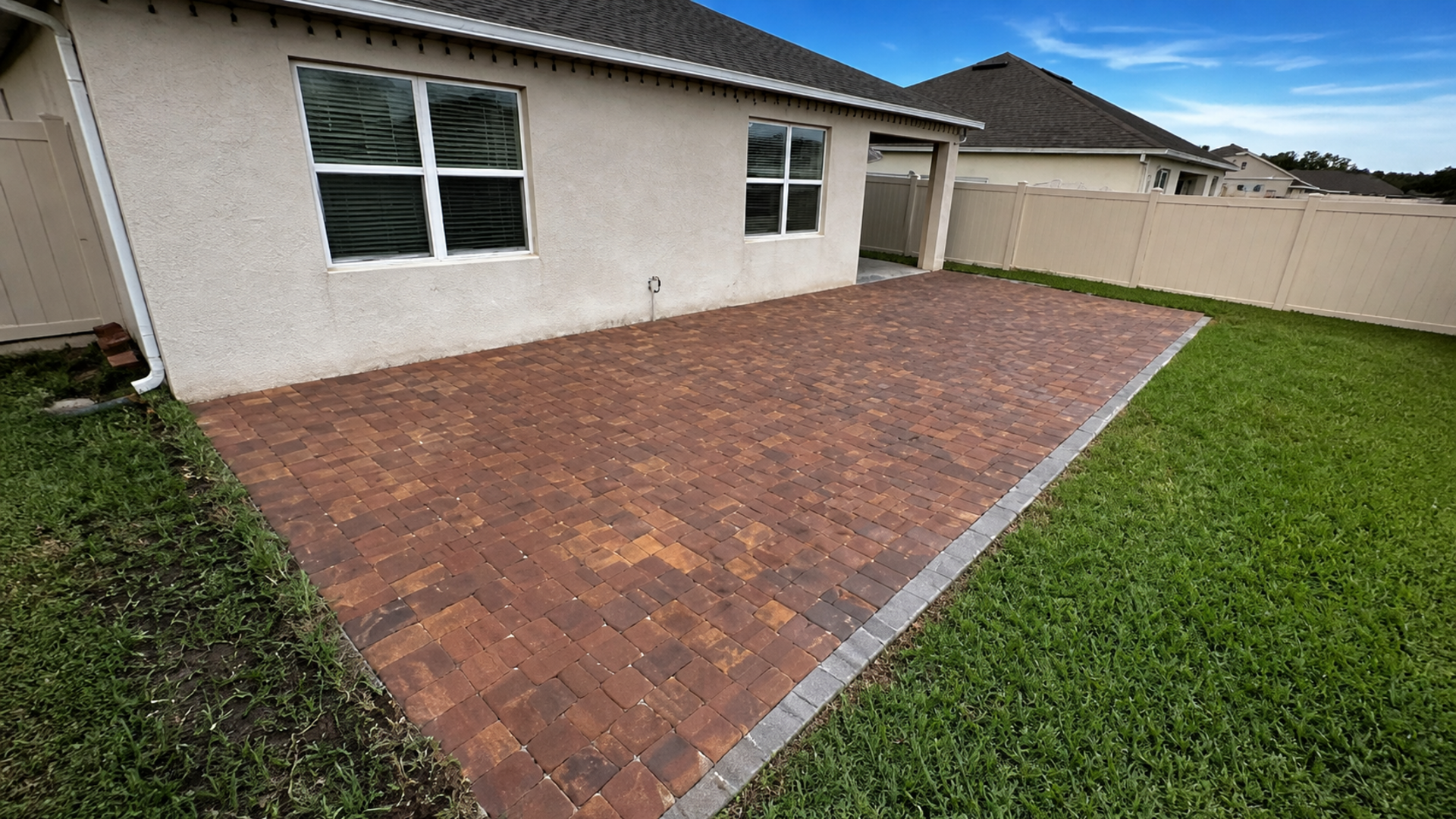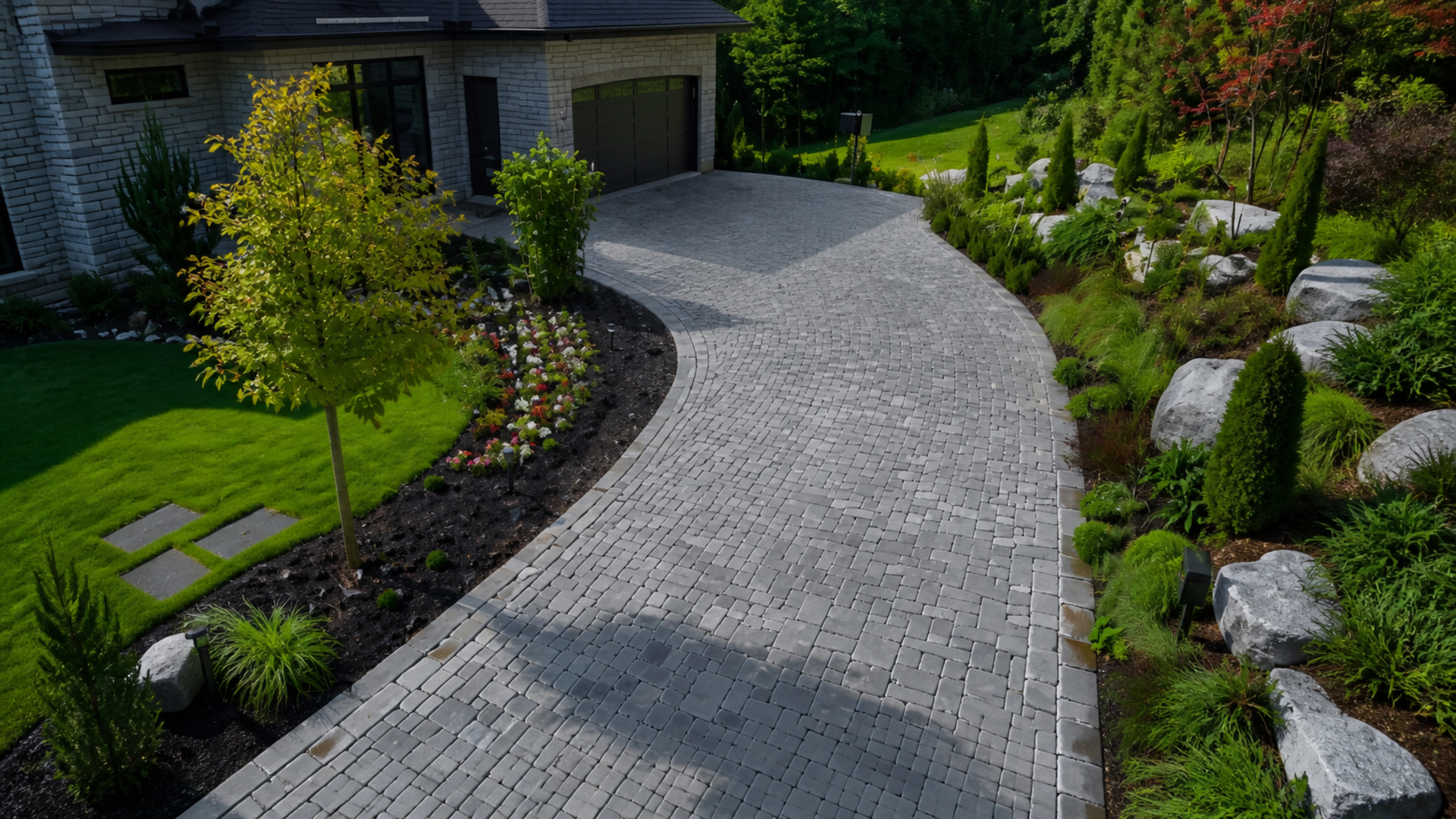

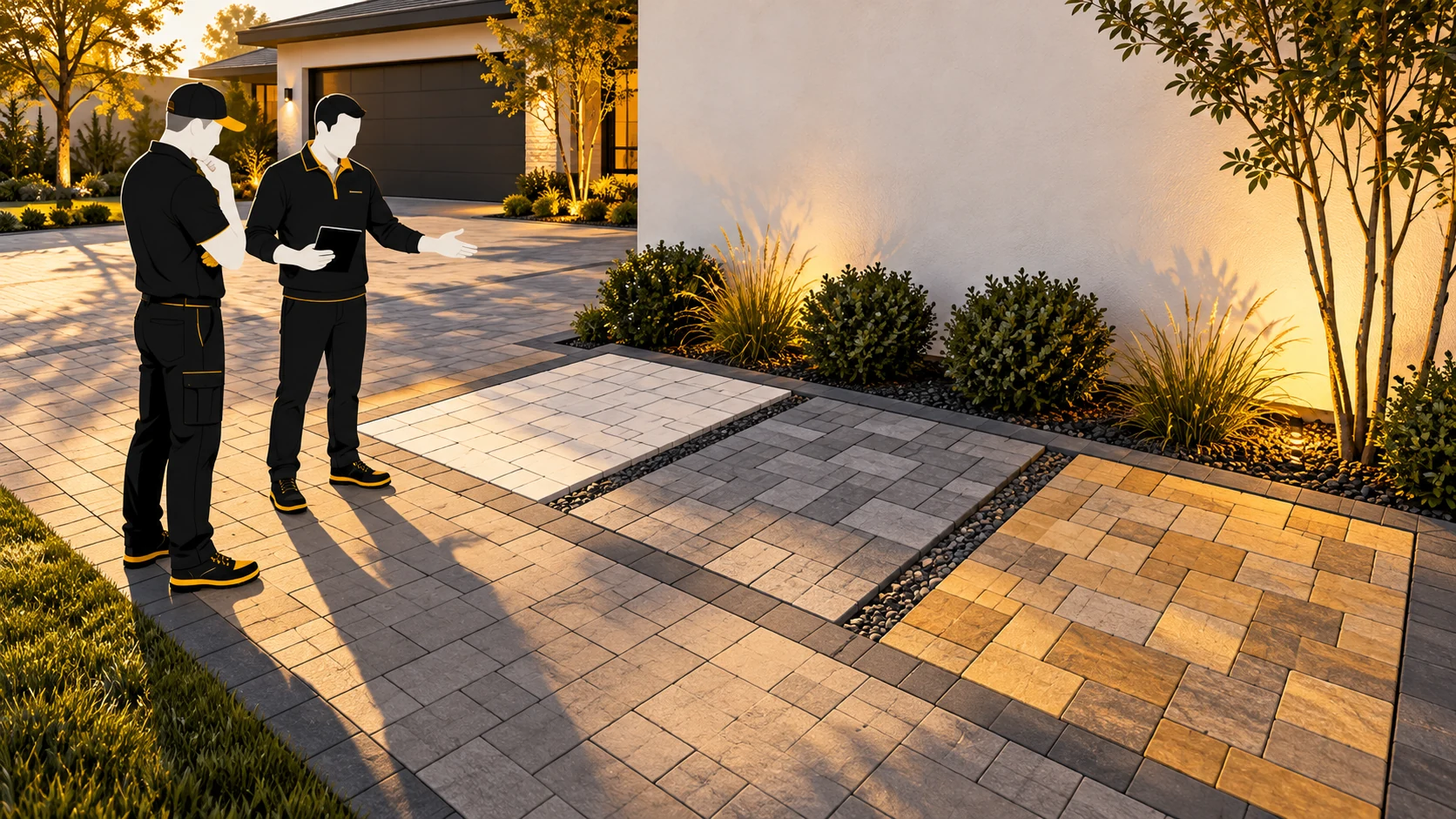
Paver sample panels help you compare an outdoor surface before a large order turns a small choice into a permanent view. However, one attractive block beside a showroom counter cannot answer every question about your Largo driveway or patio. The useful comparison includes several units, the actual house, changing light, and a clear record of the product you selected.
A set of paver sample panels does not promise an exact copy of the finished pavement. Instead, it helps you discuss what you like, what variation you accept, and what still needs confirmation. That makes the sample stage a practical buying decision rather than an exercise in choosing the prettiest photograph. This guide explains how to organize that decision without confusing an illustration, a color name, and an approved material.
Start paver sample panels with the right question
Begin by describing the role of the paved area. For example, a quiet backyard terrace may need a different visual balance from a broad front driveway. Write down whether you want the paving to support the house, create contrast, or connect several existing finishes. Those intentions give the comparison a purpose.
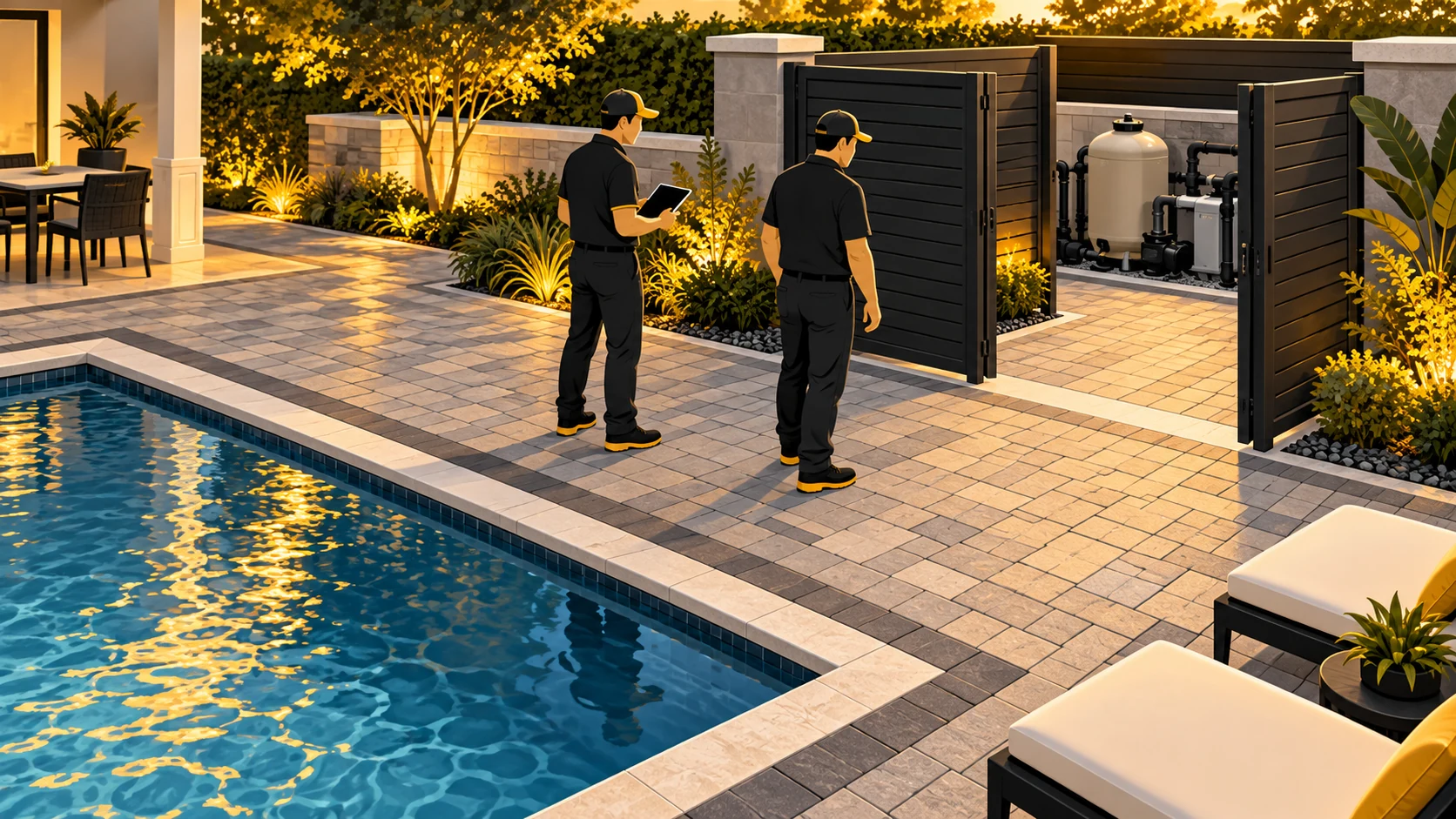
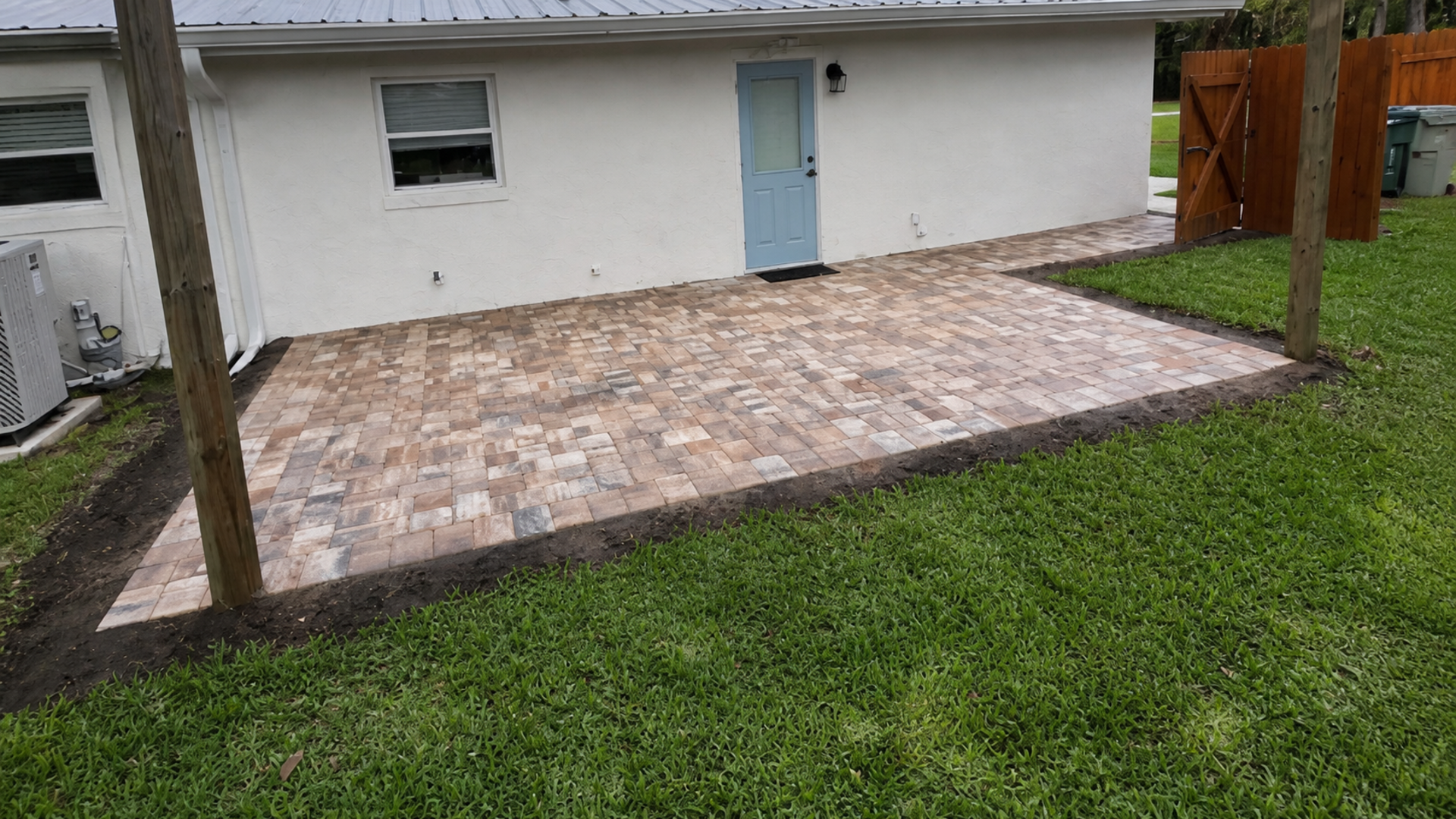
Next, identify the fixed elements around the project. The roof, exterior walls, pool coping, steps, and permanent stonework will remain after the samples leave. Therefore, compare candidates beside those surfaces rather than against a blank background alone. A color that looks warm in isolation can feel much stronger beside another warm finish.
Avoid starting with ten nearly identical options. Instead, ask the installer which product families suit the intended application and current project scope. Narrowing the technical choices first keeps the sample review focused on materials that can actually enter the proposal.
Give paver sample panels an identity
Label each candidate in your notes, not on its visible face. Include the manufacturer, product family, color name, finish, and supplier reference when available. Moreover, photograph the package label separately. A handwritten description such as gray rectangle can become ambiguous when several similar units arrive together.
Record who supplied the sample and when. Then ask whether it represents current production, an older display, or a limited selection from a larger blend. That information does not make one sample better than another. It tells you how much confidence to place in the comparison.
Keep a simple distinction between selected and approved. For example, you may select a color direction while the contractor still confirms the correct size or thickness. Writing down that distinction prevents an early preference from becoming an accidental final instruction.
Compare paver sample panels rather than one isolated block
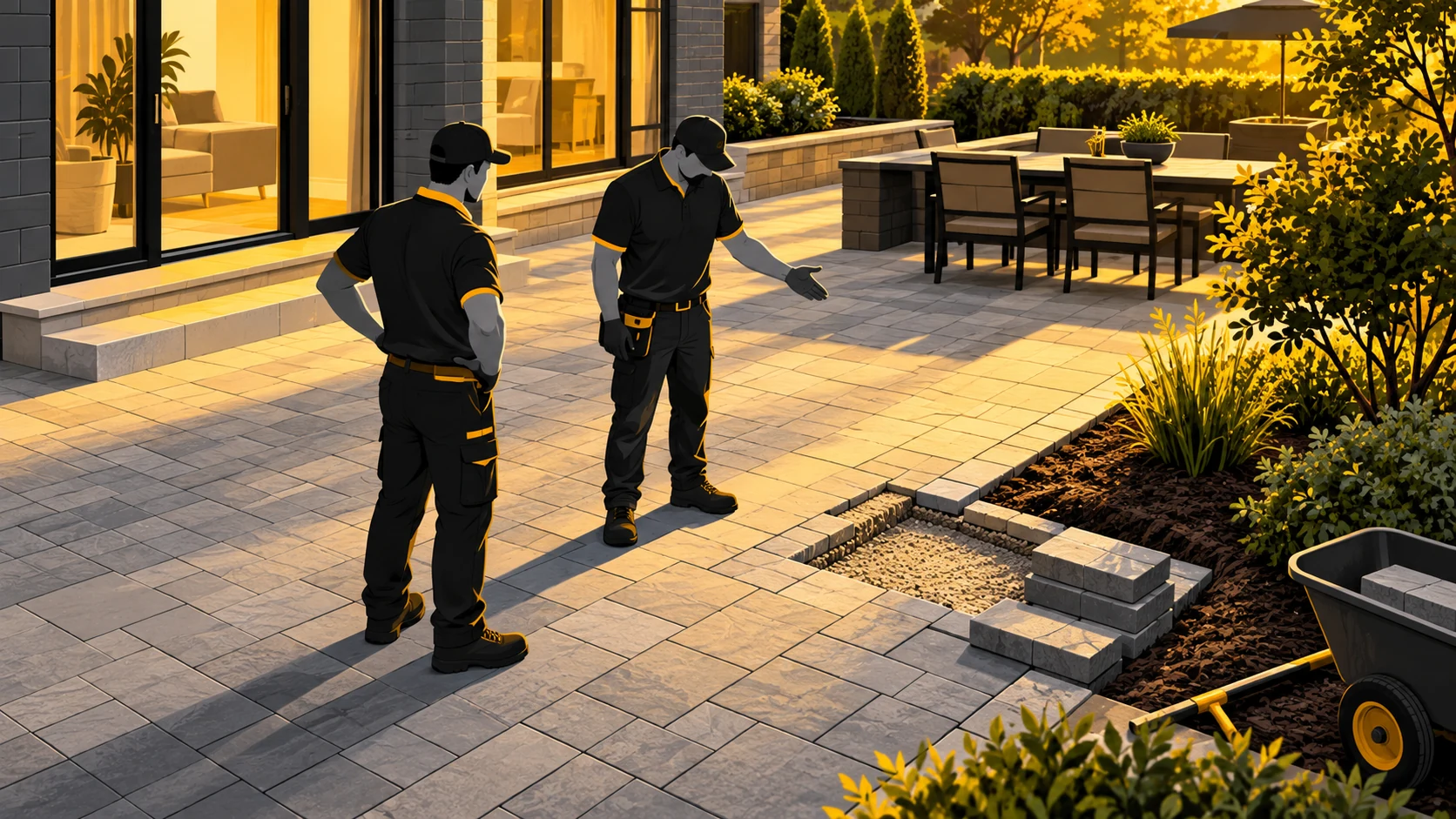
A single unit shows its own surface. However, an arrangement helps you see how neighboring colors and repeated shapes interact. Ask for enough representative pieces to discuss the proposed pattern and blend. The appropriate sample arrangement depends on the actual product, so avoid treating a universal block count as a guarantee.
Place contrasting candidates apart before comparing them together. Otherwise, one dark option can make the next option look lighter than it will appear across a whole patio. Next, view the arrangement from the doorway and the garden. Both viewpoints matter when you use the space every day.
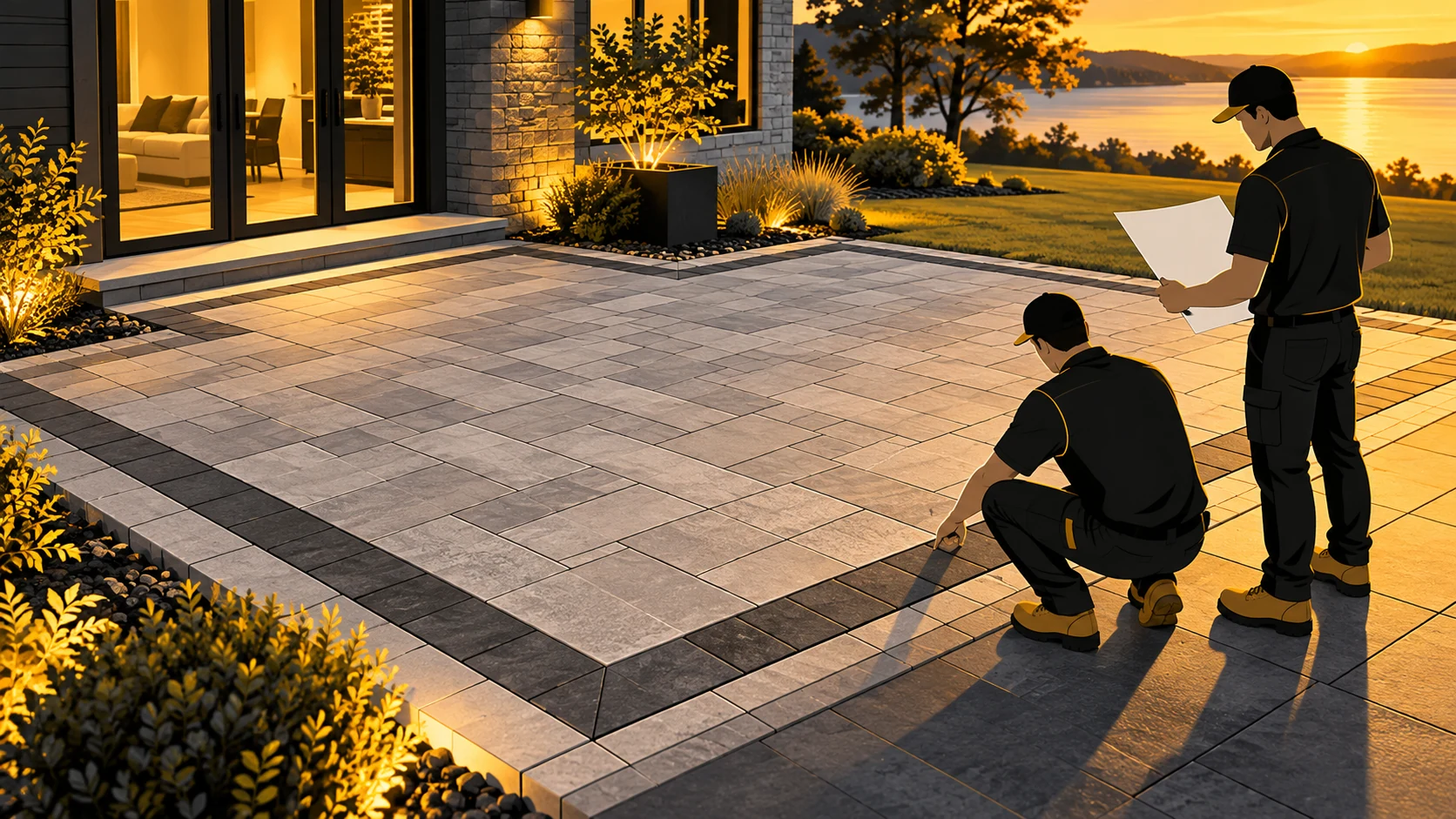
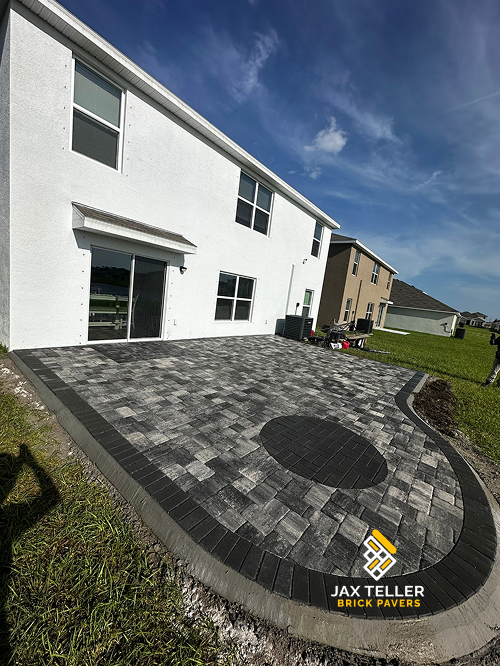
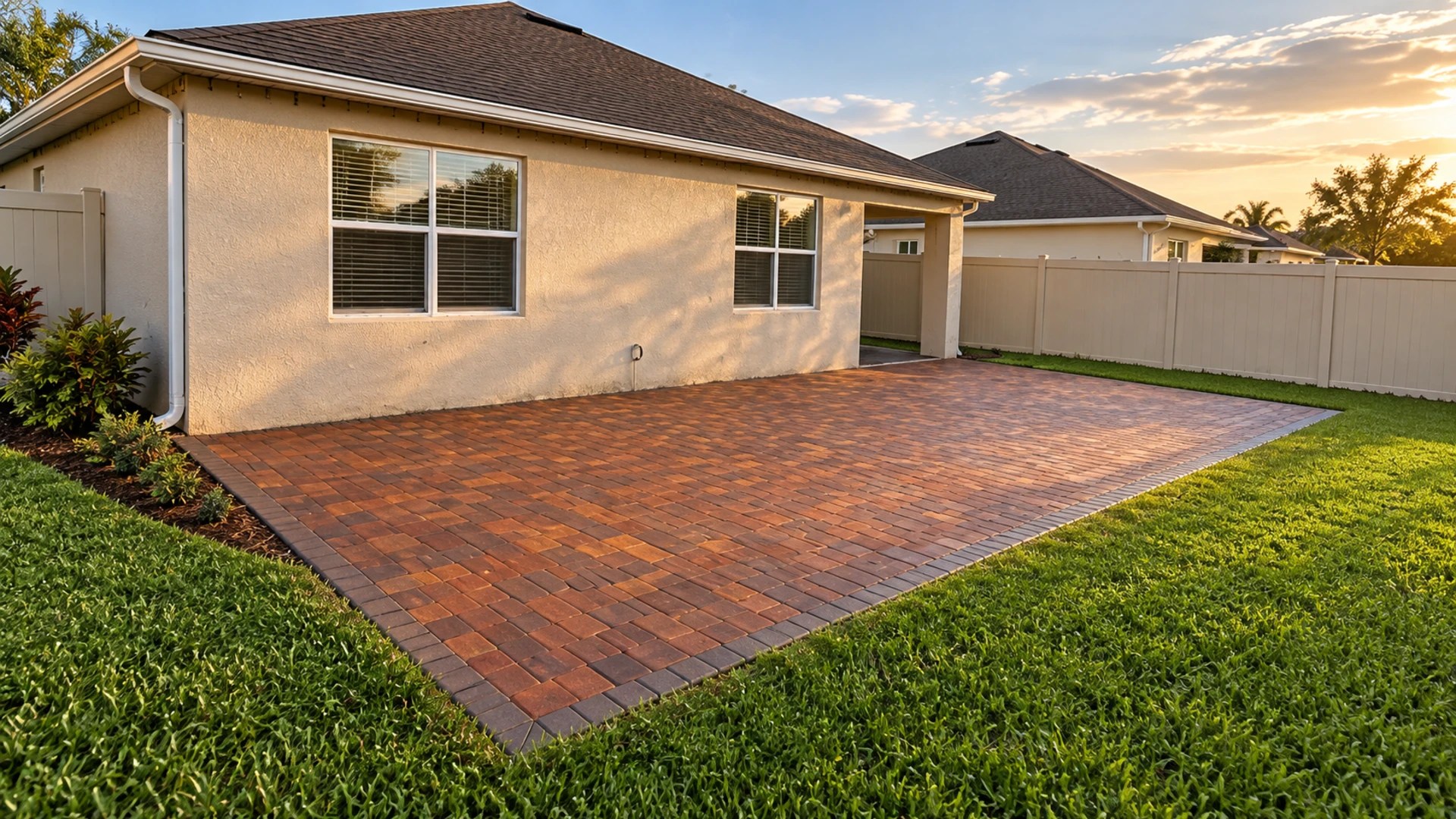
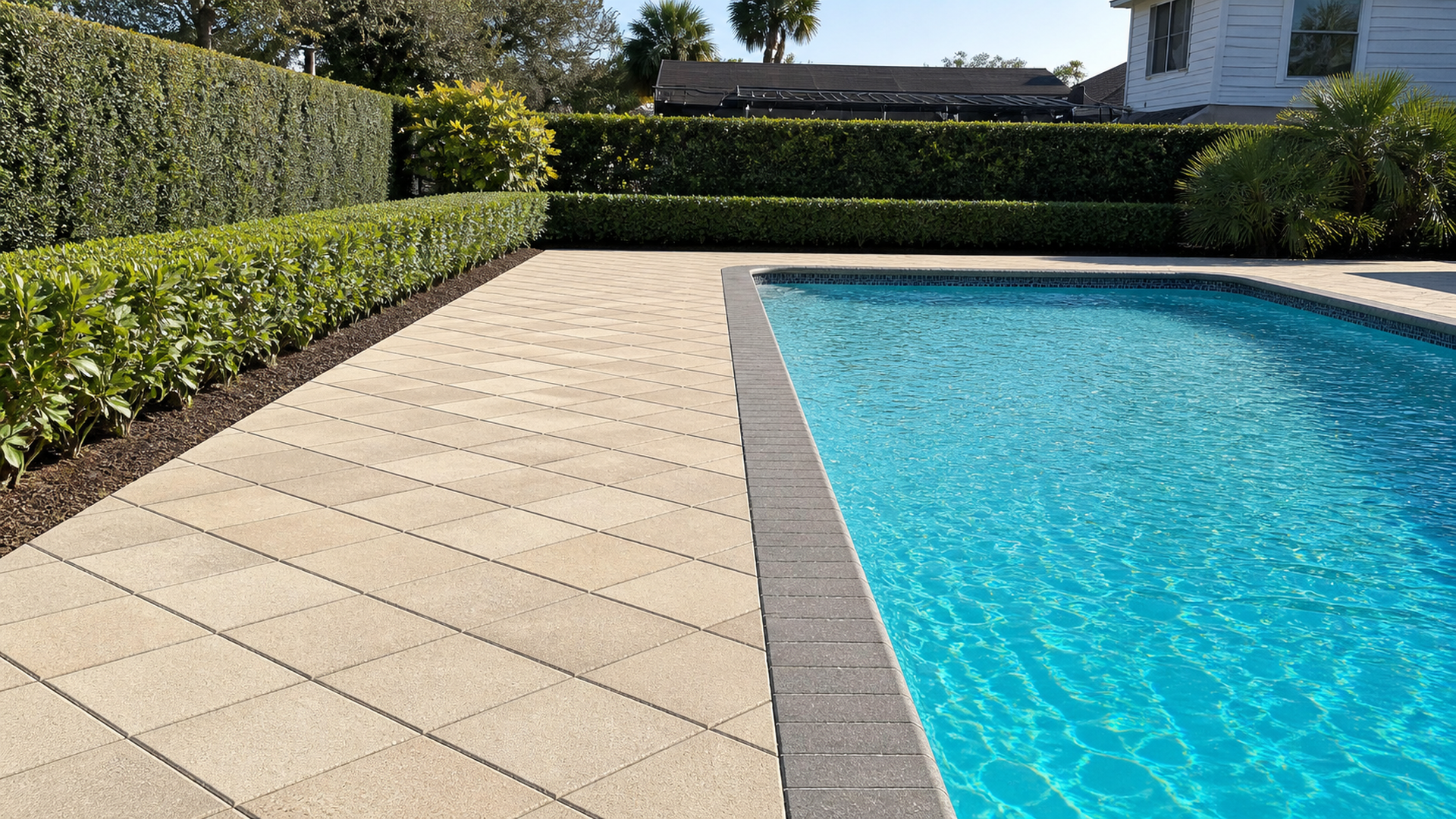
If a border forms part of the design, include it in the discussion. A narrow accent can change the apparent warmth and contrast of the field. Therefore, approving the main surface without its proposed edge can leave an important part of the design unresolved.
Review paver sample panels at your property
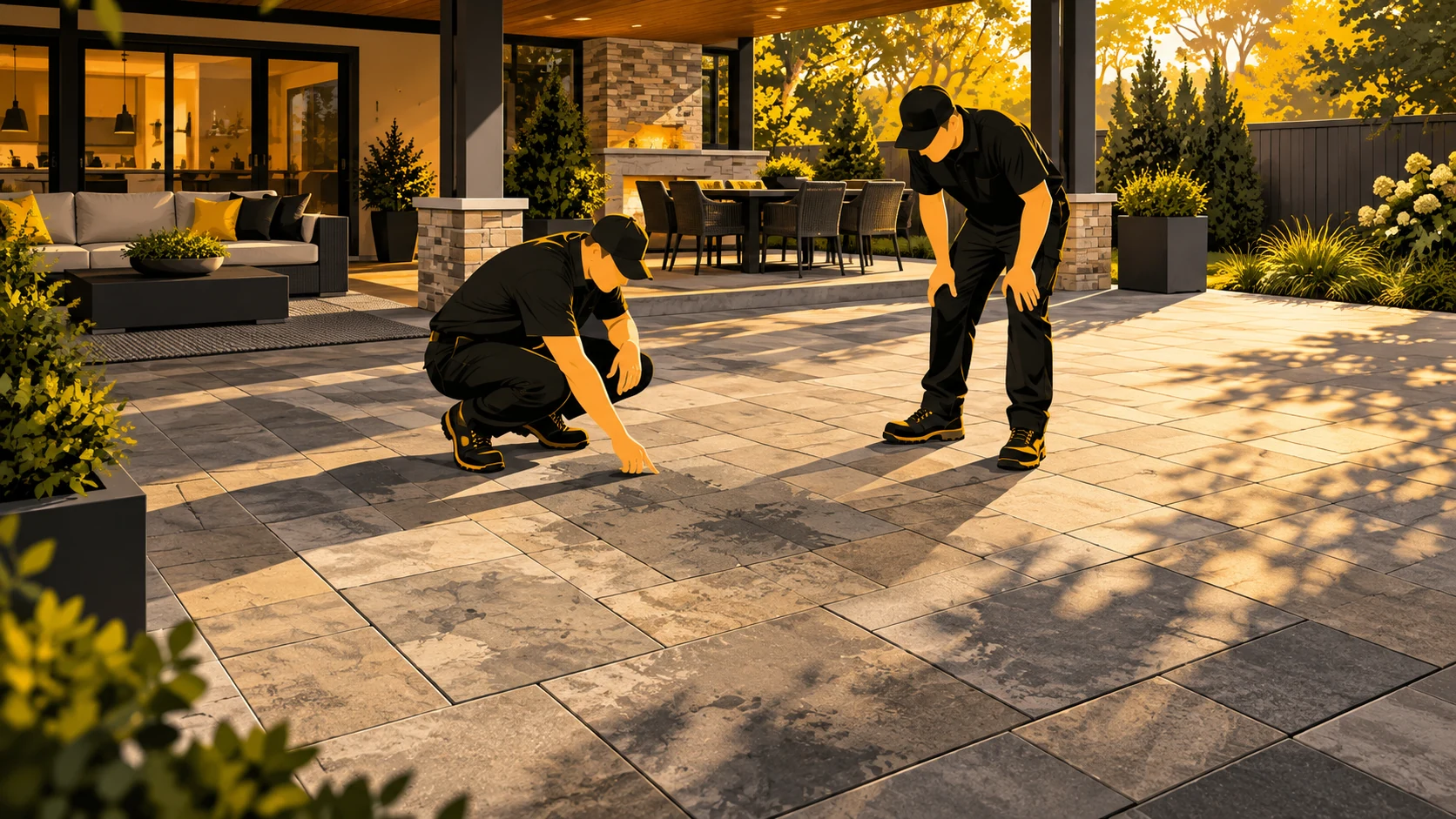
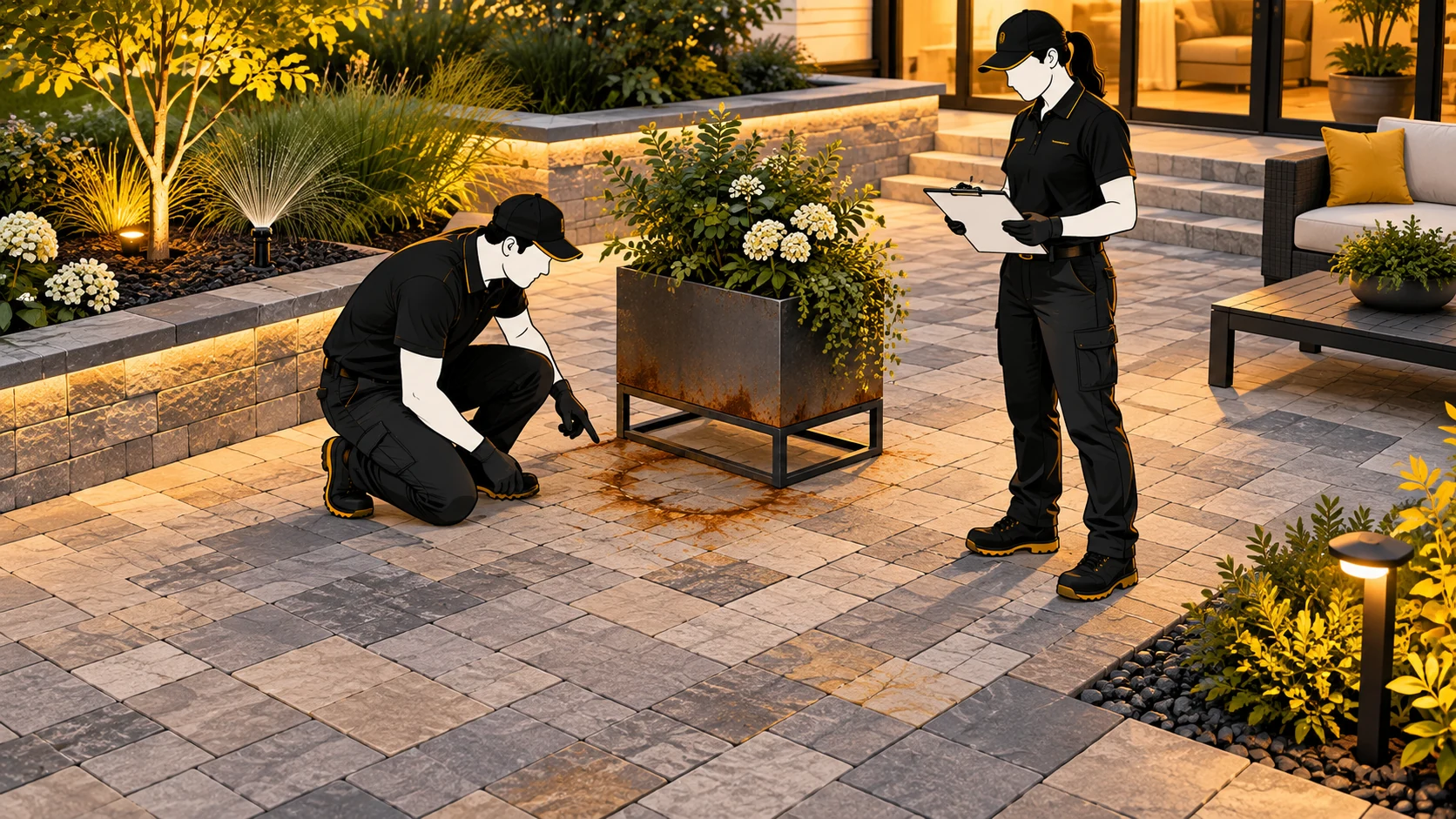
Bring the review to the actual project when practical. For example, place the samples near the house wall without blocking a path or damaging an existing surface. Look at them from normal standing height. Then step back far enough to see their relationship with the building.
A phone photograph can help you remember the review, but it changes the experience. Automatic exposure, screen brightness, and camera processing can alter the apparent tone. Therefore, use photographs as a record of your decision process rather than the final authority on exact color.
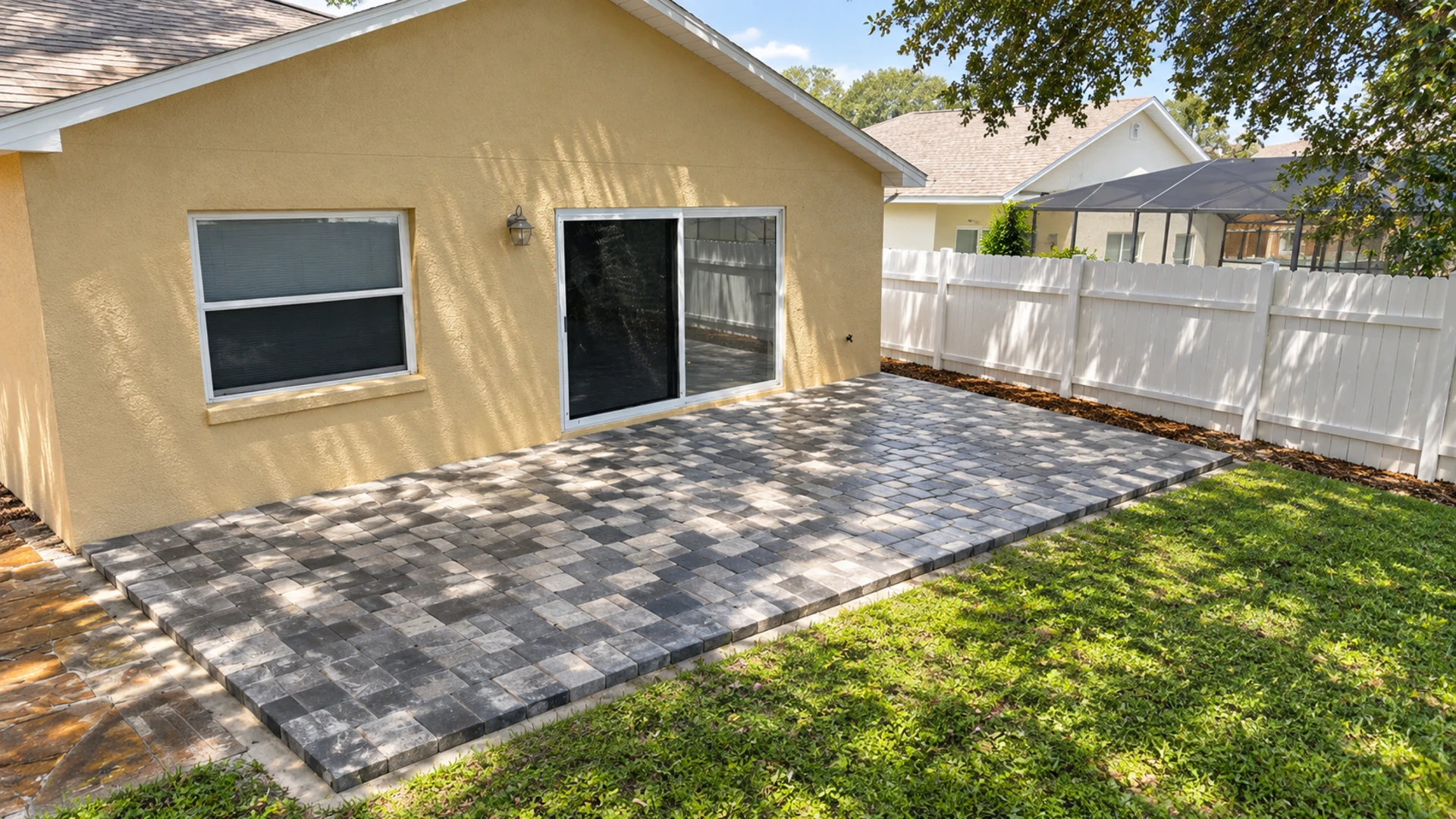
Consider the view from indoors too. A patio often forms part of the scene through a sliding door. In contrast, the driveway may dominate the approach from the street. Discussing those views helps explain why a sample that looks attractive close up may feel too busy across a larger area.
Check daylight at more than one moment
Outdoor light changes during the day. Consequently, a sample review at one moment can miss a condition you notice later. Compare your shortlisted options when the area receives direct light and when it falls into shade, if those conditions occur on the property.
Write down the viewing conditions alongside your preference. For example, note that option B felt balanced beside the wall in afternoon shade. That statement communicates more than simply calling it the best gray. It also gives another household decision-maker a useful reference for their own review.
Do not turn this exercise into an endless search for a color that looks identical in every condition. Instead, decide which views and times matter most to you. A deliberate priority makes it easier to accept normal visual changes without treating them as a later installation problem.
Discuss wet appearance separately from finish choice
Ask the supplier or installer how to review wet and dry appearance without interfering with the sample or its intended use. Moreover, distinguish a damp surface from a sealed surface. Water on a sample does not establish how a particular sealer will look or perform.
If the design includes a proposed coating, request the exact product information and an appropriate representative test. Then compare that result with the untreated material. Avoid accepting a vague promise that sealing will create a precise color match between different materials or production lots.
This distinction matters when one household member prefers a dry natural look and another prefers stronger color. Instead of assuming both goals mean the same finish, describe the preferred appearance in plain language. The contractor can then explain which choices need separate confirmation before the order.
Understand variation without accepting an undefined result
Some products include a deliberate range of tones. However, the acceptable range still deserves a clear conversation. Ask whether the panel includes the lighter and darker units you should expect, rather than only the pieces that look closest to your favorite photograph.
Manufacturer guidance supports viewing physical samples because natural materials and production can affect appearance. For example, Belgard's color guidance recommends actual product samples rather than relying only on displayed colors. That advice does not establish that every Belgard product, color, or size is available for your particular project.
Next, ask how the contractor will review delivered materials against the approved selection. The answer should identify a practical checkpoint before widespread installation. It should not promise that every unit will look identical or that any unexpected appearance will disappear automatically after weathering.
Keep material suitability separate from color approval
A good color choice does not establish that a product suits every use. Therefore, ask the contractor to confirm the material and assembly for the actual driveway, walkway, or patio. Include expected traffic and any special conditions in that discussion.
For example, a sample chosen for a pedestrian terrace does not automatically approve the same unit for a vehicle route. The product name alone may not describe all available sizes, thicknesses, or finishes. Consequently, the proposal should identify the complete selection rather than a color name without context.
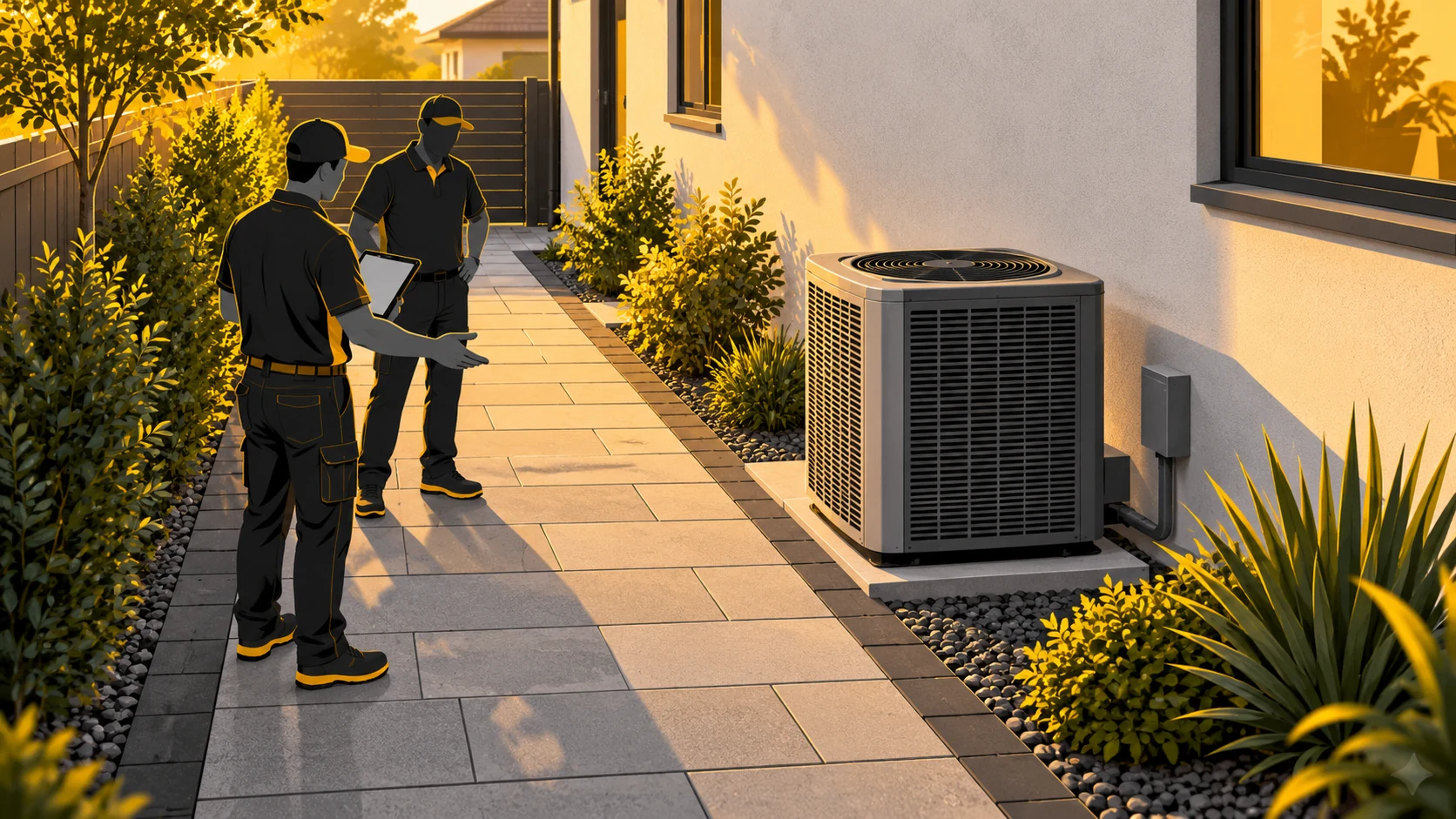
Do not ask the sample panel to replace the site assessment. Existing levels, drainage, edges, and access still affect the overall installation. Instead, treat visual approval and technical suitability as two connected decisions. Both need an identified owner before materials move toward the property.
Use a simple comparison sheet
Give each candidate the same review criteria. For example, compare its relationship with the house, the visibility of its pattern, the contrast of the border, and your reaction from the main viewpoint. Short notes usually work better than an elaborate rating system.
Separate preferences from unresolved questions. You might prefer option A but still need confirmation of regional availability. In contrast, option B may be available but create too much contrast beside the coping. Recording both facts helps prevent availability alone from silently deciding the design.
Invite household decision-makers to review the same physical arrangement. Then discuss differences before signing the final selection. Two people can both say they like a light patio while imagining very different surfaces. A shared panel and a written description make that conversation much easier.
Connect paver sample panels to the proposed layout
Once you narrow the material, discuss the arrangement at project scale. A small panel can show color relationships, but it cannot fully represent every cut, border, curve, and transition. Therefore, review a drawing or marked layout with the contractor before assuming the sample answers those questions.
Ask where the pattern begins and which sight line controls its direction. Next, look at the edges near doors, steps, and existing paving. These decisions can change how the finished surface feels even when the chosen material remains exactly the same.
If two patterns remain under consideration, compare them using the same color family when possible. Otherwise, a change in color can distract from the layout question. Keeping one variable steady gives you a clearer basis for deciding whether the pattern supports the space.
Agree on a delivery review checkpoint
Before ordering, ask when you can review the delivered material and what information will accompany it. For example, the contractor may confirm product labels and compare representative units with the approved selection. Define that checkpoint while changes remain manageable.
Do not approve a substitution through a casual message that omits its consequences. Instead, ask for the new product identification, the reason for the change, and any effect on appearance or scope. A fresh photograph can support the discussion, but the final decision should remain unambiguous.
The same approach applies when additional material becomes necessary later. Paver sample panels remain a comparison tool, not a stock guarantee. A matching name does not remove the need to discuss production variation and availability. Therefore, include future repair or extension questions in the conversation without expecting a supplier to guarantee indefinite stock.
Build a useful selection record
Keep the approved sample photographs, product references, border choice, and decision date together. Moreover, retain the proposal version that contains those choices. A clear record helps you distinguish a deliberate design change from a misunderstanding months later.
Include any accepted limitations in plain language. For example, your notes may acknowledge that the sample shows a representative blend rather than every possible unit. That is more useful than a broad statement saying all color differences are acceptable. Specific expectations protect the conversation on both sides.
When the project finishes, add a few photographs of the whole installation. Then store care instructions separately from the selection notes. This creates a compact history that can support later maintenance, a small repair, or a carefully planned extension without relying on memory alone.
Resolve a disagreement without restarting the whole selection
If household preferences differ, identify the exact point of disagreement. For example, one person may dislike the border while another dislikes the pattern direction. Those concerns require different comparisons. Therefore, change one element at a time instead of discarding every candidate and returning to the beginning.
Ask each person to describe an acceptable result as well as a rejected one. A statement such as less contrast beside the pool gives the contractor something to evaluate. In contrast, saying the panel feels wrong leaves the decision open to interpretation. Clear descriptions can preserve progress while still respecting different priorities.
Finally, set a decision checkpoint with the installer. Confirm which information must arrive before that date, including availability and the complete material reference. This creates a useful sequence for approval without pressuring anyone to accept an unresolved product choice merely to keep an informal date.
Prepare the right questions for your Largo estimate
A productive request explains the project, not only the preferred color. Share the approximate area, its intended use, the fixed finishes nearby, and the viewing conditions that matter to you. In addition, say whether you want a new installation or a change beside existing paving.
Ask which sample decisions you need to make now and which belong after the site assessment. This avoids rushing an appearance choice before the technical scope is clear. It also prevents the opposite problem: leaving every selection open while expecting a final material order.
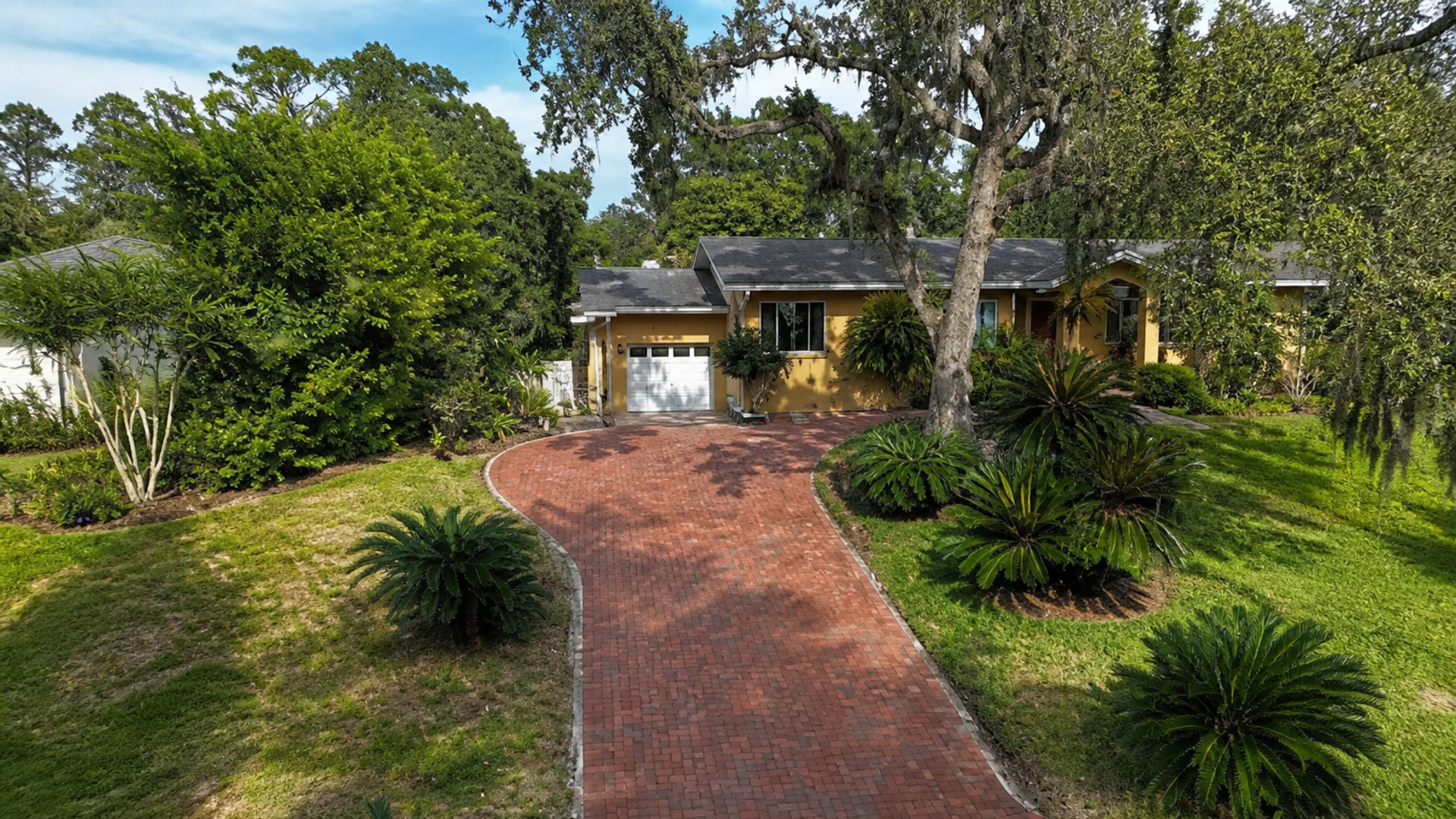
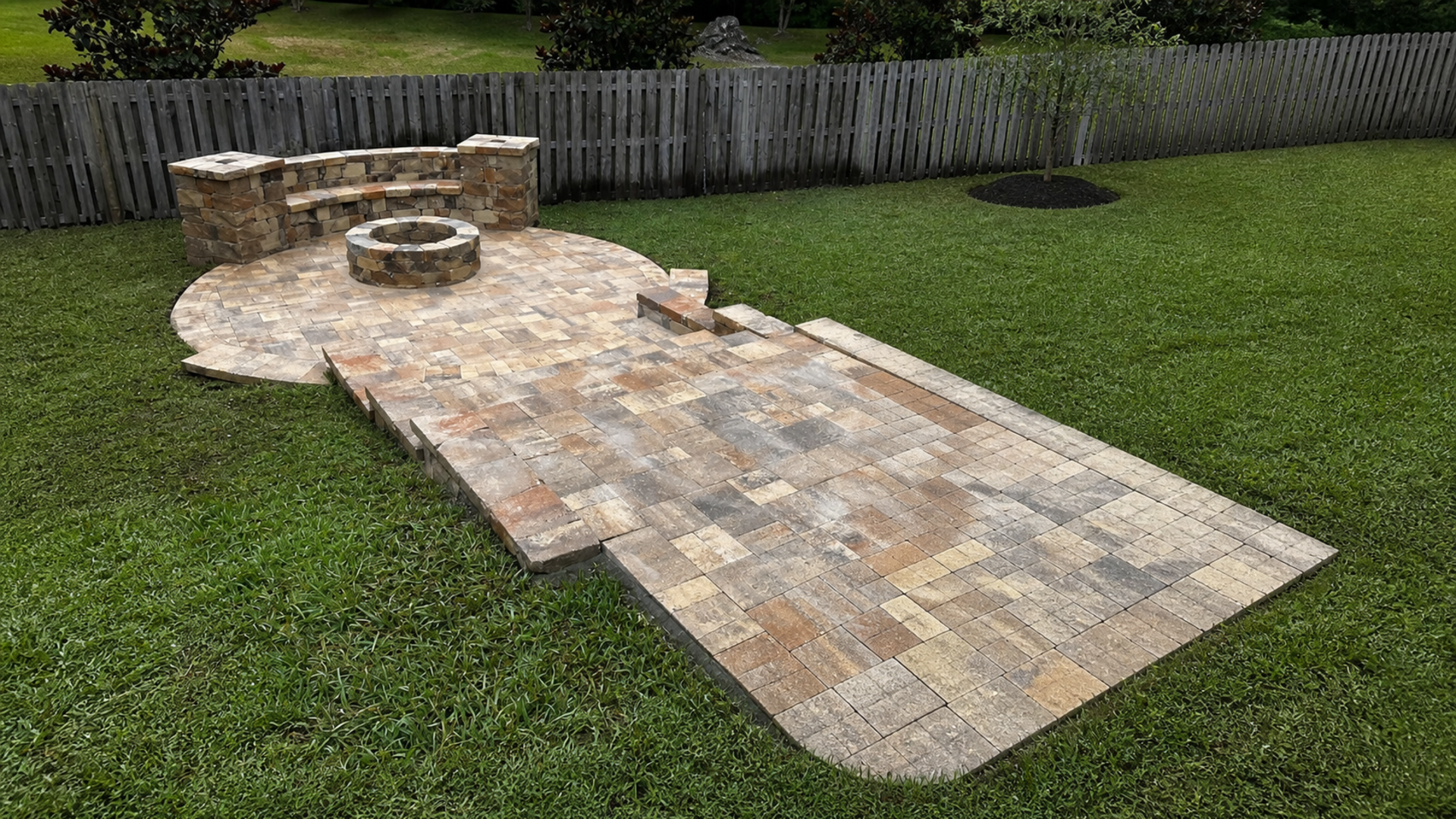
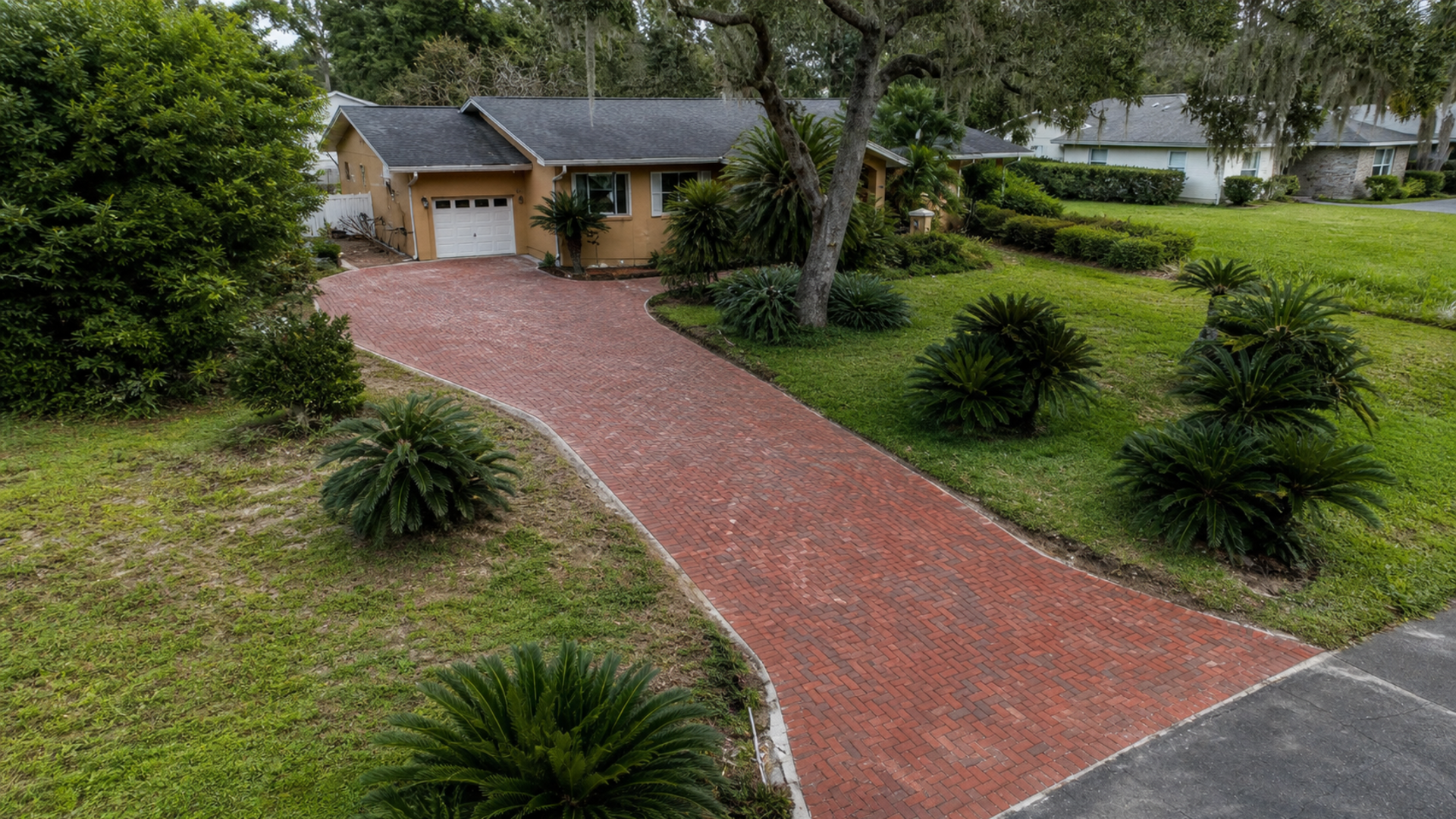
For a driveway project, explore JaxTeller's paver driveway service and bring your shortlisted samples into the estimate discussion. Meanwhile, the project gallery can help you describe a visual direction. Project photographs provide inspiration; they do not replace approval of your own product selection.
Ready to upgrade your driveway or patio? Use the contact page to discuss your property and compare ideas with JaxTeller Brick Pavers. You can also follow the team on Instagram and Facebook, or send your questions through WhatsApp. For location details, see the map. Contact JaxTeller Brick Pavers at +1 407-907-8308 or jaxtellerbrickpavers@gmail.com for your free estimate!