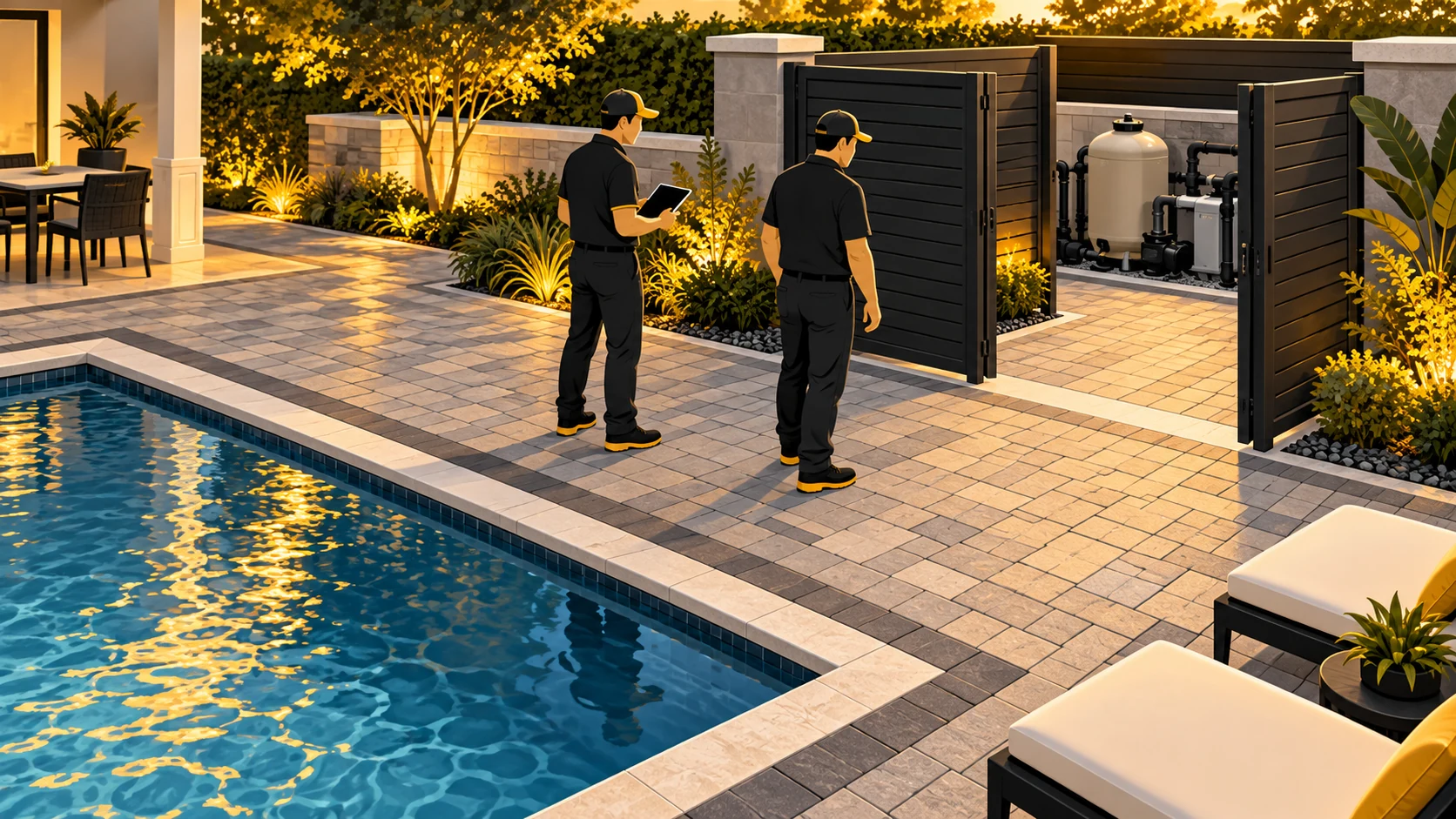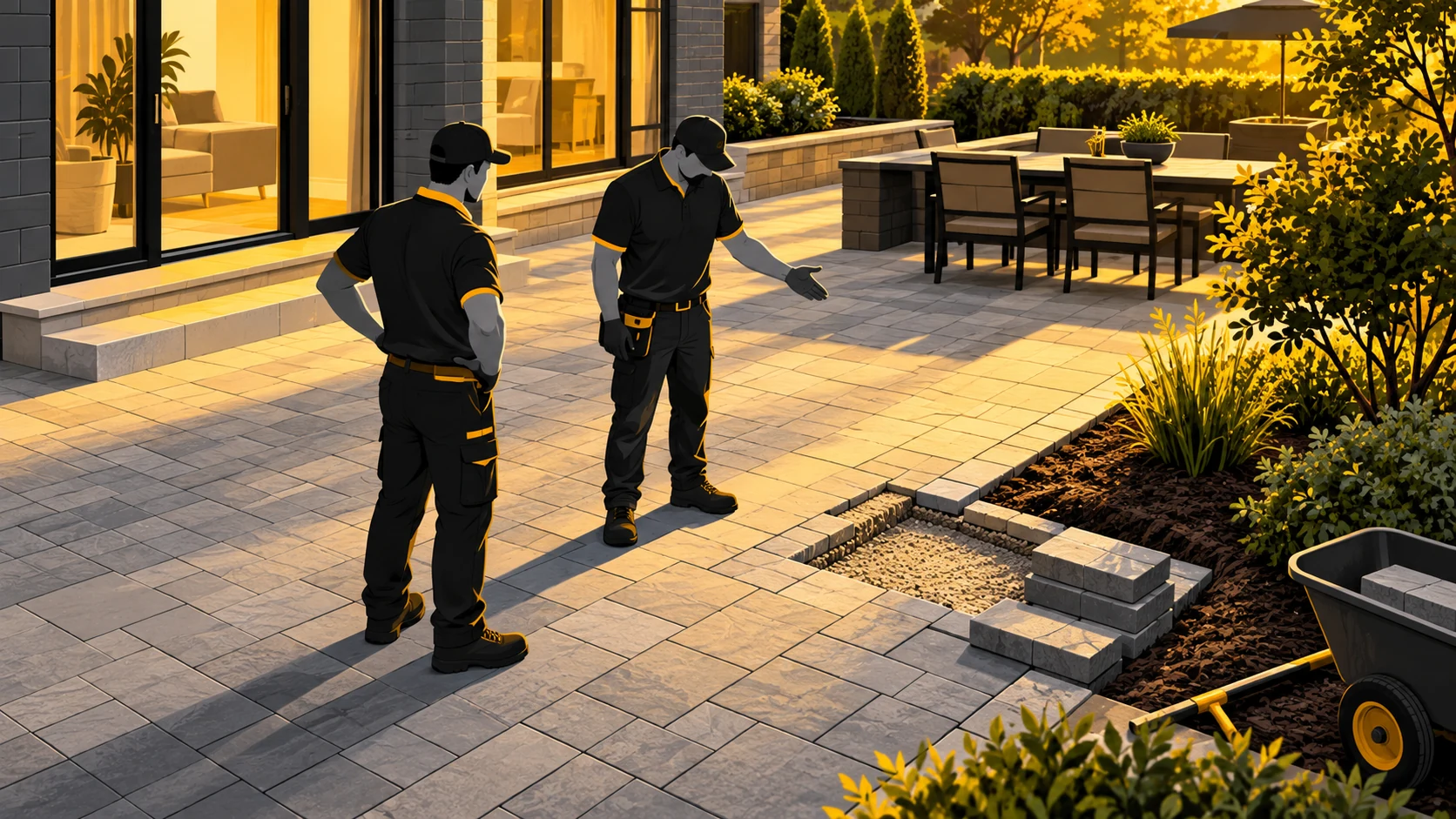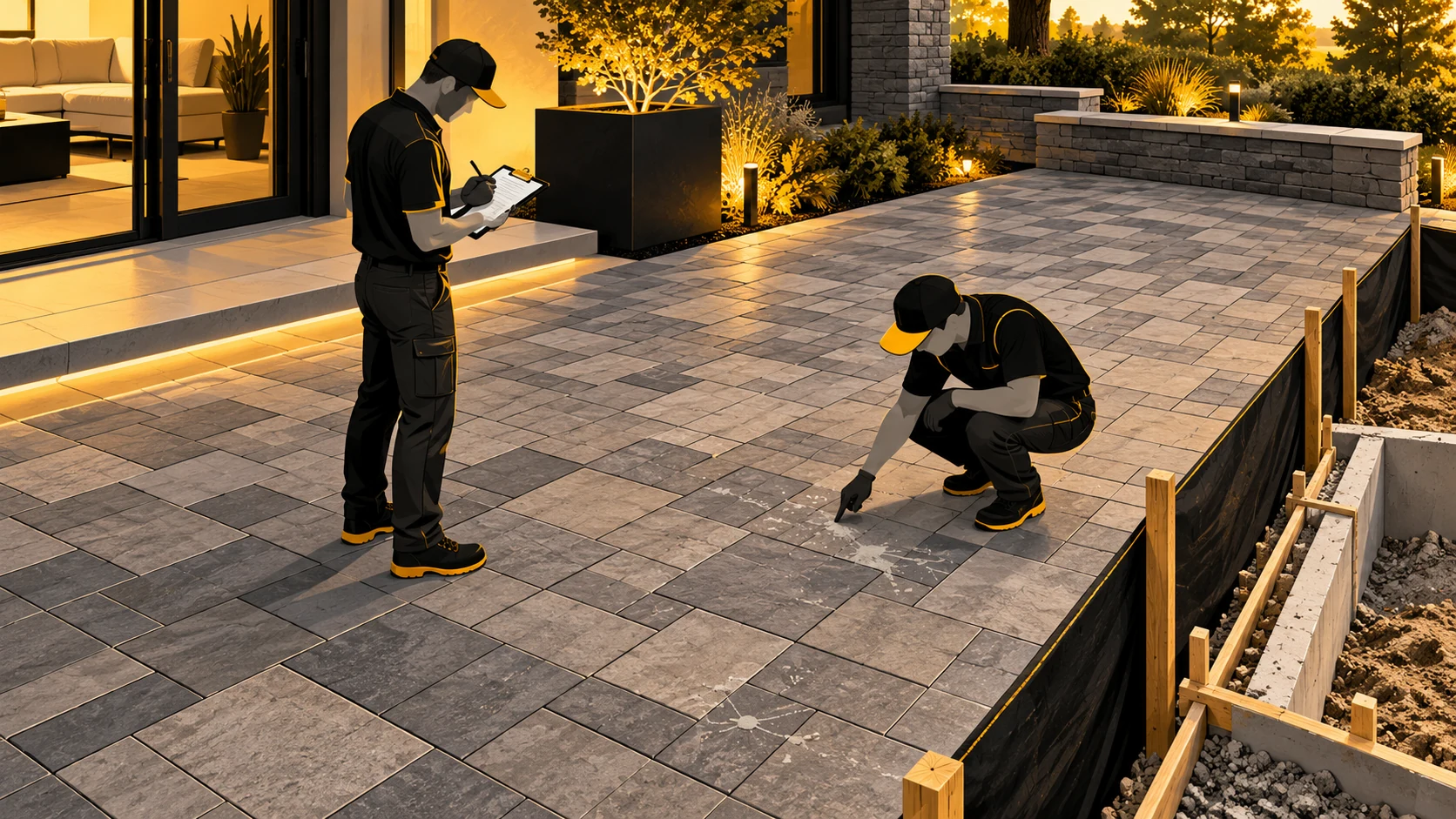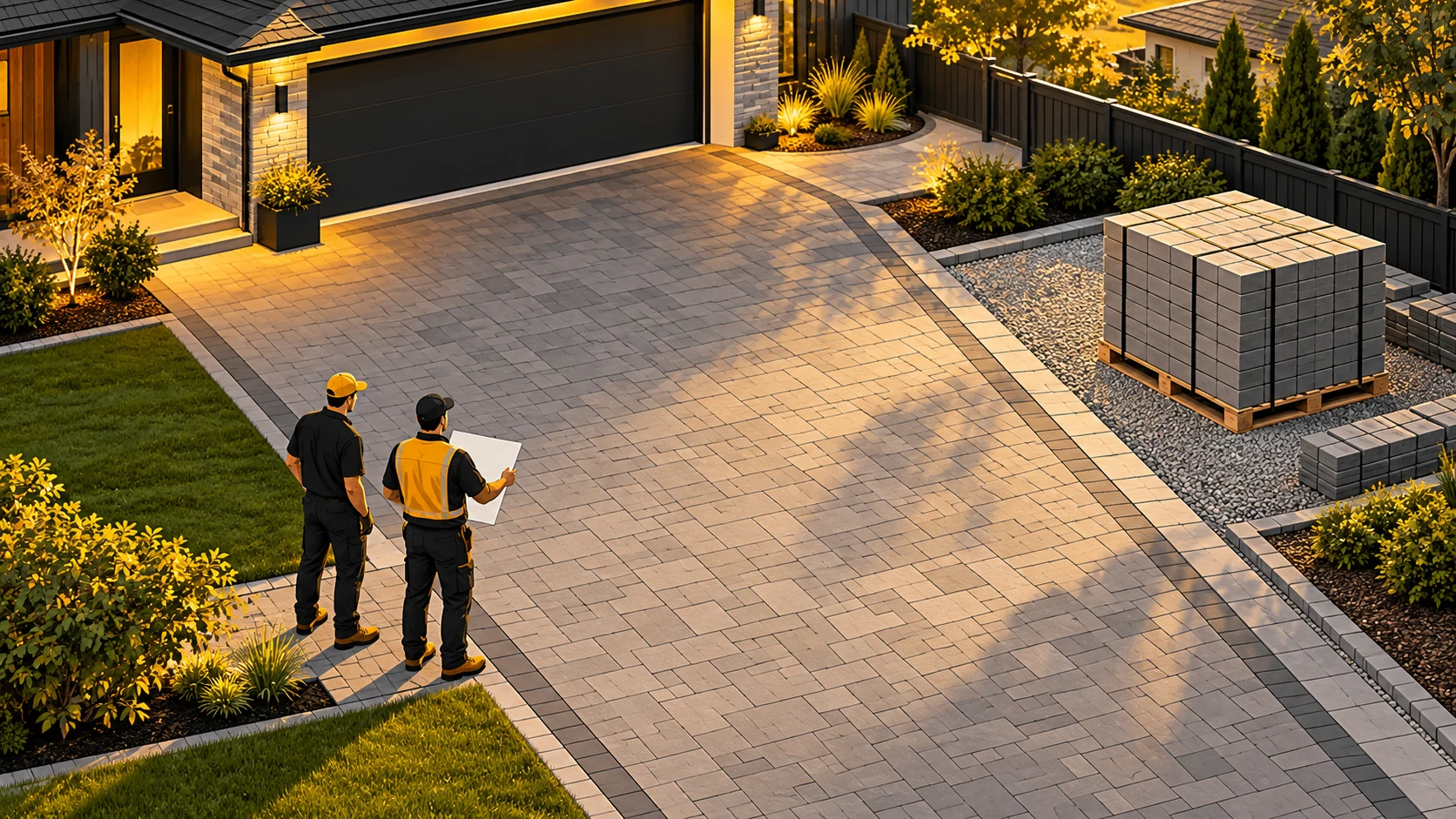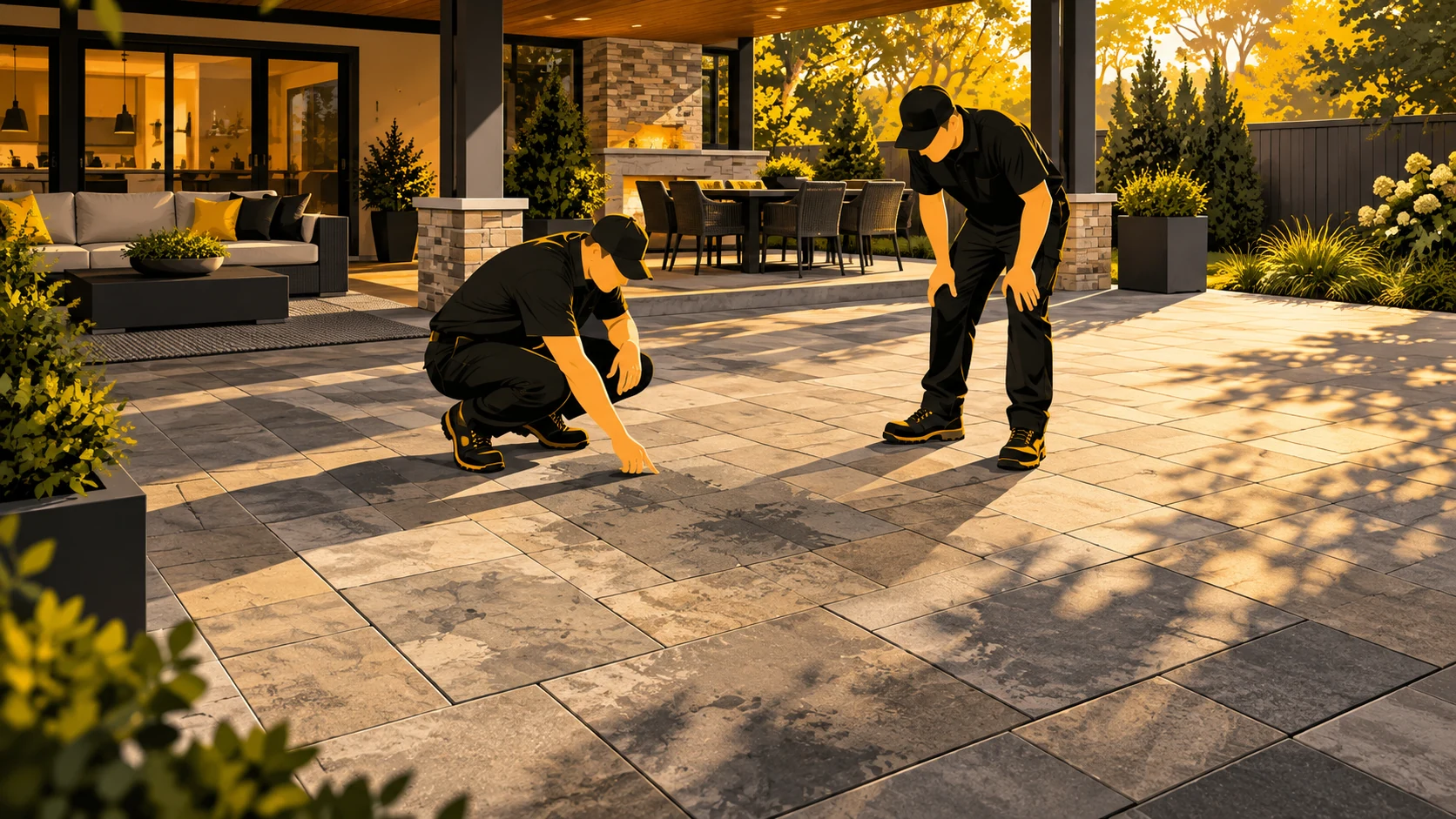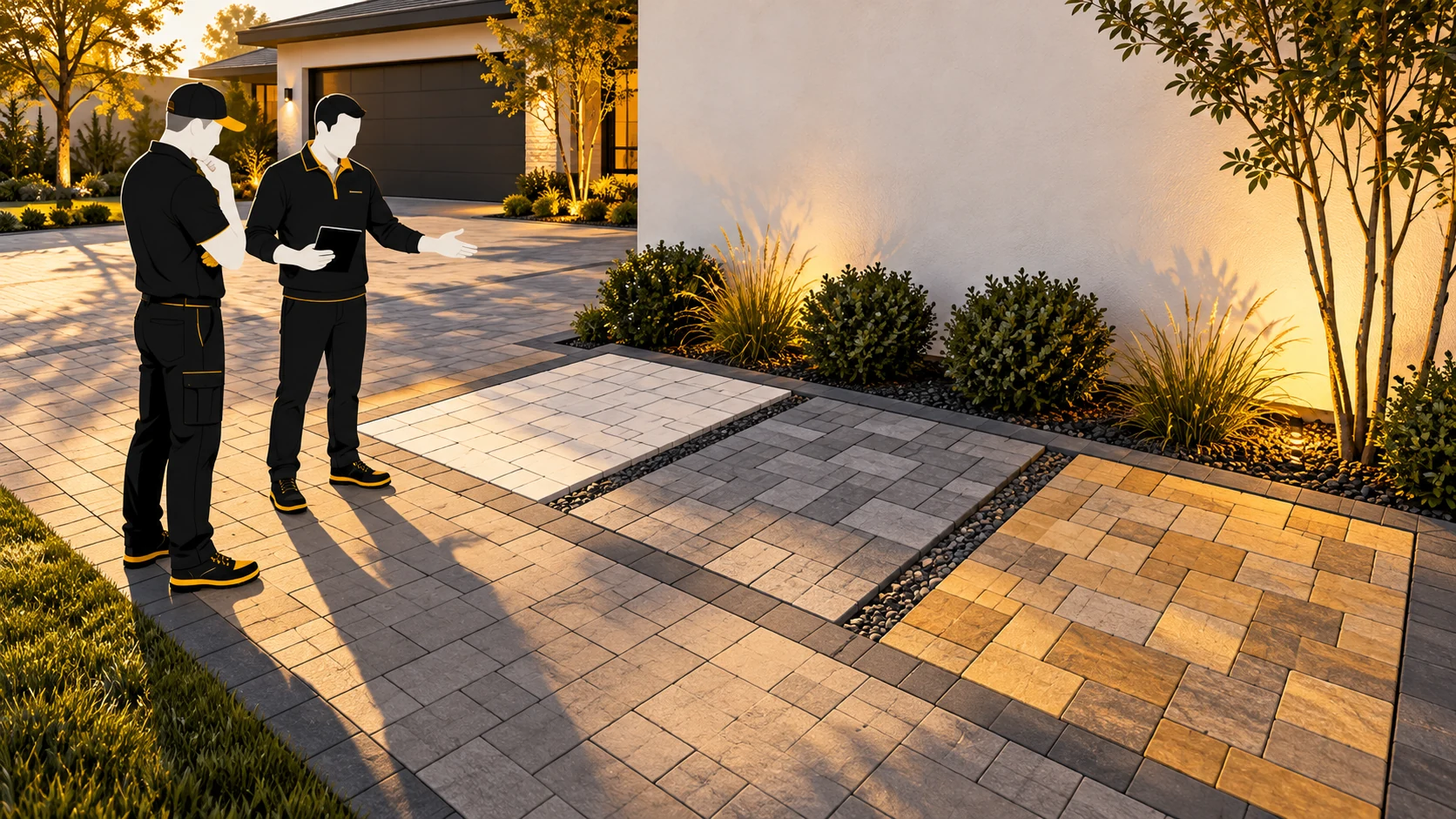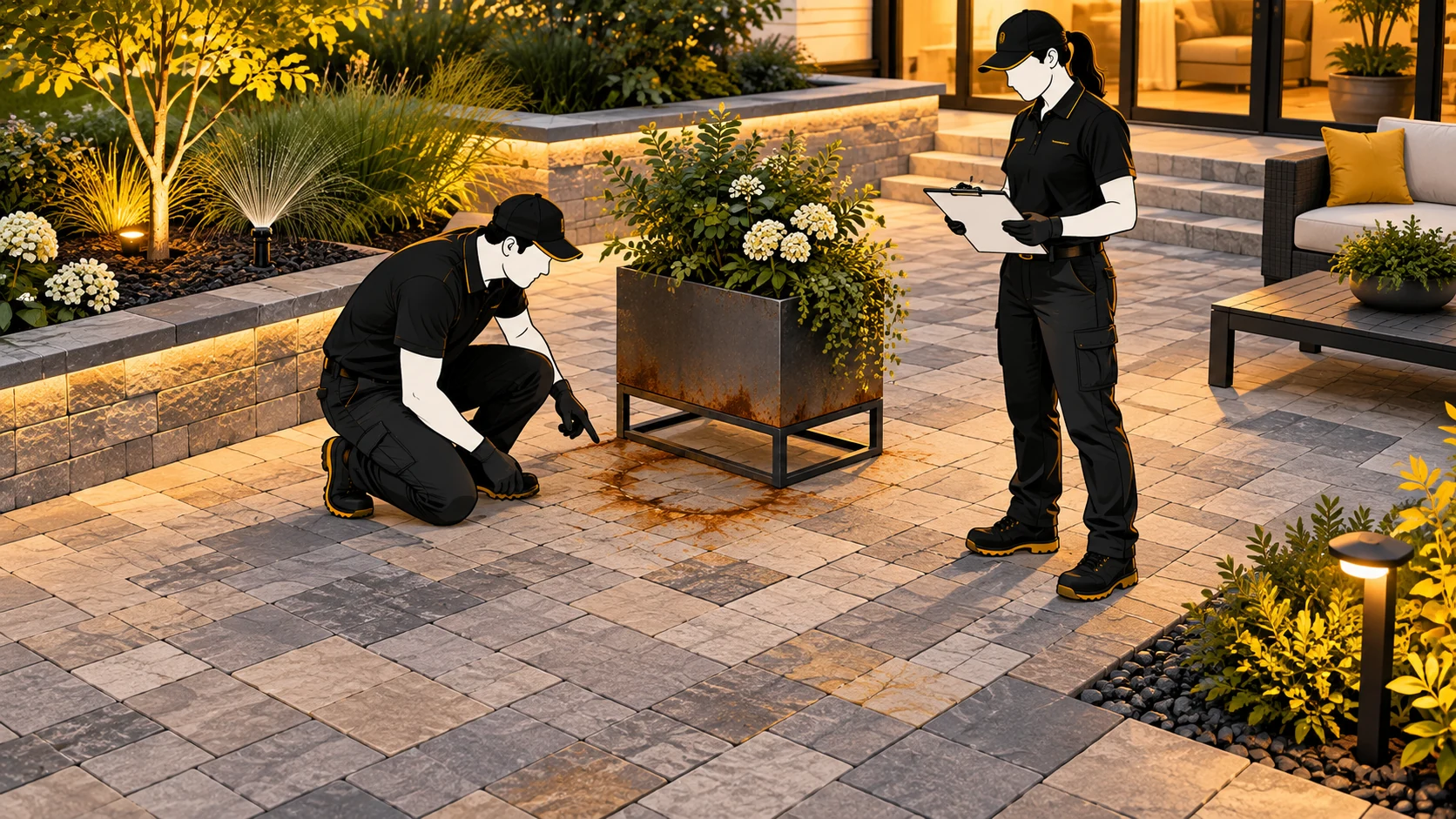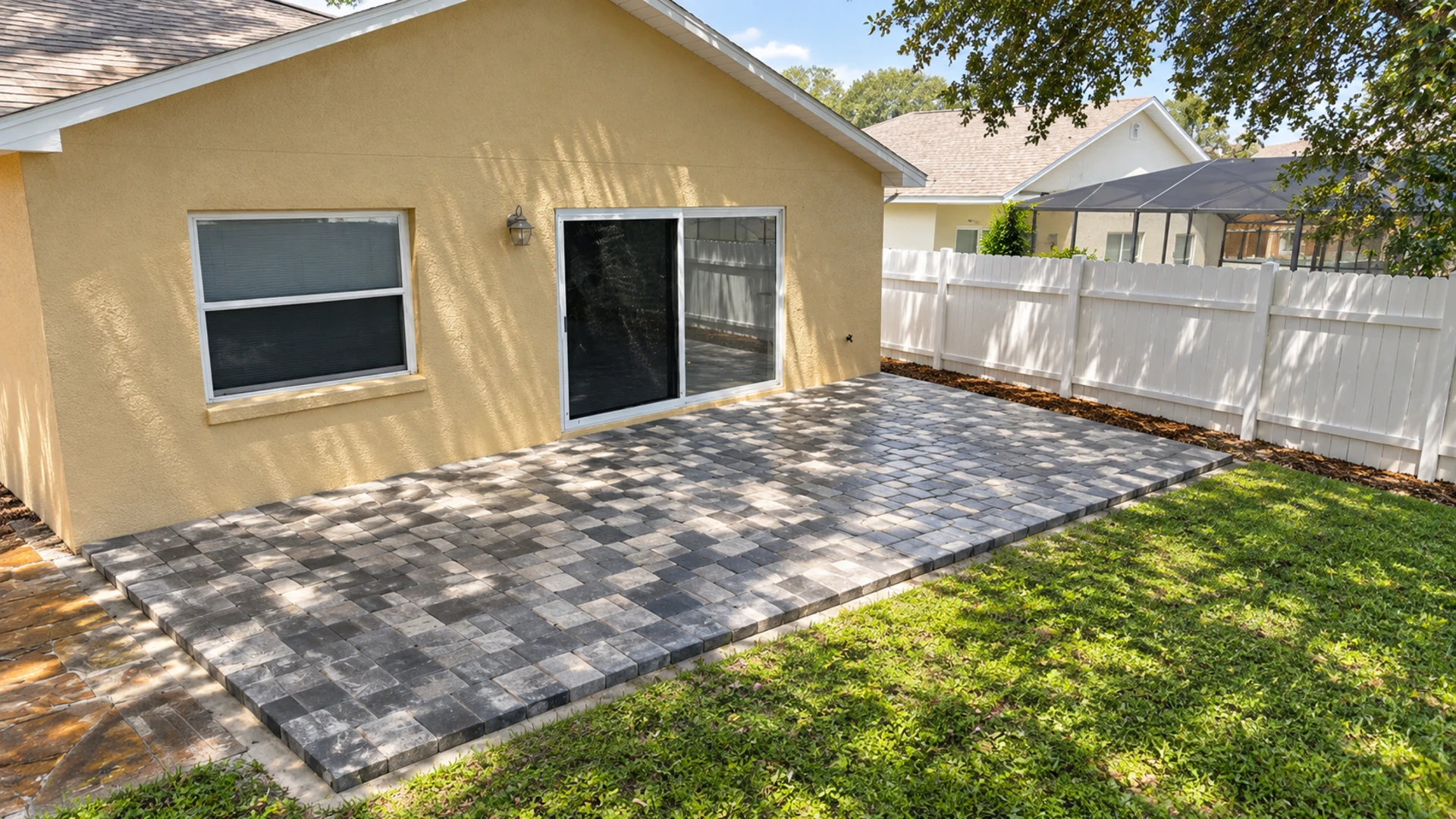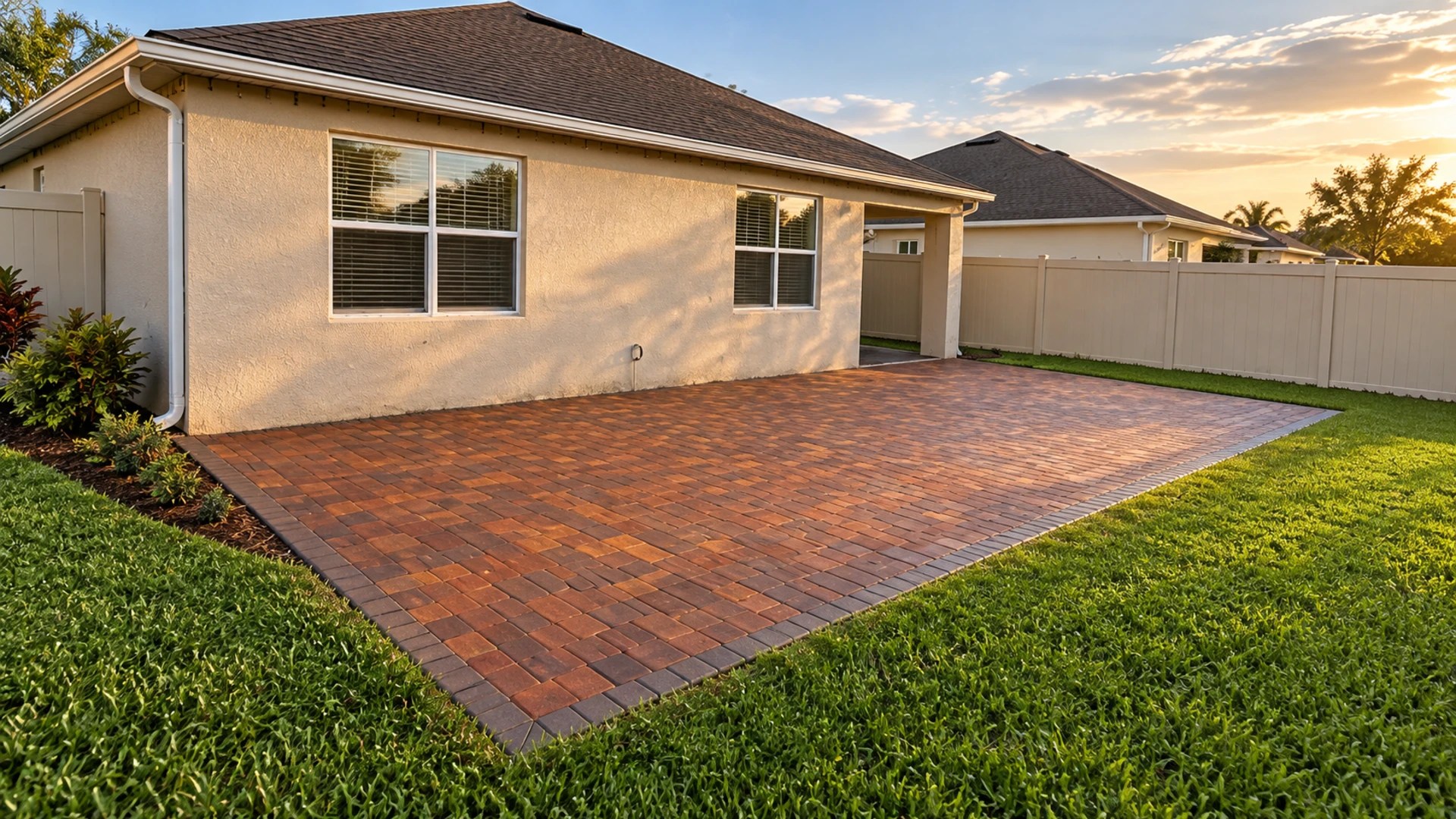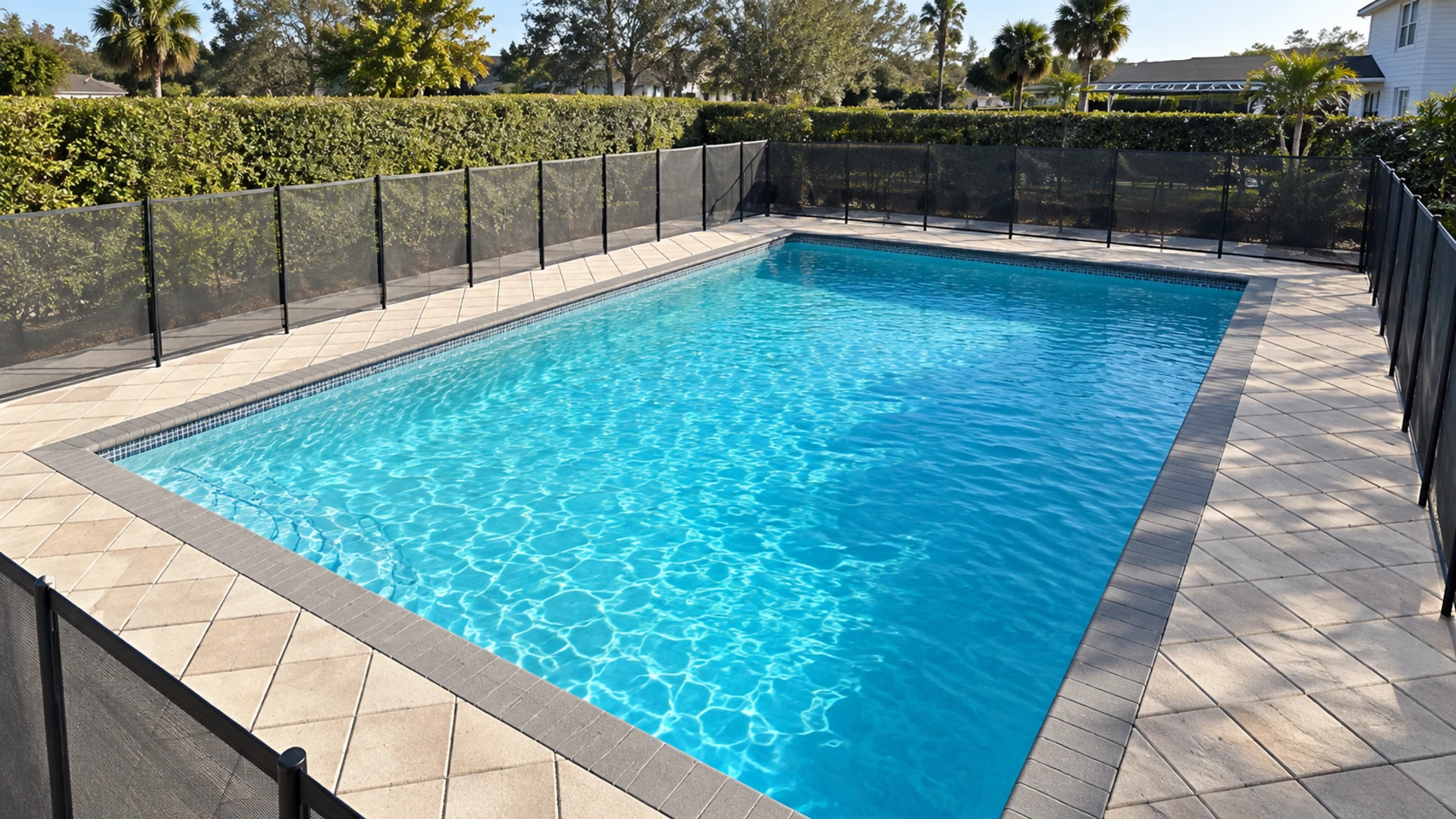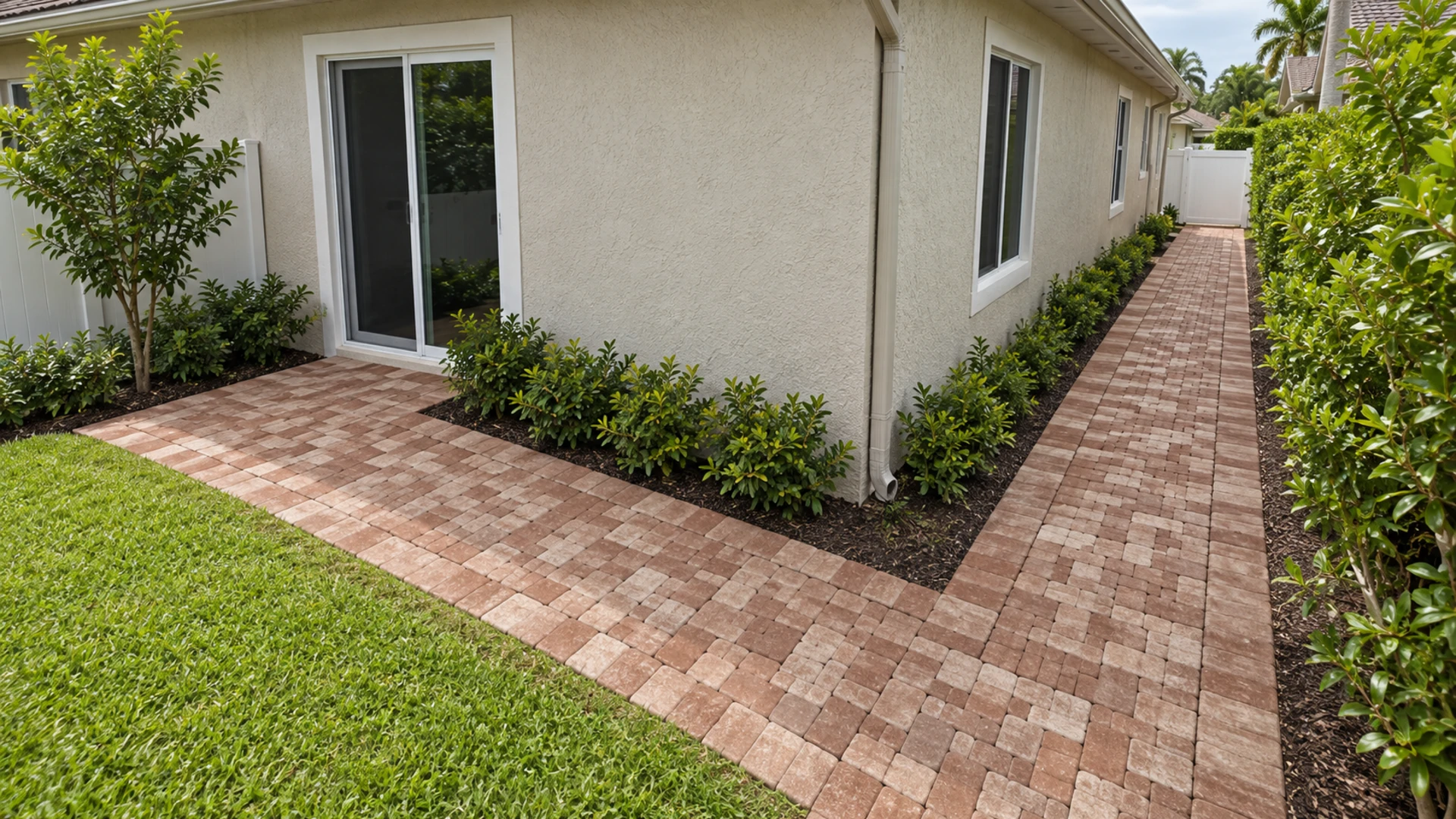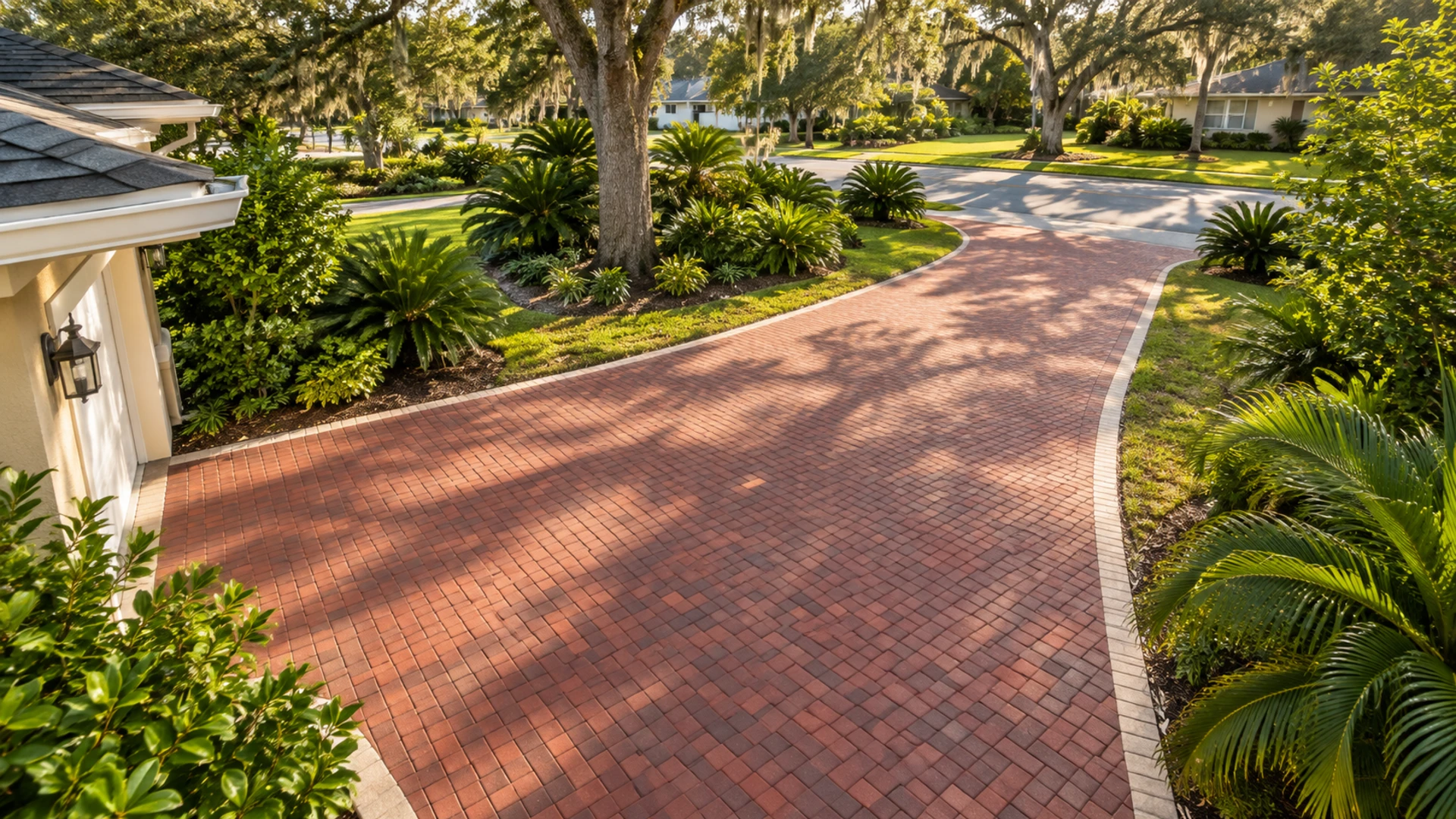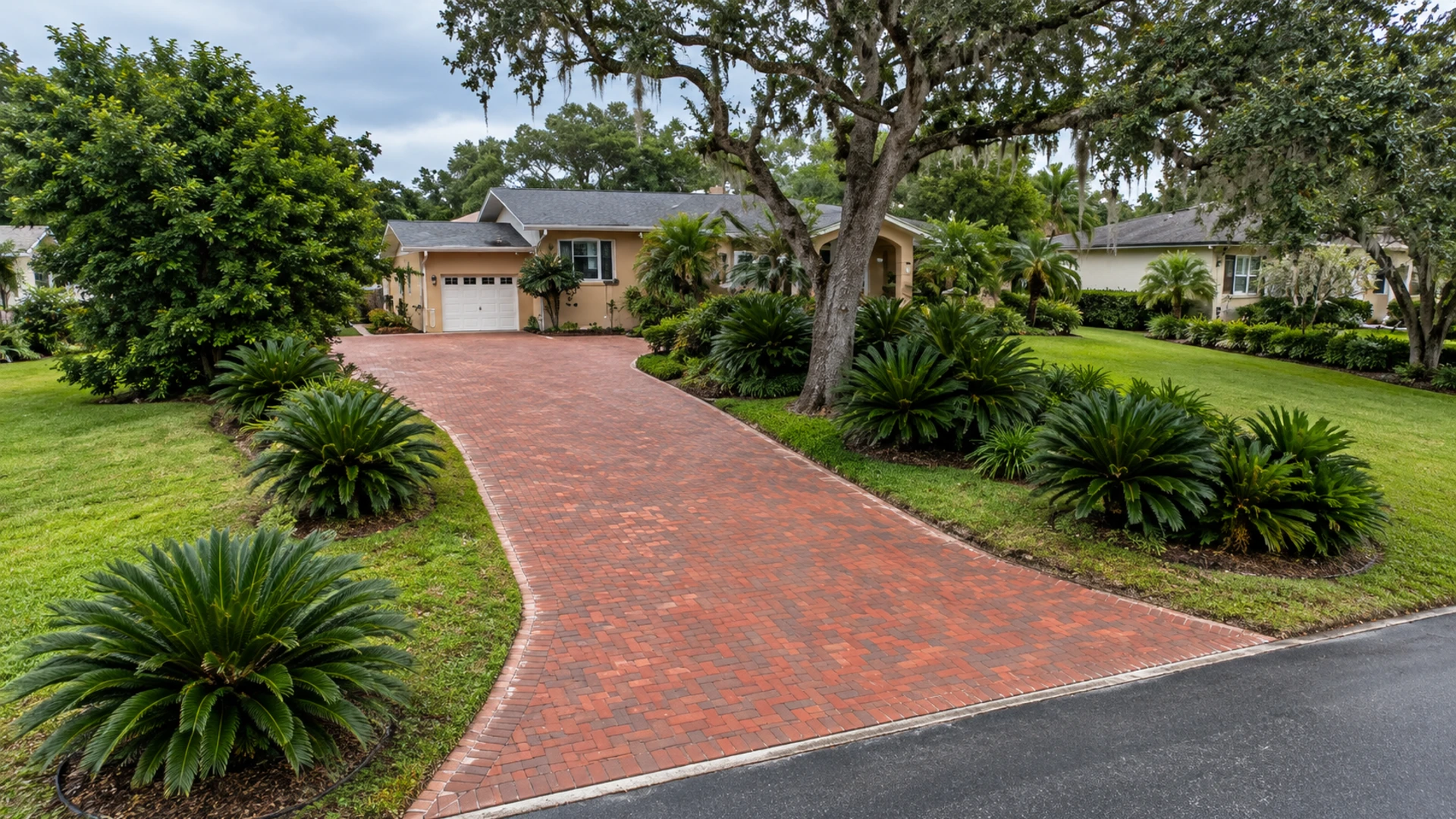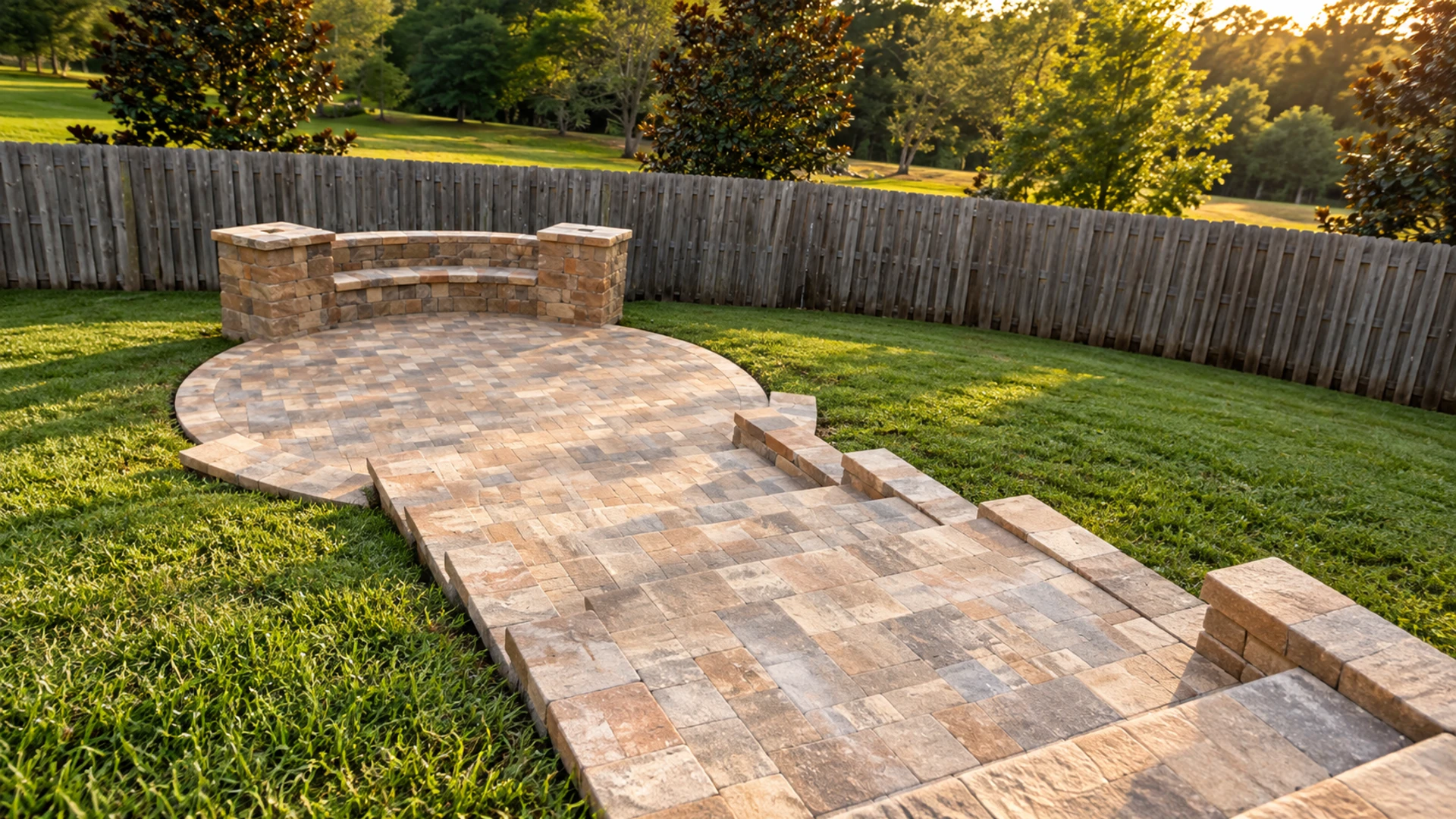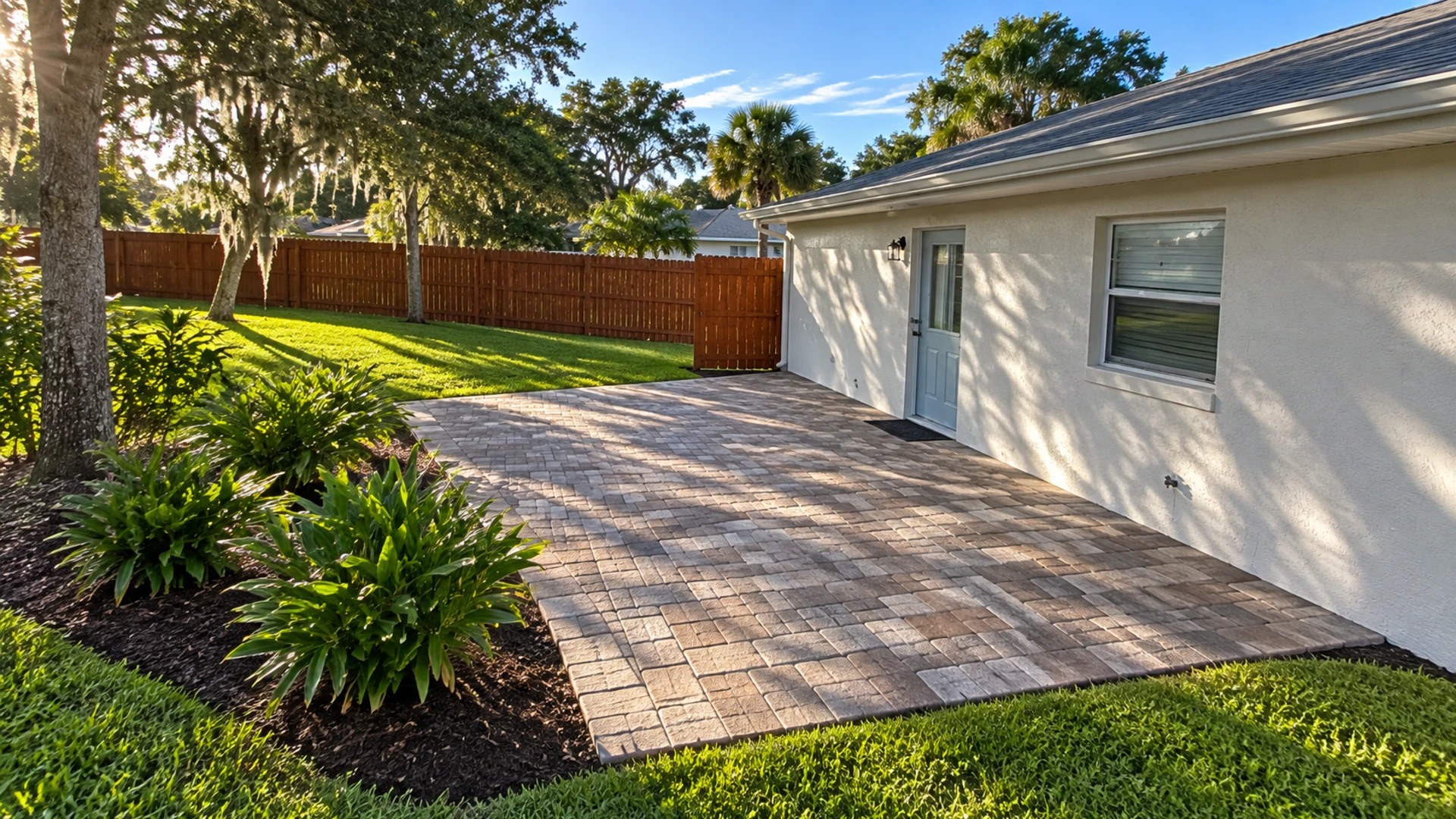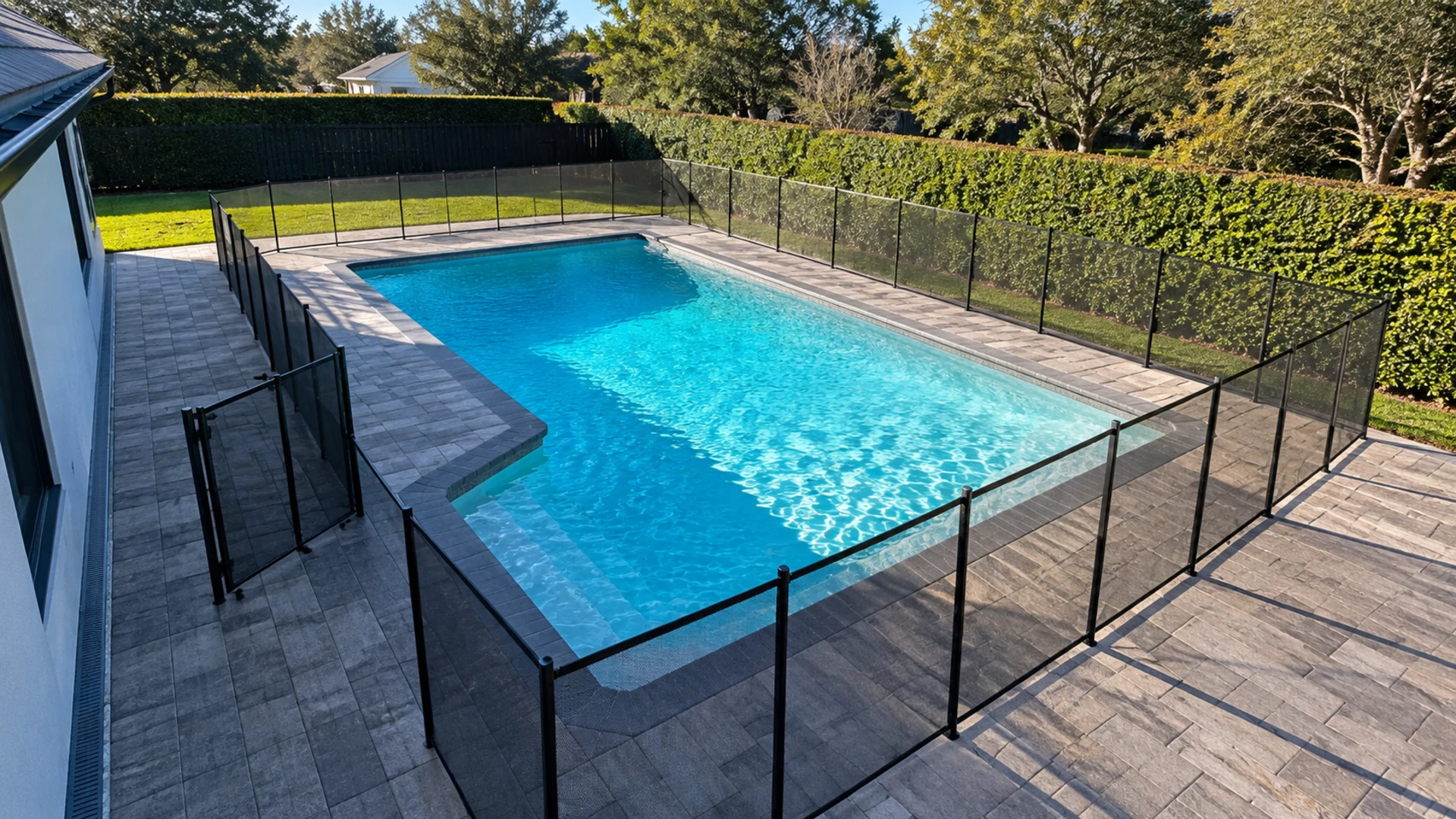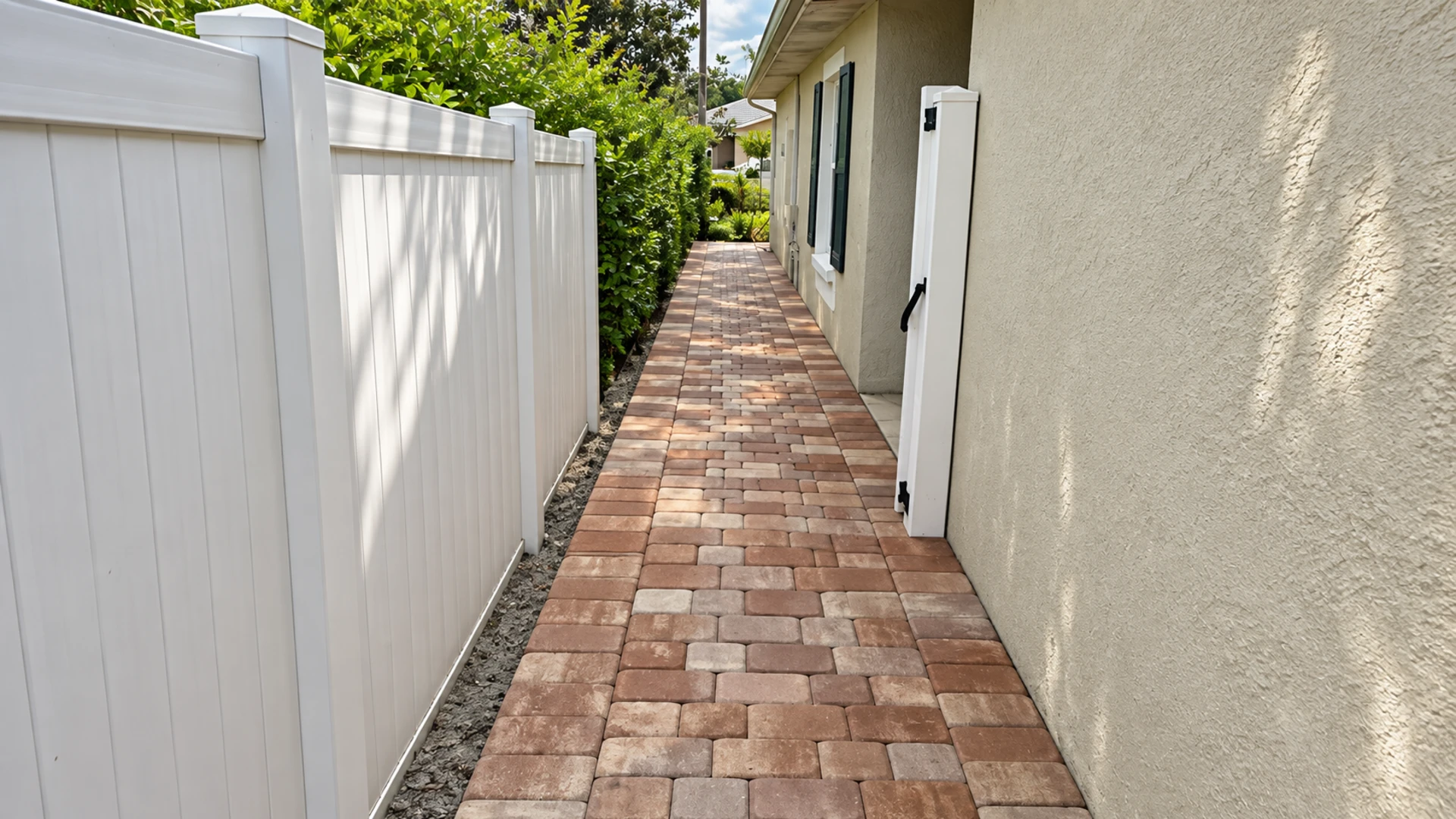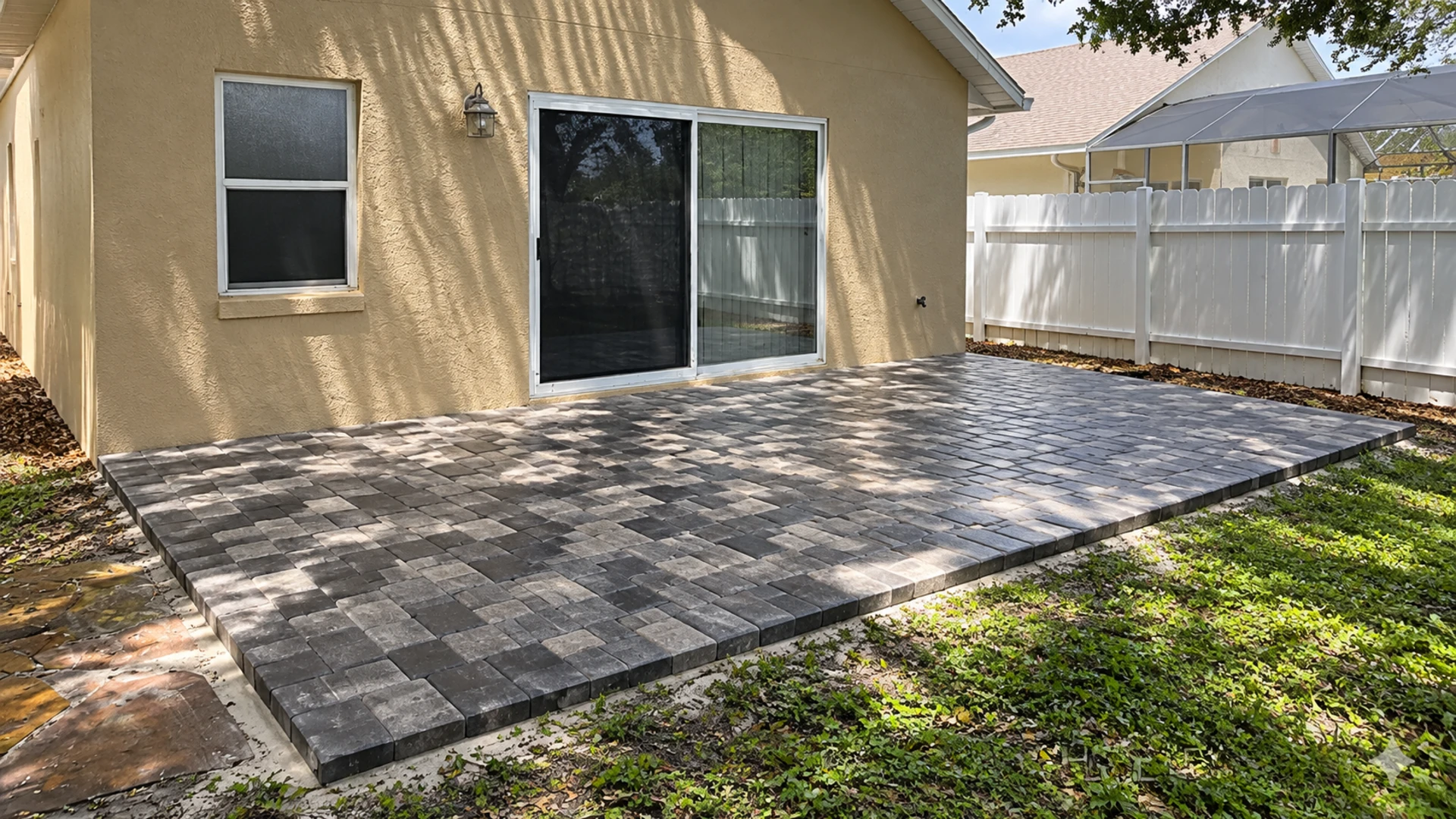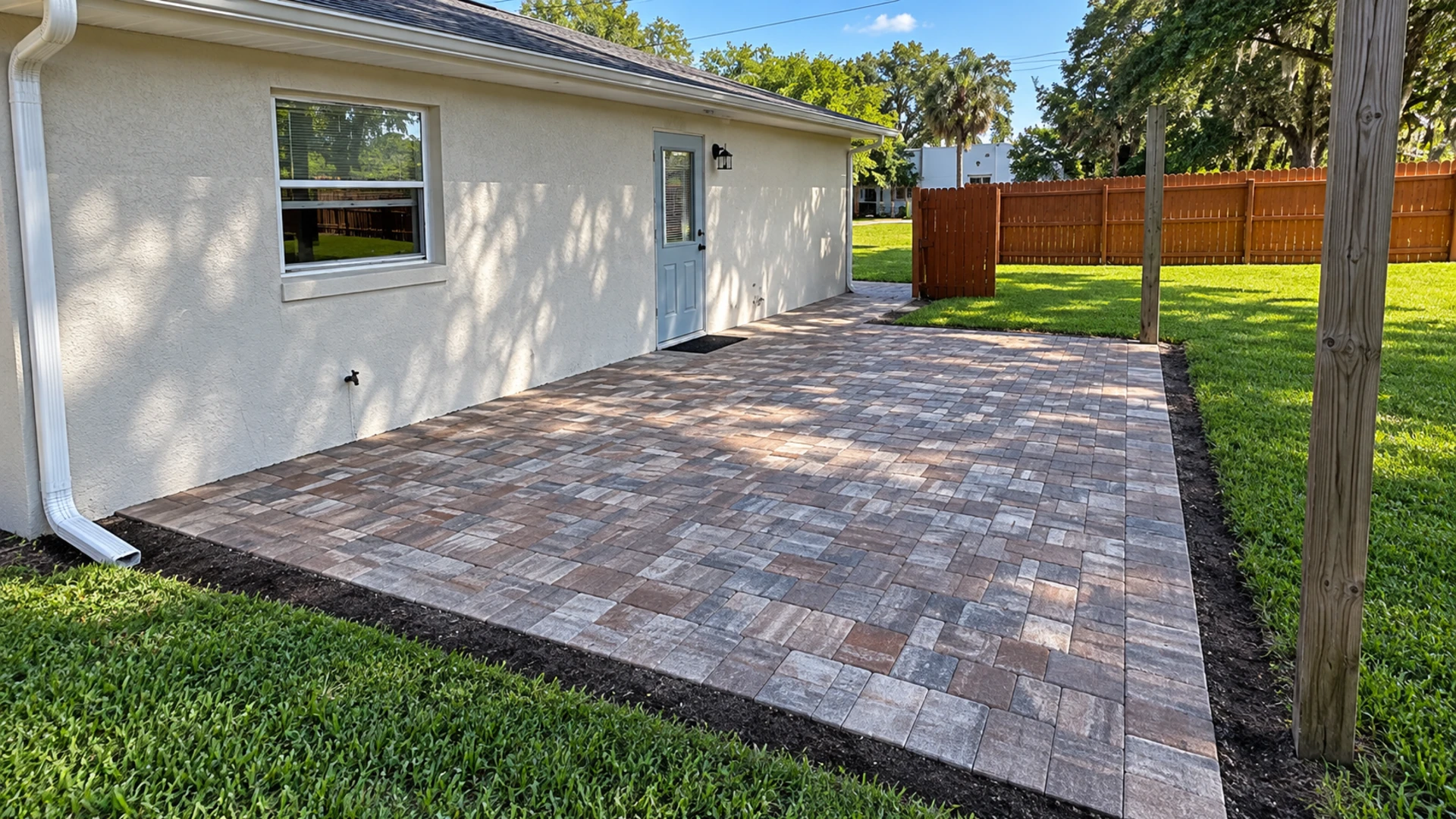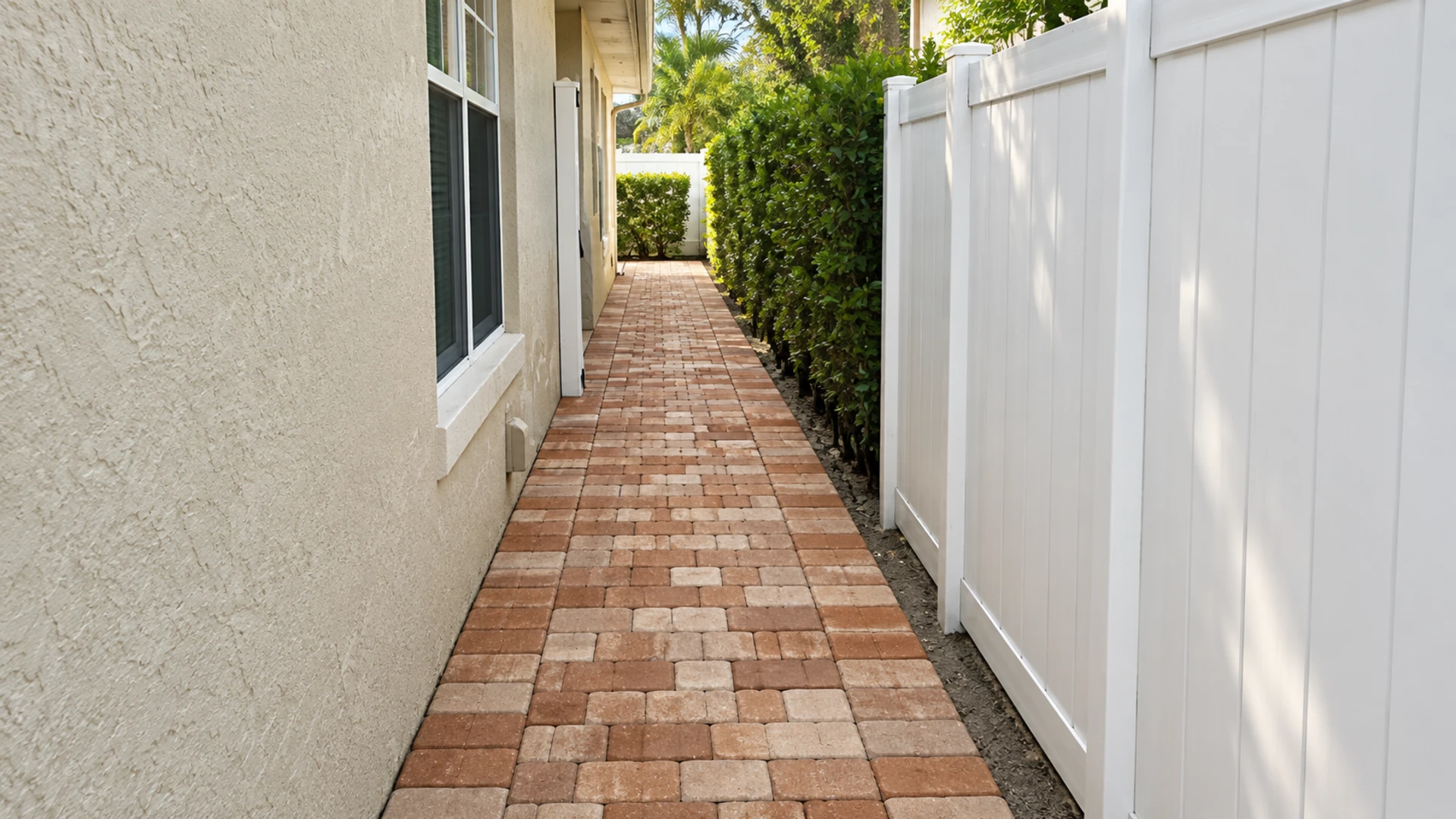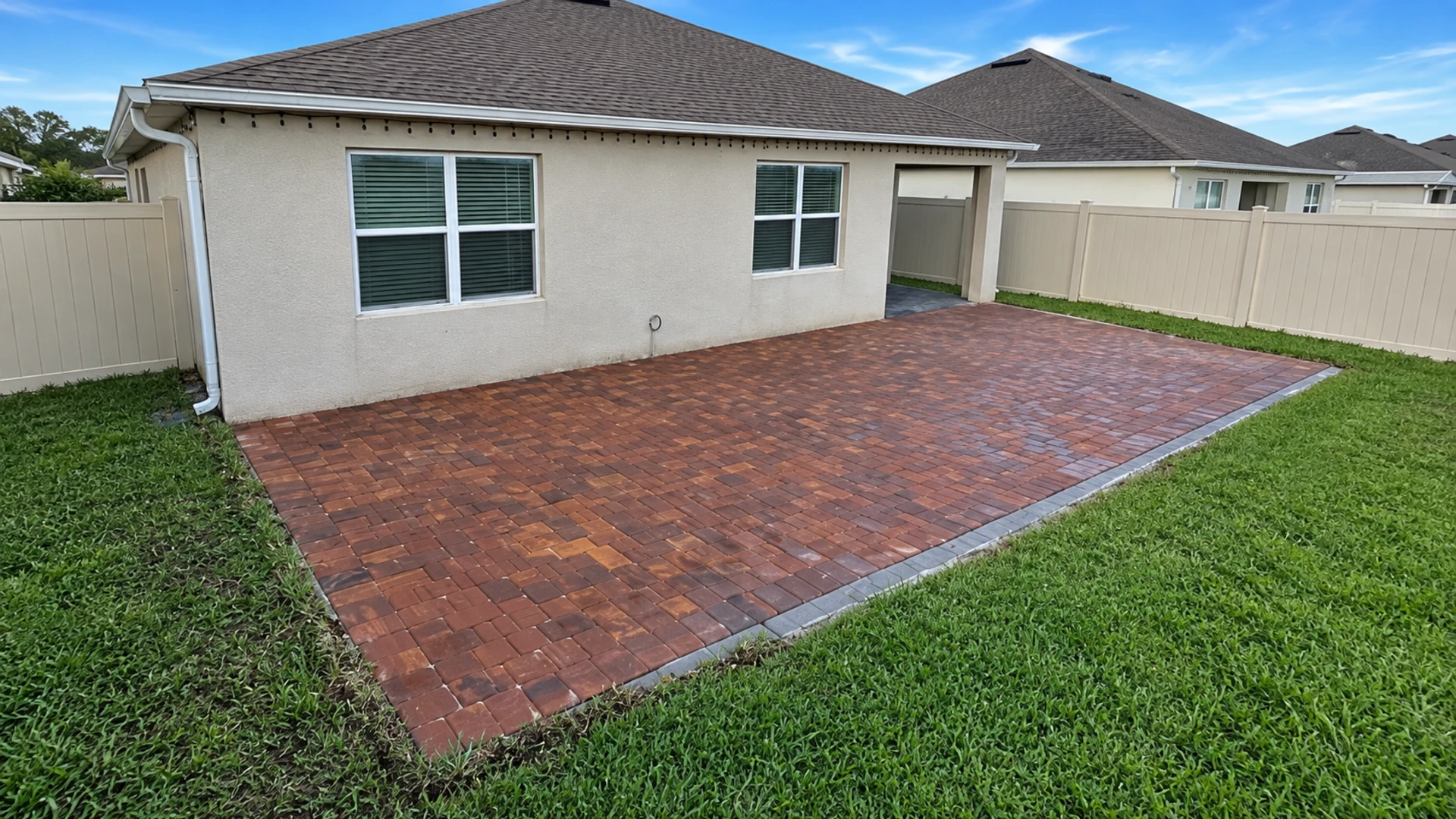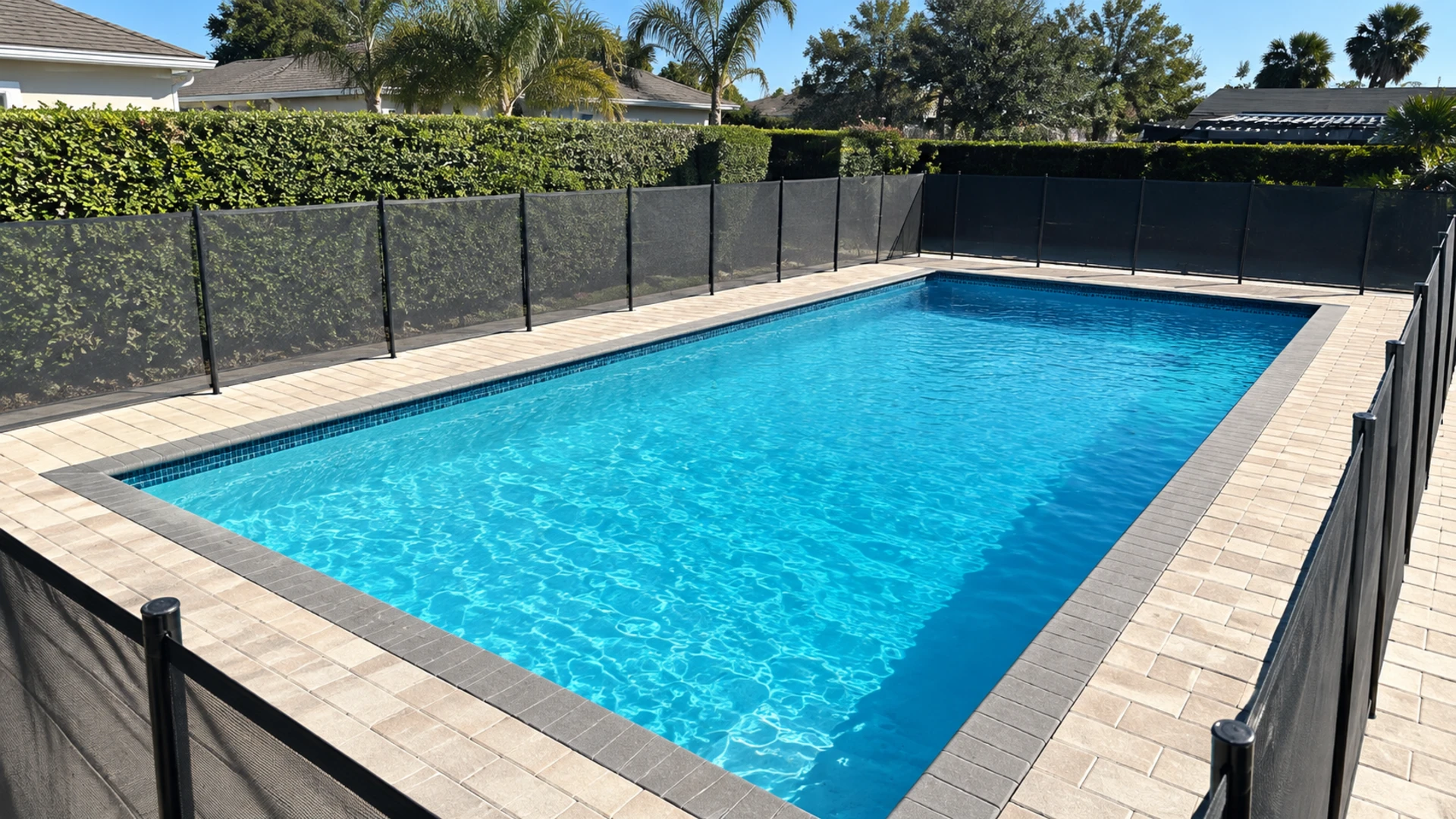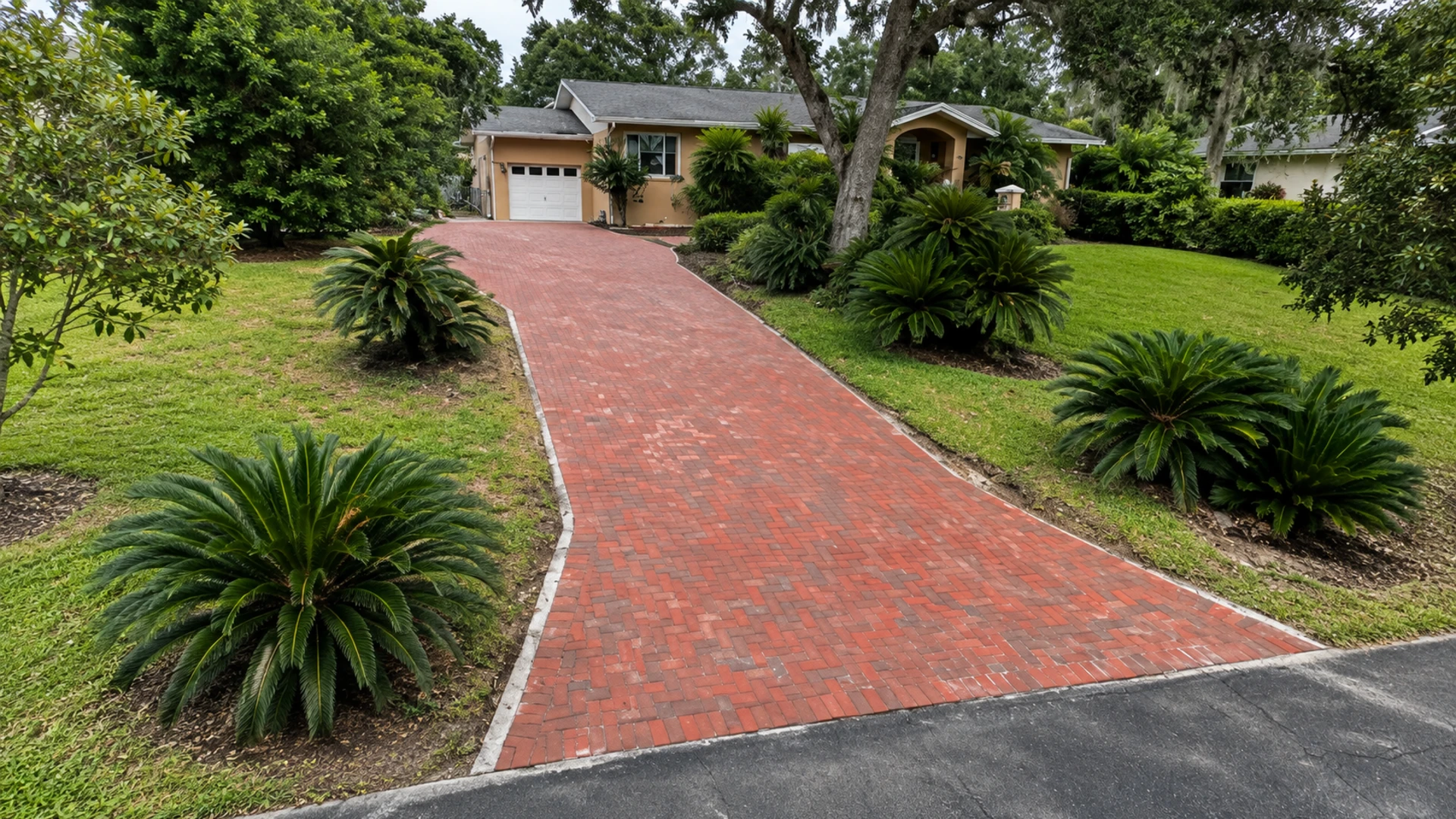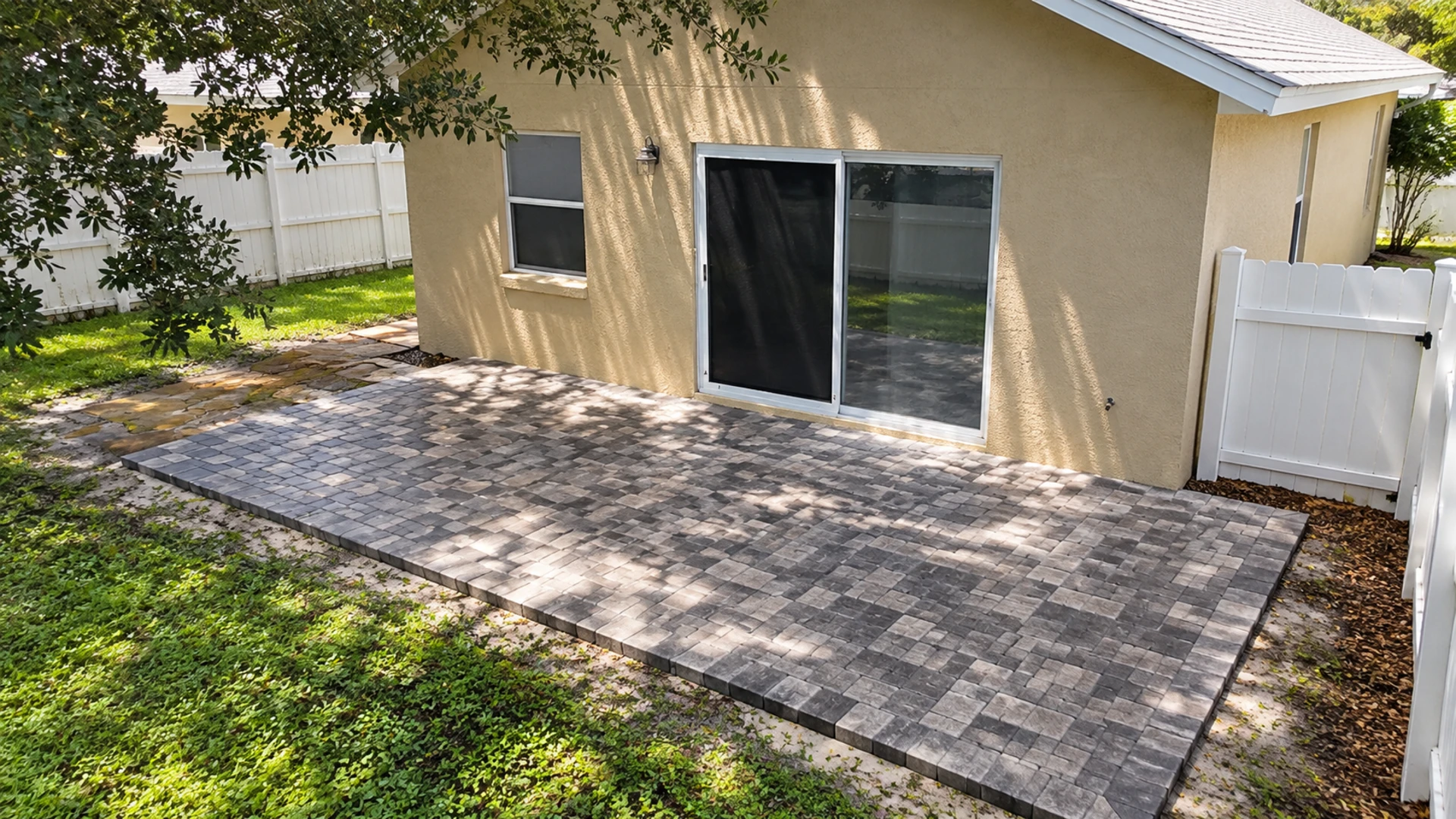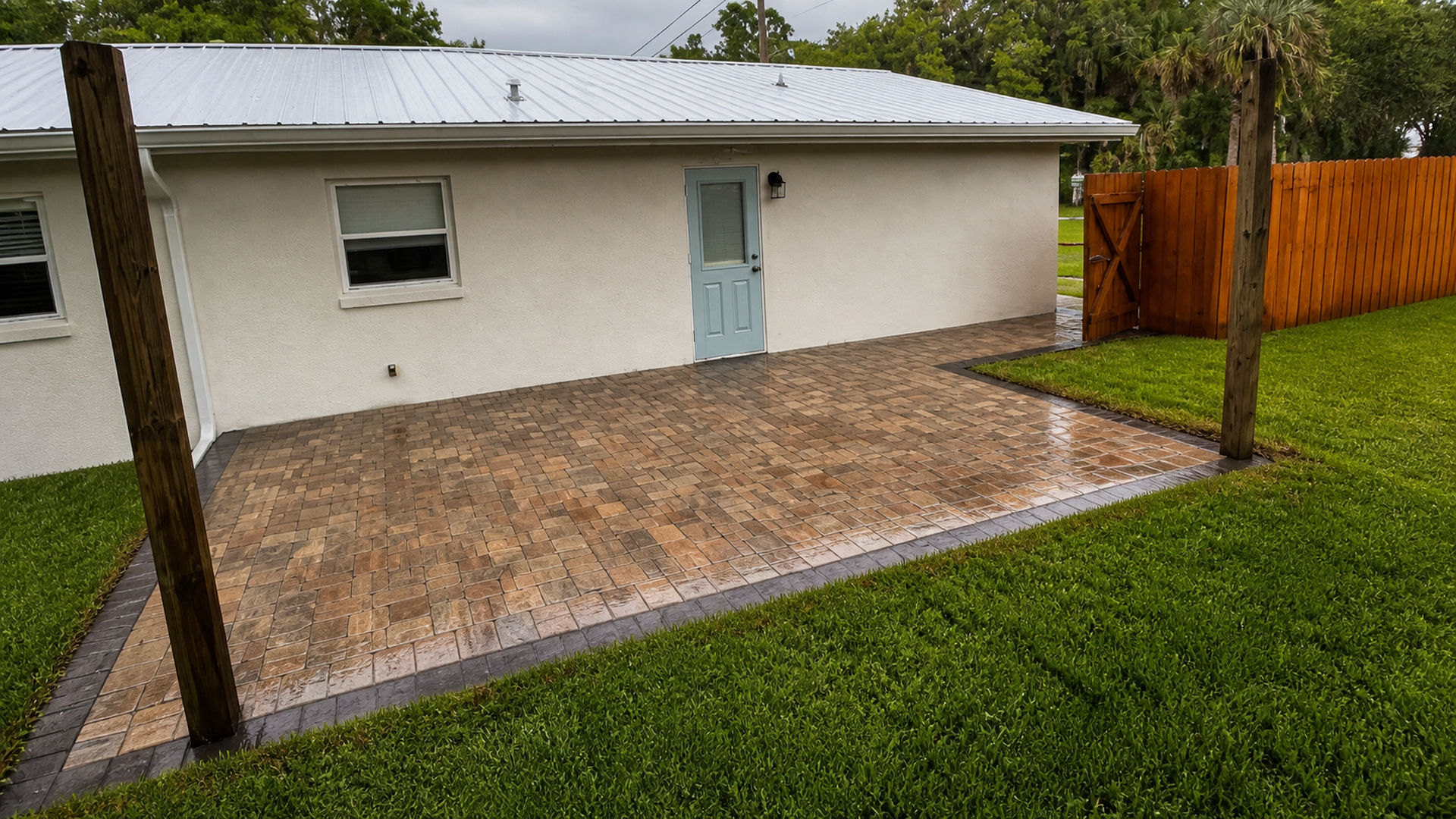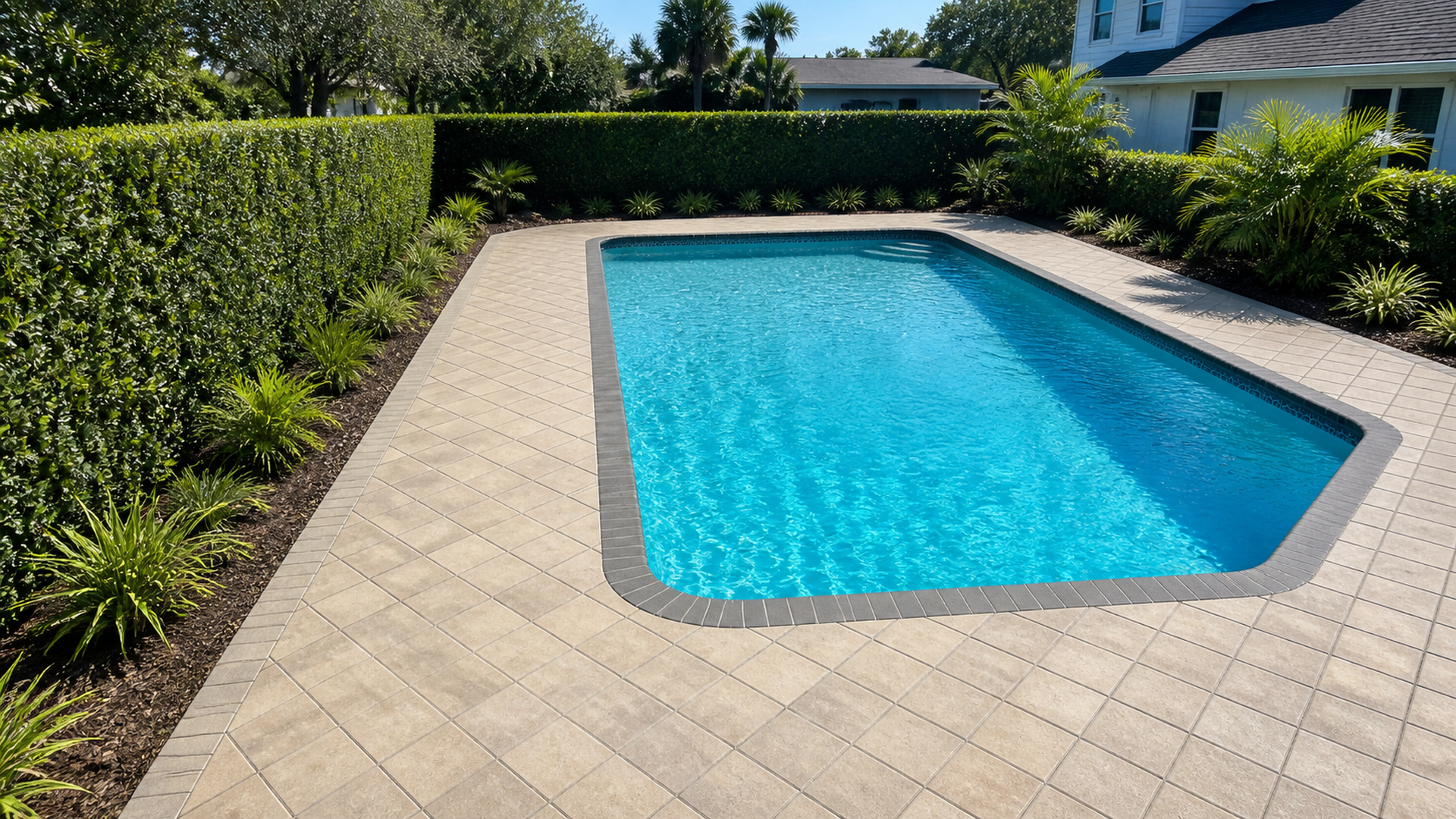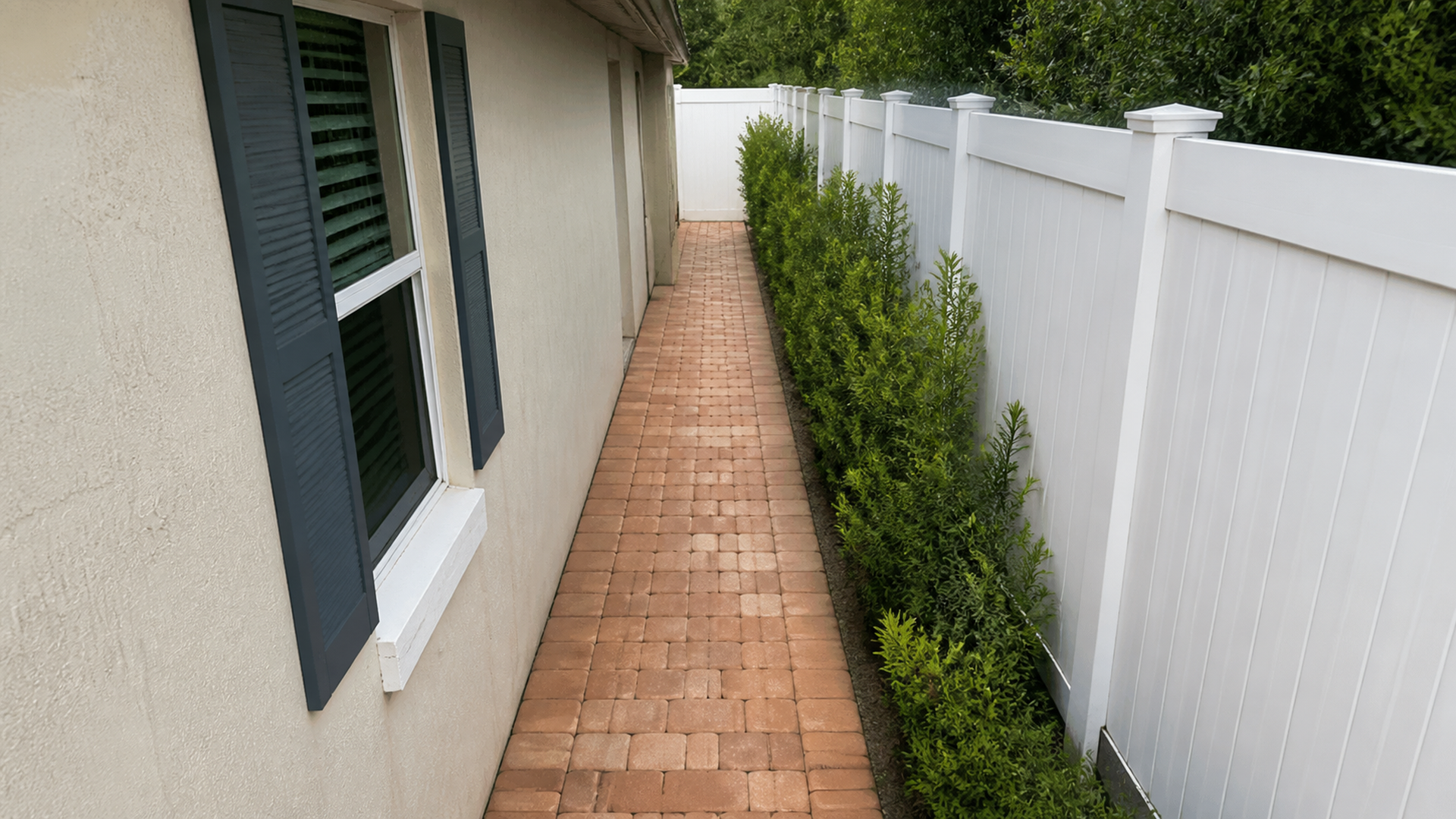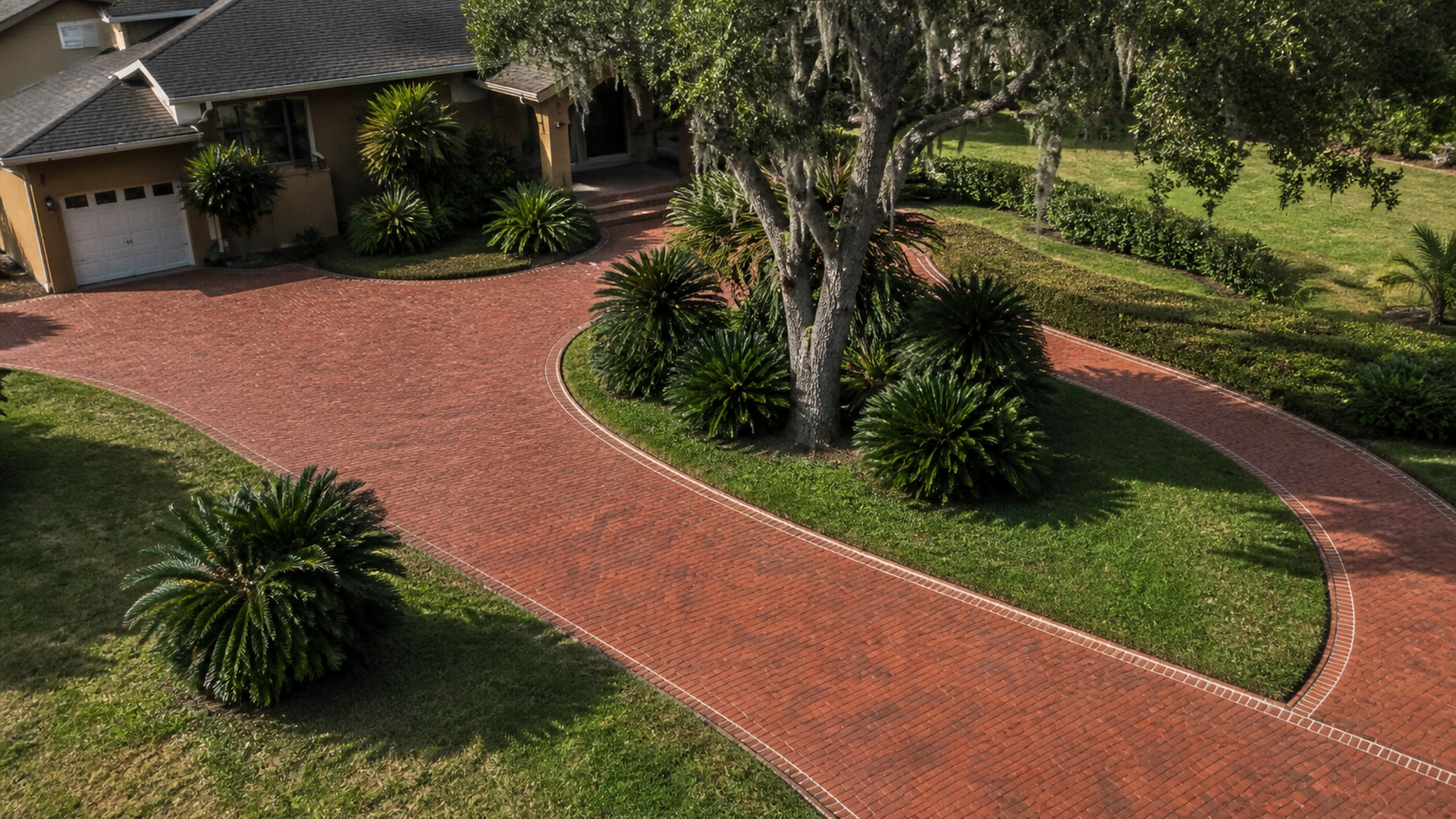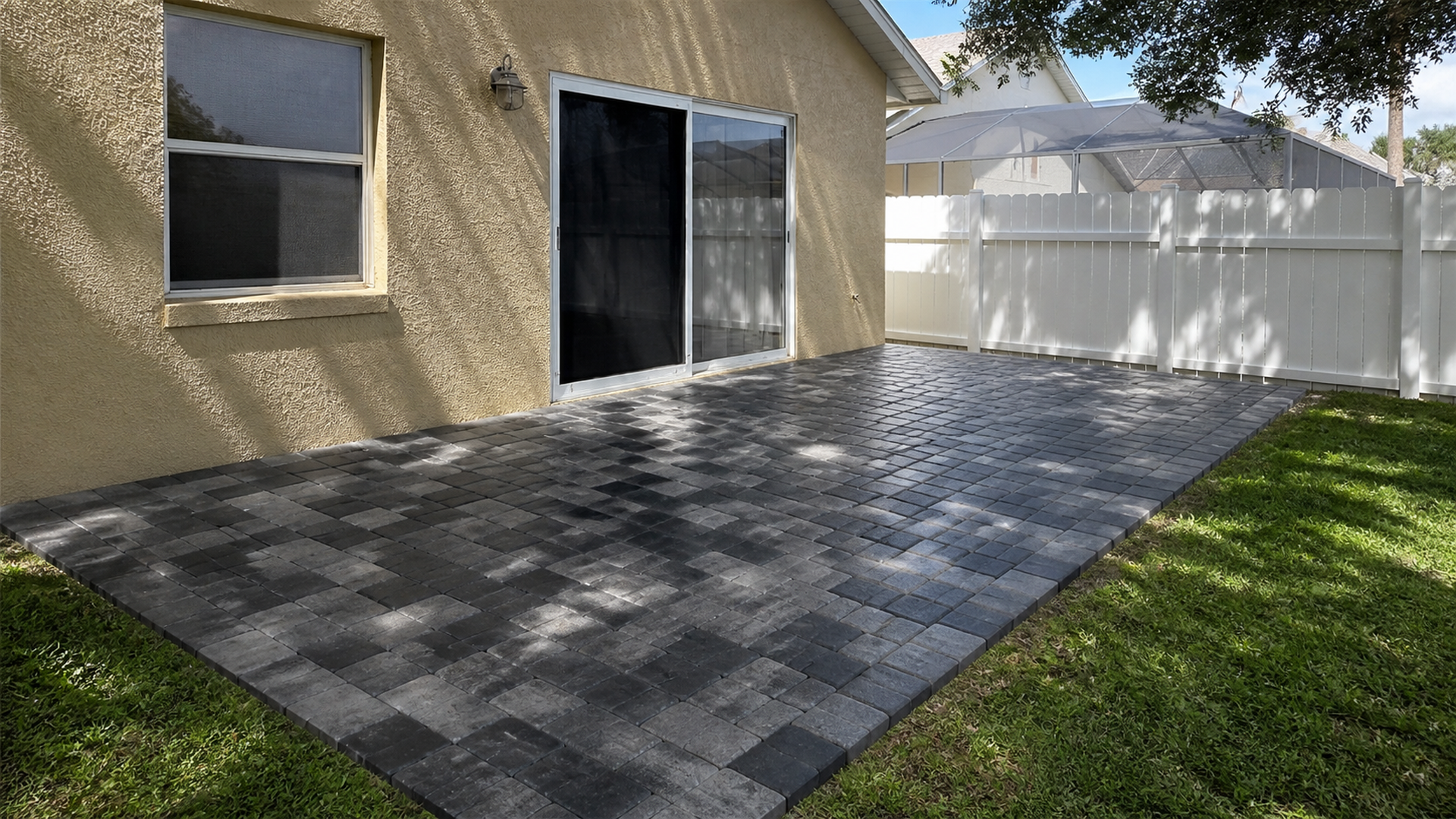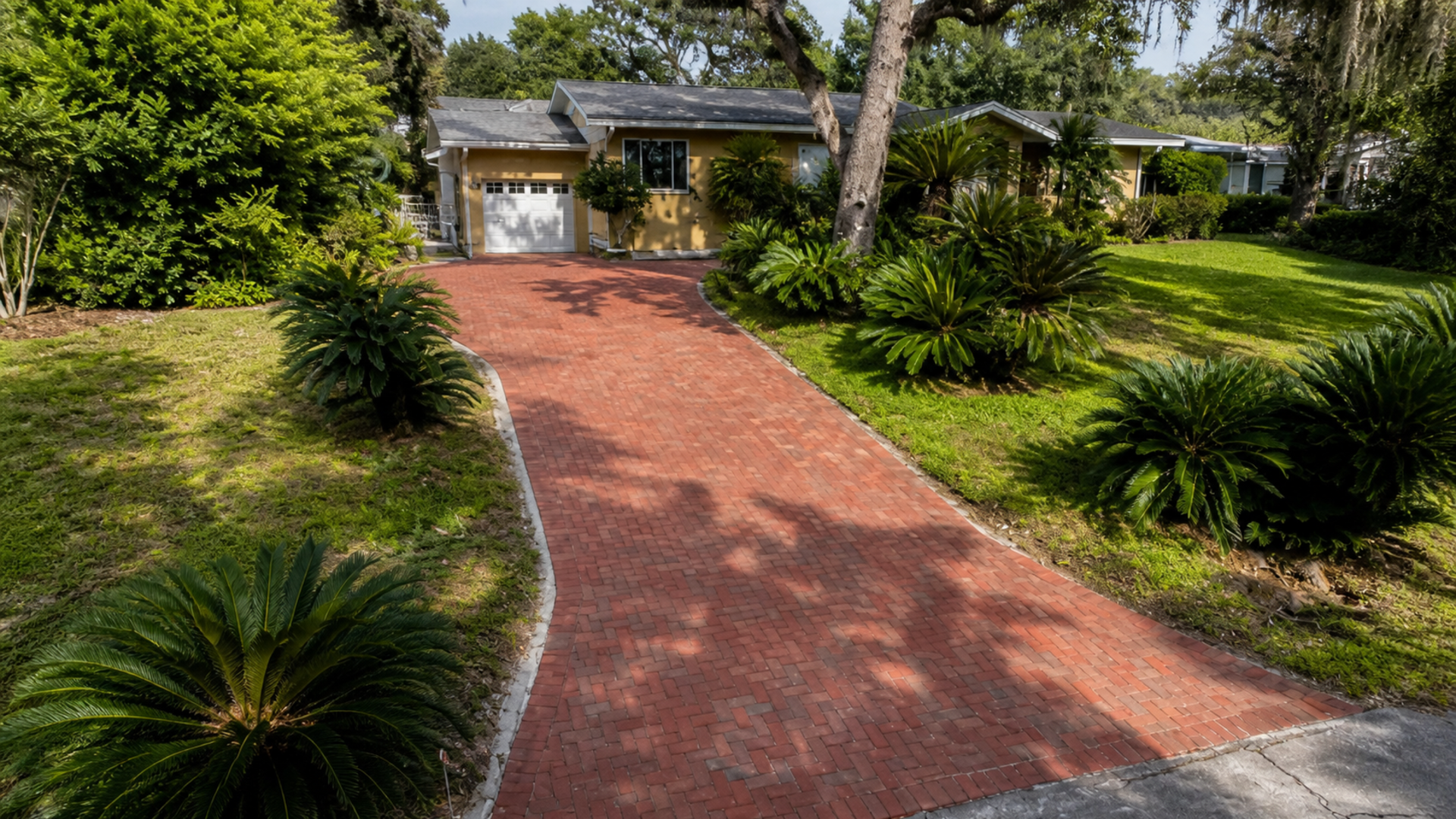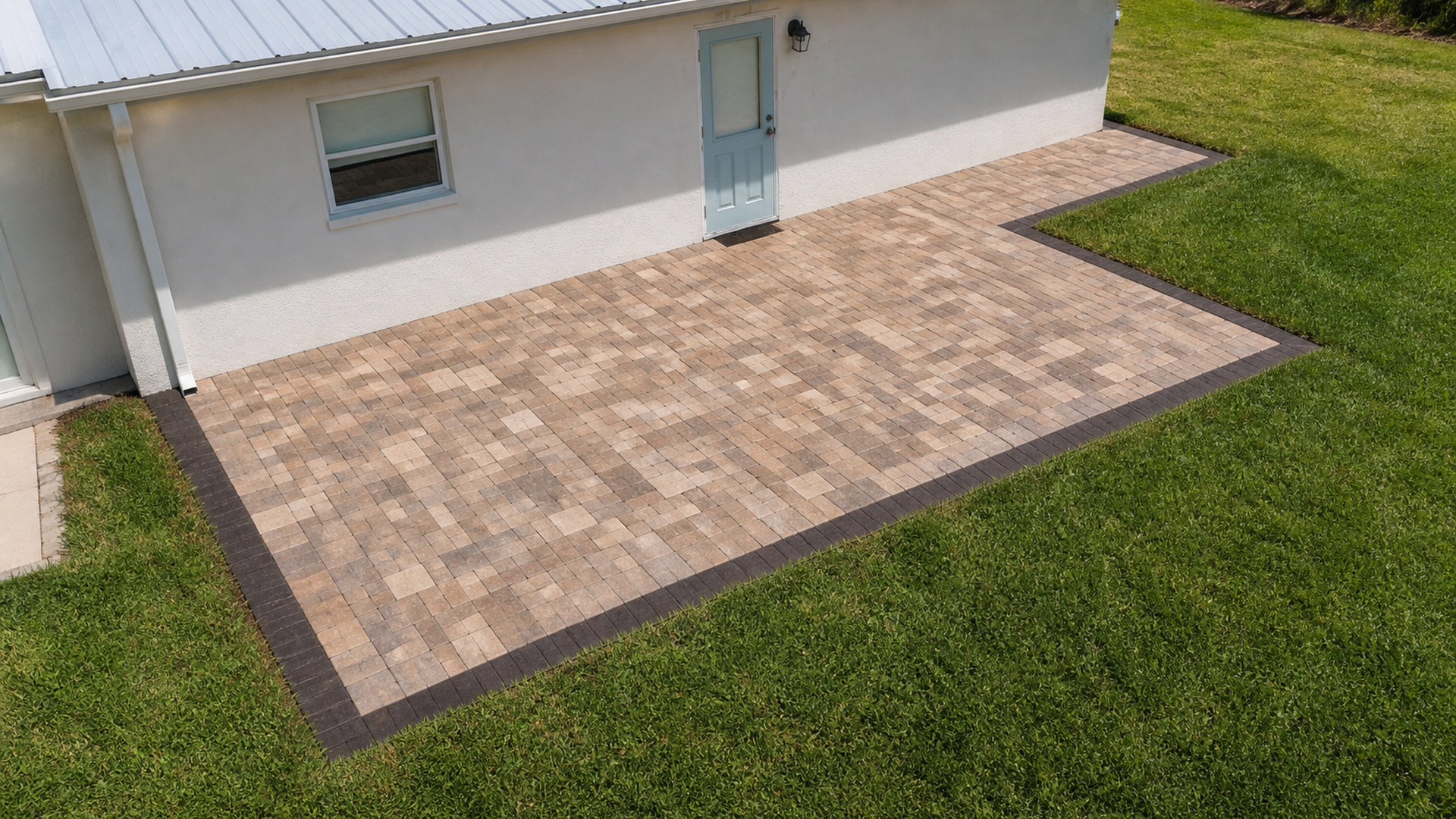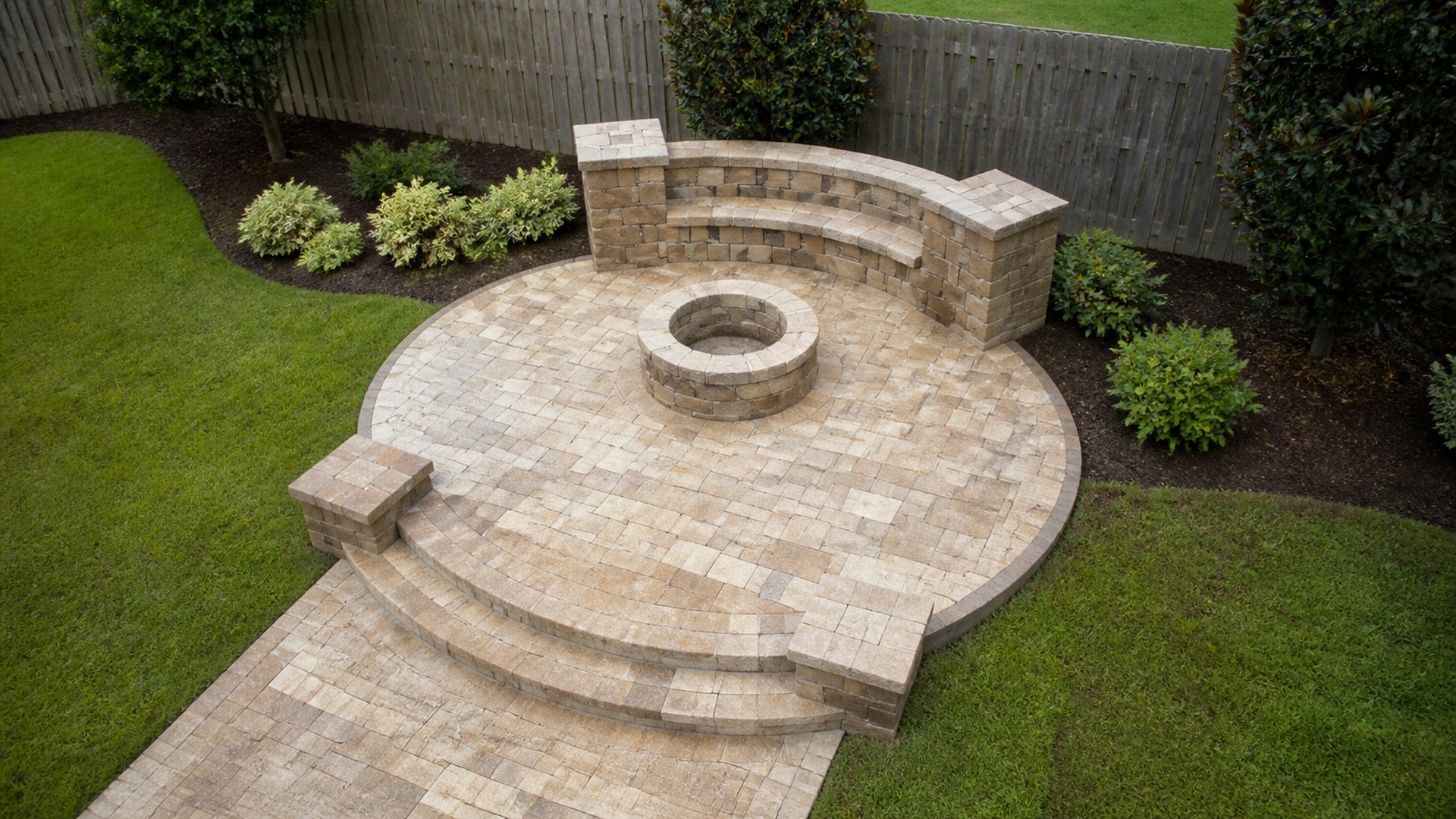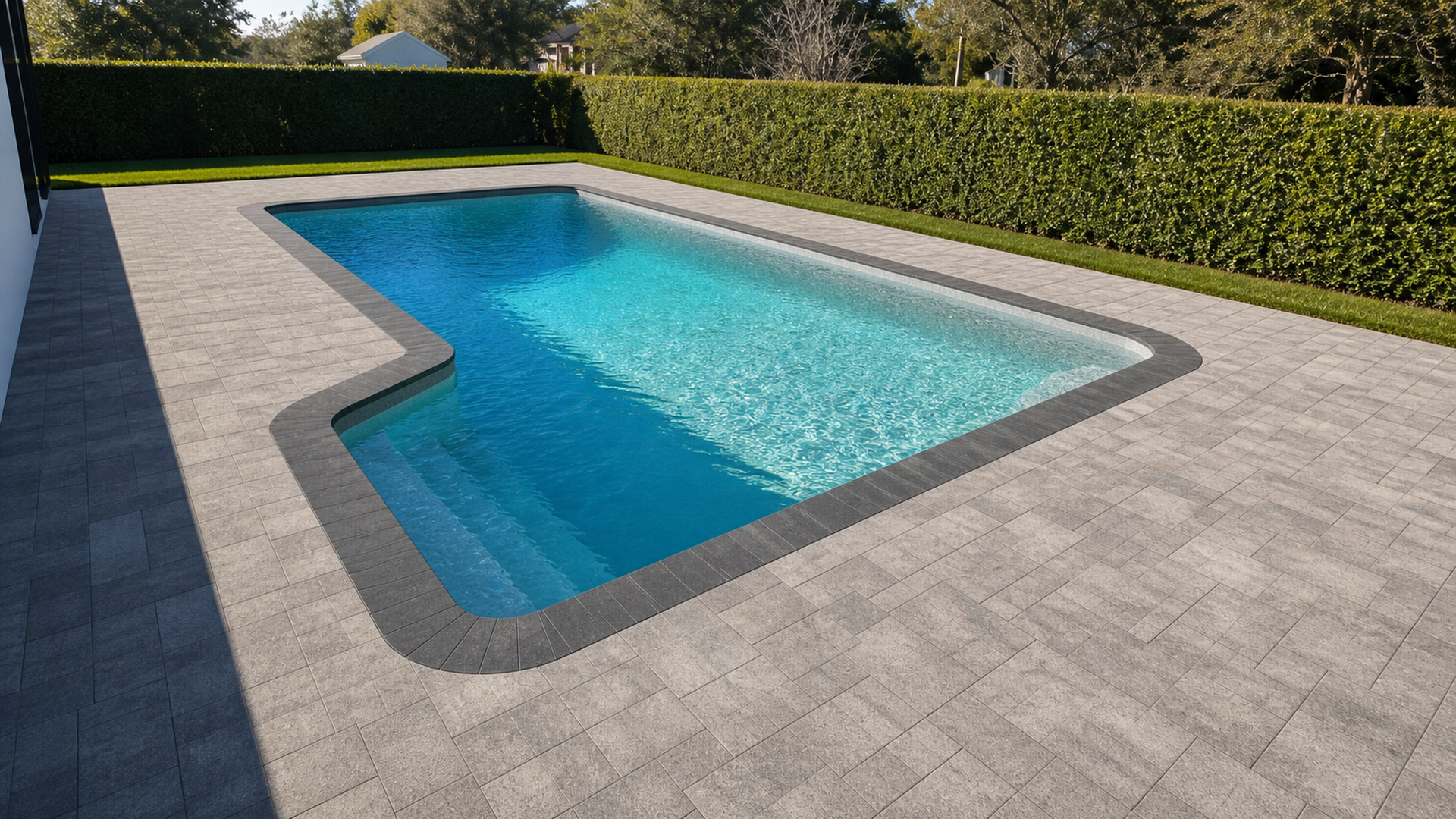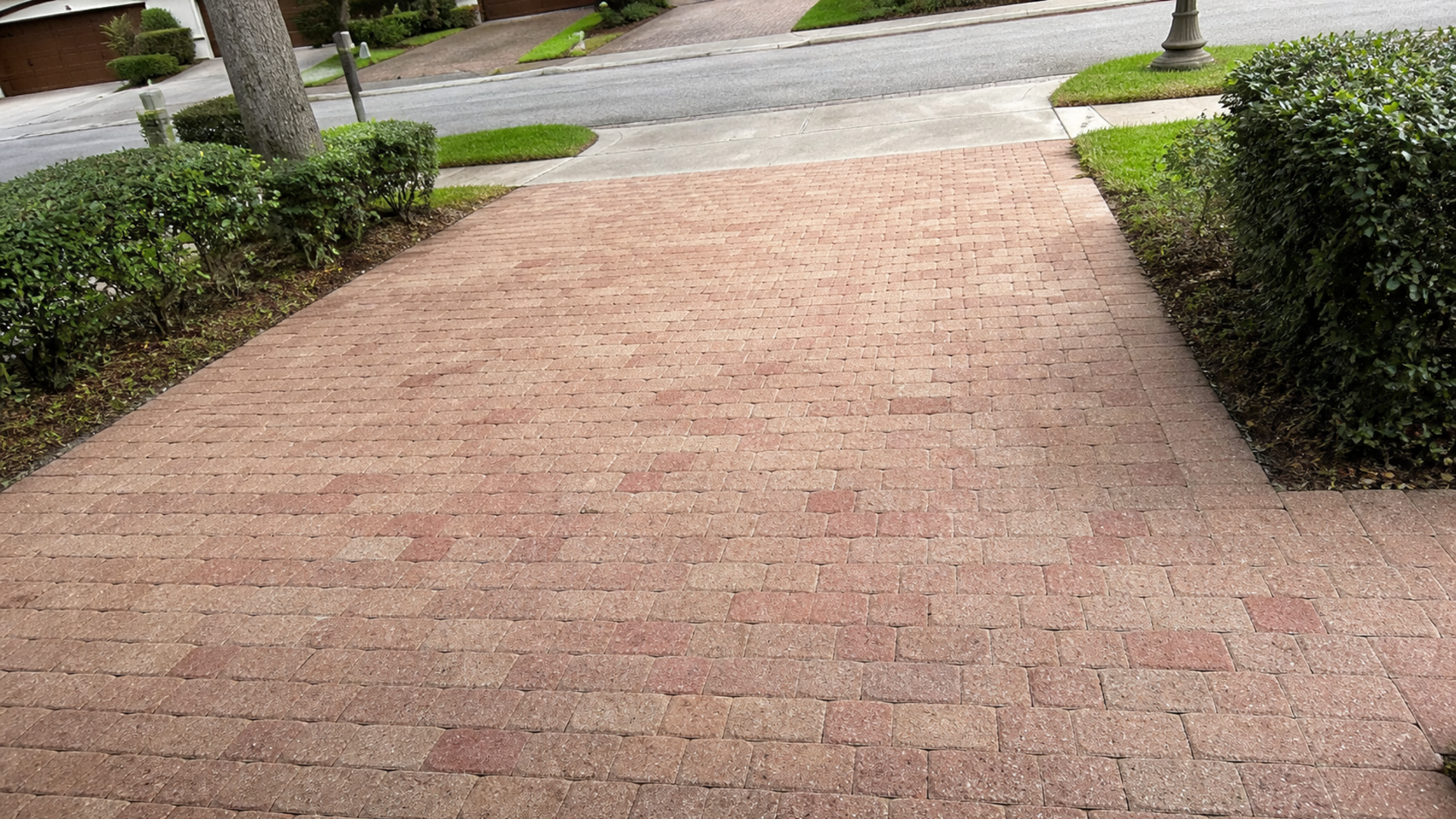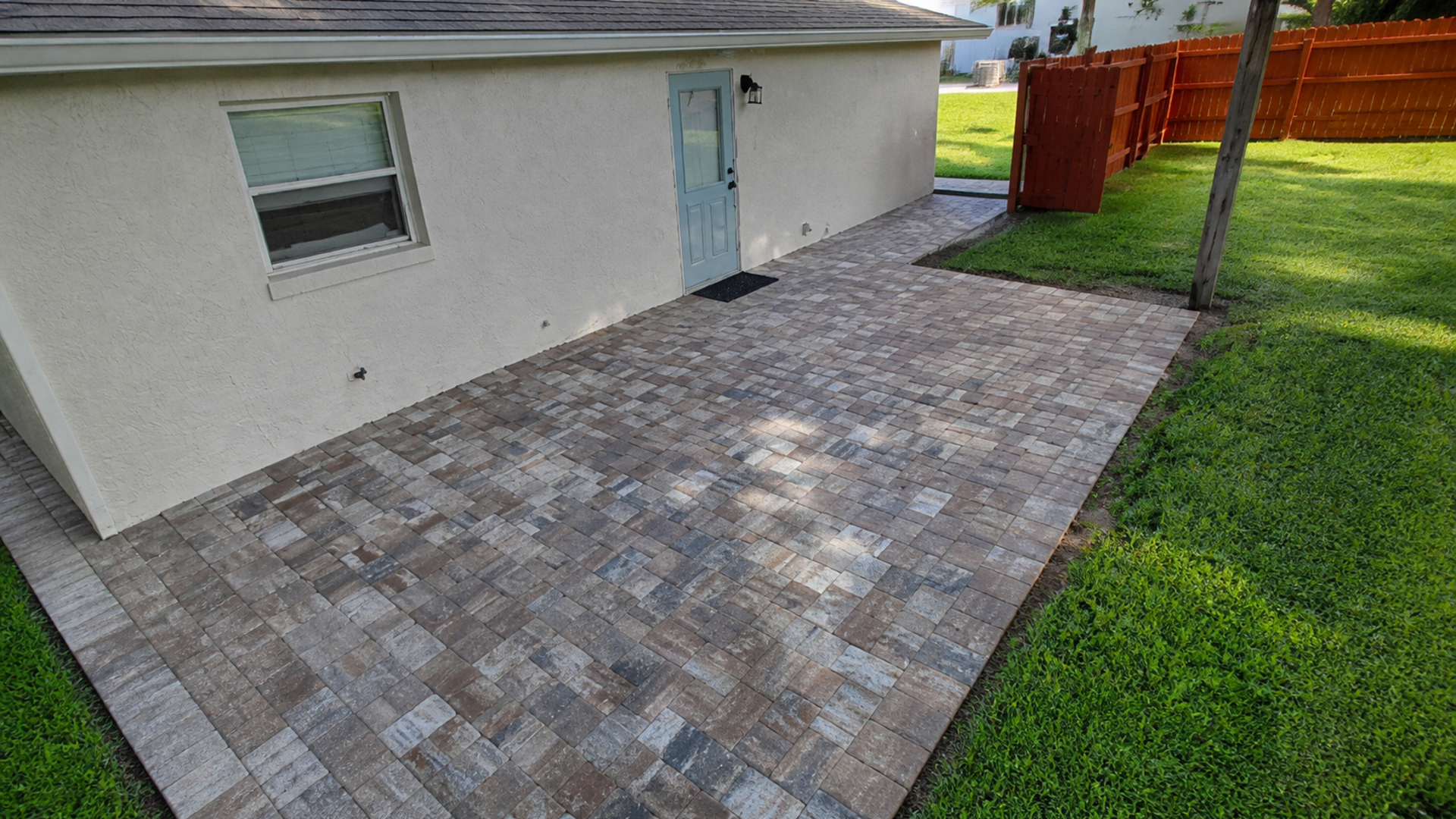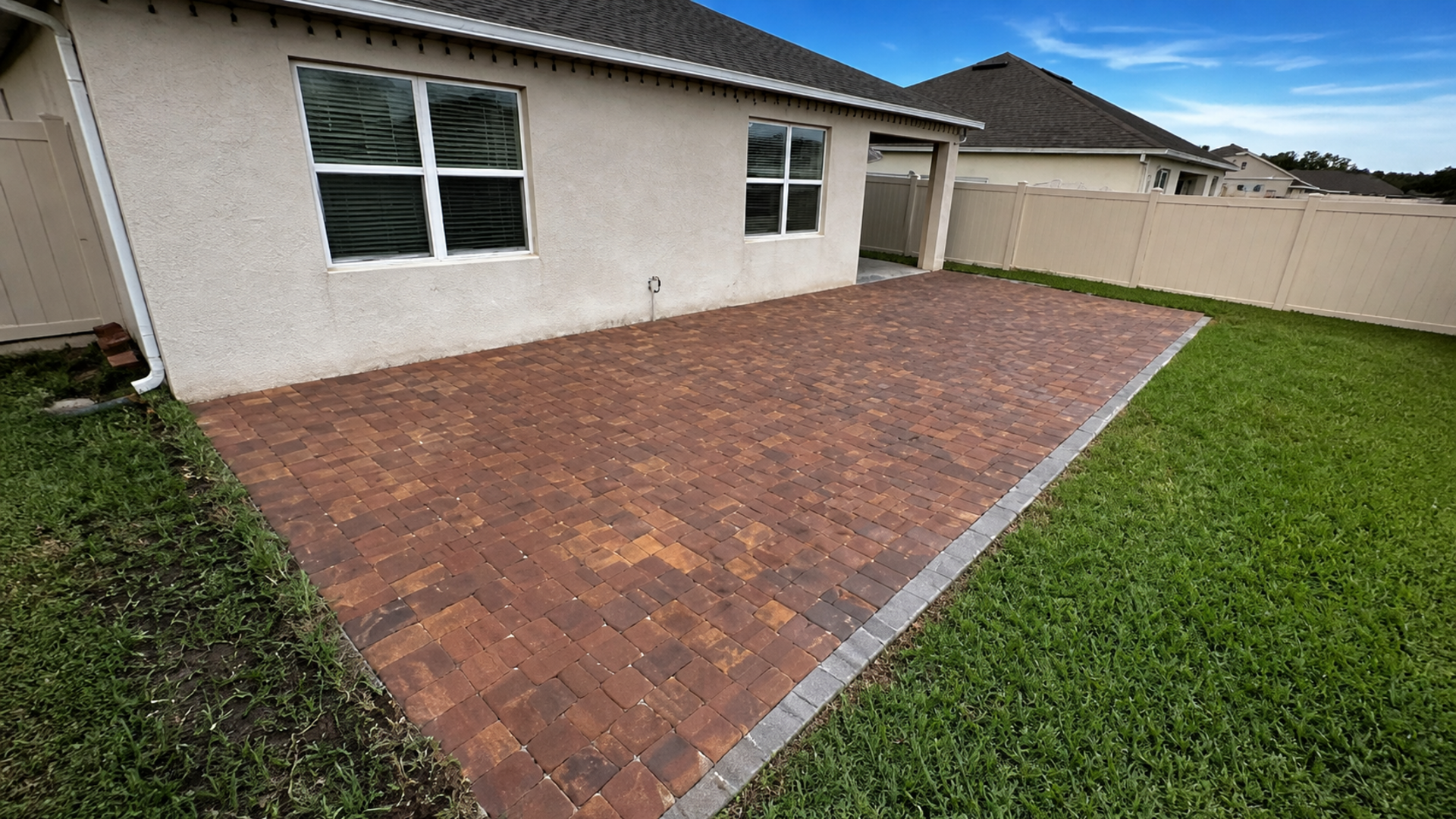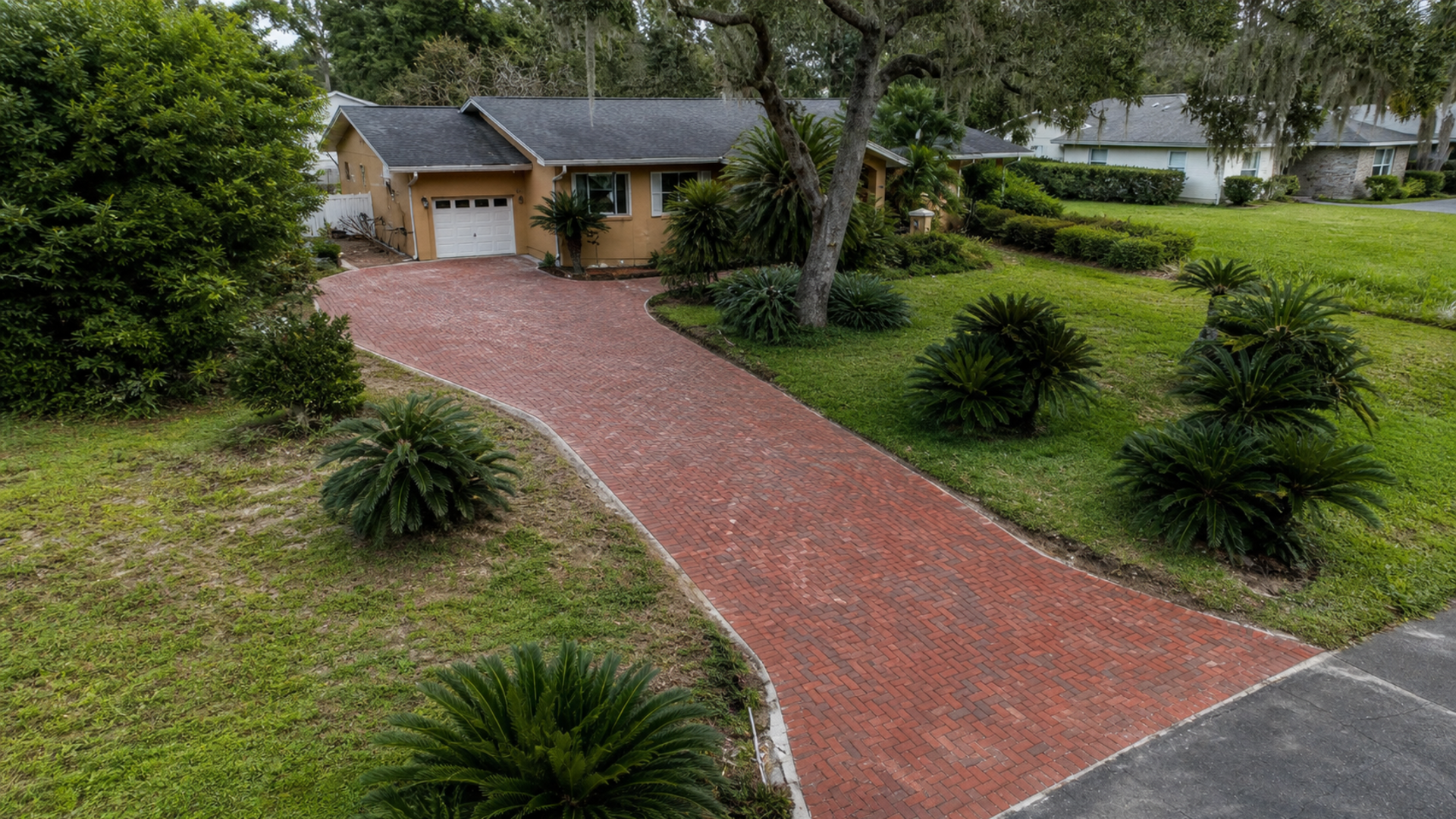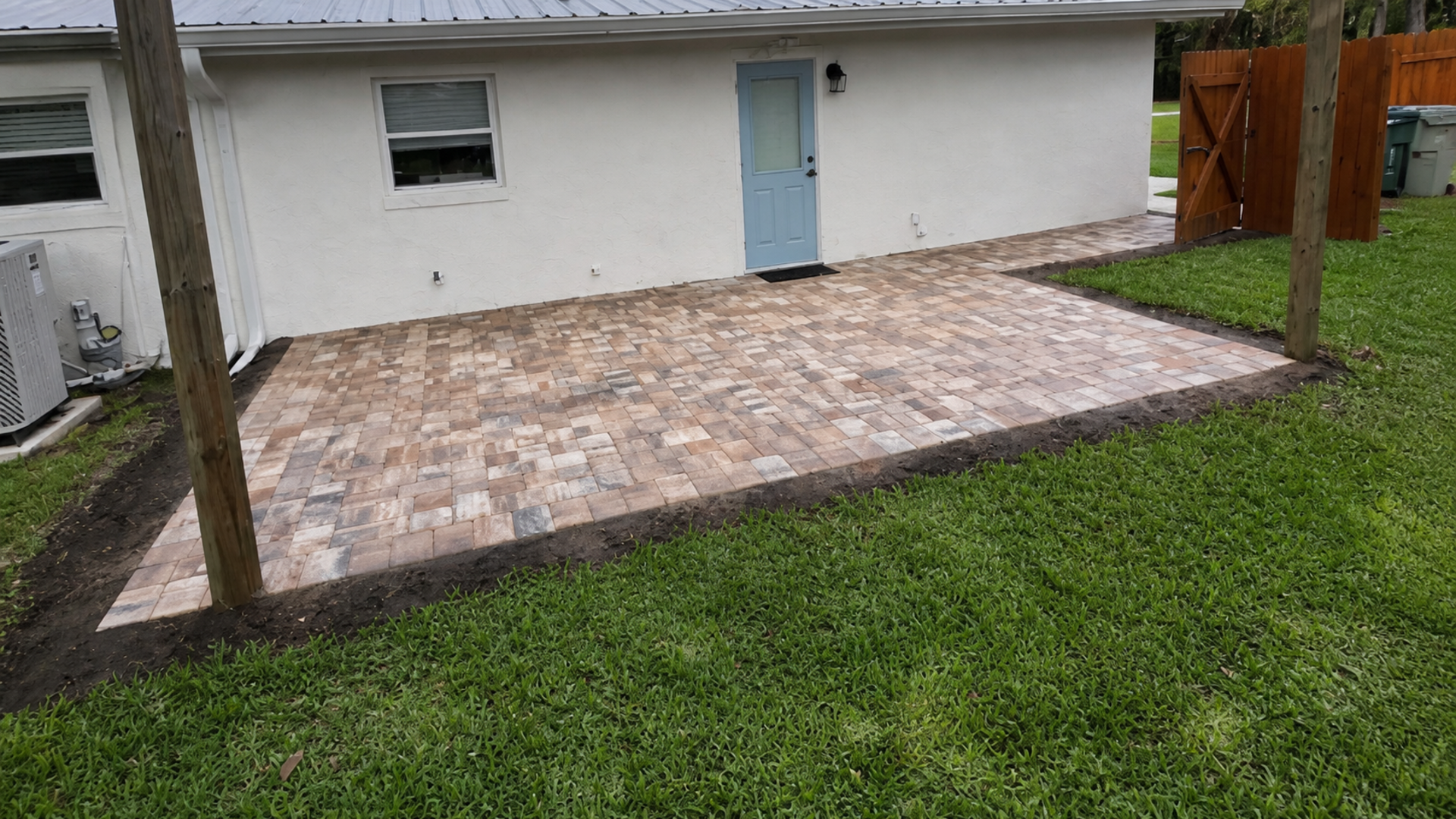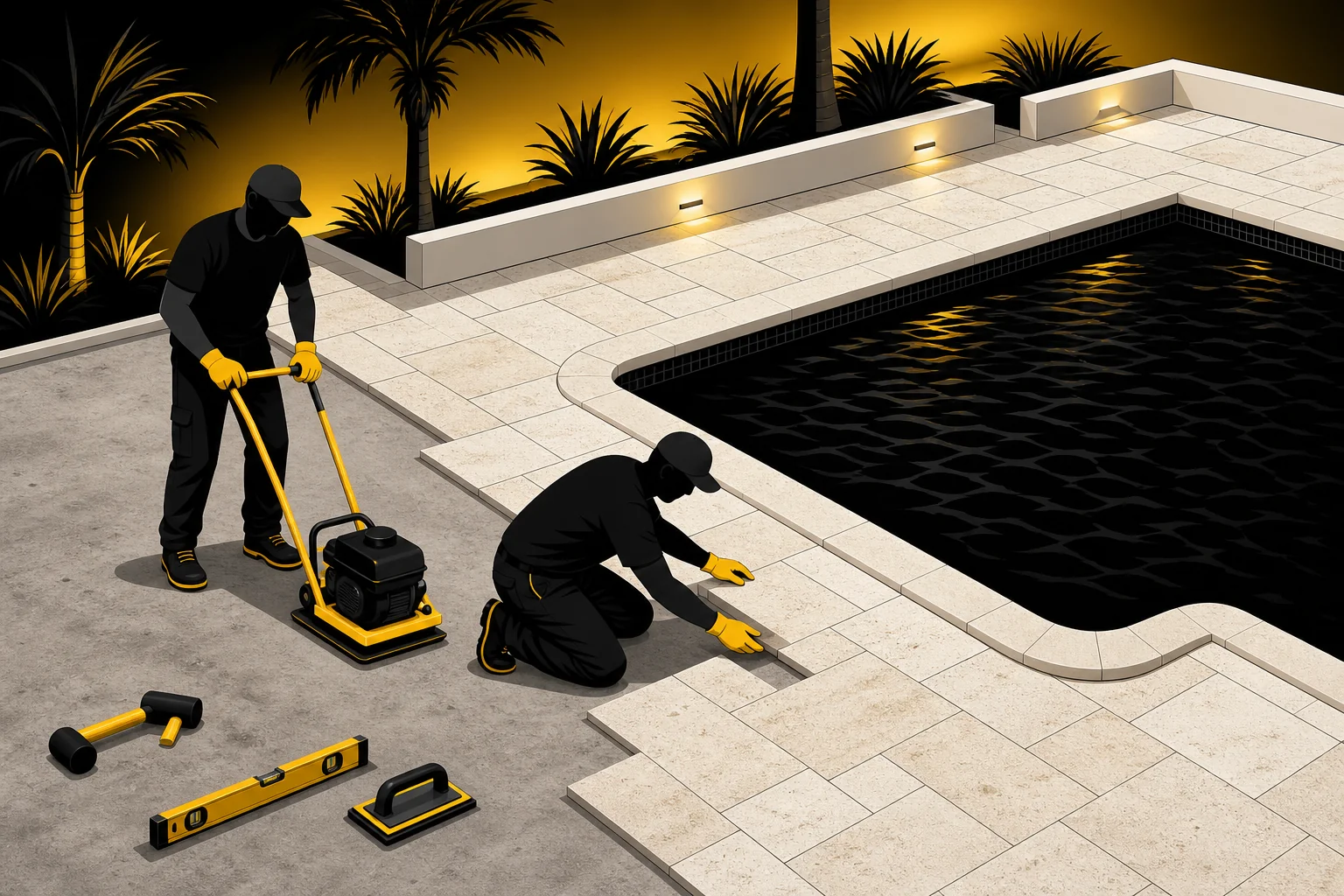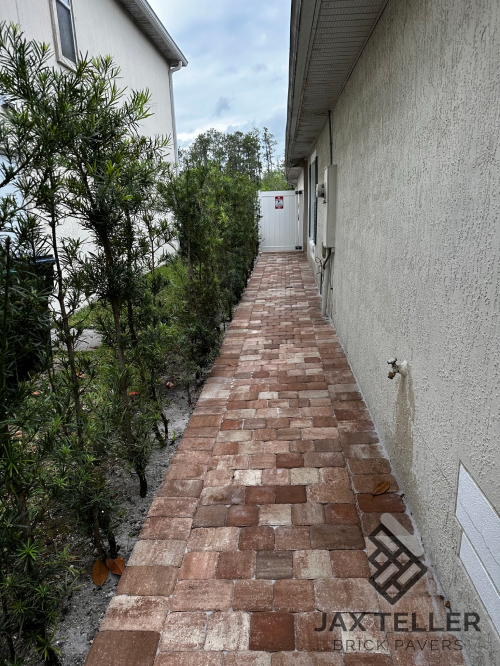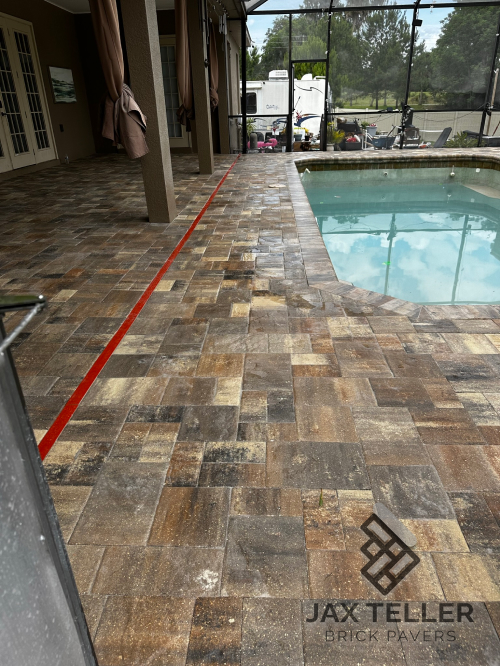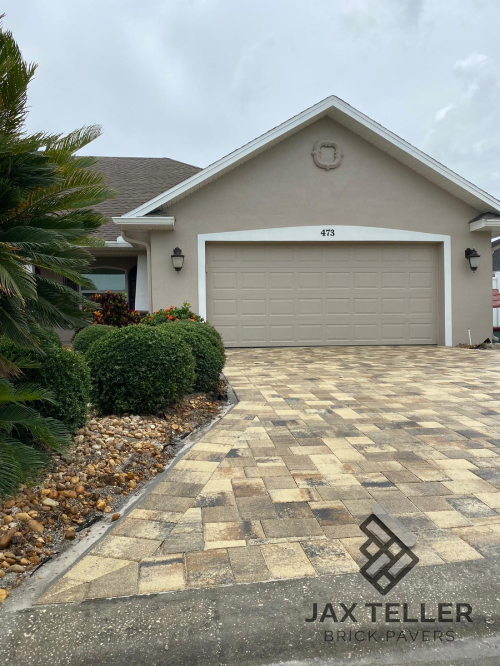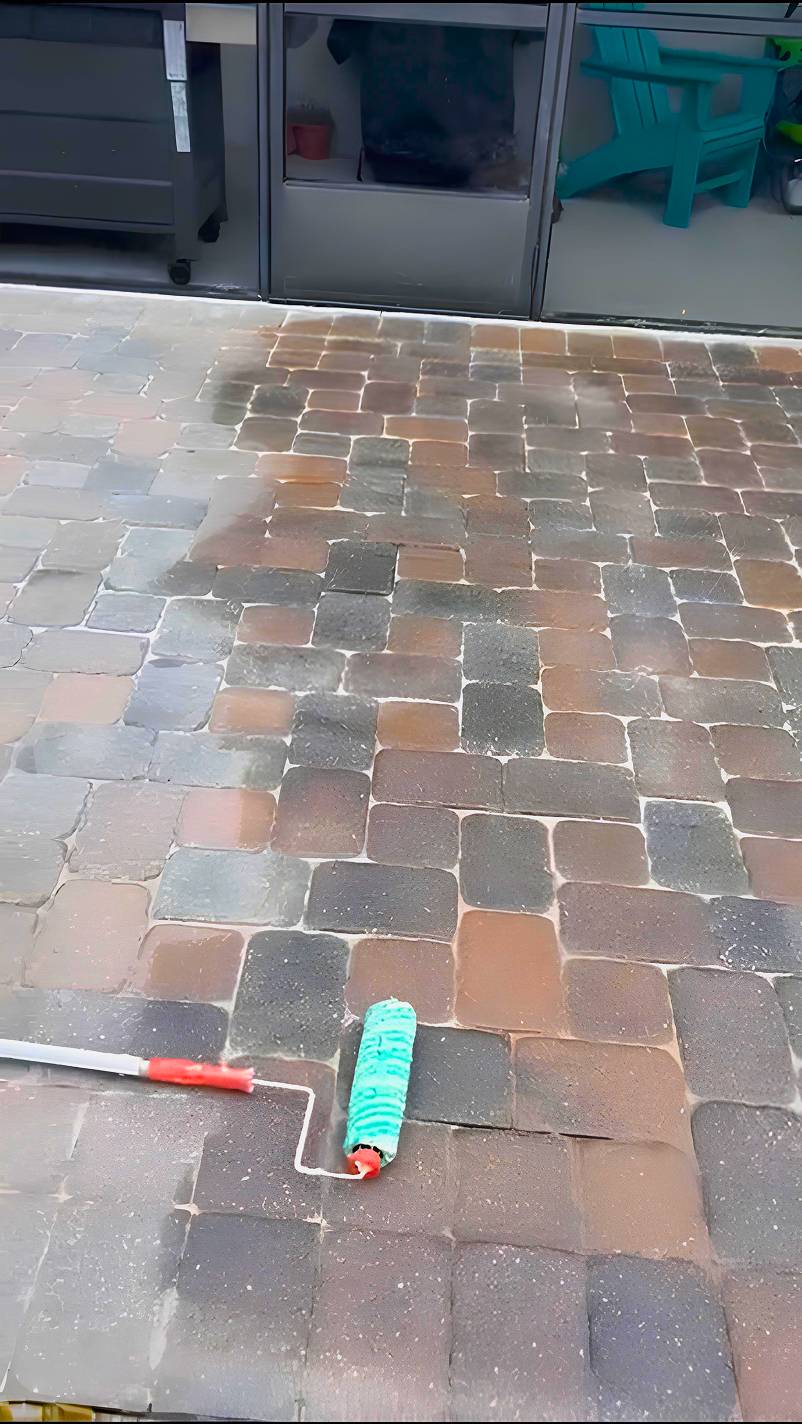

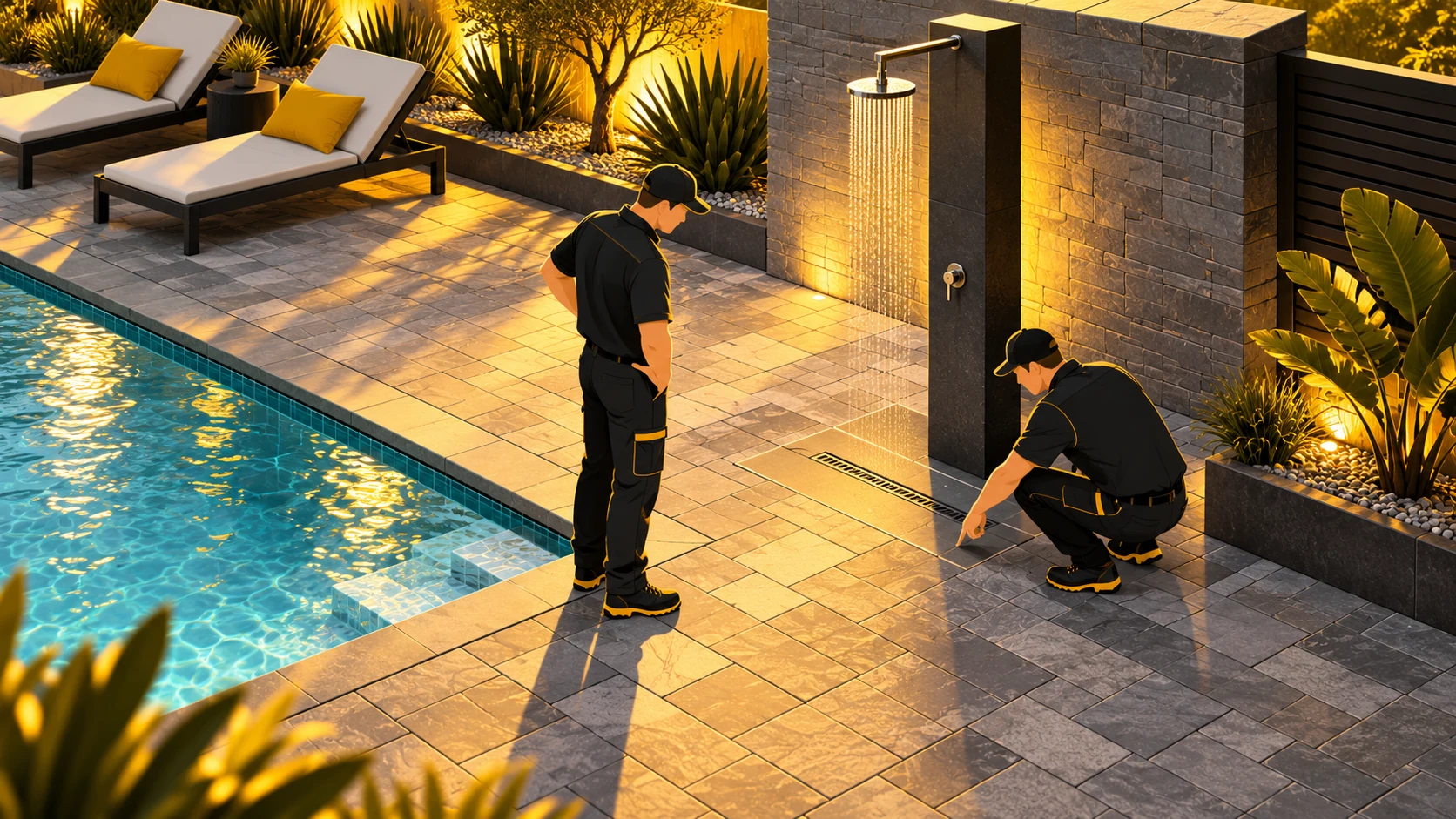
Outdoor shower pavers need a plan that considers much more than the attractive surface underfoot. Water supply, wastewater, nearby pool features, and everyday access can belong to different parts of the project. Therefore, a homeowner in Largo should settle those responsibilities before choosing a layout or asking an installer to extend an existing patio.
A shower beside the pool may look simple in a photograph. Outdoor shower pavers still need a coordinated site plan. However, the photograph cannot tell you where its water goes, how its plumbing works, or which approvals apply. This guide gives you a practical sequence for discussing those questions. It focuses on project coordination and visible conditions, rather than offering a universal plumbing detail or a do-it-yourself drainage design.
Define the purpose of outdoor shower pavers
Start with the way you expect to use the shower. For example, a quick rinse after swimming creates a different discussion from frequent washing with soap. Tell the project team who will use the area, how often, and what activities you expect there. Those facts help the appropriate specialist assess the full scope.
Next, explain whether the shower exists already or forms part of a new installation. An existing fixture may have records, known connections, and recurring puddles that deserve review. In contrast, a new fixture offers a chance to coordinate the paving and plumbing before either trade commits to a finished position.
Keep comfort and technical approval separate. You can describe the surface appearance you prefer and the route you want to use. However, a paving preference does not determine the legal or suitable destination for shower water. That question needs the relevant plumbing and local authority review.
Map outdoor shower pavers within the whole yard
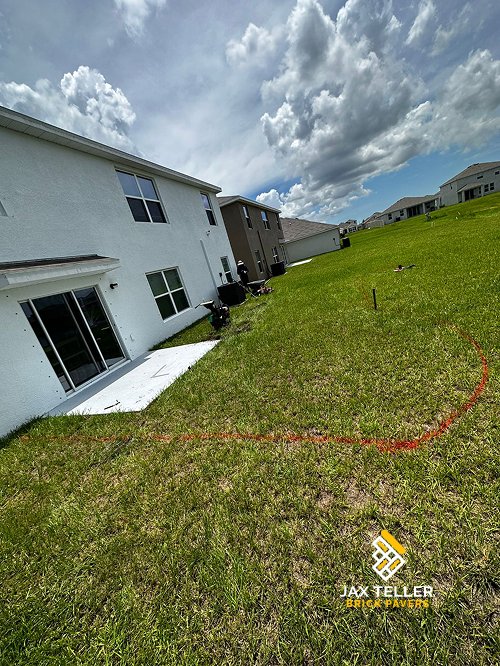
Sketch the shower, house, pool, doors, planting beds, and nearby property boundaries. Then mark the normal route between them. A simple sketch helps reveal conflicts that a close-up of the shower base would hide, such as a door opening into the main wet area.
Add visible drains, downspouts, hose connections, and equipment enclosures. Moreover, label anything whose purpose you do not know as unknown. An unidentified opening should never become the assumed outlet for a new fixture. Your contractor can use the sketch to decide which questions require further investigation.
Walk the route with the people who use it. For example, consider someone carrying towels, a parent supervising a child, or a person using a mobility aid. Describe those needs without assuming a standard patio detail automatically meets them. The practical route deserves attention alongside the shower itself.
Distinguish rainfall from shower wastewater
Rainfall on a patio and water discharged by a shower are not interchangeable design inputs. Therefore, avoid deciding that an existing surface drain can accept both simply because it sits nearby. The destination and purpose of that drain need confirmation before the team develops the connection plan.
Tell the plumber whether the shower use includes soaps, shampoos, or other products. Then ask how those uses affect the proposed system and approval requirements. Do not rely on a neighbor's installation as proof. Their property, permit history, drainage connections, and intended use may differ from yours.
The paving contractor can coordinate outdoor shower pavers around an approved plan. However, that role should not silently expand into plumbing approval or wastewater design. Identifying the boundary early prevents a situation where each trade assumes the other has already resolved the most important water question.
Confirm the approval route before installation
Ask who will contact the authority that governs your property and who will handle any required applications. Moreover, request a clear answer about the proposed work rather than a general statement about outdoor projects. Plumbing changes and paving work may raise different questions.
For properties within the city, the City of Largo permit application provides a starting point for identifying the formal review process. However, the form alone does not decide what your particular shower requires. Confirm current instructions and jurisdiction directly with the appropriate department or your qualified professional.
Keep the answer with the project records. A short written note identifying the contact, date, and required next step is more useful than remembering that someone said no problem. If the plan changes, ask whether that answer still applies before work continues.
Review existing levels without guessing a slope
Observe how the current area behaves after ordinary rain from a safe location. For example, note whether water remains beside the door, gathers against a wall, or travels toward the pool. Photographs of those conditions can help the team understand the existing problem before the new shower complicates it.
Do not translate those observations into a universal slope instruction. The correct design depends on the property, intended use, approved drainage arrangement, and surrounding features. Therefore, ask the contractor to explain how the finished levels will connect to the established plan.
Pay particular attention to transitions. A comfortable-looking shower area can still create an awkward change where it meets an existing patio or threshold. Ask to review those interfaces together. That conversation helps prevent one small new area from redirecting water toward another part of the home.
Identify materials for outdoor shower pavers
Record the material already present around the pool or patio. If possible, locate invoices or product references. Moreover, tell the contractor whether the surface has received a coating or previous repair. Matching an appearance does not establish that two materials share the same care requirements.
Ask which options suit the proposed wet-use context. A product photograph cannot establish the suitability of a specific finish for every condition. Therefore, request the relevant manufacturer information and discuss the actual surface, use, and maintenance plan before making a selection.
Avoid absolute descriptions such as never slippery. Water, residues, footwear, cleaning, and wear can affect how a surface behaves. Instead, describe the users and conditions that matter to you, then ask the professional to explain the proposed material's documented limitations and appropriate care.
Plan the route around outdoor shower pavers
Think about where users go immediately before and after showering. For example, they may reach for a towel, return to the pool, or enter the house. The paving layout should support that sequence without turning furniture, a planter, or an equipment door into an obstacle.
Next, consider the dry route used by someone who does not want to cross the shower area. A family member carrying food outside may need a different path from a swimmer rinsing off. Separating those movements where practical can make the whole patio easier to use.
Discuss lighting and visibility as part of the broader plan. However, let the appropriate professional handle electrical requirements. A paving estimate should clearly identify whether lighting work belongs elsewhere. That prevents a visually complete drawing from hiding an unresolved service or safety responsibility.
Keep drains and covers accessible
Ask how the proposed design preserves access to any approved drain, cleanout, valve, or service cover. Moreover, confirm how a professional would reach those components after installation. A neat paving pattern should not bury or obstruct an item that still needs inspection or maintenance.
Bring the actual component information into the discussion when available. A generic drawing of a round cover may not represent the installed product or its maintenance requirements. Therefore, the person responsible for that system should confirm the relevant details before the paving layout becomes final.
Look at the surrounding units too. If future service requires lifting or removing part of the surface, ask how that work would affect the border and adjacent area. The goal is a clear maintenance strategy, not a promise that every repair will remain small or invisible.
Coordinate the work sequence between trades
Create a short responsibility list before choosing dates. For example, identify who confirms plumbing, who prepares the paving scope, and who approves the transition between them. Then ask which decisions must happen before each trade can complete its part.
A useful sequence includes inspection and confirmation checkpoints, not only installation days. If an underground connection requires review before covering, that checkpoint should appear in the plan. Otherwise, the paving crew may arrive while a critical earlier step remains unresolved.
Keep one current drawing or marked photograph for shared decisions. Moreover, date revisions and identify who approved them. A casual change to shower position can affect the route, water arrangement, border cuts, and material quantity. The record should show those linked effects rather than treating the move as a cosmetic adjustment.
Prepare the area for an estimate
You do not need to perform exploratory digging to request help. Instead, gather existing records, clear ordinary movable clutter when safe, and photograph the wider setting. Tell the team about known irrigation, utilities, prior repairs, and any uncertainty about buried connections.
Provide a few precise descriptions of the current concern. For example, explain that a puddle remains beside the shower entrance after rain, rather than saying the whole yard drains badly. Specific observations help the contractor decide what to assess without pretending that a photograph alone proves the cause.
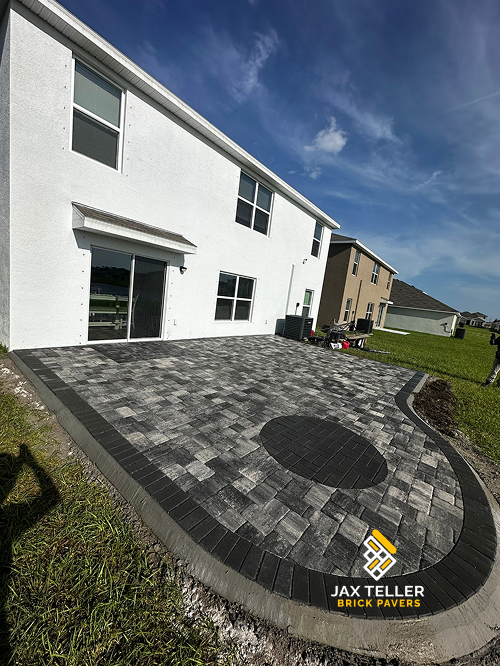
If the project combines shower work with a larger pool deck renovation, say so early. The contractor can then discuss the relationship between the small area and the whole surface. That may change the scope of the evaluation, but it does not automatically require replacing every existing paver.
Compare outdoor shower pavers proposals by responsibility
Read each proposal for what it includes around the fixture. Does it identify the paving limits, material, transition work, and coordination assumptions? Moreover, does it state which plumbing or approval tasks belong to another provider? Those details help you compare scope rather than a headline number alone.
Ask how the team will respond if it discovers an unexpected condition. A sensible process identifies who pauses work, documents the finding, and approves any change. It should not leave a homeowner guessing whether a newly exposed issue falls inside the original estimate.
Avoid treating a lower price as an equivalent proposal until the boundaries match. One contractor may price only the visible paving while another includes removal and interface work. Therefore, align the assumptions before deciding which offer best fits the project and your priorities.
Plan cleaning around the actual materials
Ask for care guidance for the complete area, including the paving, shower fixture, and any surface treatment. Products appropriate for one component may not suit the others. Consequently, the final handover should identify the materials and the correct sources of maintenance instructions.
Do not assume that a household cleaner becomes suitable outdoors or that a strong jet solves every residue. Instead, ask how the installer recommends addressing ordinary soil and when a more specific assessment becomes necessary. This approach preserves the information needed for later maintenance decisions.
Keep the approved water arrangement separate from the cleaning discussion. A cleaning habit should not become an informal redesign of where water goes. If use changes later, such as adding frequent soap washing, contact the relevant professional before assuming the original arrangement still fits.
Reassess the plan when the intended use changes
An outdoor area often evolves after the first installation. For example, you might later add a privacy screen, move a storage cabinet, or change how frequently the shower operates. Those changes can affect access and the assumptions behind the original work. Therefore, keep the project information available rather than treating it as paperwork you no longer need.
Before adding a screen, discuss its footprint and any proposed fixing with the appropriate contractor. A decorative change can introduce new contact points or obstruct a service route. Likewise, placing a large cabinet beside the shower can narrow the dry path that originally made the layout practical.
If you notice a new problem, describe the change and when it appeared. Include the most recent use or alteration without assigning blame. That timeline helps the professional compare current conditions with the completed project and decide whether the next step belongs to paving, plumbing, or another specialist.
Finish with a coordinated walkthrough
At the final review, walk the ordinary approach and departure routes. Then ask the responsible professionals to explain the completed interfaces, service access, and care requirements. Record any item that still needs correction or clarification before calling the project complete.
Keep closeout photographs and product references together. Moreover, retain the current drawing and any approval records supplied for your project. These documents can help a future contractor understand what exists instead of guessing from the surface alone.
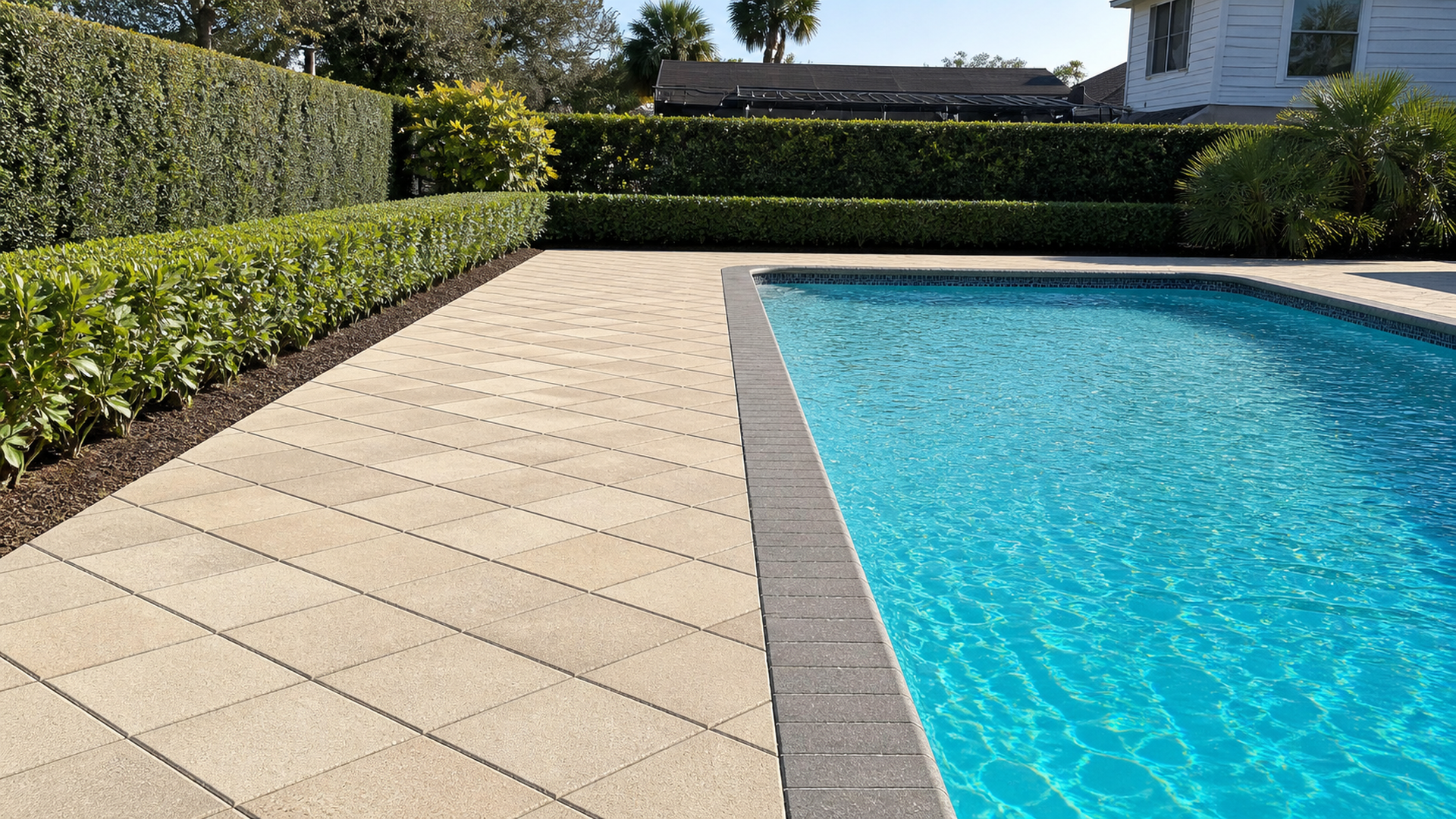
JaxTeller's paver pool deck service offers a relevant starting point for the paving conversation. You can also review completed projects to describe the appearance you prefer. However, your own site assessment and approved system details should control the final design.
Ready to transform your pool deck? Describe the shower location and your paving questions through the contact page. In addition, explore JaxTeller on Instagram and Facebook, or request a conversation through WhatsApp. Find location details on the map. Contact JaxTeller Brick Pavers at +1 407-907-8308 or jaxtellerbrickpavers@gmail.com for your free estimate!