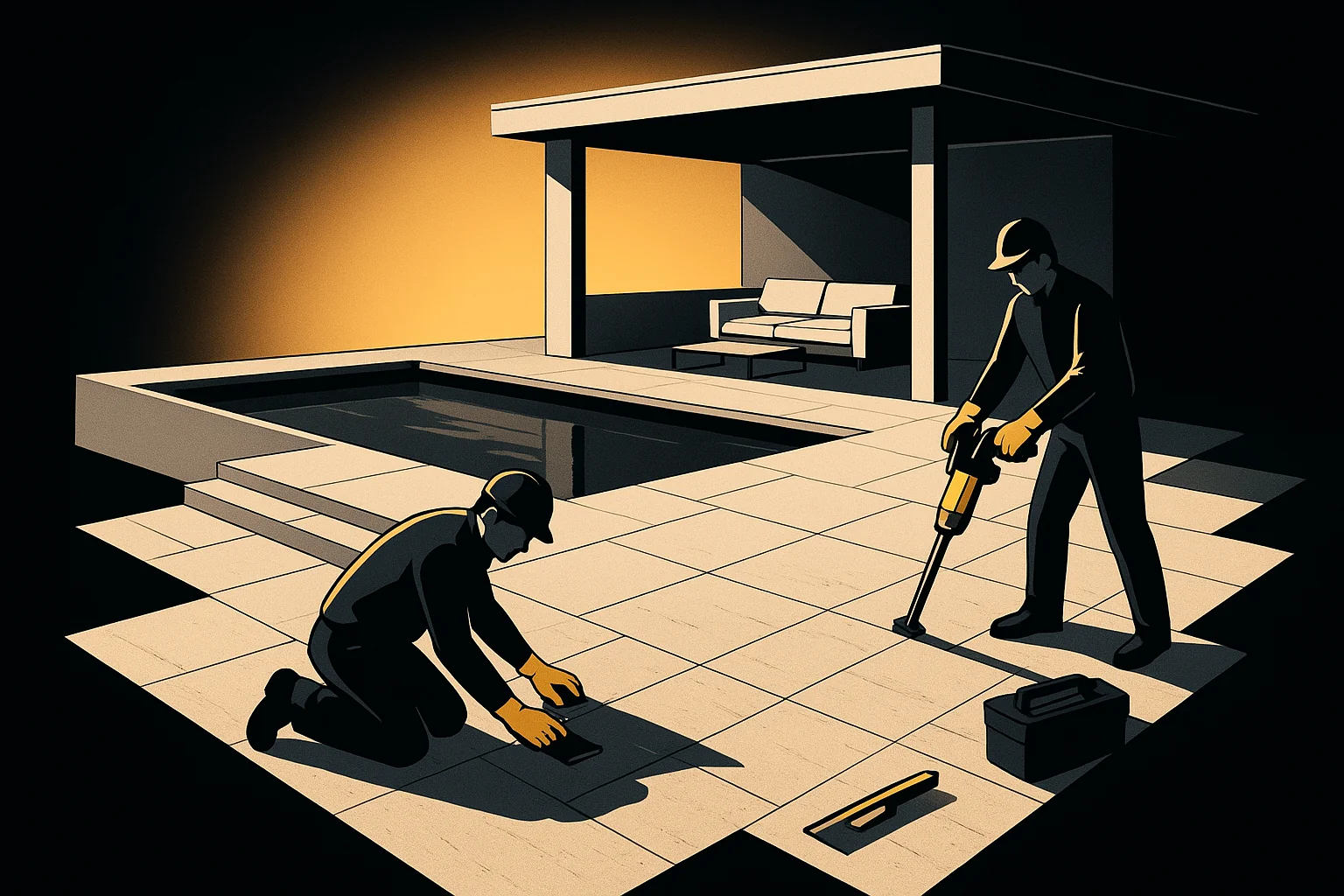
Pool decks are one of the most demanding hardscape environments in Florida. Constant sun exposure, water saturation, chemical contact, and foot traffic place significant stress on surface materials. As a result, poor design or improper installation quickly leads to cracking, shifting, and safety issues.
Many Florida homeowners replace aging concrete pool decks with pavers to improve comfort, drainage, and long-term performance. However, pool deck paver design requires more than visual planning — it must address heat, slip resistance, soil movement, and water control.
When properly engineered, paver pool decks provide a safe, attractive, and durable surface that performs consistently in Florida’s climate.
This guide outlines key pool deck paver design strategies that protect both aesthetics and structural integrity.
Why Pool Deck Design Is Critical in Florida
Florida pool areas face unique environmental challenges:
- Intense heat and UV exposure
- Frequent water saturation
- Heavy rainstorms
- Shifting sandy soil
- Chemical exposure from pools
A pool deck must remain cool, stable, and slip-resistant while maintaining precise elevation around the pool shell.
Poorly designed decks can lead to drainage issues, uneven surfaces, and long-term damage.
Why Pavers Are Ideal for Pool Decks
Pavers outperform concrete slabs in pool environments for several reasons:
- Interlocking flexibility adapts to soil movement
- Resistance to cracking
- Superior drainage between joints
- Easy localized repair
- Design versatility
Concrete pool decks often crack due to expansion and settlement. Pavers absorb movement and maintain surface integrity.
Heat Management and Surface Comfort
Surface temperature is a major concern around pools.
Florida-appropriate paver selection focuses on:
- Light color tones
- Textured finishes
- Natural stone-inspired surfaces
Recommended colors include:
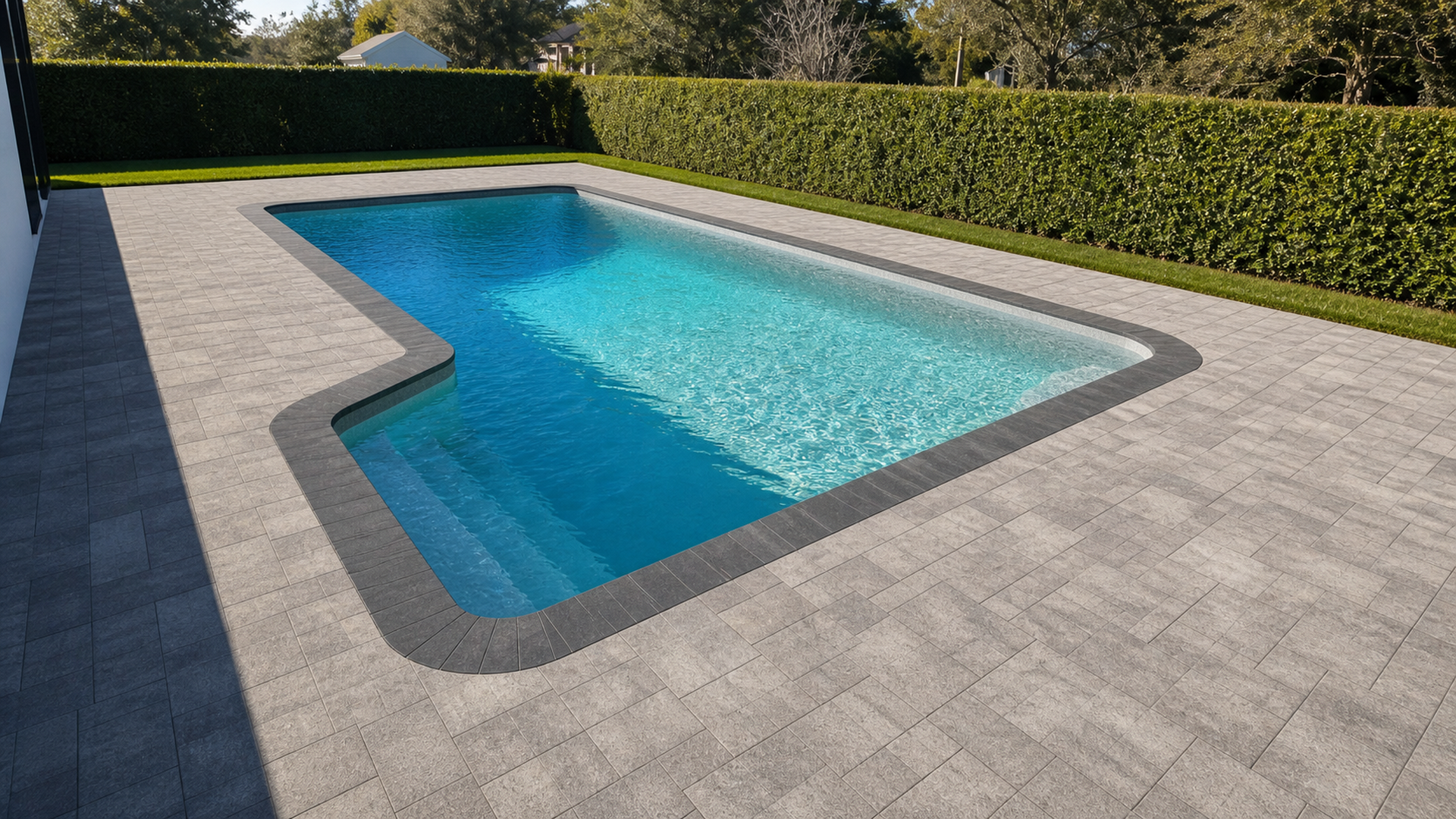
- Light gray
- Sand and beige
- Travertine-style blends
These options reflect sunlight and remain cooler underfoot compared to dark concrete surfaces.
Slip Resistance and Safety Considerations
Safety is non-negotiable for pool decks.
Professional paver designs prioritize:
- Textured, slip-resistant surfaces
- Consistent joint spacing
- Even transitions around pool coping
- Proper edge detailing
Pavers designed for pool decks provide better traction when wet, reducing slip hazards.
Drainage Planning Around Pool Areas
Water control is essential.
Proper pool deck drainage includes:
- Controlled slope away from the pool
- Joint spacing for water movement
- Stable compacted base
- No water pooling near coping
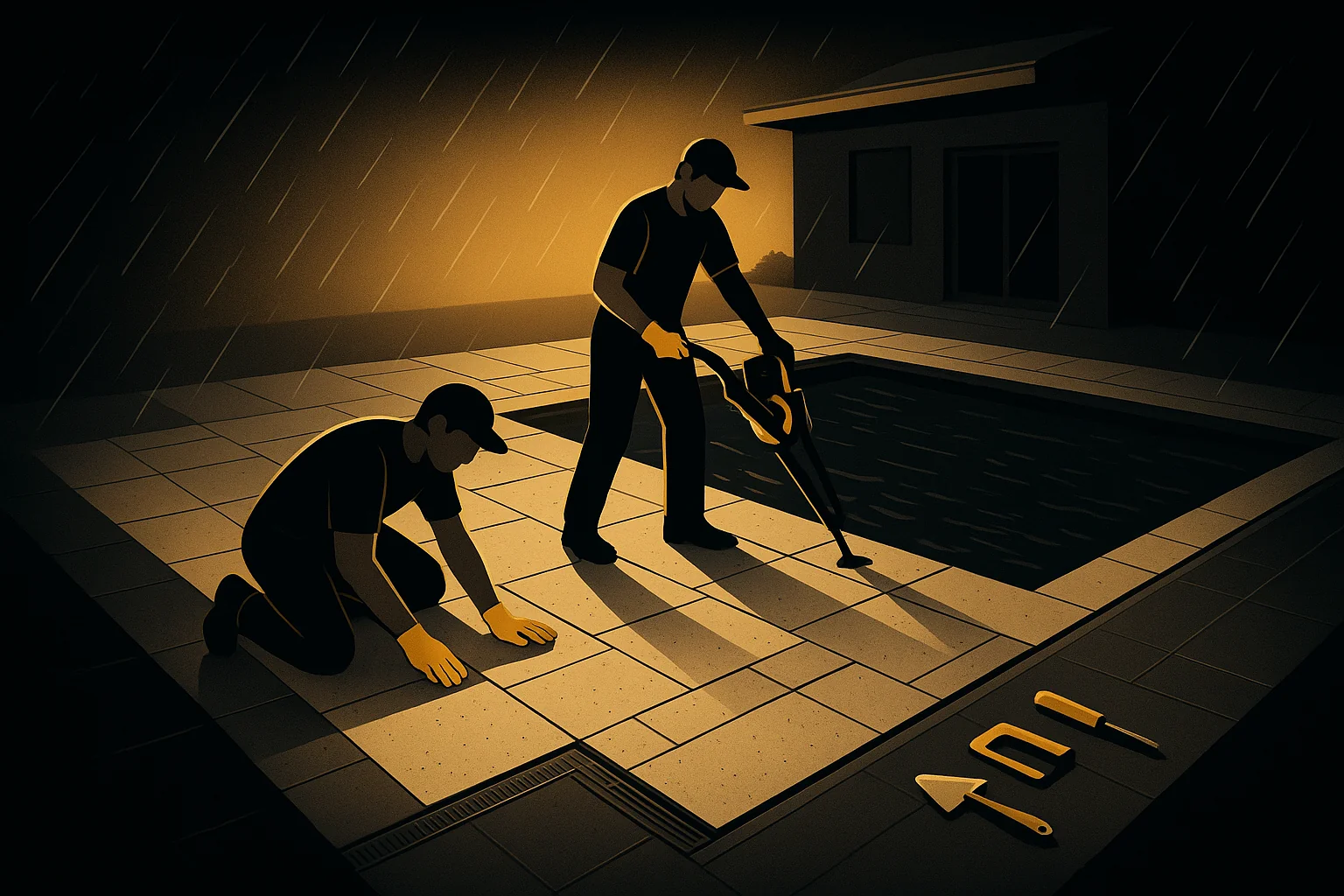
Florida’s heavy rain requires decks that drain efficiently to protect both the pool structure and surrounding hardscape.
Base Preparation for Pool Deck Stability
The foundation beneath the pool deck determines long-term performance.
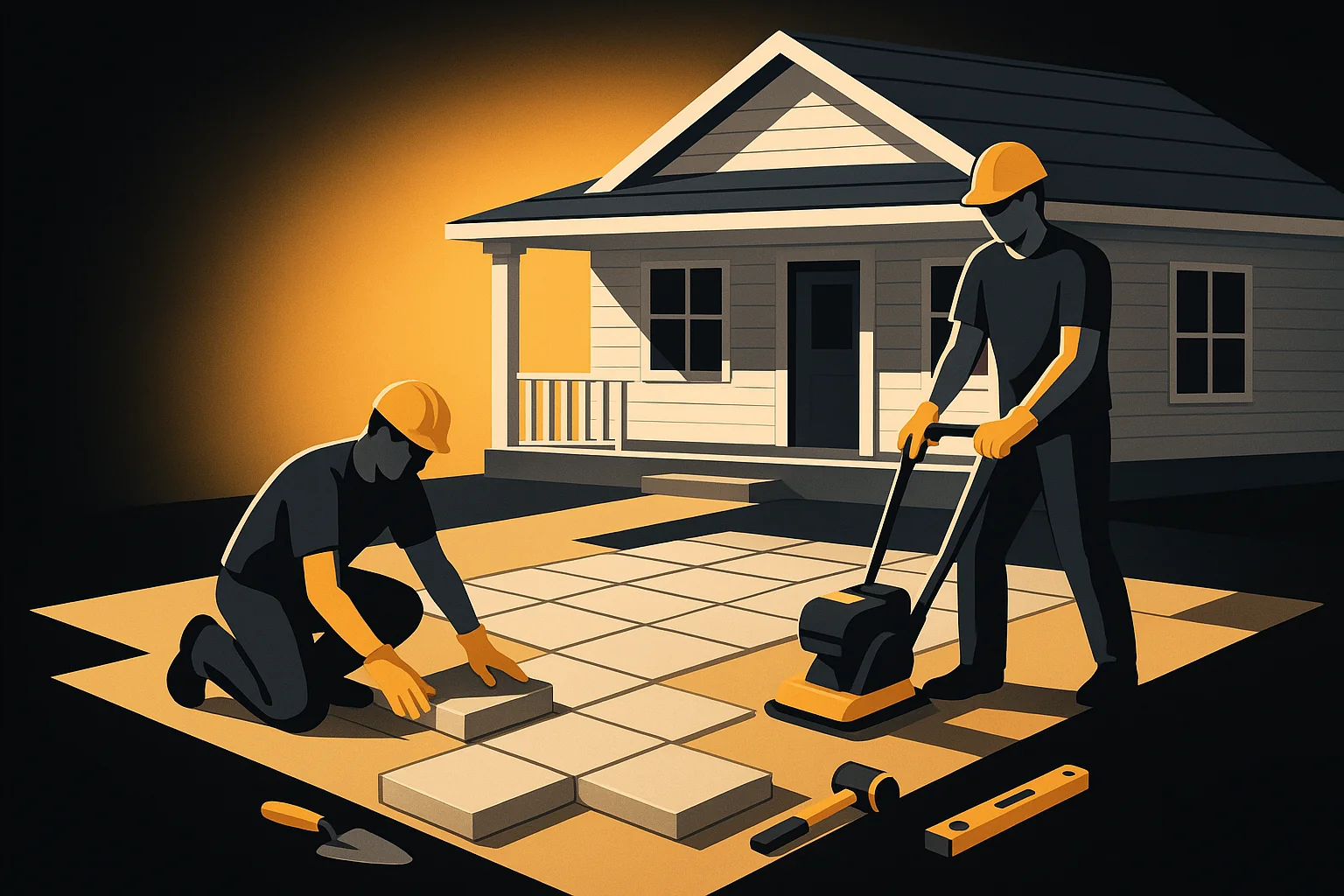
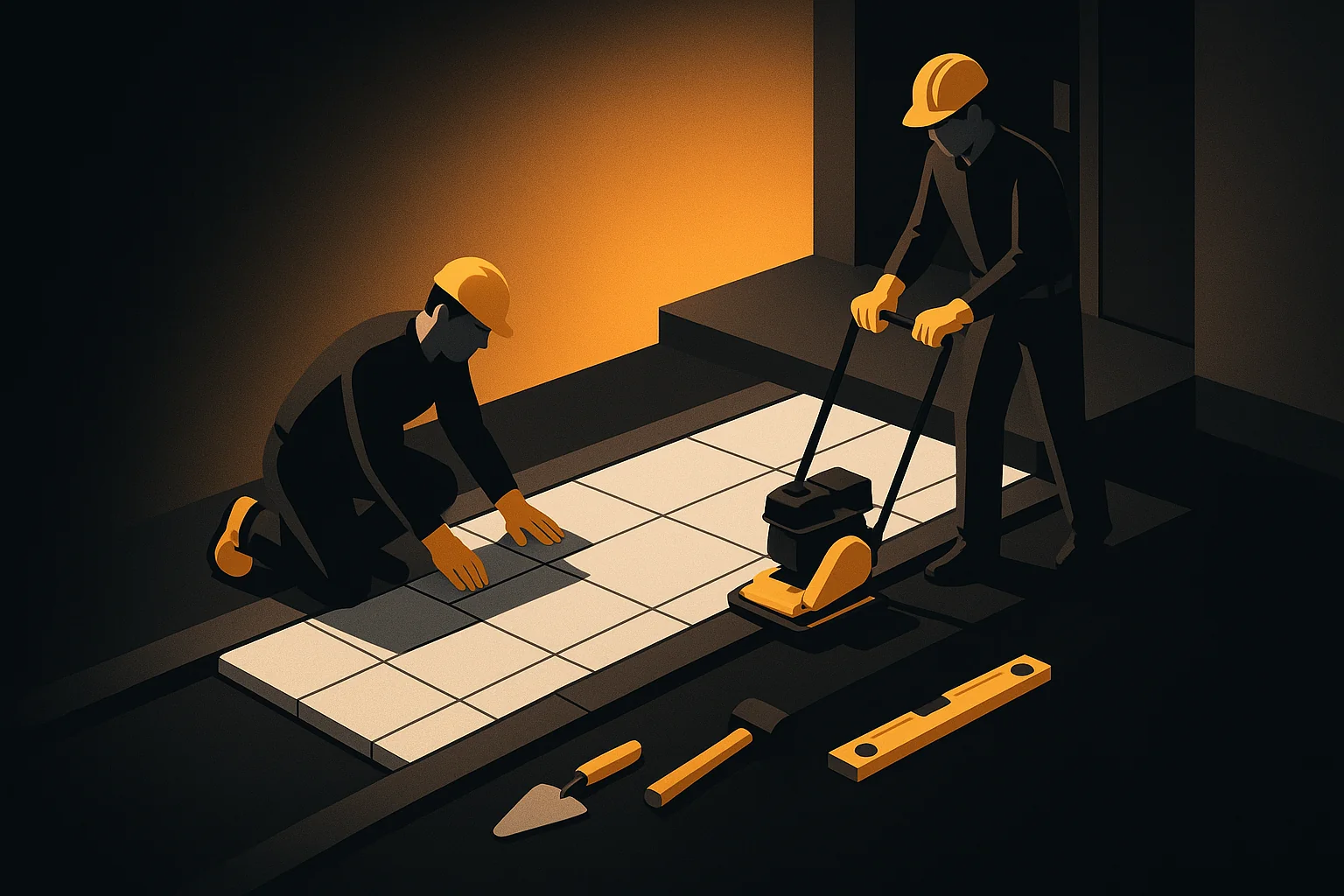
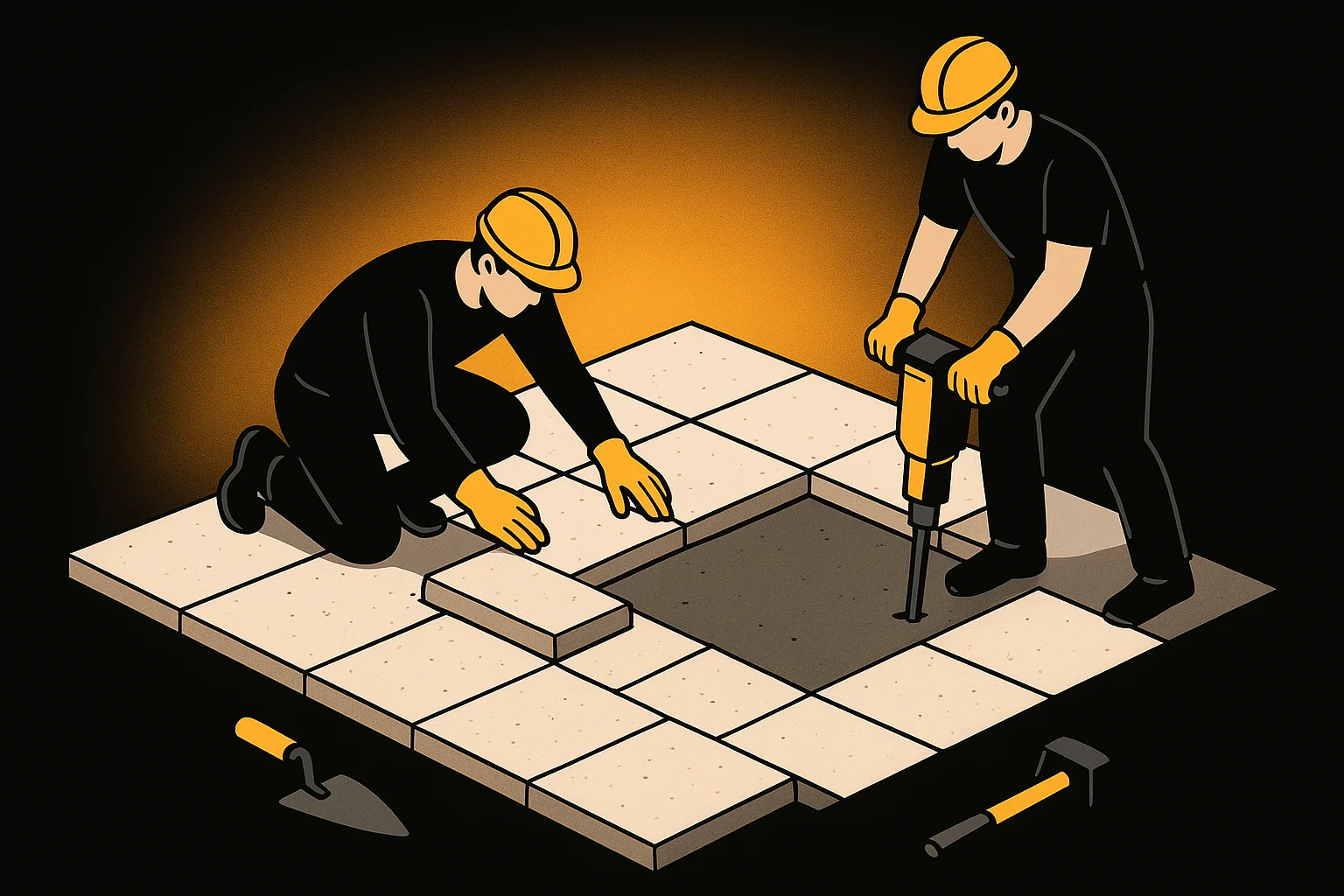
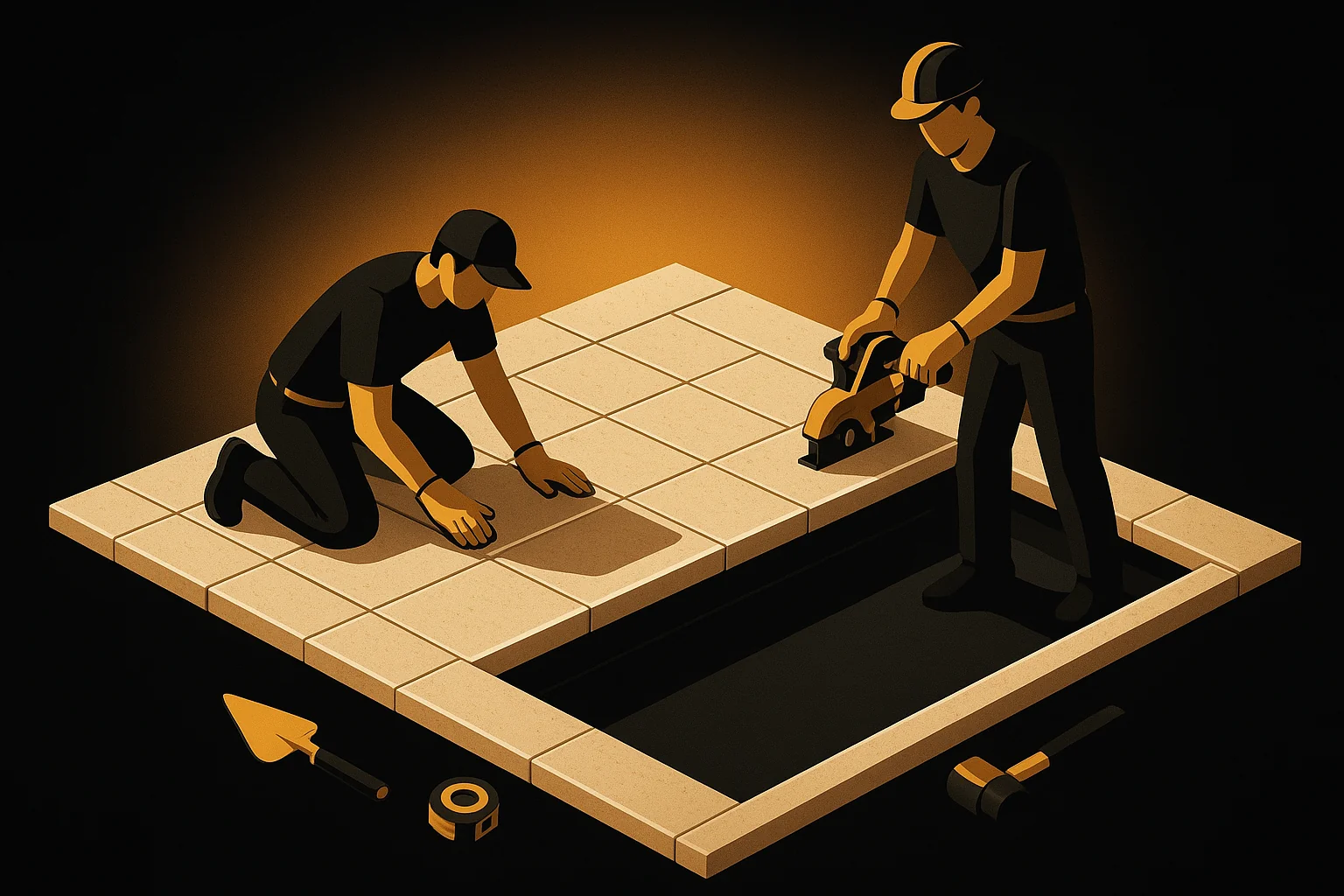
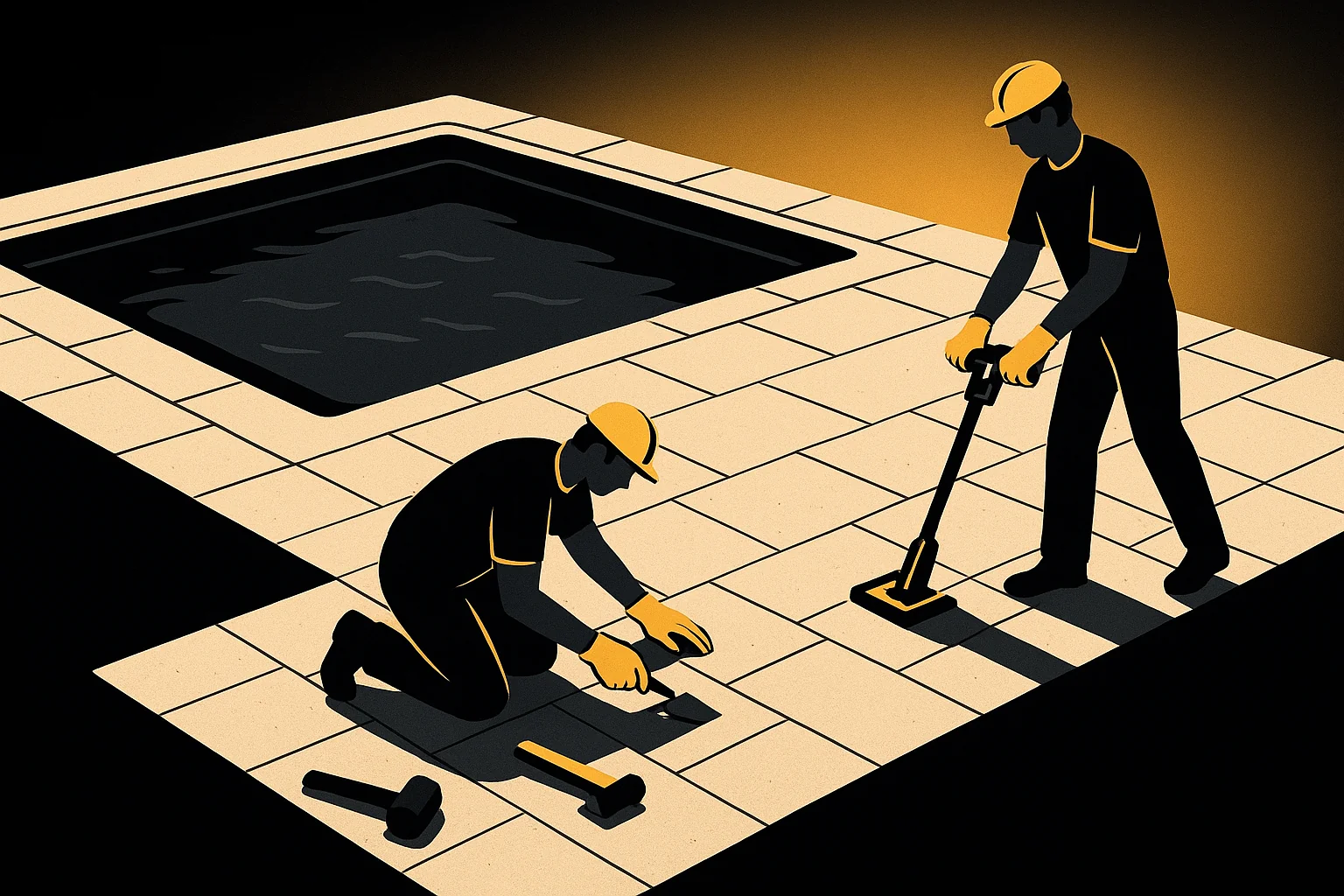
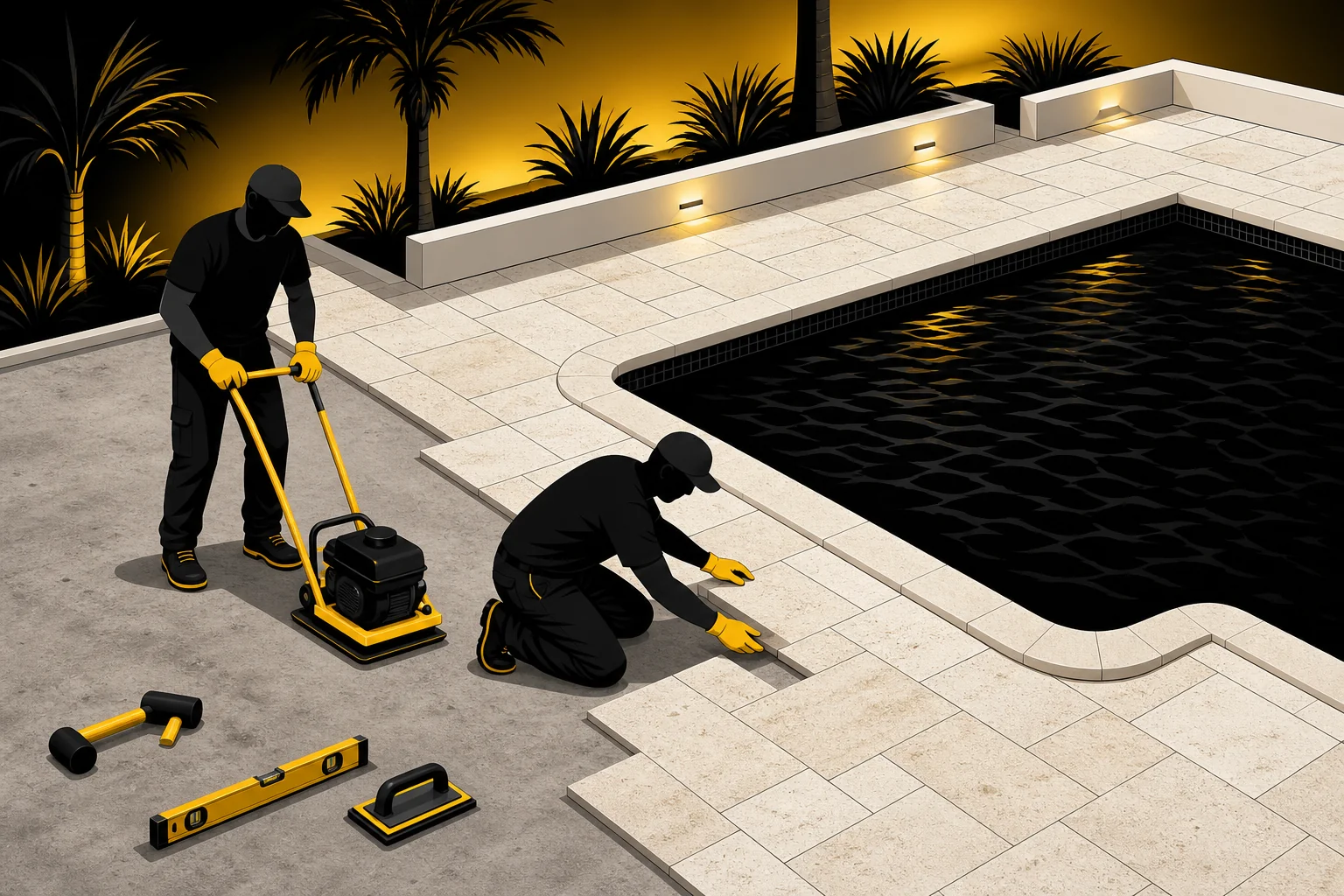
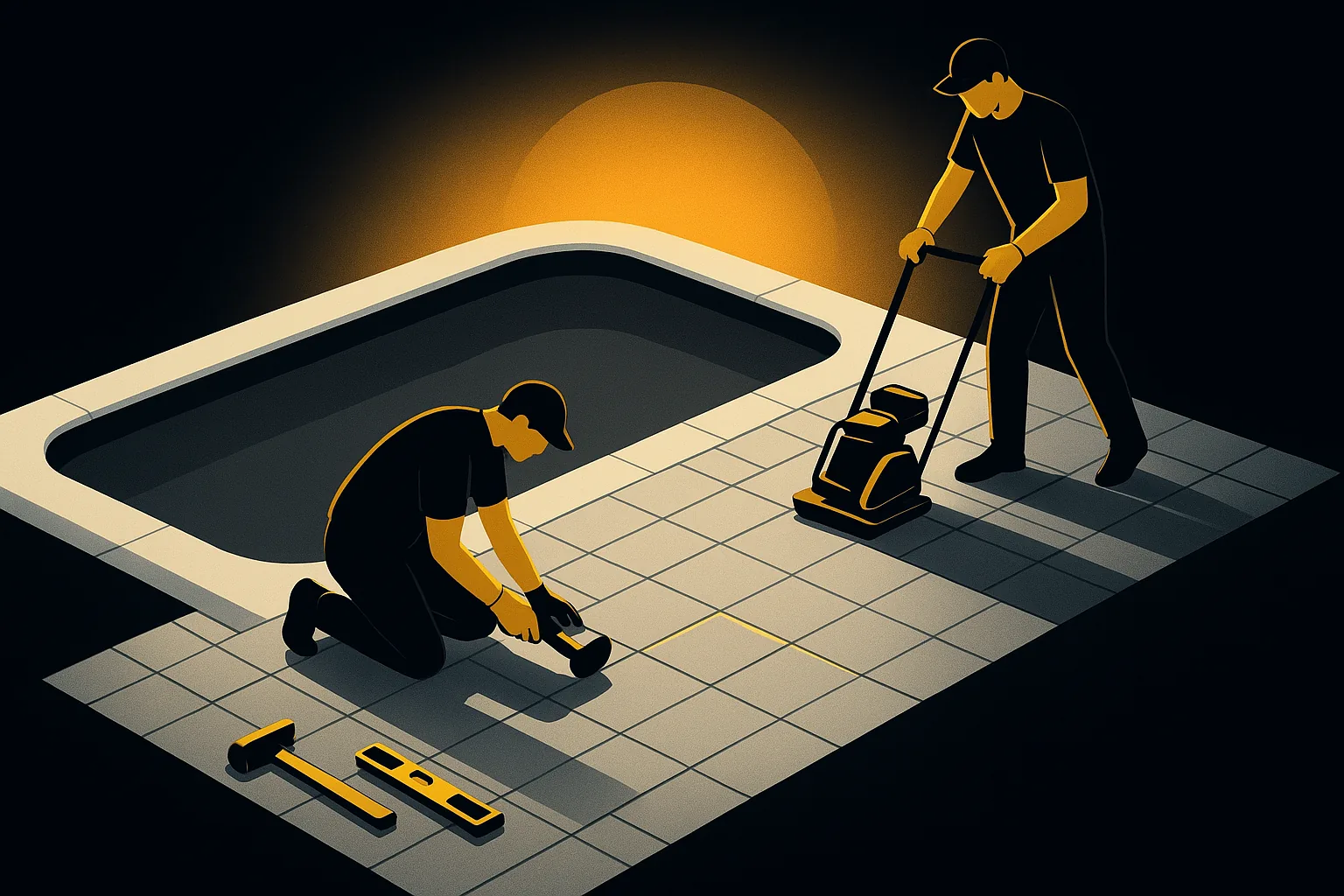
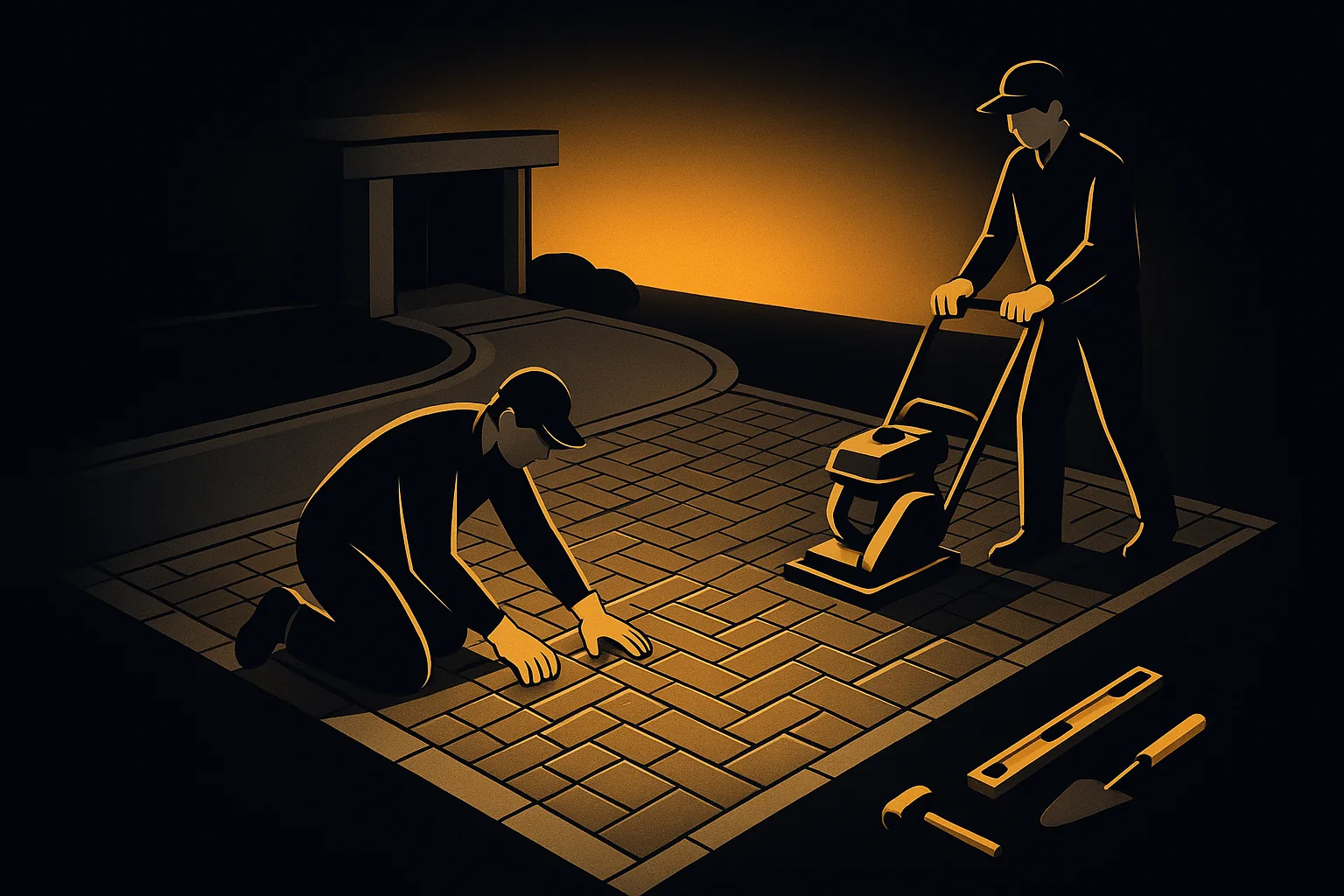
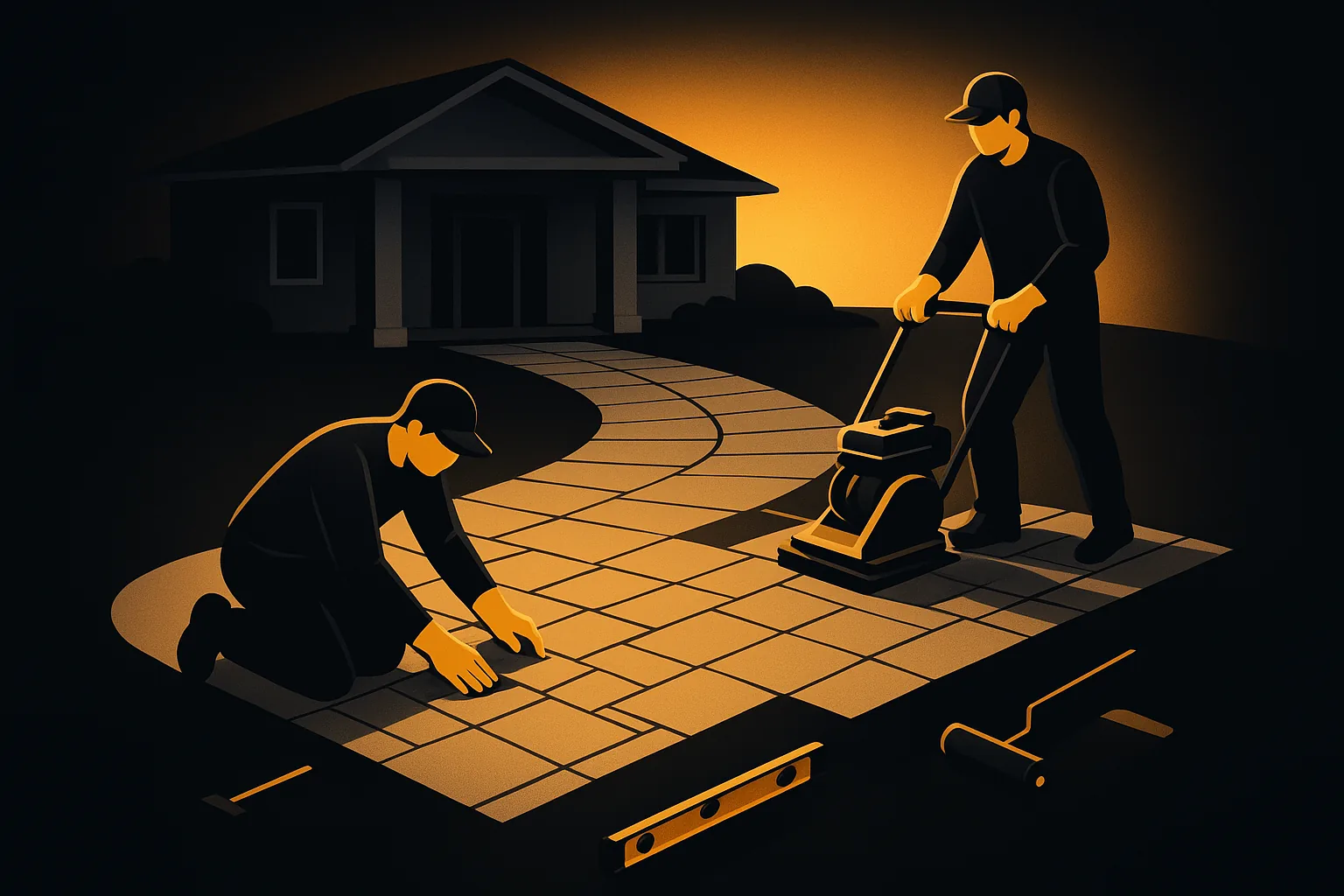
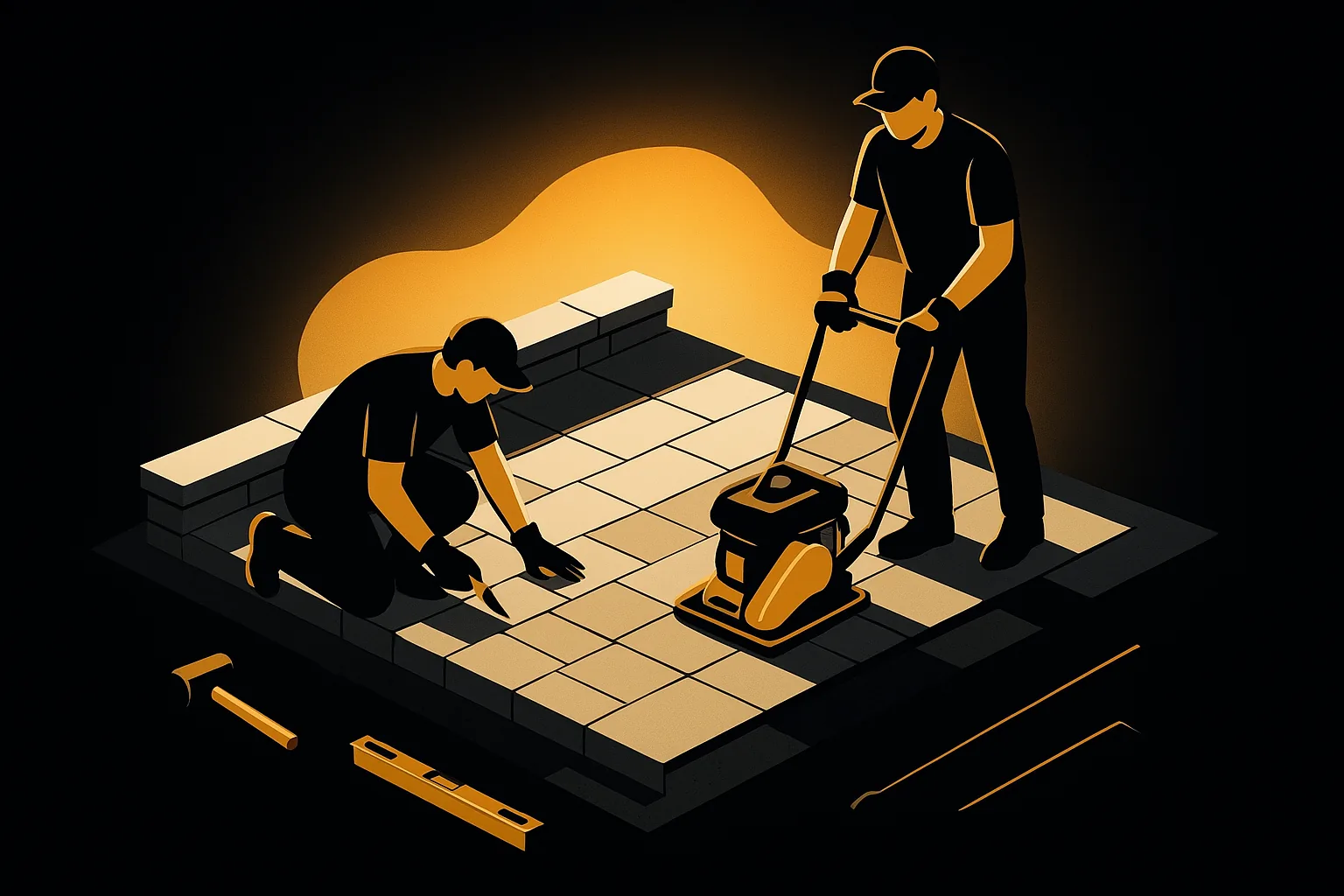
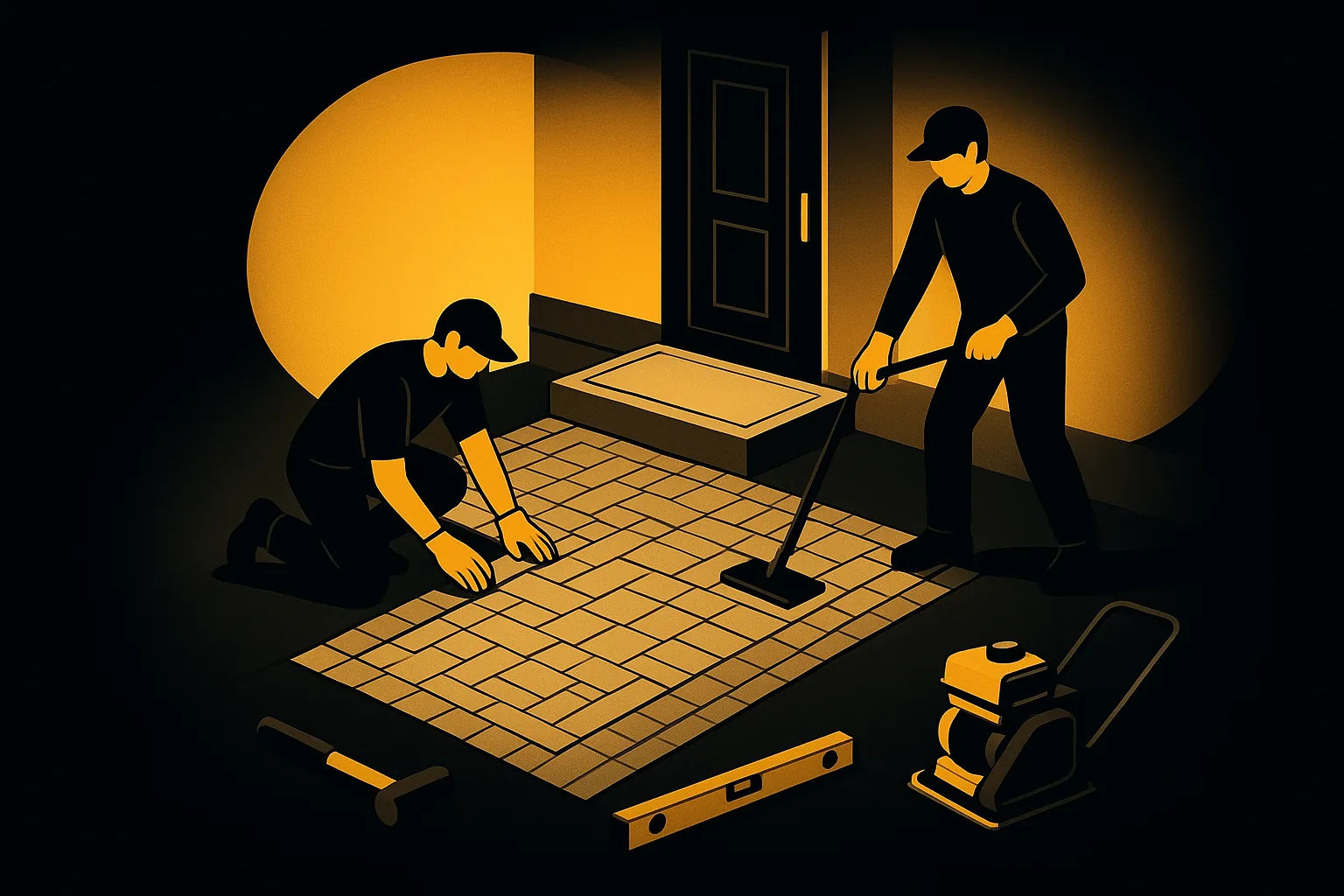
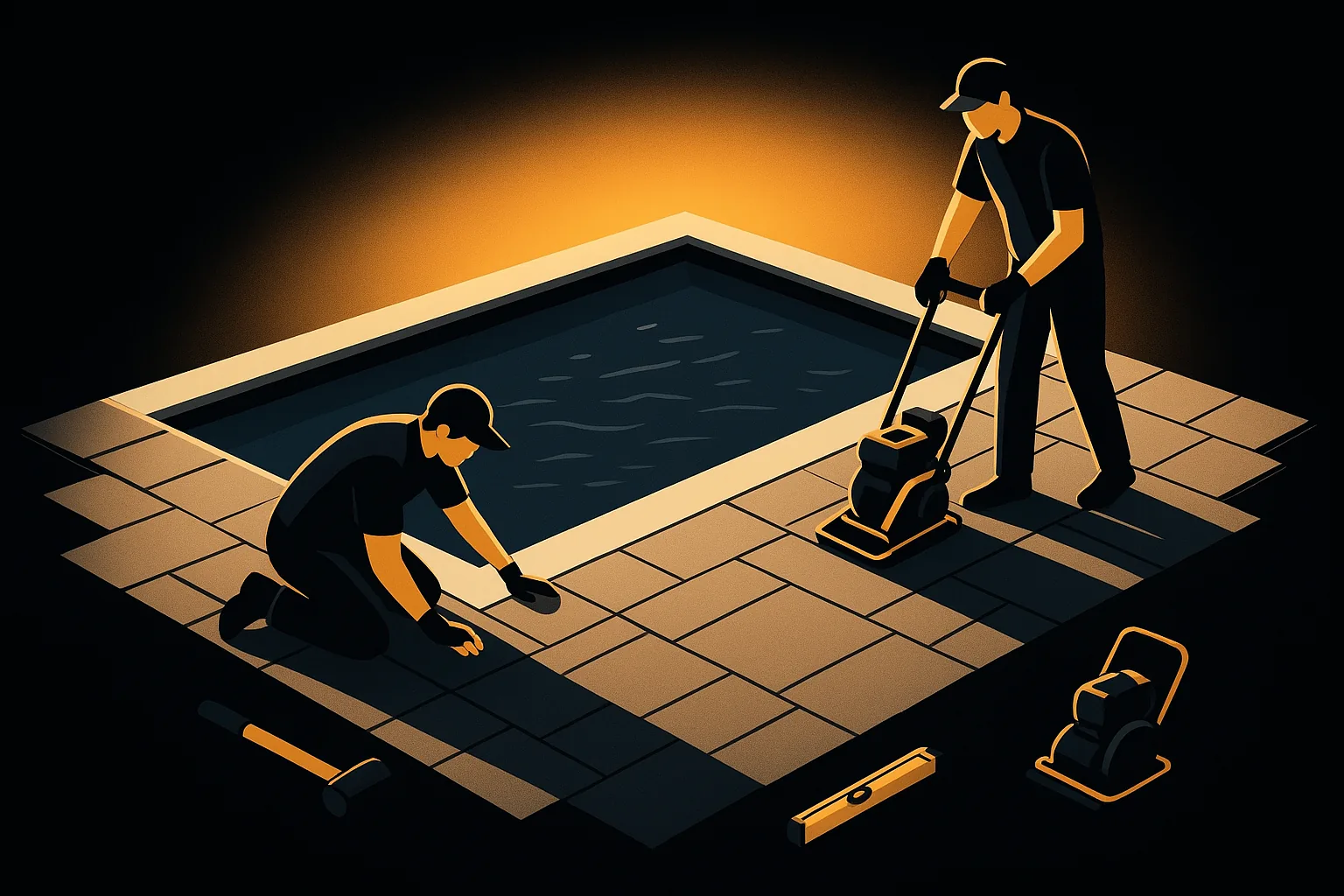
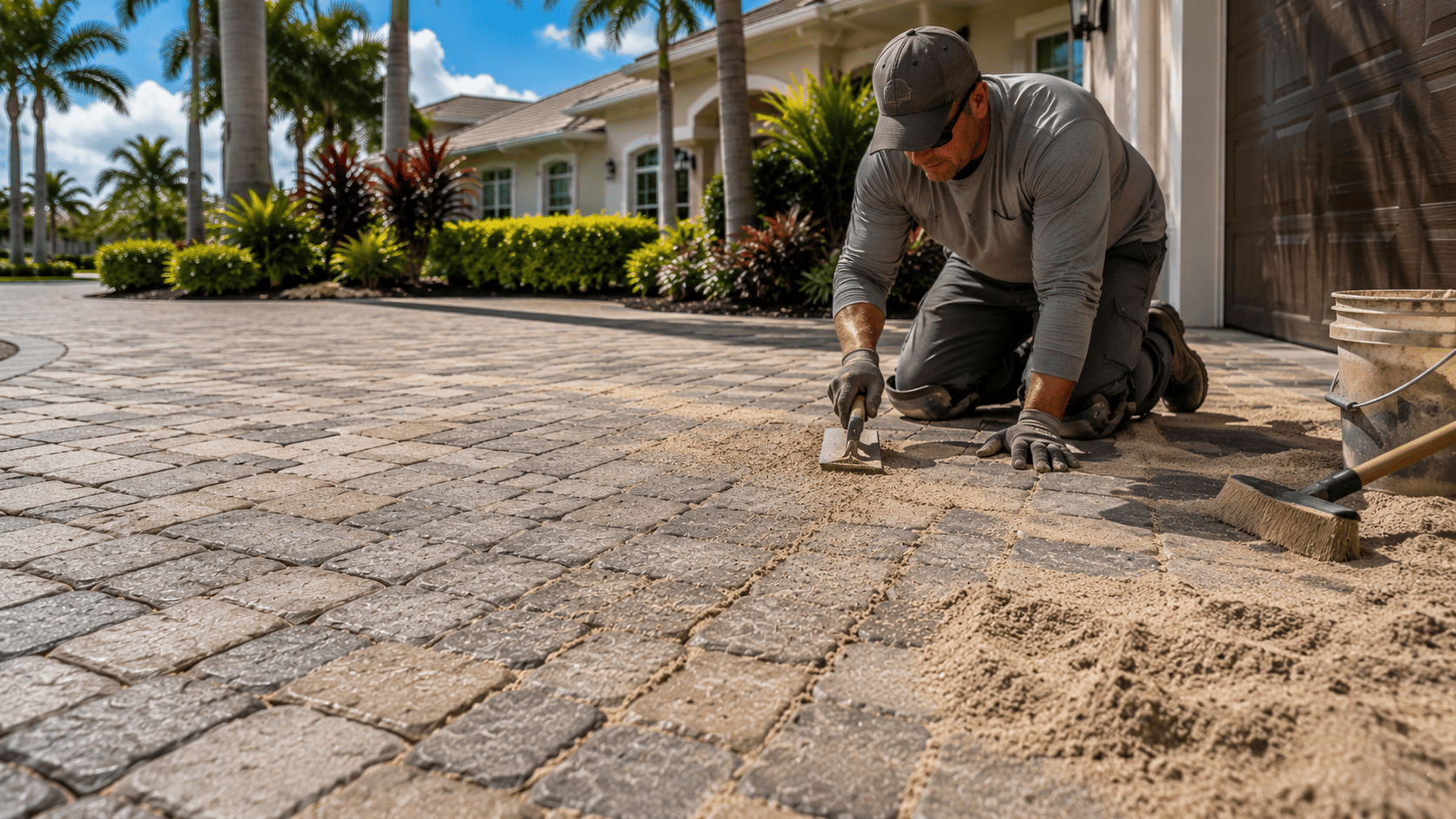
Professional installation includes:
- Precise excavation
- Compacted crushed stone base
- Mechanical compaction
- Level bedding layer
- Accurate paver placement
- Joint stabilization
Skipping base preparation leads to settlement and misalignment, especially near pool edges.
Pool Coping Integration and Alignment
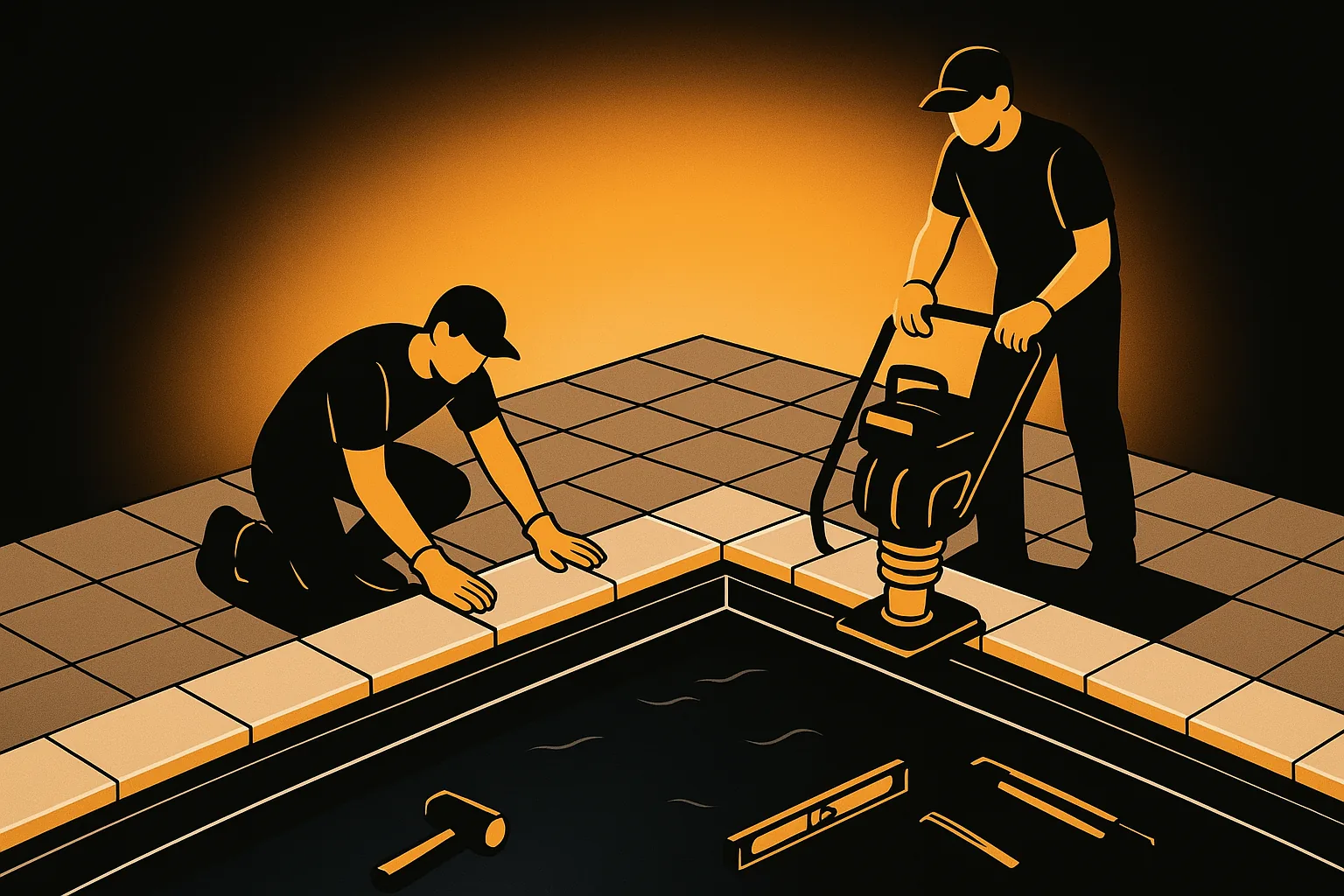
Pool coping is the transition between deck and waterline.
Proper integration ensures:
- Smooth visual continuity
- Safe edge profile
- Structural separation from the pool shell
- Consistent elevation
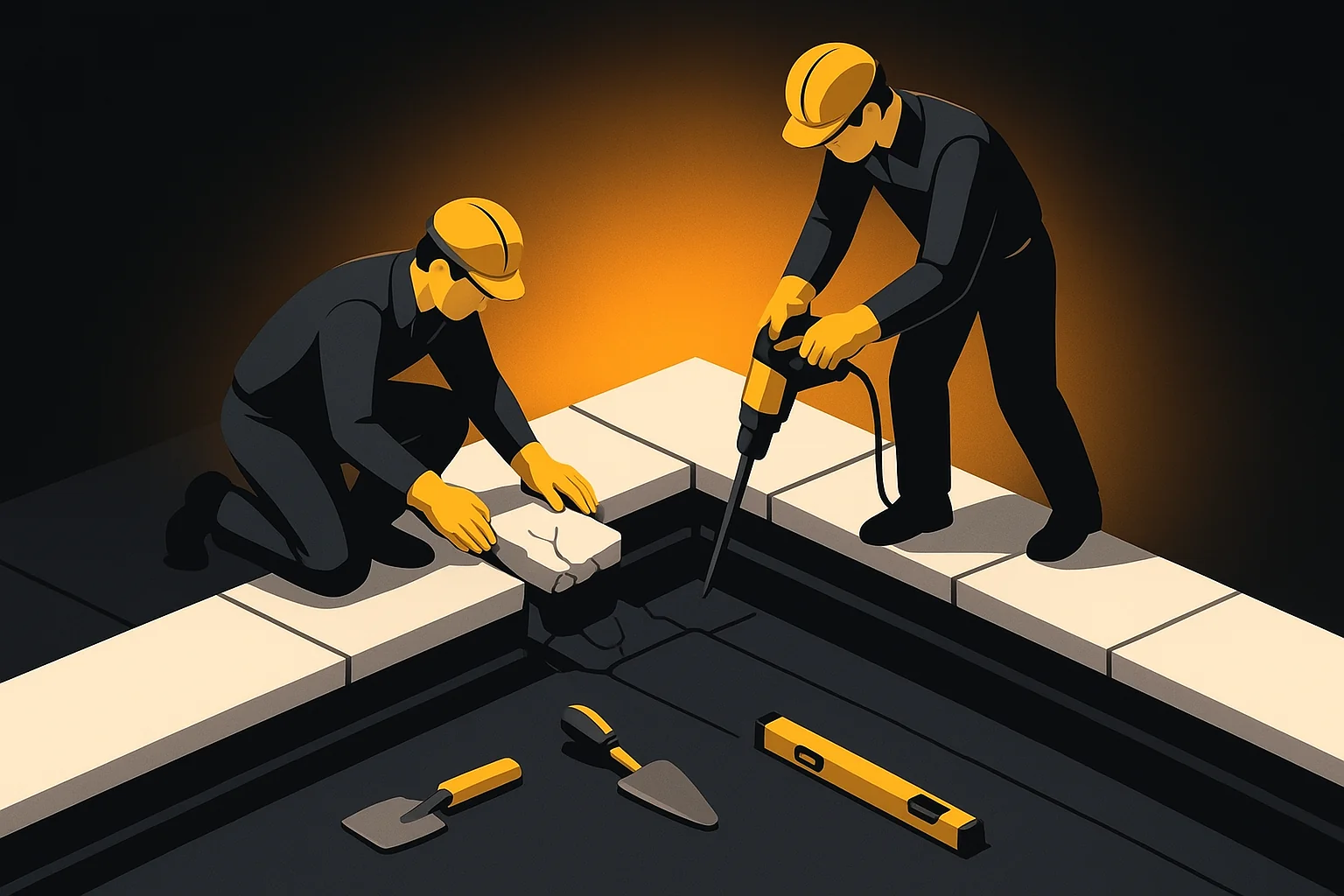
Paver decks must align precisely with coping to prevent trip hazards and water intrusion.
Design Layout Options for Pool Decks
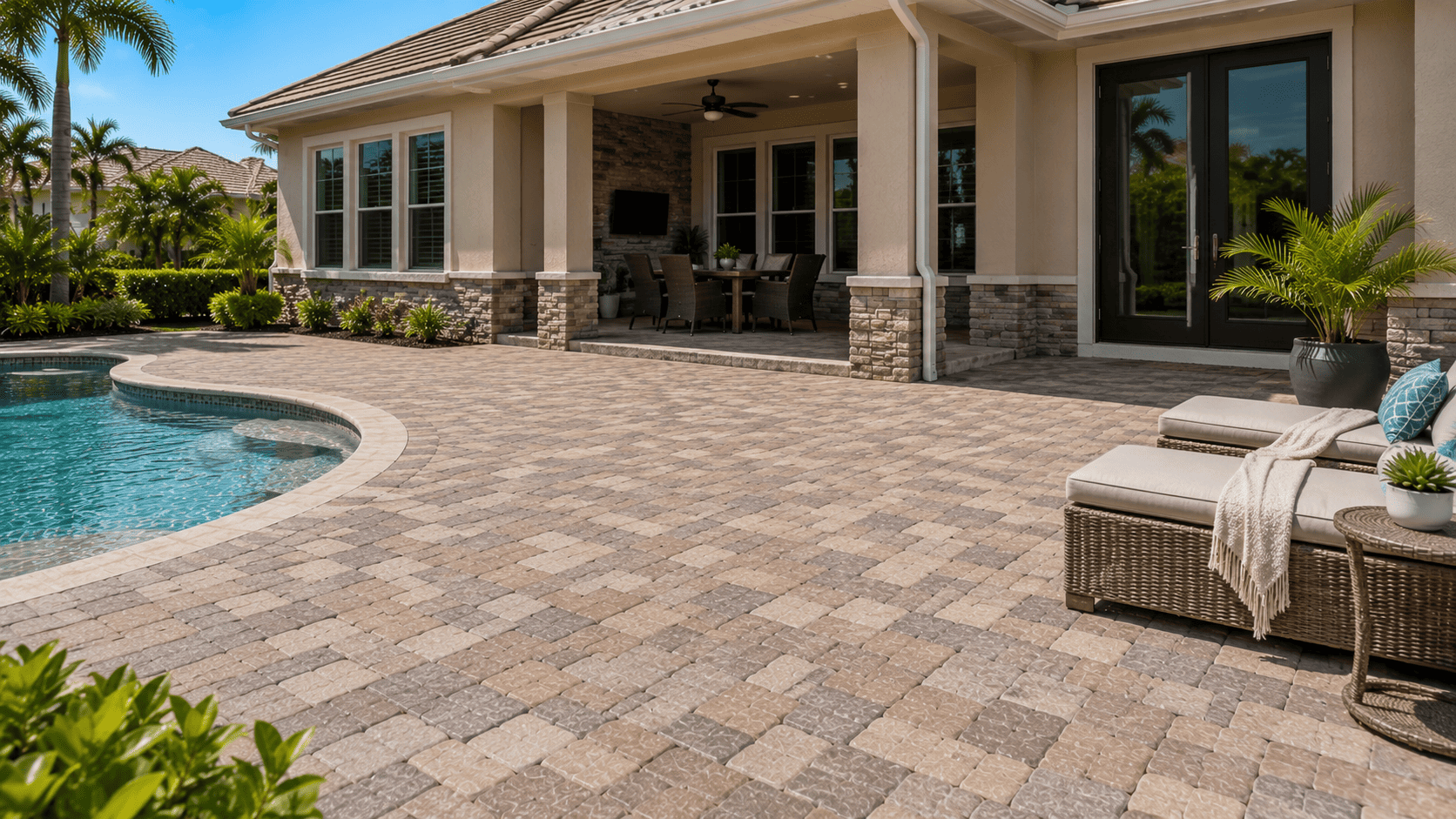
Pool deck paver layouts should complement the pool shape.
Popular layout strategies include:
- Running bond for clean, classic designs
- Modular patterns for visual depth
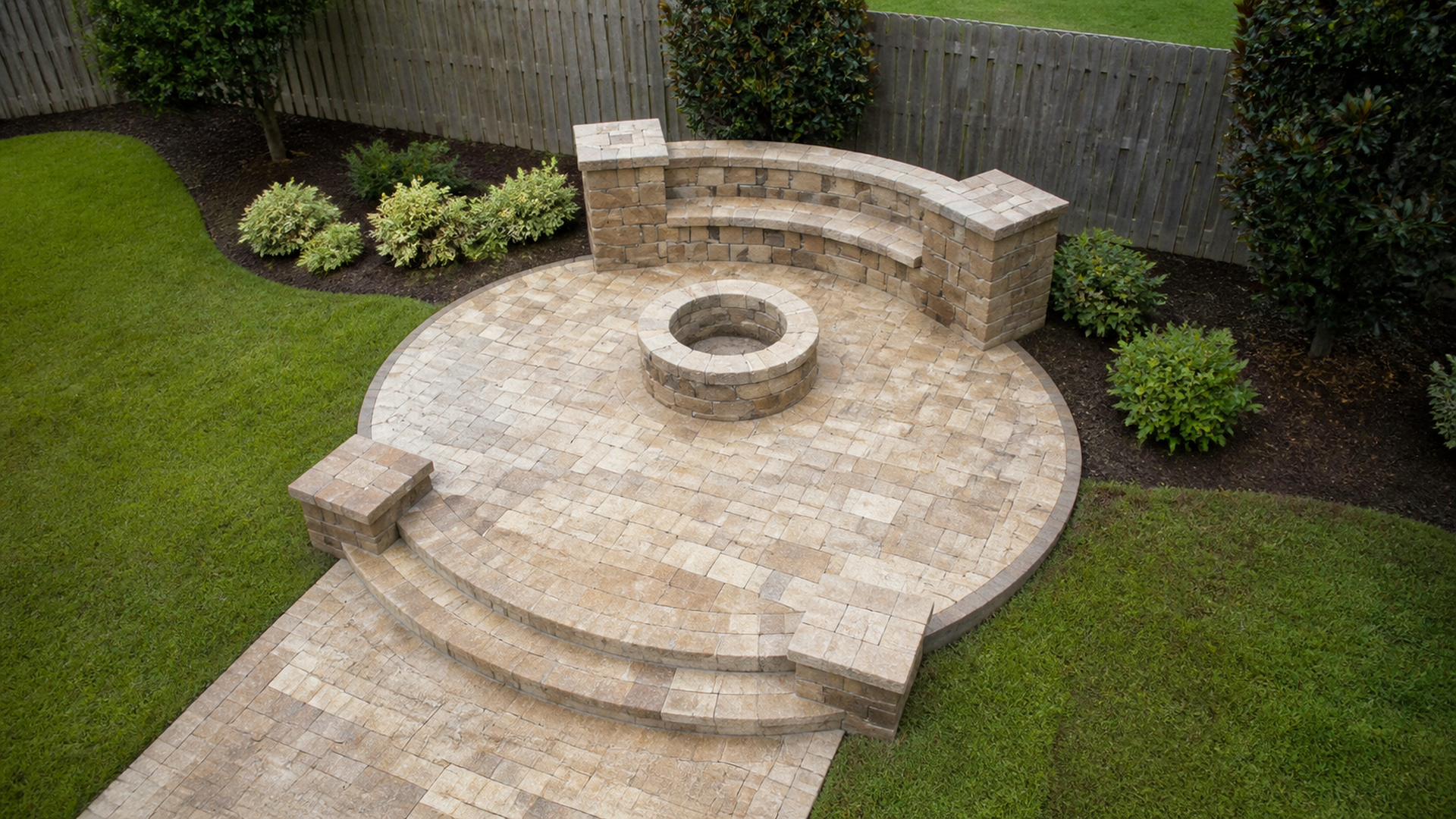
- Curved layouts for freeform pools
- Border accents to define zones
Design alignment improves flow and visual balance.
Common Pool Deck Design Mistakes
Florida homeowners should avoid:
- Dark paver colors that overheat
- Insufficient drainage slope
- Poor coping alignment
- Weak edge restraints
- Ignoring soil conditions
Professional planning prevents costly corrections.
Real Project Example
DROP IMAGE HERE +..
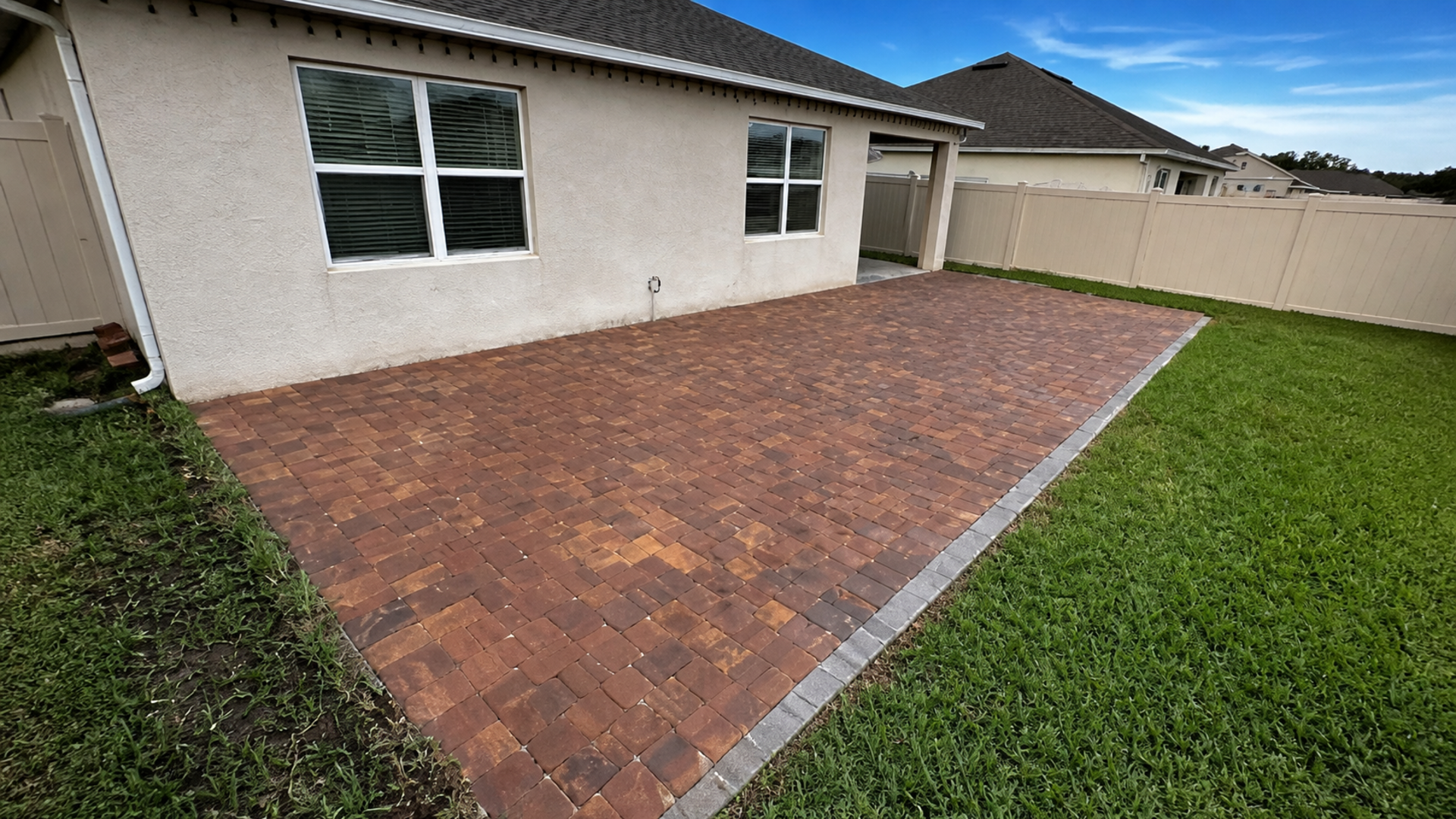
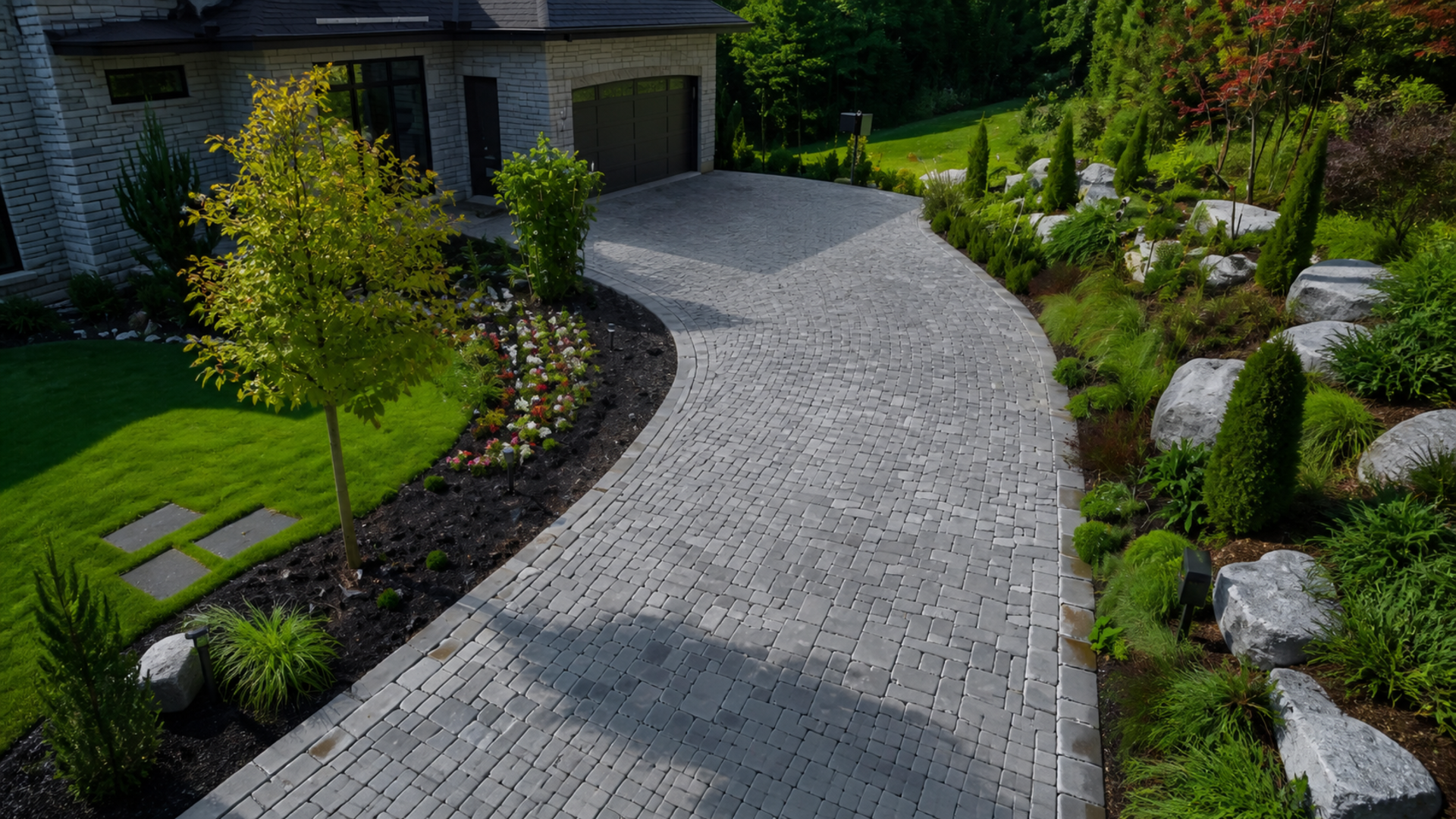
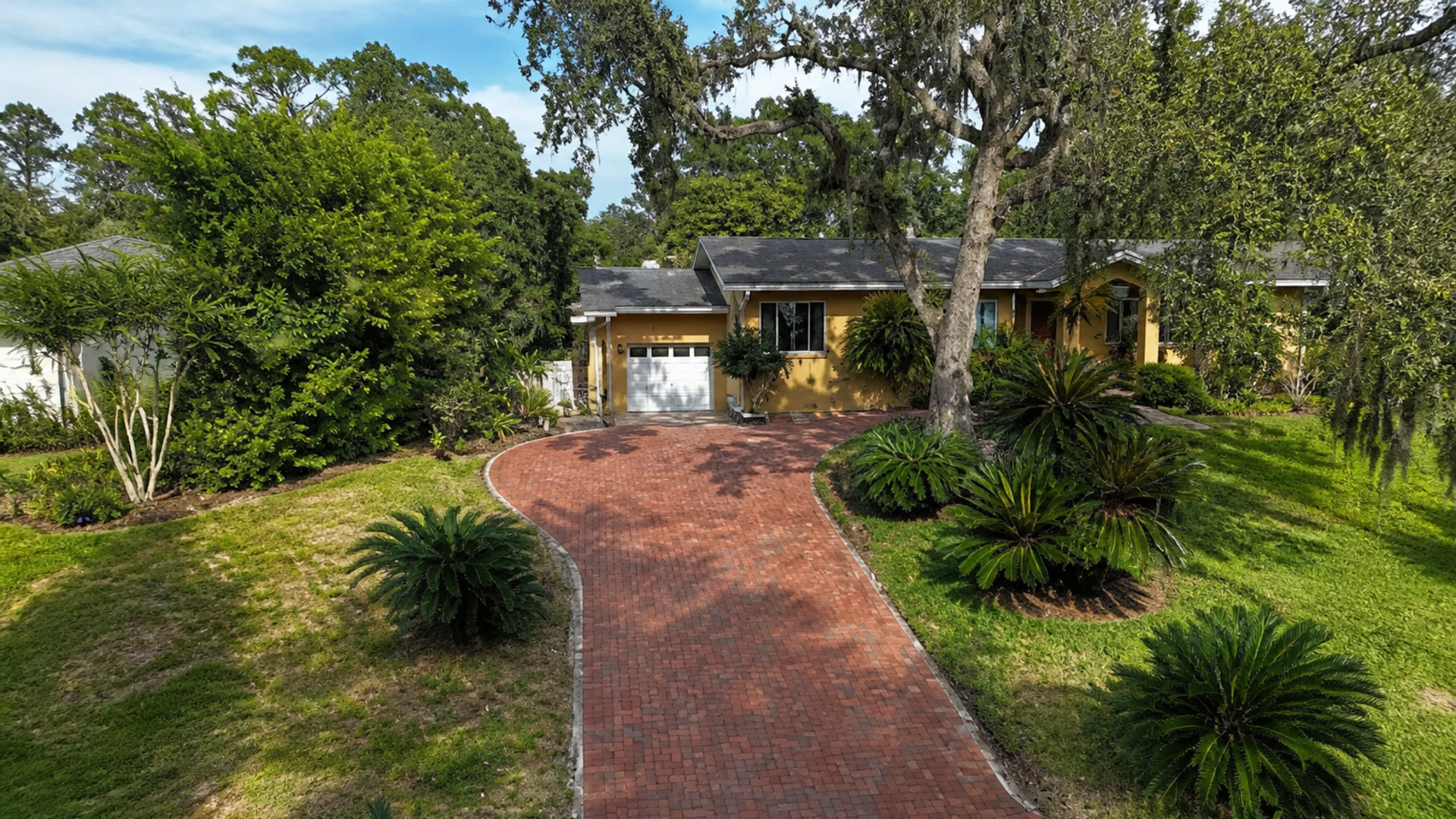
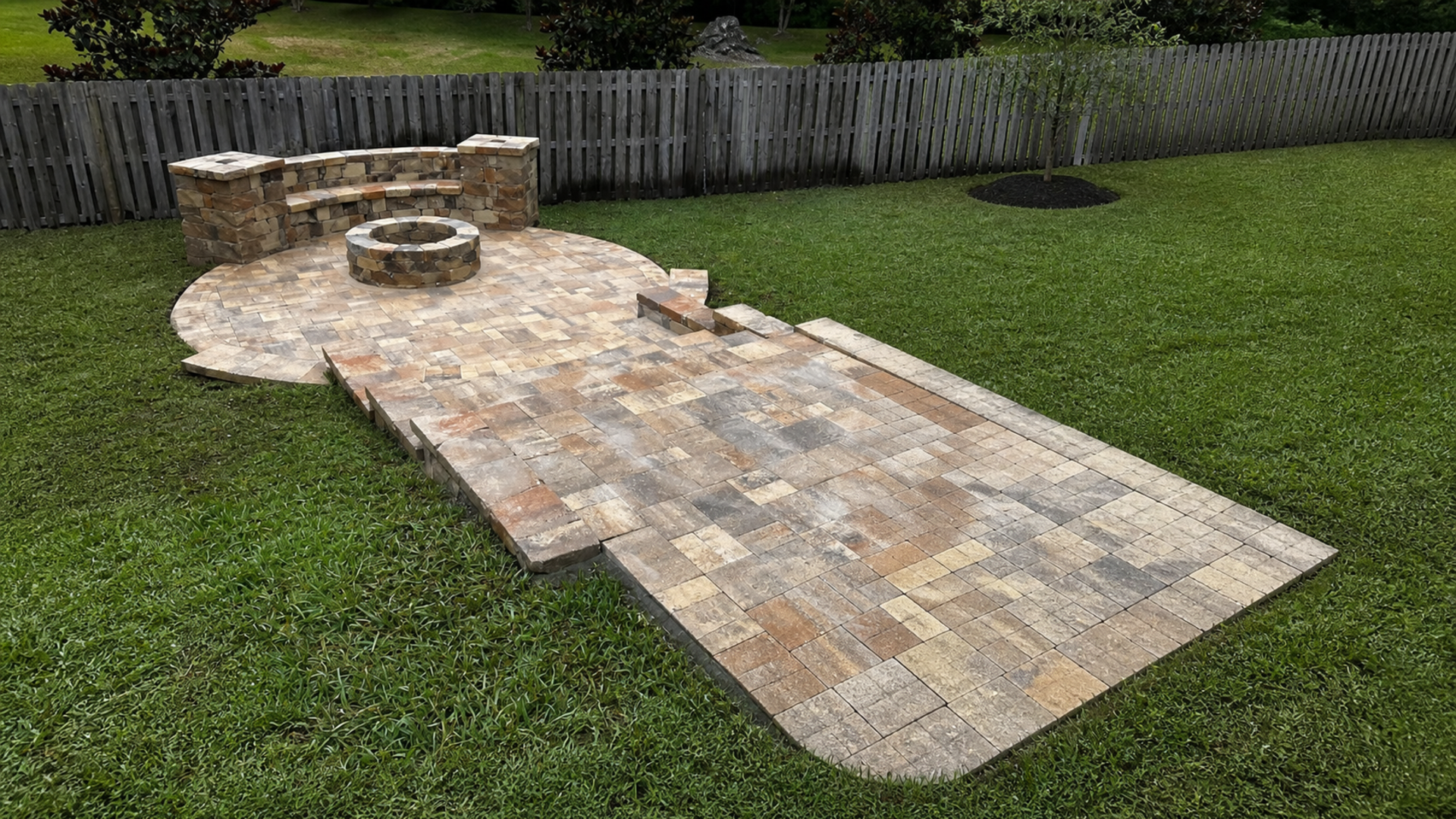
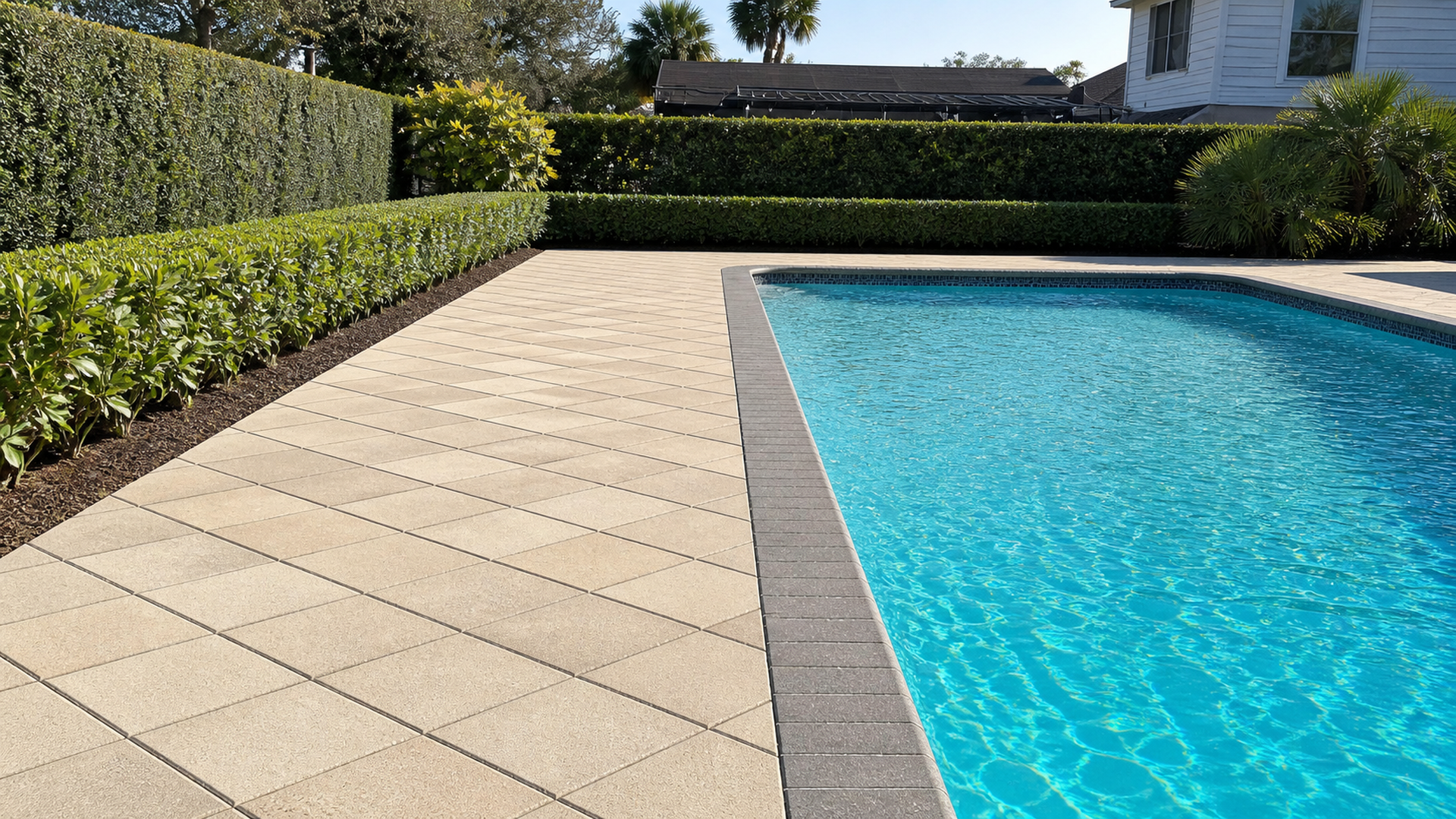
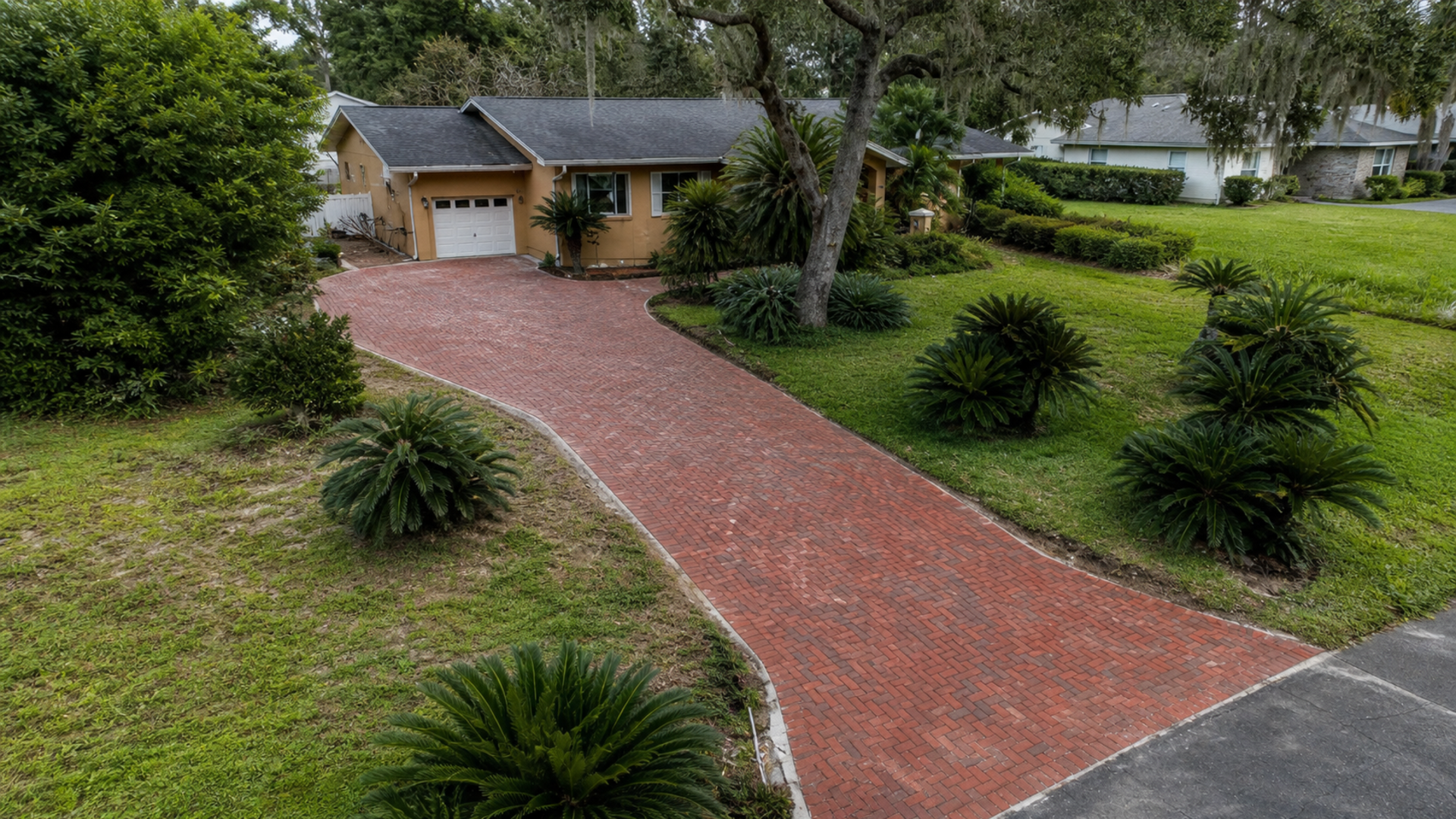
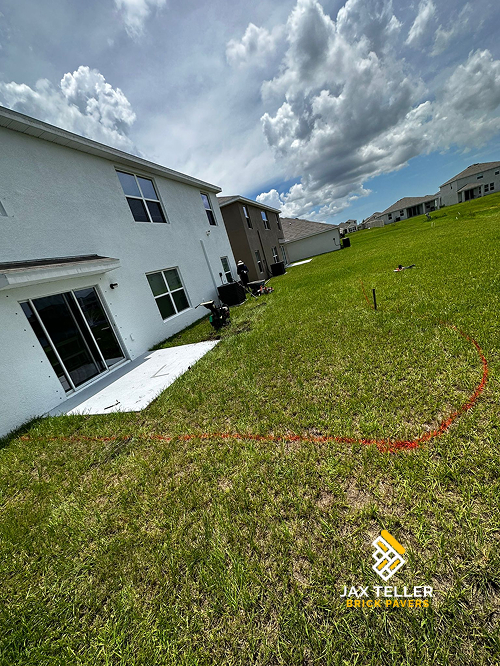
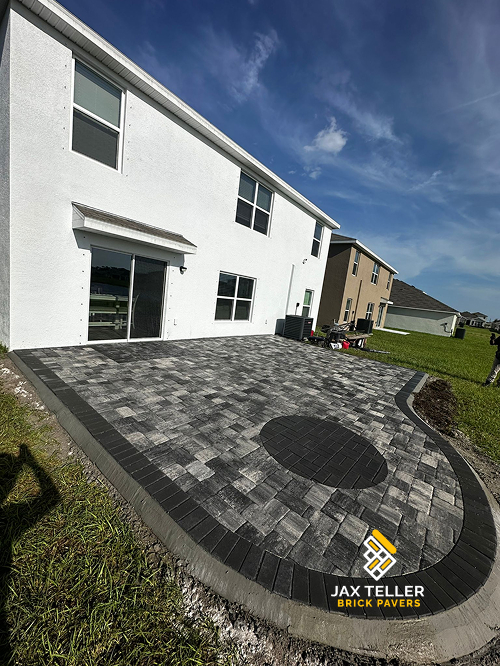
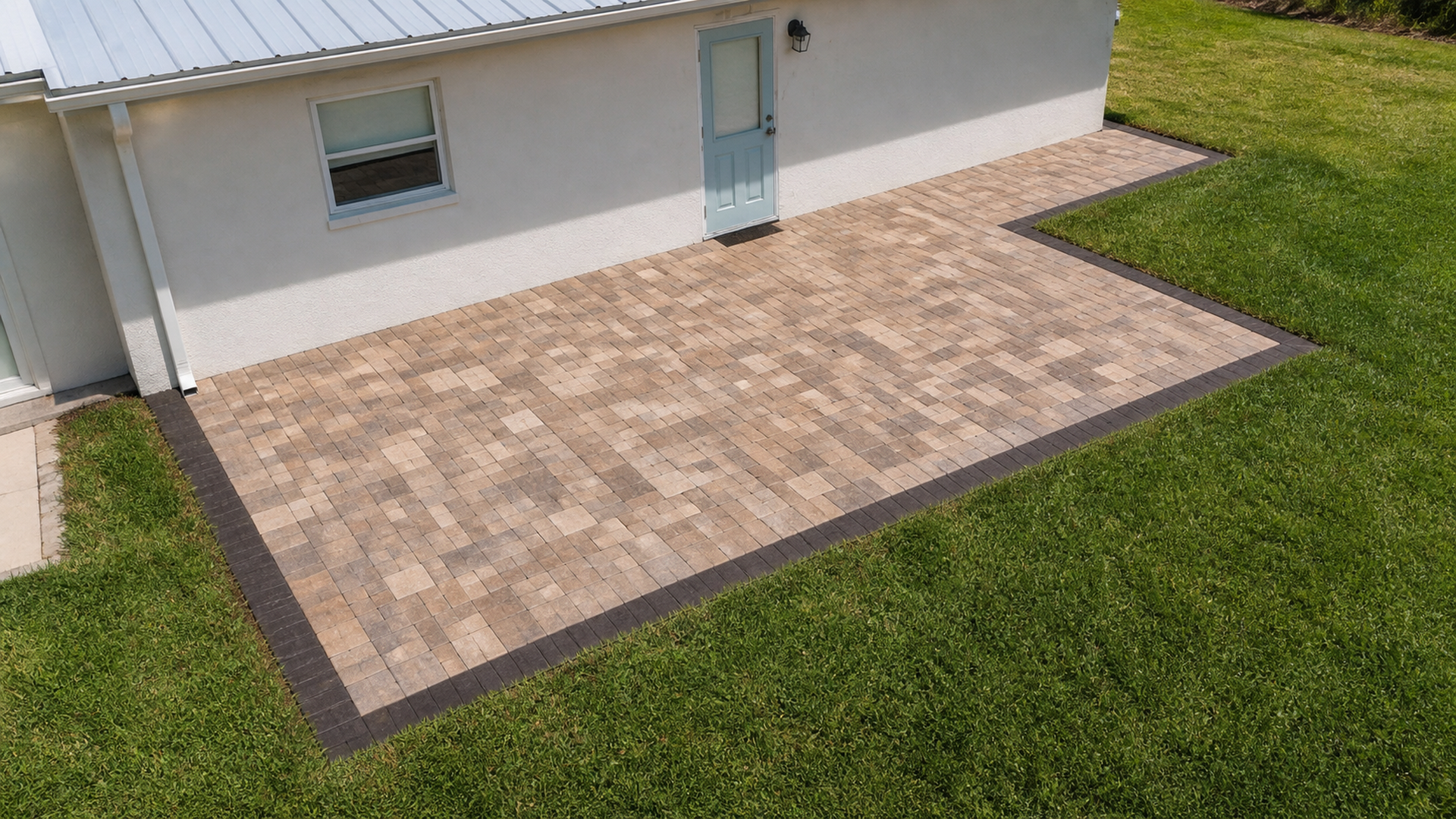
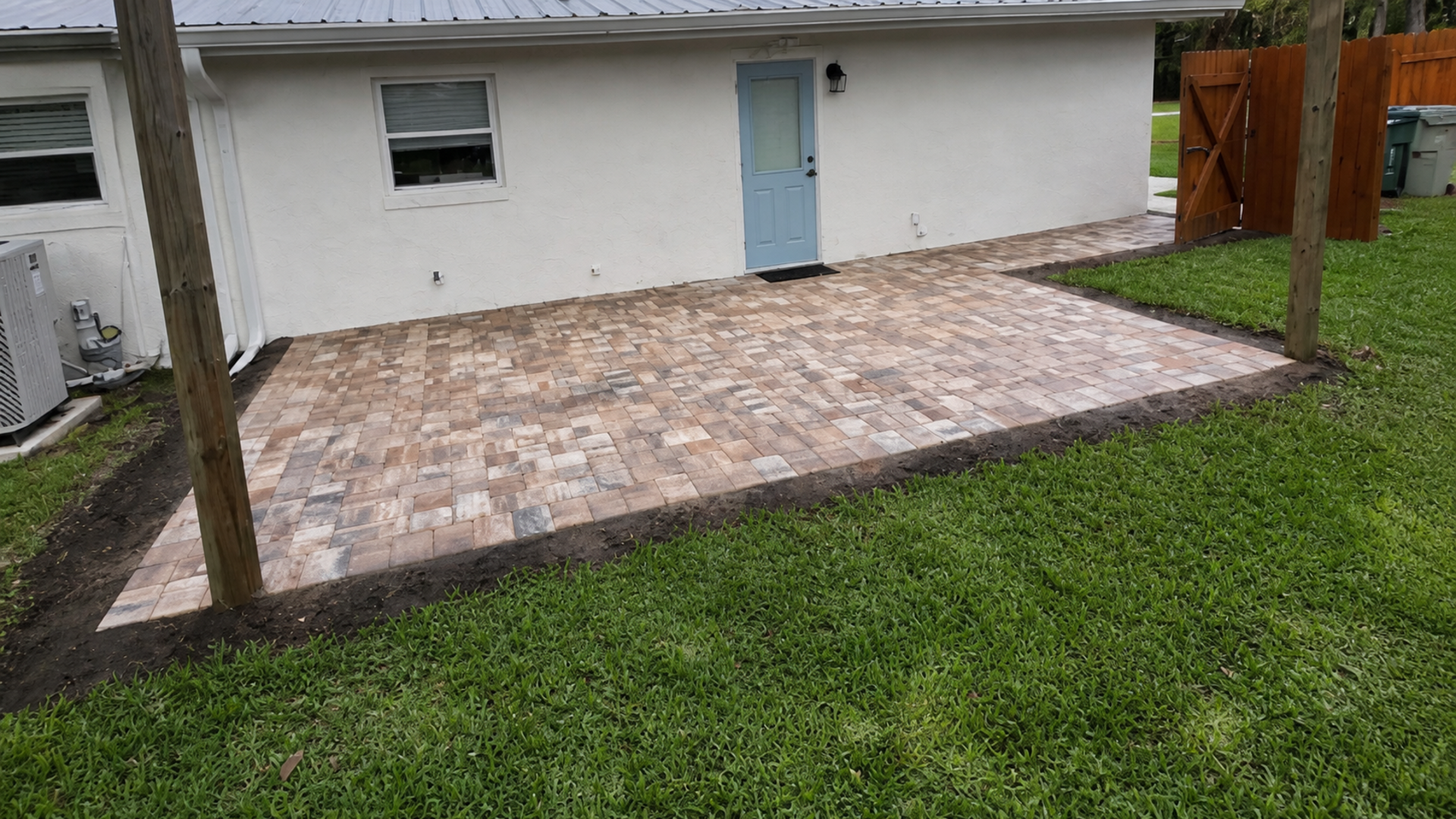
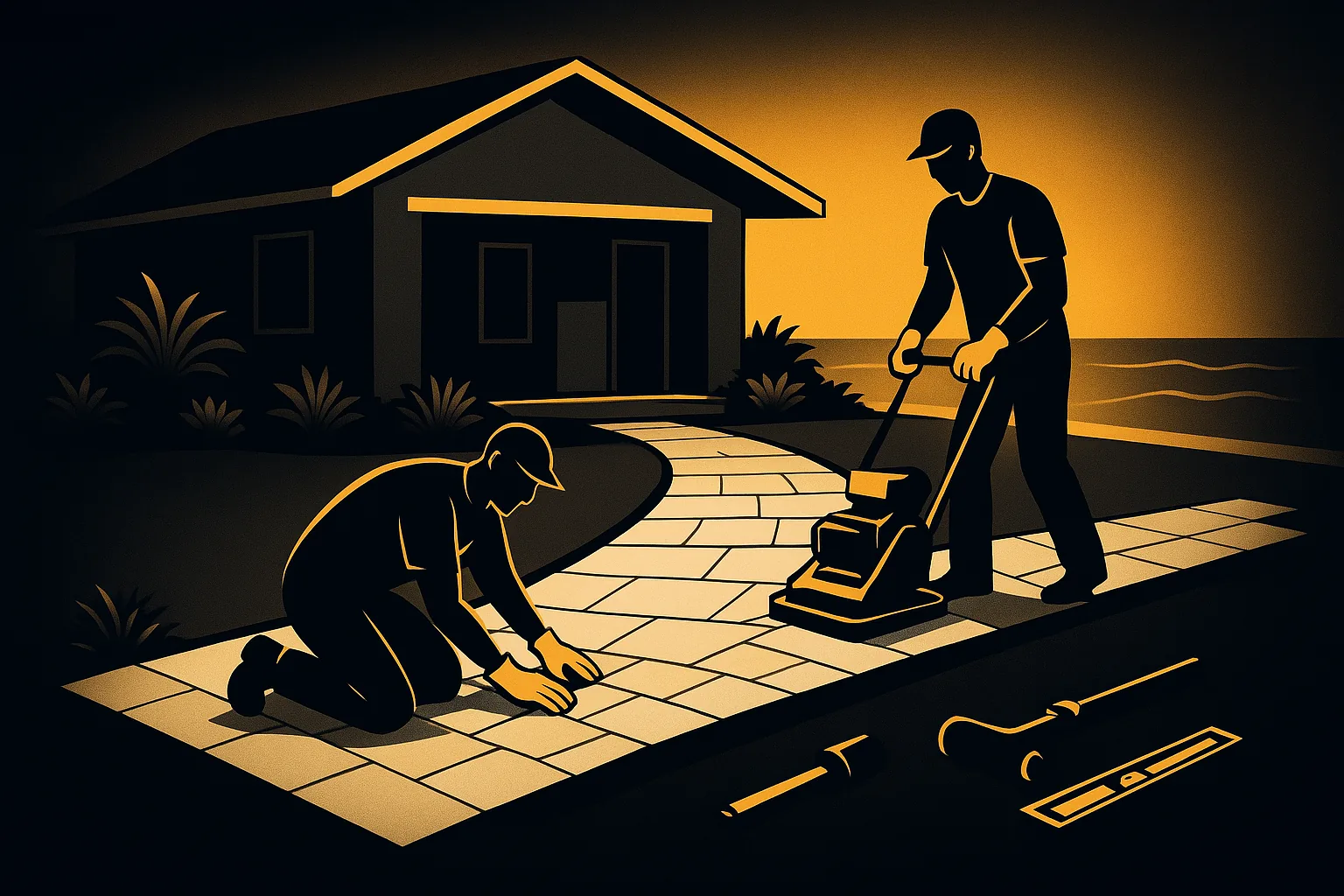
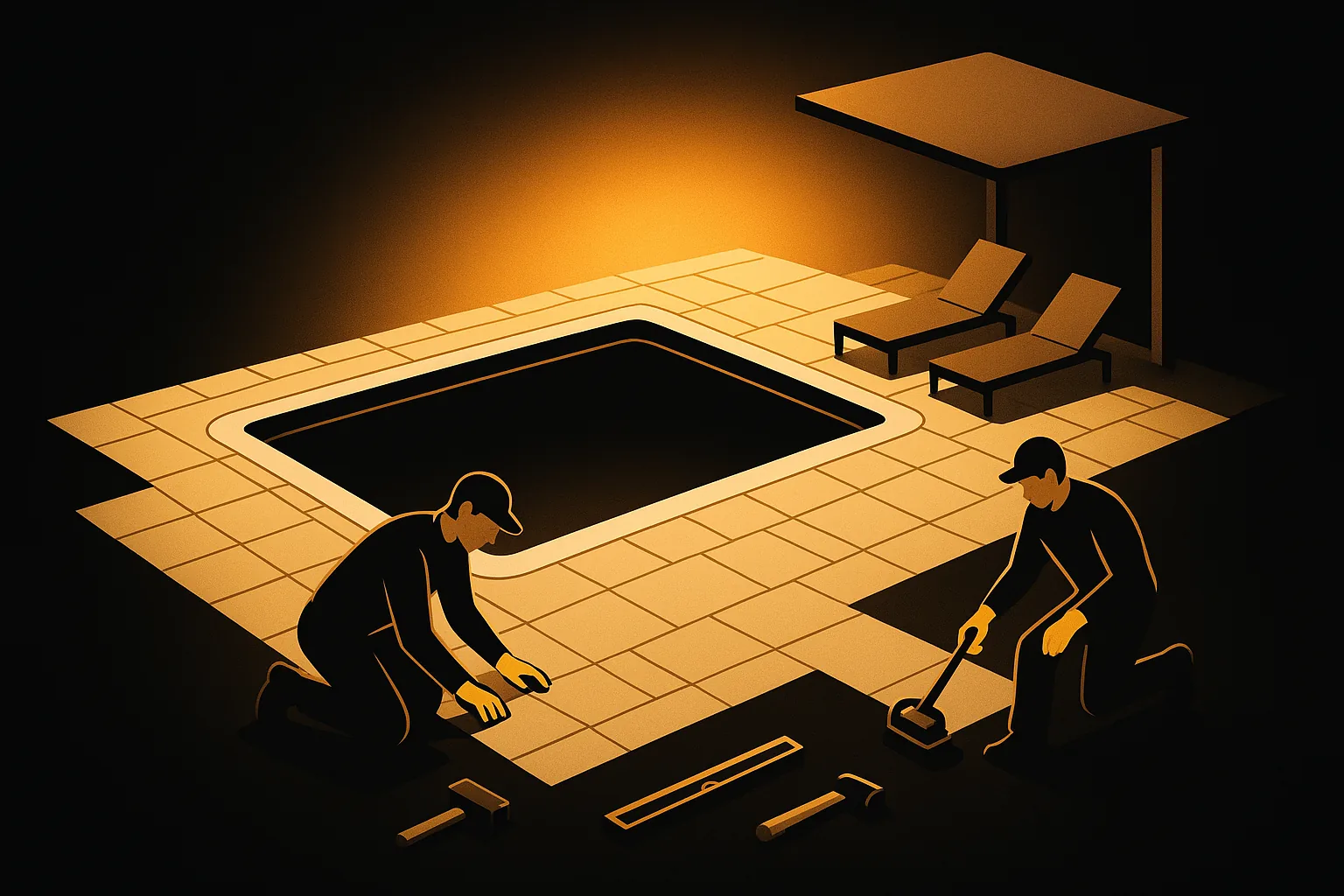
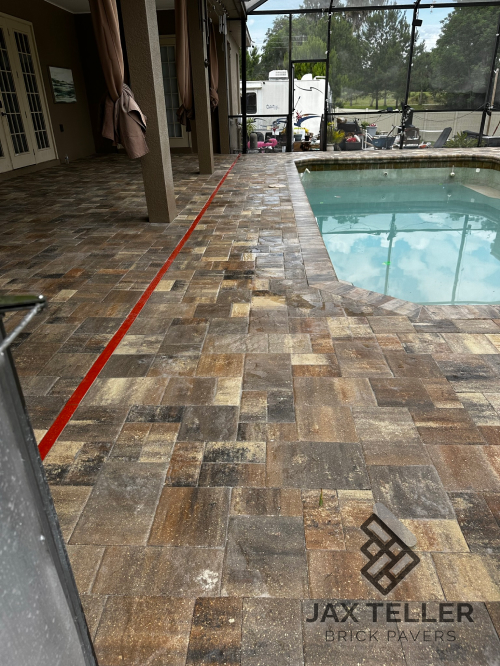
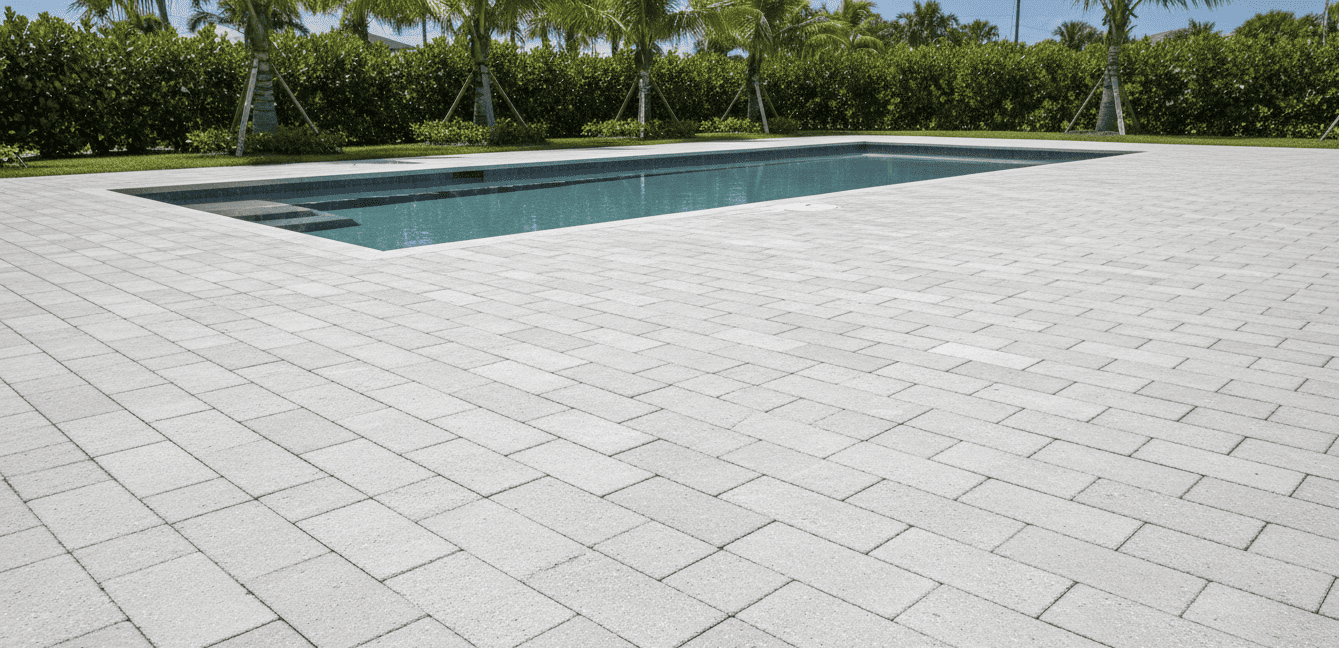
Recent pool deck paver installation completed by JaxTeller Brick Pavers in Florida.
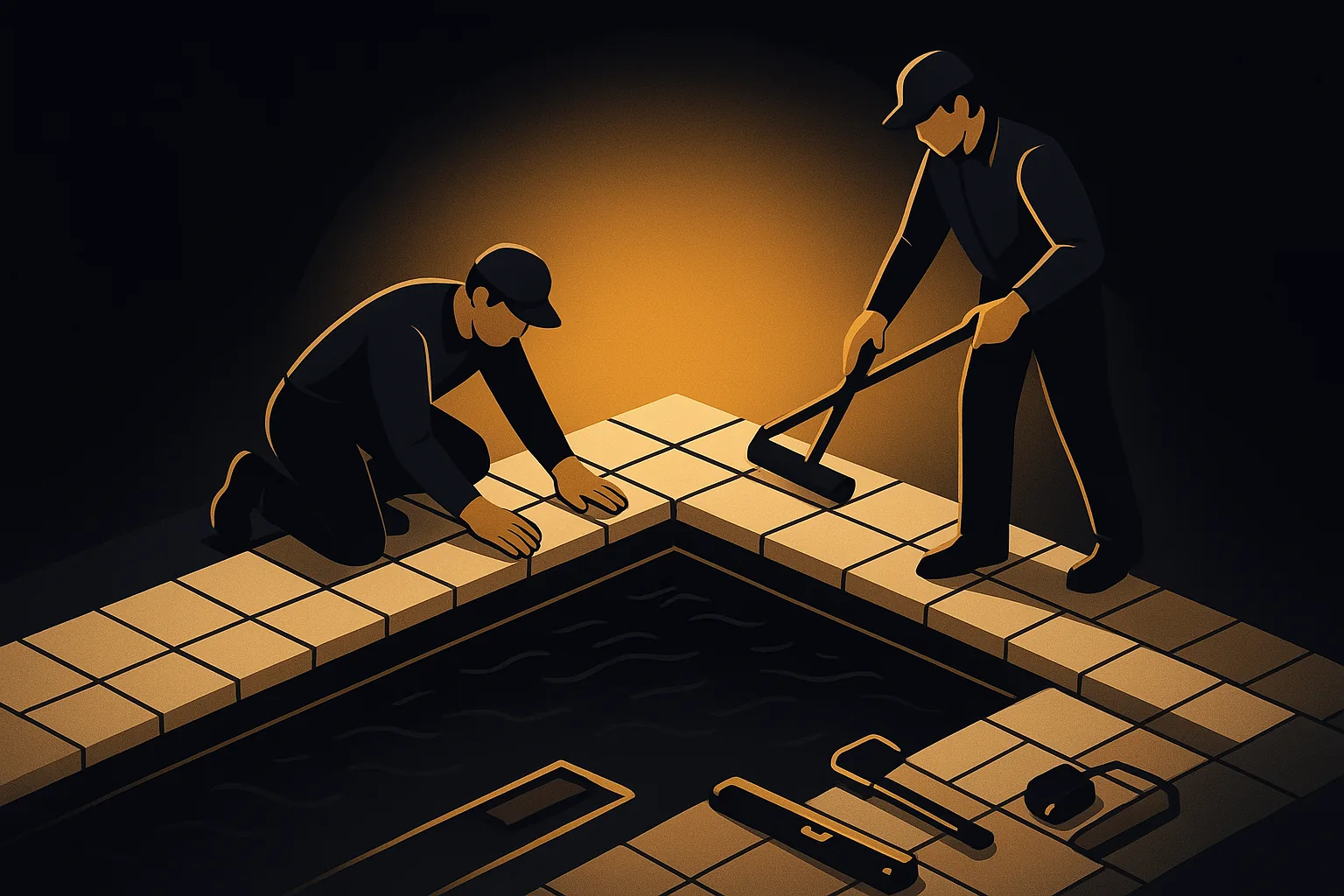
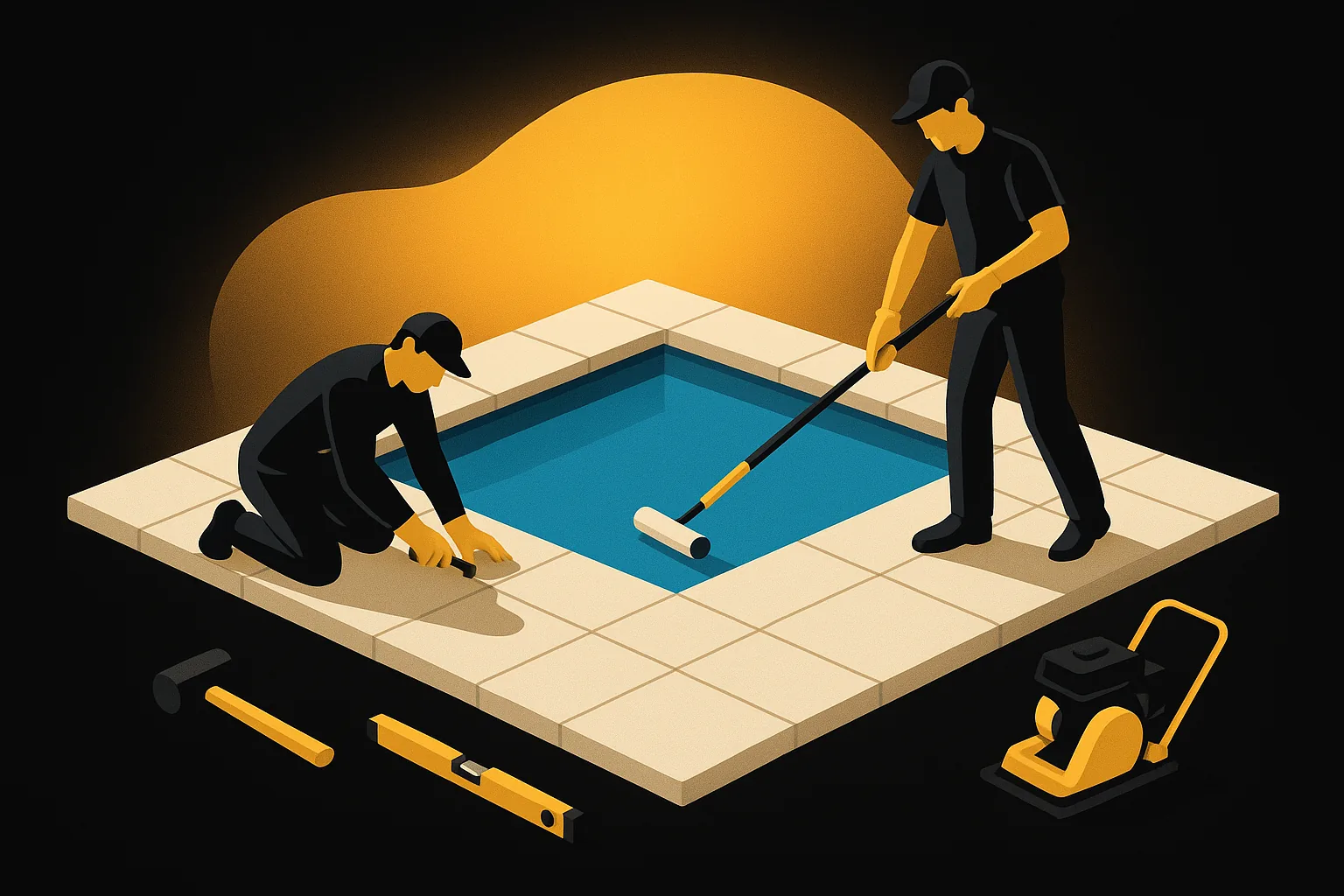
This project required precise base preparation and compaction to support constant moisture exposure, controlled slope grading for heavy Florida rain, accurate coping alignment, reinforced edge restraints to prevent movement, and long-term structural stability around the pool perimeter.
Long-Term Value of Paver Pool Decks
A professionally installed paver pool deck:
- Improves safety and comfort
- Enhances backyard aesthetics
- Reduces cracking and maintenance
- Increases property value
- Performs reliably in Florida climate
Pool deck upgrades offer strong lifestyle and resale benefits.
Explore More Poolside Projects and Standards
For more projects completed in Florida, visit:
https://jaxtellerbrickpavers.com/projects
To review official installation standards, visit:
https://www.icpi.org/
Conclusion
Pool Deck Paver Design Strategies for Florida Backyards highlight the importance of engineering, material selection, and drainage planning. In Florida’s heat, heavy rain, and moisture-rich environment, pool decks must be designed for performance, not just appearance.
With professional installation, paver pool decks provide a durable, safe, and visually refined outdoor surface built to last.
If you’re planning a pool deck renovation, contact JaxTeller Brick Pavers at +1 407-907-8308 or jaxtellerbrickpavers@gmail.com for a free estimate.