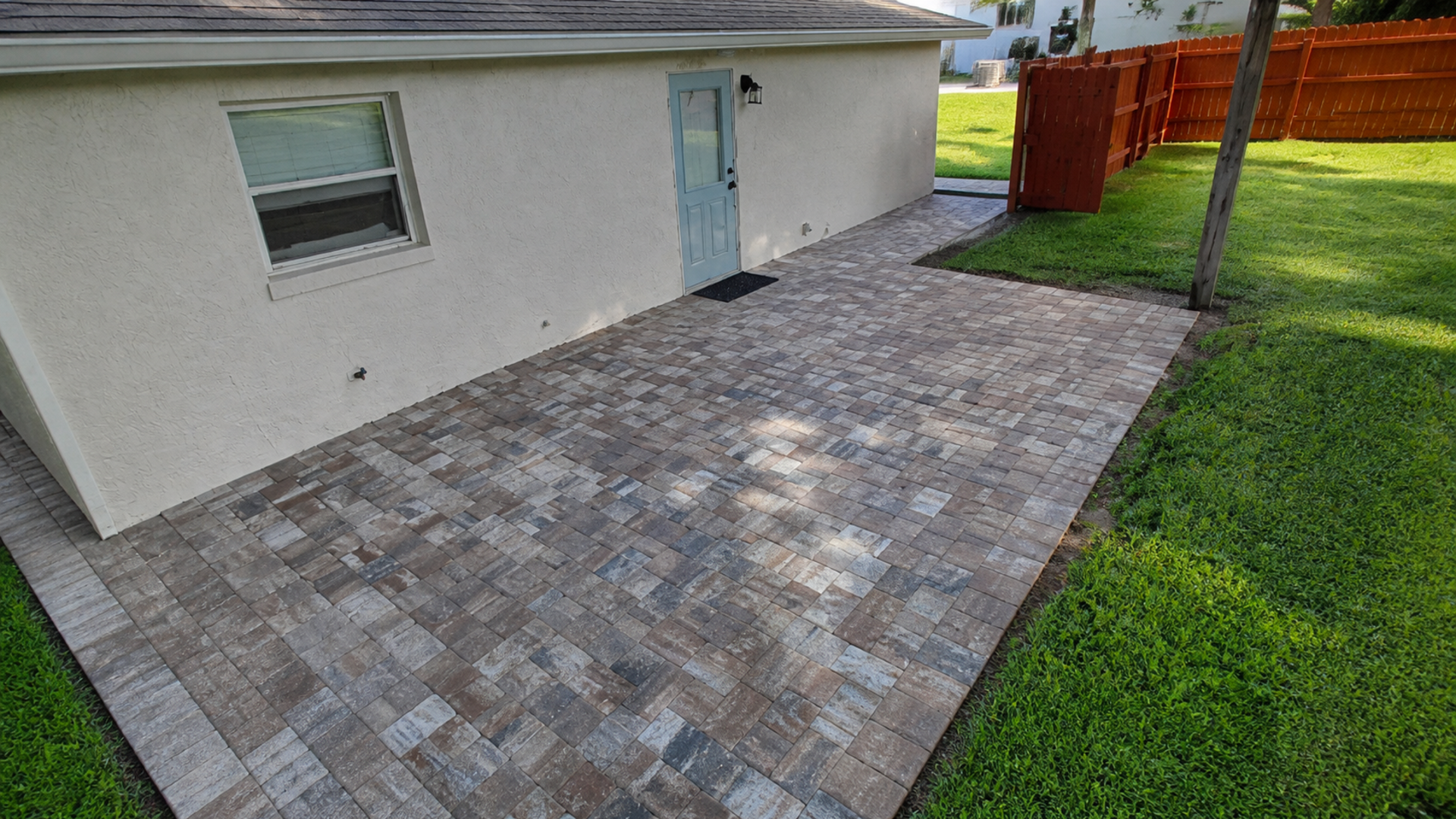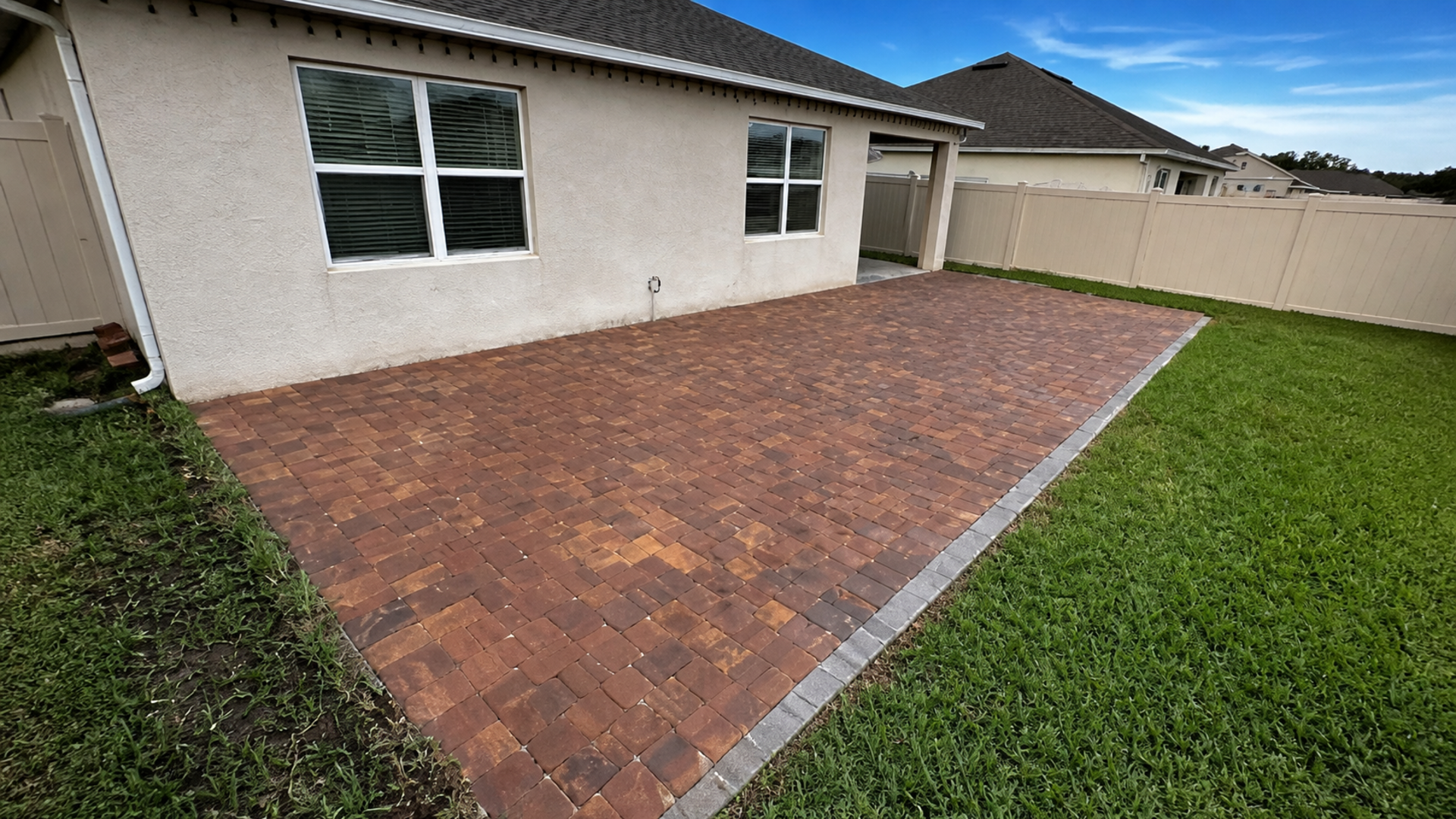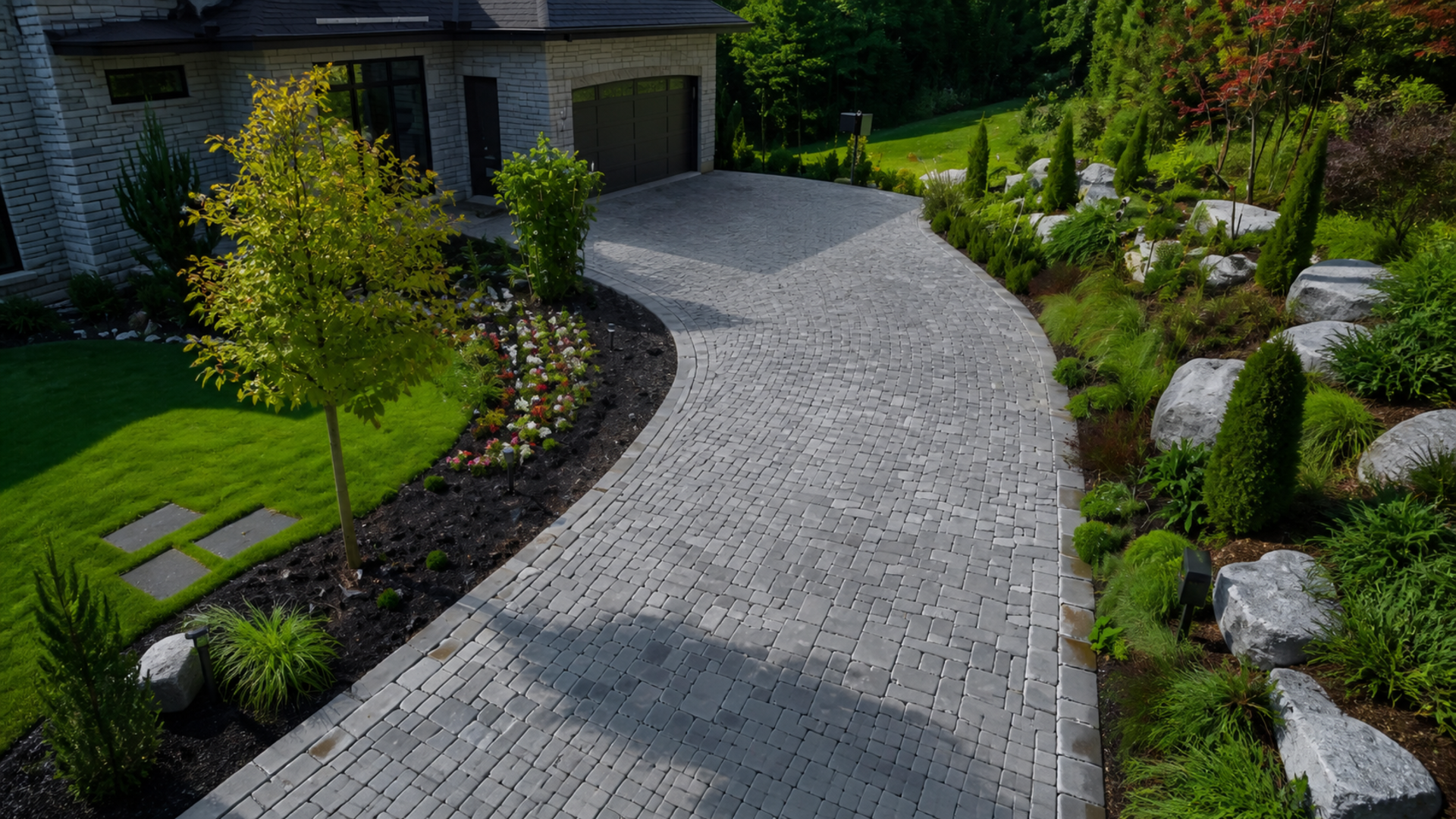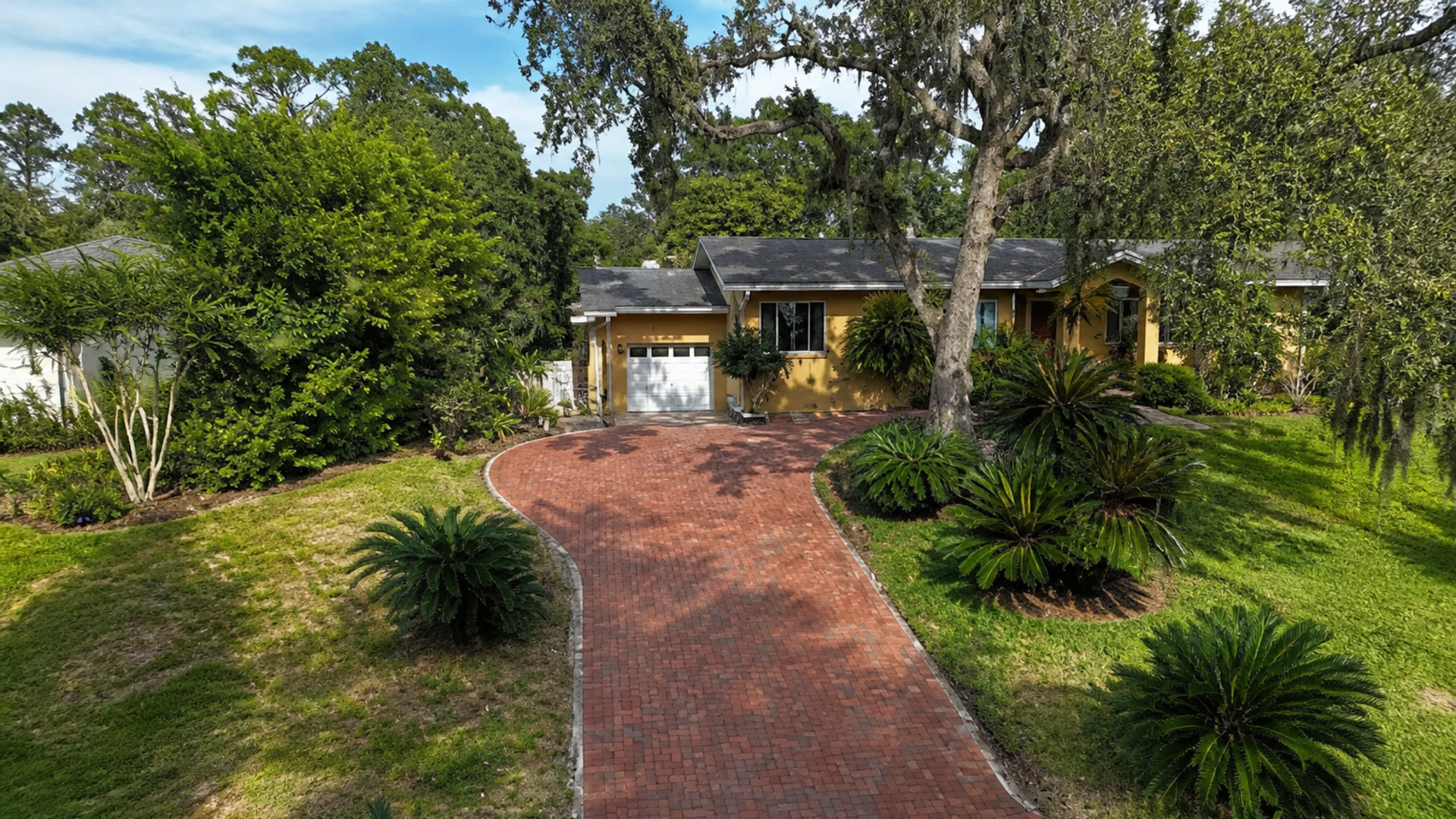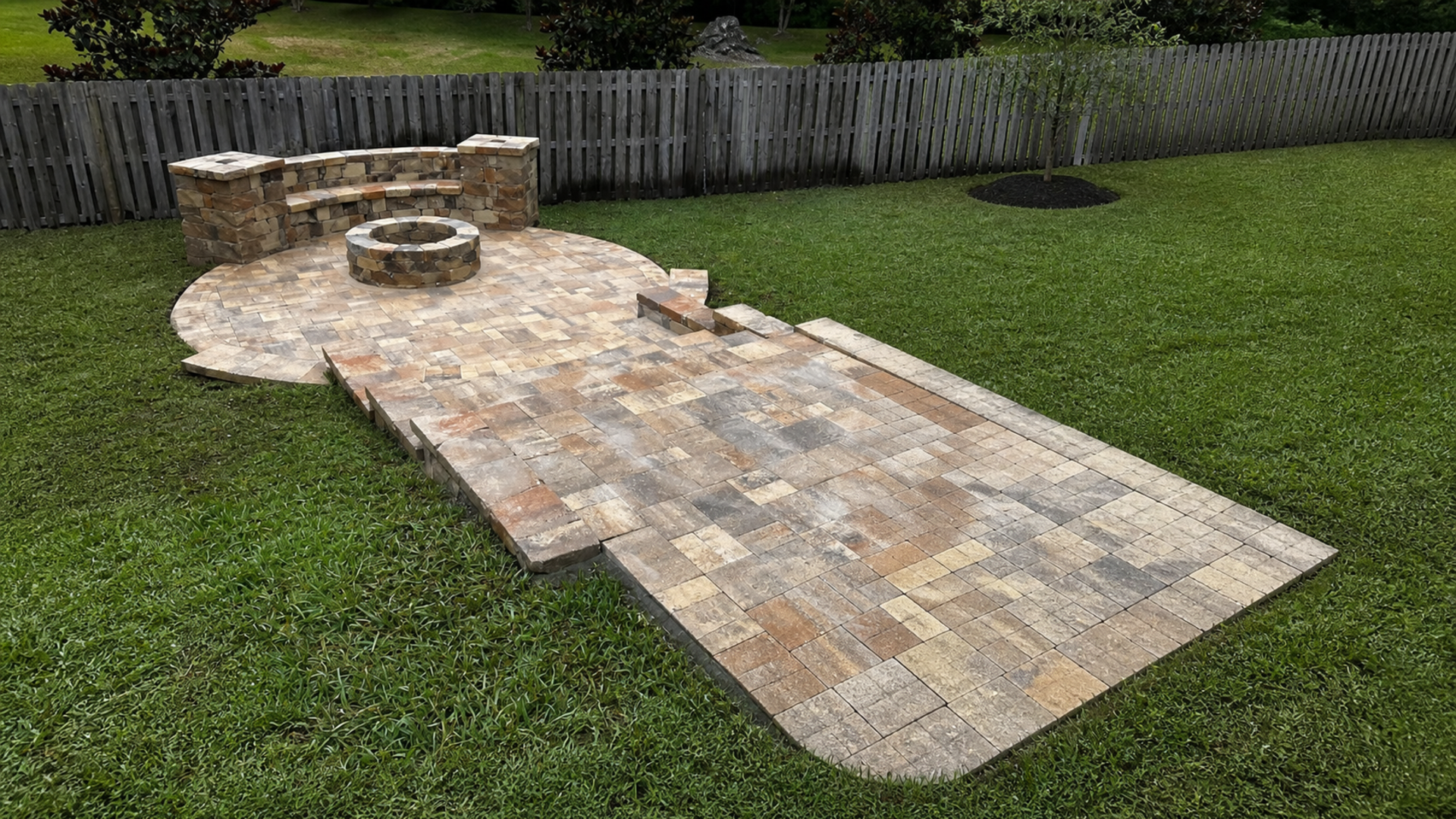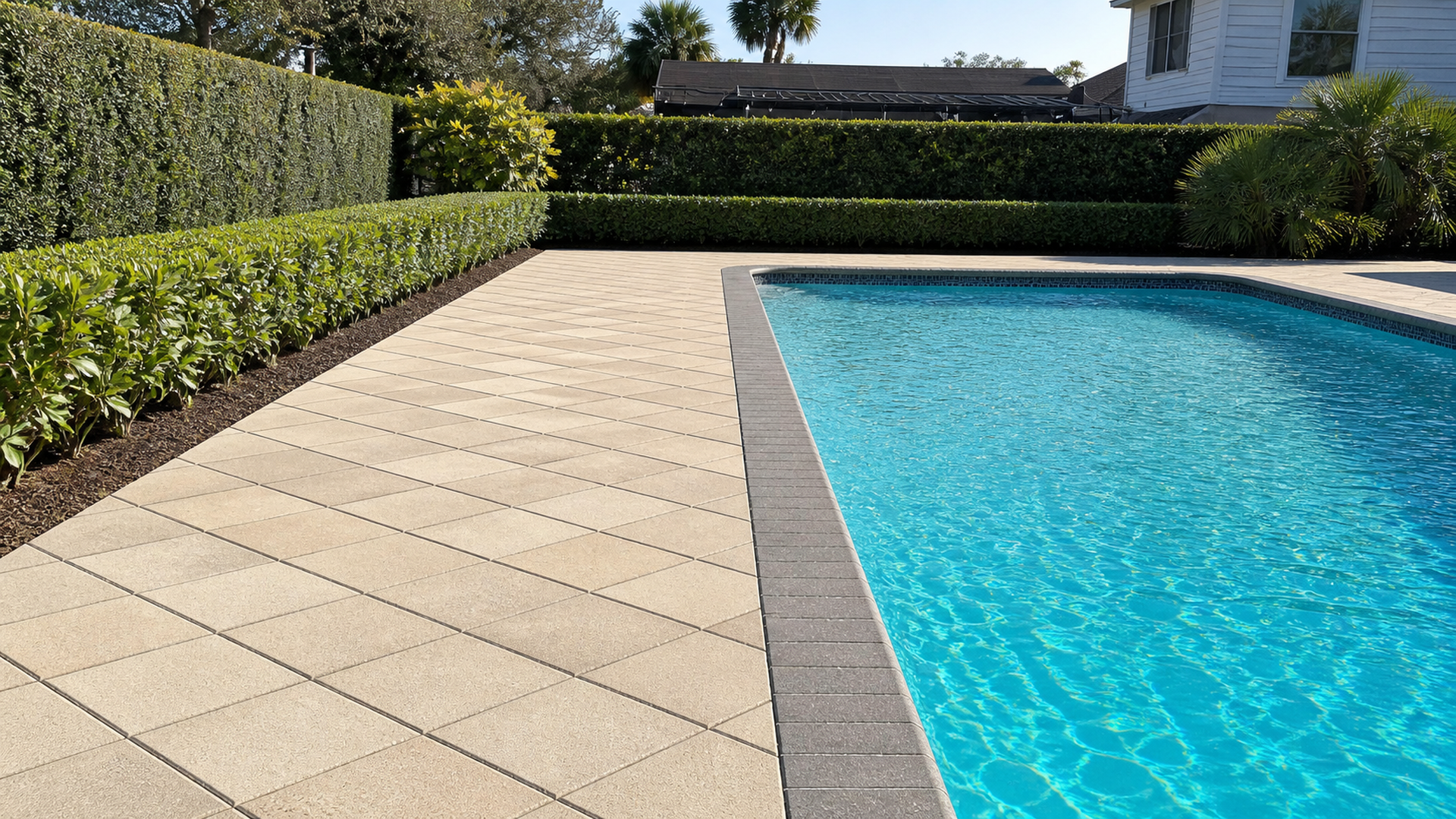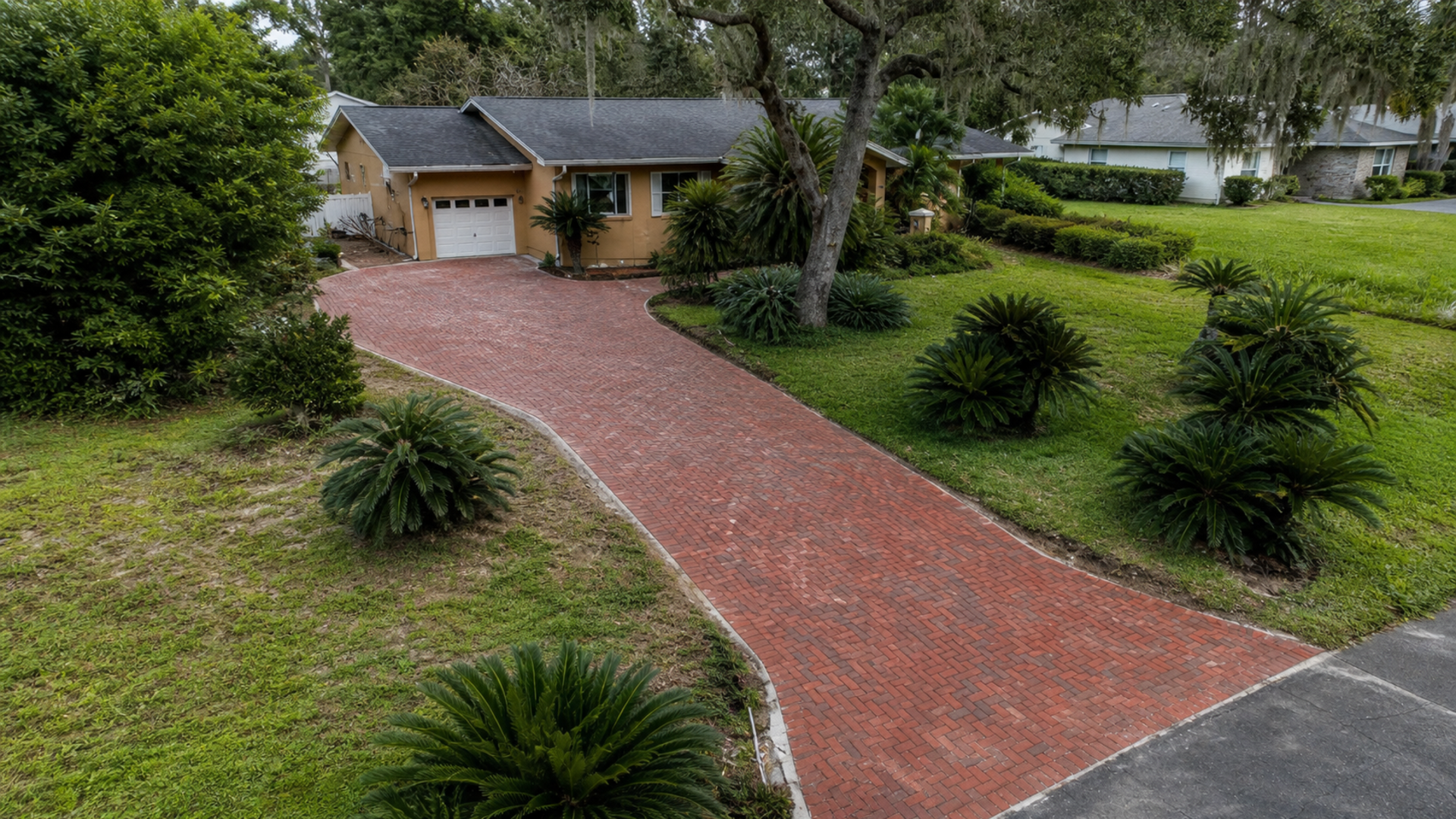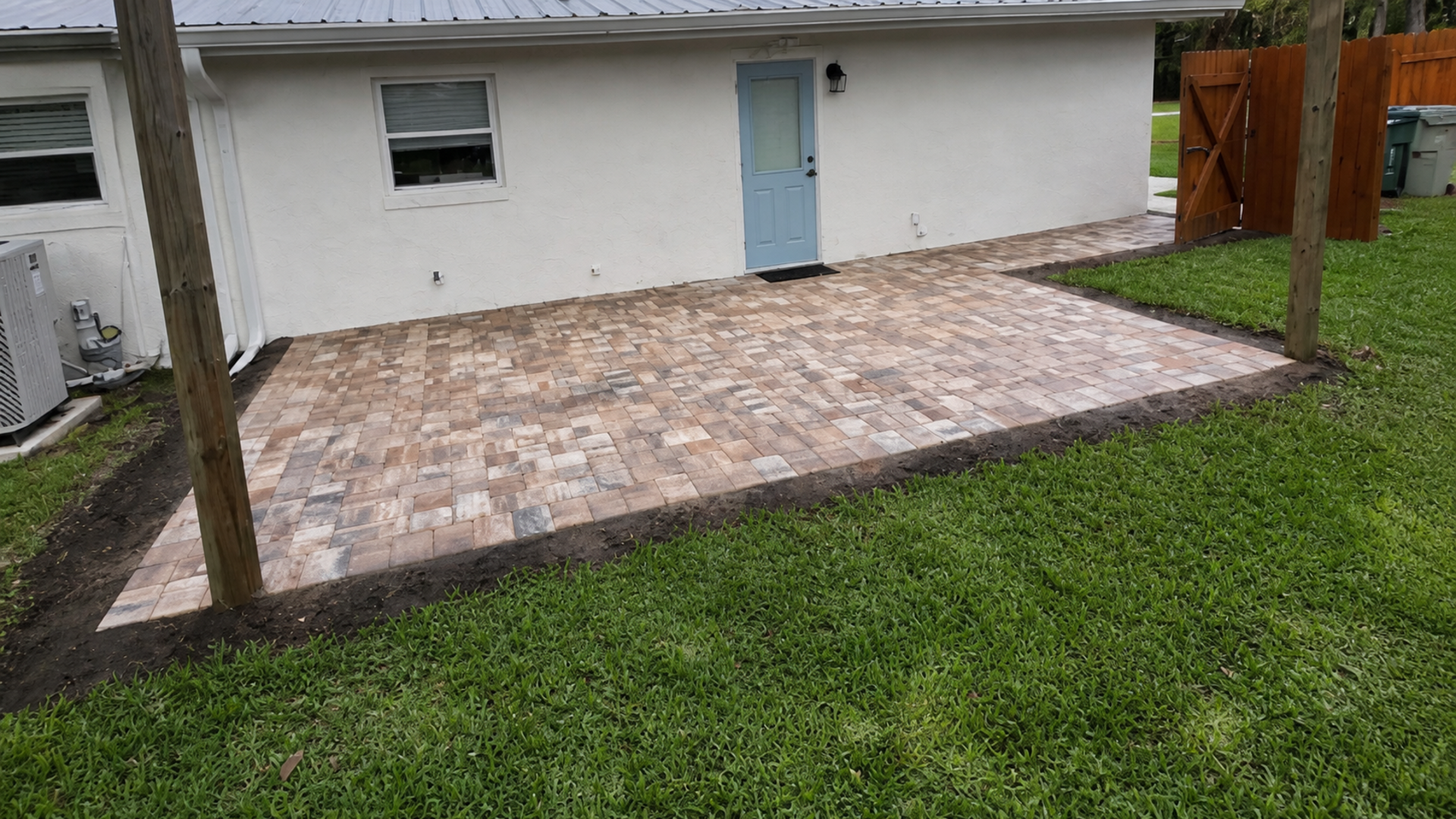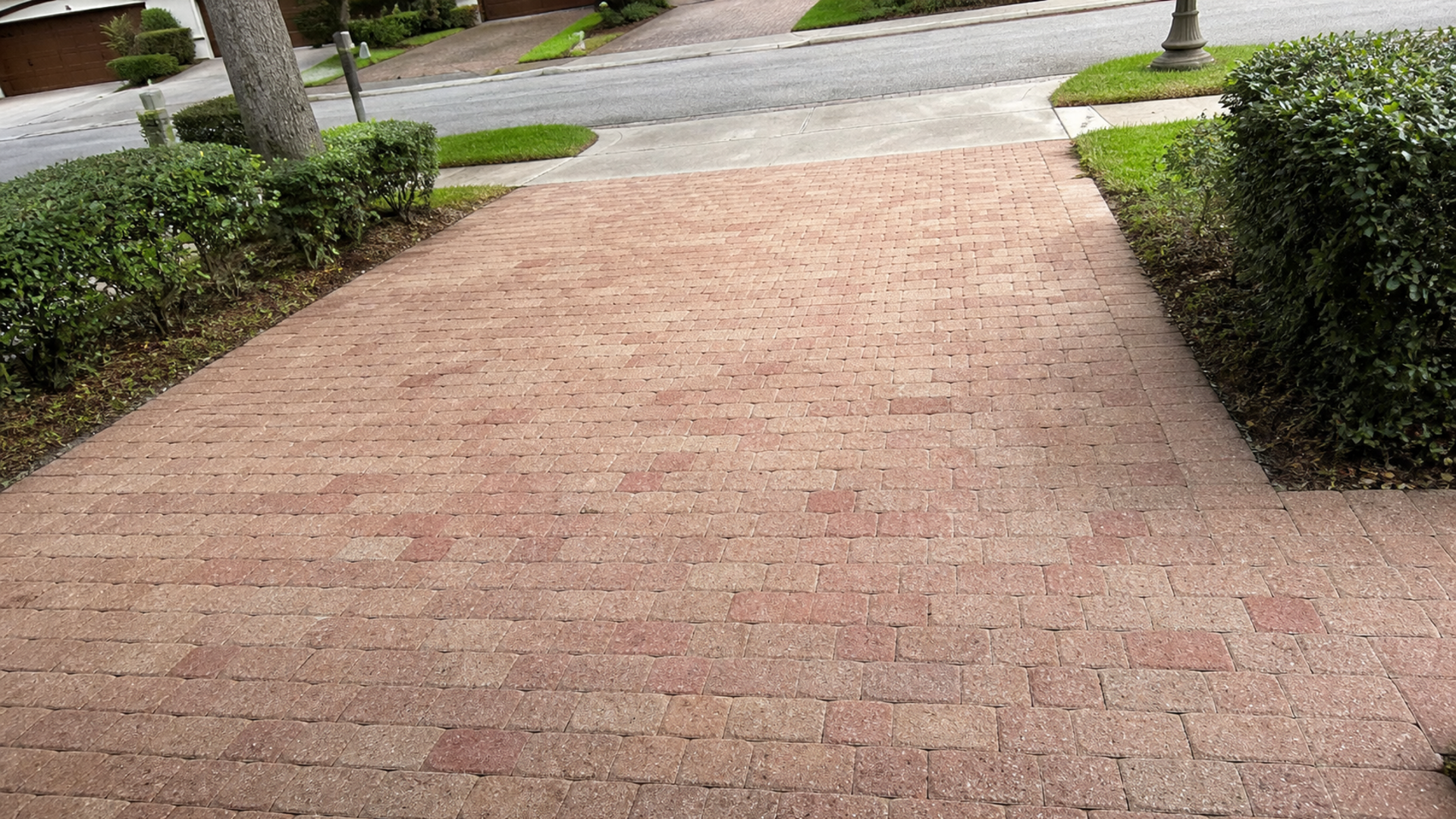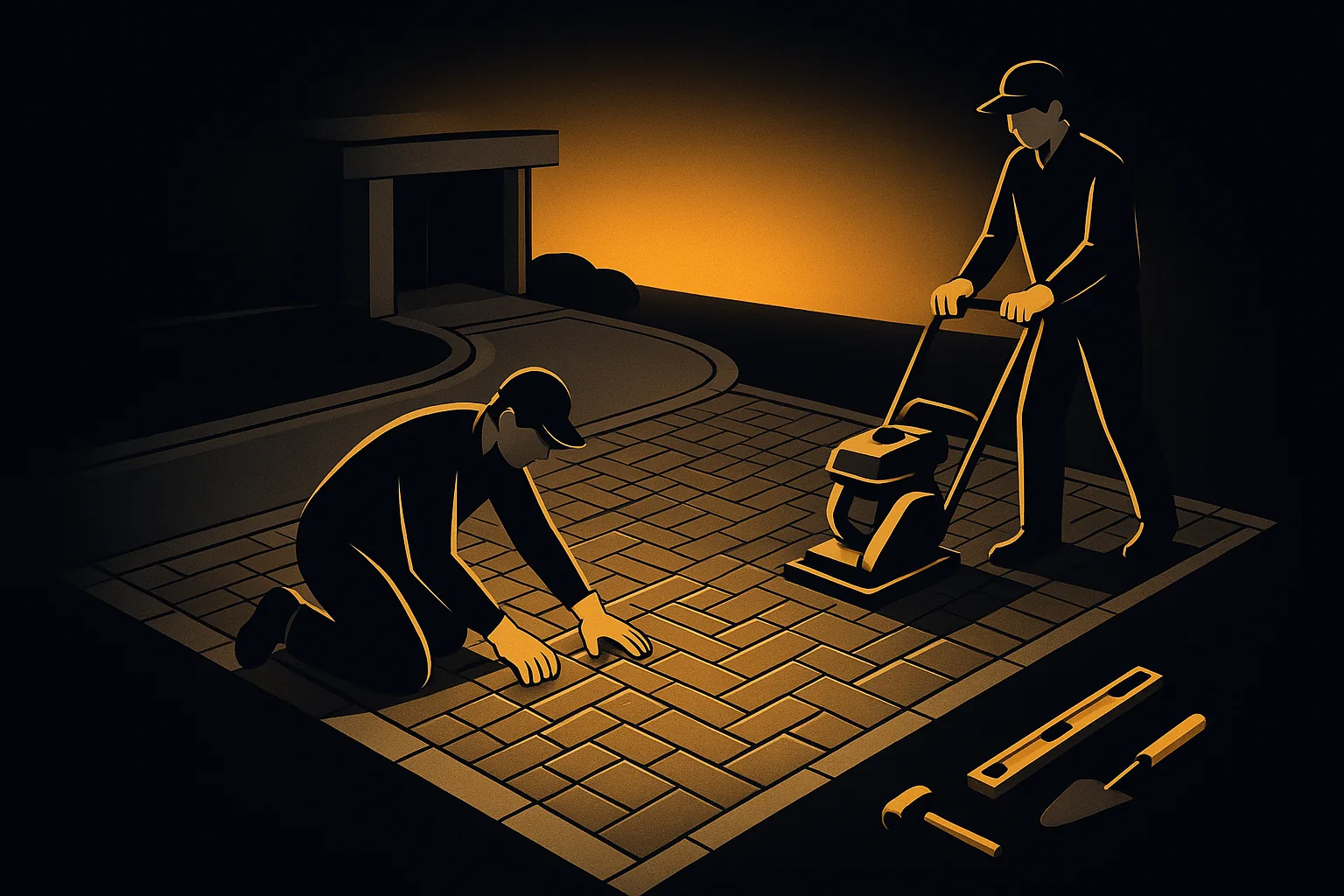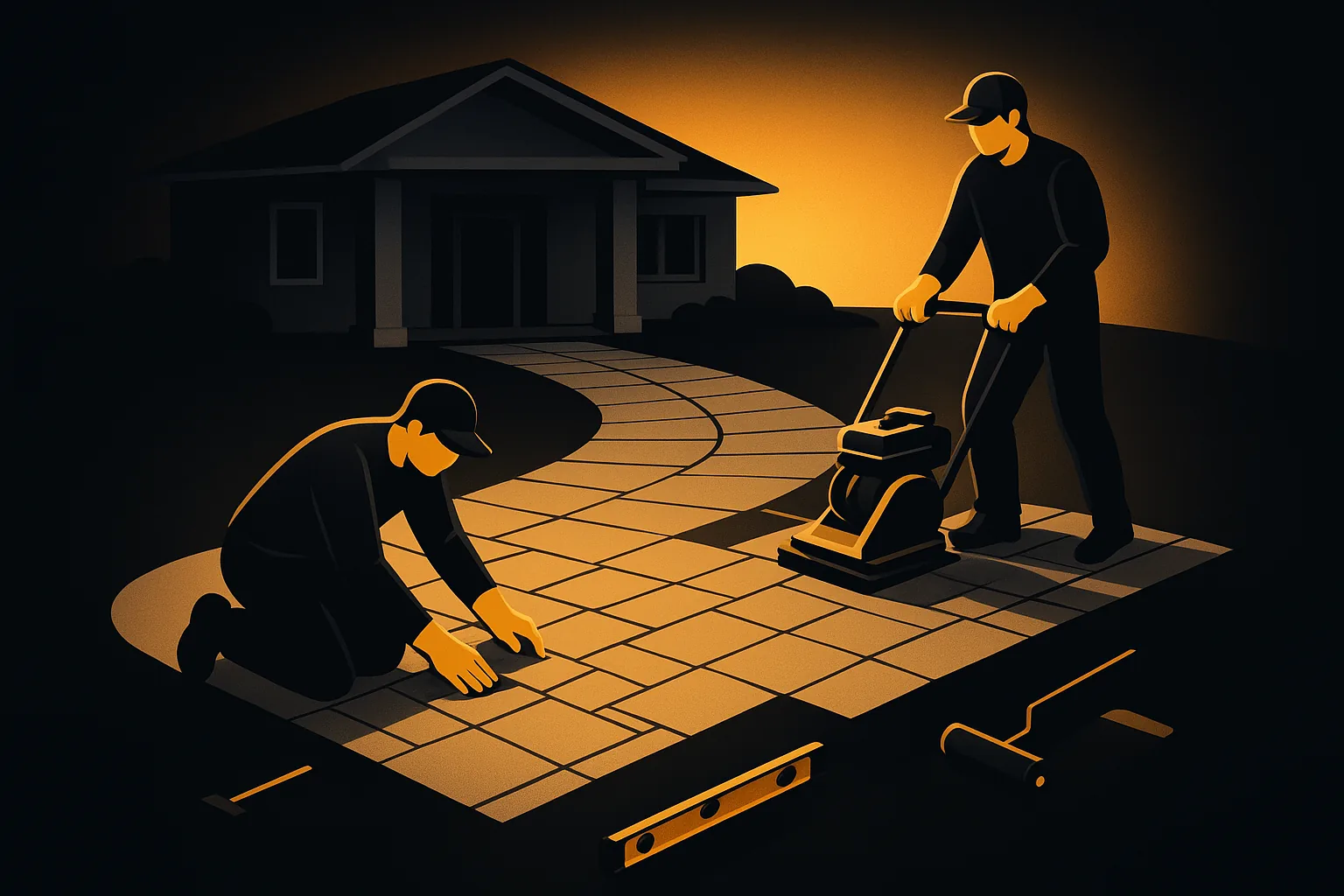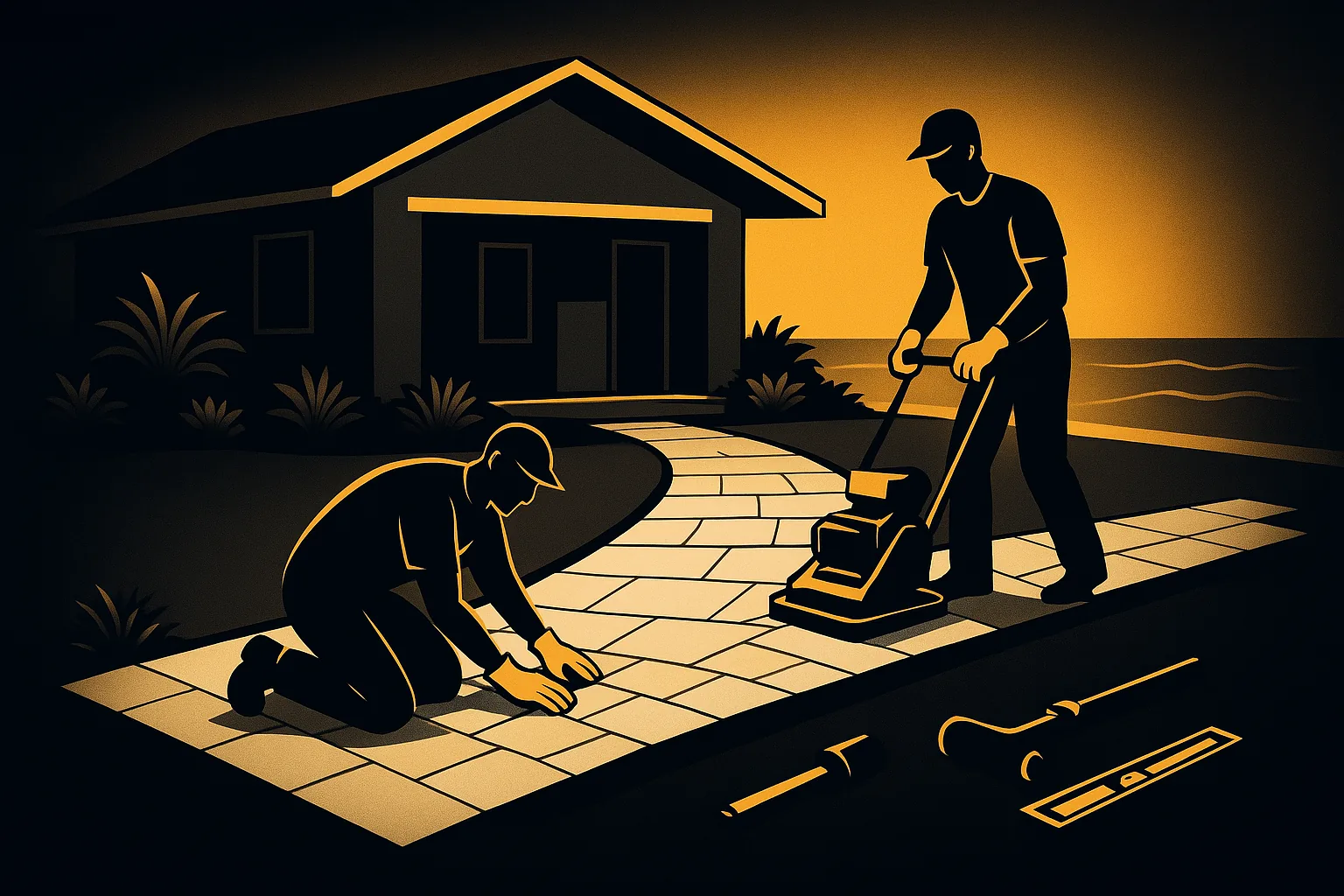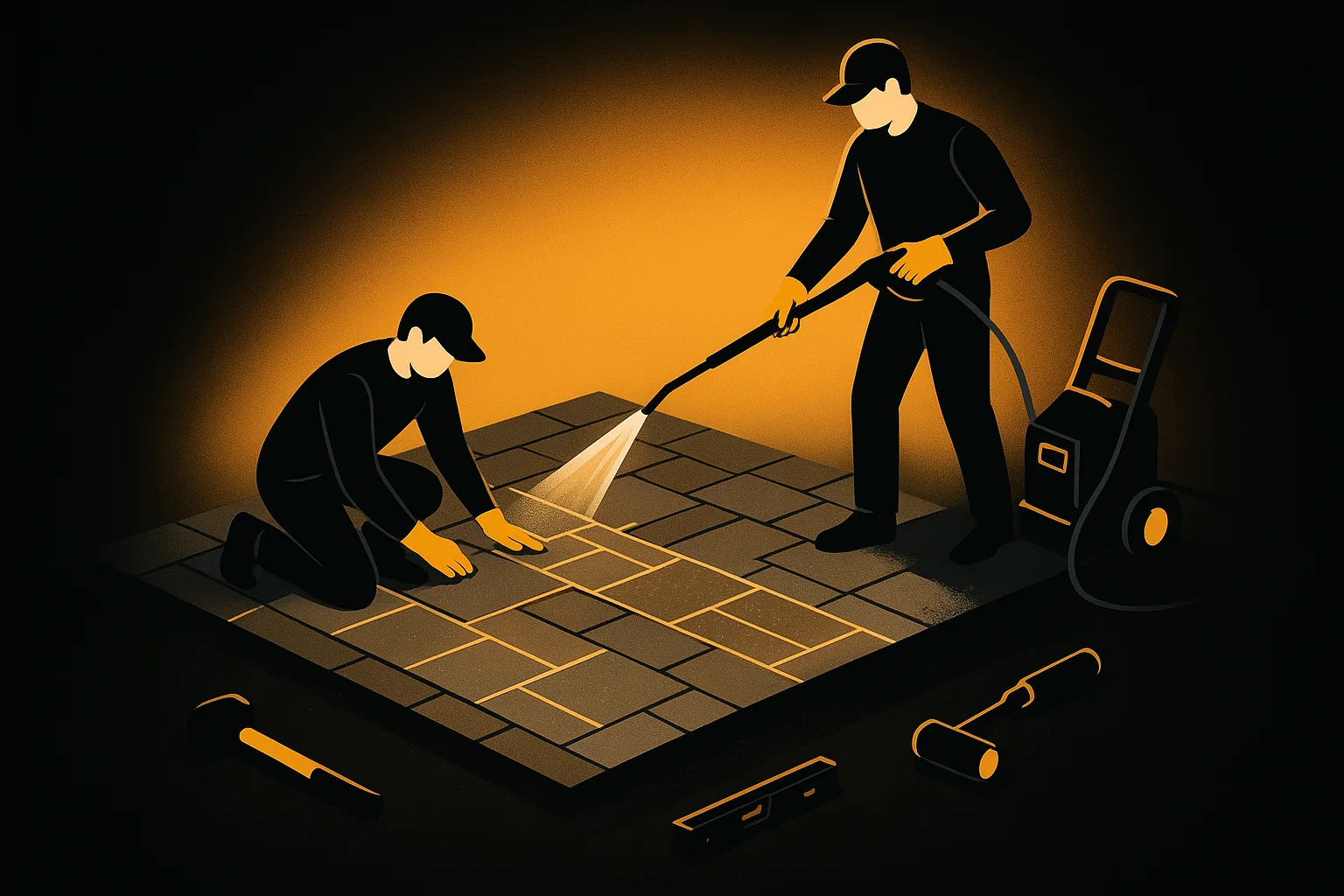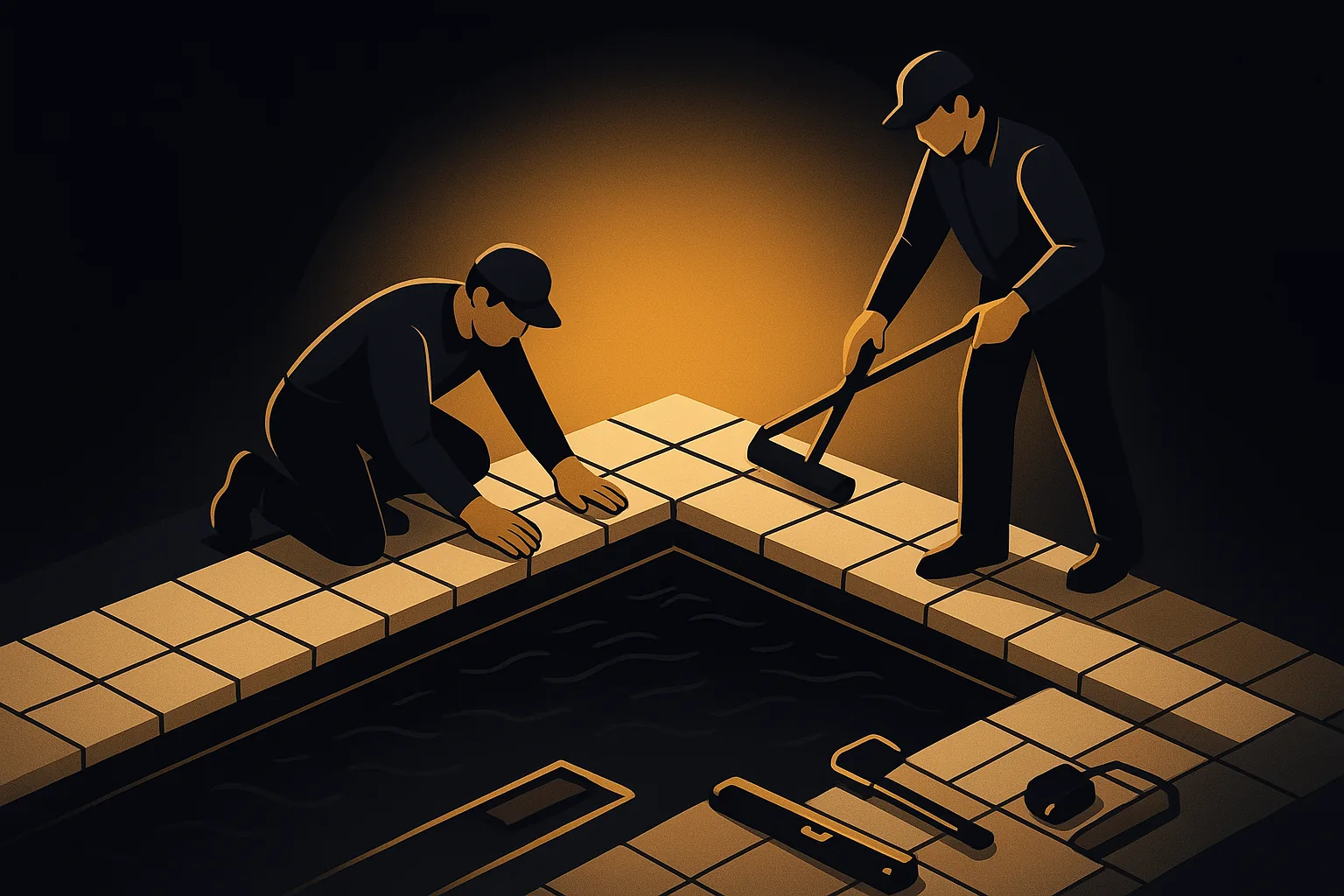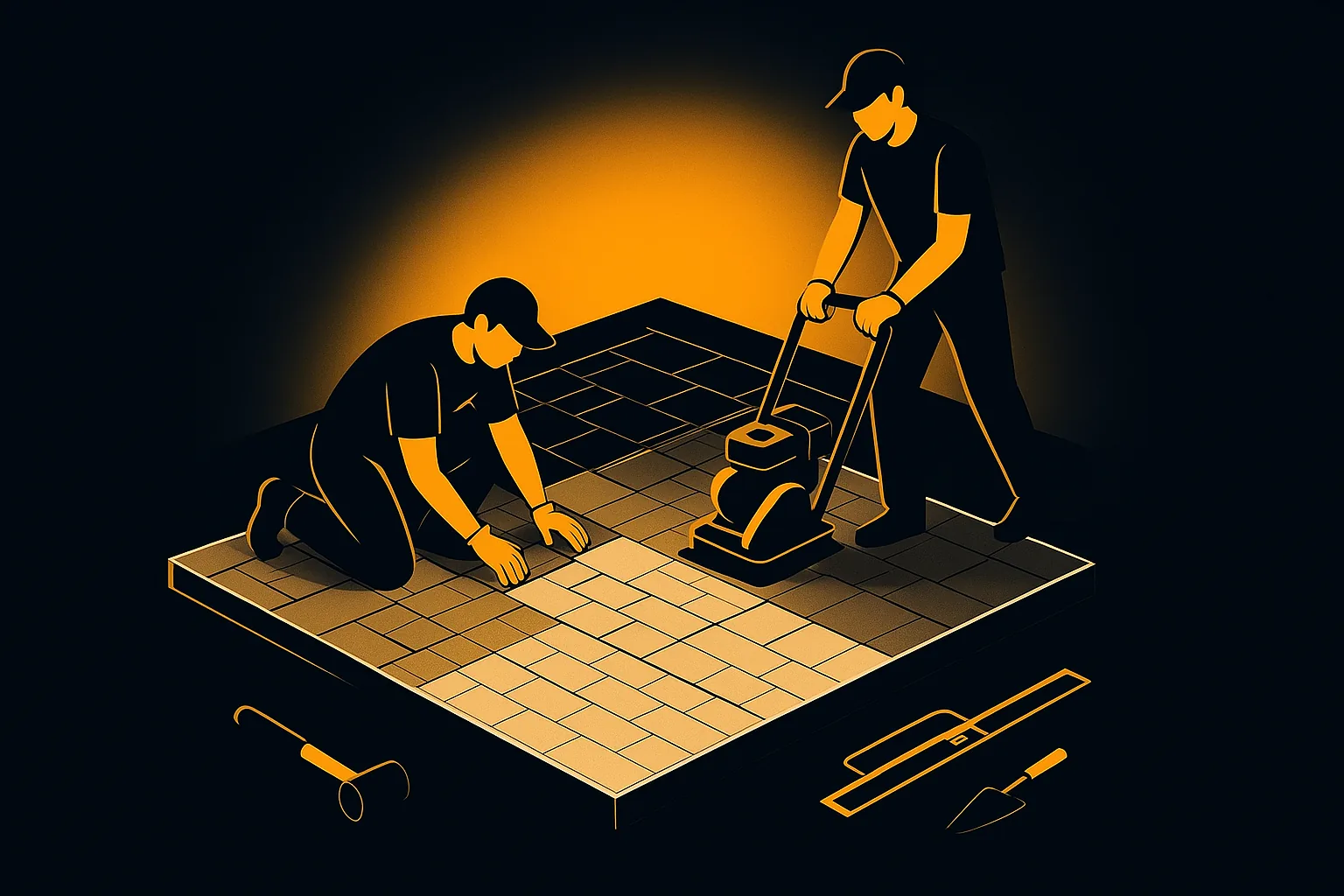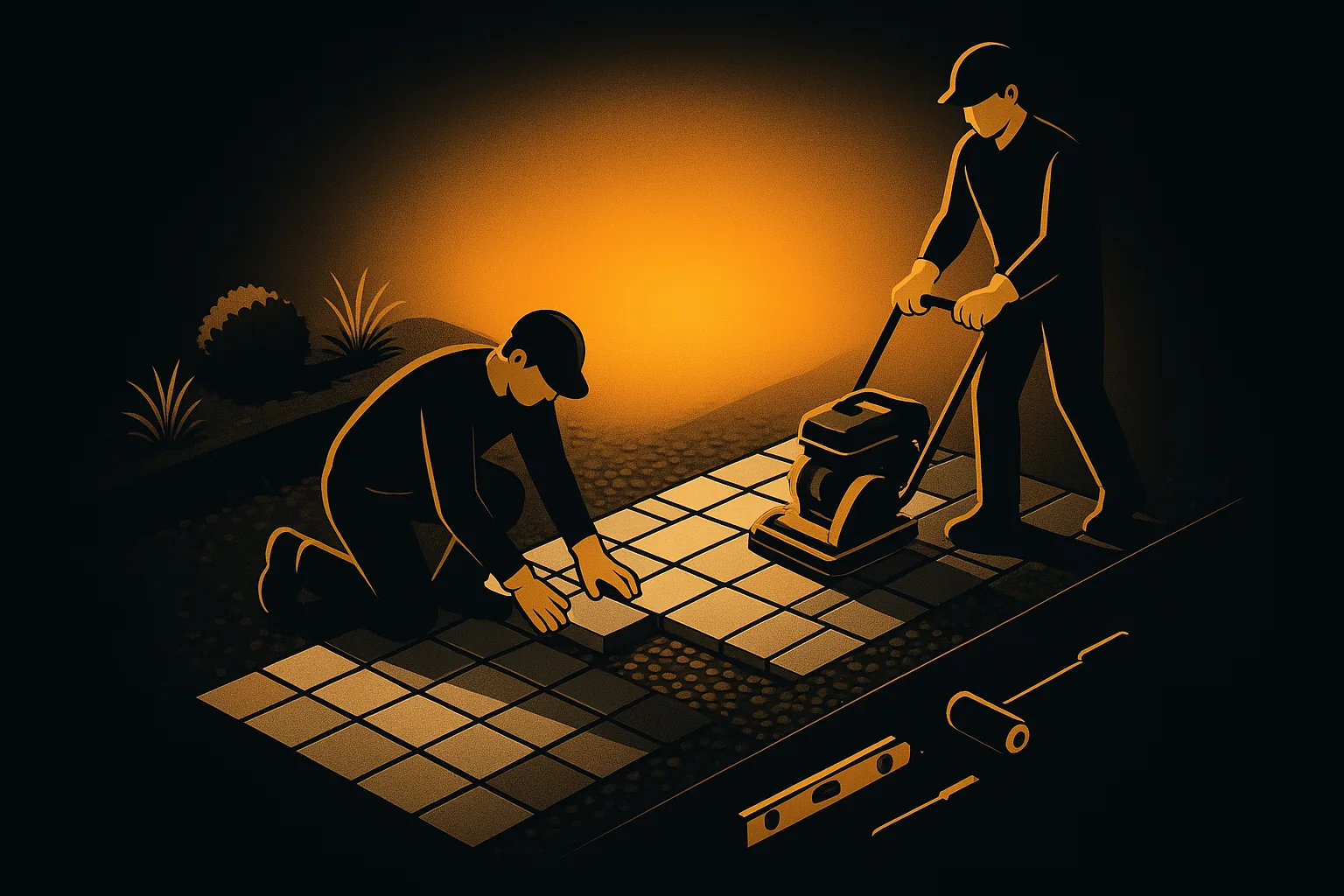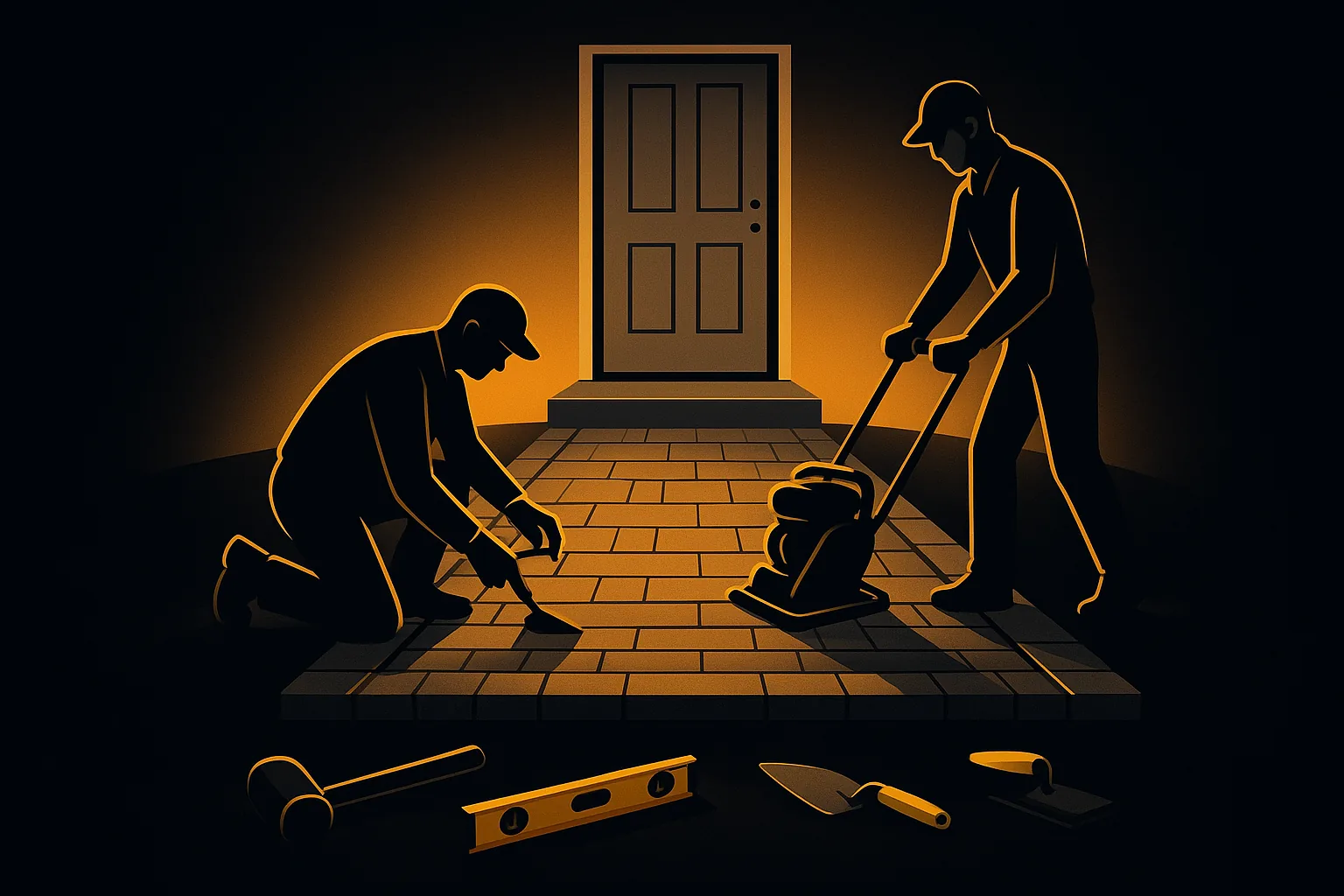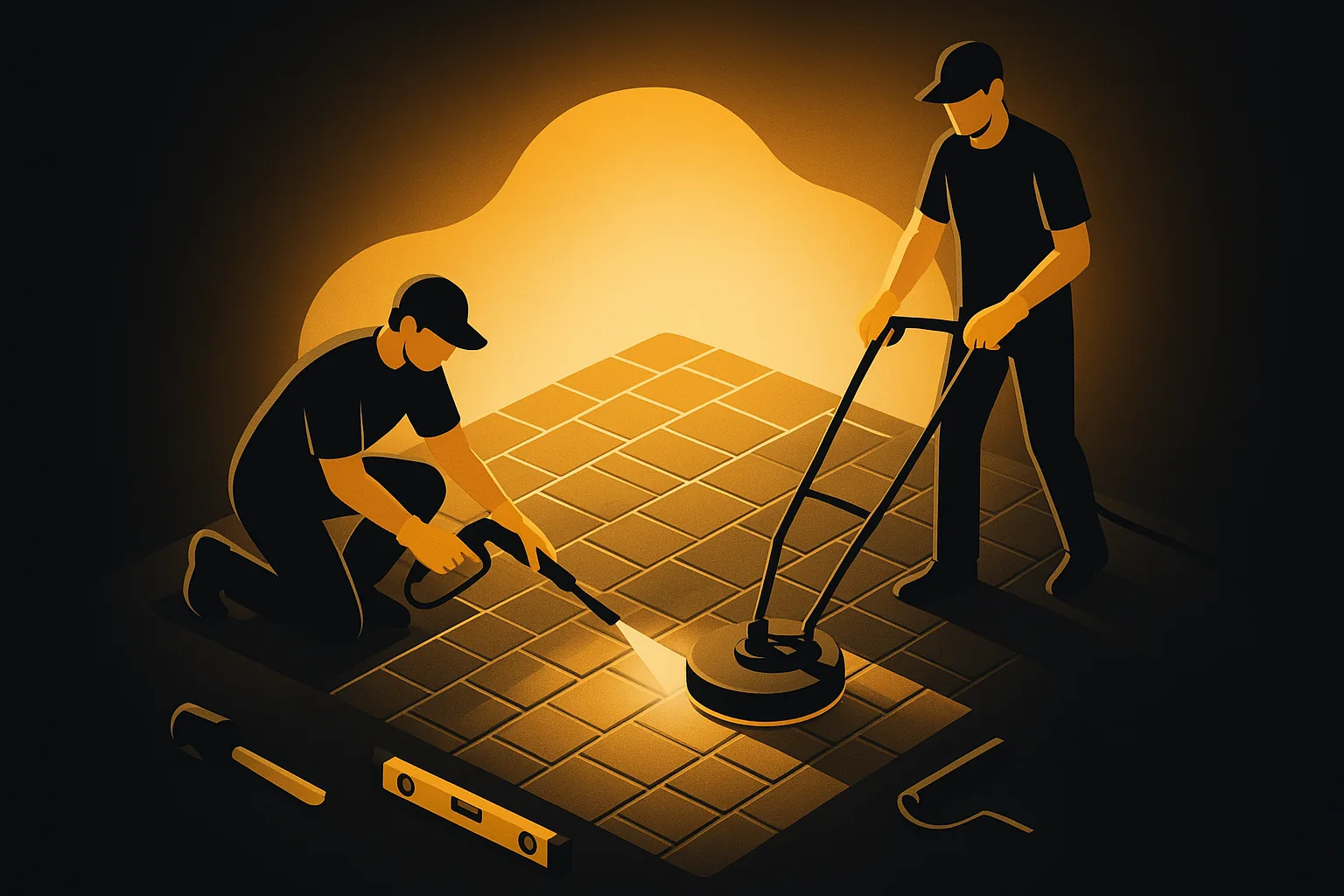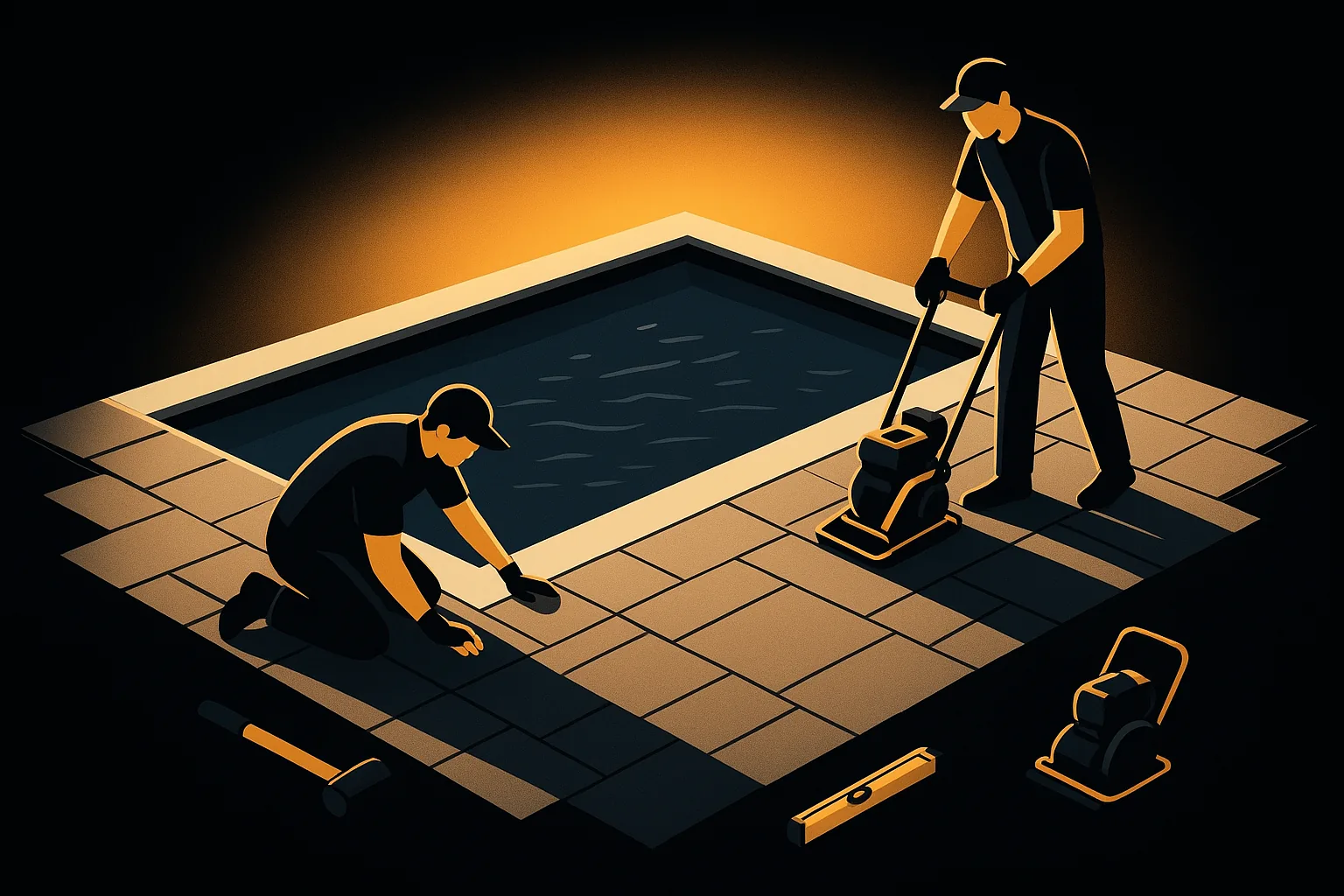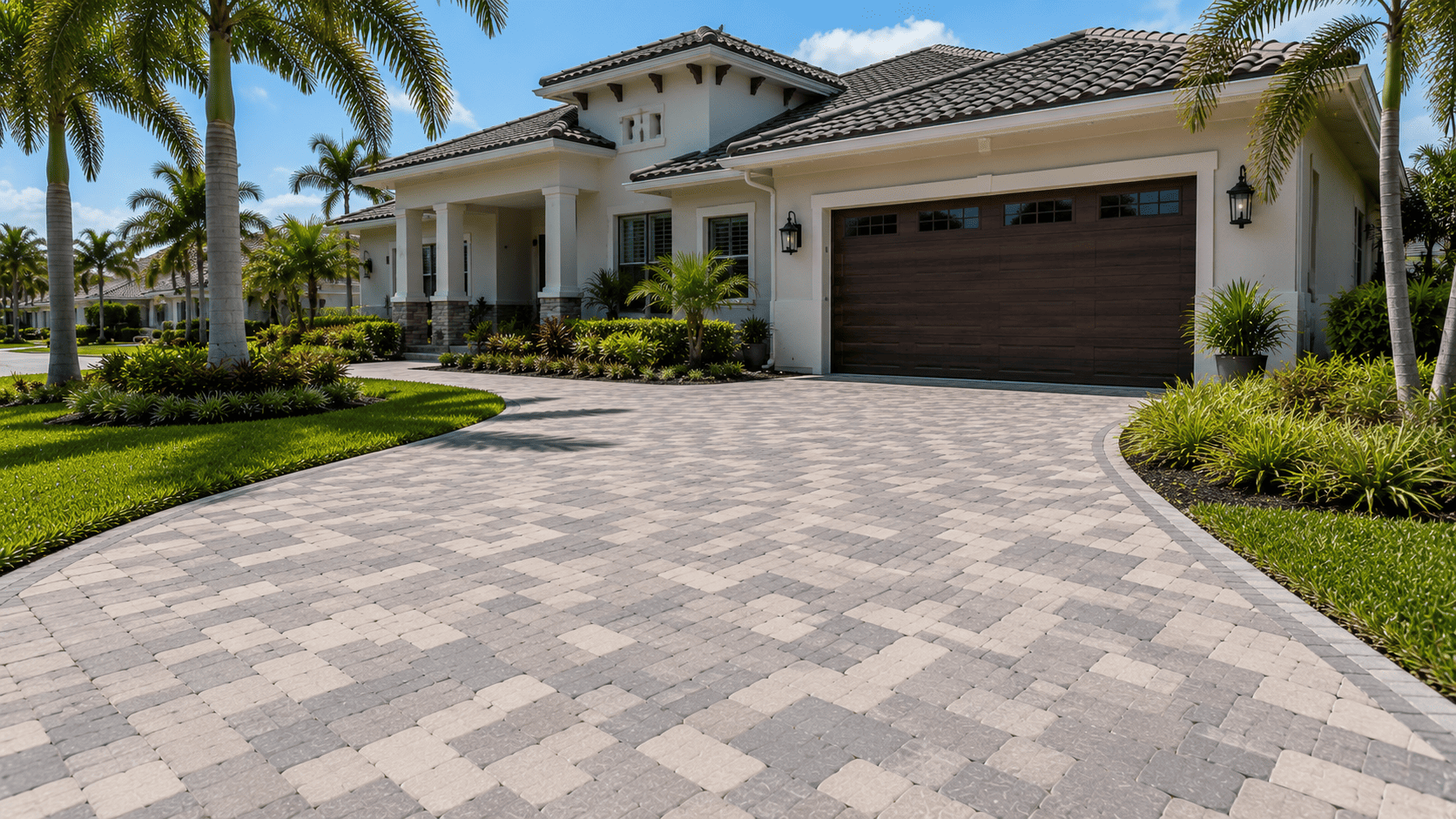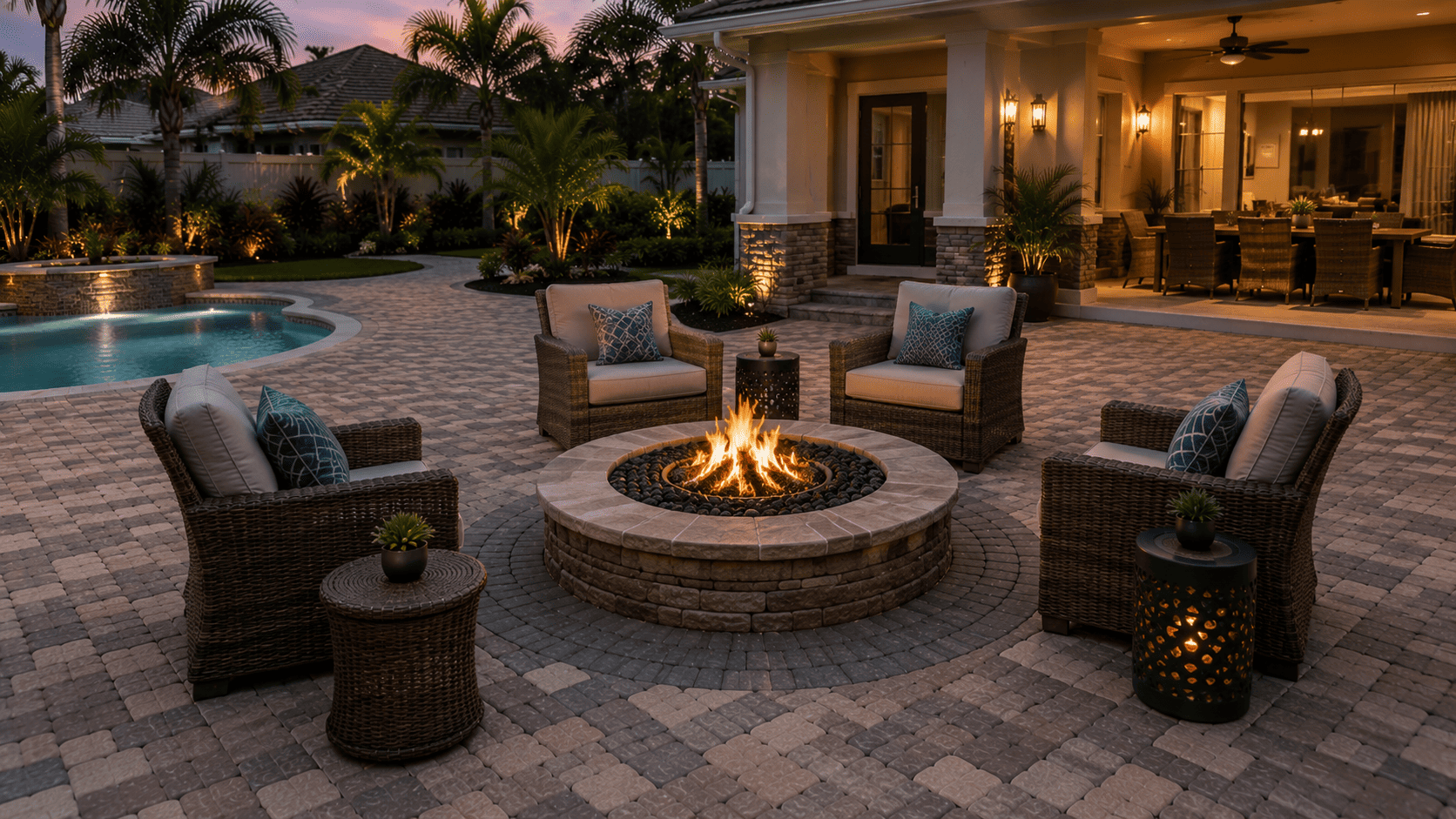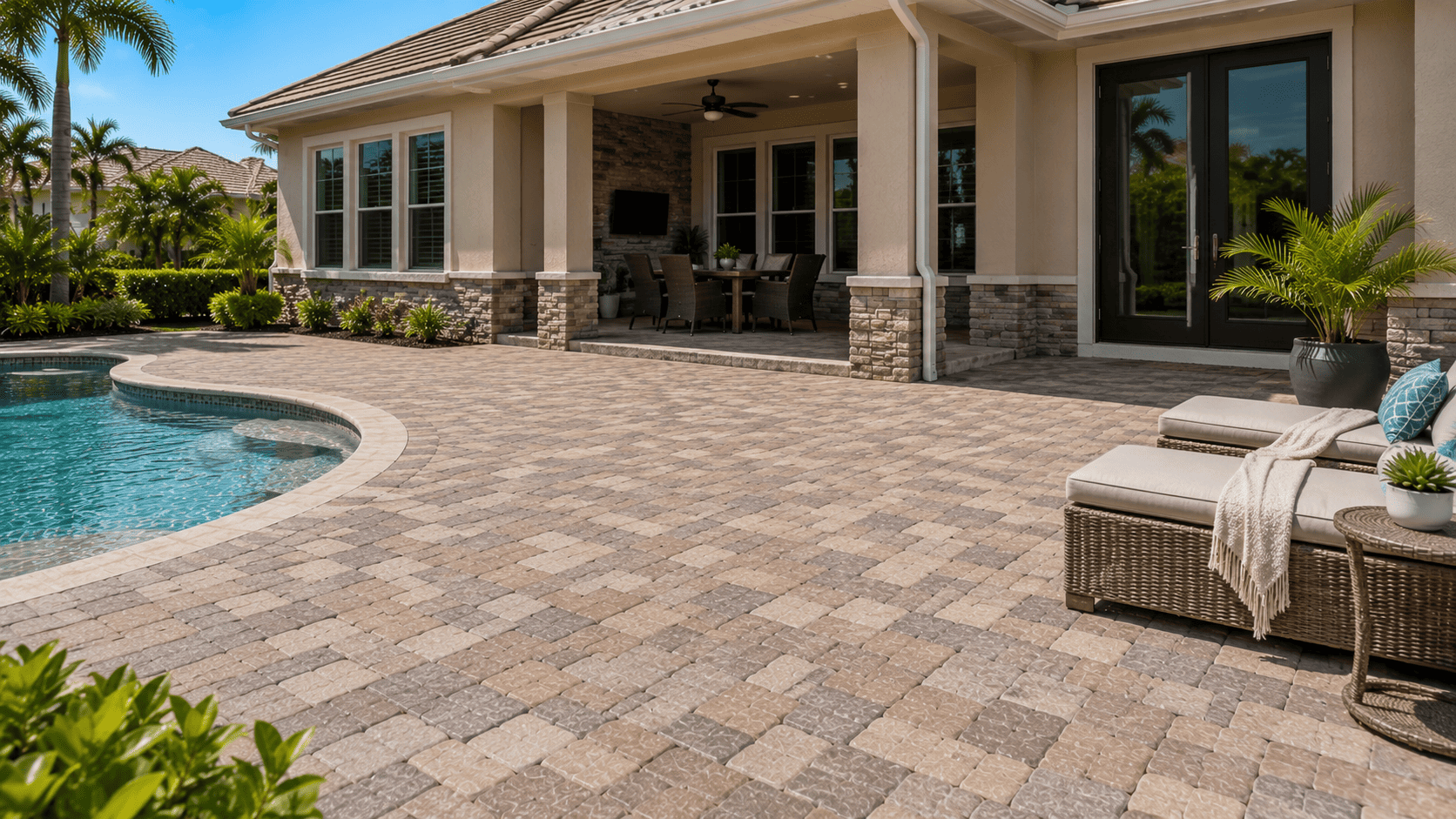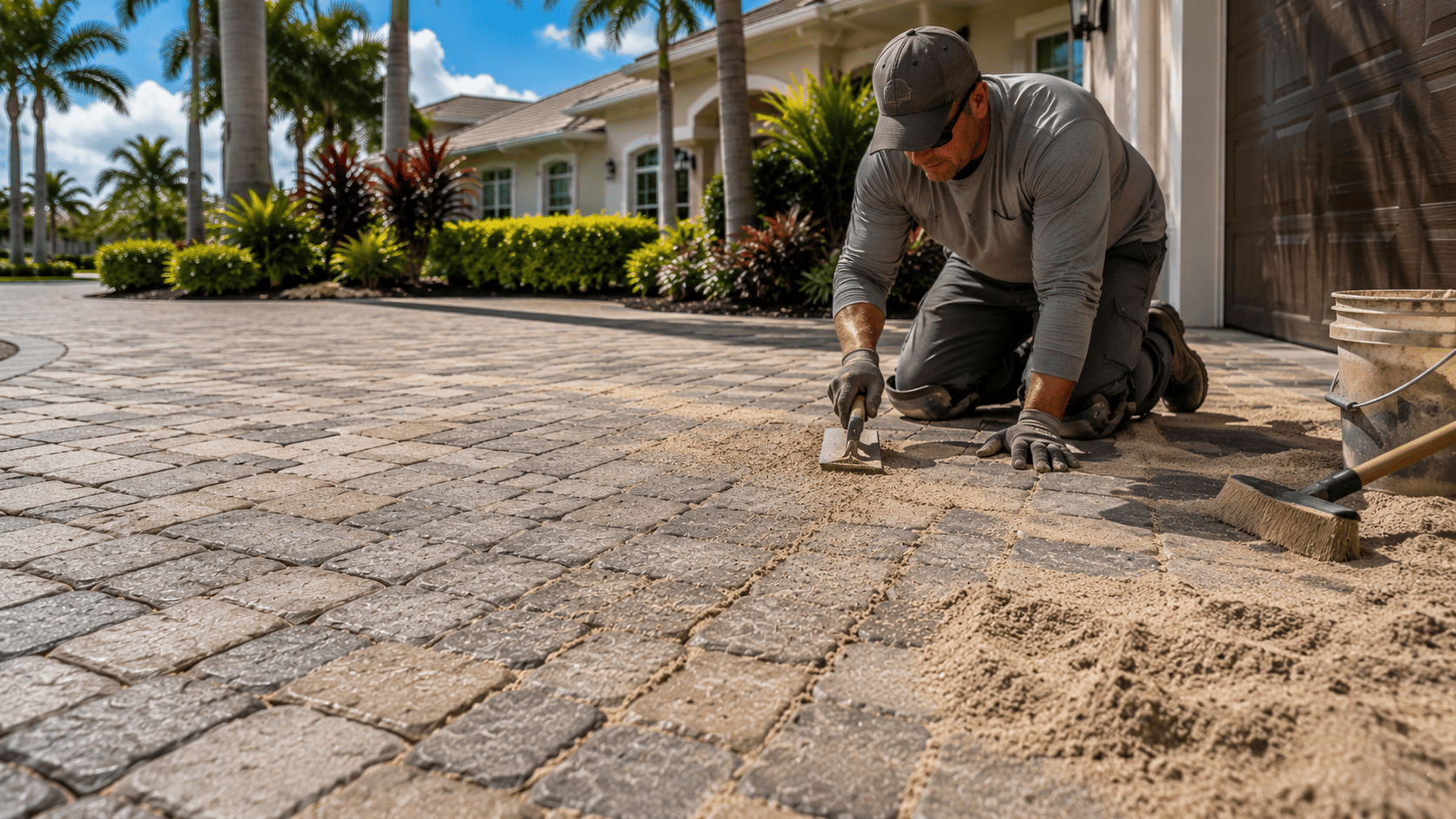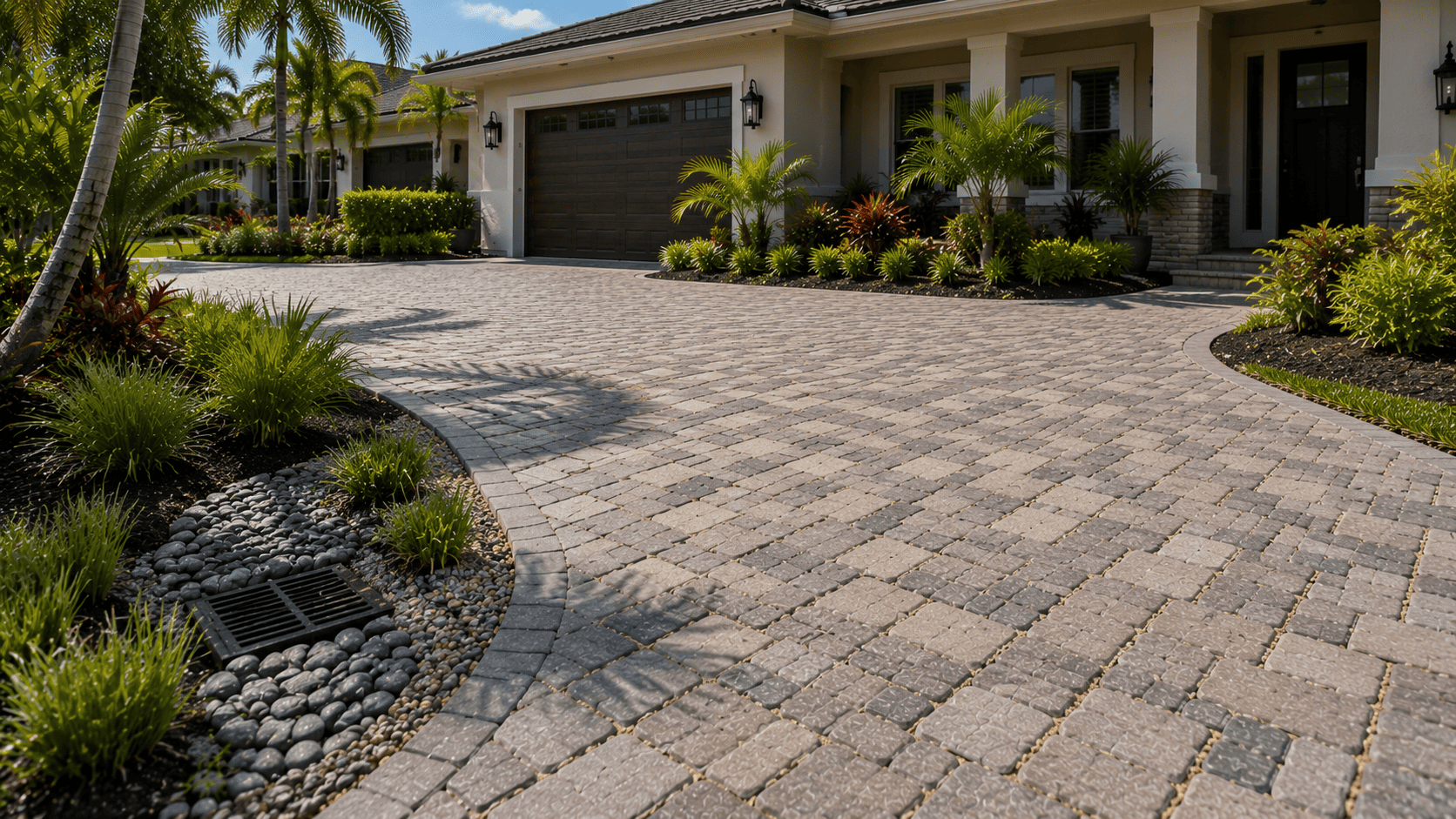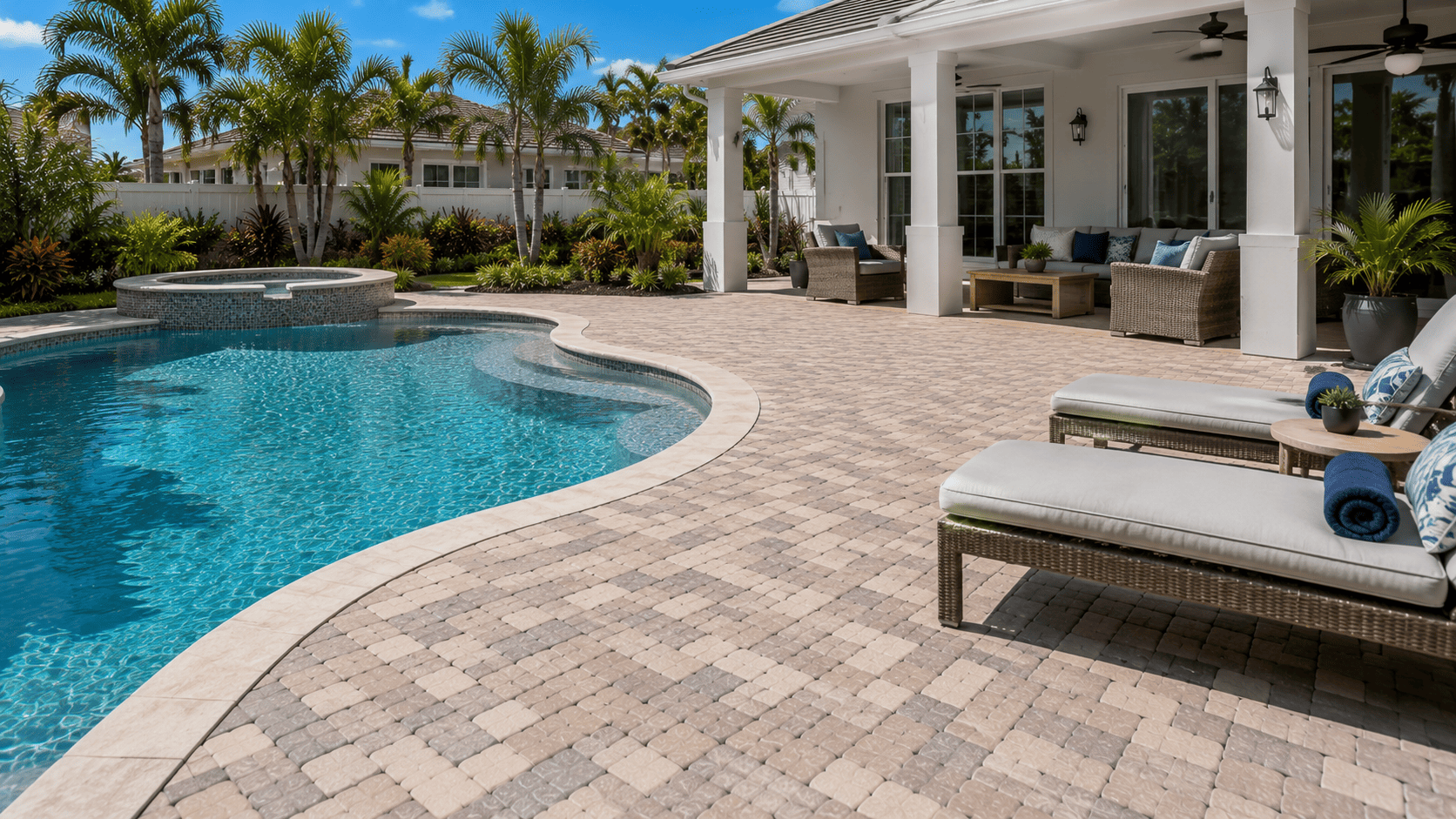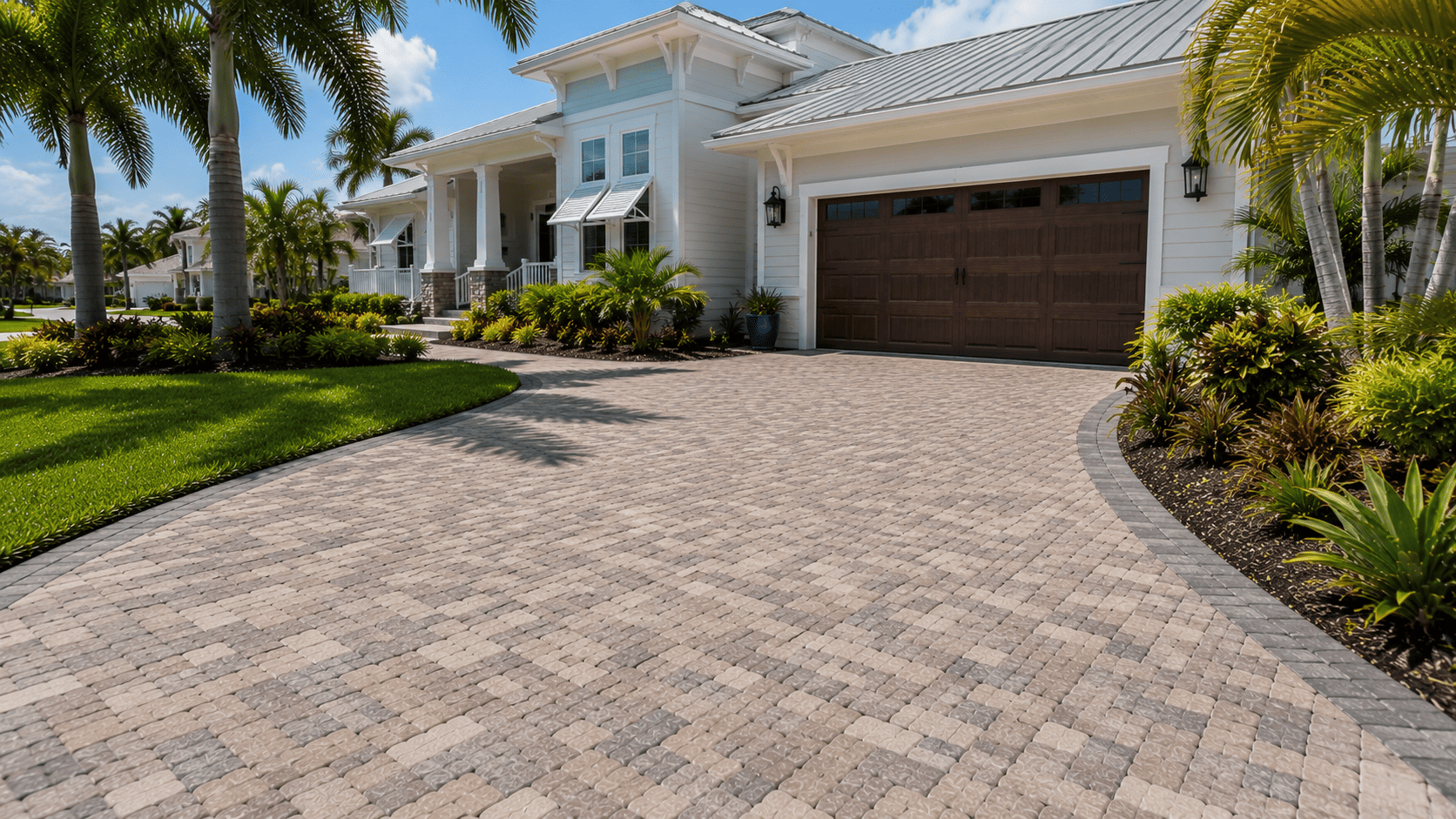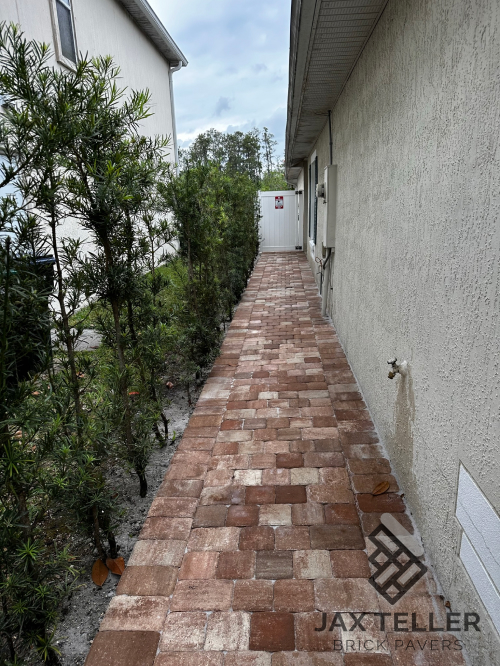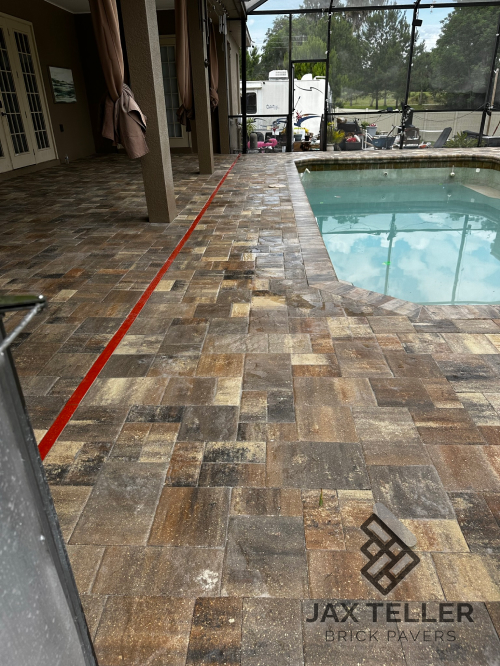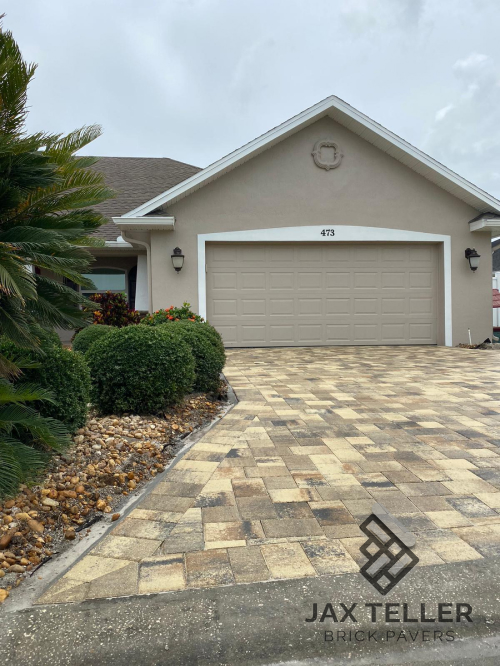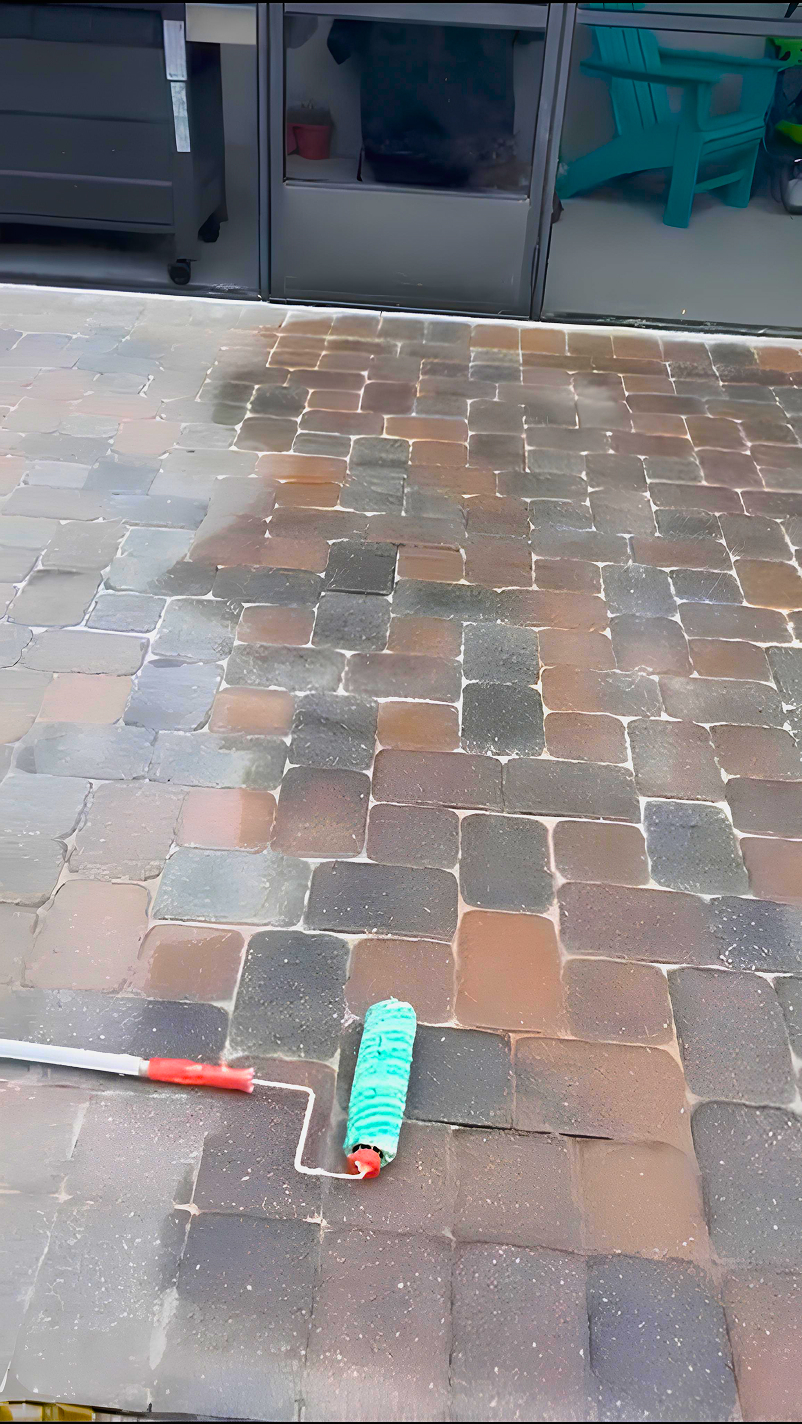
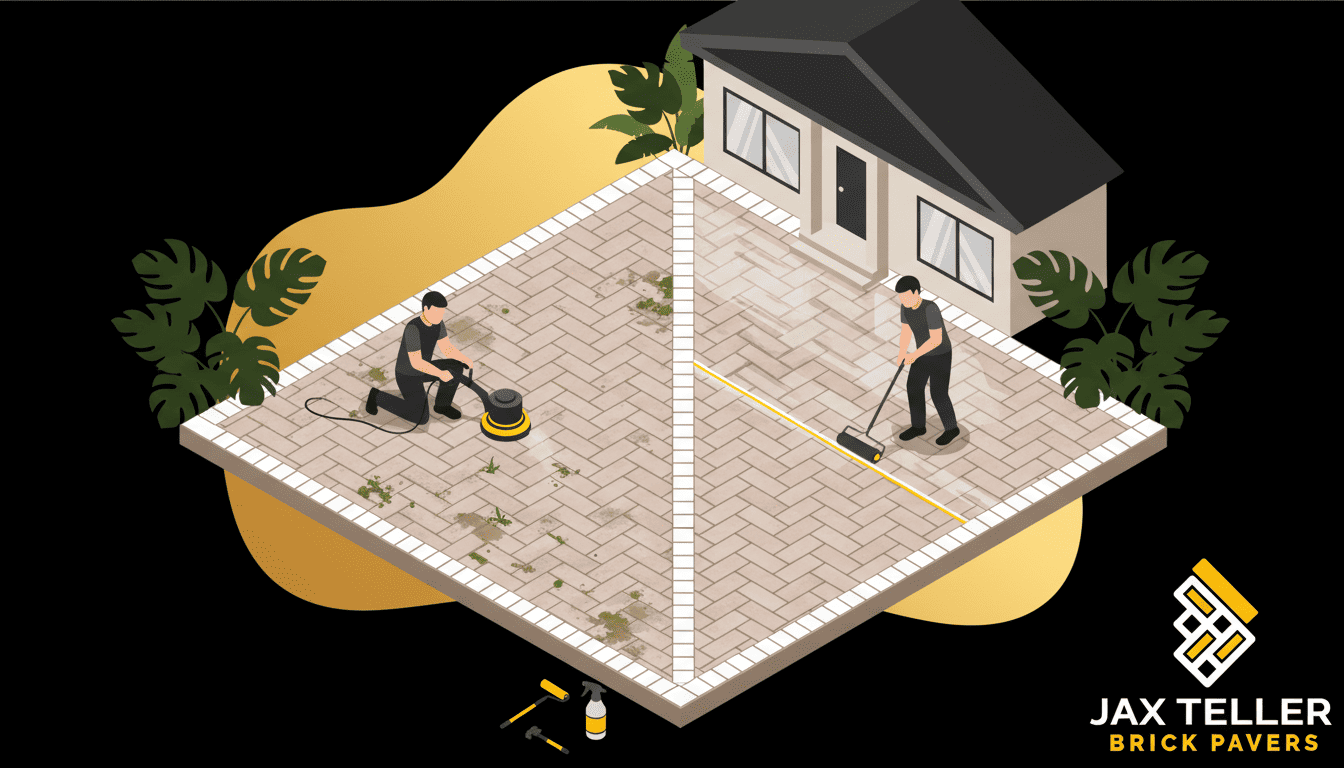
Pressure washing and sealing pavers in Largo, FL is the single most impactful maintenance step a Florida homeowner can take to protect a paver investment. Most Largo homeowners invest thousands of dollars in a paver driveway, pool deck, patio, or walkway. However, many then skip the routine maintenance that keeps that surface performing and looking its best for decades. This is a costly mistake — and it is entirely avoidable.
Florida’s climate attacks paver surfaces relentlessly. UV radiation fades color. Humidity promotes algae and mold growth in the joints. Largo’s heavy seasonal rainfall washes joint sand out and opens the surface to weed establishment. Pool chemicals stain unsealed travertine and concrete. Each of these forces operates continuously — and none of them wait for you to get around to maintenance. Consequently, a surface that looks outstanding at installation begins to show visible degradation within two to three years without proper cleaning and sealing.
This guide covers everything Largo homeowners need to know about pressure washing and sealing pavers. It explains why each step matters, which cleaning methods suit which materials, how professional sealing works, how often it should be performed, and what realistic service costs look like in Pinellas County. Most importantly, it helps you understand what you are paying for — and why cutting corners costs more in the long run.
Why Pressure Washing and Sealing Pavers in Largo, FL Matters
Largo’s climate creates a specific combination of threats that most other regions do not face simultaneously. UV intensity in Pinellas County is among the highest in the continental United States. It degrades surface color and breaks down organic joint materials rapidly. Additionally, Florida’s average annual rainfall exceeds 50 inches — much of it concentrated in intense summer storm events that blast joint sand out of the paver field and deposit organic debris across the surface.
Furthermore, the warm, humid coastal environment in Largo accelerates biological growth on paver surfaces. Algae, mold, and mildew establish quickly on unprotected surfaces — particularly in shaded zones under trees, overhangs, and on north-facing patio areas. These growths create a slippery surface condition that is genuinely hazardous on walkways and pool decks. They also produce the dark green and black staining that homeowners often mistake for permanent surface damage.
What Sealing Actually Protects Against
A quality paver sealer creates a protective barrier across the entire surface. It locks out moisture penetration that causes freeze-thaw damage in colder climates and subsurface salt migration in coastal environments like Largo. Additionally, sealer bonds the polymeric joint sand in place — significantly reducing the weed germination and joint erosion that unsecured sand allows. Moreover, sealer enhances color depth on brick and concrete pavers. It provides a wet-look or matte finish depending on the product selected.
On travertine specifically, sealing prevents the porous stone from absorbing pool chemicals, organic staining from leaves and soil, and the moisture that causes surface pitting over time. In other words, sealing is not a cosmetic upgrade — it is a structural protection step that directly extends the service life of the surface. Our post on paver sealing in Florida — is it worth it? covers the full return-on-investment analysis for every paver type in Pinellas County.
Pressure Washing Pavers in Largo, FL — Methods and Materials
Pressure washing is the first step in any professional pressure washing and sealing pavers service. It removes the surface contamination — biological growth, organic staining, dirt, and old sealer residue — that would otherwise trap beneath a new sealer coat and compromise adhesion. However, pressure washing technique matters enormously. The wrong approach damages the paver surface and destroys the joint sand that holds the field stable.
Correct PSI Settings for Paver Surfaces
Professional paver pressure washing uses controlled PSI settings matched to the specific surface material. Concrete and brick pavers typically tolerate 1,200 to 1,500 PSI with a 25-degree or 40-degree fan tip. Travertine is more sensitive — it requires lower pressure, typically 800 to 1,200 PSI, to avoid eroding the natural stone surface and widening the pores. Additionally, surface cleaners — rotating disc attachments that distribute pressure evenly across a defined area — produce more consistent results than a standard wand tip on flat paver surfaces.
High-pressure wand cleaning without a surface cleaner creates striping patterns on the paver surface and blasts joint sand directly out of the field. This is the most common mistake homeowners make when attempting DIY pressure washing. As a result, they end up with a clean surface that has lost significant joint sand stability — requiring polymeric sand replacement before sealing can proceed. Professional crews use surface cleaner attachments specifically to avoid this outcome.
Chemical Treatments Before Pressure Washing
Stubborn biological growth — particularly algae and mold that have penetrated the surface texture — requires chemical pre-treatment before pressure washing can remove it effectively. A pH-appropriate efflorescence cleaner or algae treatment applies to the surface and dwells for a specified period before rinsing. This pre-treatment loosens the biological bond to the surface. Consequently, the subsequent pressure washing removes the contamination completely rather than simply redistributing it across the field.
Acidic cleaners work effectively on concrete and brick pavers for efflorescence removal. However, they must not be used on travertine or other calcium-based natural stones — acid etches the surface and causes irreversible damage. pH-neutral or alkaline cleaners are the correct choice for travertine. In Largo, where travertine is widely used on pool decks and high-end patios, using the wrong cleaner is a significant and costly mistake. Our post on pressure washing travertine pavers in Florida covers the correct approach for natural stone surfaces in detail.
Joint Sand Replacement After Cleaning
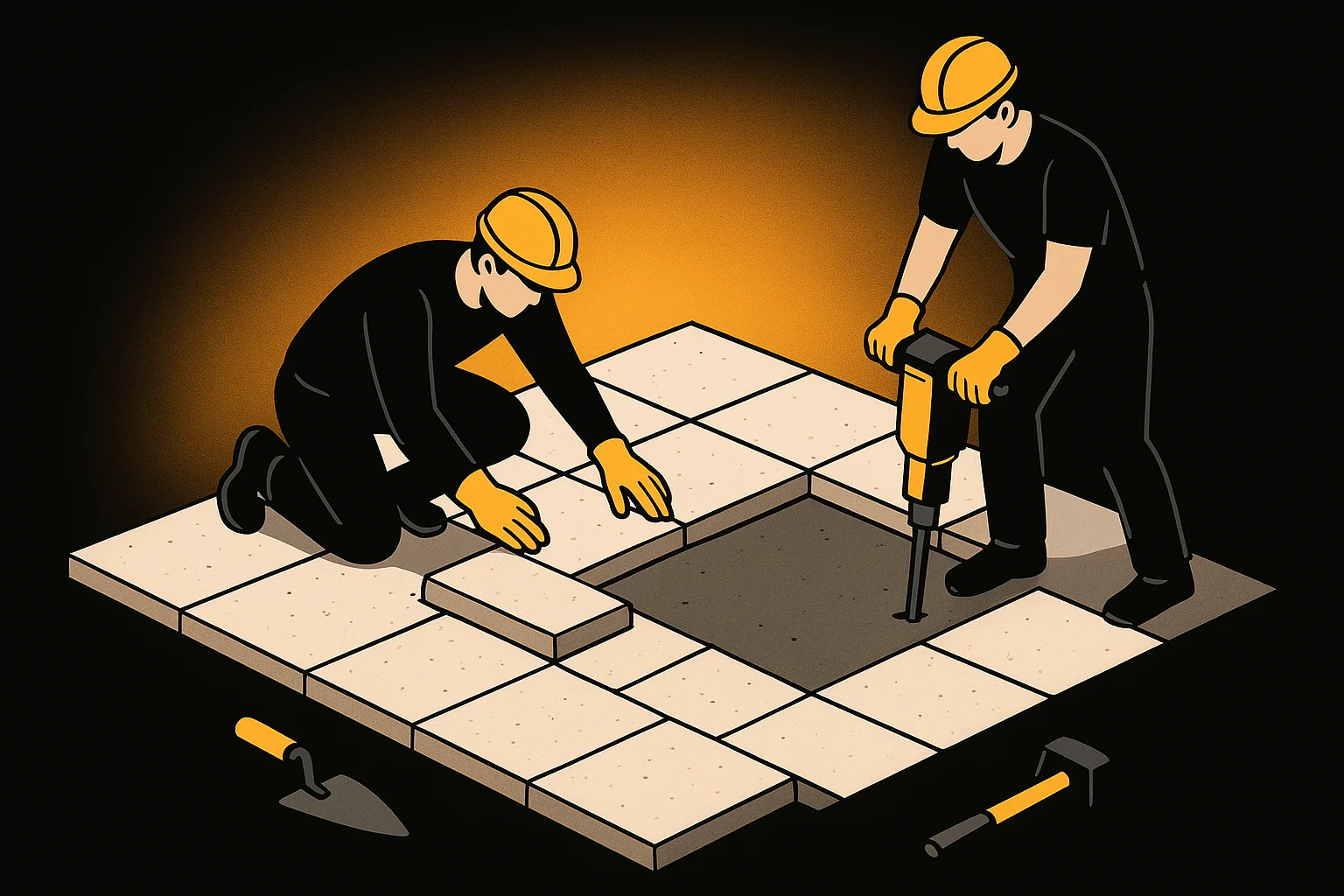
After pressure washing, the contractor inspects the joint sand depth across the entire paver field. Pressure washing inevitably removes some joint sand — particularly in zones where the sand was already depleted before cleaning. Therefore, polymeric sand replenishment is a standard part of any professional pressure washing and sealing service. Skipping this step and sealing over depleted joints locks in the problem rather than correcting it. Additionally, sealing without adequate joint sand depth reduces the sealer’s ability to bond the field effectively at the joint level.
Paver Sealer Types — Which Is Right for Largo, FL Surfaces?
Not all paver sealers perform equally — and the wrong sealer for a specific surface material or application environment can cause problems that are worse than not sealing at all. Selecting the correct sealer is therefore one of the most consequential decisions in any pressure washing and sealing pavers in Largo, FL service. There are three primary categories of paver sealers used in residential applications across Pinellas County.
Penetrating Sealers — Best for Travertine and Natural Stone
Penetrating sealers — also called impregnating sealers — absorb into the paver surface rather than forming a film on top. They fill the microscopic pores in the stone or concrete, blocking moisture and staining agents from entering without altering the surface appearance. This makes them the correct choice for travertine, limestone, and other natural stone pavers. The sealed surface retains its natural matte appearance. Furthermore, penetrating sealers do not peel, flake, or develop the white haze that film-forming sealers can produce when moisture is trapped beneath the coating.
In Largo’s pool deck and patio environments, penetrating sealers are the professional standard for travertine. They allow the stone to breathe while blocking pool chemicals, organic staining, and moisture penetration. Additionally, they do not create a slippery surface when wet — a critical safety consideration for pool deck applications. Our post on do travertine pavers need to be sealed in Florida? covers the sealing requirements for natural stone in Pinellas County’s coastal environment in full detail.
Film-Forming Sealers — Wet Look and Enhanced Color for Brick and Concrete
Film-forming sealers create a protective coating on top of the paver surface. They enhance color significantly — producing either a wet-look gloss or a semi-gloss finish that makes brick and concrete paver colors appear richer and more saturated. Most importantly, film-forming sealers provide excellent joint sand stabilization. The surface coating penetrates slightly into the joints and bonds the sand in place more aggressively than penetrating products alone.
However, film-forming sealers require more precise application conditions. The surface must be completely dry and clean before application. Any trapped moisture beneath the coating causes a whitish haze — called blushing — that requires reapplication to correct. Additionally, film-forming sealers on pool decks can become slippery when wet if applied too thickly. In those applications, contractors add anti-slip additives to the sealer before application. Correct product selection and application technique are therefore non-negotiable for film-forming sealer performance on Largo’s pool deck surfaces.
Water-Based vs. Solvent-Based Sealers
Within both penetrating and film-forming categories, sealers come in water-based and solvent-based formulations. Solvent-based sealers generally penetrate more deeply and provide stronger color enhancement — but they emit volatile organic compounds (VOCs) during application and require ventilation precautions. Water-based sealers are lower in VOCs, faster to dry in Largo’s humid conditions, and more environmentally appropriate for applications near water features and pool areas. Additionally, water-based formulations have improved significantly in recent years and now match solvent-based products in durability for most residential applications in Florida.
How Often Should You Seal Pavers in Largo, FL?
The correct resealing interval for pressure washing and sealing pavers in Largo, FL depends on the paver material, the application environment, and the sealer product used. Generally speaking, most residential paver surfaces in Pinellas County require resealing every two to three years. However, several factors can shorten or extend that interval significantly.
- Travertine pool decks: Every 2 years — constant water exposure and pool chemical contact degrade sealer faster than any other residential application
- Brick or concrete paver driveways: Every 2–3 years — vehicle loads and UV exposure are the primary sealer degradation forces in this application
- Paver patios and walkways: Every 2–3 years — foot traffic and UV exposure are the primary forces, with biological growth as a secondary factor in shaded areas
- Shaded patio areas with heavy tree canopy: Every 1–2 years — accelerated biological growth in humid shaded zones breaks down sealer faster than UV-exposed surfaces
- Pool deck coping: Every 2 years minimum — the coping joint sealer at the bond beam interface requires inspection and potential replacement on the same cycle as the deck sealer
The most reliable way to assess resealing need is the water bead test. Apply water to the paver surface. If it beads on the surface, the sealer is still active. If it absorbs immediately, the sealer has degraded and resealing is due. Most importantly, do not wait until visible staining or biological growth establishes before resealing — by that point, a full cleaning service is required before the sealer can perform correctly.
DIY vs. Professional Pressure Washing and Sealing in Largo
Many Largo homeowners attempt DIY pressure washing and sealing after watching online tutorials. Some achieve acceptable results on simple concrete paver patios with standard contamination levels. However, most underestimate the technical complexity of the process — particularly for travertine, natural stone, or any surface adjacent to a pool or water feature where chemical and sealer choices have serious consequences.
Where DIY Typically Goes Wrong
The most common DIY mistakes in Largo paver maintenance include using excessive pressure that strips joint sand, selecting the wrong cleaner chemistry for the surface material, applying sealer on a surface that is not fully dry or clean, and over-applying sealer product — which causes white haze and peeling. Additionally, most consumer-grade pressure washers lack the consistent PSI control and surface cleaner attachments that professional equipment provides. As a result, DIY pressure washing frequently produces striping marks and uneven cleaning that becomes visible after sealing.
Furthermore, correcting a failed DIY sealer application requires stripping the existing sealer coat before reapplication — a process that adds significant time and cost to the remediation. In most cases, the total cost of a failed DIY attempt followed by professional remediation exceeds the cost of professional service from the beginning. For a full breakdown of the most costly paver maintenance mistakes, our post on common paver mistakes Florida homeowners make covers every scenario with practical guidance on how to avoid them.
What Professional Service Includes
A professional pressure washing and sealing pavers service in Largo includes a complete assessment of the surface condition before any work begins. The contractor identifies areas of joint sand depletion, biological staining, efflorescence, and existing sealer failure. They then select the appropriate cleaning chemistry, pressure settings, and sealer product for the specific material and application environment.
Professional crews also manage the curing time correctly — ensuring the surface is fully dry before sealer application begins. In Largo’s humid climate, this requires monitoring surface moisture levels carefully. Additionally, professional application uses commercial sprayers and back-rolling techniques that produce even, consistent sealer coverage across the entire surface — eliminating the lap marks and uneven sheen that brush or DIY spray application produces on large surfaces.
Pressure Washing and Sealing Pavers Cost in Largo, FL
Professional pressure washing and sealing service costs in Largo vary based on the surface area, the paver material, the level of contamination, and the sealer product specified. Here are realistic price ranges for the most common residential applications in Pinellas County:
- Pressure washing only (per sq ft): $0.25 – $0.50 depending on contamination level and surface material
- Sealing only — penetrating sealer (per sq ft): $0.40 – $0.80 depending on product and surface porosity
- Sealing only — film-forming wet look sealer (per sq ft): $0.50 – $1.00 depending on product and application complexity
- Full service — pressure wash + polymeric sand + seal (per sq ft): $1.00 – $1.80 for standard brick or concrete pavers
- Full service — travertine pool deck (per sq ft): $1.20 – $2.20 due to material sensitivity and product specification requirements
- Typical driveway maintenance service (400–600 sq ft): $450 – $900+ depending on material and contamination
- Typical pool deck maintenance service (300–500 sq ft): $400 – $1,000+ depending on material and coping condition
These figures reflect professional-grade service with correct equipment, appropriate chemistry, and quality sealer products. Quotes significantly below these ranges almost always indicate diluted sealers, inadequate cleaning preparation, or missing polymeric sand replacement. In contrast, investing in a correct full-service maintenance cycle every two to three years consistently costs less over a 10-year period than repairing a neglected surface that requires base remediation or full reinstallation.
Pressure Washing and Sealing Pavers by Surface Type in Largo
Different paver applications in Largo require specific pressure washing and sealing approaches. Understanding the nuances of each surface type helps homeowners communicate clearly with their contractor and evaluate service proposals accurately.
Driveway Pavers — Pressure Washing and Sealing
Paver driveways in Largo face the most demanding load and contamination conditions of any residential application. Vehicle traffic deposits oil, fuel residue, and rubber transfer across the surface constantly. These petroleum-based contaminants penetrate unsealed pavers and cause permanent staining. Additionally, the physical load of vehicle weight over time compresses the bedding sand slightly — making joint sand maintenance particularly important for driveway surfaces.
For driveway pressure washing, degreaser pre-treatment is standard before the pressure washing phase on any surface with visible oil staining. Sealer selection for driveways prioritizes durability under vehicle load — film-forming sealers with high solids content perform best in this application. Our pressure washing and sealing service page outlines exactly how JaxTeller Brick Pavers approaches driveway maintenance across Largo and Pinellas County.
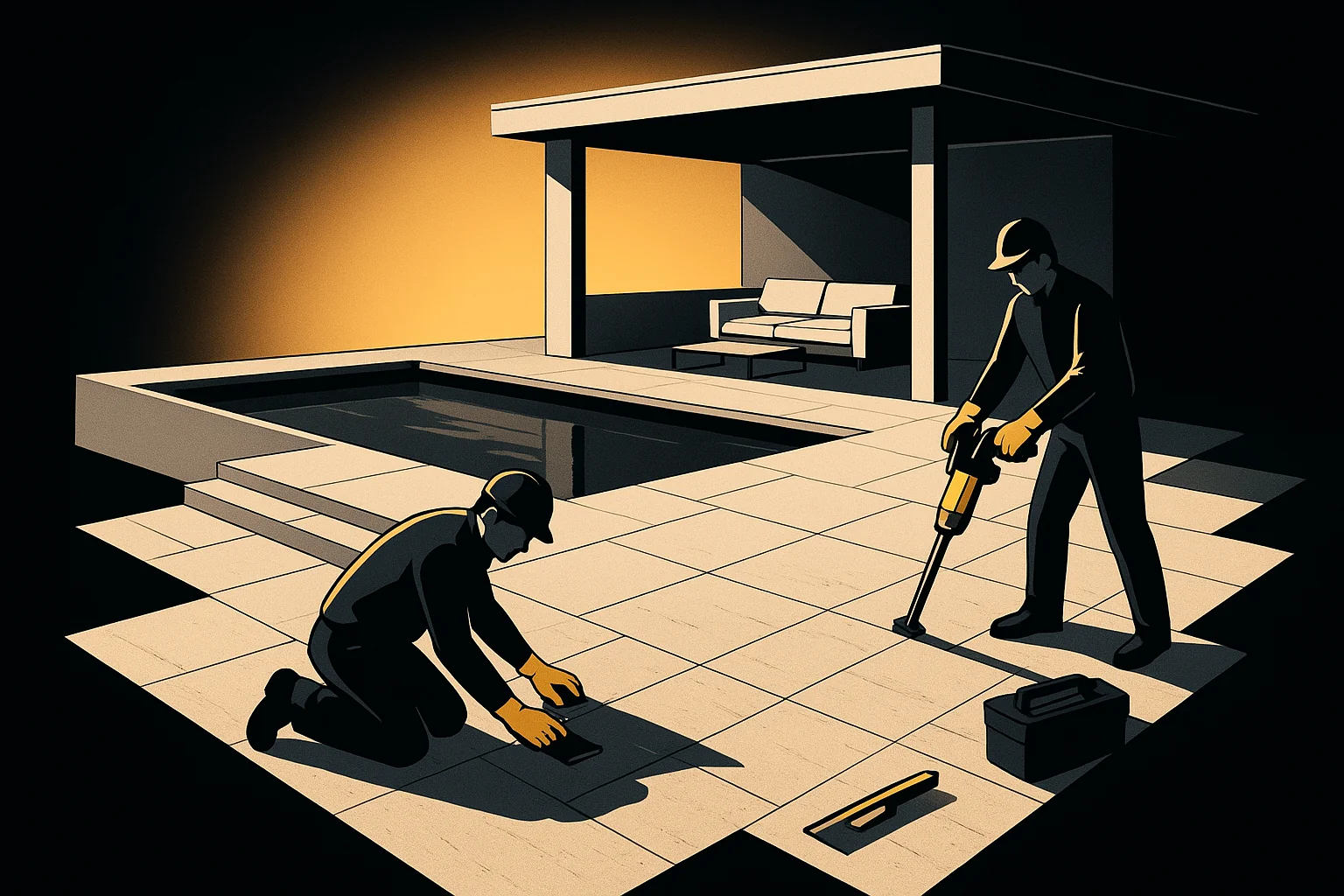
Pool Deck Pavers — Pressure Washing and Sealing
Pool deck pressure washing and sealing in Largo requires the most careful chemical management of any residential paver application. Cleaning chemistry must be safe for pool water — any chemical runoff that enters the pool affects water chemistry and equipment. Therefore, professional crews protect pool water during cleaning operations and flush the deck thoroughly before chemicals reach the pool edge.
Sealer selection for pool decks must also address wet-surface slip resistance — particularly for travertine, which can become slippery with certain film-forming products. In most cases, penetrating sealers are the correct specification for travertine pool decks specifically because they maintain the natural surface texture and traction the stone provides. For a complete guide to pool deck paver maintenance in Largo, our post on paver maintenance and poolside paving solutions in Largo covers every seasonal care consideration for pool deck surfaces.
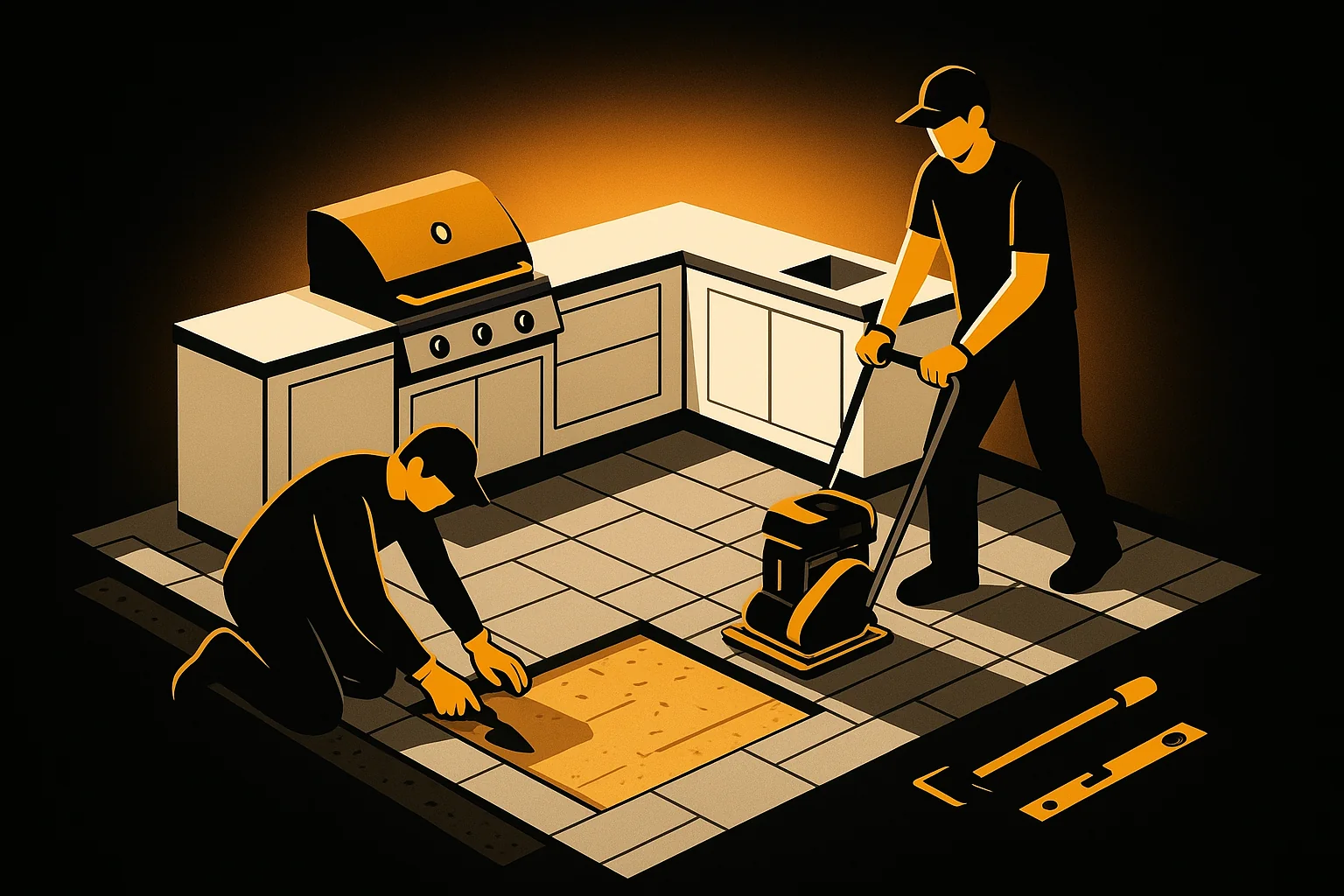
Patio and Walkway Pavers — Pressure Washing and Sealing
Patio and walkway surfaces in Largo typically accumulate the most biological growth of any residential paver application — particularly in shaded areas under pergolas, trees, and overhangs. Algae and mold establish on these surfaces faster than on exposed driveways or pool decks. Consequently, patio and walkway cleaning services often require chemical pre-treatment and extended dwell times before pressure washing removes the biological growth completely.
After cleaning, these surfaces benefit significantly from sealer application — both for biological growth resistance and for color enhancement. Shaded patio areas in particular retain moisture longer after rain events. This moisture creates favorable conditions for rapid biological re-establishment on unsealed surfaces. Sealing therefore provides the most obvious protection benefit on shaded patio and walkway surfaces in Largo’s humid coastal environment.
Industry Standards for Paver Sealing in Largo, FL
The Interlocking Concrete Pavement Institute (ICPI) provides technical guidance on paver maintenance practices — including sealer selection, application methods, and resealing intervals for different paver materials and application environments. ICPI guidance aligns sealer specifications with the structural and environmental demands of each application type. Following ICPI-aligned maintenance practices protects the structural integrity of the paver system beneath the surface — not just its visual appearance.
Contractors who follow industry-standard maintenance protocols demonstrate a level of technical discipline that separates professional paver specialists from general cleaning crews. In Largo, where Florida’s climate places sustained pressure on every outdoor surface year-round, choosing a maintenance contractor who understands paver systems — not just pressure washing equipment — is the most important decision you will make for your surface’s long-term performance. Our complete resource on paver maintenance in Florida covers every step of professional annual care for all residential paver surfaces in Pinellas County.
Ready to Upgrade Your Driveway or Patio?
JaxTeller Brick Pavers provides professional pressure washing and sealing services for all paver surfaces across Largo, FL and Pinellas County — driveways, pool decks, patios, and walkways in brick, concrete, travertine, and natural stone. Visit our contact page to book your free on-site assessment, or browse our completed projects gallery to see the before and after results our maintenance services deliver across the region. Follow us on Instagram and Facebook for real maintenance project photos and seasonal care tips from our team in Largo. Reach us instantly on WhatsApp or find us on Google Maps — we are based in Largo and ready to restore and protect your paver investment. 🧹
Contact JaxTeller Brick Pavers at +1 407-907-8308 or jaxtellerbrickpavers@gmail.com for your free estimate!