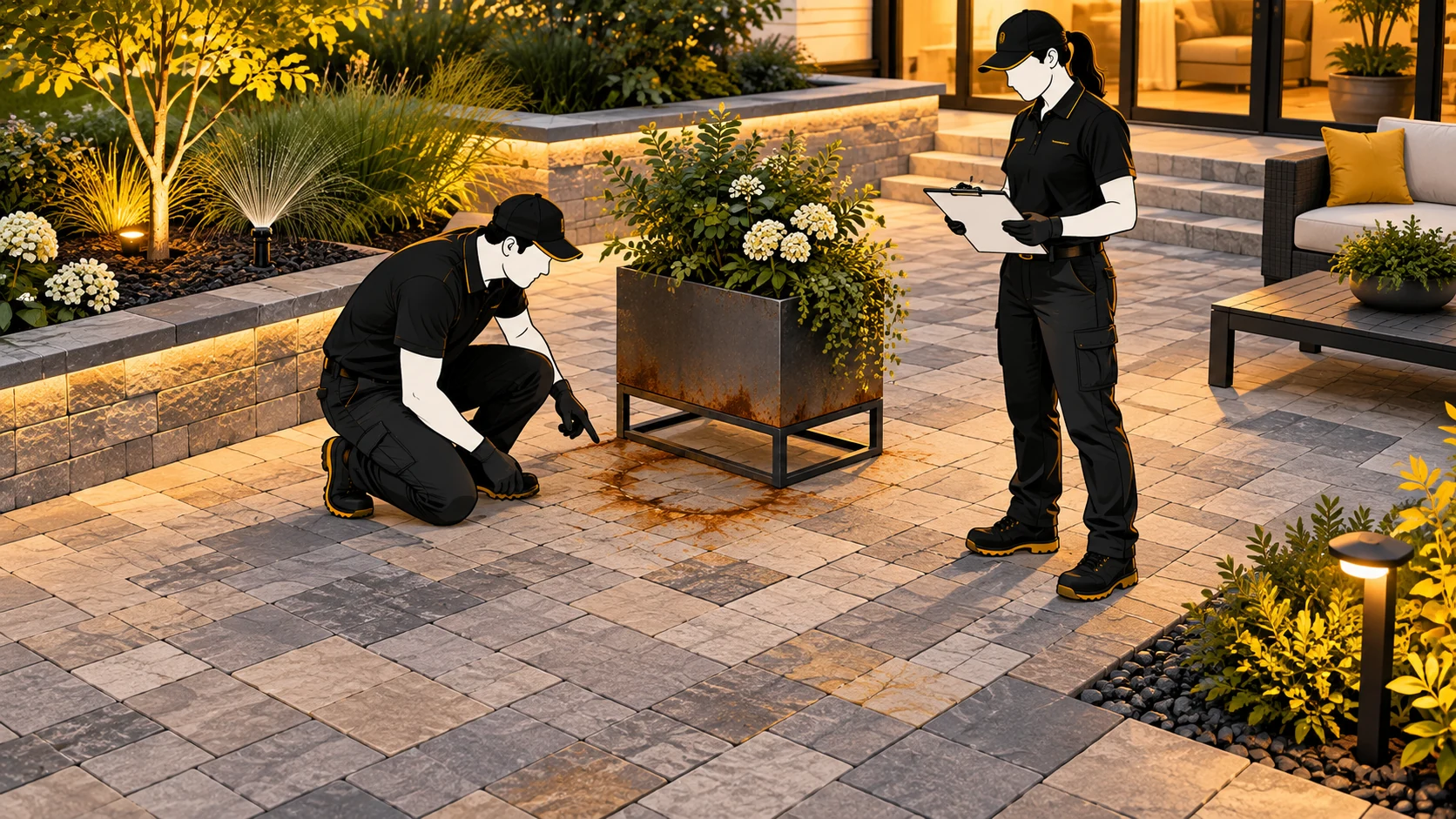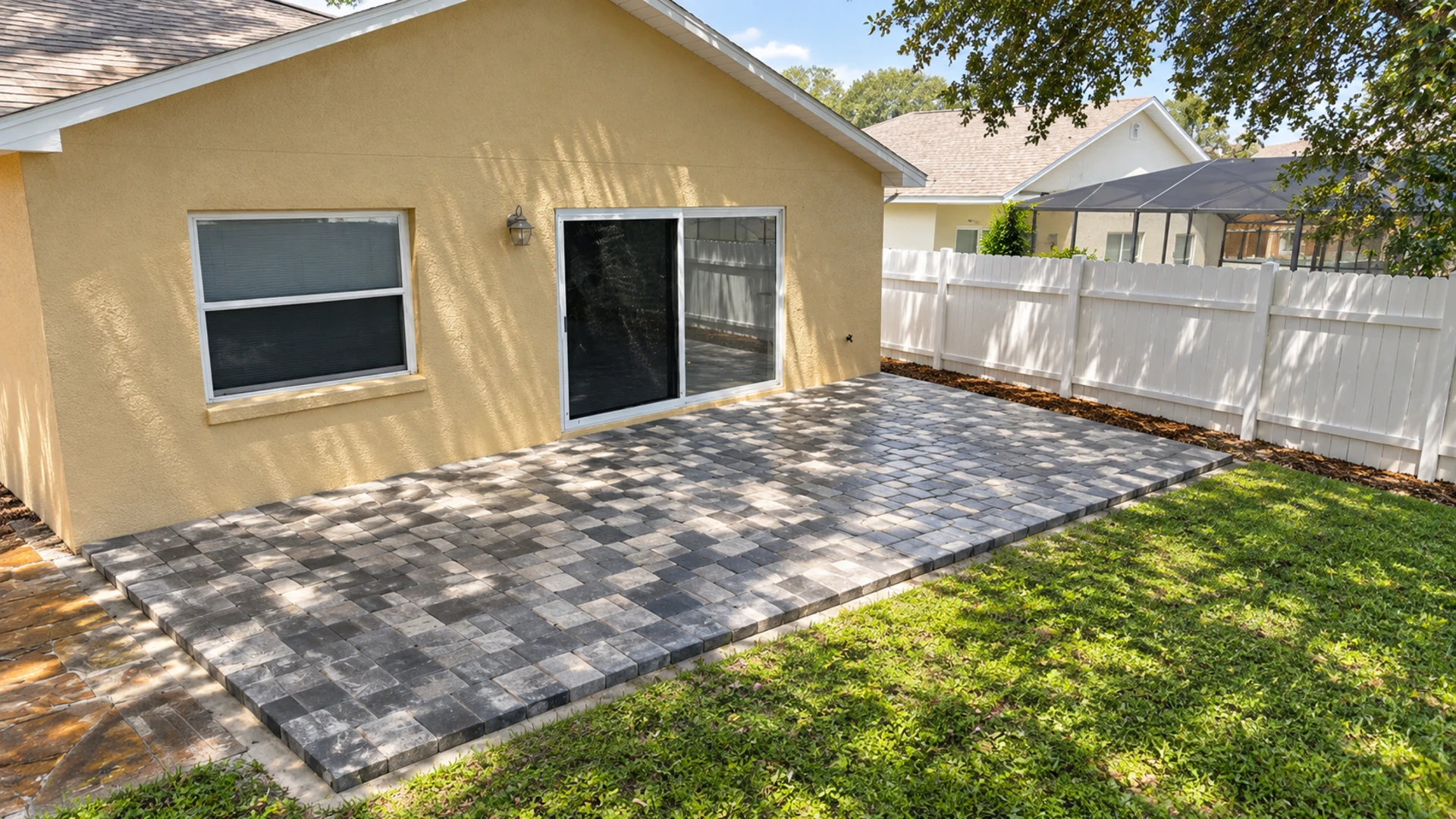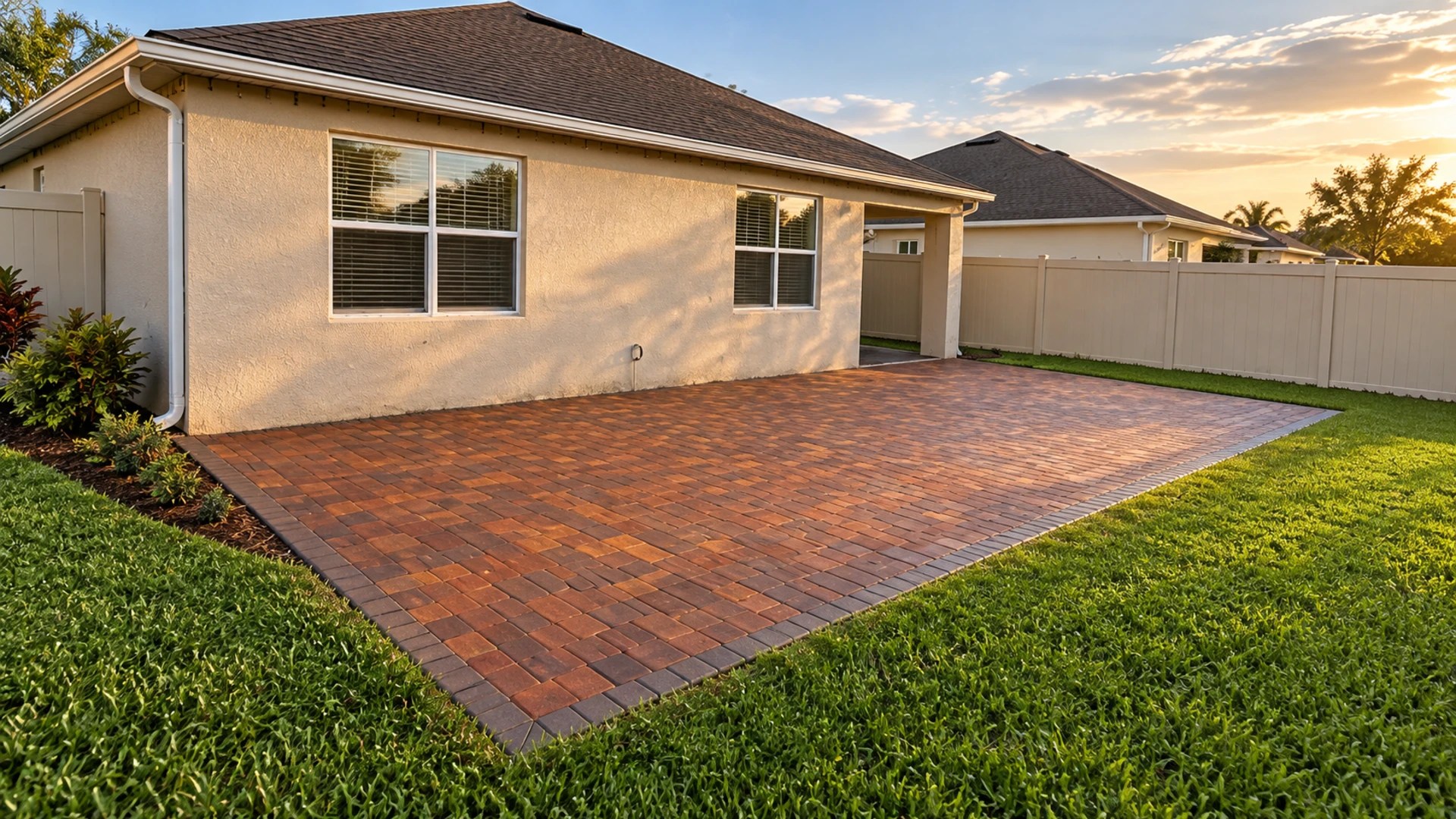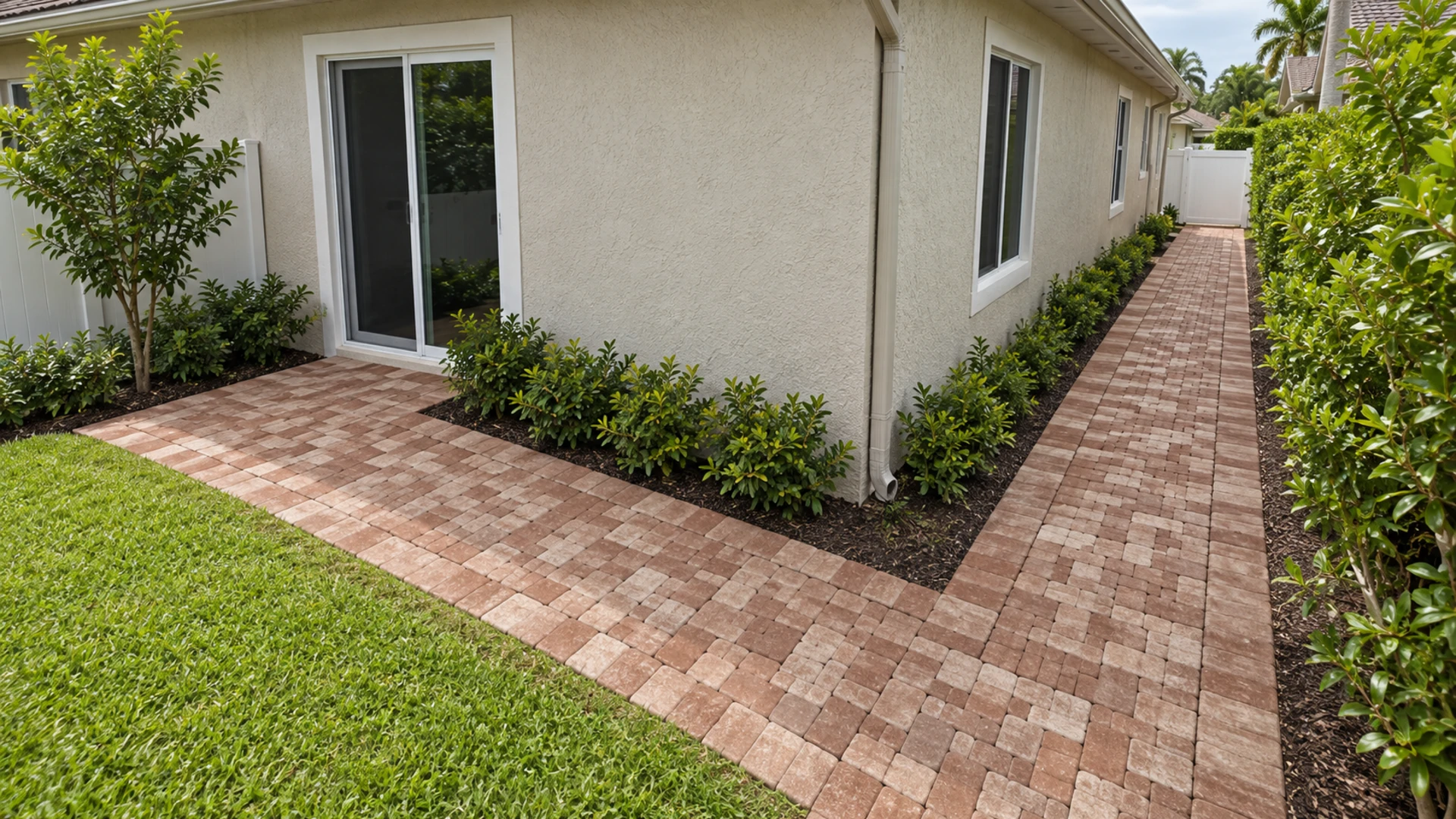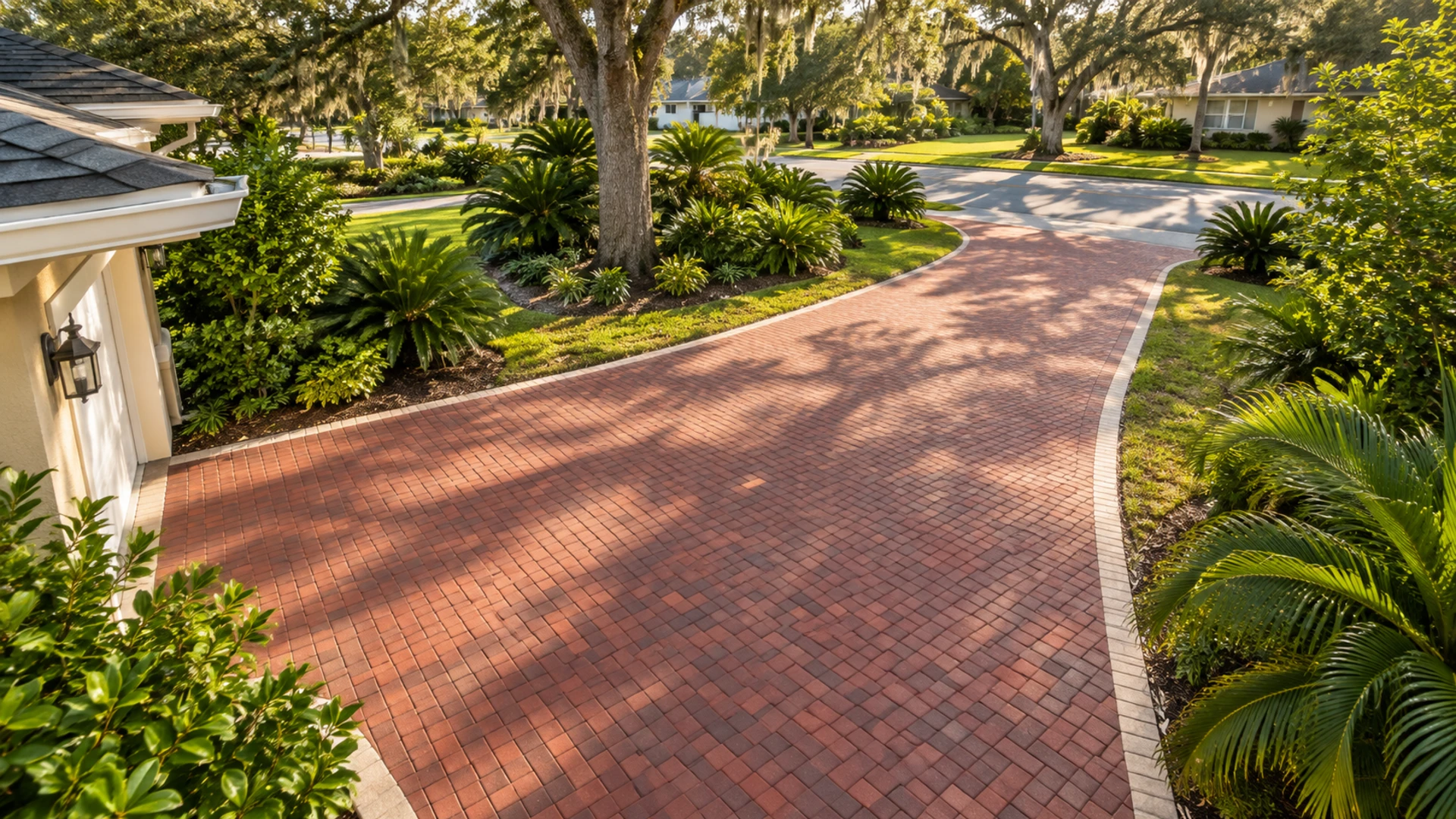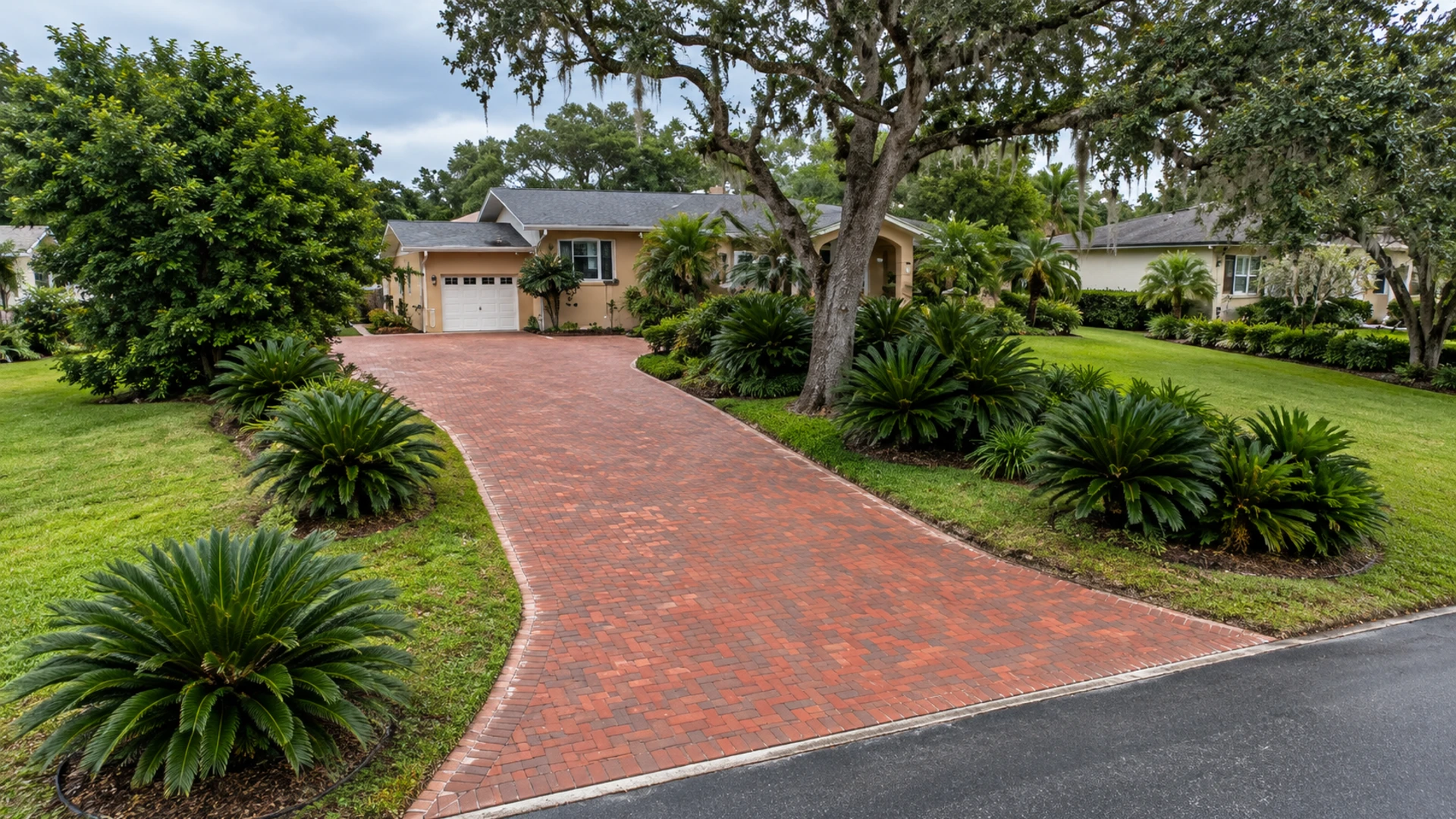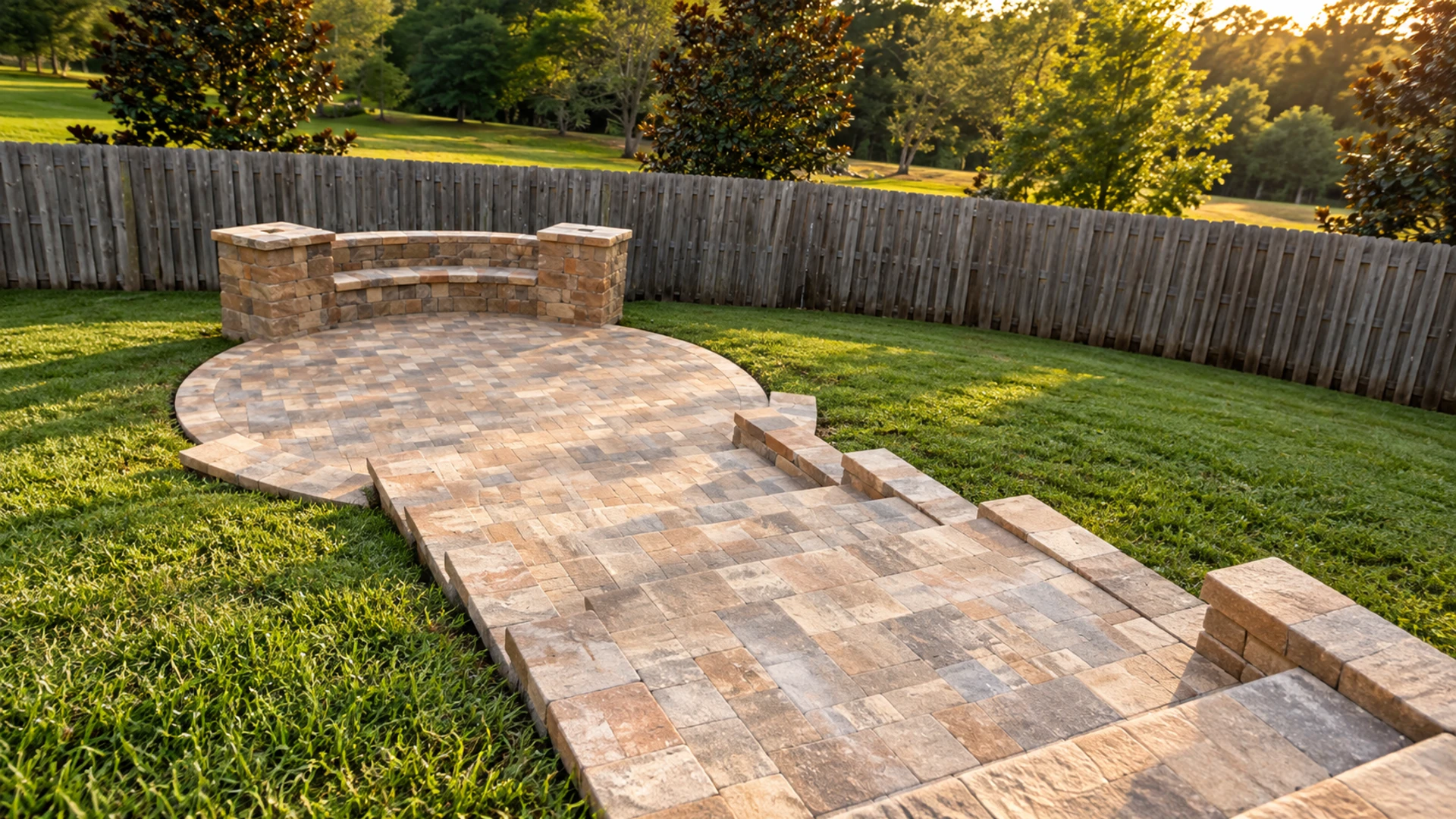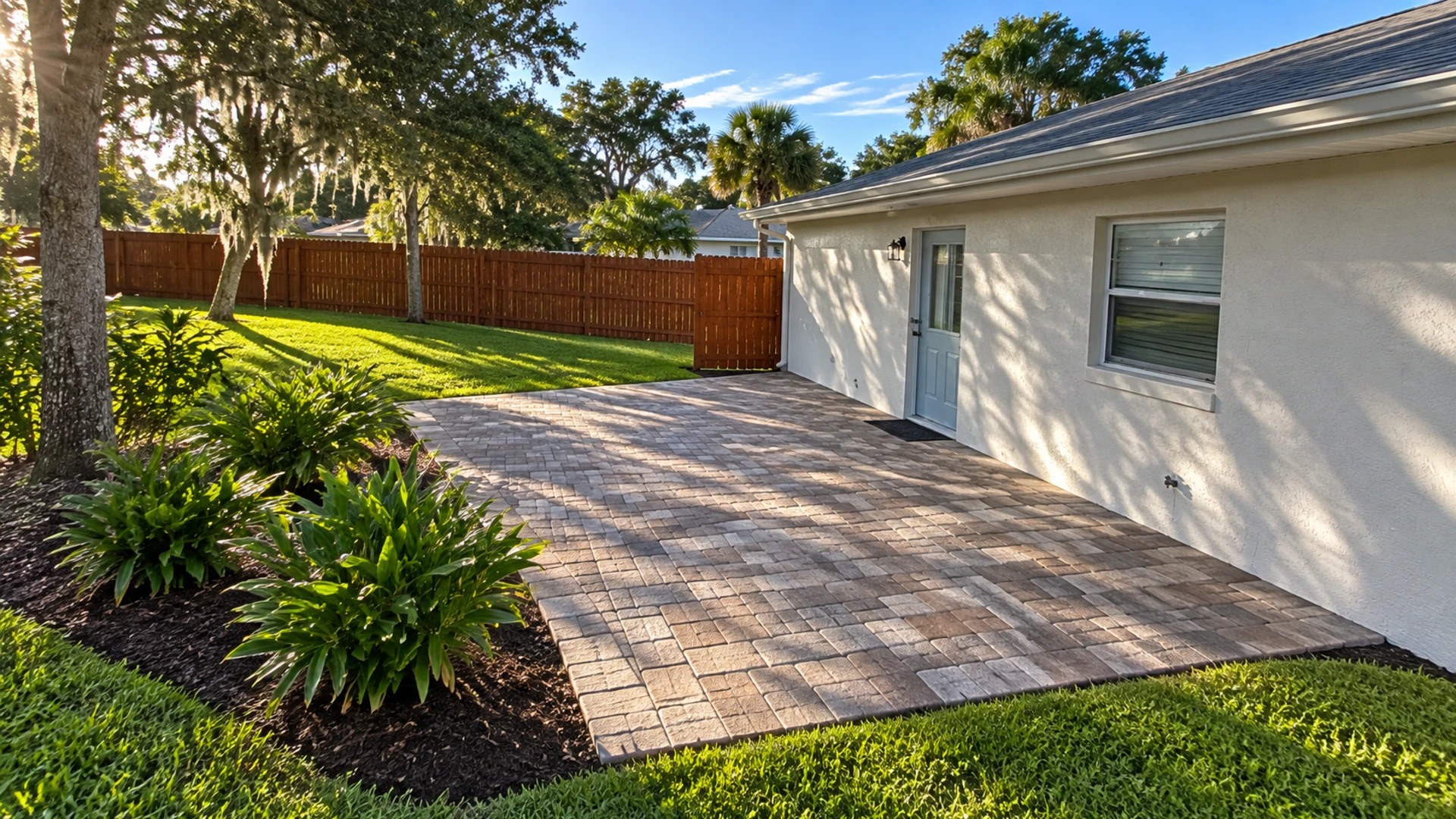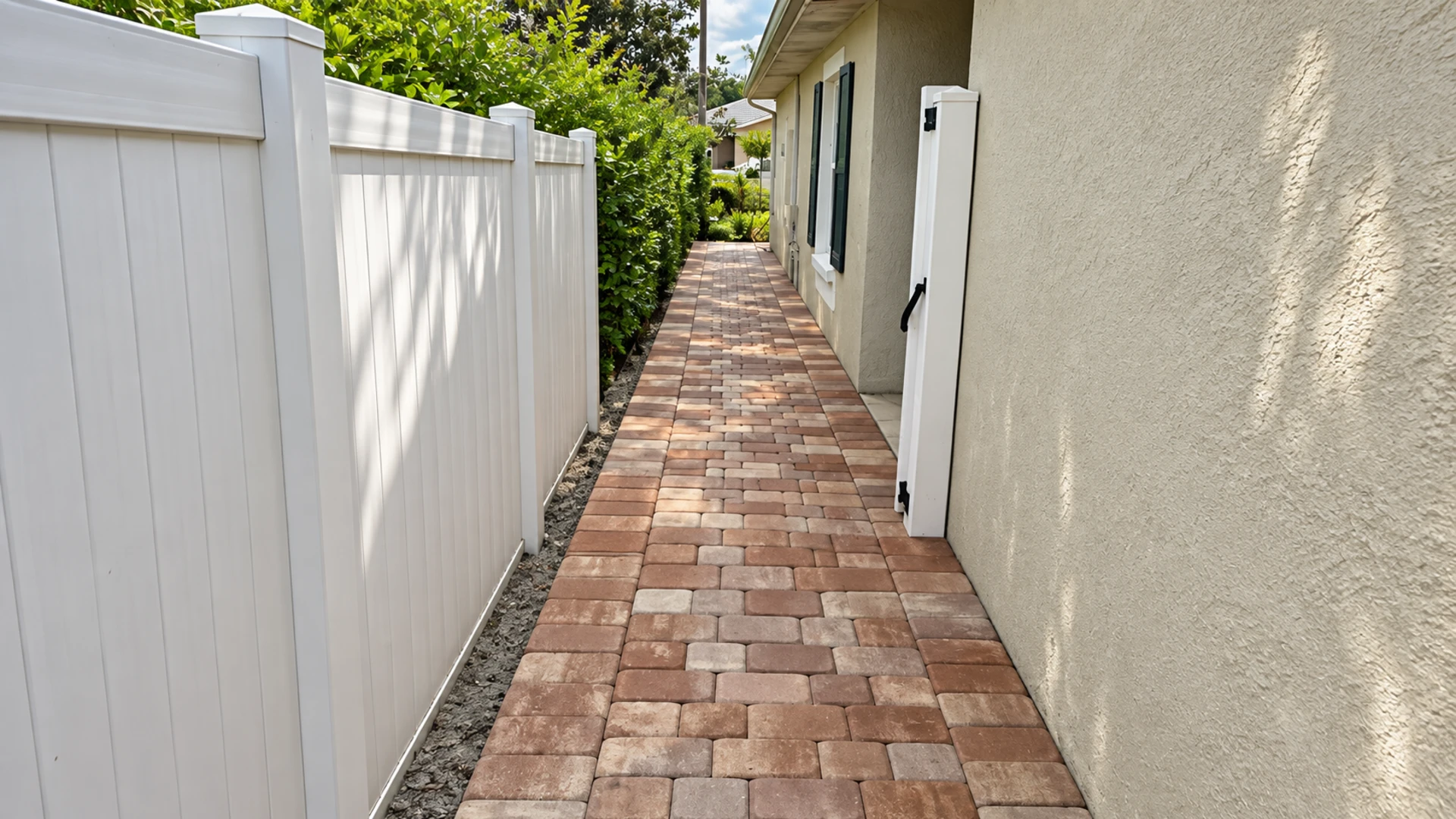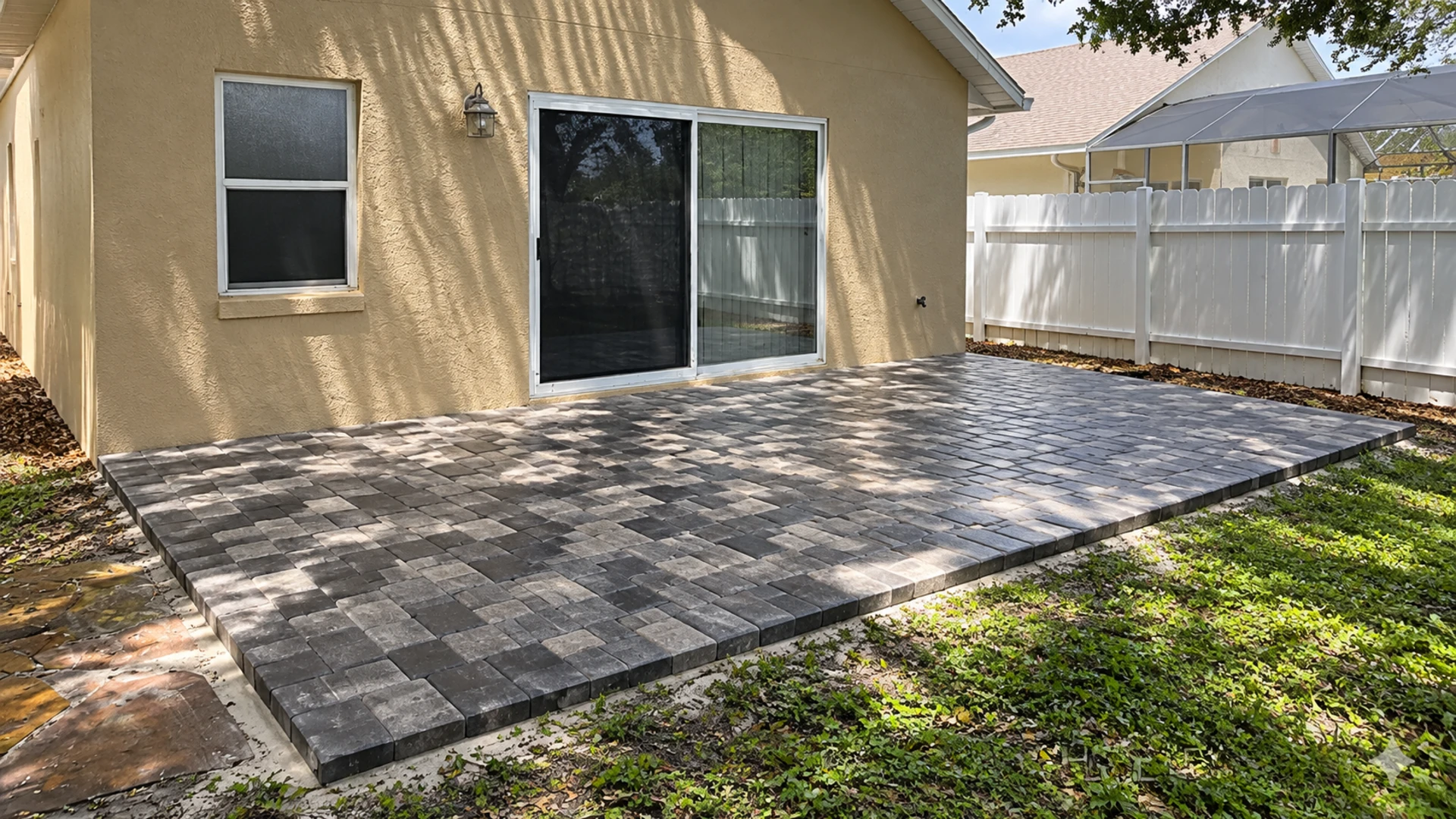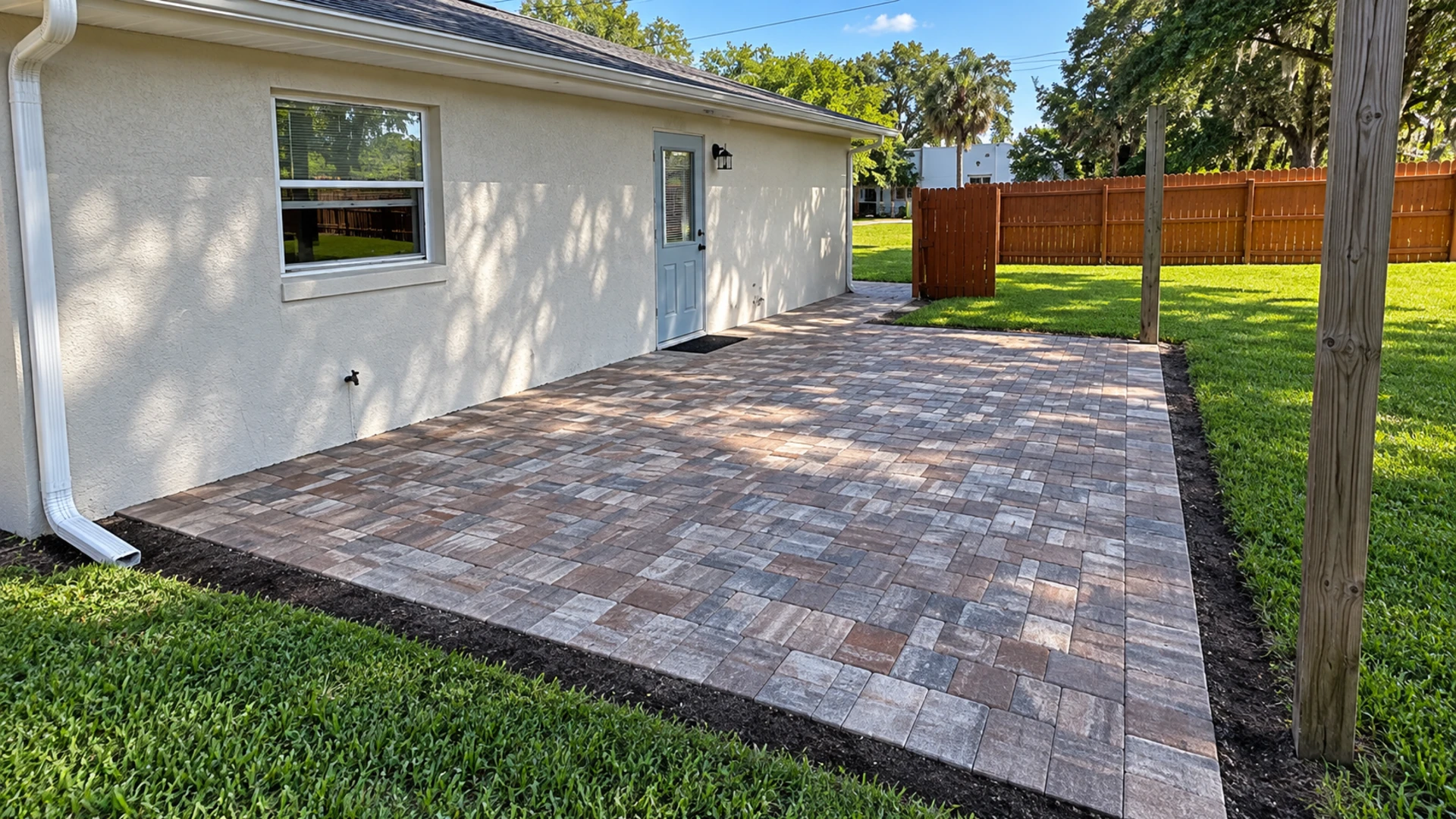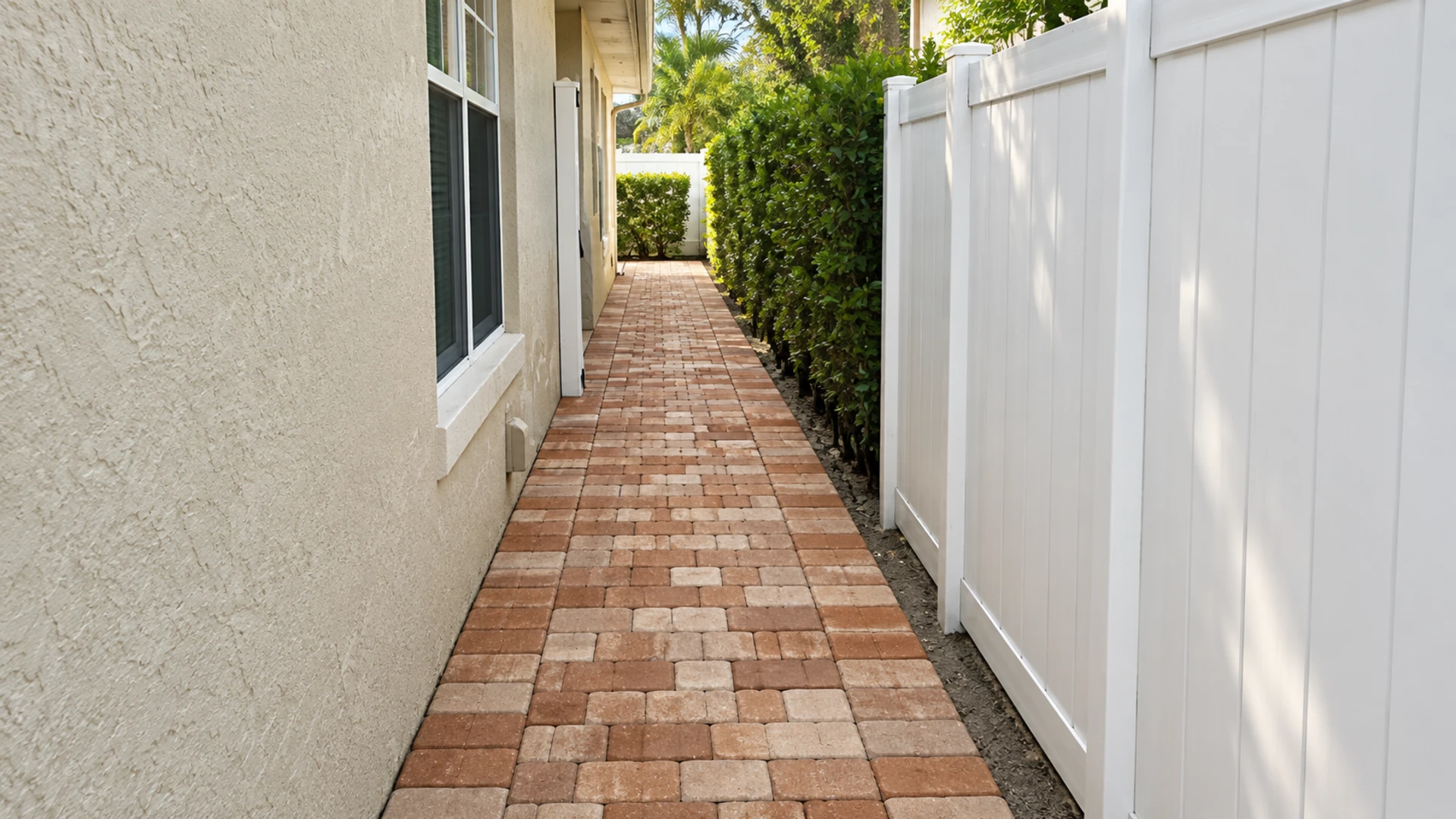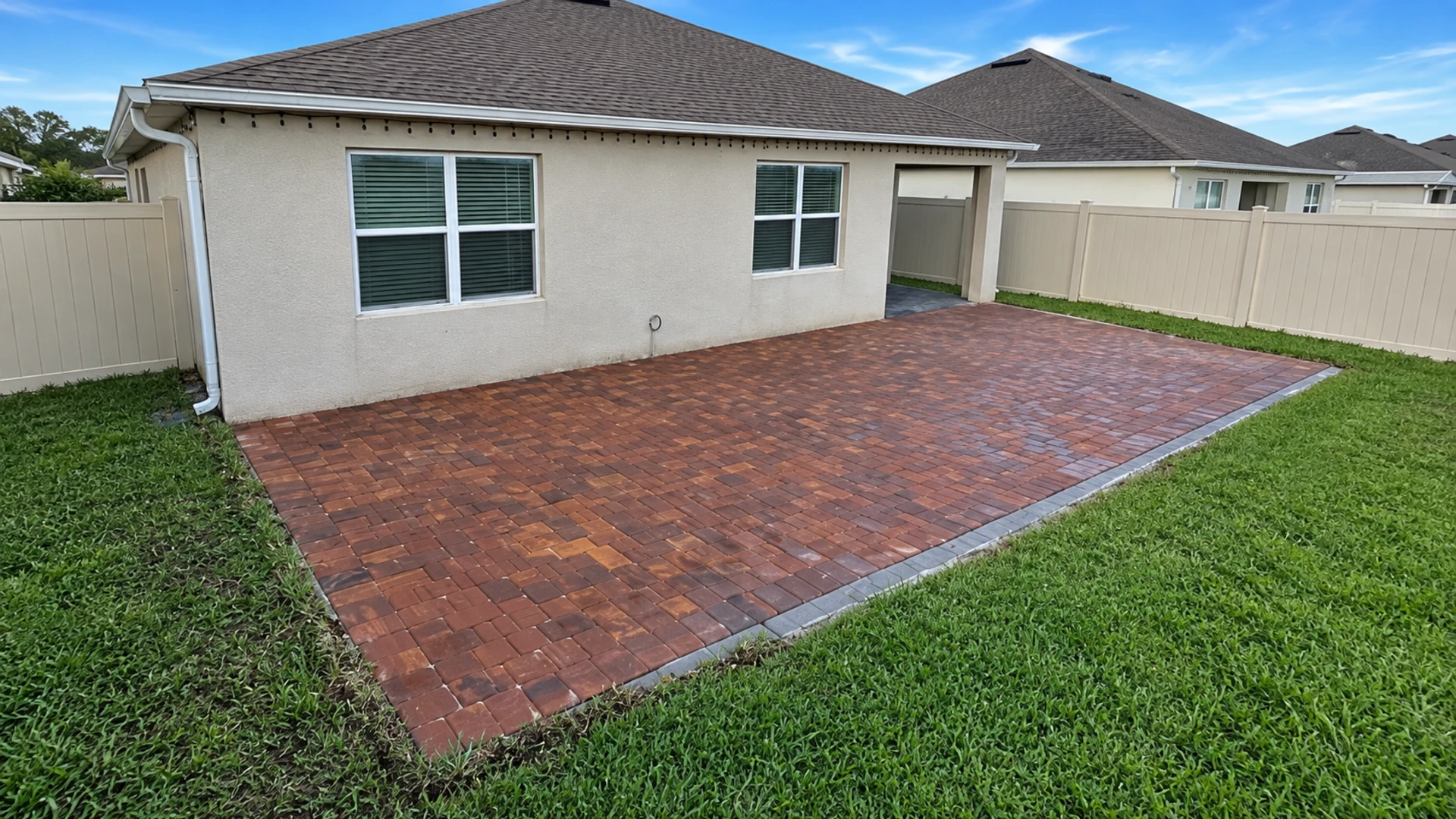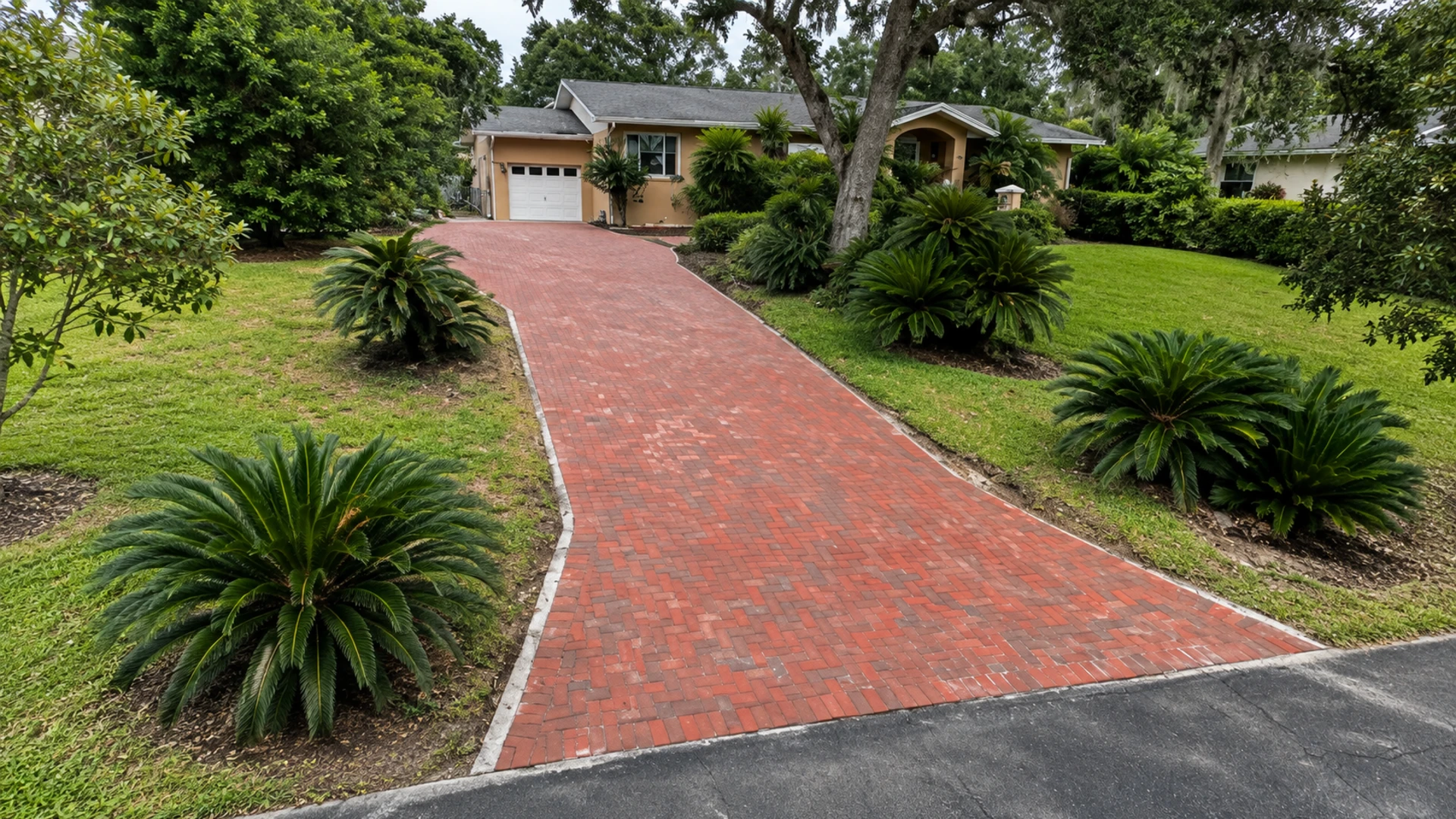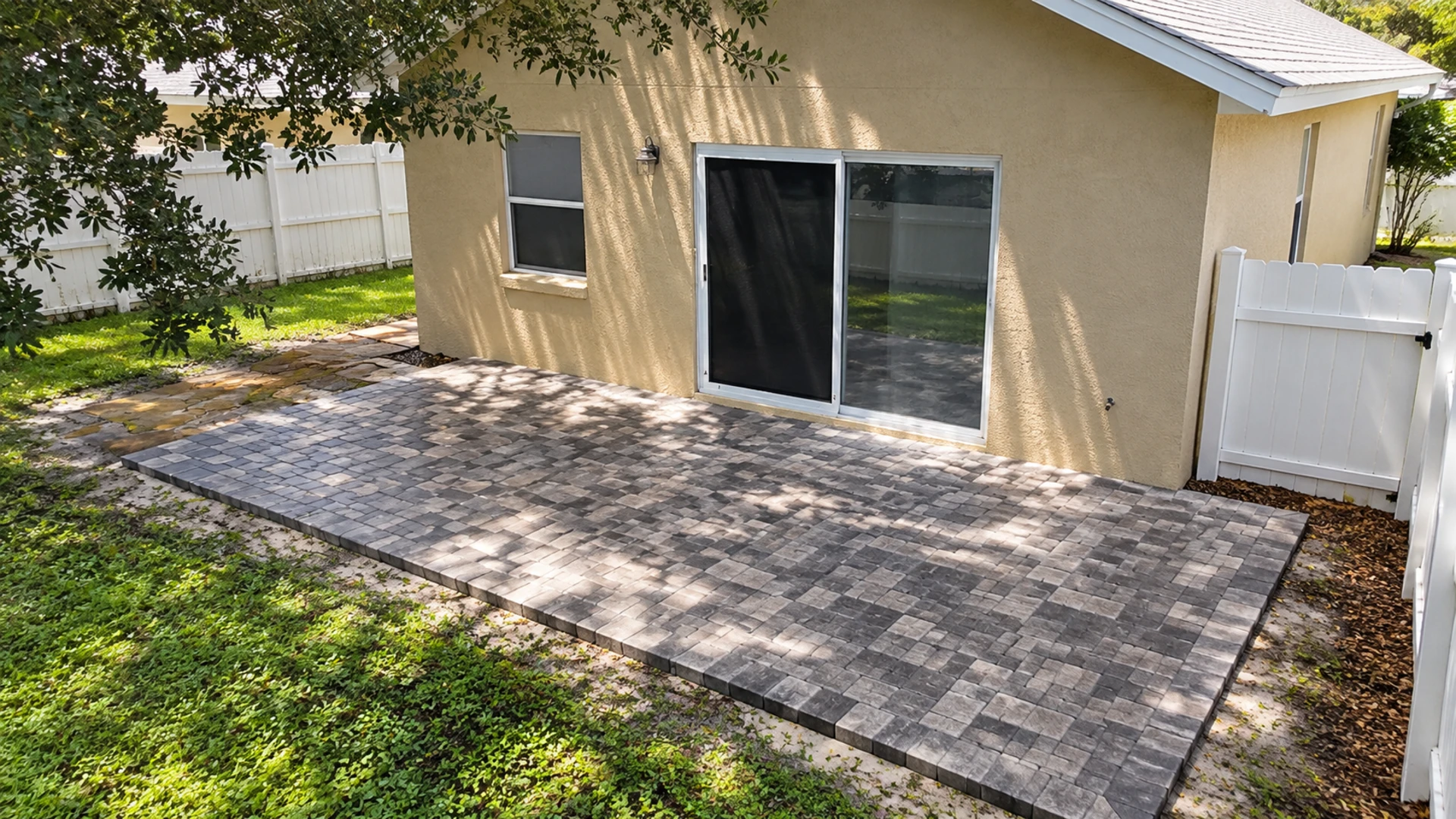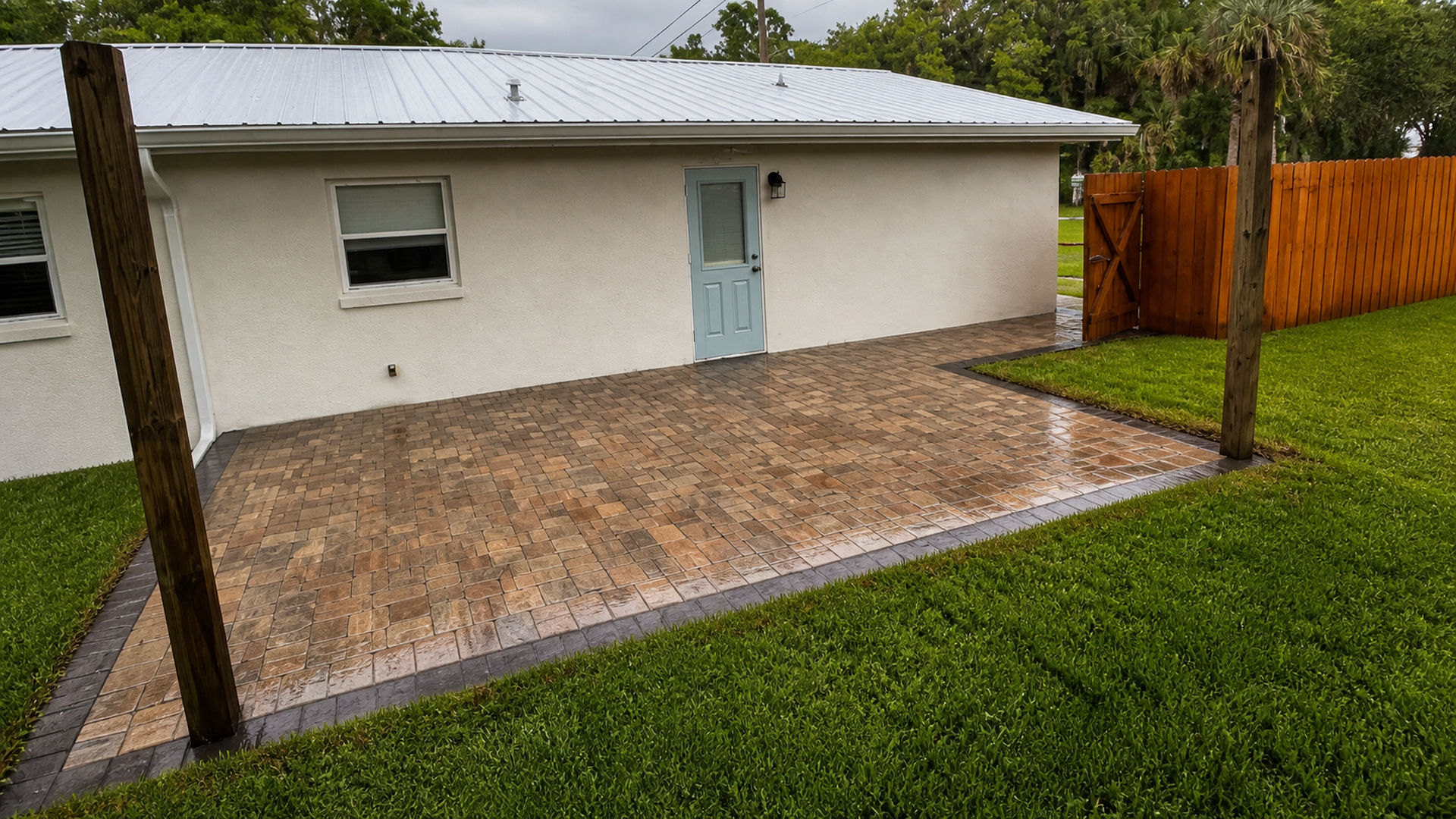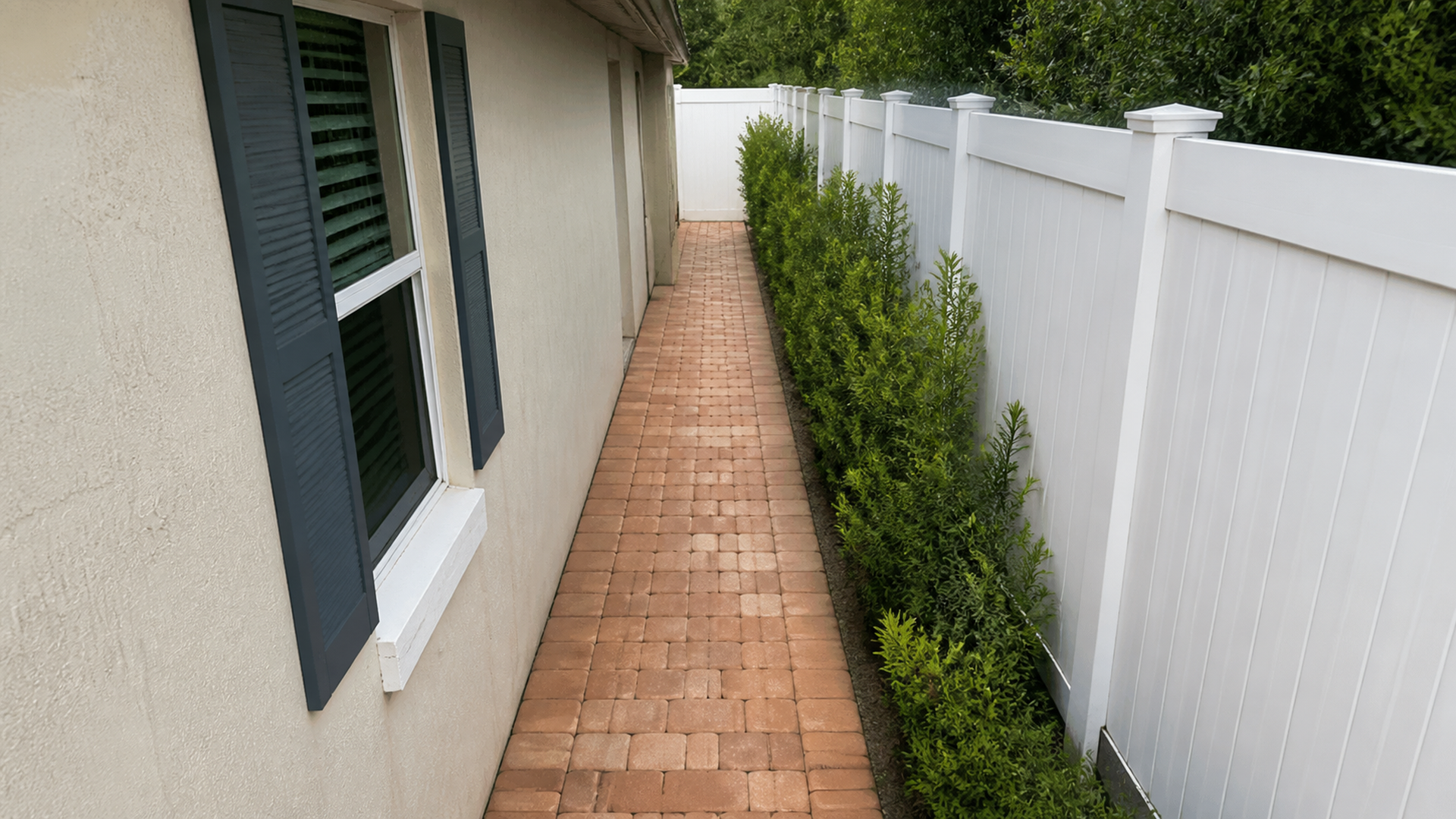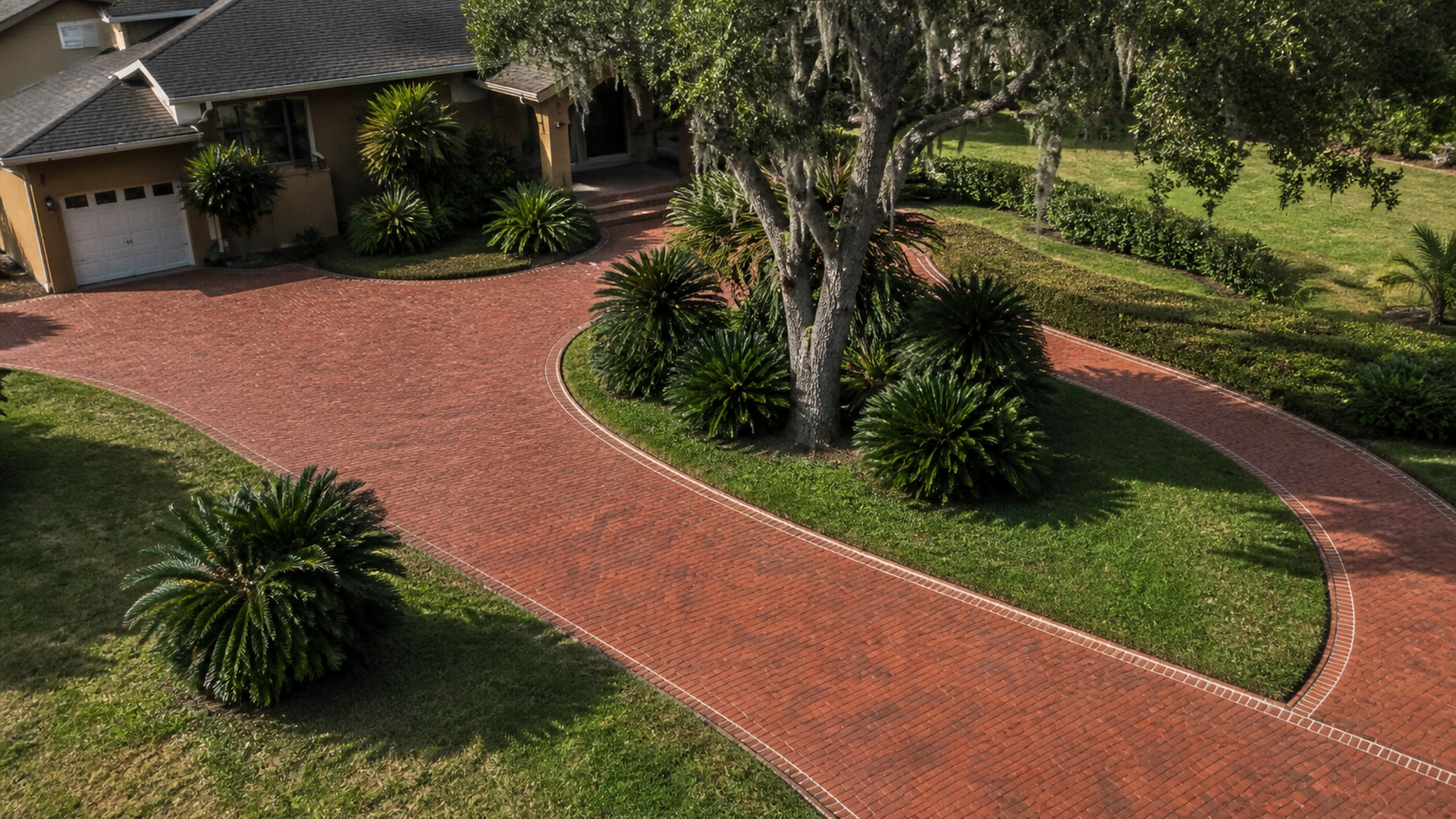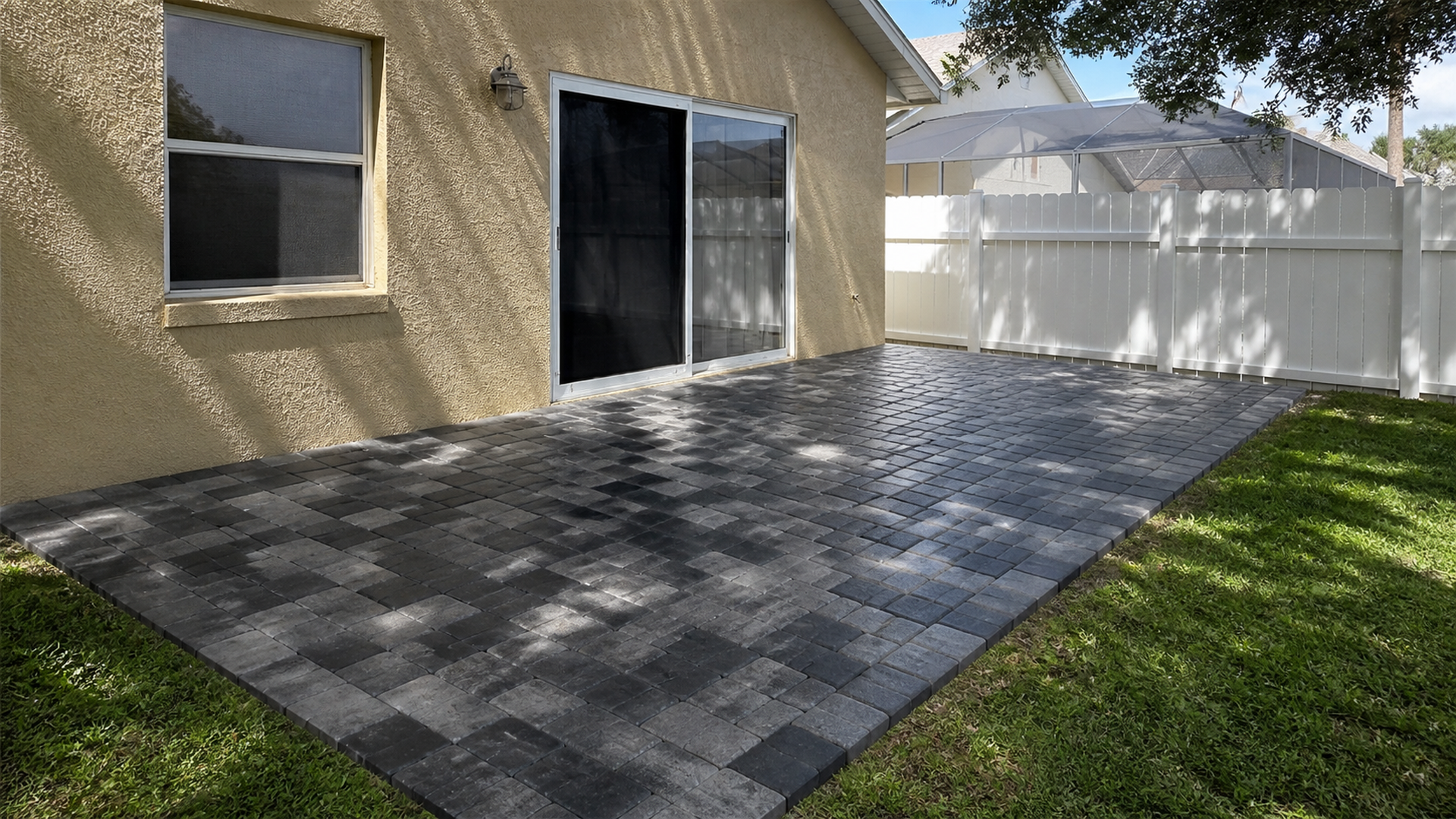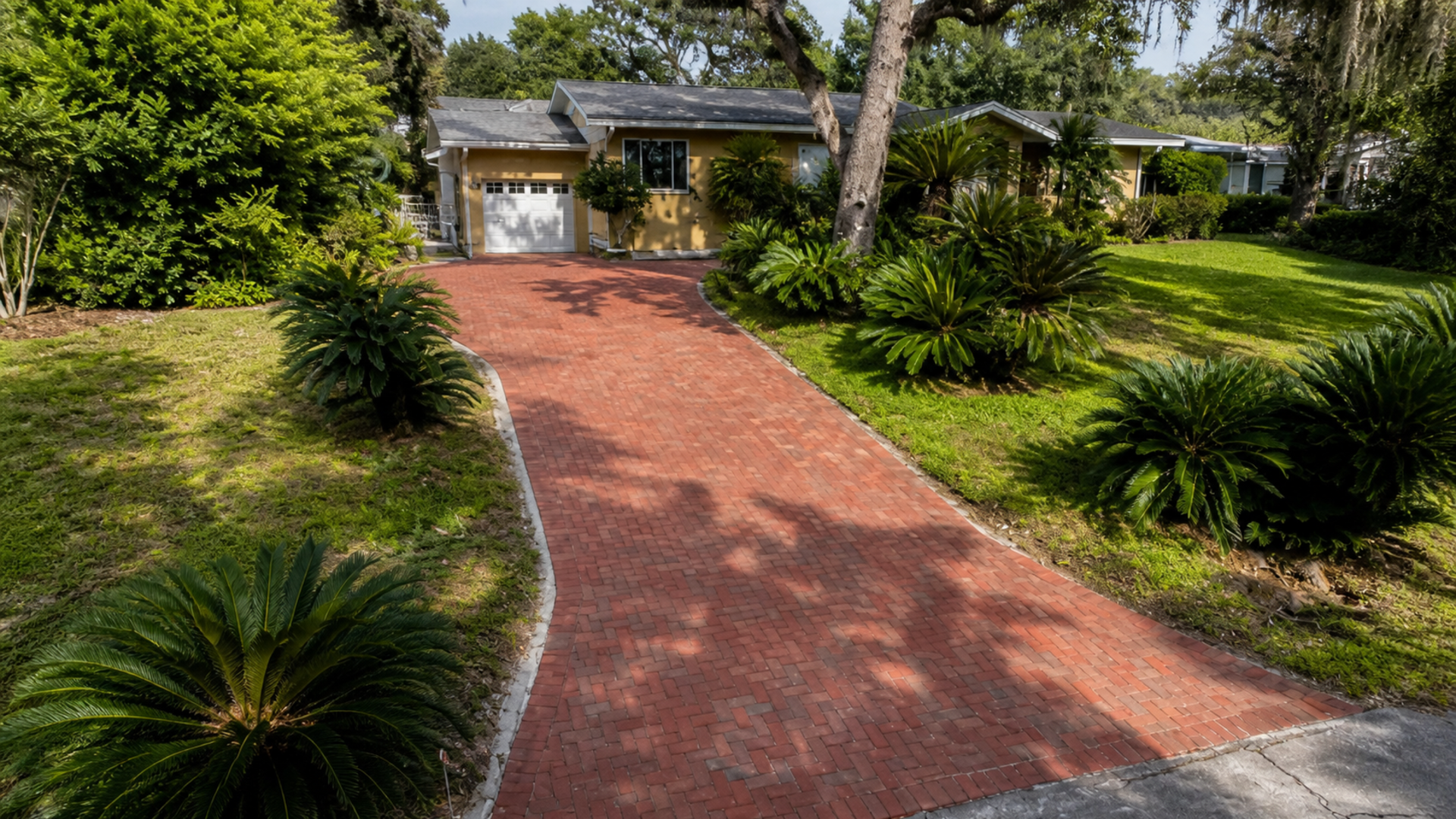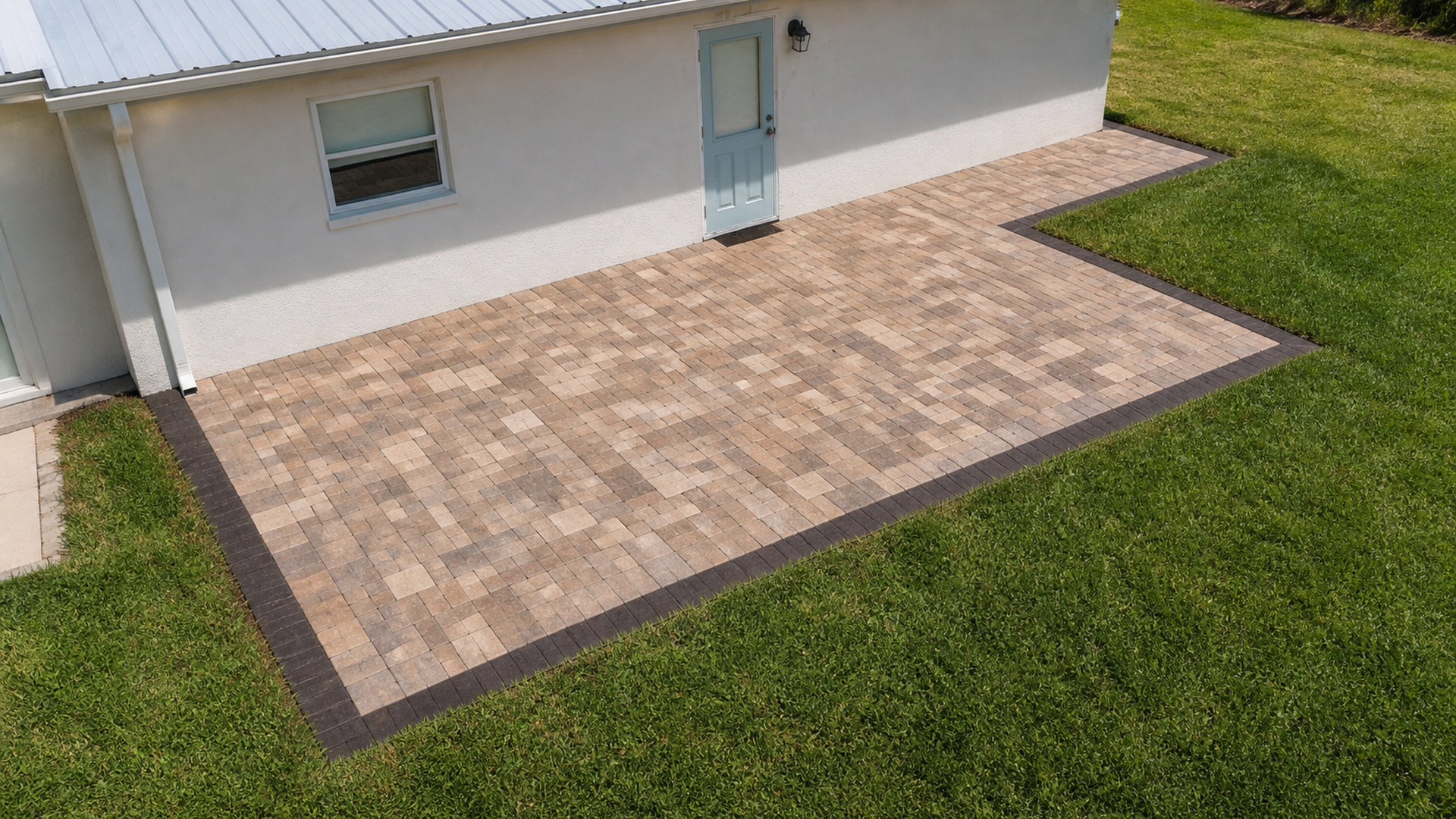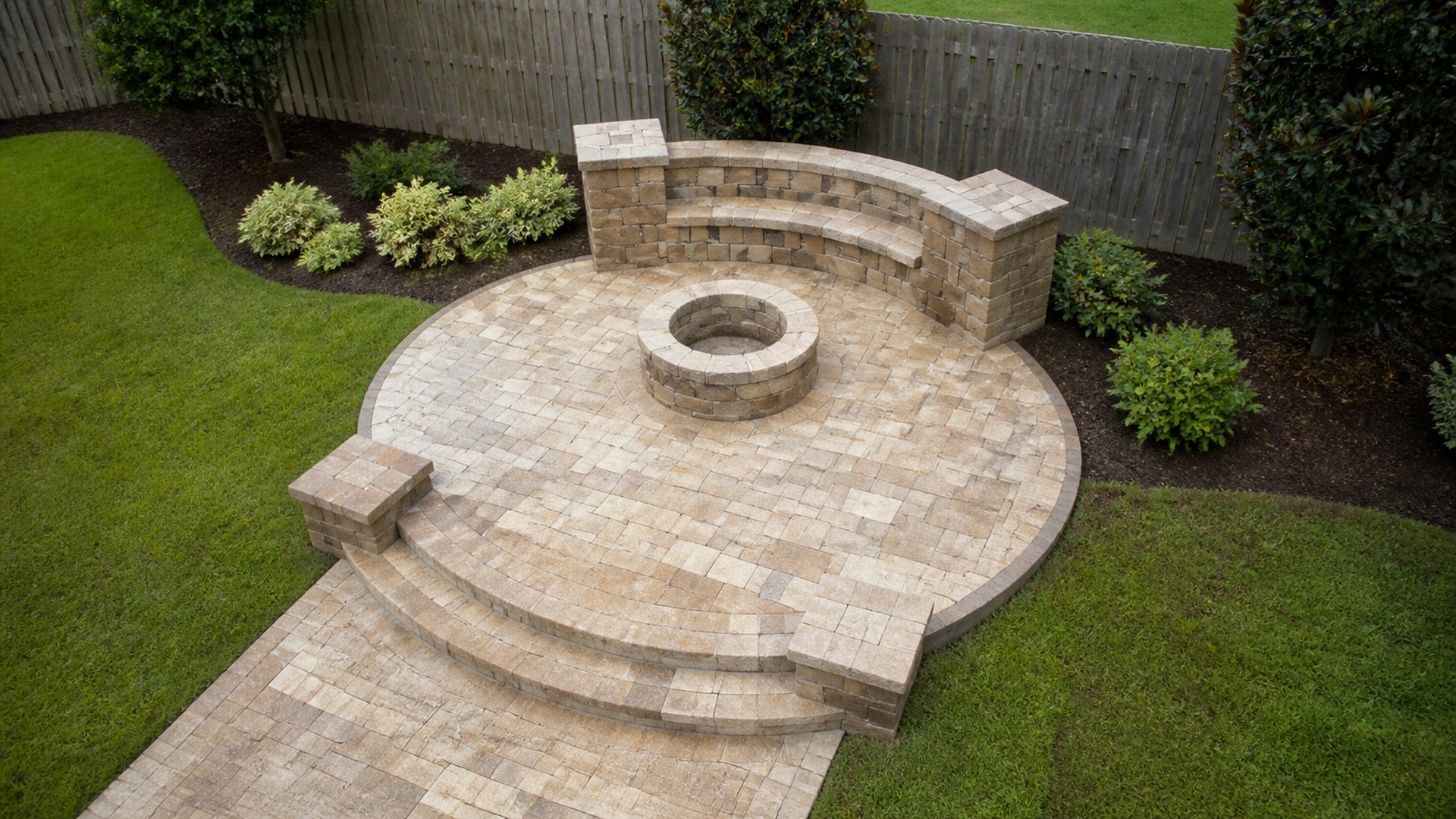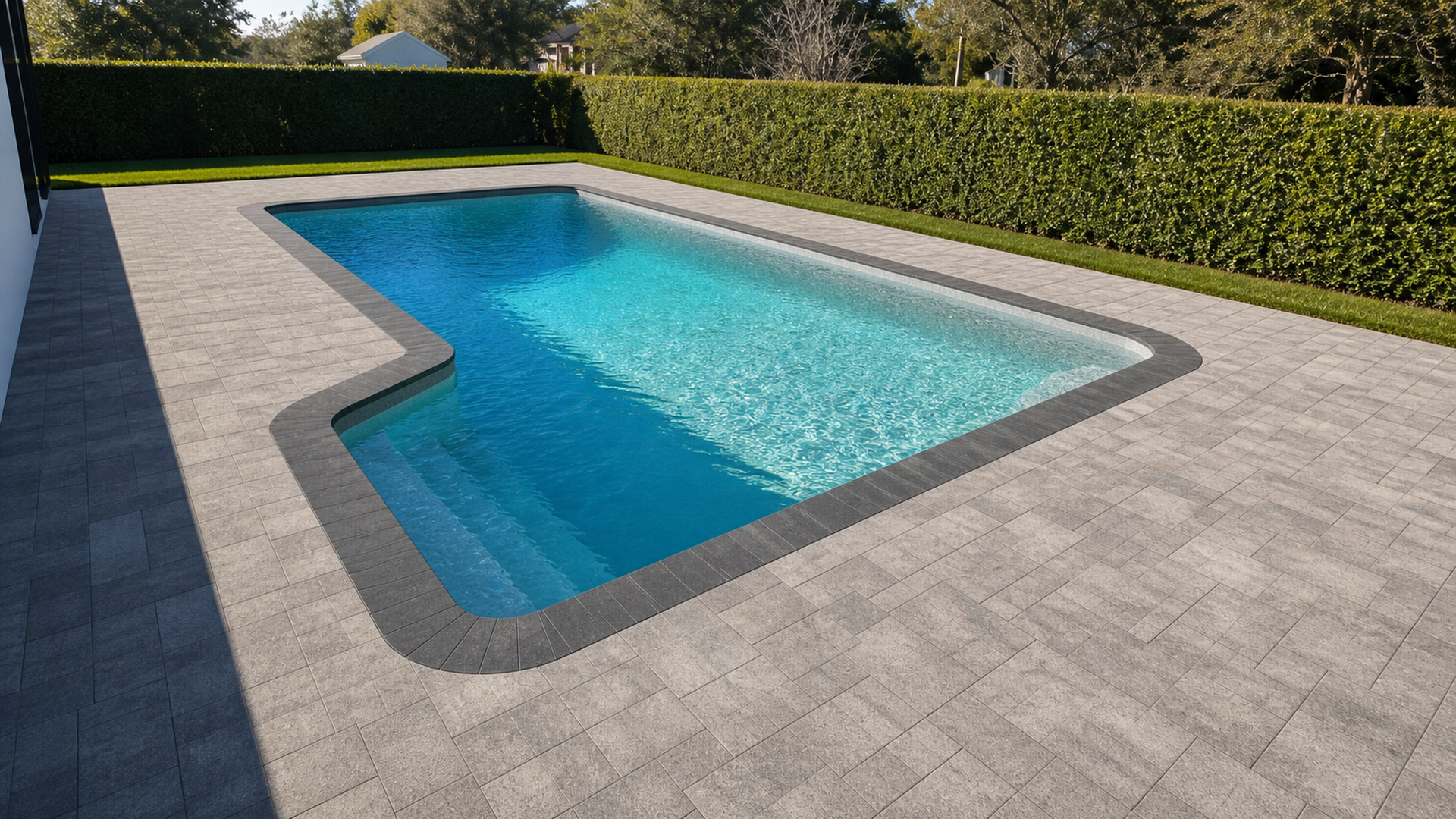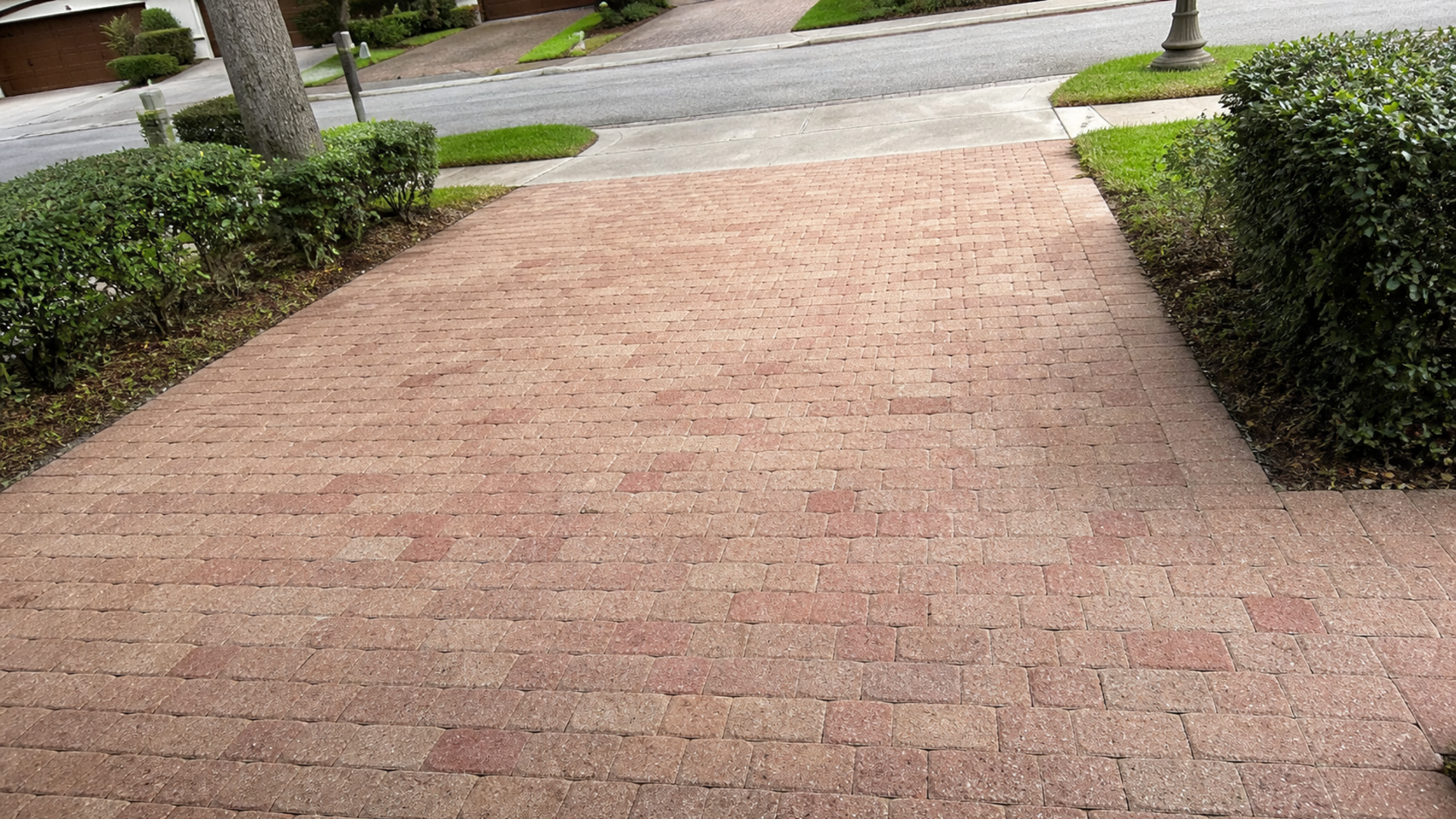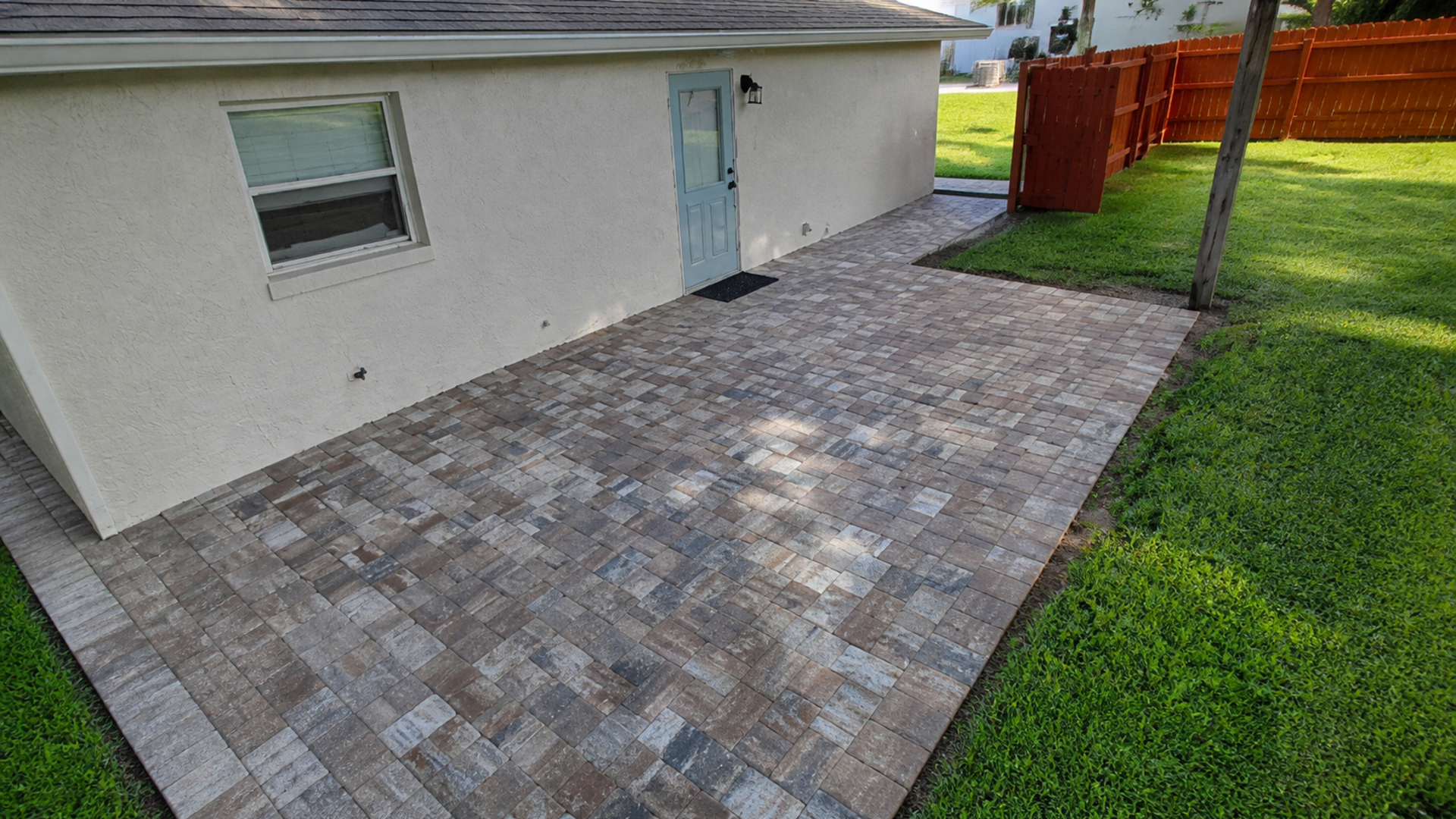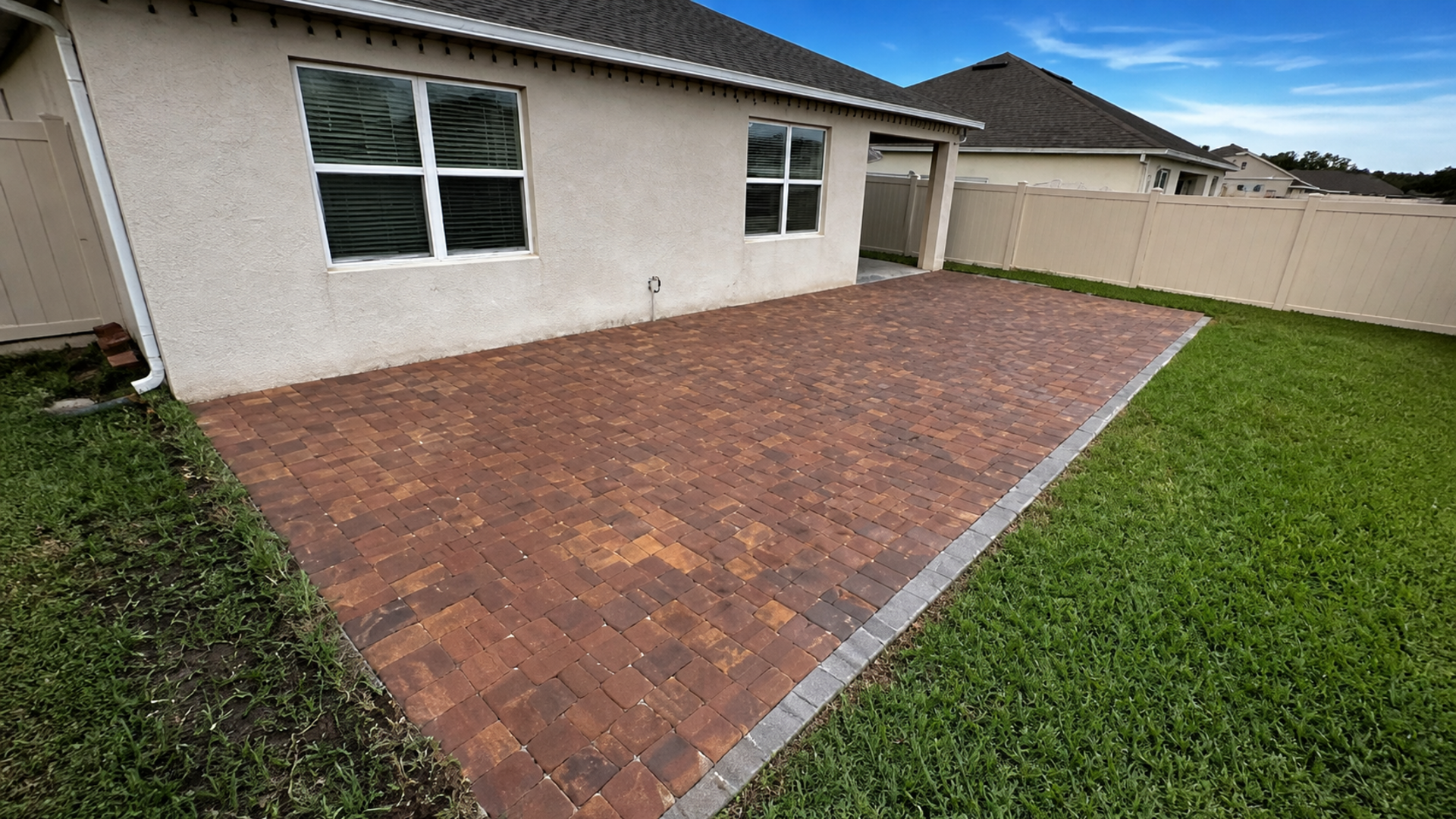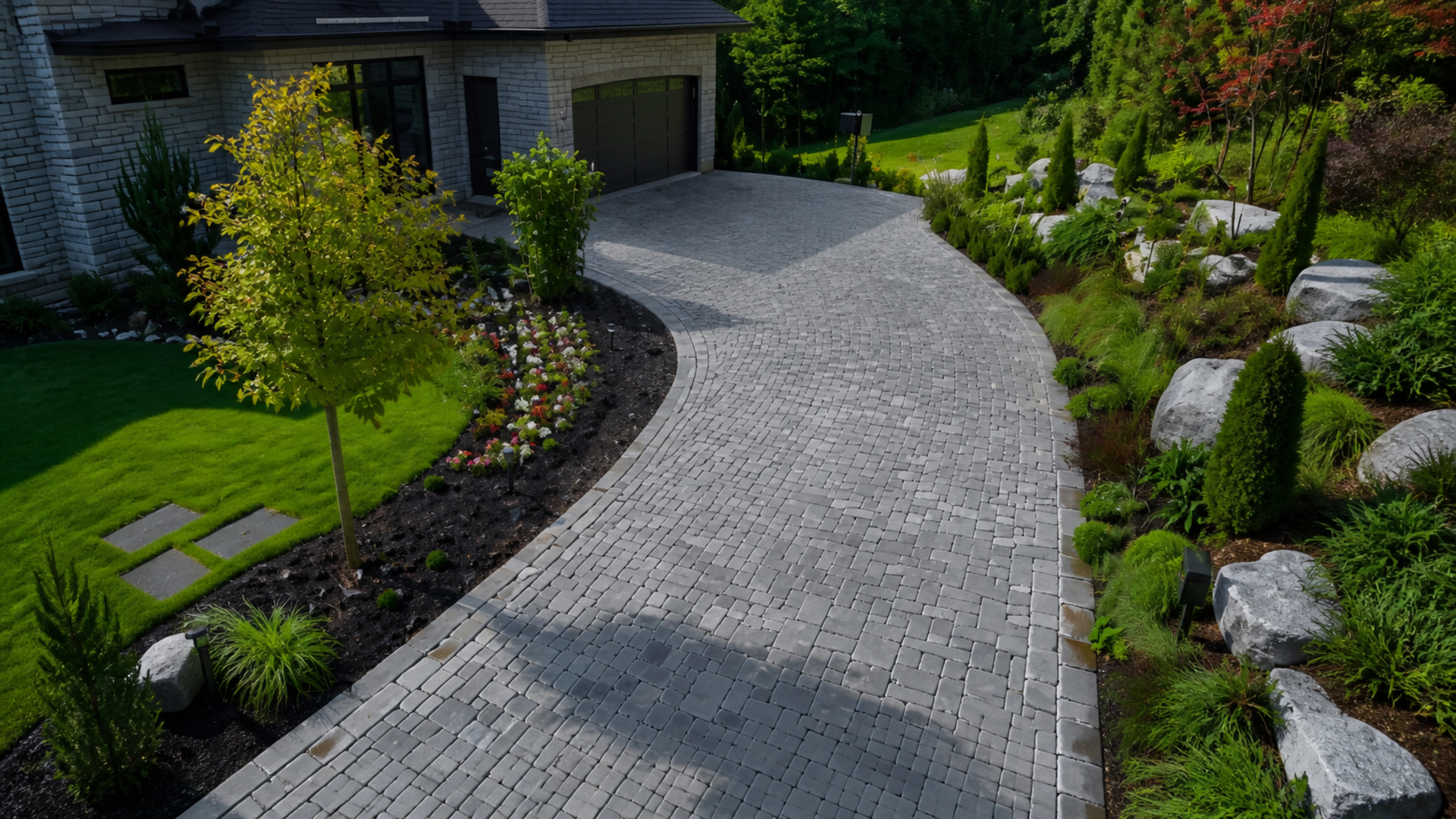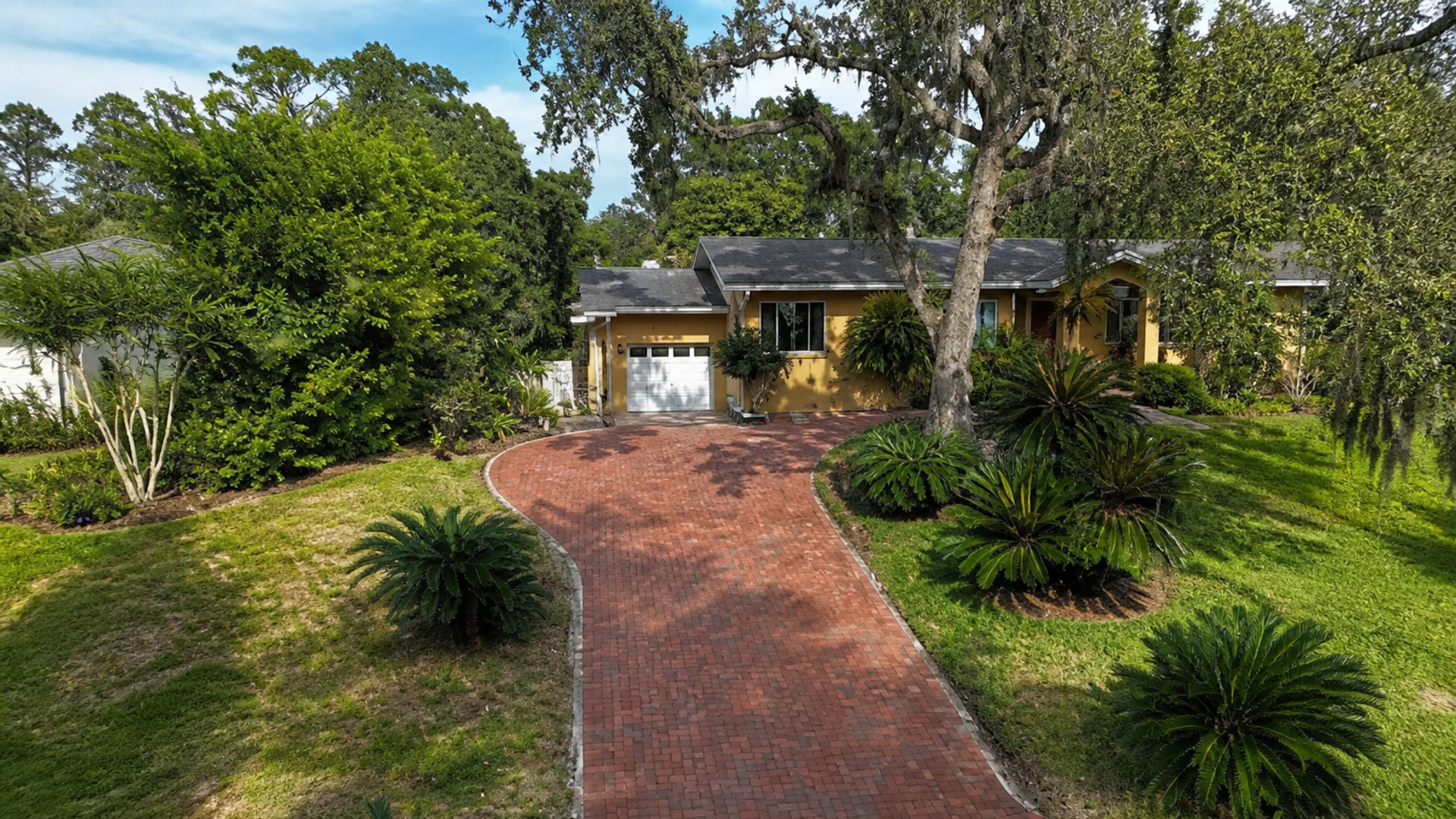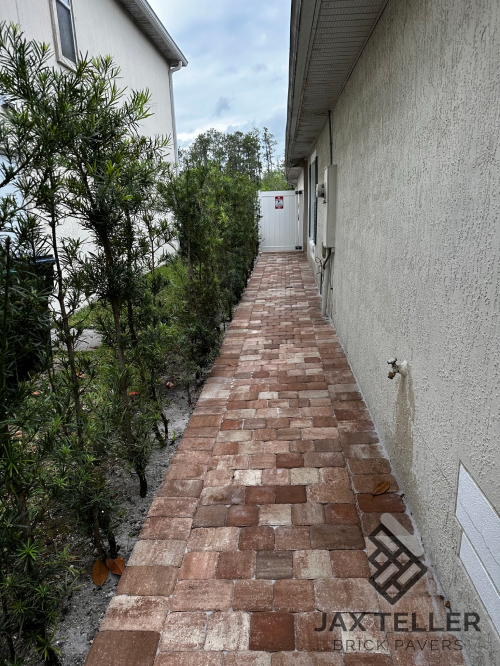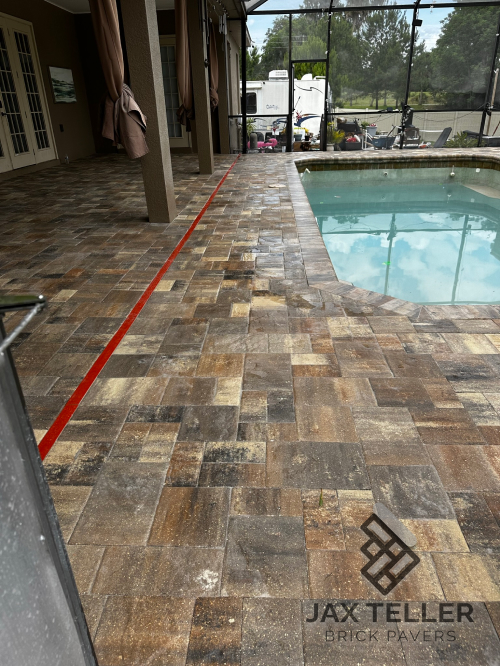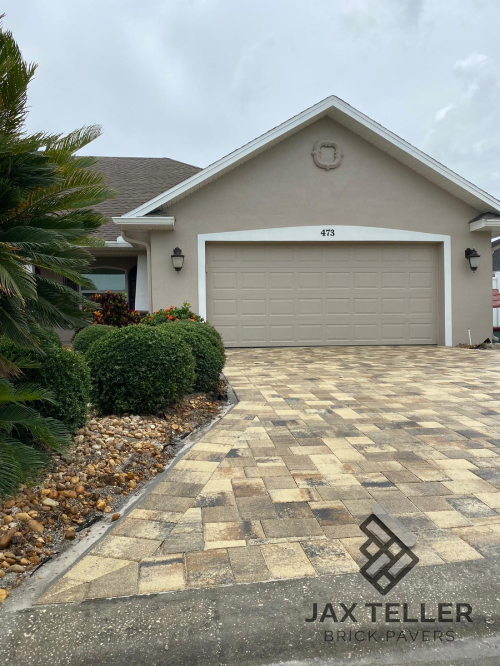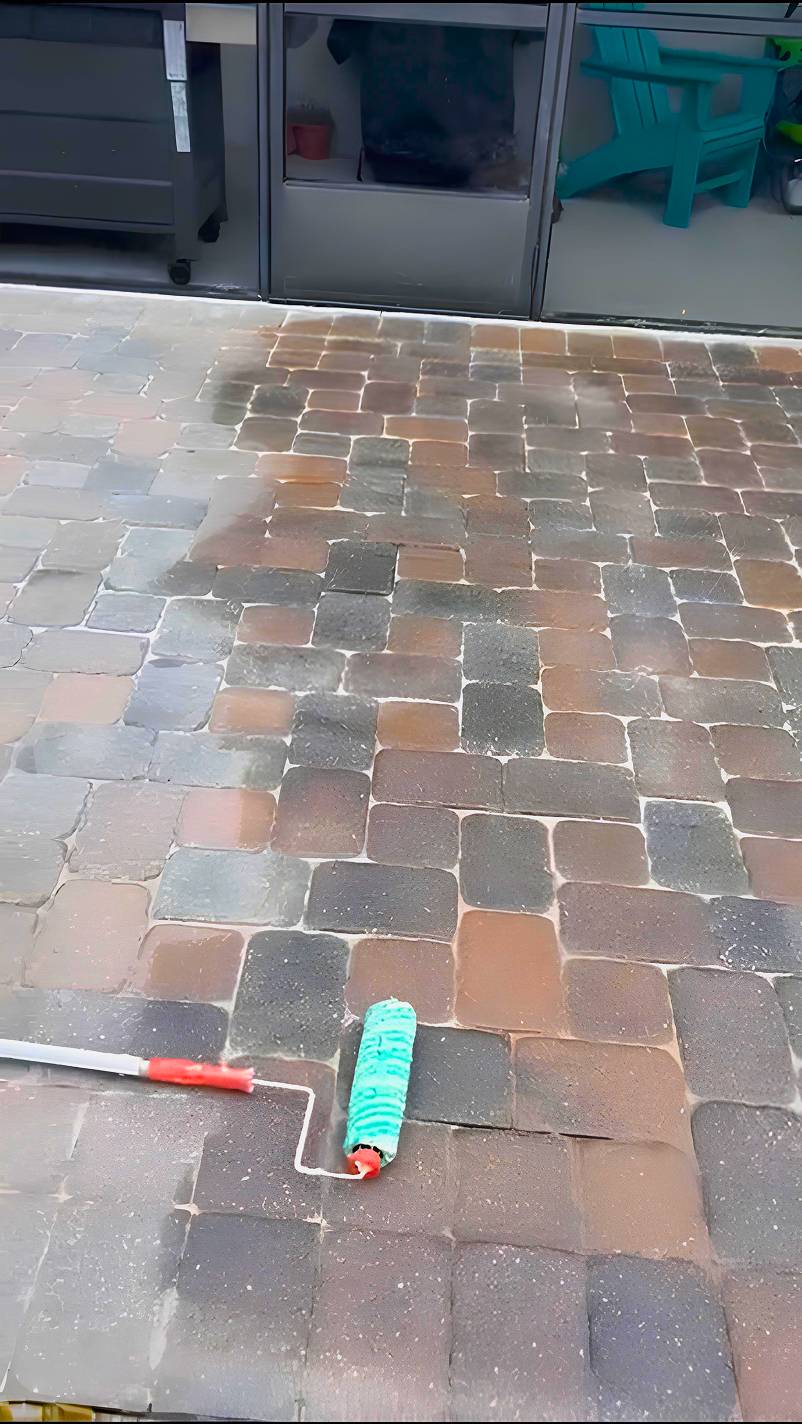

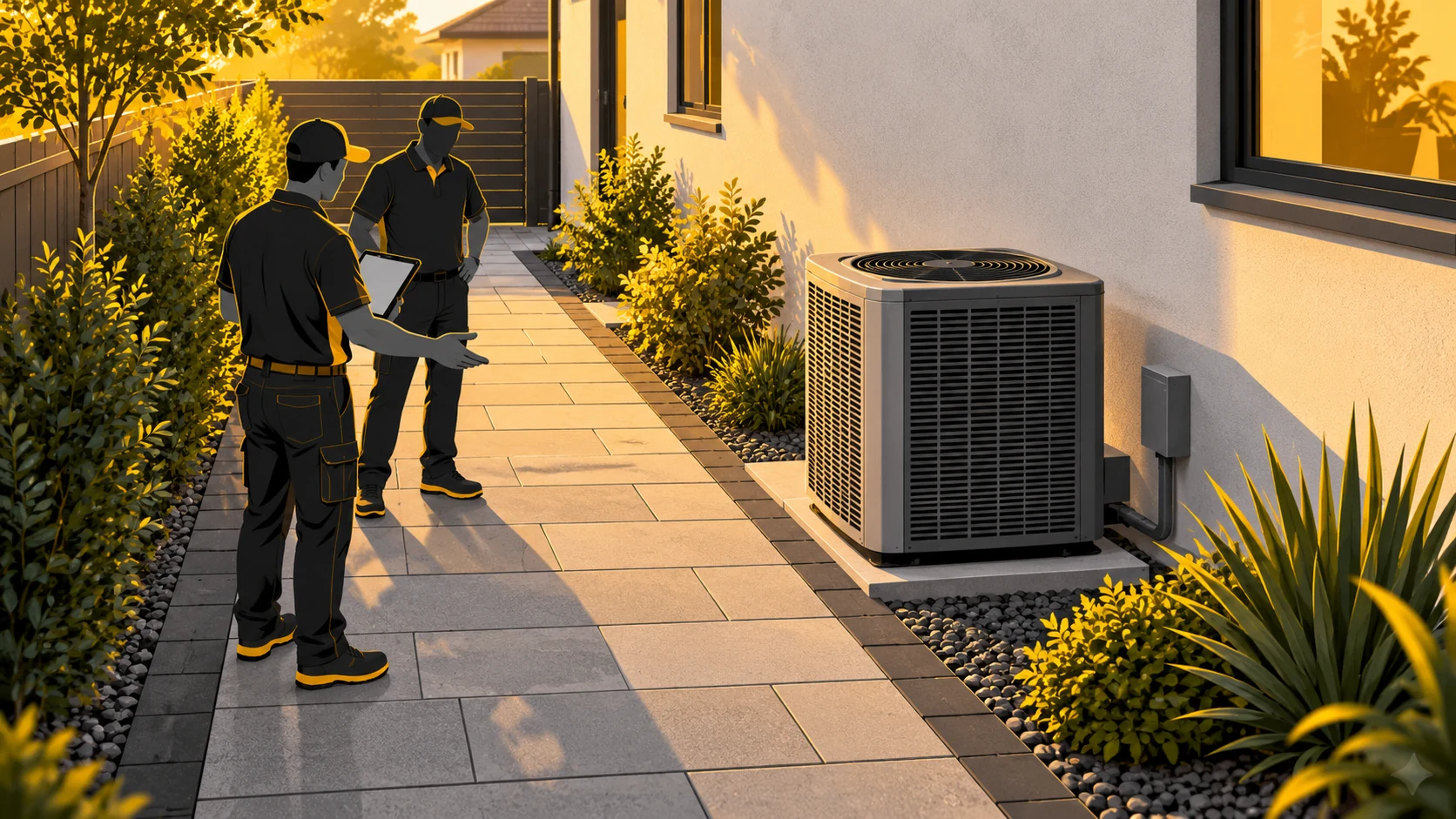
Pavers near AC units should support a usable side yard without making the cooling system harder to service. A tidy walkway can improve the route around a Largo home. However, the paving design must respect the actual equipment, its access needs, and the responsibilities of the HVAC professional. Attractive geometry alone cannot settle those questions.
The useful starting point is a shared review of the walkway and equipment area. This guide explains what to identify, photograph, and discuss before work begins. It does not provide universal clearance dimensions or instructions for moving a condenser. The system's current manufacturer guidance and the appropriate qualified professionals should determine those technical details.
Plan pavers near AC units around the actual equipment
Identify the outdoor unit without opening covers or touching its connections. For example, locate the model information already present in your household records or ask the HVAC provider for help. A generic drawing of a square condenser may not represent the unit installed at your property.
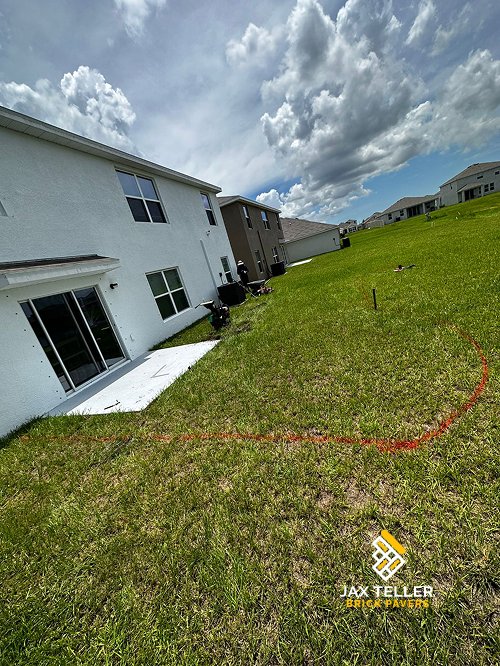
Next, photograph the surrounding setting. Include the house wall, fence, gate, existing path, and the direction from which a technician normally approaches. Moreover, show nearby drains and visible lines without disturbing them. The paving contractor needs this wider context before discussing the proposed route.
Tell the team whether the equipment will remain or forms part of a separate replacement project. Those are different starting conditions. Therefore, confirm which provider controls its final position before approving a walkway that depends on an approximate or temporary location.
Separate pavers near AC units from equipment support
Ask whether the project concerns the walking route, the area around an existing equipment support, or a proposed change to that support. These tasks should not merge silently. A paving proposal does not automatically authorize moving or modifying the cooling system.
The HVAC professional should explain the requirements of the actual equipment and any proposed relocation. Meanwhile, the paving contractor can address the surface and its interfaces within the agreed scope. Keeping those roles clear prevents a gap where each provider assumes the other has approved a critical detail.
Record the distinction in the proposal. For example, the work may preserve the existing unit and support while creating a separate adjacent route. That description is more useful than a broad instruction to pave around the AC without defining which components remain untouched.
Confirm model-specific clearance guidance
Ask the HVAC provider to identify the relevant current installation and service requirements. Then make sure the paving plan reflects them. A measurement repeated online for a different model should not become the default instruction for your property.
For example, Carrier's outdoor placement guidance emphasizes model-specific clearance and access requirements. That supports consulting the actual system information. It does not establish a single dimension for every condenser, heat pump, or side-yard arrangement.
When planning pavers near AC units, distinguish airflow space from the room needed for service activities. The HVAC professional can explain the relevant requirements. The homeowner can then understand why a visually open corner may still need a different layout or a wider practical approach.
Keep the technician's route visible
Think beyond the empty space immediately beside the cabinet. A technician needs a way to reach the equipment from the gate or driveway. Therefore, review the whole approach, including turns, steps, and narrow points beside planting beds or storage items.
Ask how routine maintenance and a possible future replacement would use the route. Those activities may raise different questions. Moreover, tell the provider about any fixed object that cannot simply move out of the way on service day.
A walkway that looks continuous on a drawing may still encounter a gate opening into the route. Walk through that movement before finalizing the layout. This practical review helps the team connect the paving design with real access rather than assuming every open strip works the same way.
Identify visible services without disturbing them
Show the contractor visible refrigerant lines, electrical components, and drainage-related features from a safe distance. Moreover, share reliable records about buried services when available. Do not dig, disconnect, or probe anything to prepare for an estimate.
Ask which provider will confirm the location and protection of relevant services before construction. The answer should fit the actual project and local requirements. A homeowner's memory of where a line probably runs should remain a useful observation, not the final locating method.
If the contractor encounters an unexpected feature, the agreed process should pause the affected work and involve the appropriate professional. Therefore, establish that process before installation. A clear boundary around uncertainty can prevent a small walkway project from becoming an improvised equipment alteration.
Discuss water observations with the right provider
Note recurring damp areas, visible discharge, and puddles along the proposed route. For example, photograph where the path remains wet and identify when you notice it. However, do not diagnose the cooling system or assume every damp patch comes from the condenser.
The HVAC provider should assess equipment-related drainage questions within its role. The paving contractor can evaluate the relationship between the surface, levels, and the approved arrangement. Together, those discussions help define the next step without treating paving as a cure for an unresolved mechanical issue.
Do not redirect an unidentified pipe or conceal its outlet beneath new work. Instead, ask the relevant professional to confirm its purpose and appropriate treatment. That keeps the final surface from hiding a question that later requires unnecessary removal or another service visit.
Review levels and edges for pavers near AC units
Ask how the proposed route meets existing paving, the equipment area, and the yard. Moreover, identify thresholds or covers that will remain. The installer should explain the appropriate levels and edge details for the actual site rather than copy a generic side-yard section.
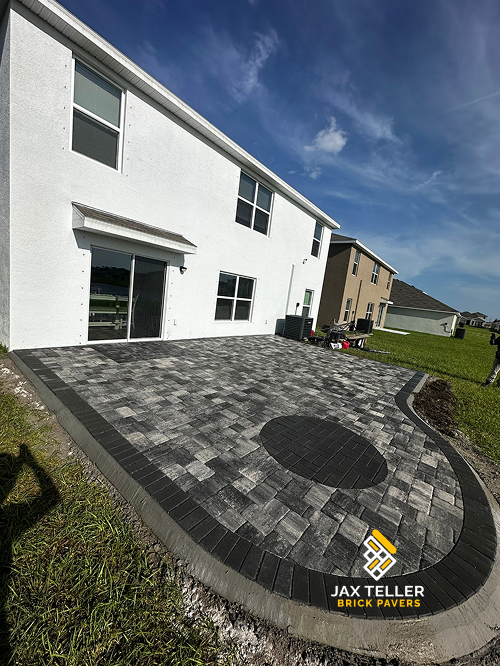
Pavers near AC units can create a clean-looking path while still needing careful treatment at an existing support. Therefore, review that interface explicitly. A decorative border should not obscure an unresolved question about the support, equipment, or service clearance.
If an edge must change during the project, revisit the whole relationship. A small shift toward the unit may alter the agreed access arrangement. Keeping a current marked photograph or drawing makes that change visible to both the paving and HVAC providers before it becomes part of the finished work.
Choose materials for the route's actual use
Tell the contractor how the path will function outside service visits. For example, it may also connect the front and backyard or provide access for routine household tasks. The selected material and layout should reflect those uses alongside the equipment constraints.
Ask which product information supports the proposed application. A sample can help you compare appearance, but it does not establish every technical suitability question. Moreover, confirm how the path will meet any existing surface you intend to preserve.
Keep care requirements in the decision. A narrow side yard may be harder to clean around fixed equipment than an open patio. Therefore, ask for a maintenance approach that respects both the paving and nearby components rather than assuming a broad pressure-washing method fits every part of the property.
Avoid turning the service area into storage
After installation, an attractive paved strip can become a convenient place for bins, planters, or spare materials. However, those additions may narrow the access and clear space that the original design preserved. Keep the equipment requirements available when arranging the finished yard.
Review pavers near AC units after adding any large object nearby. Ask whether the item changes the approved airflow or service conditions. The relevant professional should answer technical questions; a homeowner should not rely only on the fact that the unit still appears to run.
Keep movable clutter off the normal approach before a service appointment. Moreover, tell the technician about any change since the last visit. A clear route helps the provider assess the system without turning a routine appointment into an unplanned furniture-moving or access problem.
Coordinate pavers near AC units with HVAC work
If equipment replacement is already planned, ask both providers to agree on the sequence. For example, the final unit position and support may need confirmation before adjacent paving reaches completion. The right order depends on the actual scope, not a universal rule that one trade always goes first.
Use one current drawing or marked photograph to identify the final arrangement. Then record the relevant decisions and who approved them. A revised equipment size can affect a previously acceptable route, even when the homeowner still describes the job as replacing the same AC.
If schedules change, revisit the dependencies rather than forcing the paving crew to finish around uncertainty. A clear pause point may protect completed work and avoid unnecessary rework. The homeowner benefits from knowing which decision unlocks the next phase rather than receiving unrelated appointment dates from separate providers.
Compare estimates by the work they actually include
Read whether the paving proposal identifies its limits around the equipment. Does it preserve the existing support, exclude mechanical work, and identify coordination assumptions? Moreover, does it explain removal, preparation, material, and edge work within the agreed area?
A quote that covers only a visible strip is different from one that includes broader transition work. Therefore, align the scope before comparing the totals. Ask the contractor to describe any condition that could trigger a change and how you would approve that change.
Do not treat a promise to make the area look neat as a complete service-access plan. A useful estimate connects the visual goal with the confirmed constraints. That makes it easier to understand both the proposed result and the responsibilities that remain with another provider.
Use a side-yard example to test the plan
Imagine a home with a narrow route between a fence and an outdoor condenser. The homeowner wants a continuous paved path to the backyard. A first sketch shows enough apparent walking space. However, an HVAC review identifies a service task that needs a different approach.
The team can then compare a revised path boundary, a different gate arrangement, or a separately assessed equipment change. Each option needs its own technical and scope review. The homeowner can choose among clear alternatives rather than discover the access conflict during a future repair visit.
This hypothetical example shows why the equipment review belongs before final paving approval. It does not prove that any particular side yard requires relocation or a special material. Instead, it demonstrates how real tasks and model-specific information can improve the practical design without relying on a one-size-fits-all clearance number.
Check the completed route with the agreed references
During closeout, walk the approach and compare the result with the current plan. Then ask the appropriate providers to explain the completed interfaces and any remaining instructions. Do not open equipment or perform a mechanical test as part of the paving walkthrough.
Photograph the finished route from the same viewpoints used during planning. Moreover, keep the equipment reference and relevant service guidance with the paving records. These documents make it easier to explain the arrangement to a future provider without recreating the whole conversation.
If a concern remains, identify the exact location and task affected. A clear statement such as the gate blocks the agreed approach gives the team something to review. It is more useful than a general complaint that the side yard feels tight after installation.
Preserve a clear handoff for future providers
A different HVAC company may service the system later. Therefore, keep the model reference, current arrangement, and relevant paving decisions in a compact household record. The next provider should know which work changed the path and whether the equipment itself remained in its original position.
Likewise, a future paving contractor benefits from understanding the equipment constraints before proposing another extension. A dated photograph and a clear note can prevent an old service area from appearing to be unused space. Moreover, record any later change to the gate, fence, or equipment so the information does not become misleading.
This handoff does not certify the system forever. It simply preserves the assumptions behind the completed work. If the actual equipment or intended route changes, the appropriate professional should reassess the current situation rather than rely on an old photograph as universal approval.
Request a coordinated walkway assessment in Largo
JaxTeller's paver walkway service is a relevant starting point for the surface discussion. Share photographs, the intended route, and any equipment requirements your HVAC provider has confirmed. In addition, review project examples to communicate the appearance you prefer.
A useful plan for pavers near AC units combines a deliberate walkway with confirmed service constraints. Therefore, ask for a proposal that makes those responsibilities clear. The result should help you understand the next decision, not merely offer a neat-looking line beside equipment that still needs assessment.
Ready to enhance your walkway with pavers? Use the contact page, follow JaxTeller on Instagram and Facebook, or discuss your project on WhatsApp. Location details appear on the map. Contact JaxTeller Brick Pavers at +1 407-907-8308 or jaxtellerbrickpavers@gmail.com for your free estimate!