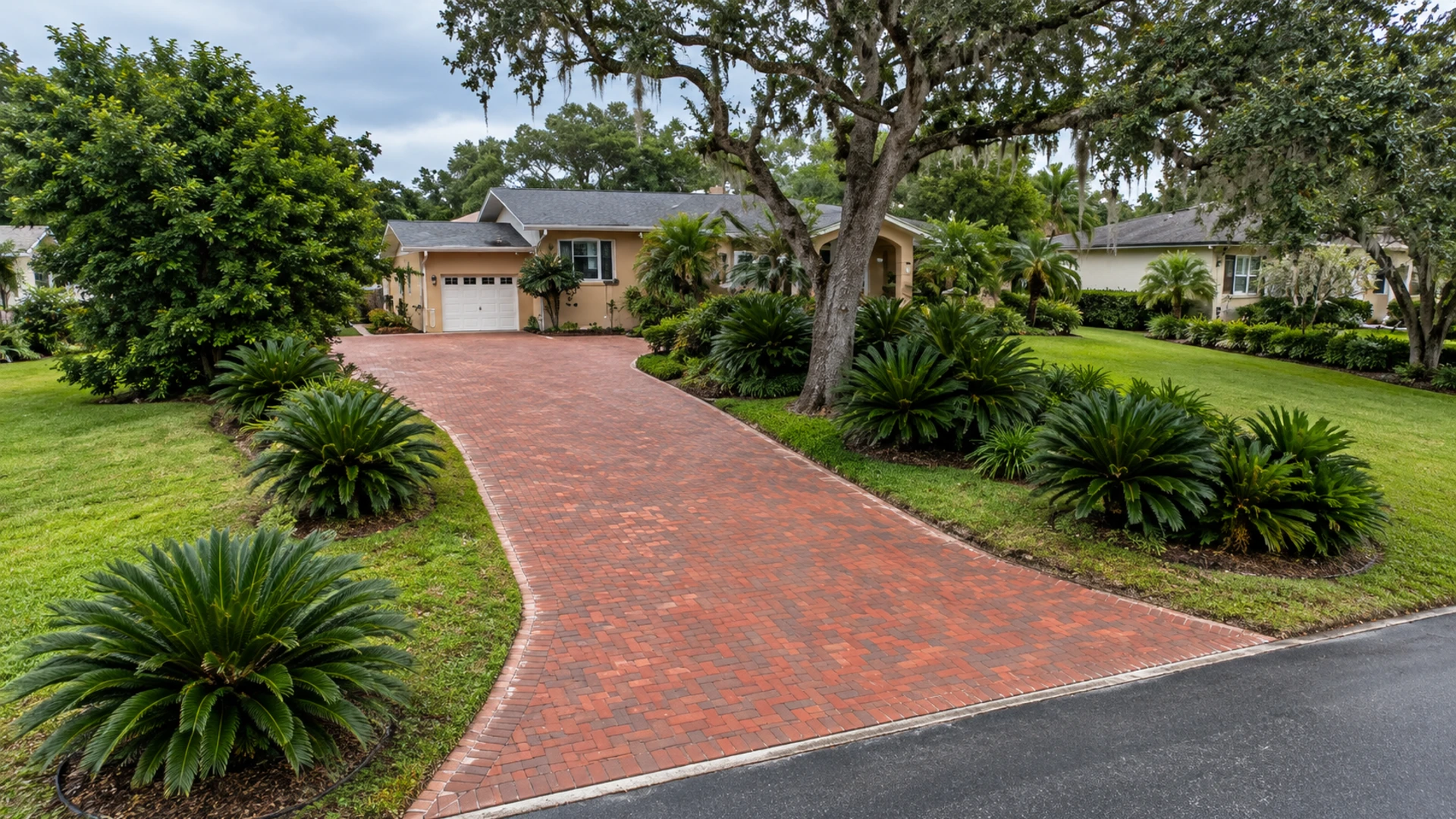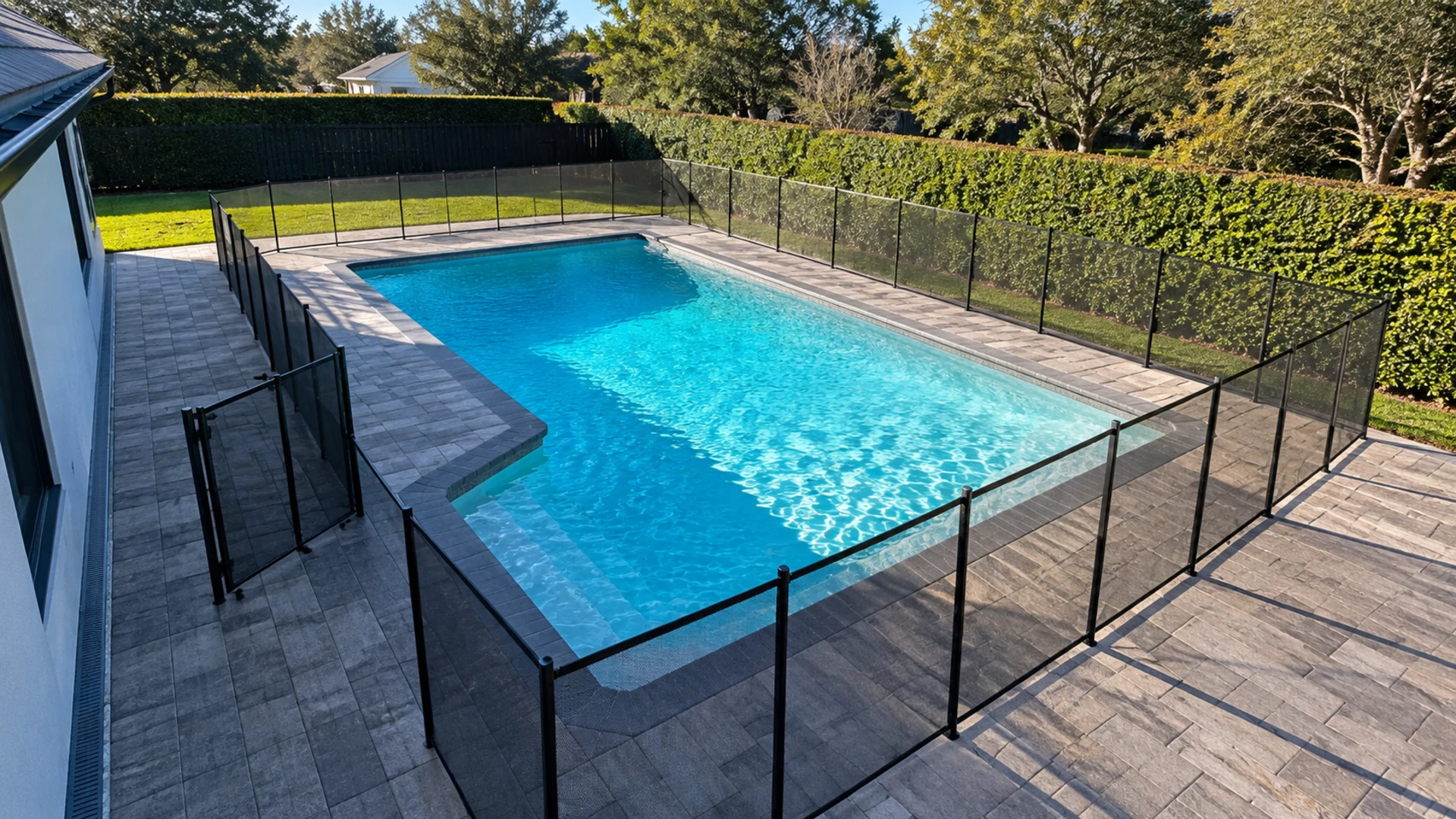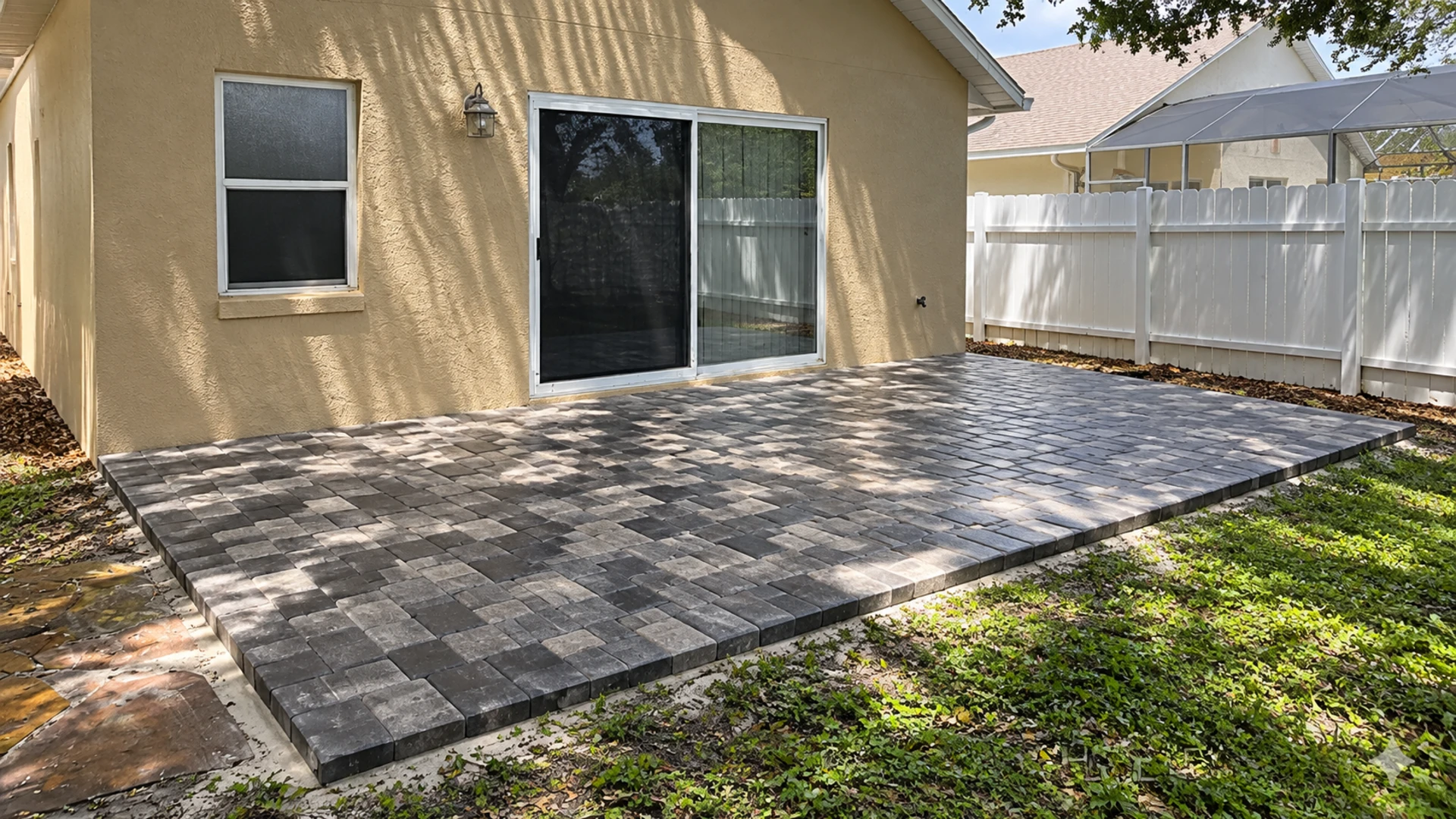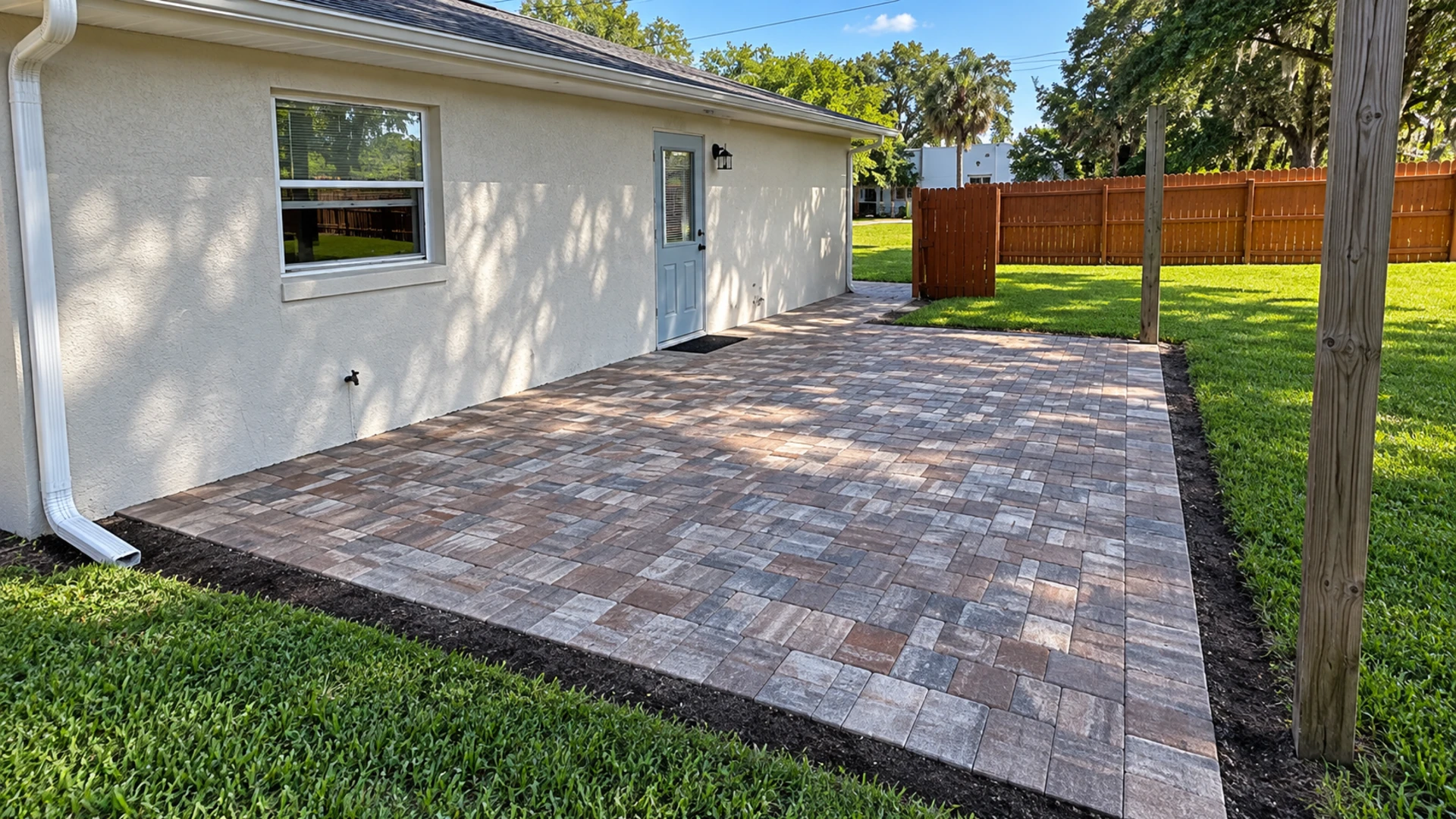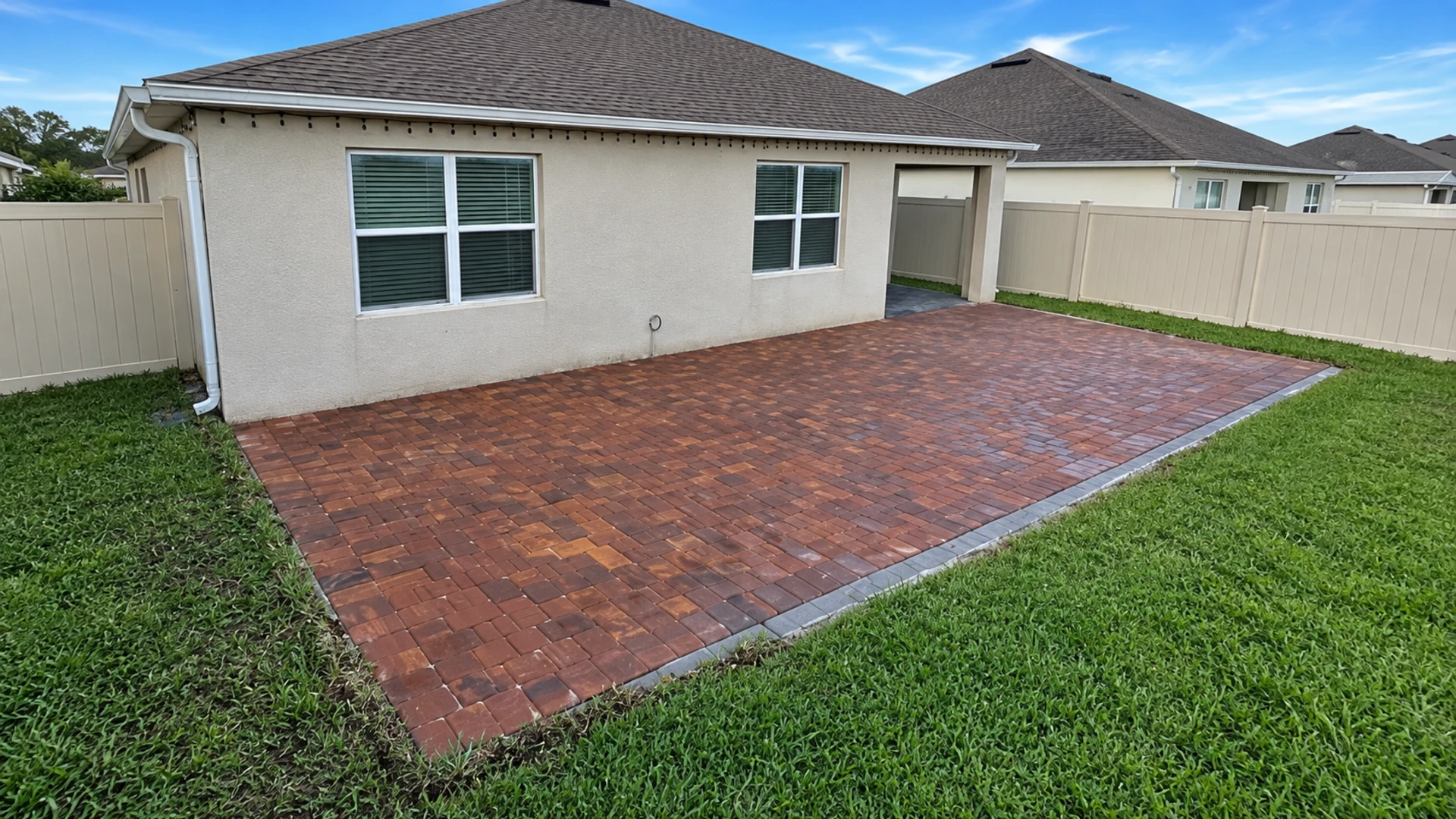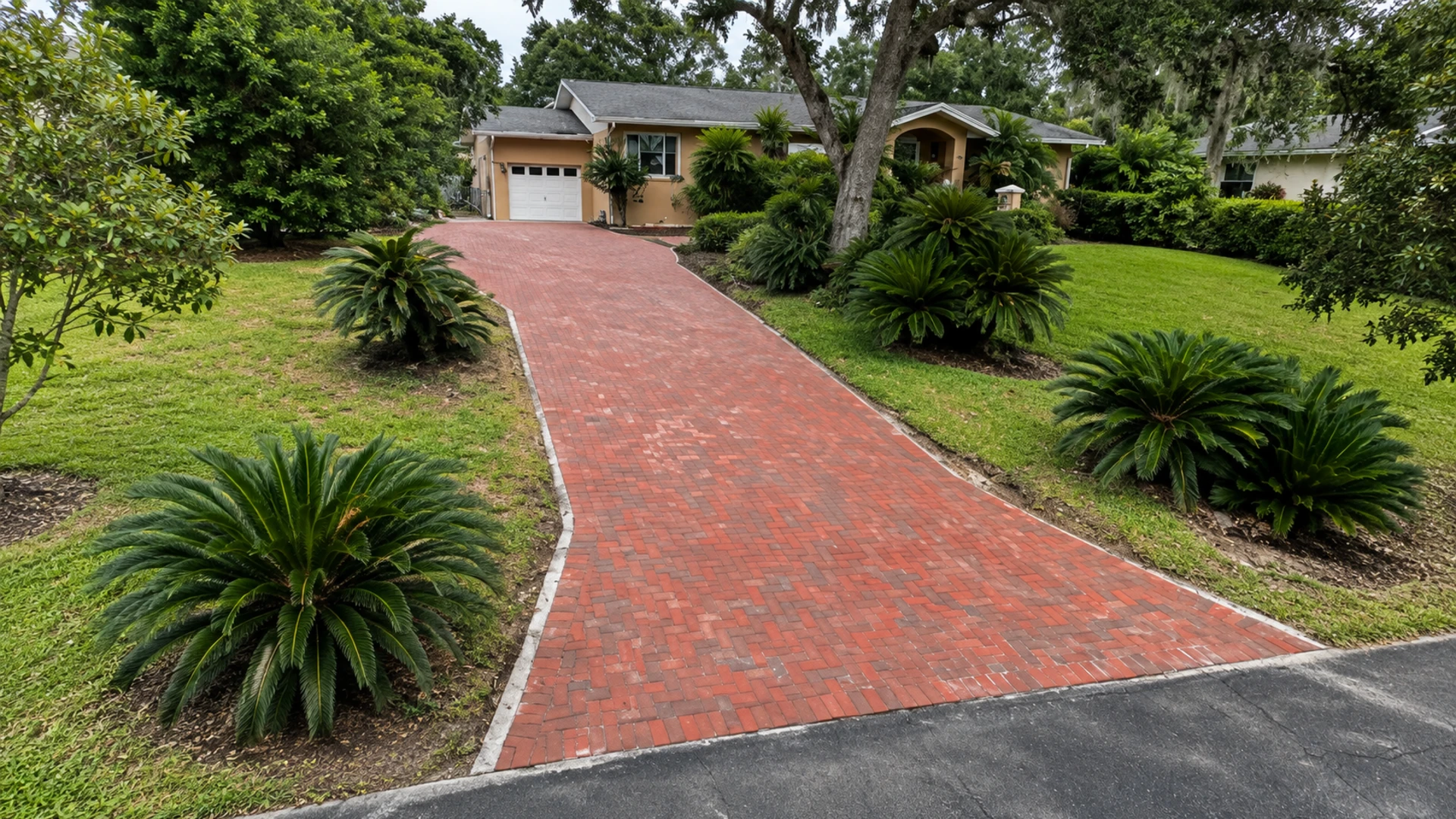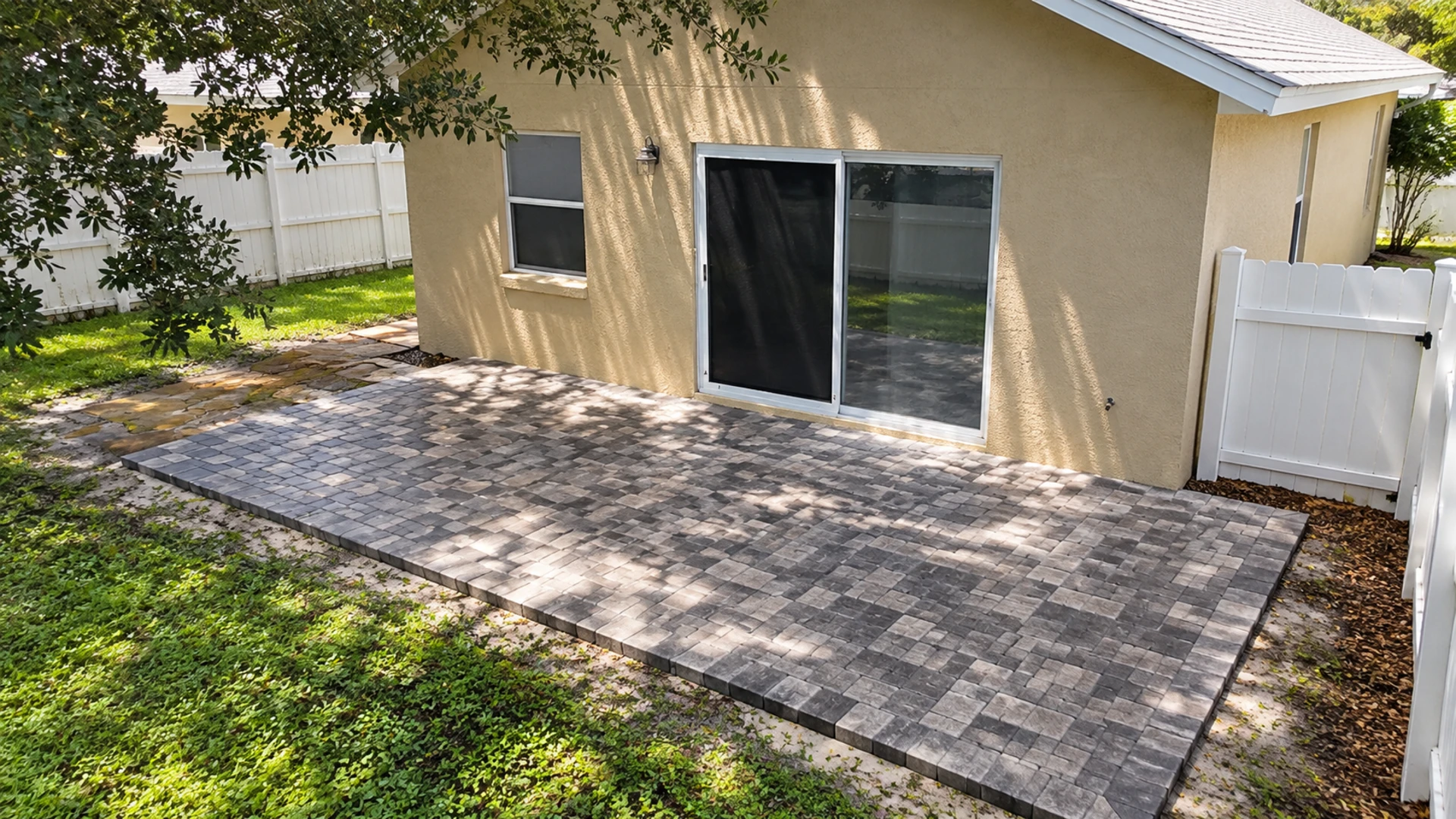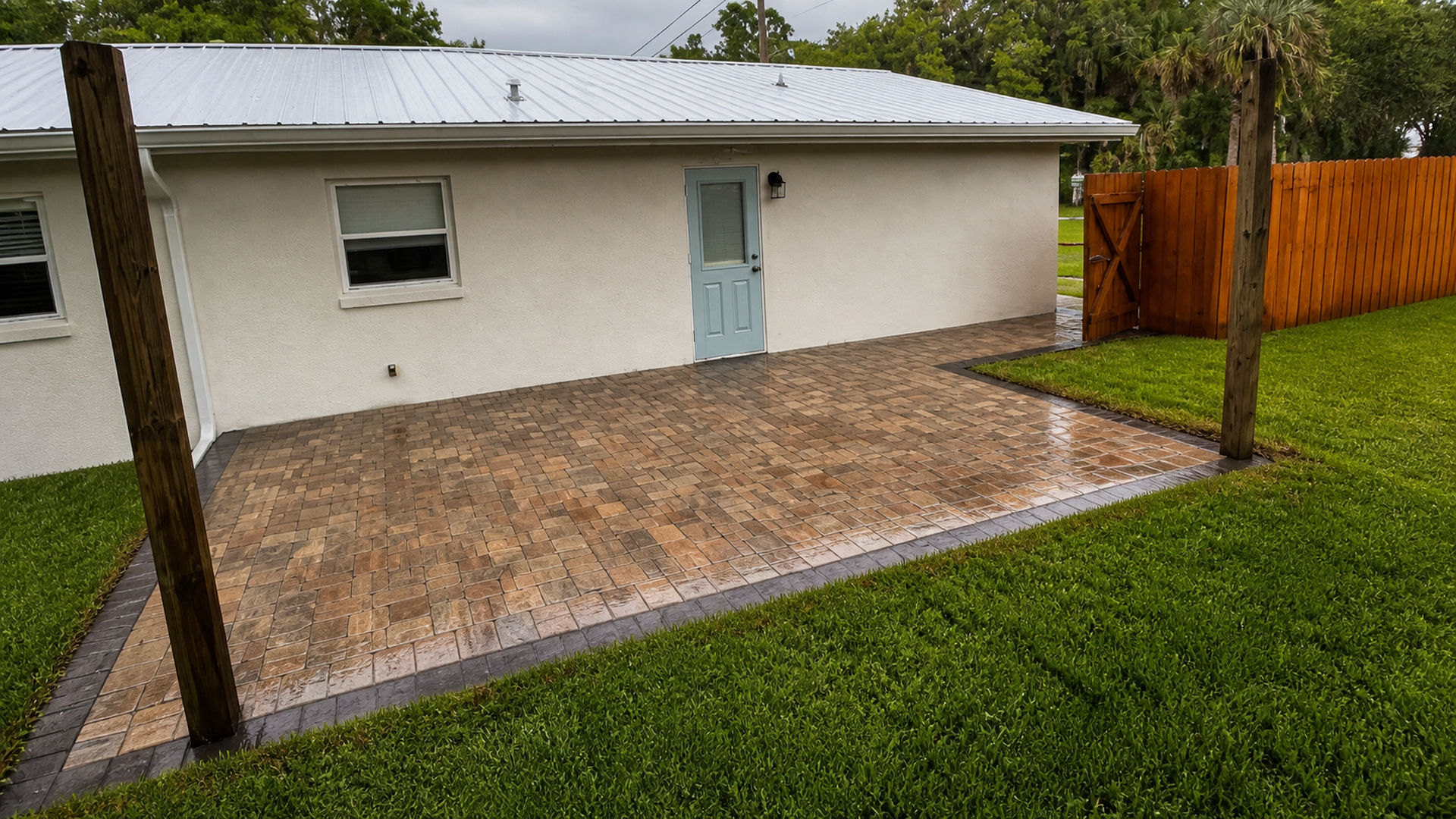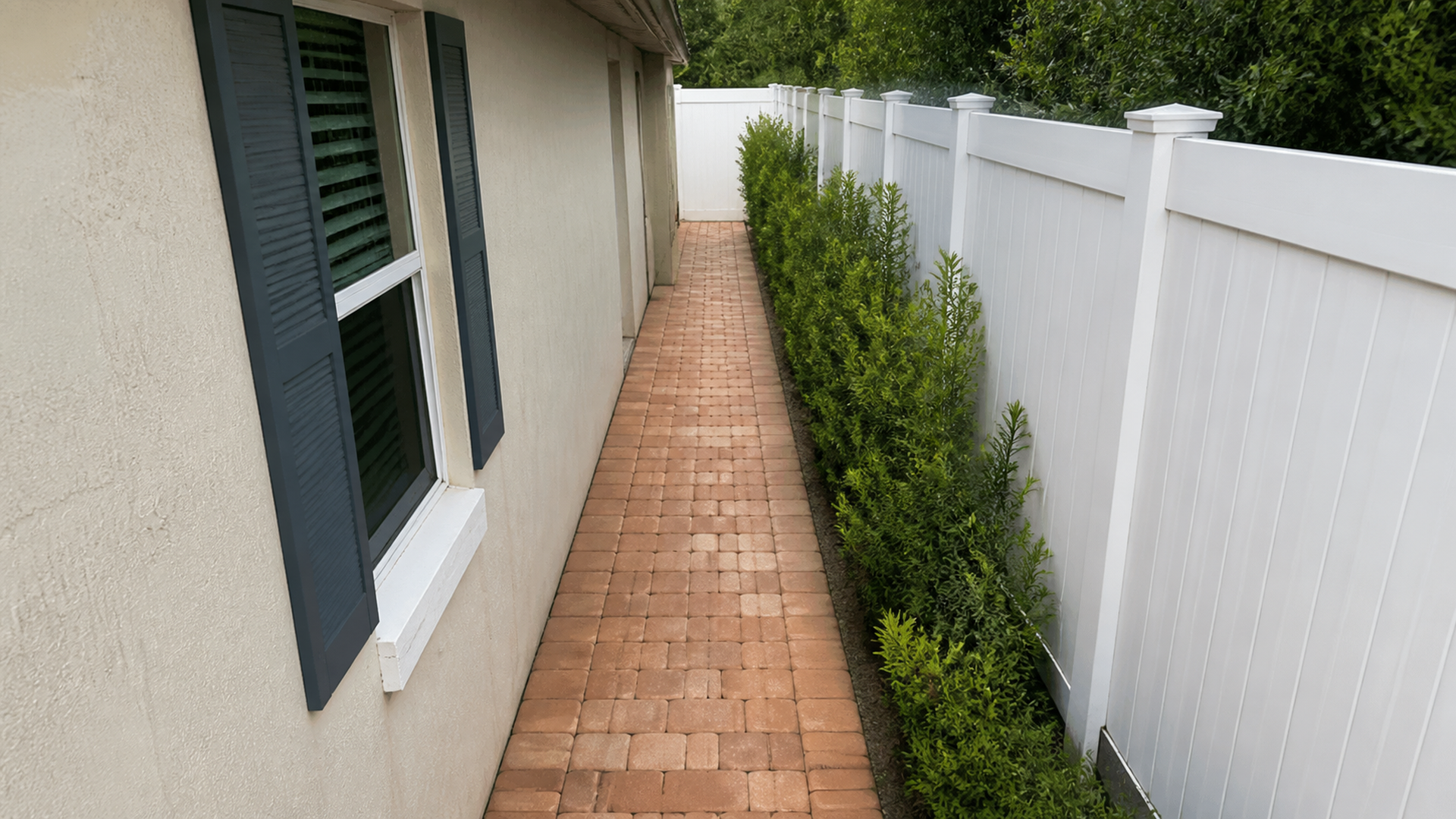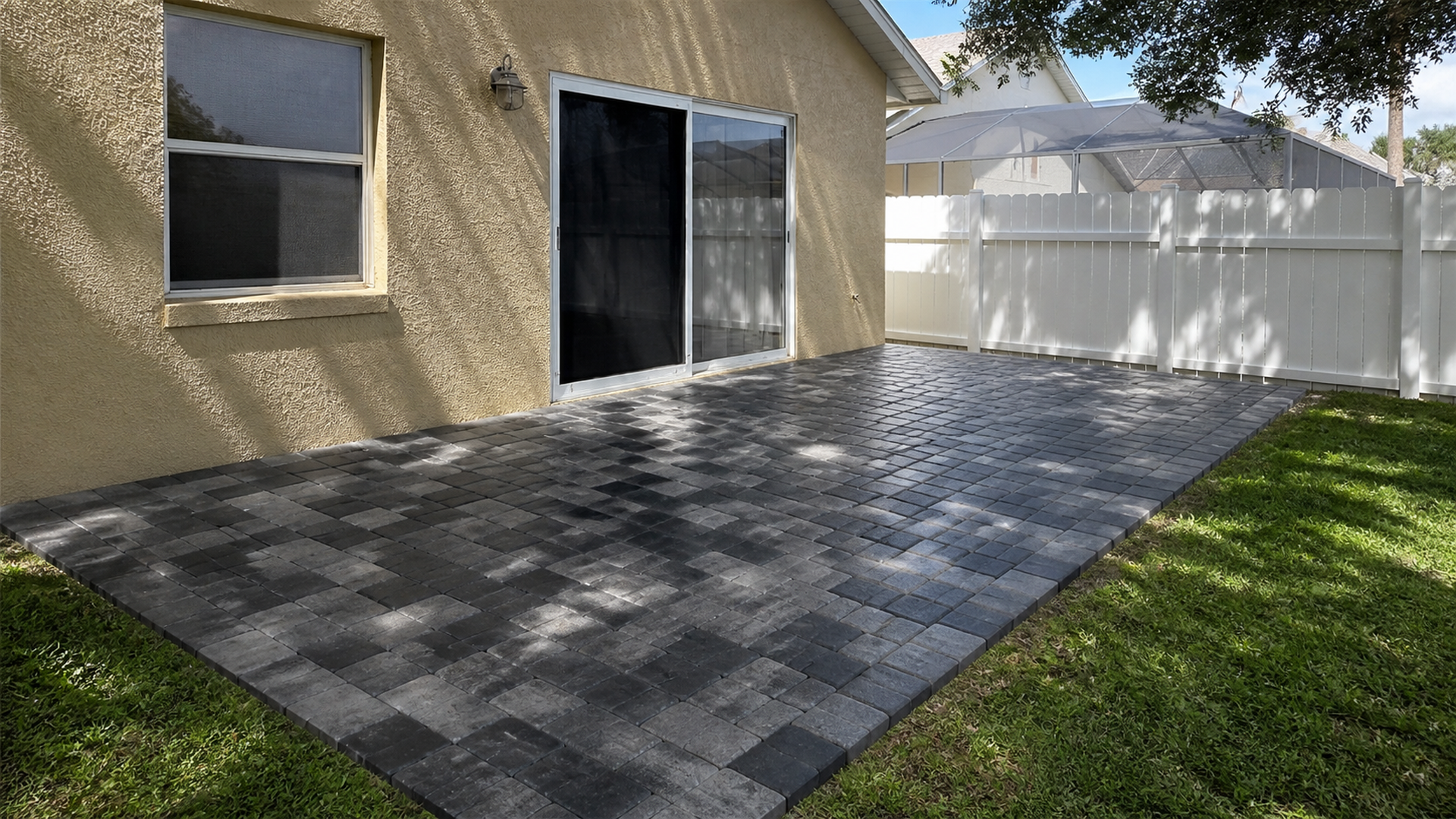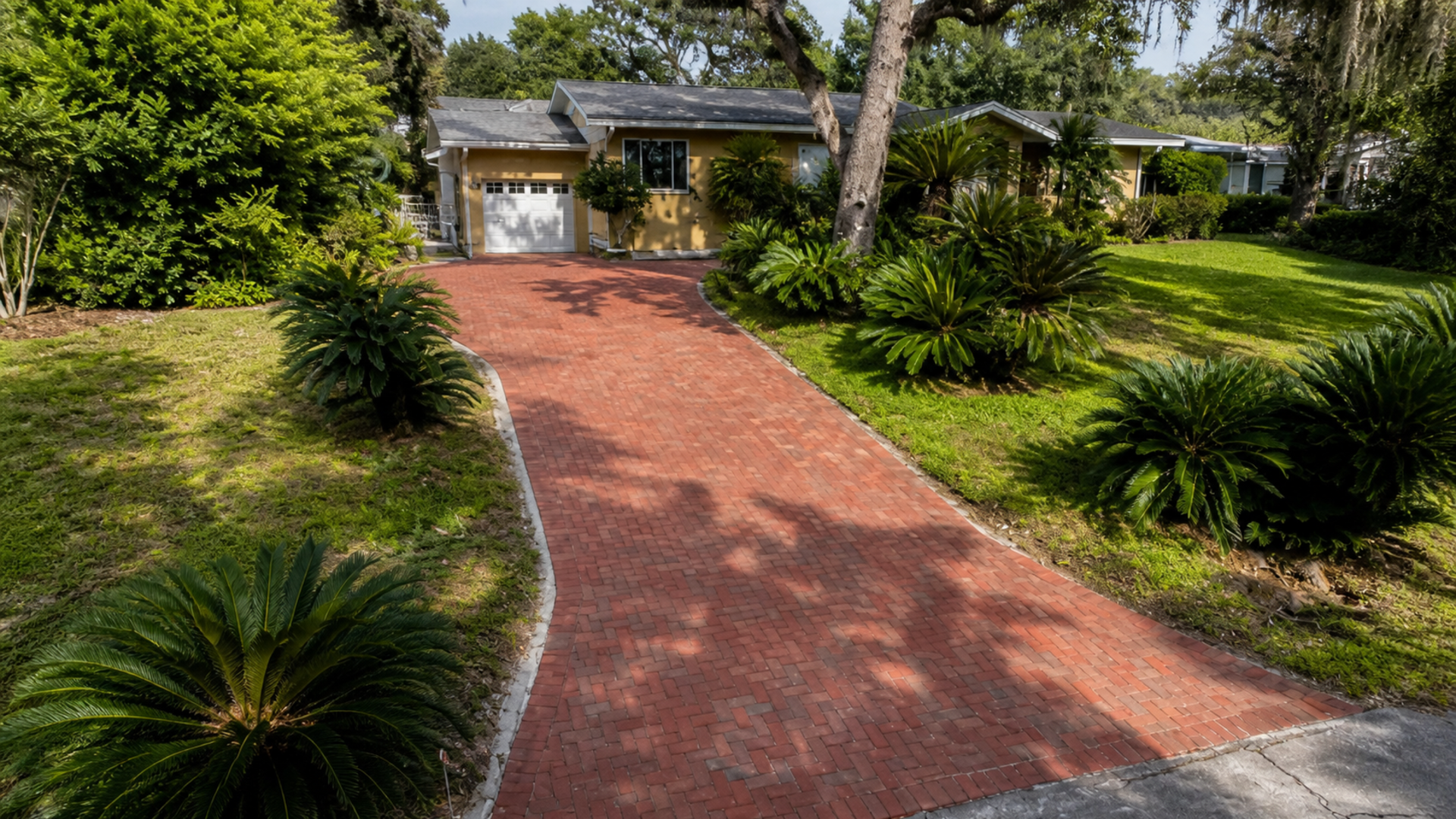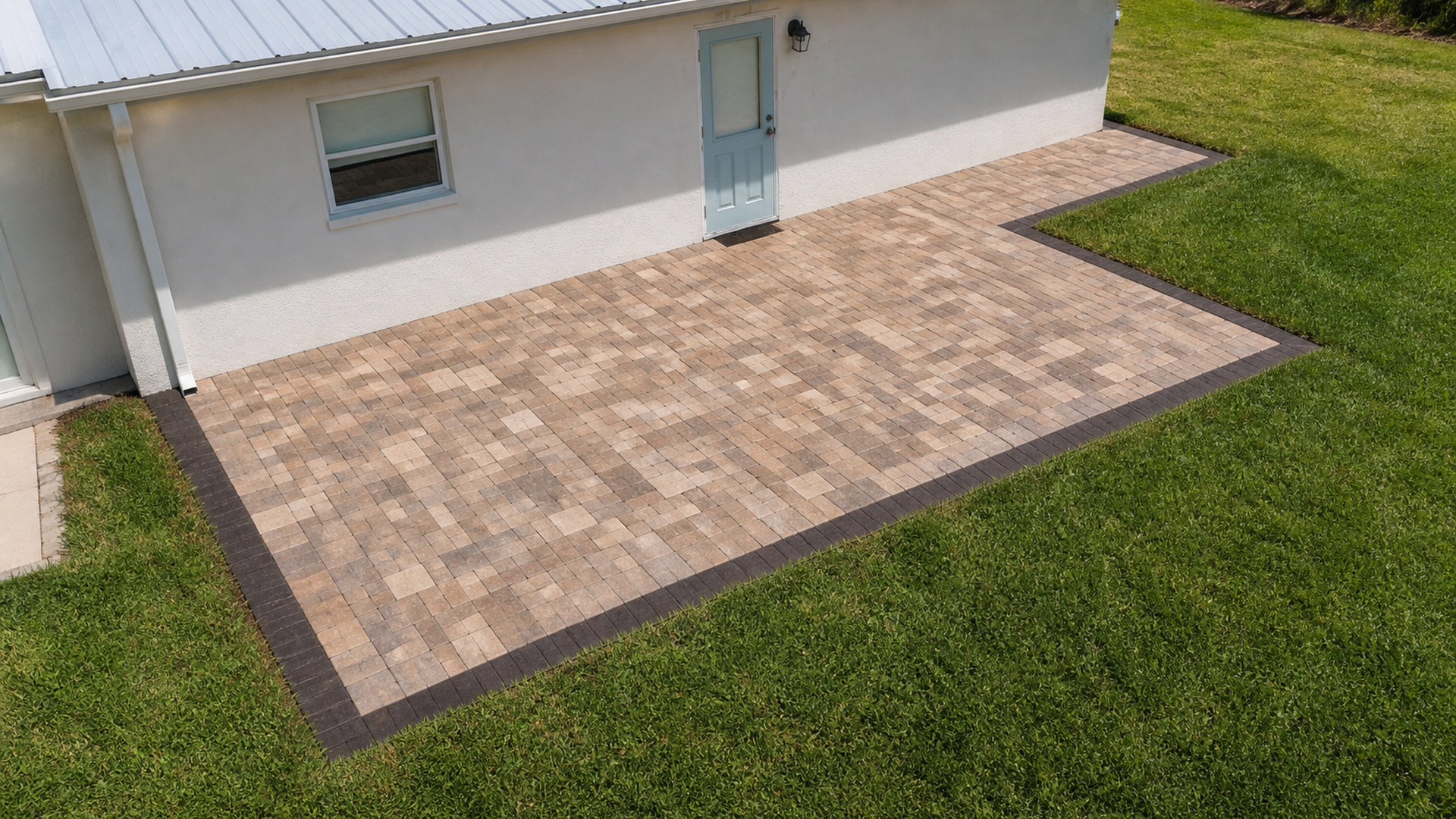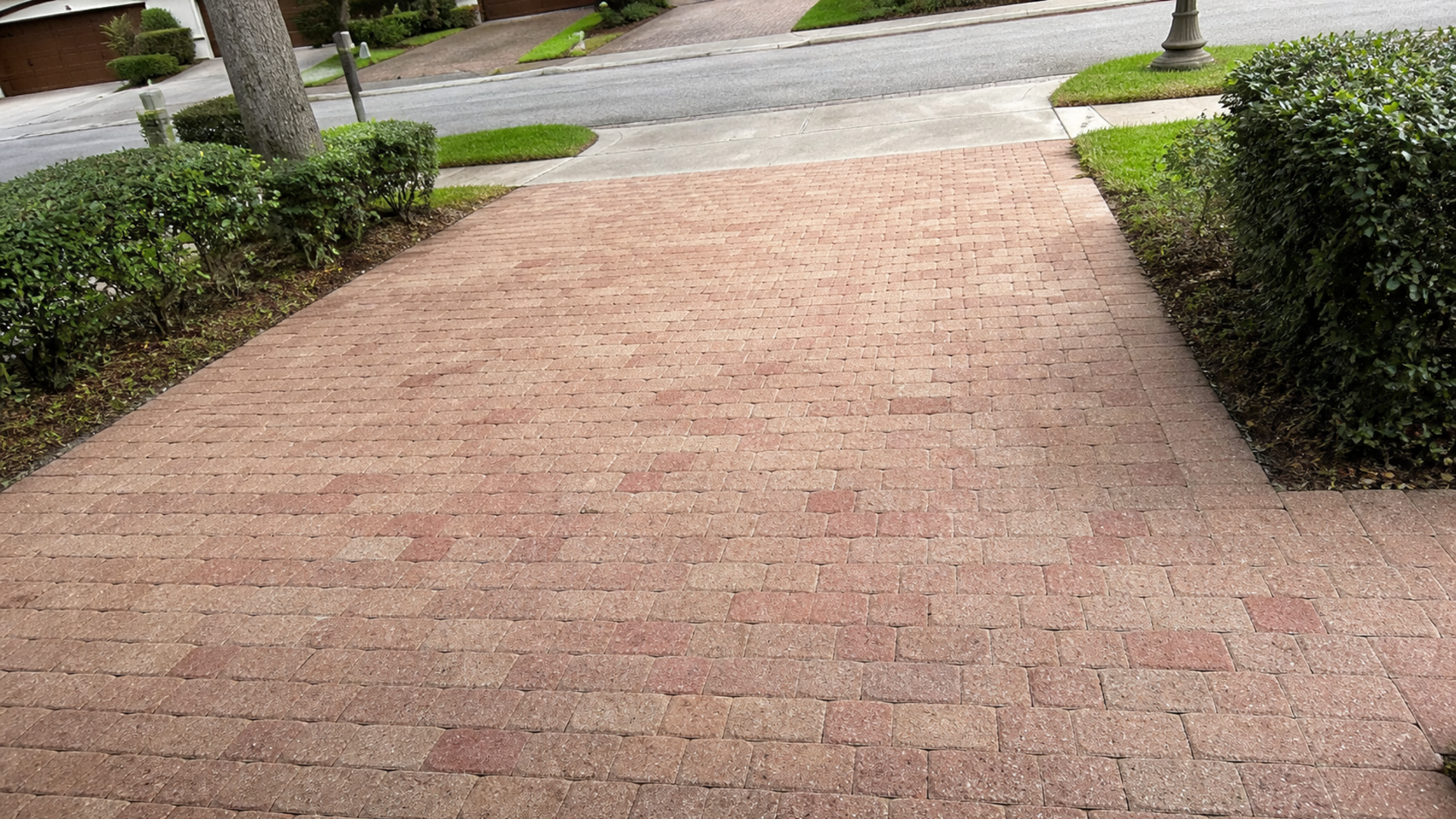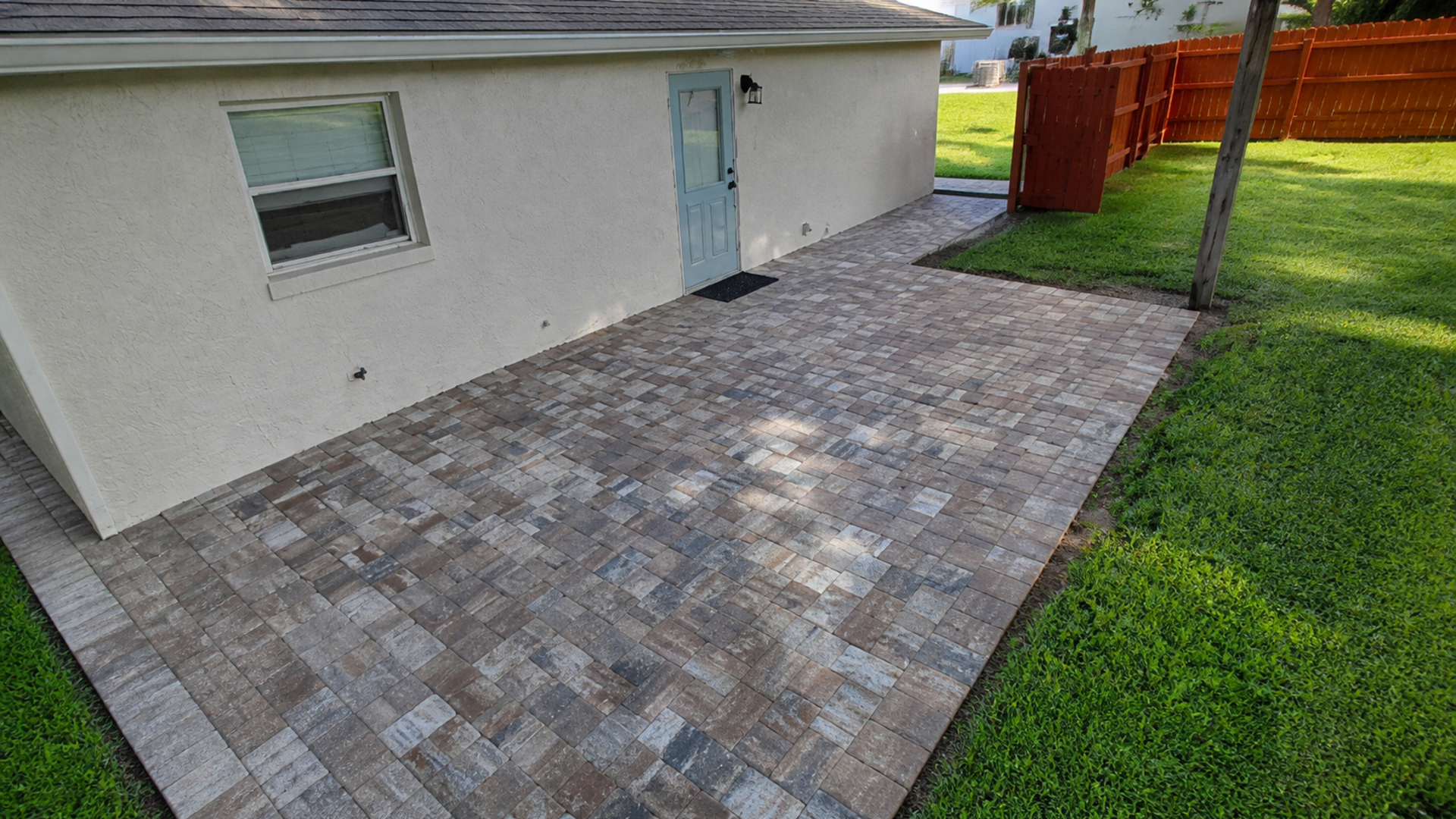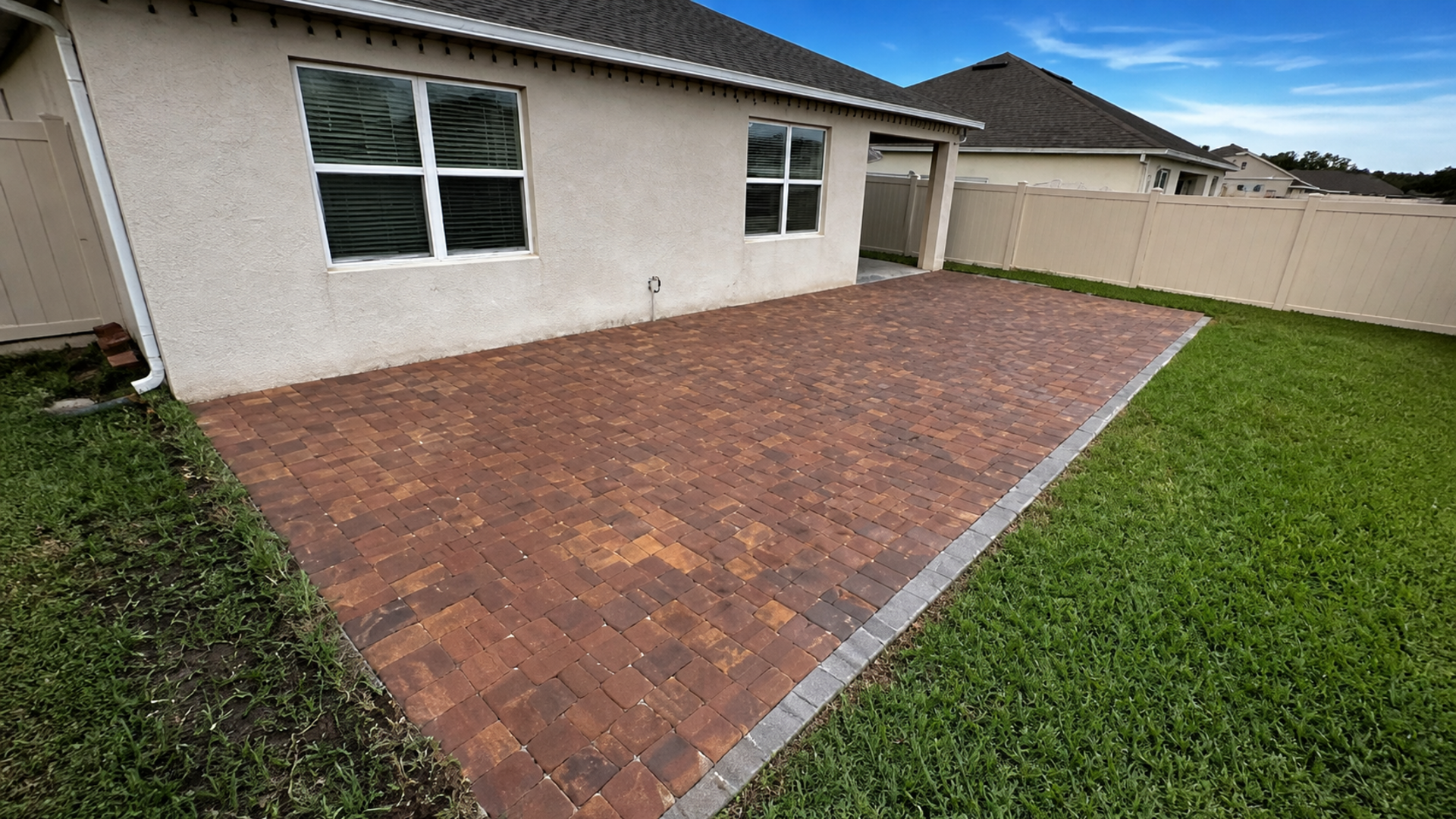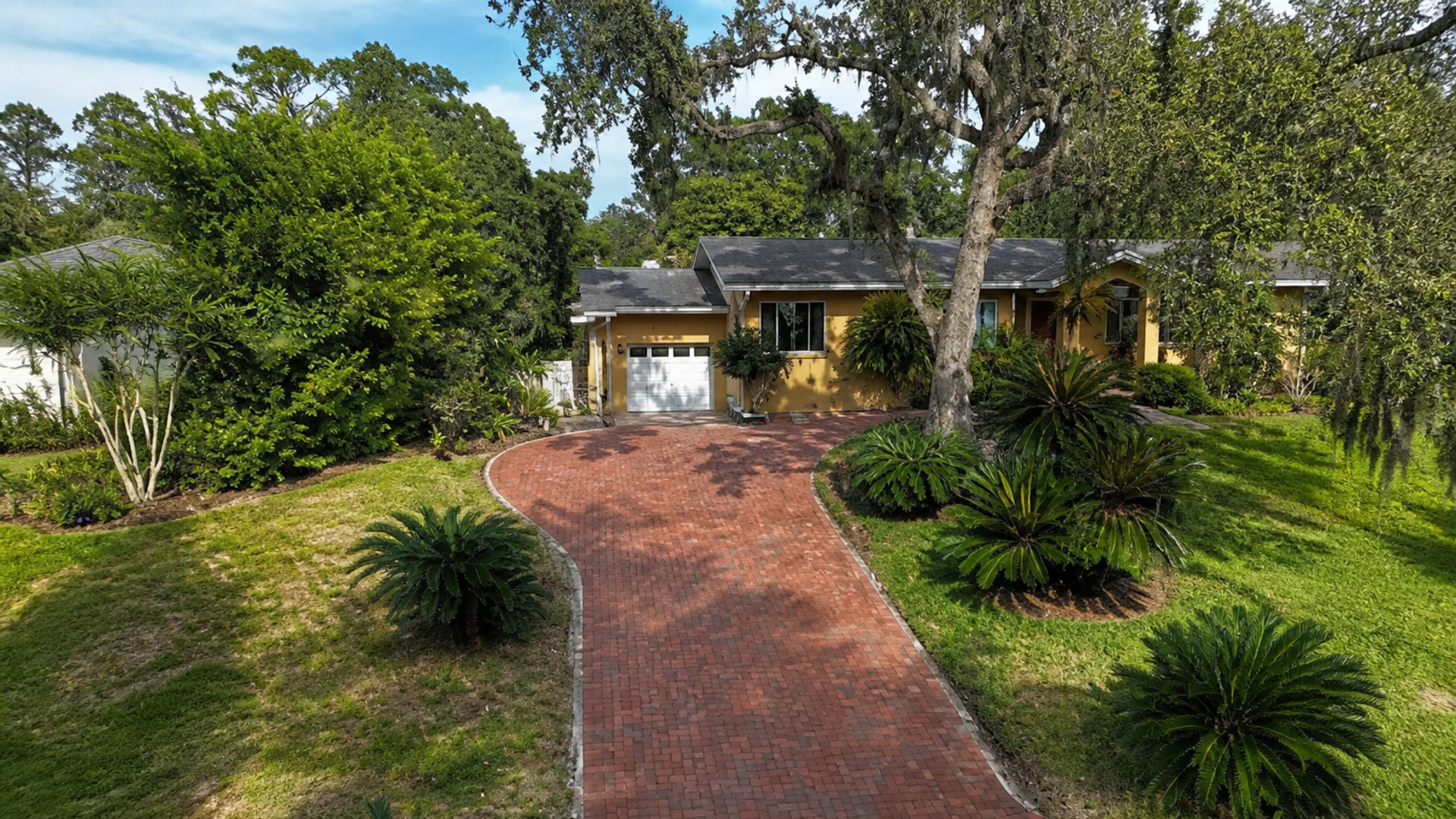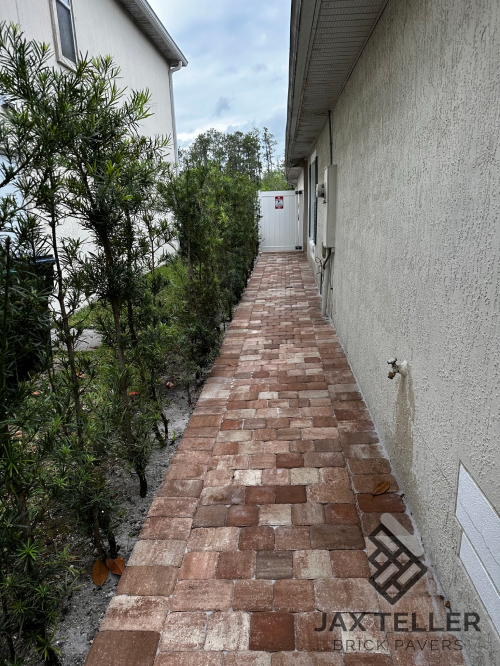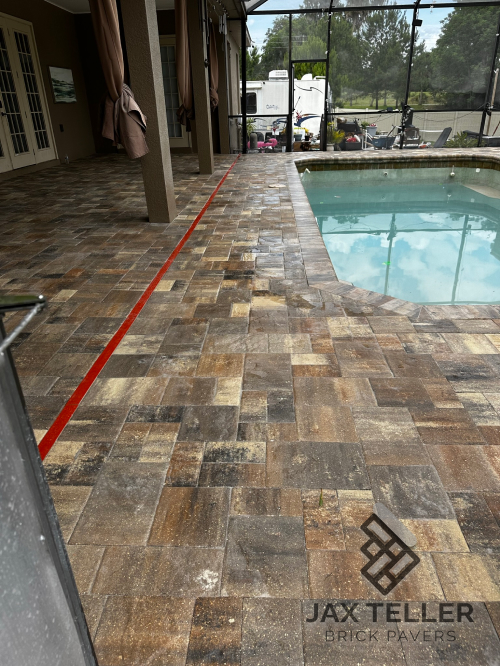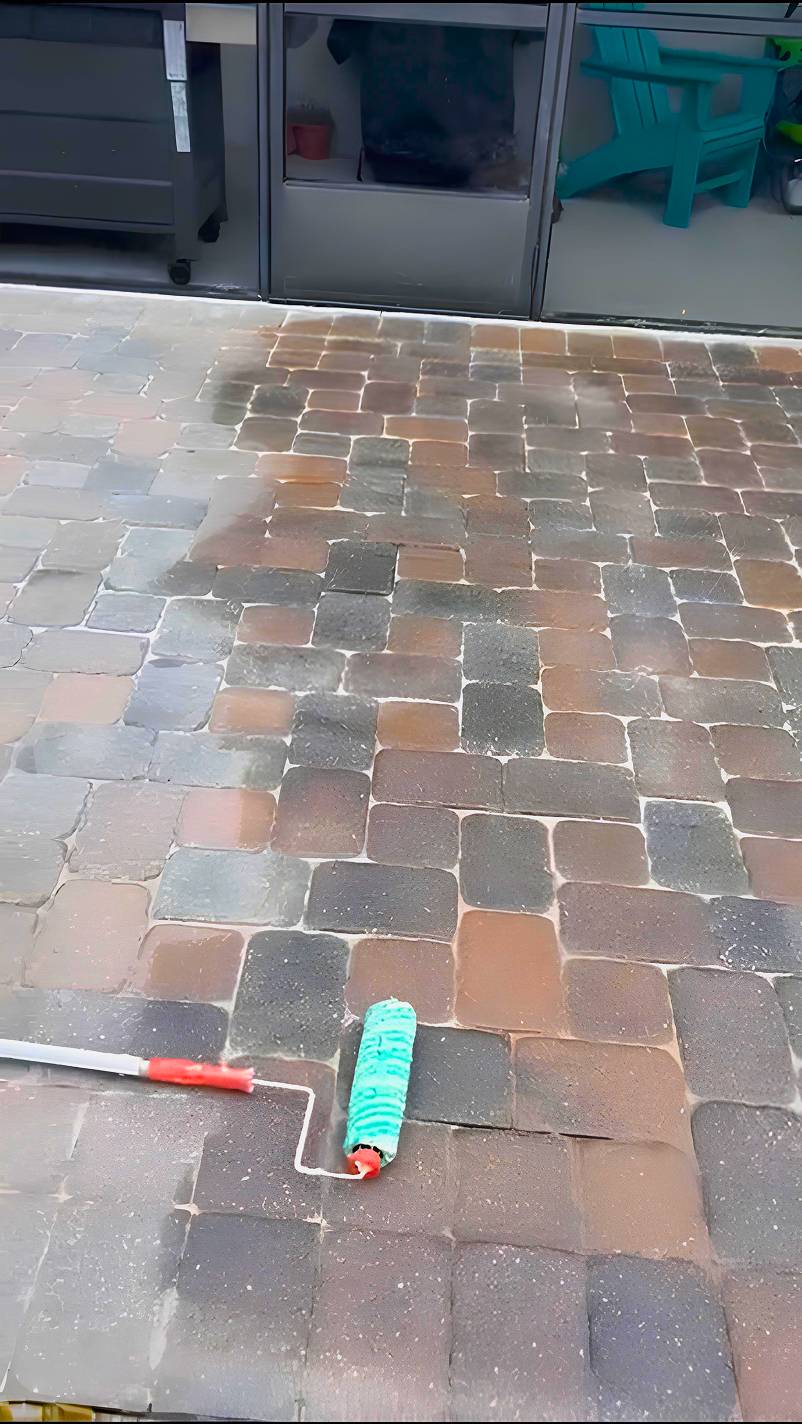


Dark spots on pavers can raise several different questions about a patio or driveway. A patch may appear after rain, remain beneath furniture, or become noticeable after a maintenance service. However, the color alone cannot establish whether you are seeing moisture, residue, a surface treatment change, or another condition. A useful assessment starts with a better description.
For Largo homeowners, that description can save time during a service conversation. Instead of asking someone to remove every dark area immediately, explain when the marks appear and what surrounds them. This guide shows how to gather that information without diagnosing a surface remotely or choosing a cleaning method before the paving material and history are clear.
Describe dark spots on pavers before naming a cause
Begin with the shape and extent of the visible area. For example, distinguish a broad shaded patch from several small round marks or a line beneath a fence. Those descriptions give the professional context without forcing an explanation that the evidence does not yet support.
Next, note whether the marks cross joints or remain within individual units. Include the nearby wall, landscape, furniture, and equipment in a wide photograph. Moreover, record the location with a simple name so later images refer to the same place.
Avoid labeling the condition mold, oil, failed sealer, or hidden drainage damage solely from its color. Those terms can bias the next conversation. Instead, explain what you actually observe and let the provider identify which information or assessment will distinguish the possibilities.
Compare dark spots on pavers under ordinary conditions
Photograph the same area during normal use when it appears different. For example, compare a view after ordinary rain with one taken during a naturally drier period. Do not create a chemical or soaking experiment to force a visible result.
Record the date, recent weather, and whether the area sits in sun or shade. Then keep the images in order. A short sequence can communicate change more clearly than a single dramatic close-up, especially when the mark does not remain equally visible throughout the day.
If you cannot tell whether the surface has dried, say so. The purpose is not to prove a scientific conclusion from household observations. It is to give the professional a more complete account of the condition before the provider chooses the next step.
Separate shadows from persistent appearance changes
Look at the area from more than one ordinary viewpoint. Trees, screens, and furniture can cast shapes that resemble dark patches in photographs. Therefore, note whether the apparent mark follows a shadow or remains visible when the lighting changes.
A phone camera can exaggerate contrast or brighten surrounding units automatically. Moreover, different screen settings can change how the image looks to another person. Use photographs as records of the setting rather than exact measurements of color or surface condition.
If a mark only appears in a particular light, explain that fact. It can still deserve review, but the provider needs to understand the viewing condition. A clear description is more useful than editing the photograph until every image seems to show the same dramatic contrast.
Look at what stands above the area
Identify nearby furniture, planters, fences, vehicles, and roof features. For example, a repeated pattern beneath contact points suggests a different investigation from a broad area beside an irrigation zone. The relationship provides context; it does not prove responsibility.
Record any recent change in those objects. A moved table or new planter can alter shade, contact, and access for ordinary cleaning. Therefore, a short household timeline may help the provider understand why the appearance became noticeable at a particular time.
Do not move a heavy or unstable object merely to inspect underneath it. Ask for appropriate help or leave the task to the relevant provider. Dark spots on pavers should lead to a sensible assessment, not an improvised handling operation that creates a separate risk.
Connect dark spots on pavers with the surface history
Find records of the paving material, sealing, cleaning, and repairs. Moreover, note whether the whole area received the same service. A spot treatment or partial repair can leave different histories within a surface that looks uniform from a distance.
If you know the exact product names, provide them. If you only remember that the patio received a glossy finish, describe that as memory rather than confirmed chemistry. The distinction helps the professional decide whether manufacturer information or a closer assessment is necessary.
An unknown history does not prevent you from requesting help. Instead, it defines part of the assessment. Tell the provider which information is missing so the proposal does not quietly assume bare material, a known sealer, or a treatment that the records do not support.
Check whether the concern includes movement or damage
Describe any visible gap, chipped unit, or change in level separately from the dark appearance. A surface can have more than one concern at the same time. Therefore, avoid assuming a cleaning service will address every issue simply because the area looks better afterward.
Do not repeatedly load or test a unit that appears unstable. Instead, record the condition and ask the paving contractor to assess it. The provider can then determine whether the scope involves maintenance, repair, or further investigation.
Keep the observations connected through location notes. For example, explain that a dark patch sits beside a particular raised edge rather than treating the two images as unrelated. That gives the professional context without claiming that one visible condition necessarily caused the other.
Resist a one-product answer before assessment
A cleaner recommended for another property may not suit your paving material, coating, or surrounding finishes. Consequently, avoid selecting a treatment from the color of the mark alone. The actual product instructions and surface information should guide a provider's method.
Do not mix cleaners or layer a new sealer over an unexplained patch. Such attempts can change the condition before anyone assesses it. Moreover, they can make the service history harder to interpret if the original appearance and later treatment effects become mixed together.
If you already tried a product, keep its name and describe where and when you used it. An honest record helps the professional evaluate the current surface. It is more useful than presenting the area as untouched when the first attempt may influence the appropriate next step.
Request a focused assessment of dark spots on pavers
Ask the provider which question it intends to resolve. For example, the initial task may involve identifying the material and comparing the affected area with nearby paving. A clearer purpose helps distinguish an assessment from a promise to perform broad cleaning immediately.
If a representative test is proposed, ask what result would justify a wider service. Moreover, identify the review point before the scope expands. The test should follow the selected product's guidance and consider the relevant adjacent materials.
A small clean-looking area does not automatically answer every compatibility or appearance question. Therefore, ask the professional to explain the limitations. Dark spots on pavers deserve a method connected to the observed condition, not simply a demonstration chosen because it creates a dramatic photograph.
Compare service scopes for dark spots on pavers
A proposal may address the visible marks locally or include a wider cleaning service. Ask why the suggested scope fits the actual condition. For example, the provider may need to discuss potential appearance contrast between a treated patch and the surrounding surface.
Neither the smallest nor the broadest scope is automatically correct. Instead, compare the expected result, preparation, limitations, and follow-up. A sensible proposal explains what each task addresses and which findings could change the plan.
Keep repair decisions separate when necessary. Replacing a unit raises material matching and installation questions that differ from cleaning. Moreover, a coating-related proposal should identify the product and preparation assumptions rather than hide those decisions behind a general instruction to restore the patio.
Use a simple observation sequence
Choose two or three repeatable viewpoints, including one broad view. Then photograph the concern when ordinary conditions make it visible. Add a brief note about weather, nearby activity, and any recent service. This small record can remain practical without becoming a daily monitoring project.
Avoid constant testing or checking that adds no new information. If the condition changes sharply or creates an immediate practical concern, contact the appropriate provider promptly. Otherwise, the purpose is to prepare a useful service brief, not to replace professional assessment with endless household observations.
Share the sequence in its original order. Moreover, distinguish a new mark from an older mark that only became more noticeable. That timeline can help the provider identify the next question without encouraging an unsupported conclusion about damage or a particular contaminant.
Compare two hypothetical patios
Consider a patio with dark areas that appear after ordinary rain and become less obvious during drier conditions. The homeowner has no coating records. A useful request explains the timing and missing history, then asks for an assessment of the actual material and surface. It does not label the condition a failed sealer automatically.
Now consider a second patio with small persistent marks beneath several furniture feet. The homeowner recently changed the furniture. That history creates a different starting question, even if both patios look similar in one photograph. The provider may need the furniture information as well as the paving records.
These examples do not diagnose either property. Instead, they show why context matters. Dark spots on pavers can look alike while calling for different information. A better brief helps the professional choose the assessment and appropriate scope without relying on a generic before-and-after story from another home.
Plan the handoff after an approved service
Keep the provider's description of the work, products, treated limits, and care instructions. Then add photographs from your original viewpoints. This helps you understand what changed and provides a useful record if another question appears later.
Ask when the surface may return to ordinary use under the actual service instructions. Moreover, clarify how to report a concern and which information the provider would like. A defined follow-up process is more practical than an open-ended promise that every future mark will disappear.
If the appearance returns, contact the provider before trying another product. Share the date and circumstances without assuming the previous service failed. The relevant professional can compare the record and decide whether the current condition belongs to the same issue or needs a separate assessment.
Keep routine care tied to the actual paving
The CMHA operation and maintenance guide offers technical background for interlocking concrete pavement. However, your installed material and any surface treatment still need confirmation. The reference does not diagnose an unknown patch or make every cleaning method suitable for every stone or coating.
Ask the provider to identify the care instructions that apply after the assessment or service. For example, the guidance may distinguish ordinary soil removal from a specific stain concern. Keep those instructions with the product records rather than relying on a remembered recommendation from a different installation.
Routine care should also respect neighboring finishes and equipment. Therefore, ask how the provider will handle those interfaces when proposing a broader service. A useful plan considers the complete setting instead of treating each dark area as an isolated target for the strongest available treatment.
Keep the service request proportionate
Before booking, decide which question matters most to you. For example, you may want to understand a persistent appearance change before entertaining a complete maintenance proposal. Tell the provider that priority so the first visit has a clear purpose rather than an assumed treatment already attached to it.
If the provider recommends a larger scope, ask how it follows from the observed condition. Moreover, request an explanation of the alternatives and limitations. This keeps the decision connected to your property and helps you approve useful work without treating every dark mark as evidence that the entire patio needs restoration.
Bring a focused maintenance request to JaxTeller
Use JaxTeller's pressure washing and sealing service to begin the surface conversation. Share the location, timing, photographs, and material history you have. In addition, review project examples to describe the kind of paved area involved.
The useful outcome is a clear next decision: an assessment, a product-specific test, a defined maintenance scope, or a separate repair discussion. Therefore, ask how the proposal connects to your observed condition. An informed plan matters more than an immediate promise based only on a dark patch in one photograph.
Ready to upgrade your driveway or patio? Reach JaxTeller through the contact page, follow the team on Instagram and Facebook, or discuss your questions on WhatsApp. Location details appear on the map. Contact JaxTeller Brick Pavers at +1 407-907-8308 or jaxtellerbrickpavers@gmail.com for your free estimate!