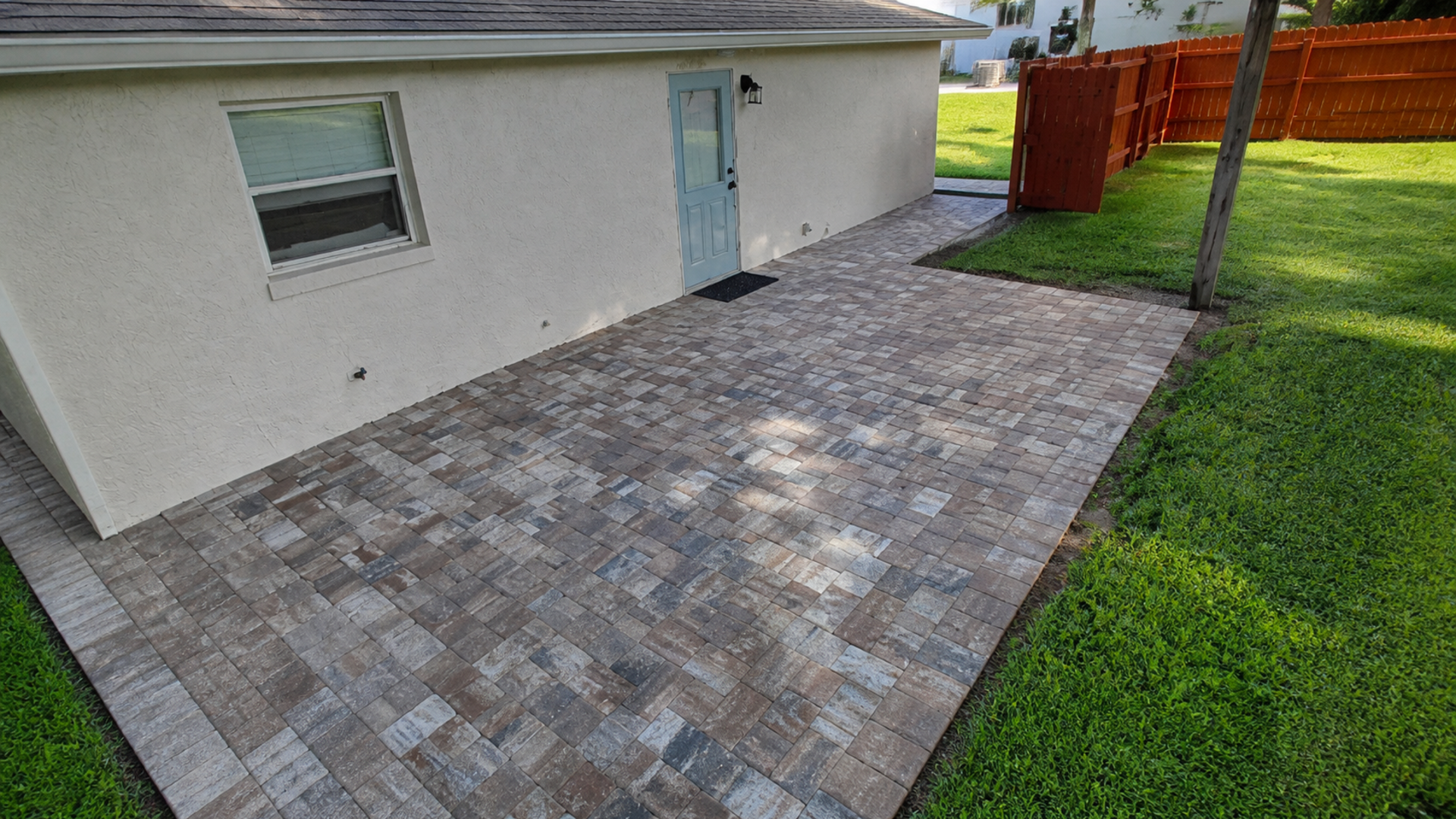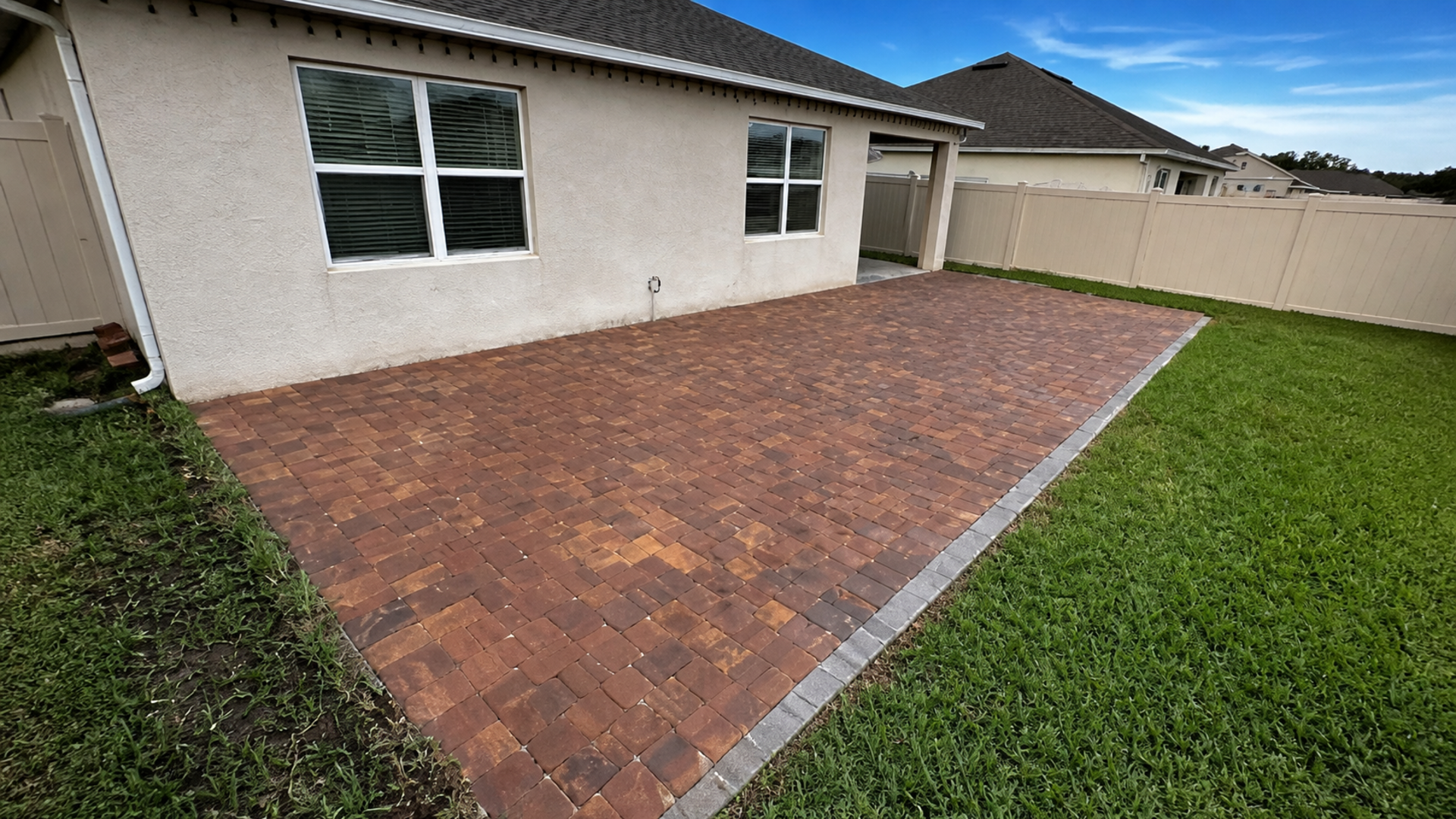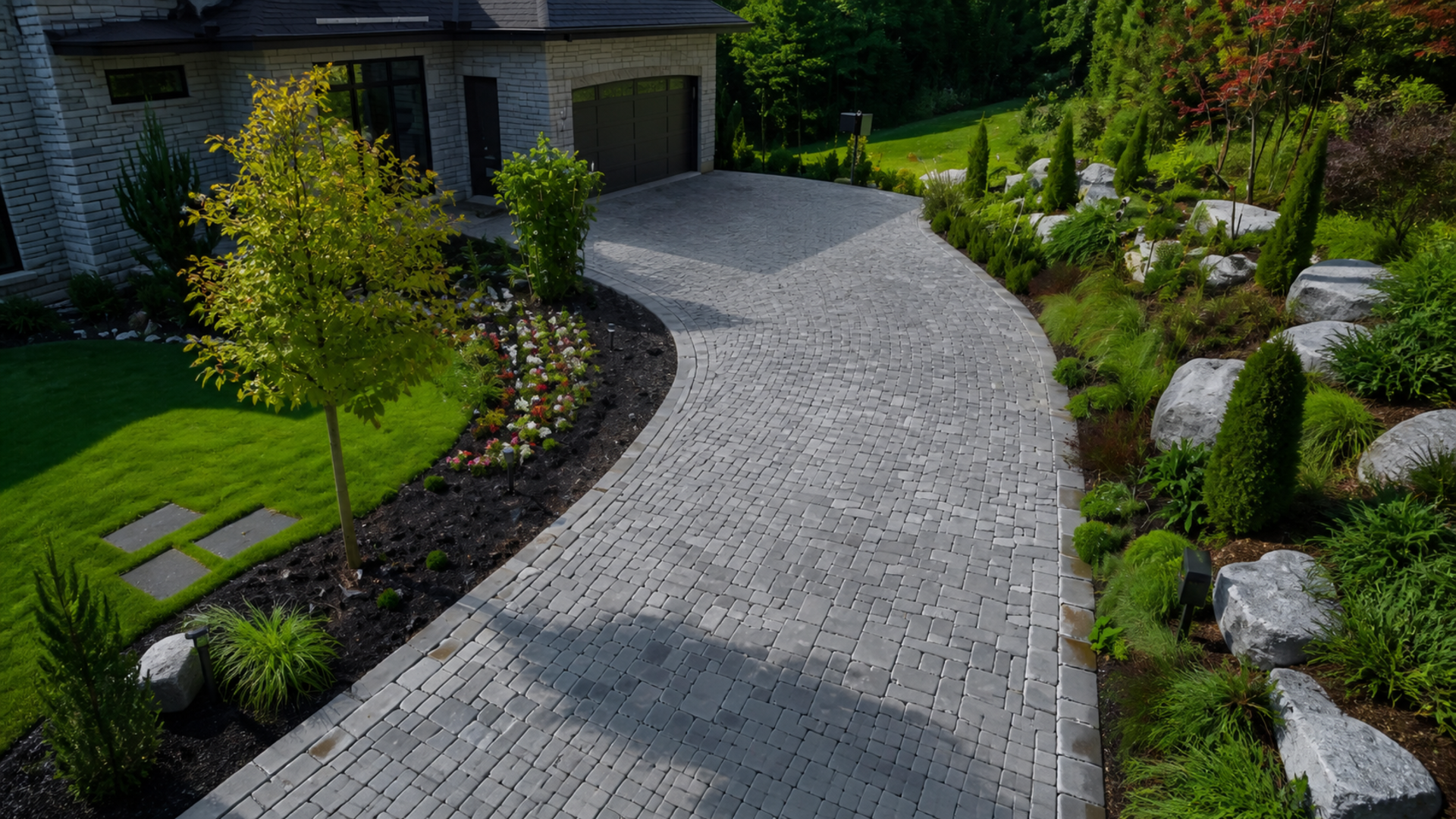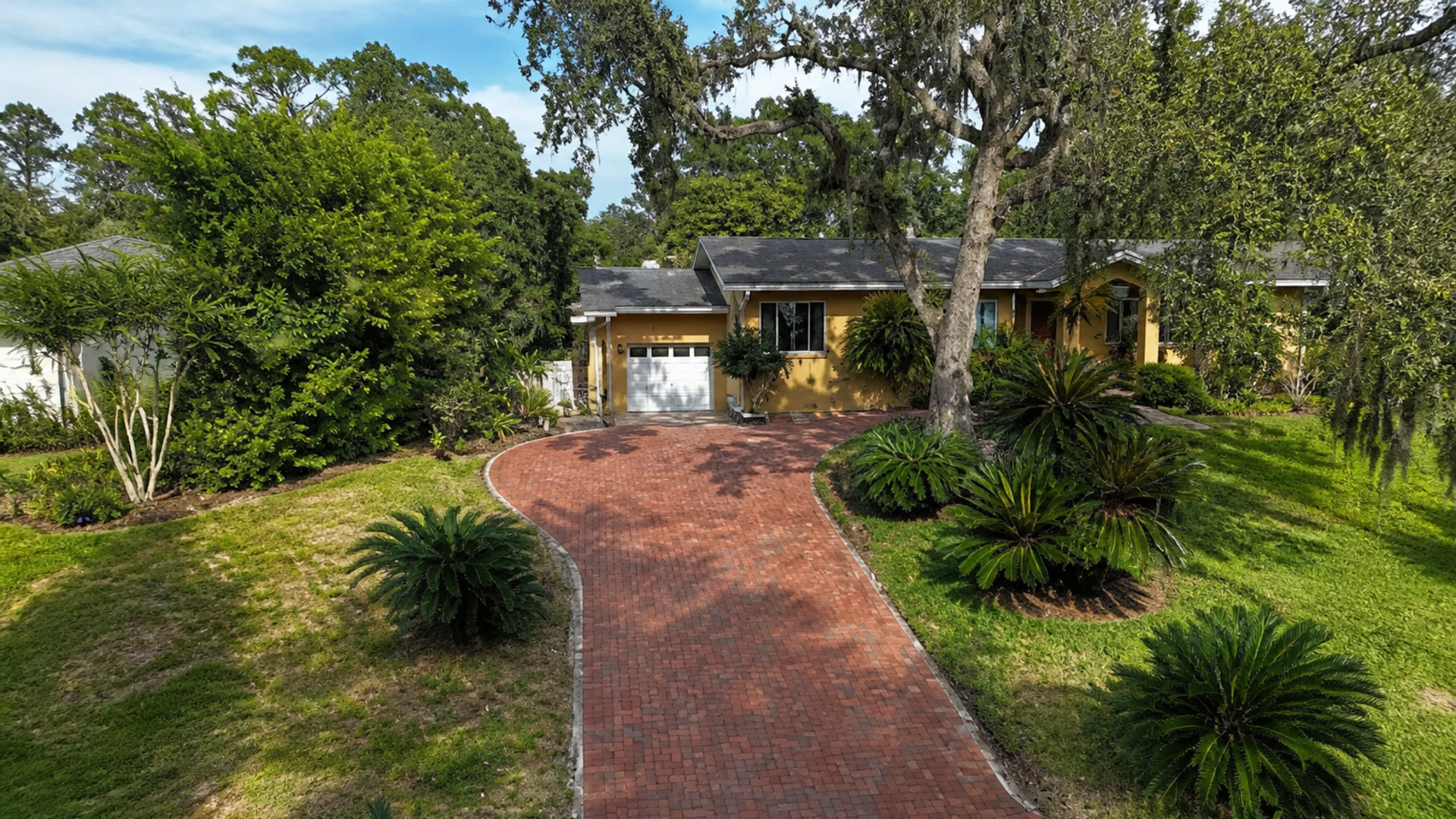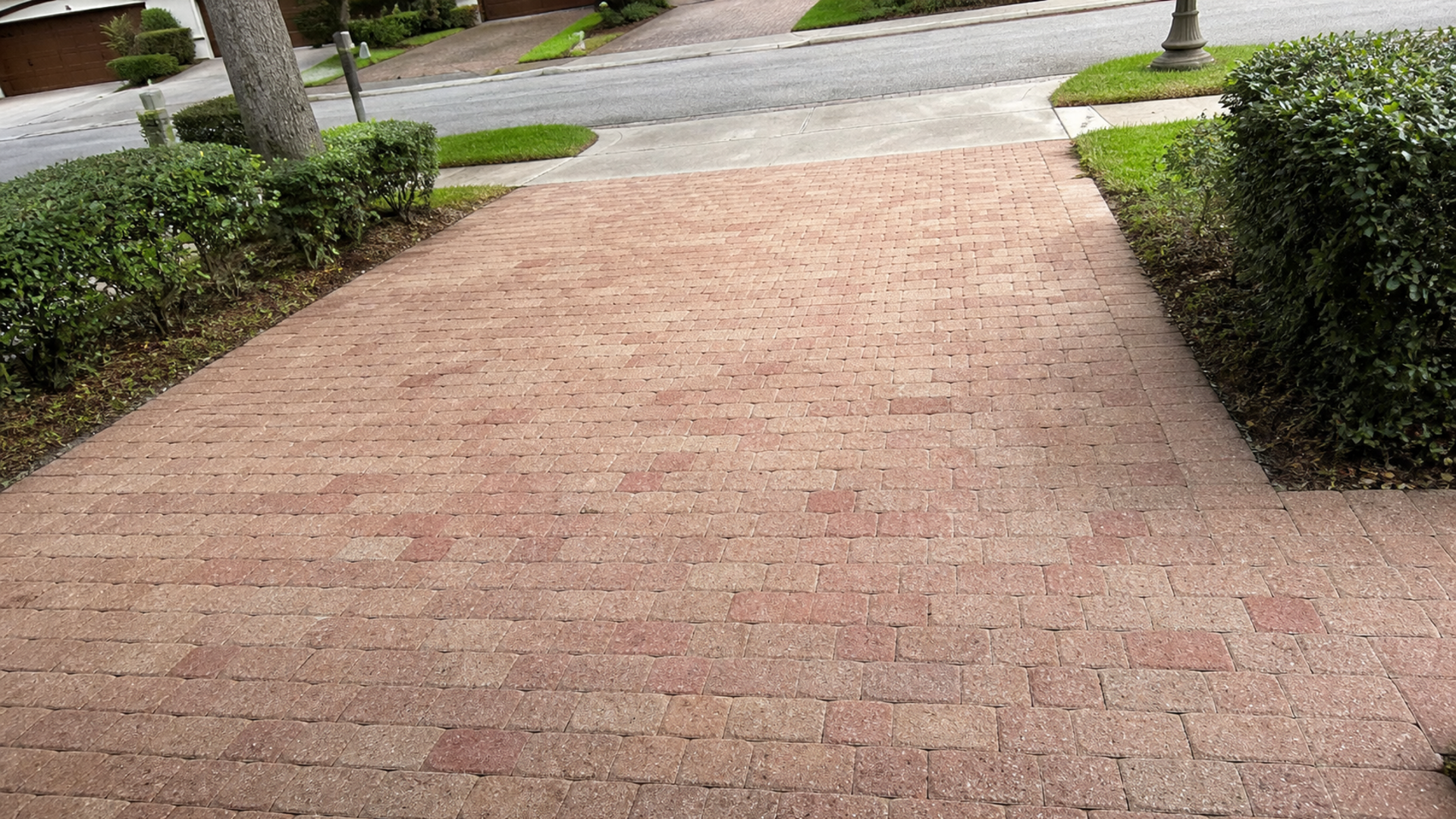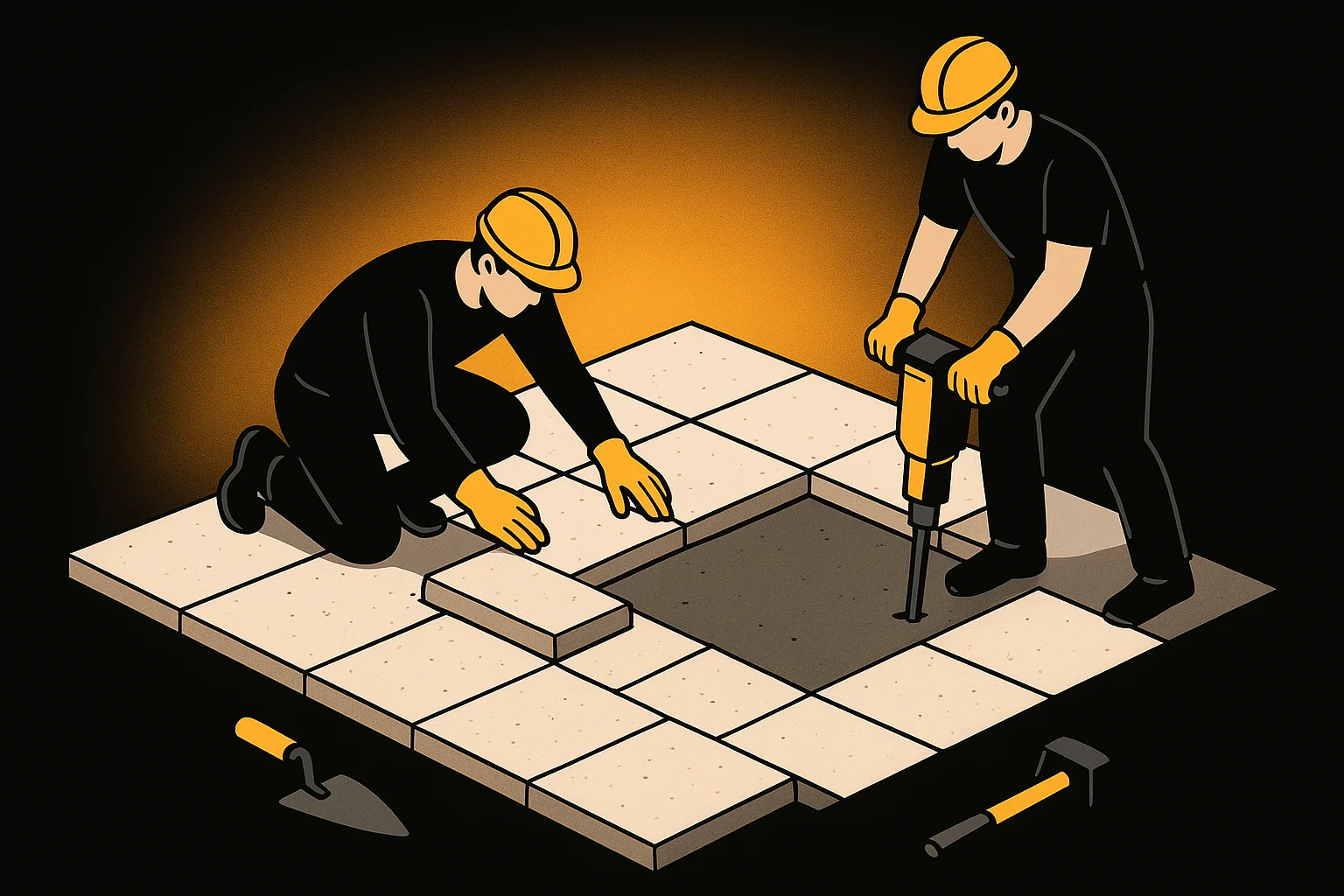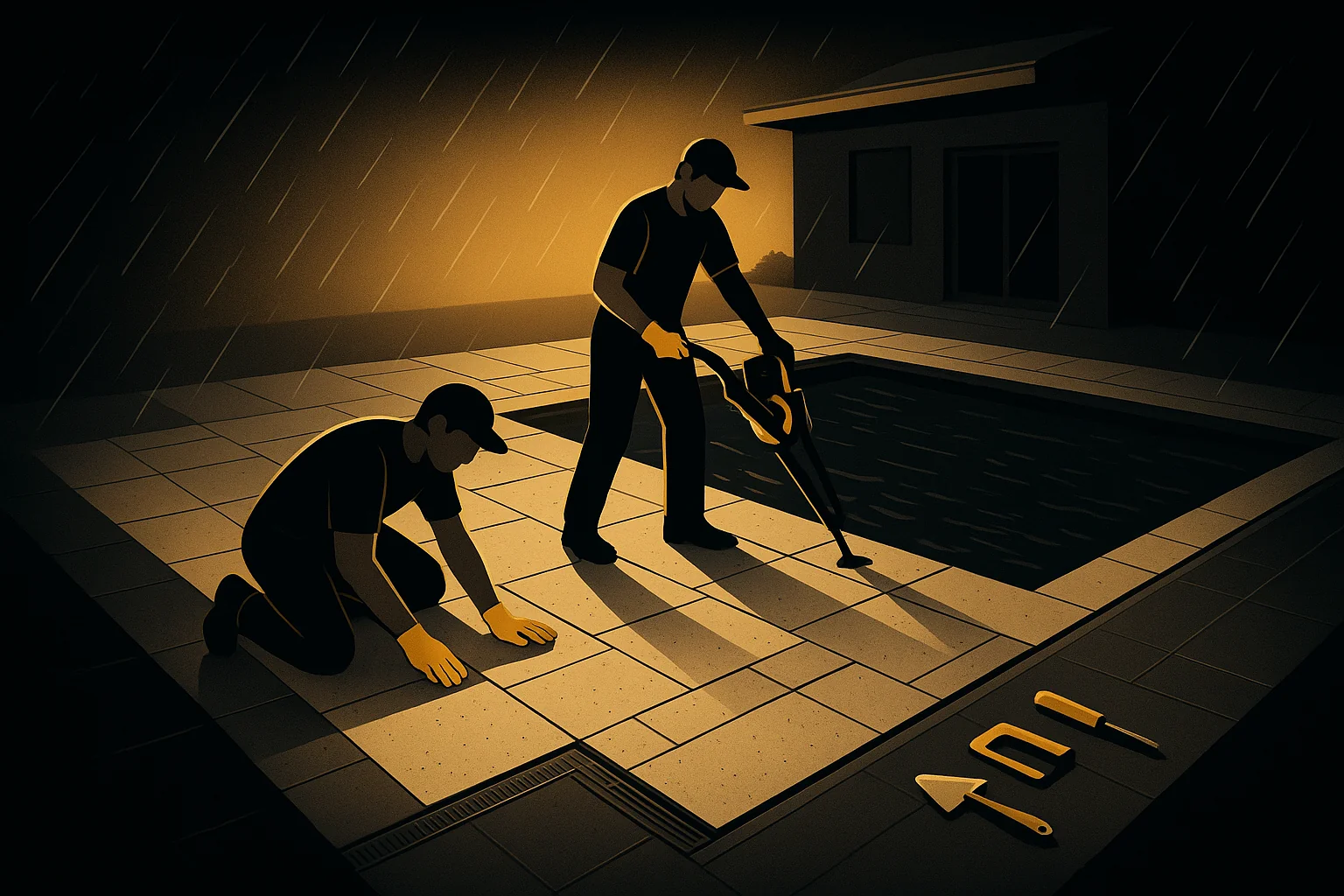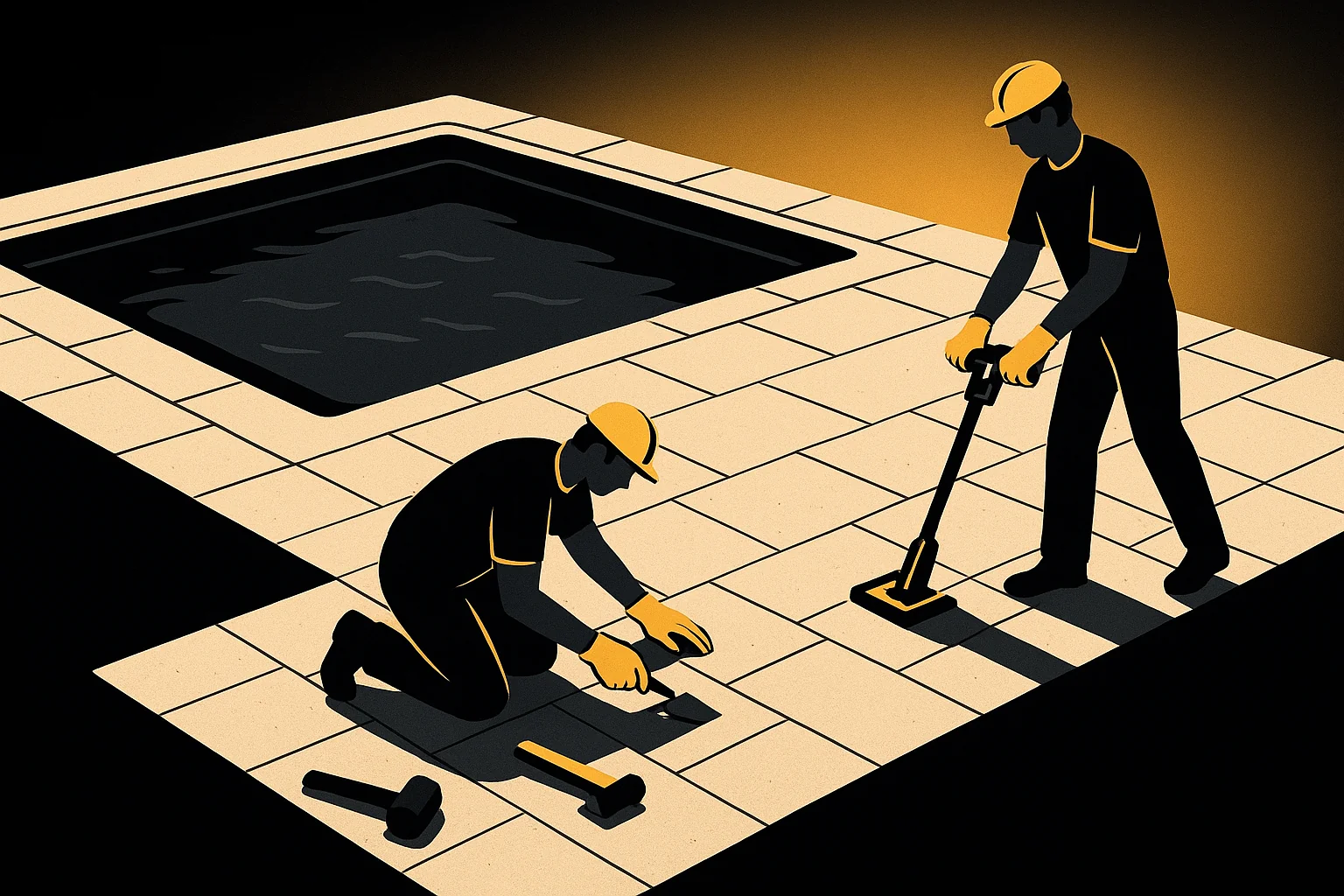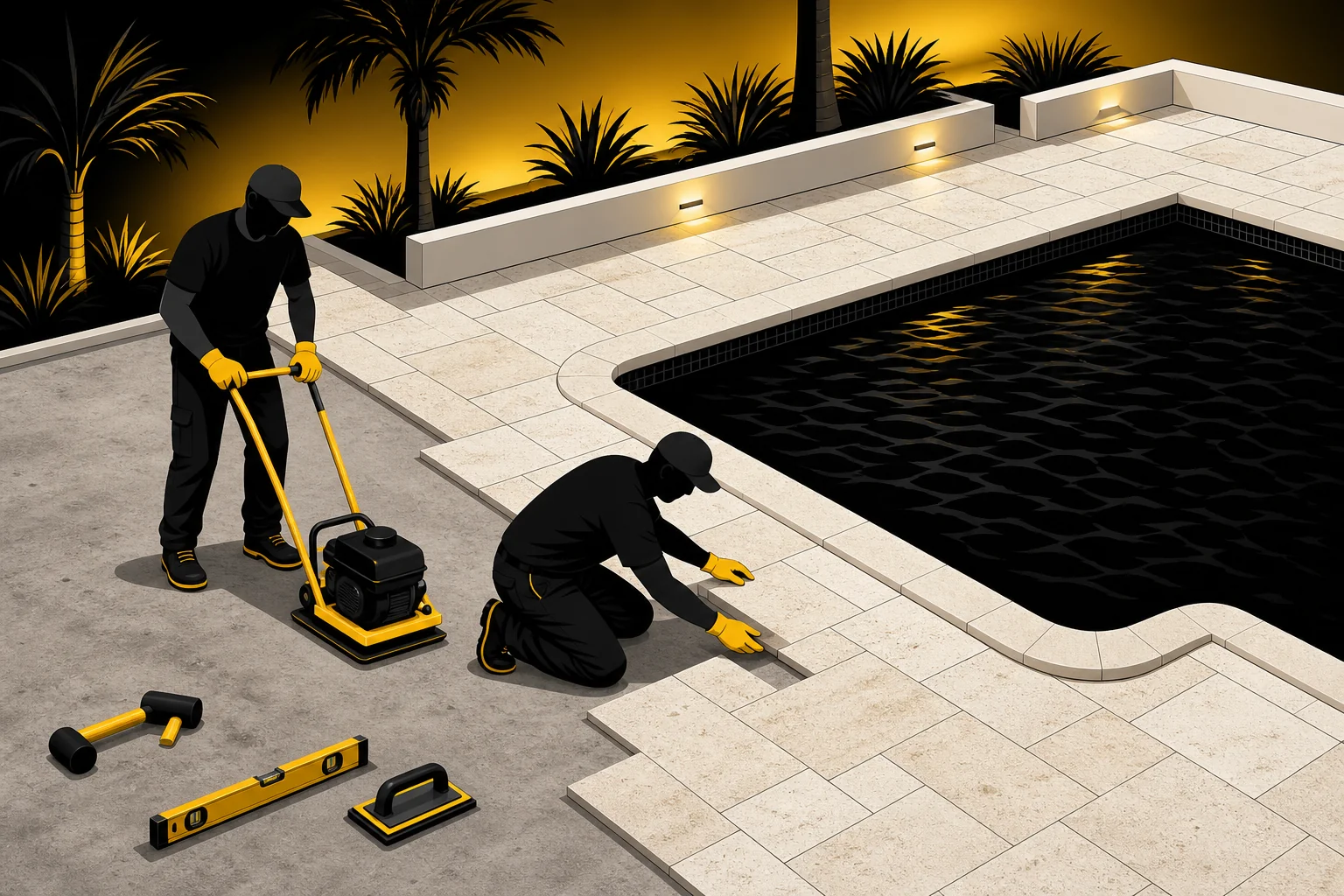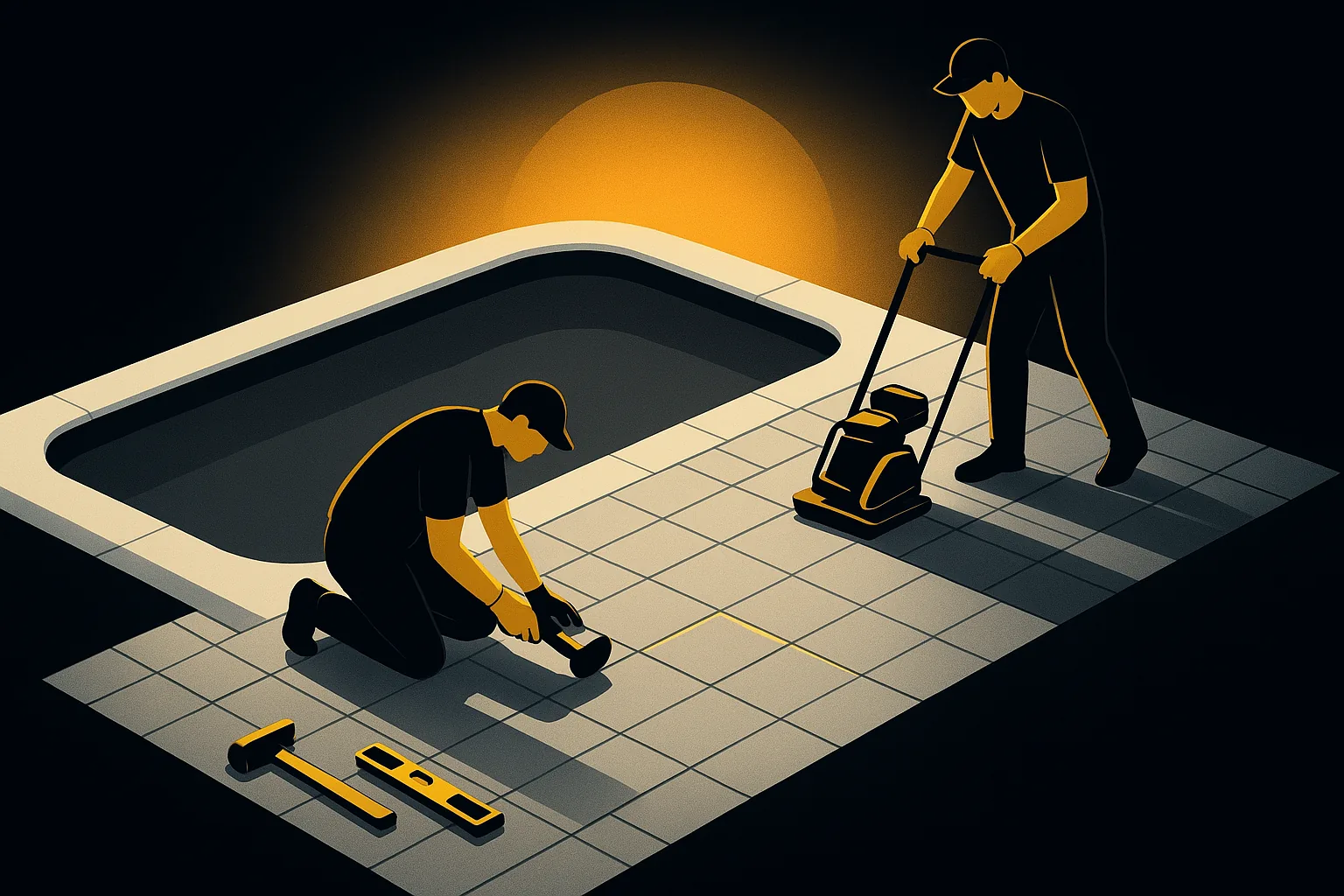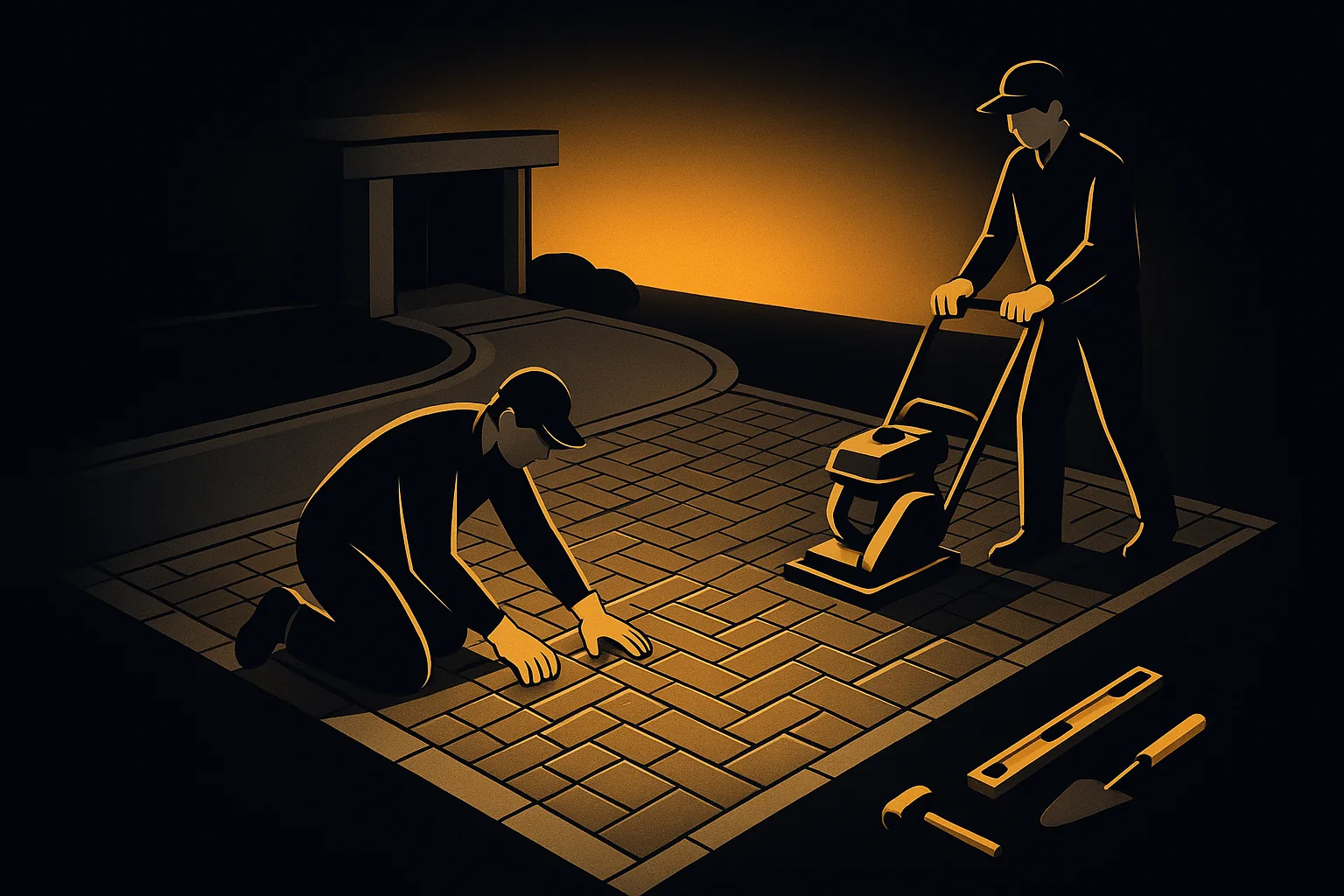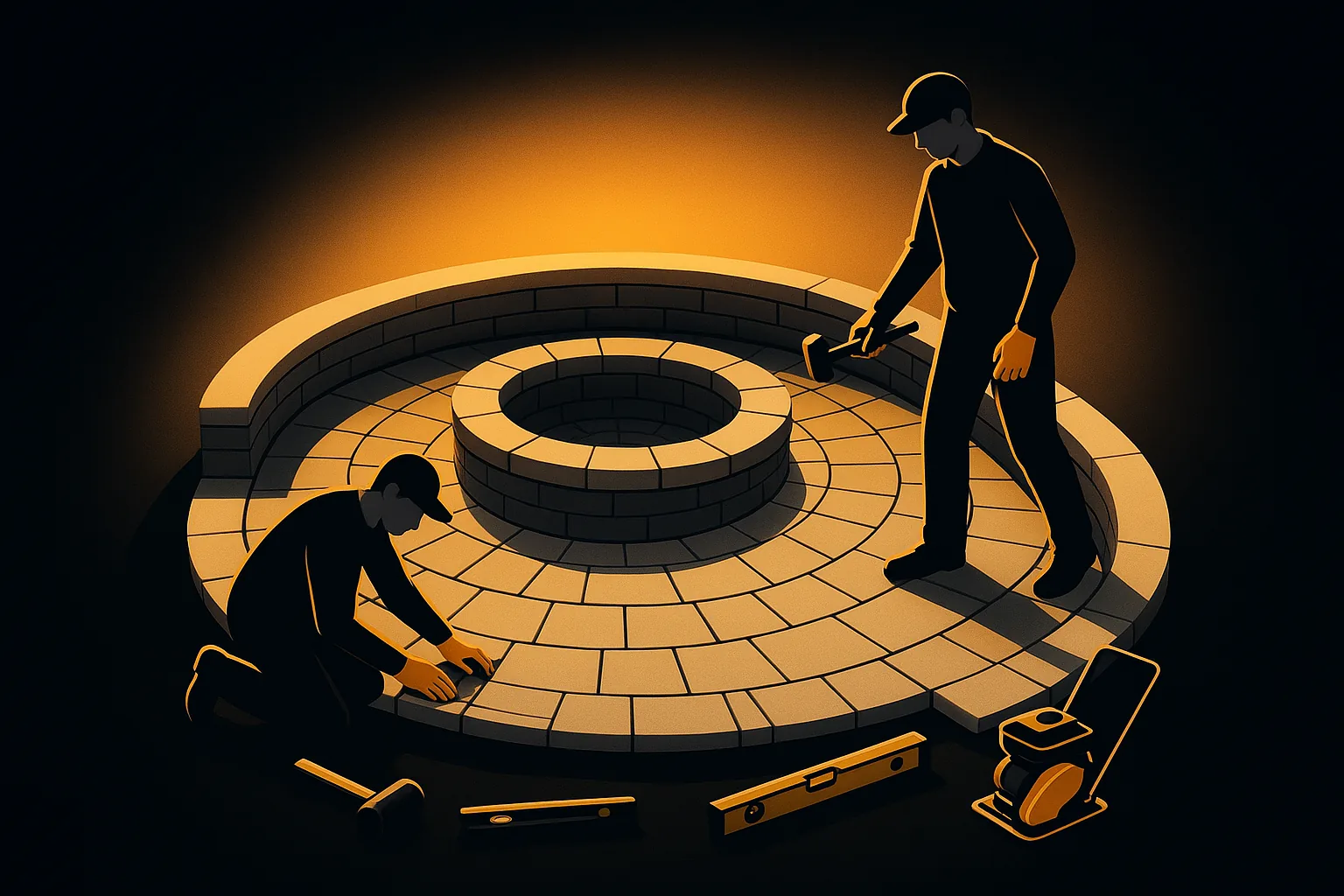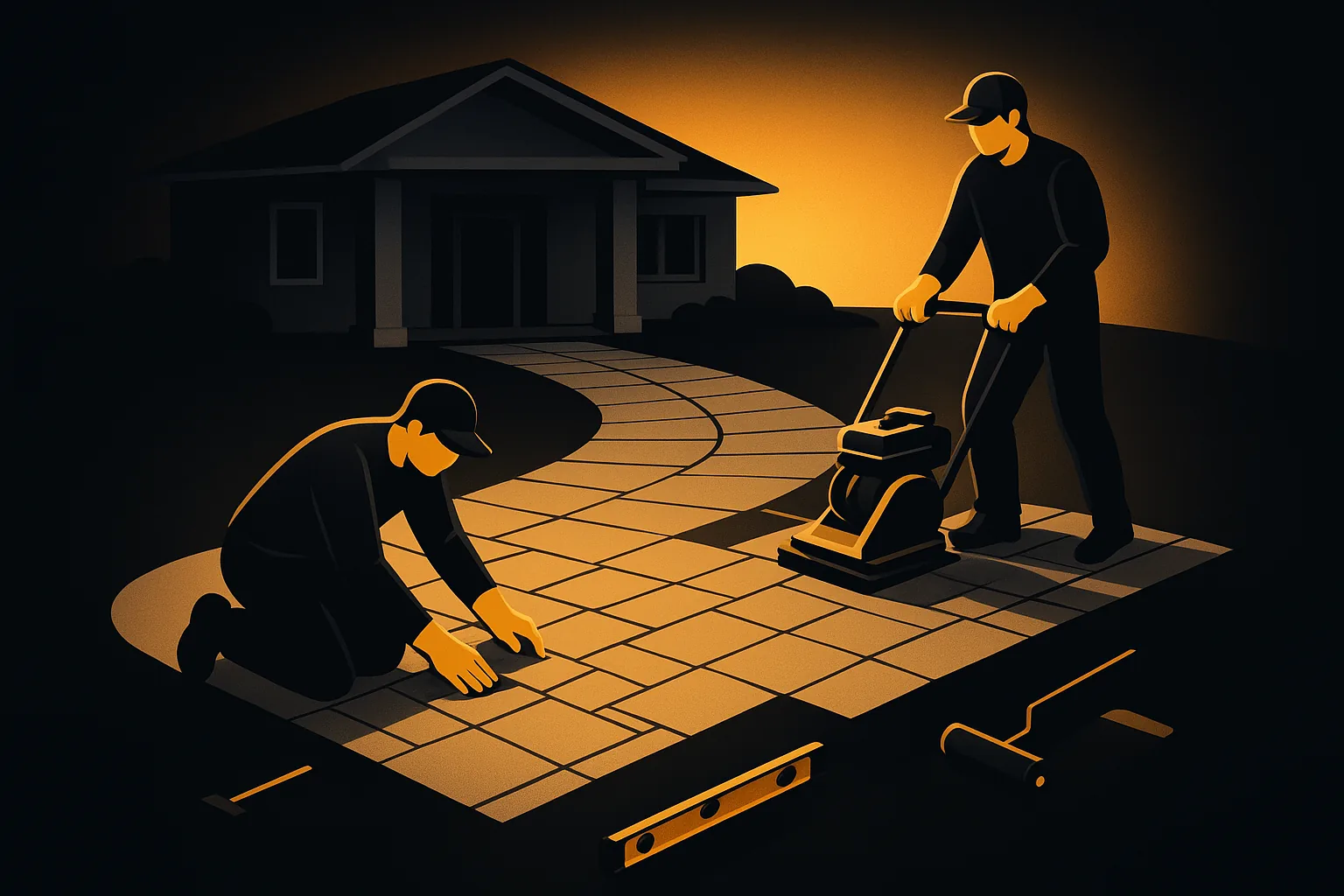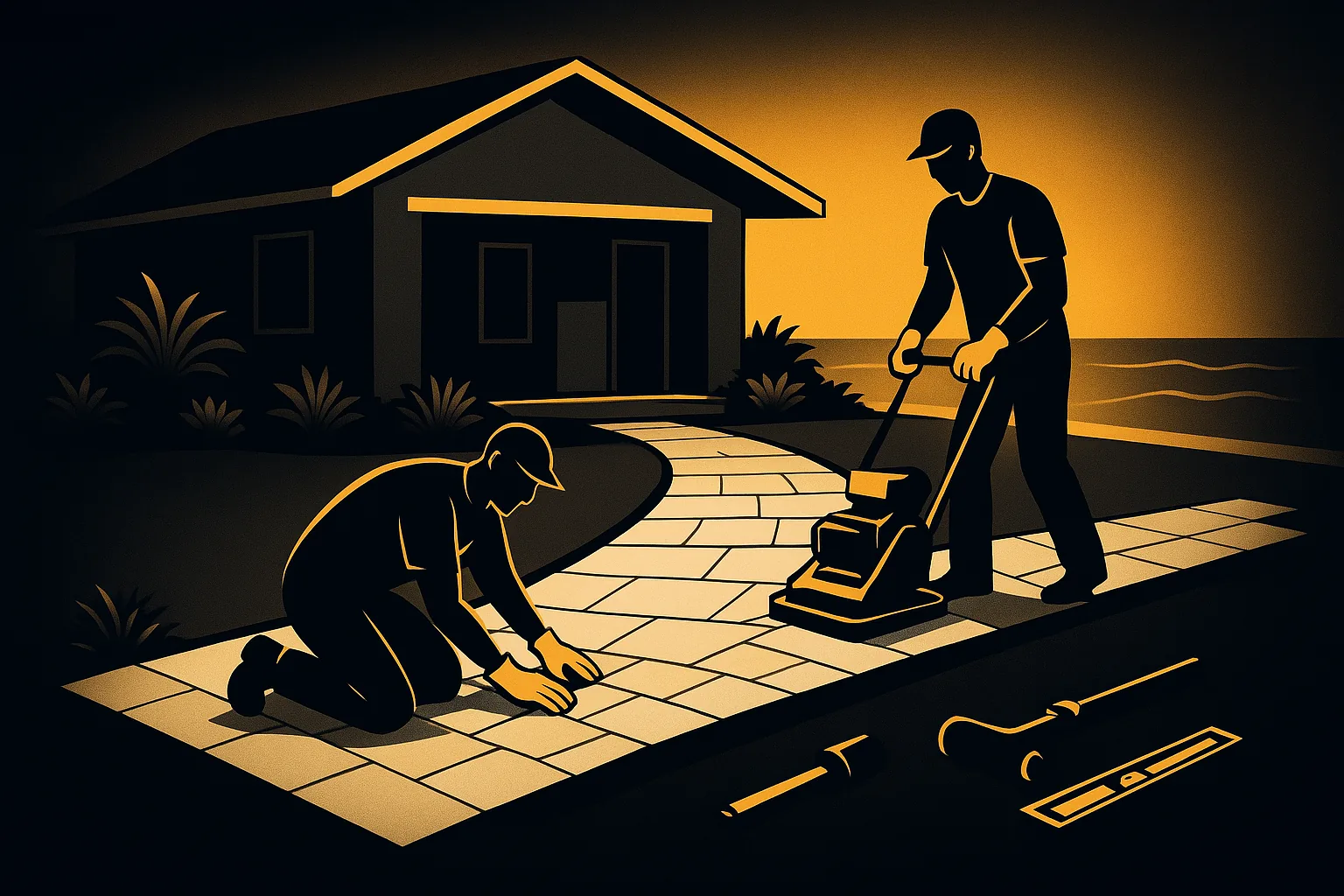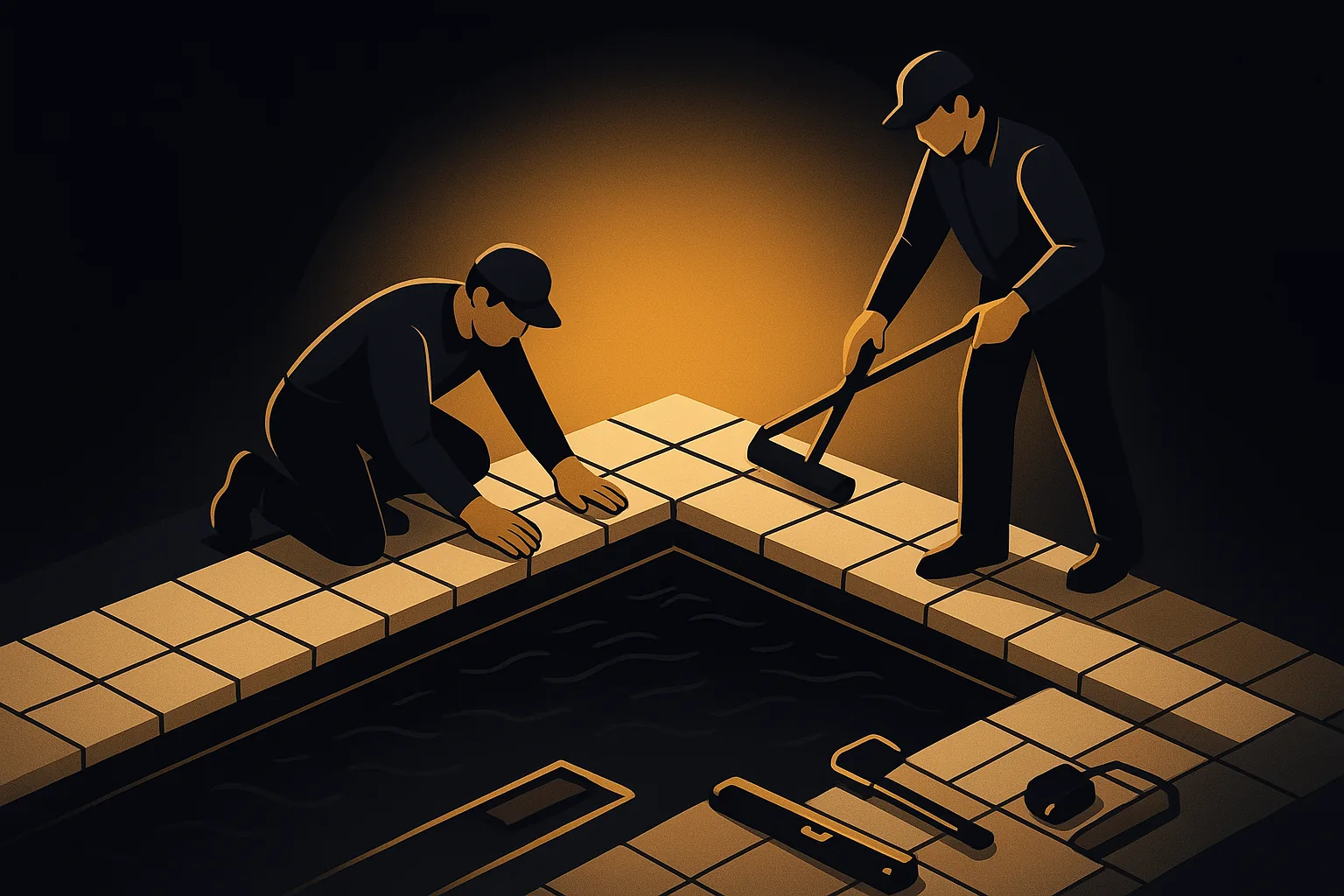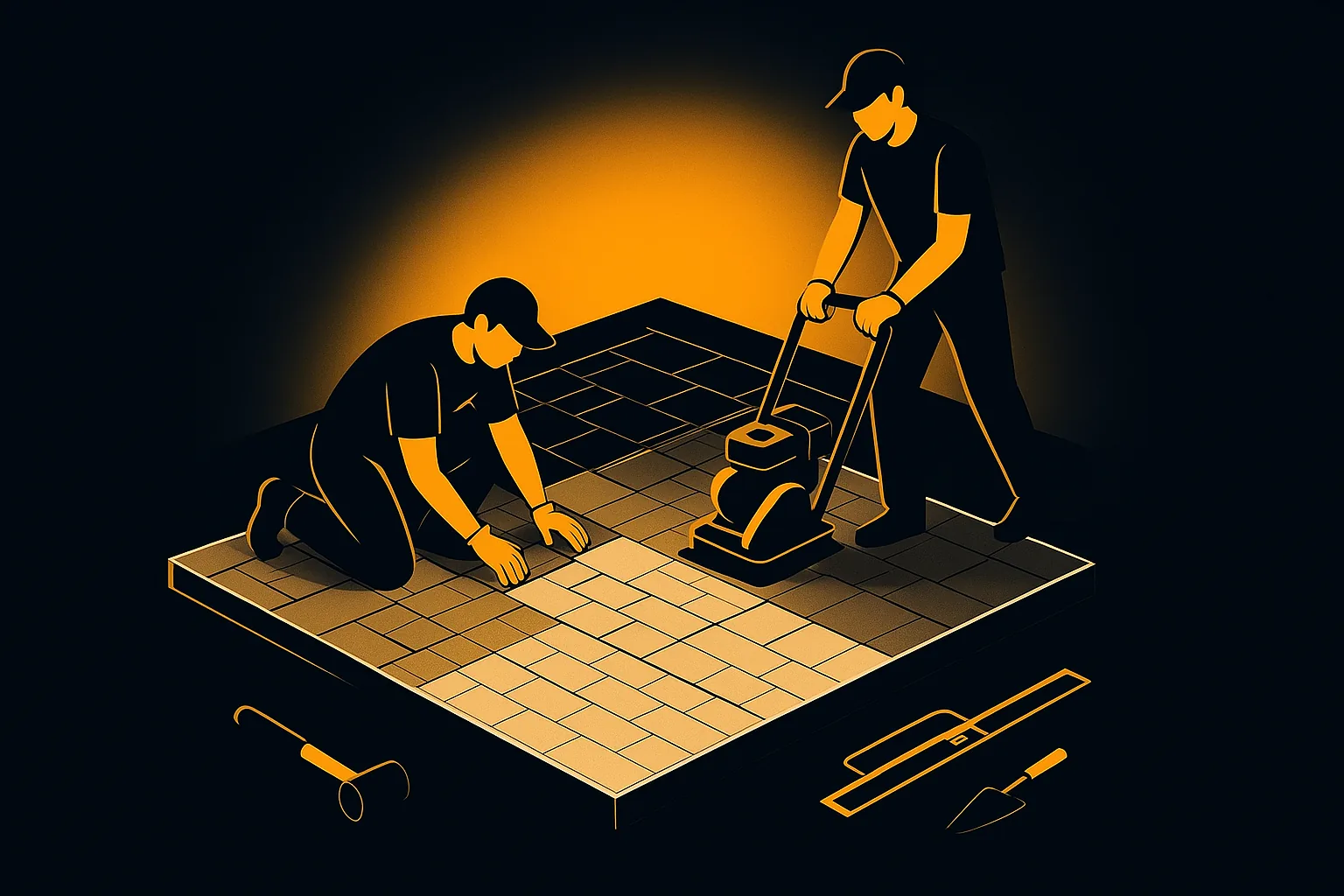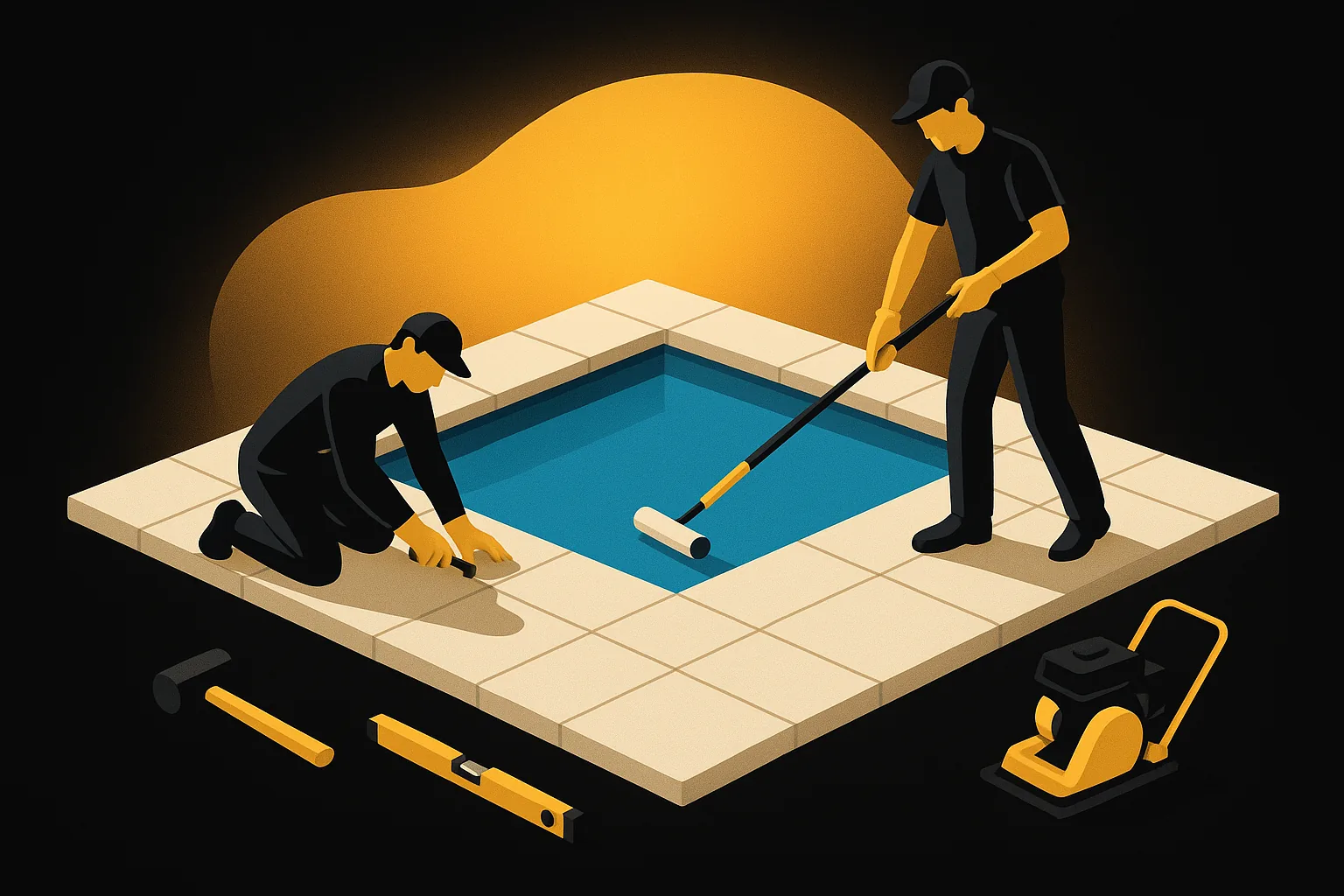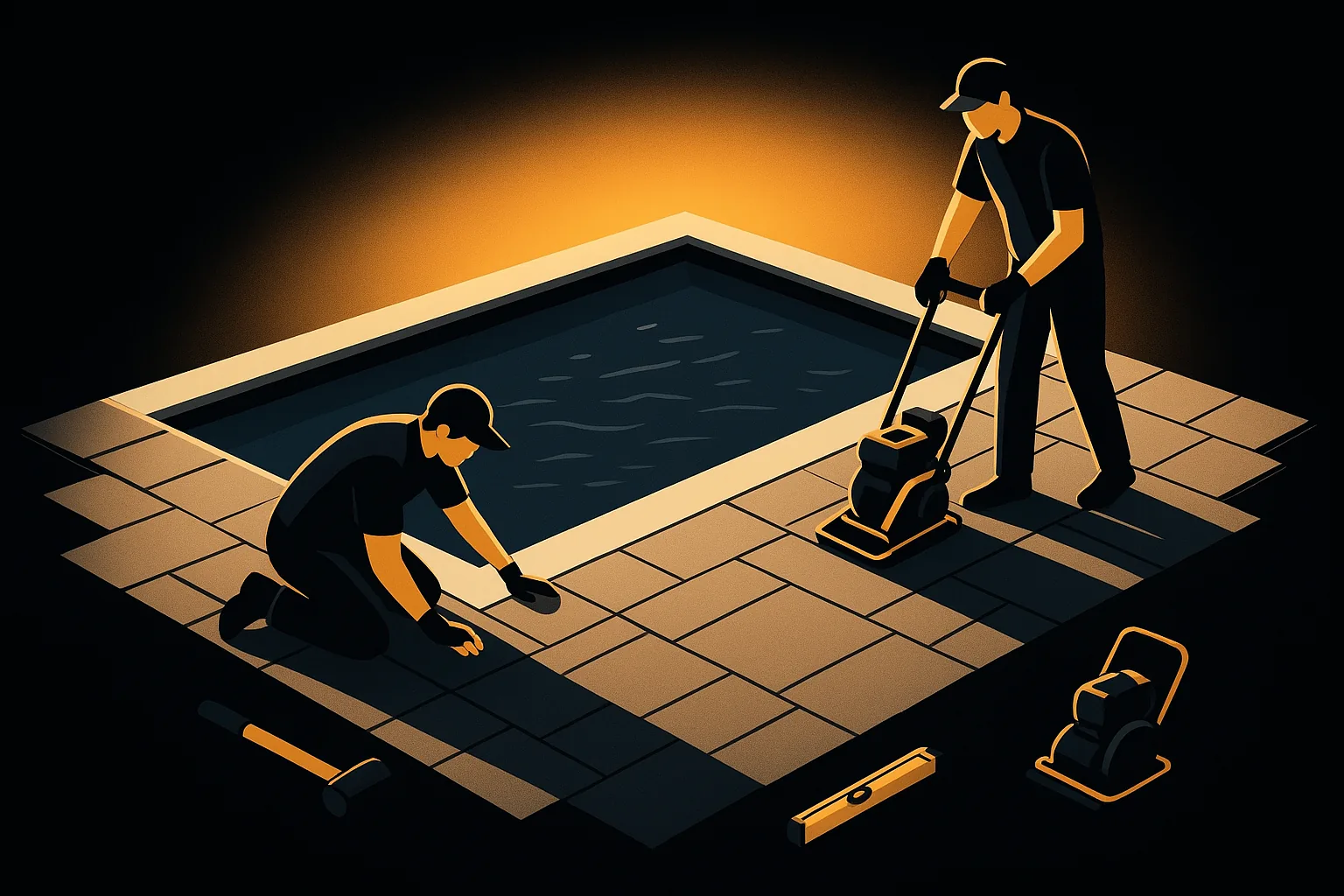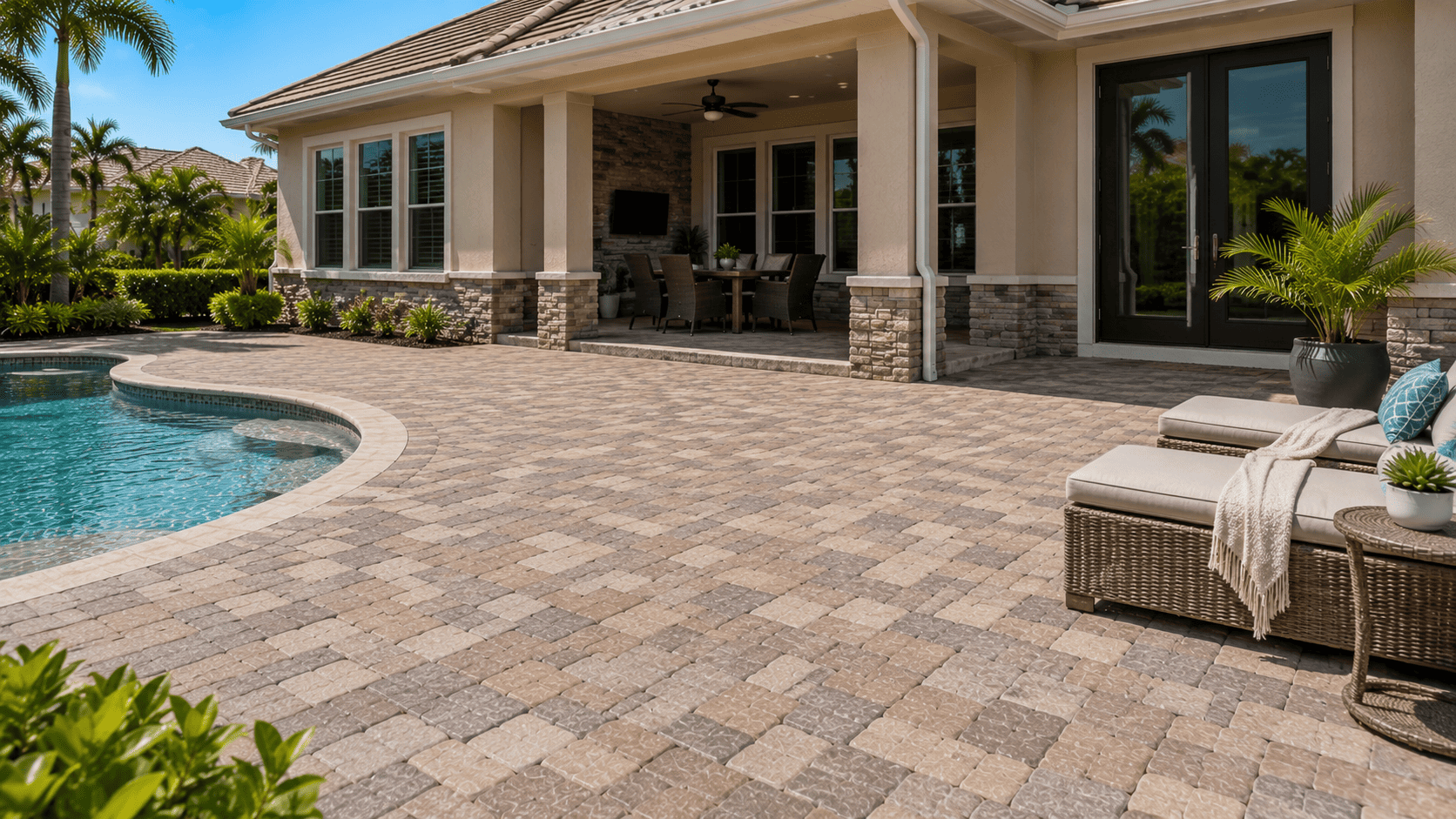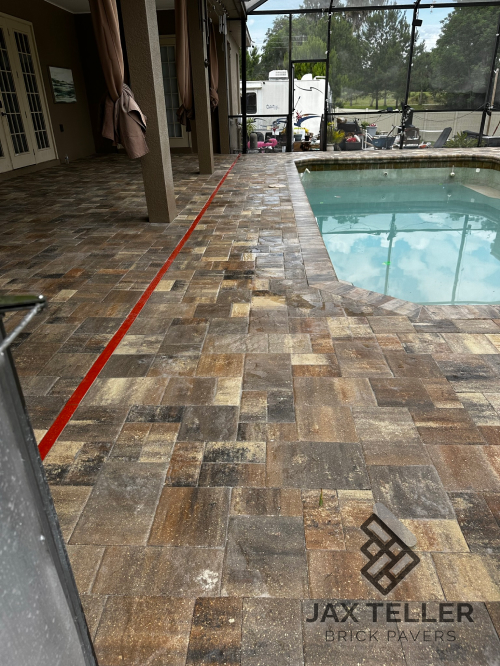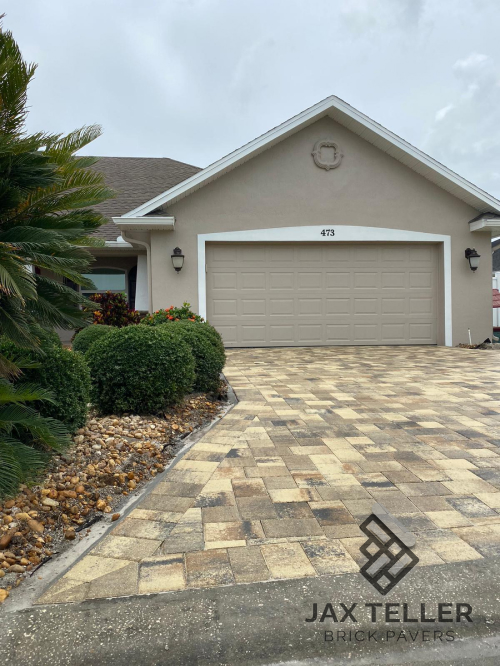
Pool deck paver installation in Largo, FL is one of the most demanding hardscape projects a Florida homeowner will undertake. The pool deck endures constant UV exposure, chemical splash, water saturation, and barefoot traffic. No other residential surface faces this combination every single day of the year.
Most Largo homeowners replace aging concrete pool decks with pavers because concrete fails here faster than almost anywhere else in the country. Florida’s sandy soil shifts constantly. Heat causes rigid slabs to crack. Moisture then penetrates those cracks and accelerates damage from below. Pavers solve this structural problem. They also deliver a surface that looks significantly more refined than any poured alternative.
However, pool deck paver installation requires more than selecting a material and laying units on sand. Drainage engineering, coping design, base preparation, heat performance, and slip resistance all affect the long-term outcome. This guide covers every key decision — from material comparison and design options to installation sequencing and realistic cost ranges — so you approach your contractor conversation with full clarity.
Why Paver Pool Decks Outperform Concrete in Largo, FL
Understanding the performance gap between pavers and concrete starts with the environment itself. Largo sits in Pinellas County — a coastal region where UV intensity, humidity, and soil moisture destroy rigid concrete surfaces faster than almost any other climate in the United States. Concrete slabs crack under thermal expansion and soil movement. Once cracked, moisture enters the base and accelerates deterioration from below.
Paver pool decks eliminate this failure pattern entirely. Each unit flexes independently, accommodating the minor ground movement that Florida’s sandy substrate produces constantly. Therefore, the surface absorbs soil shifts without developing fracture lines. Additionally, individual pavers replace without disturbing the surrounding field — meaning localized damage never triggers a full reinstallation project.
Safety Advantages of Paver Pool Decks
Beyond structural performance, pavers provide two safety advantages specific to pool decks. First, their textured surface maintains traction even when wet. This matters critically when barefoot guests move between the pool and the surrounding deck. Second, many paver materials — particularly travertine — stay measurably cooler underfoot than concrete in direct Florida sun.
On a 95-degree summer afternoon, the temperature difference between a concrete deck and a travertine deck can exceed 20 degrees Fahrenheit. That is not a minor comfort difference — it is a functional one. For a full side-by-side comparison, our post on concrete vs. pavers for pool decks in Florida covers every performance dimension in detail.
Best Materials for Pool Deck Paver Installation in Largo, FL
Material selection is the most consequential decision in any pool deck paver installation in Largo, FL. Each material performs differently across four key dimensions: heat reflection, slip resistance, chemical durability, and aesthetic quality. Choosing correctly requires understanding what each option delivers in Florida’s climate — not just how it looks in a product catalog.
Travertine — The Premium Standard for Pool Deck Paver Installation
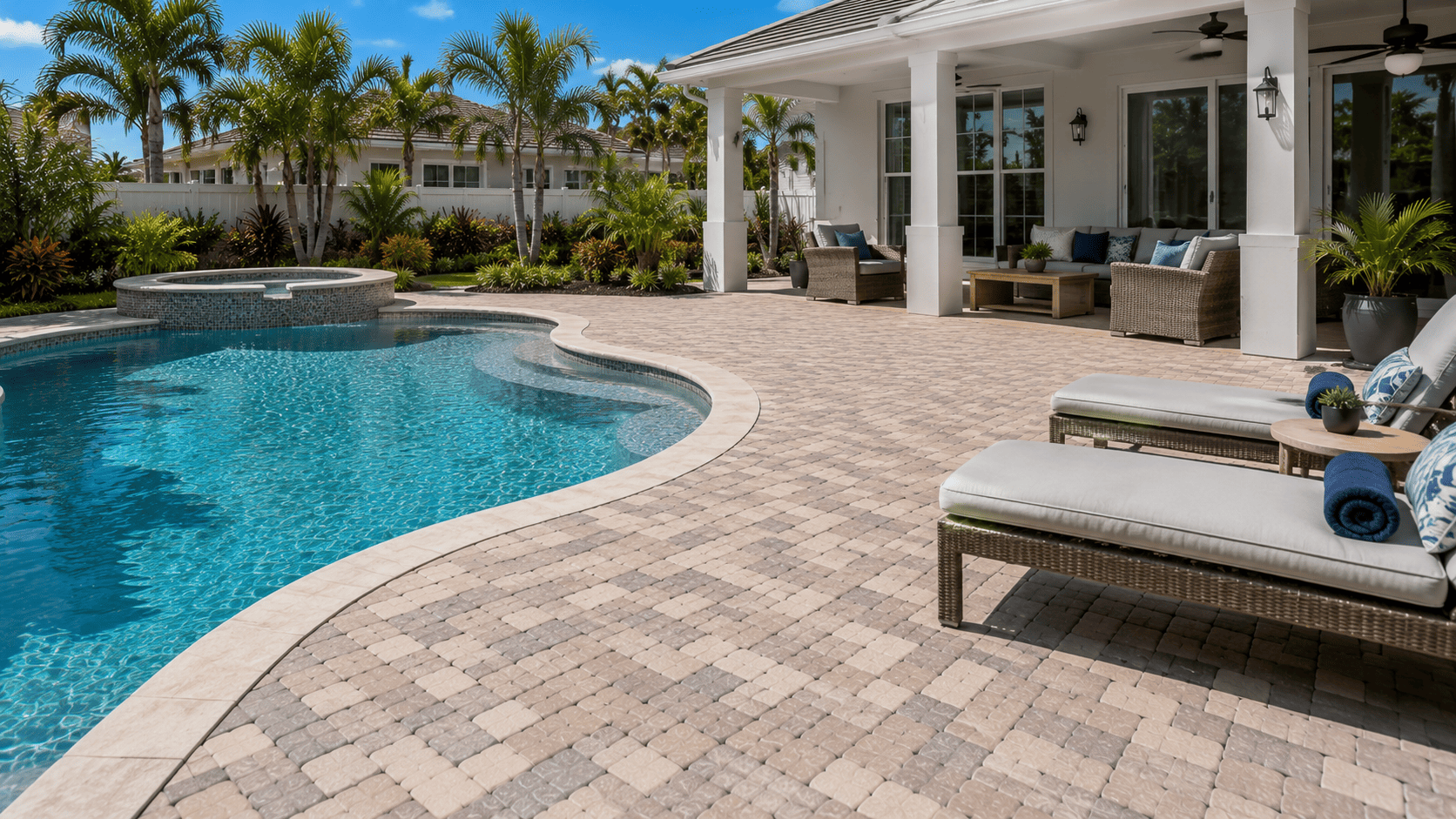
Travertine is the most specified material for pool deck paver installation in Largo. Its natural composition keeps the surface cooler underfoot than any manufactured alternative at a residential price point. Furthermore, travertine’s natural porosity drains water rapidly through the surface. This reduces puddle formation and improves wet-area traction without requiring added texture treatments.
Aesthetically, travertine delivers a resort-quality finish. Its neutral tonal palette — ivory, cream, walnut, and silver-gray — pairs naturally with tropical landscaping and both contemporary and traditional home architecture. On the other hand, travertine requires professional sealing to prevent pool chemical staining. Without proper sealing, the porous surface absorbs chlorinated water over time. With regular sealing, however, travertine pool decks remain visually outstanding for 20 to 30 years. Our post on travertine pool decks for Florida homes covers every practical consideration in full.
Concrete Pavers — Versatile Performance at a Lower Entry Cost
Concrete pavers offer the broadest design range for pool deck applications. They come in dozens of shapes, sizes, colors, and finishes — giving homeowners extensive visual flexibility below travertine’s price point. Additionally, concrete pavers engineered for pool deck use carry texture profiles and thickness ratings designed to meet pool-area slip resistance requirements.
However, concrete pavers absorb and radiate heat more aggressively than travertine. On peak summer days in Largo, unshaded concrete paver pool decks can become uncomfortably hot for barefoot traffic. Lighter colors mitigate this significantly — ivory, light gray, and cream tones reflect more solar energy than darker blends. Resealing every two to three years is also essential to maintain color integrity and chemical resistance. Our post on the best patio pavers for Florida weather covers the thermal and durability performance of each material in detail.
Brick Pavers — Character and Durability for Classic Pool Areas
Brick pavers bring warmth and character that manufactured products cannot replicate. Their natural clay composition resists UV fading better than concrete over long timeframes — a genuine advantage in Largo’s relentless sun. Moreover, brick’s textured surface provides strong traction in wet conditions. This makes it a practical choice for pool decks where safety is the primary design driver.
On the other hand, brick absorbs pool chemicals more readily than travertine without regular sealing. In pool deck applications, professional sealing is non-negotiable. Sealed brick, however, performs reliably for decades and ages gracefully — developing a natural patina that many homeowners prefer to a factory-fresh surface. For classic or Mediterranean architecture, brick remains one of the strongest aesthetic choices for poolside environments.
Porcelain Pavers — The Modern High-Performance Option
Porcelain pavers have grown significantly in popularity for Largo pool decks in recent years. Their ultra-low porosity makes them virtually impervious to pool chemicals, staining, and moisture absorption. This eliminates most of the maintenance requirements that natural stone demands. Additionally, modern porcelain products achieve realistic stone, travertine, and wood appearances at a competitive price point.
Furthermore, porcelain’s non-porous surface resists algae and mold growth — a meaningful advantage in humid coastal environments. The primary limitation is hardness. Porcelain requires diamond-blade cutting tools and experienced installation crews. Cutting errors are difficult to correct without replacing entire units. For this reason, porcelain pool deck installation demands a contractor with specific material experience — not a generalist who occasionally works with pavers.
Pool Coping — The Most Critical Detail in Pool Deck Paver Installation
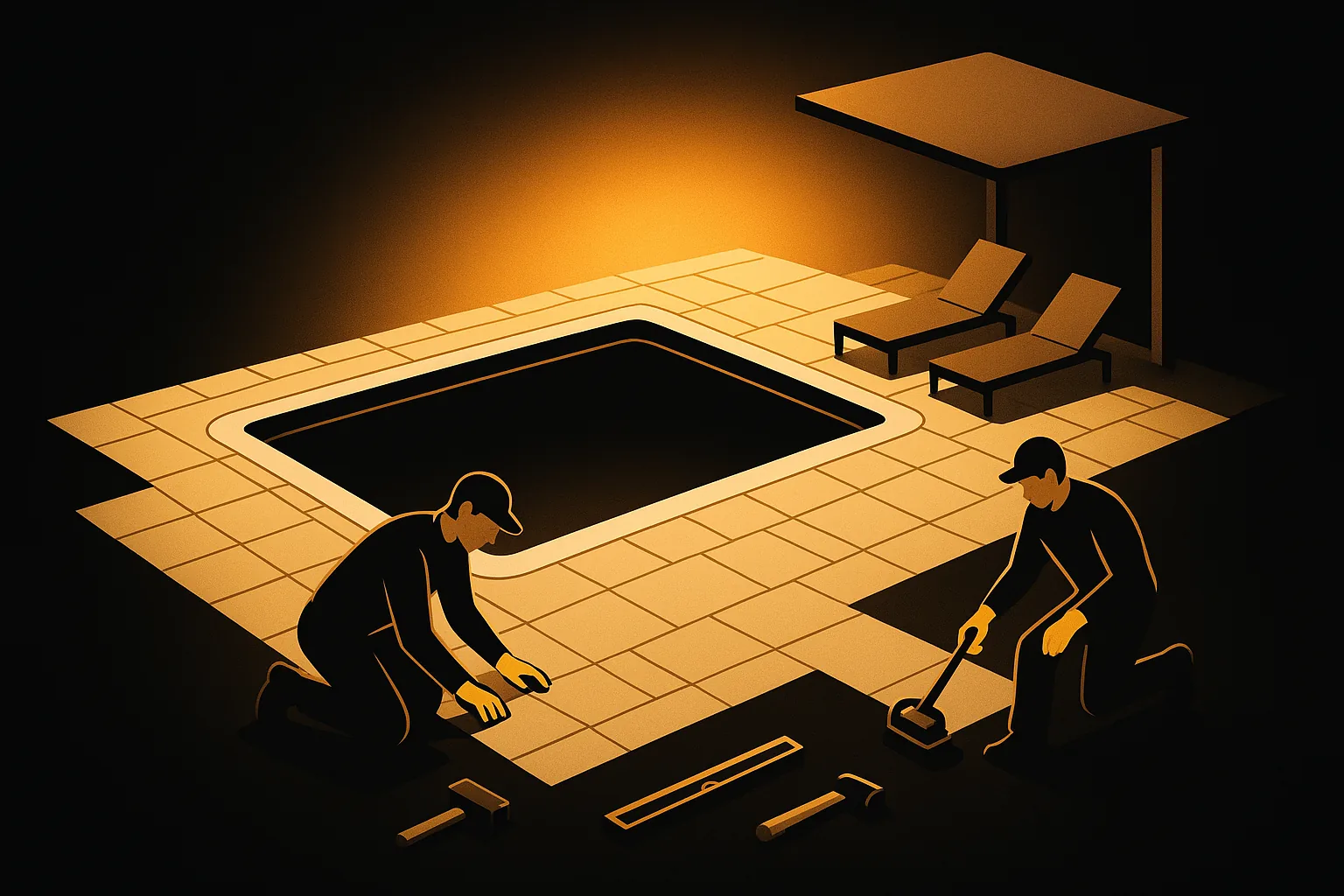
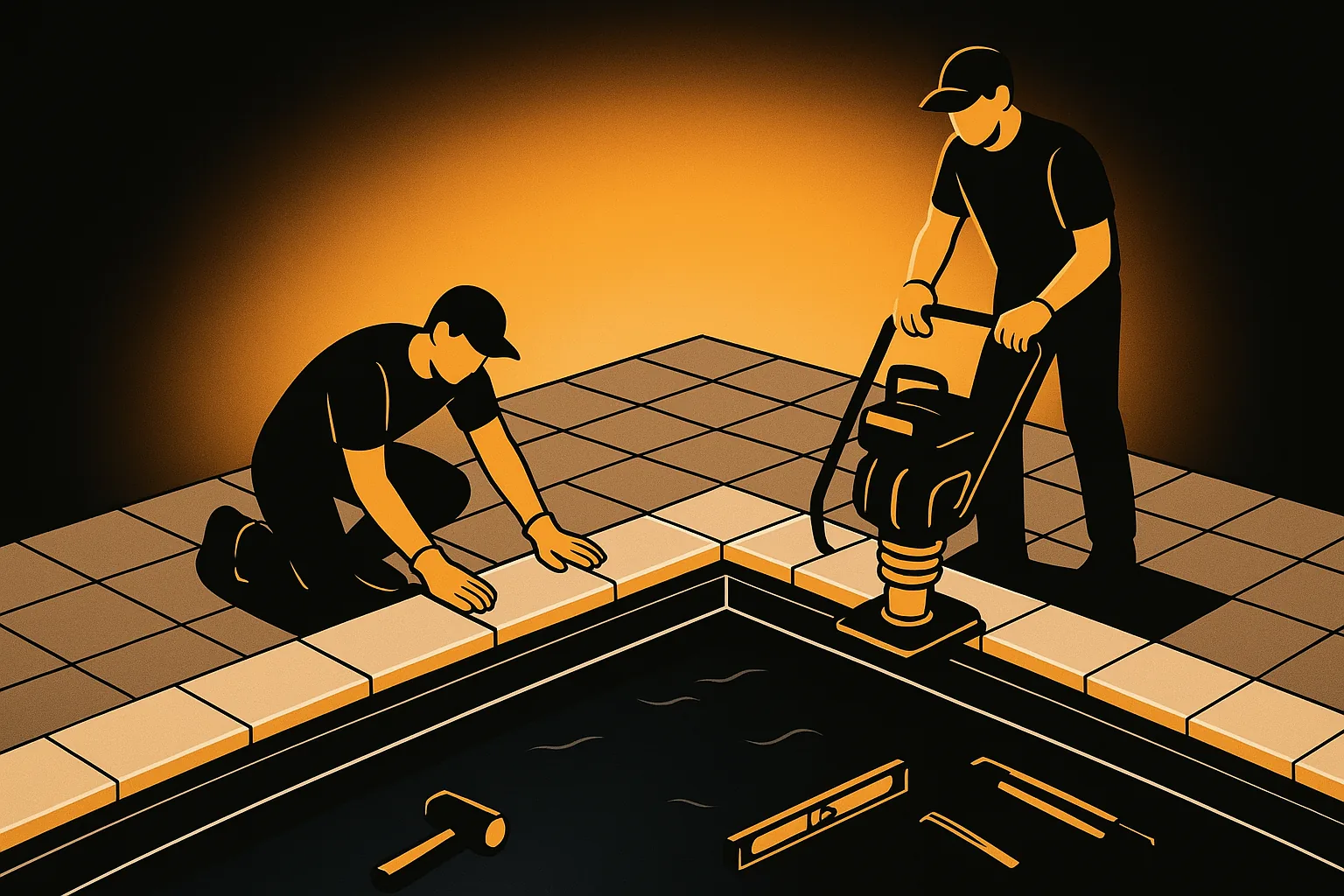
Pool coping caps the pool bond beam — the structural edge where the pool shell meets the surrounding deck. In any pool deck paver installation, coping is the most technically critical detail. It must be watertight to prevent moisture intrusion behind the shell. It must be slip-resistant at the pool’s edge. Most importantly, it must handle continuous loading from people sitting and stepping on it daily.
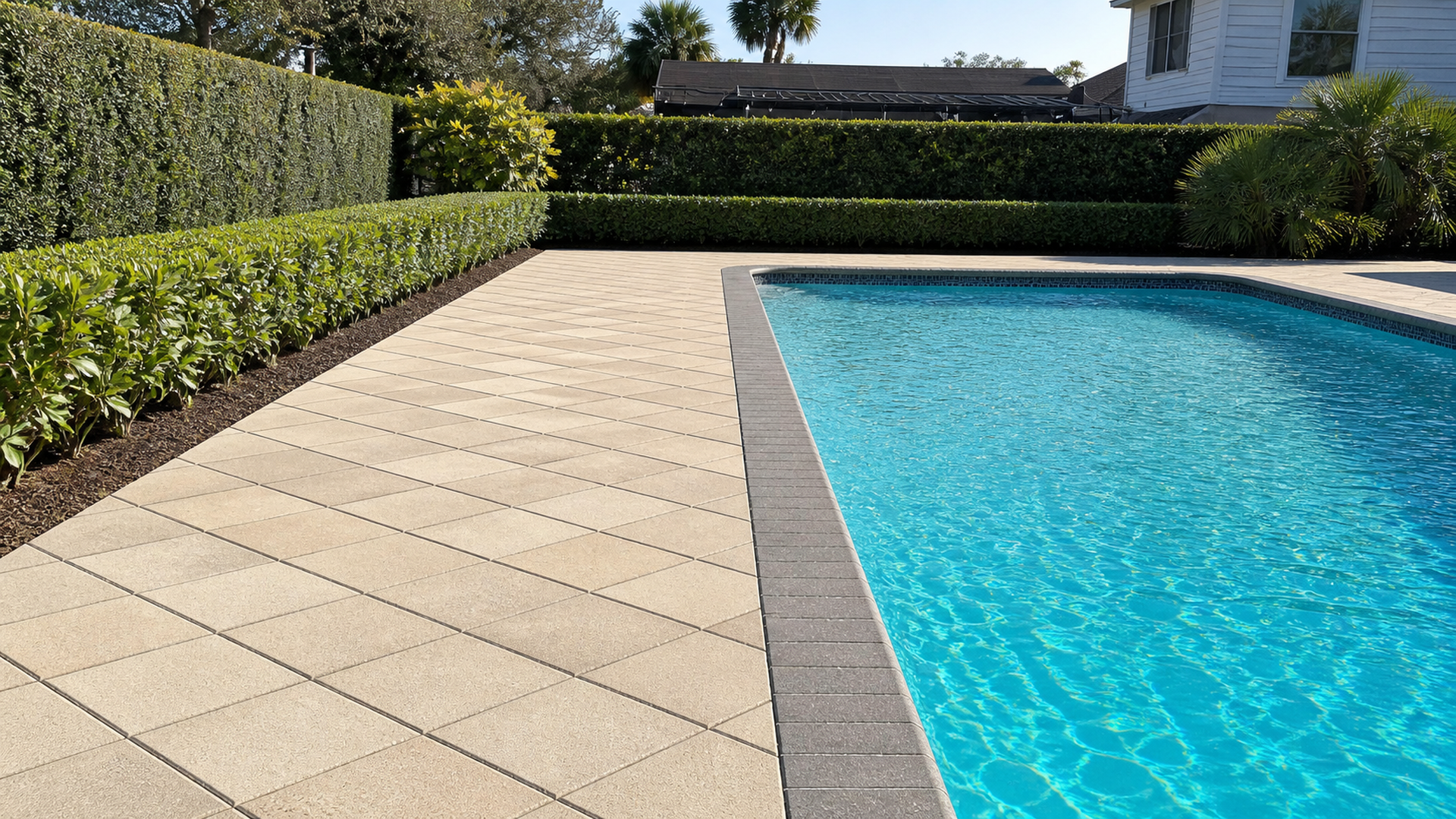
Bullnose coping — a rounded-edge unit that overhangs the pool shell slightly — is the most common and safest profile for residential pools in Largo. The rounded edge eliminates sharp corners at the waterline. It provides a comfortable grip for swimmers and creates a clean visual transition between the pool water and the deck. Our post on pool coping options in Florida covers every profile, material, and installation consideration available in the Largo market.
Matching vs. Contrasting Coping
Matching the coping material to the deck paver creates the most cohesive finished appearance. However, contrasting coping in a complementary tone can also be highly effective — particularly when using travertine deck pavers with a darker walnut or noce coping border. In either case, the coping installation must follow strict waterproofing standards. Flexible sealant at the deck-to-coping joint is essential. It accommodates the thermal movement that Florida’s temperature cycles produce year-round.
Drainage Engineering for Pool Deck Paver Installation in Largo
Drainage is the most frequently underestimated aspect of pool deck design — and the most consequential. In Largo, pool decks must manage two distinct water sources simultaneously. The first is pool water splash and overflow. The second is Florida’s seasonal rainfall, which can exceed 60 inches annually. Both require intentional drainage engineering built into the surface from the start.
A properly engineered pool deck slopes away from the pool shell at a minimum of 1/8 inch per foot. This directs water toward channel drains, perimeter drains, or lawn drainage areas at the deck edge. Moreover, correct slope protects the compacted base beneath the pavers from saturation — the primary cause of base settlement and surface unevenness in Largo pool decks over time.
Permeable paver systems offer an additional drainage solution for complex site conditions. In permeable installations, water moves directly through the joints into a gravel drainage layer below — eliminating surface water entirely. This approach works particularly well in Largo properties where traditional surface drainage is difficult due to surrounding landscaping or hardscape. Our post on permeable pavers in Florida covers the engineering and installation requirements in full detail.
Pool Deck Design Patterns and Layout Options
Pattern selection significantly affects both the visual quality and functional performance of a pool deck paver installation in Largo, FL. Different patterns suit different pool shapes, deck sizes, and architectural styles. Some patterns also perform better in terms of drainage slope execution and edge alignment at the coping boundary.
French Pattern — Resort-Quality Visual Complexity
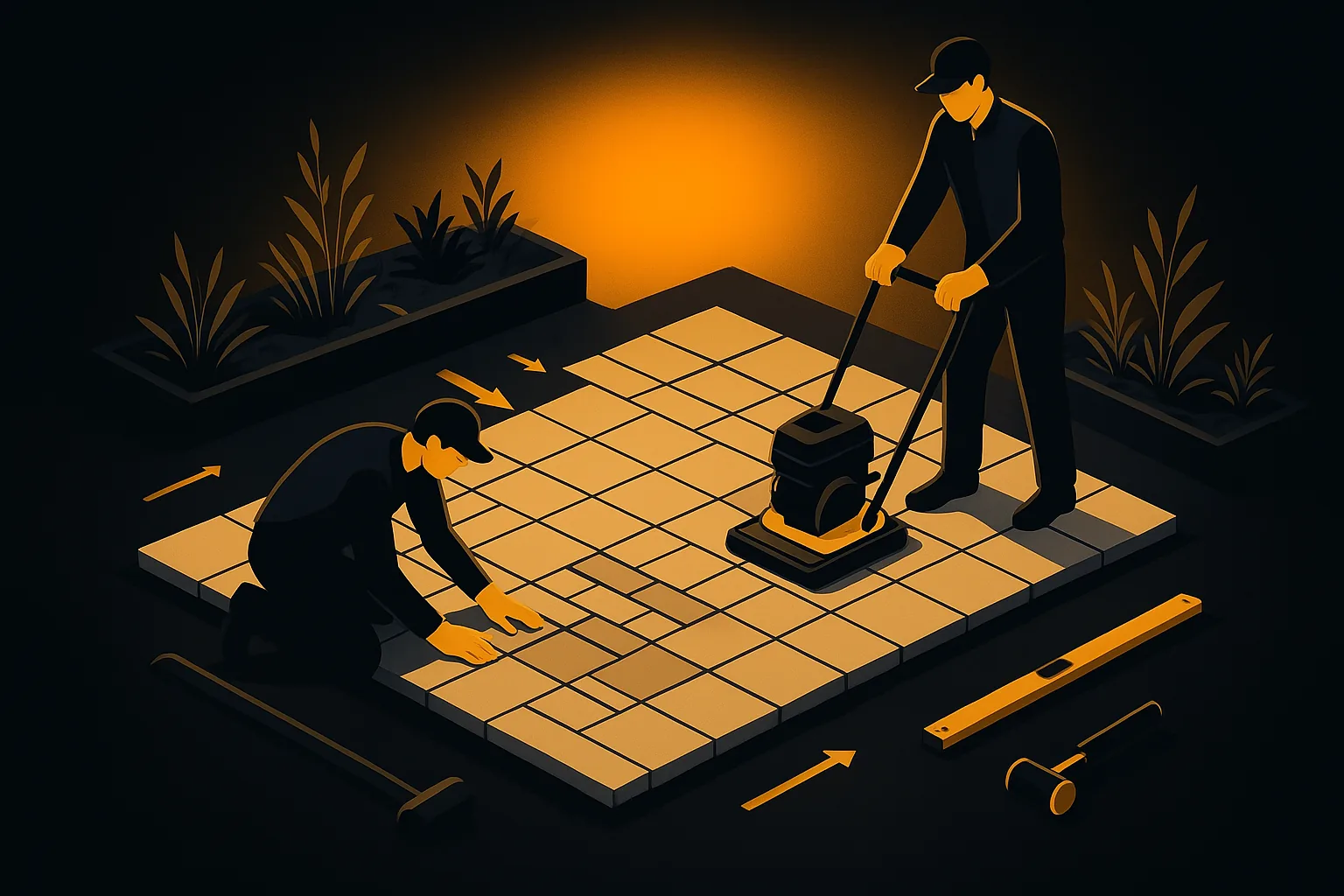
The French pattern — also called ashlar — uses four different paver sizes in a staggered, non-repetitive layout. It creates the richest visual texture of any pool deck pattern. This is the most commonly specified layout for travertine pool decks in Largo. The irregular sizing eliminates predictable grid lines. Instead, it produces a surface that reads as naturally varied and sophisticated. Most importantly, it scales beautifully from compact rectangular pools to expansive freeform designs.
Running Bond — Clean Lines for Contemporary Pools
Running bond creates a clean, horizontal rhythm that pairs naturally with contemporary rectangular pool designs and minimalist landscaping. Its straightforward layout makes it one of the more cost-effective patterns to install. Less precision cutting is required compared to French pattern or fan layouts. Additionally, running bond’s linear geometry makes drainage slope execution more predictable — an advantage on flat lots where precise grading requires careful planning.
Herringbone — Dynamic Energy for Classic Pool Spaces
Herringbone brings dynamic visual energy to pool deck surfaces. Its interlocking layout distributes load across multiple units simultaneously. This makes it particularly stable in high-traffic zones around pool steps and entry areas. For classic or Mediterranean-style homes with brick or tumbled concrete pavers, herringbone consistently delivers the most architecturally appropriate result.
Decorative Borders and Inlays
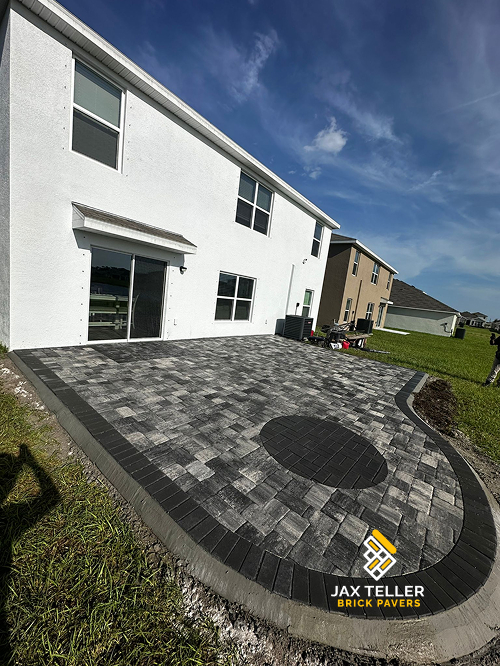
Borders and inlay bands define zones, frame the pool perimeter, and add visual hierarchy to large deck surfaces. A contrasting soldier course border along the pool coping edge creates a clean transition line between the coping and the field pattern. Similarly, inlay bands at the deck perimeter define the boundary between the paver surface and the surrounding landscape. These details require no significant additional material cost — but they elevate the finished quality of the installation dramatically. Our post on driveway borders and inlays with pavers in Florida covers the same design principles applied across multiple hardscape contexts.
What the Pool Deck Paver Installation Process Looks Like
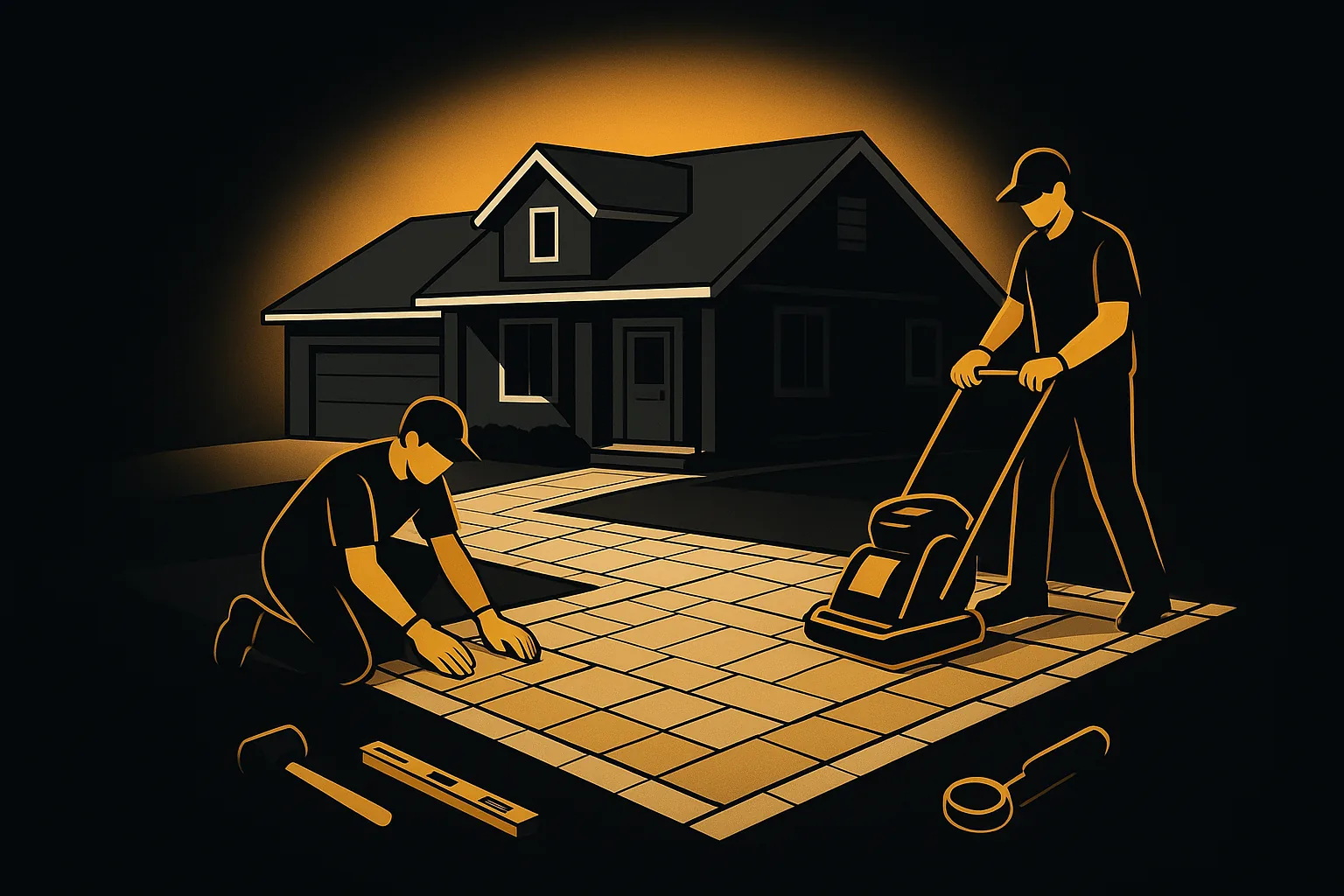
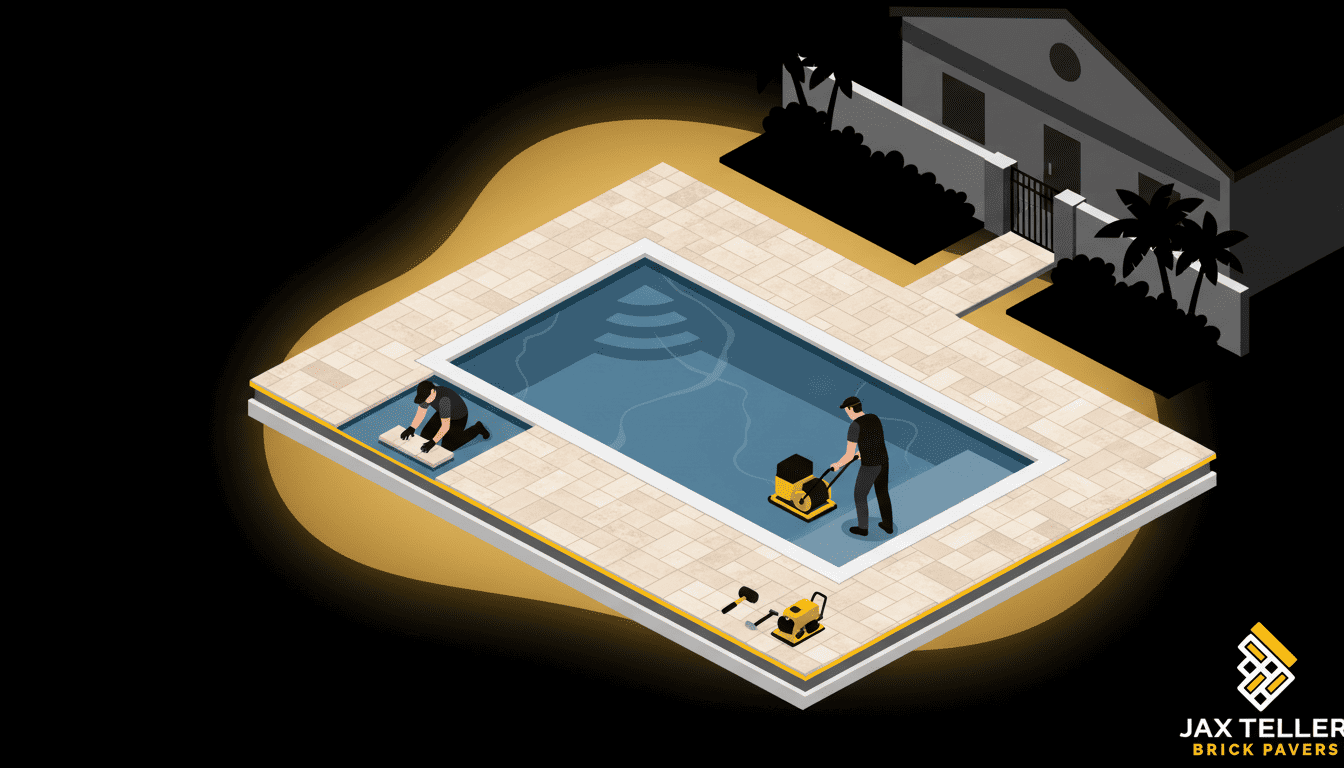
A professional pool deck paver installation in Largo follows a precise sequence. Each phase affects the performance of everything that follows. Skipping any step compromises structural integrity — often in ways that do not become visible until the first or second rainy season after installation.
- Site assessment and drainage planning: Evaluates existing grade, drainage outlets, pool shell condition, and coping requirements before excavation begins
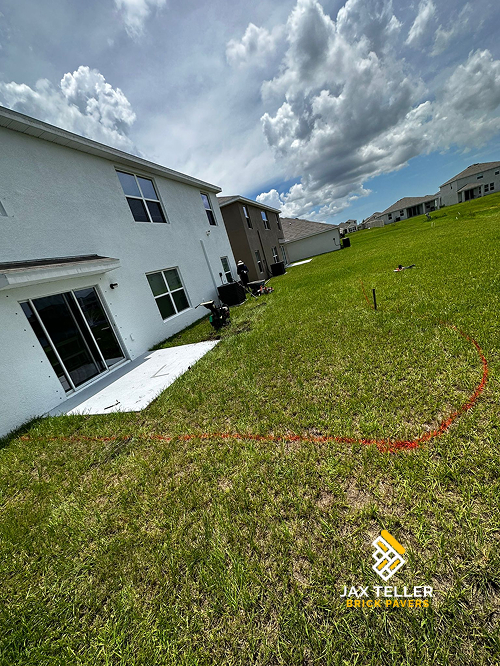
- Excavation and sub-grade preparation: Removes existing surface material, establishes correct sub-grade depth, and grades for the required drainage slope away from the pool
- Aggregate base installation and compaction: Installs and compacts crushed stone base — typically 6 to 8 inches deep in Largo’s sandy soil
- Edge restraint installation: Secures the deck perimeter to prevent lateral movement of the paver field over time
- Bedding sand screeding: Creates the precise, level setting bed that positions pavers at the correct finished elevation relative to coping
- Coping installation: Sets pool coping units with waterproof mortar and flexible joint sealant before the deck field begins around it
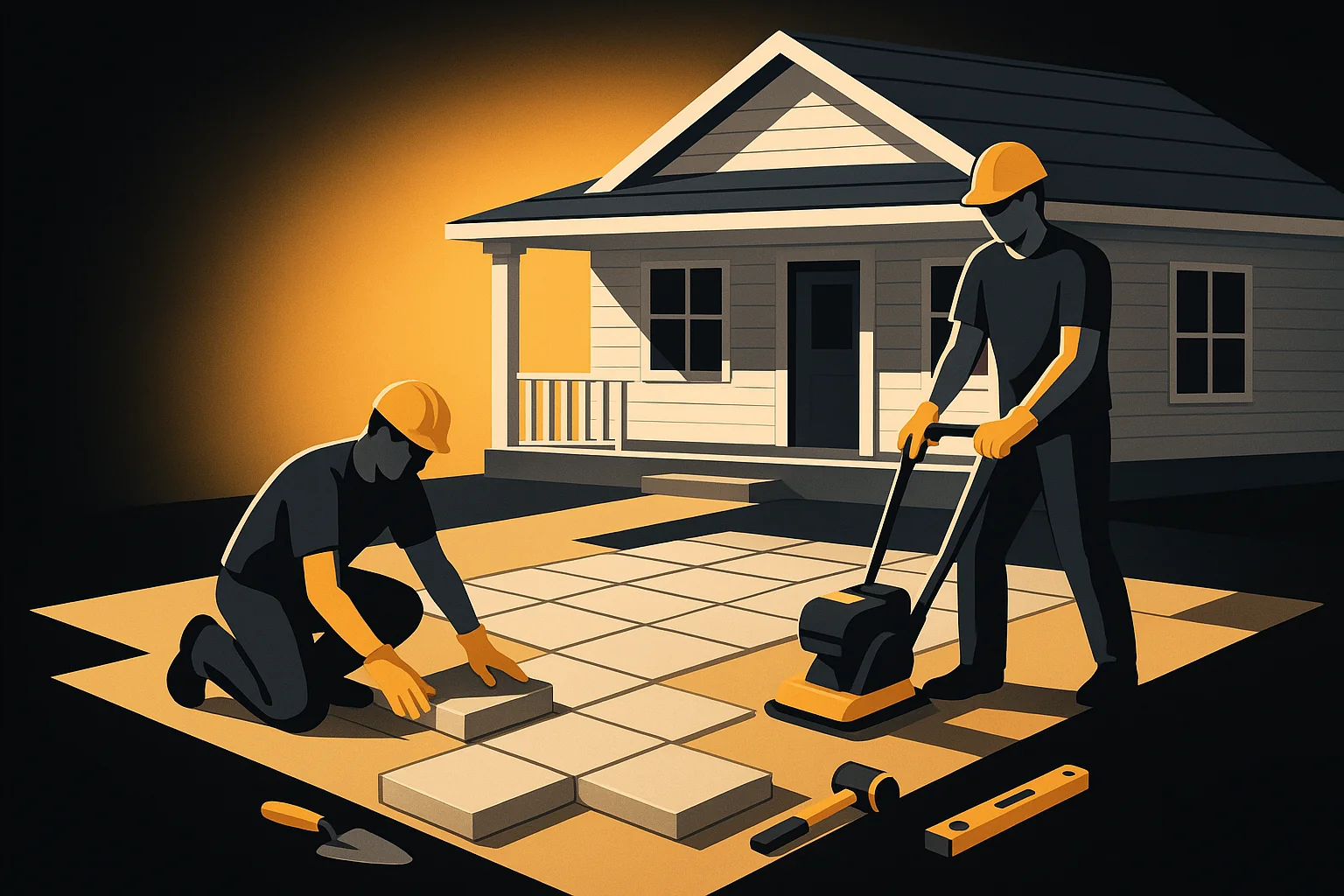
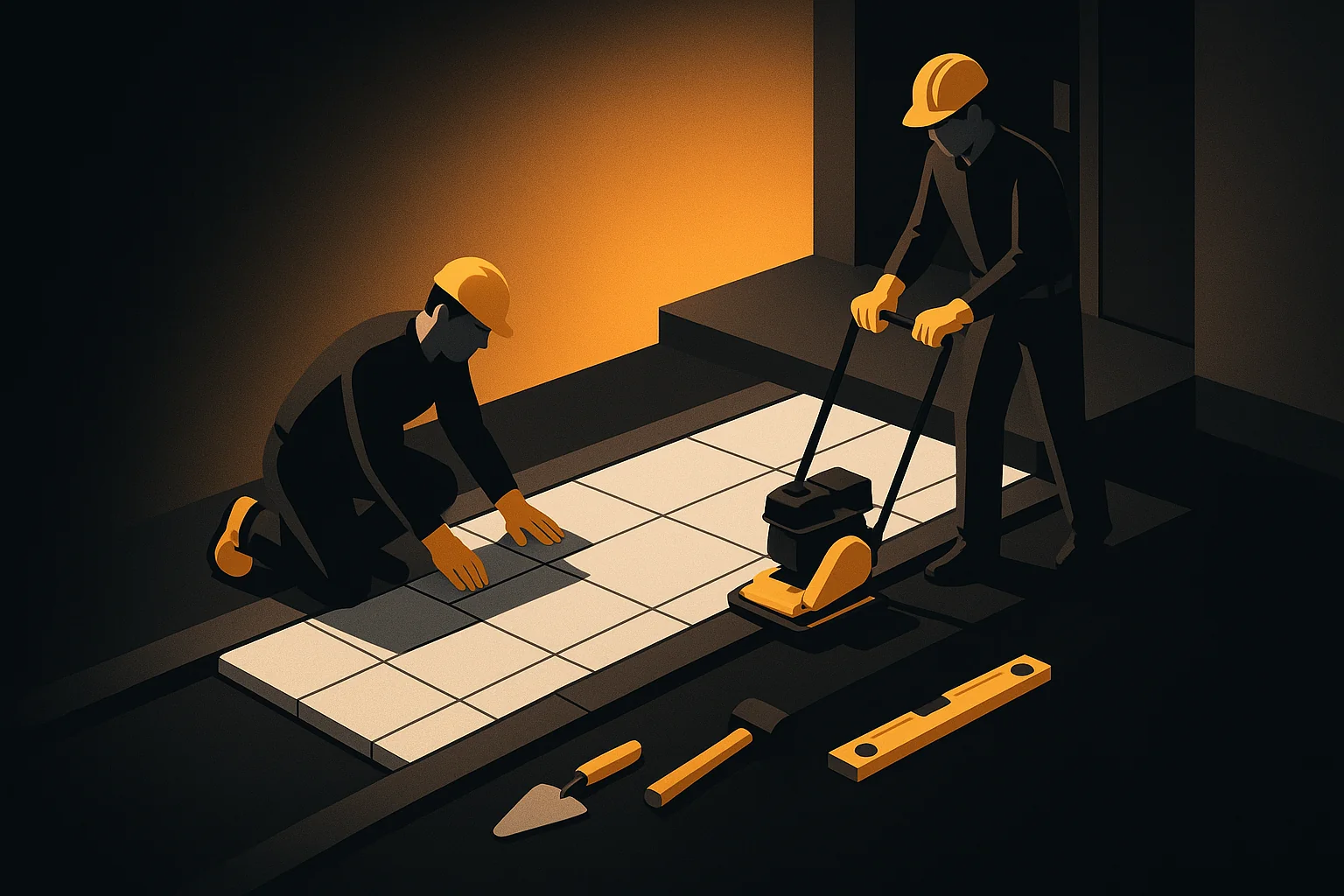
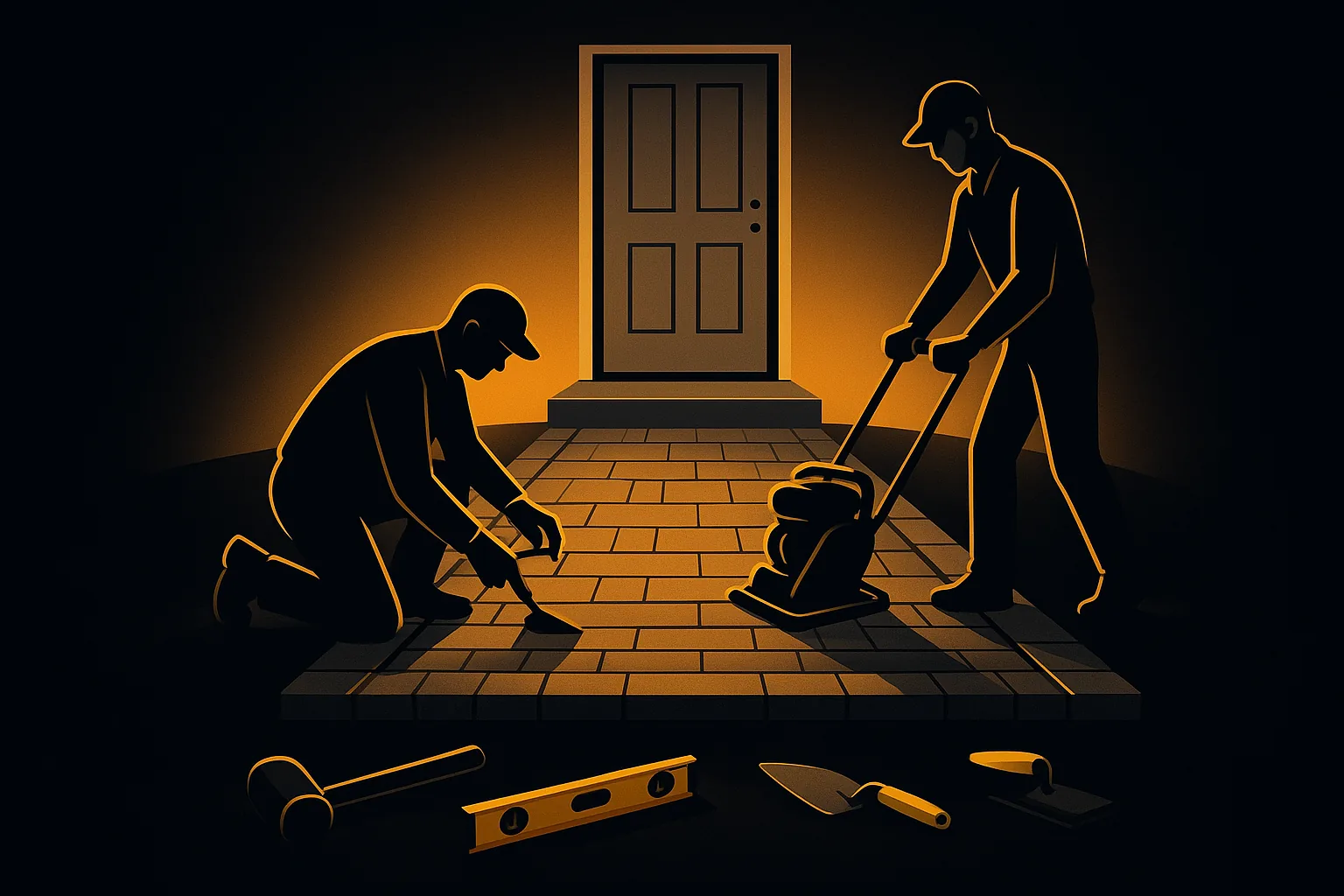
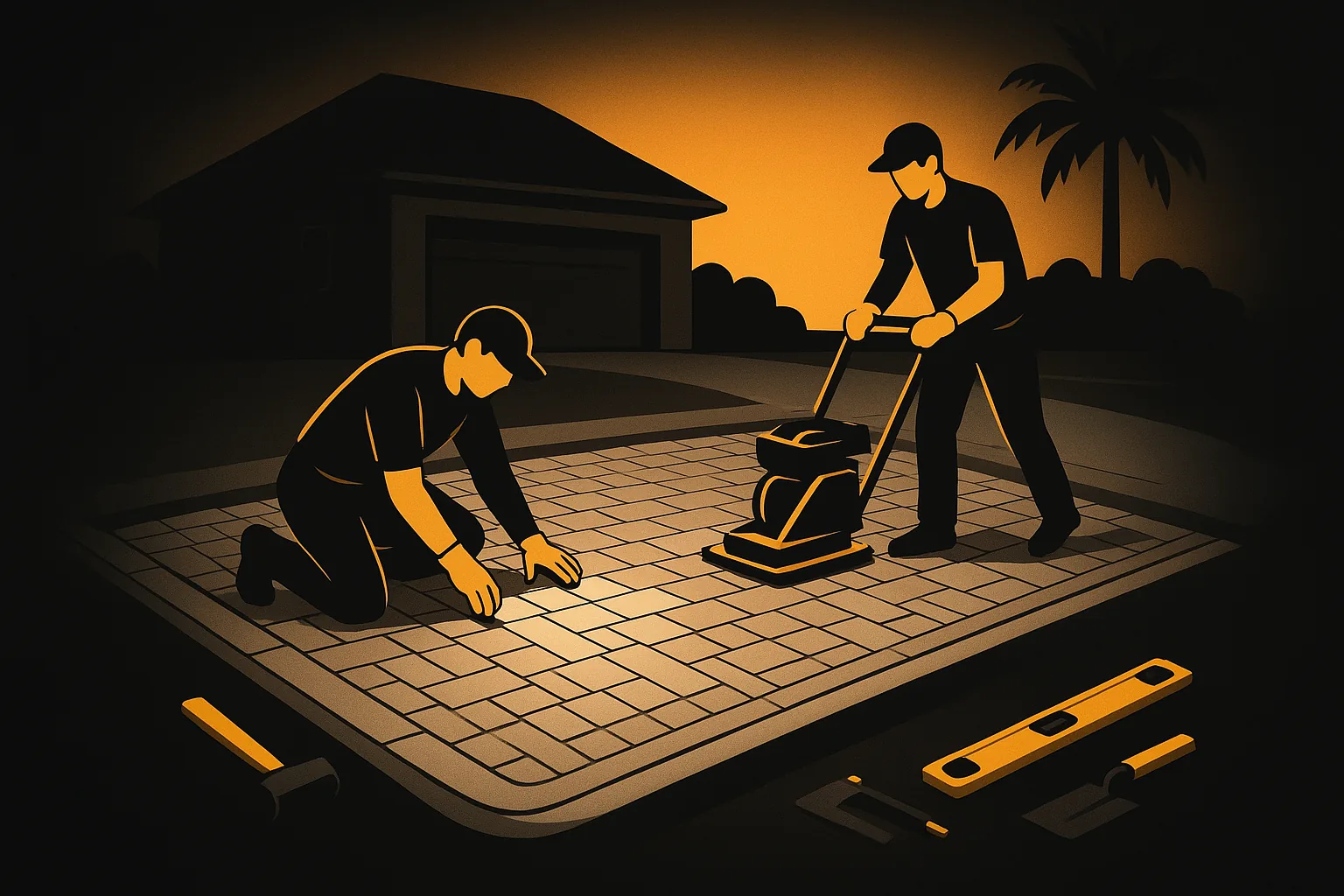
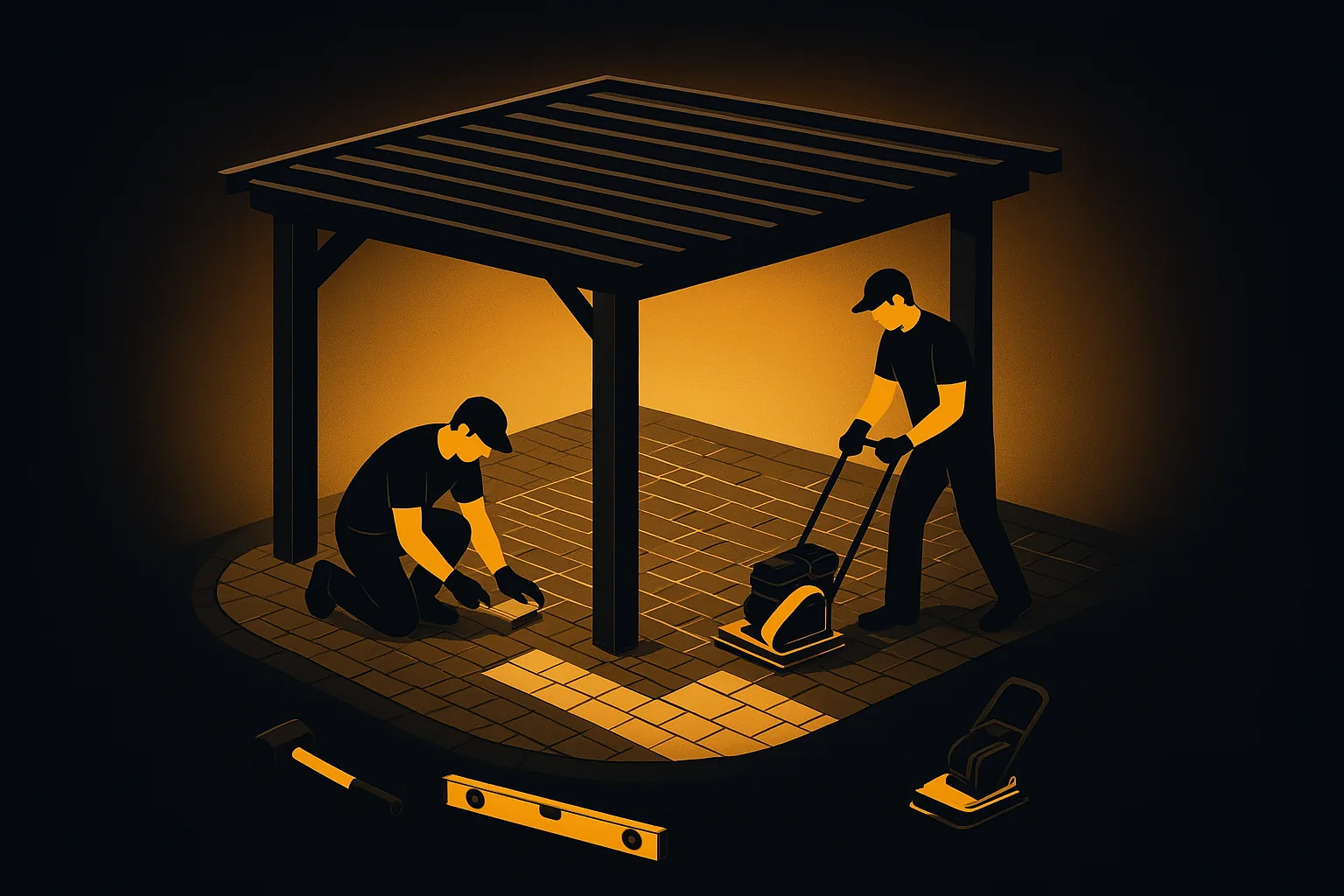
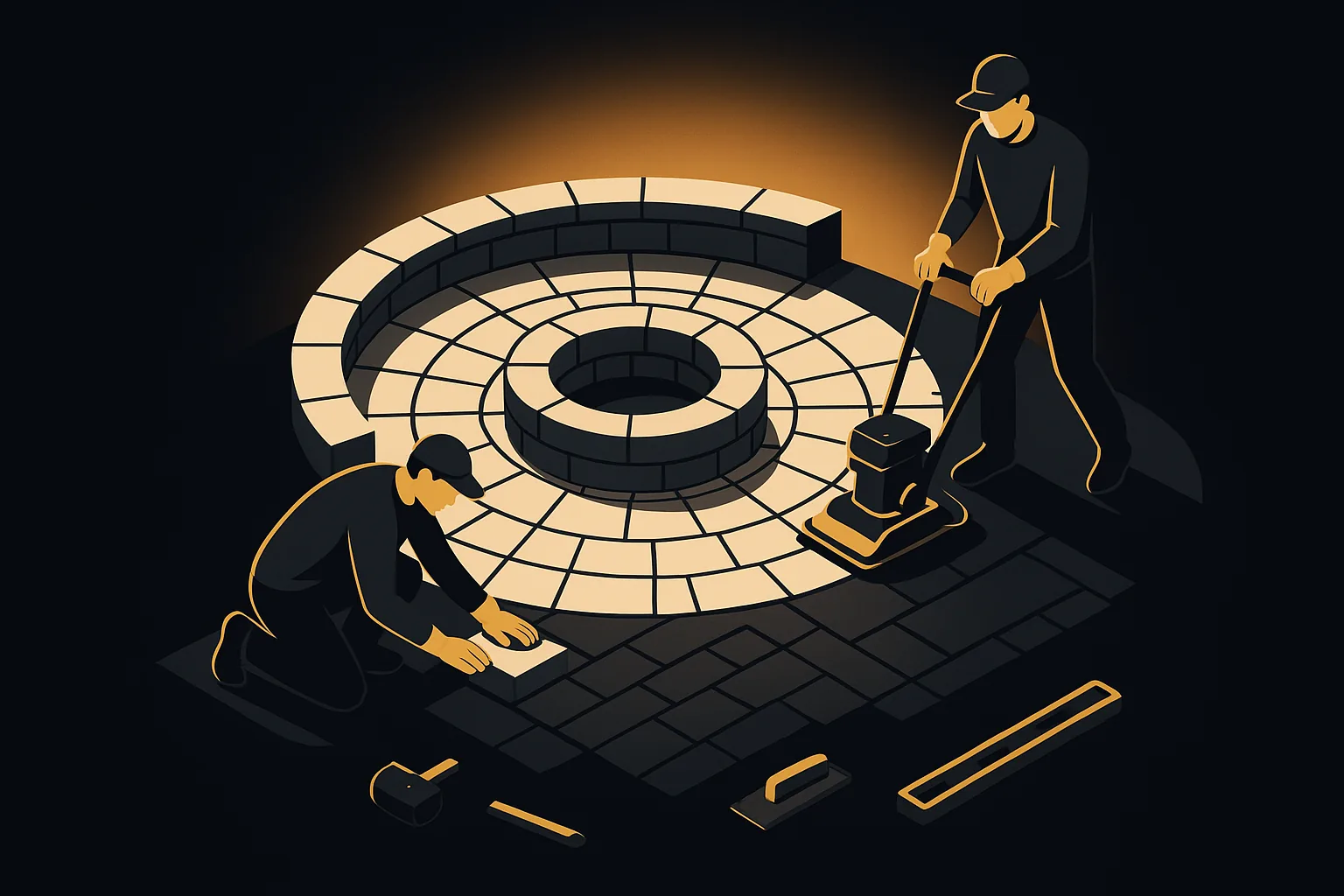
- Paver laying and compaction: Sets pavers in the specified pattern, cuts border units as needed, then compacts the field with a plate compactor
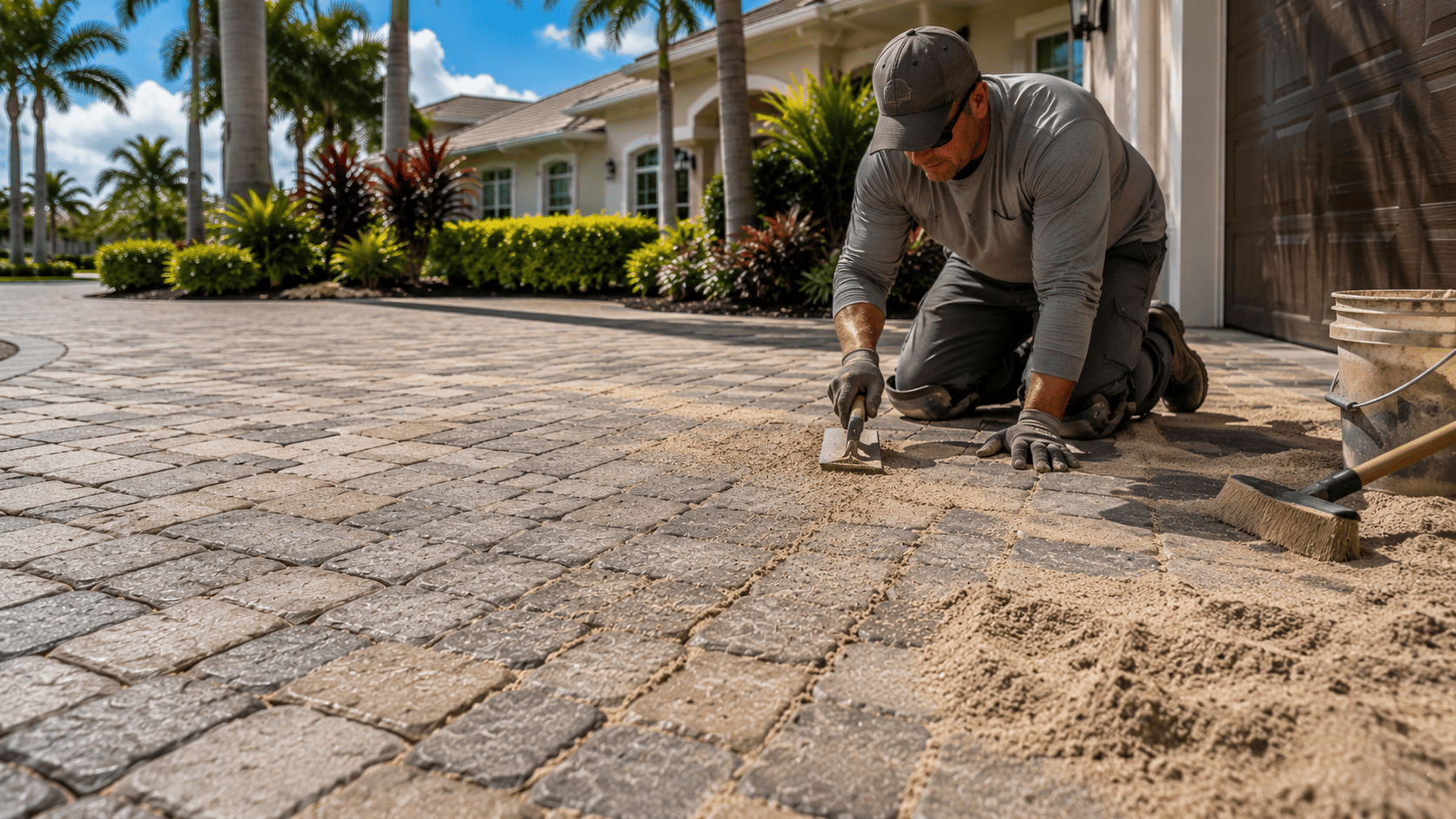
- Joint sand application: Fills joints with polymeric sand and activates with water to lock the surface and resist weed intrusion
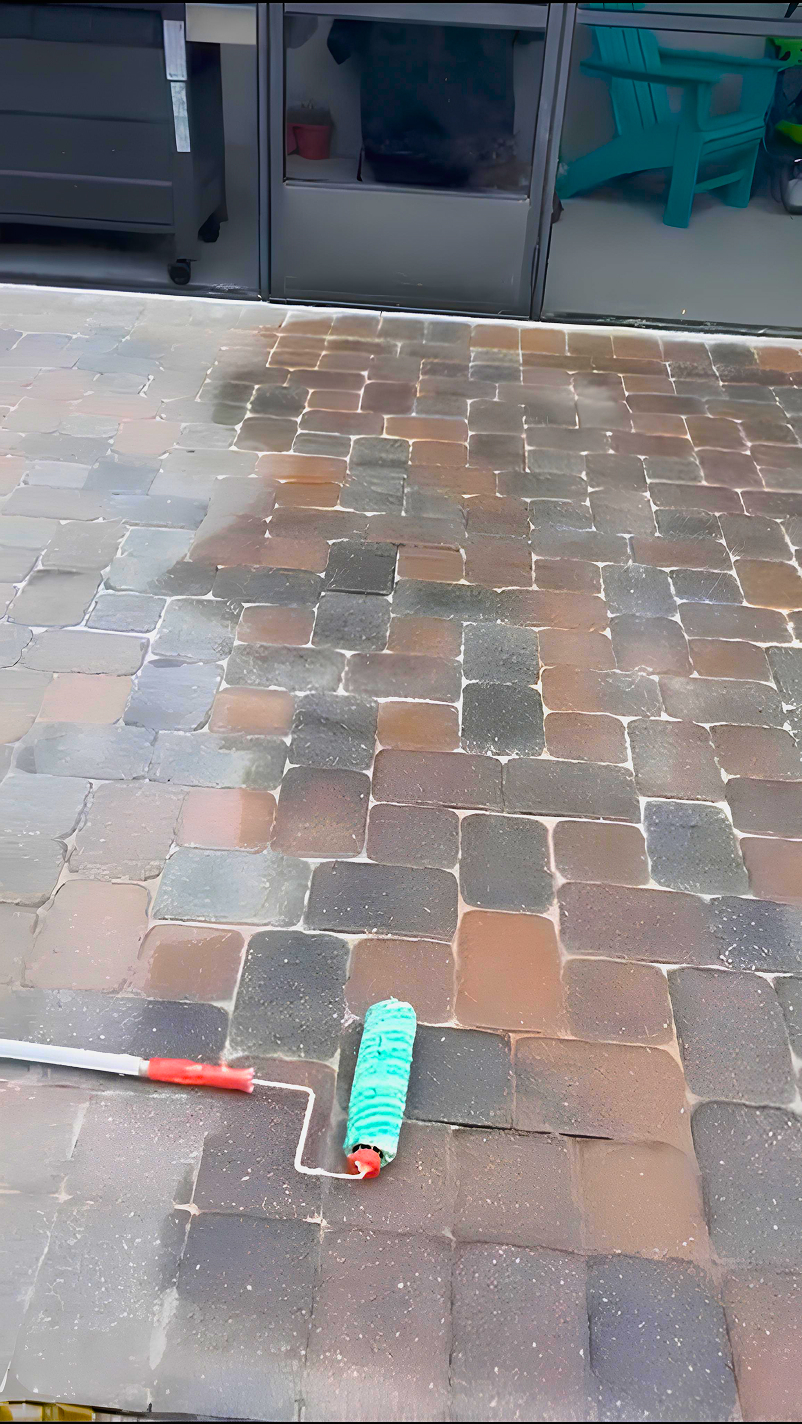
- Sealing: Applies a penetrating sealer matched to the specific material — travertine, concrete, and brick each require different sealer formulations
This full sequence produces a pool deck that performs structurally for 20 to 30 years without remediation. Contractors who abbreviate base preparation or skip edge restraints deliver a surface that looks identical on day one — but begins to fail within two to three rainy seasons. Our post on common paver mistakes Florida homeowners make covers the most costly installation errors and how to avoid them.
How Much Does Pool Deck Paver Installation Cost in Largo, FL?
Cost for pool deck paver installation in Largo varies based on deck size, material selection, coping complexity, and site conditions. Here are realistic installed price ranges for the most common configurations in Pinellas County:
- Concrete pavers, standard pool deck (per sq ft installed): $15 – $25
- Brick pavers, standard pool deck (per sq ft installed): $18 – $28
- Travertine pavers, French pattern pool deck (per sq ft installed): $22 – $38
- Porcelain pavers, standard pool deck (per sq ft installed): $25 – $42
- Pool coping installation (per linear foot): $35 – $75 depending on material and profile
- Typical pool deck renovation (400–600 sq ft): $8,000 – $22,000+ depending on material, coping, and site conditions
These figures reflect professional installation with full base preparation, proper drainage grading, coping installation, and final sealing. Quotes significantly below these ranges almost always indicate shortcuts in base depth or coping waterproofing. Over a 10-year horizon, the cost of two to three repairs on a poorly installed deck consistently exceeds the upfront cost difference of a properly engineered installation.
Maintaining Your Pool Deck Pavers After Installation
A well-installed pool deck paver surface requires consistent maintenance to perform at its best long-term. Florida’s climate accelerates surface degradation faster than most other regions. Pool deck surfaces also face chemical exposure that other paver applications do not. Therefore, a proactive maintenance routine is the most cost-effective investment a Largo homeowner can make after installation.
- Seal every 2–3 years: A quality penetrating sealer locks out moisture, pool chemicals, UV rays, and organic staining — the four primary degradation forces on Largo pool decks
- Clean the surface regularly: Rinse deck pavers weekly during pool season to prevent chemical buildup. Use pH-neutral cleaners — acidic products strip sealers and etch natural stone surfaces
- Inspect coping joints annually: The flexible sealant at the deck-to-coping joint degrades over time. Replace it when cracking or separation appears to maintain the watertight bond
- Address joint sand loss promptly: Replenish polymeric sand in any zone where joint erosion is visible. Open joints allow base material to wash out during heavy rain events
- Monitor drainage performance: After major rainstorms, confirm that water drains away from the pool and foundation as designed. Pooling water signals drainage slope or joint blockage issues
For a complete seasonal maintenance schedule tailored to Florida pool deck conditions, our detailed resource on paver maintenance in Florida covers every step of annual care for pool decks, patios, and driveways across Pinellas County.
Industry Standards for Pool Deck Paver Installation
The Interlocking Concrete Pavement Institute (ICPI) sets the technical standards that govern professional paver installation across North America — including pool deck applications. ICPI guidelines address base depth requirements, drainage slope specifications, coping integration protocols, and joint sand requirements for wet-area environments. These standards exist because pool deck surfaces face a uniquely demanding combination of structural, chemical, and moisture stresses.
Contractors who follow ICPI methodology demonstrate the technical discipline that separates professional paver specialists from general landscapers. In Largo, choosing a contractor who applies these standards is one of the most important decisions you will make before any pool deck project begins. Our paver pool decks service page outlines exactly how JaxTeller Brick Pavers approaches every installation — from initial site assessment through final sealing — across Largo and the surrounding Pinellas County area.
Ready to Transform Your Pool Deck?
JaxTeller Brick Pavers designs and installs premium pool deck paver surfaces across Largo, FL and Pinellas County — from travertine French pattern installations to concrete and brick pool deck renovations with custom coping and drainage engineering. Visit our contact page to book your free on-site evaluation, or browse our completed projects gallery to see the quality and range of pool deck work we deliver across the region. Follow us on Instagram and Facebook for real project photos and poolside design inspiration from our team. Reach us instantly on WhatsApp or find us on Google Maps — we are based right here in Largo and ready to protect your poolside investment. 🏊
Contact JaxTeller Brick Pavers at +1 407-907-8308 or jaxtellerbrickpavers@gmail.com for your free estimate!