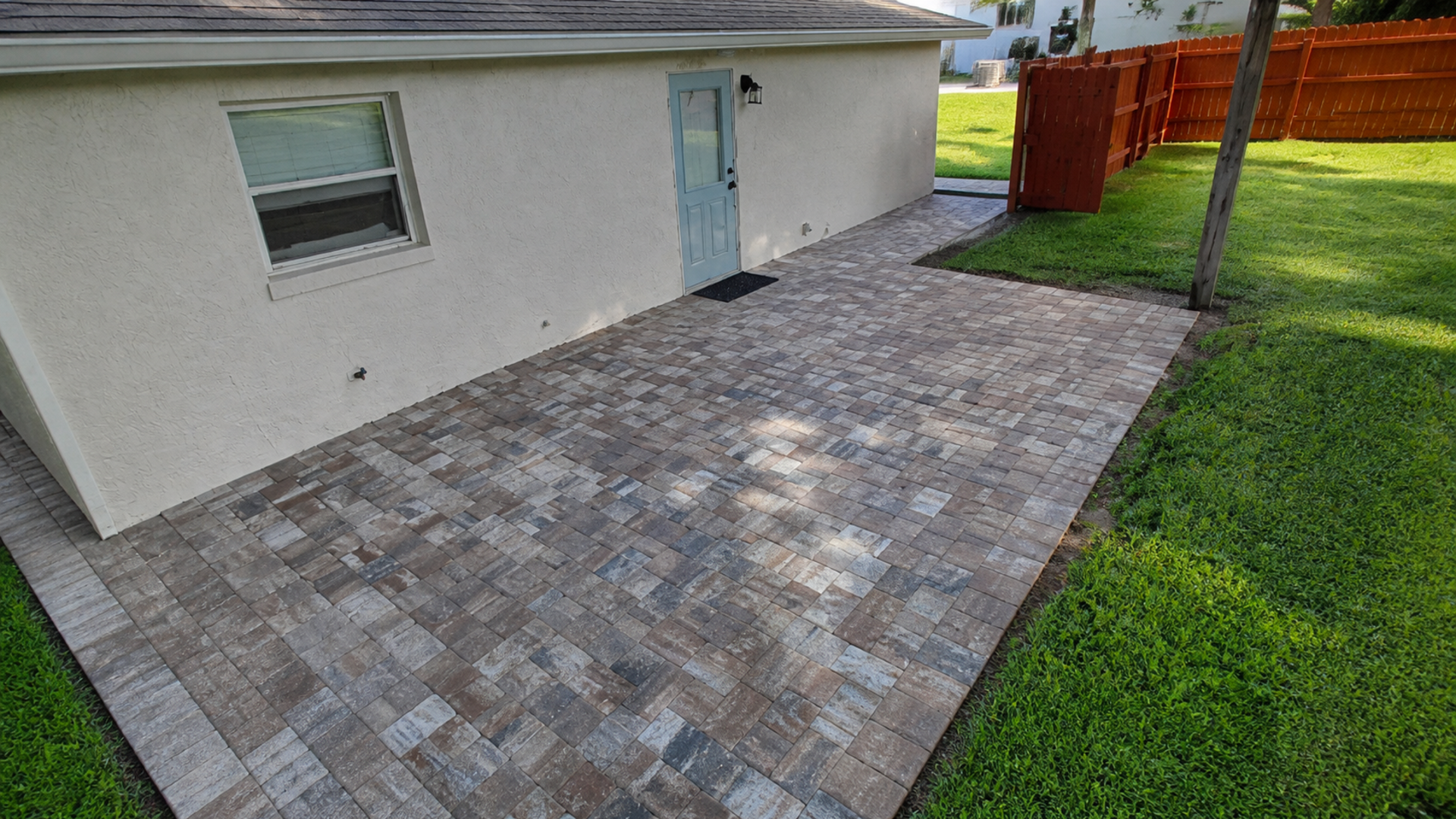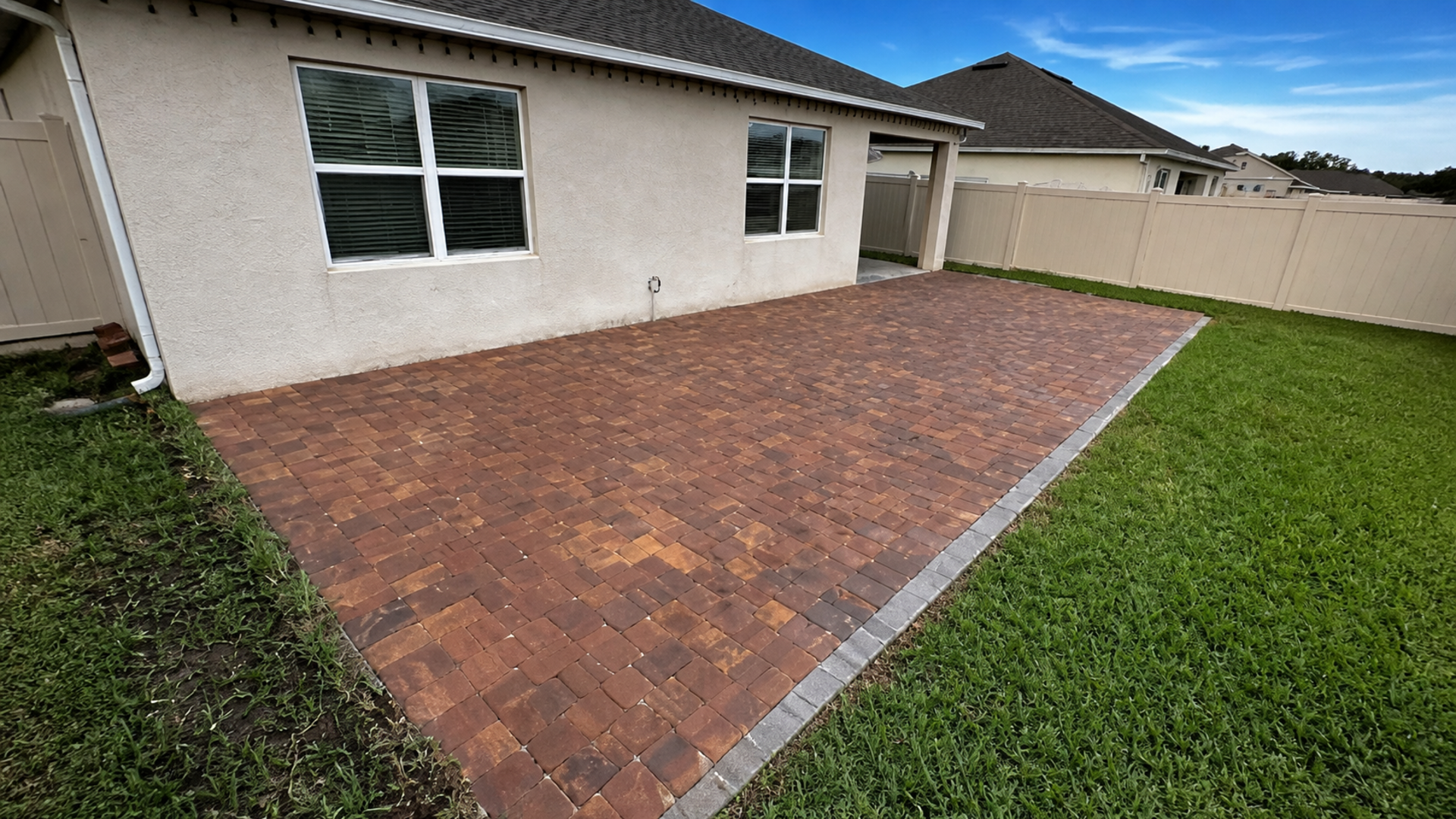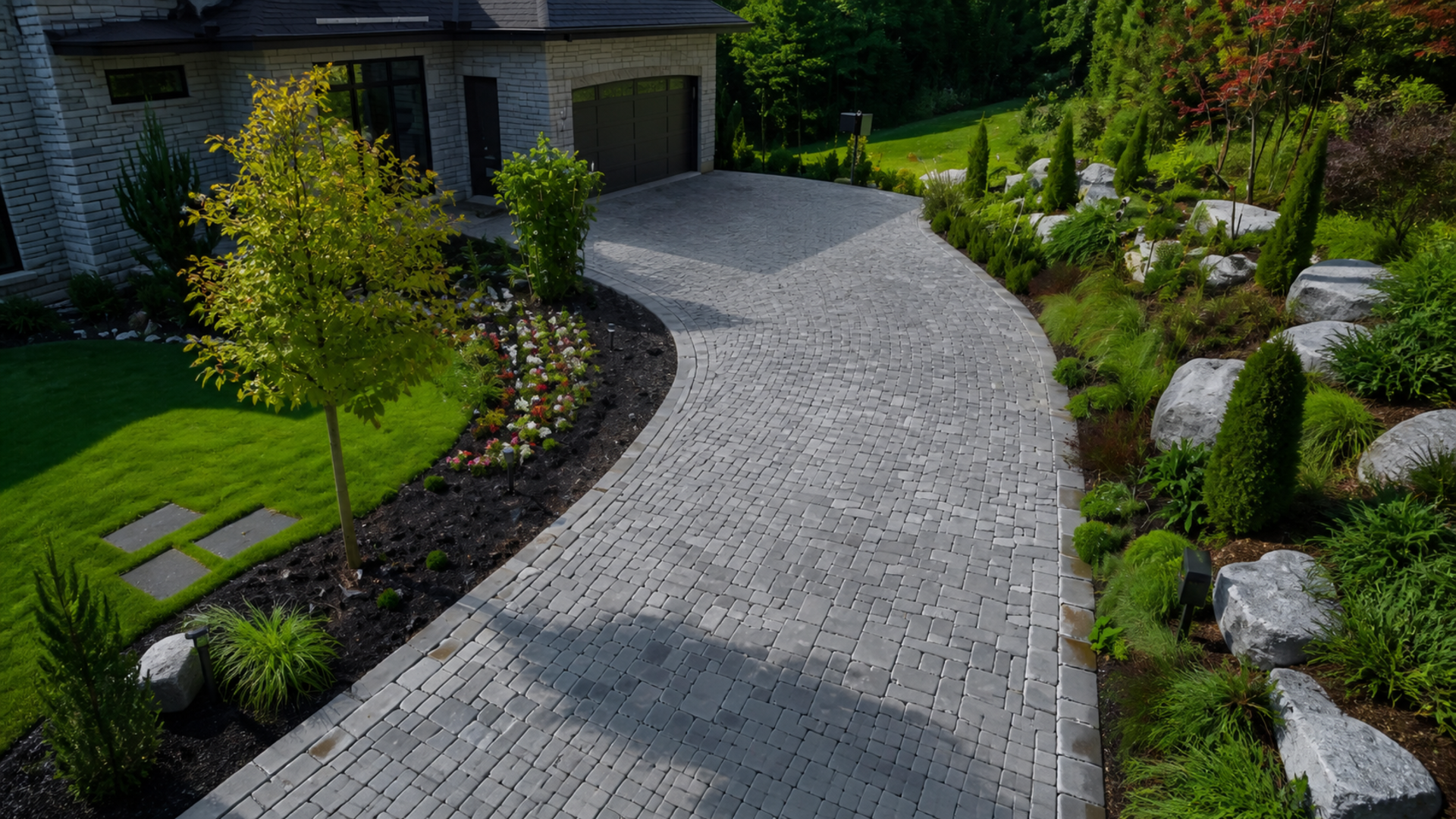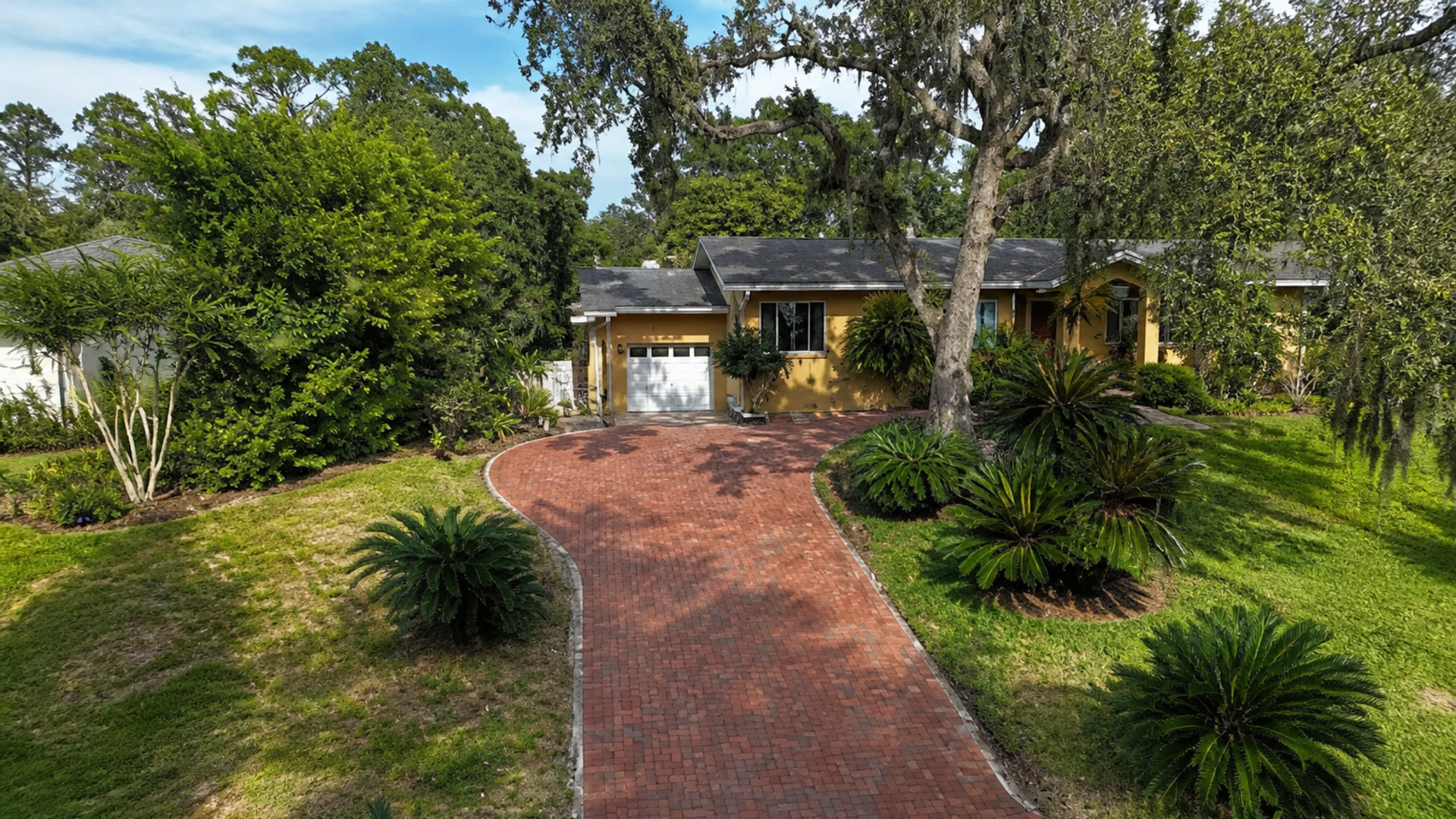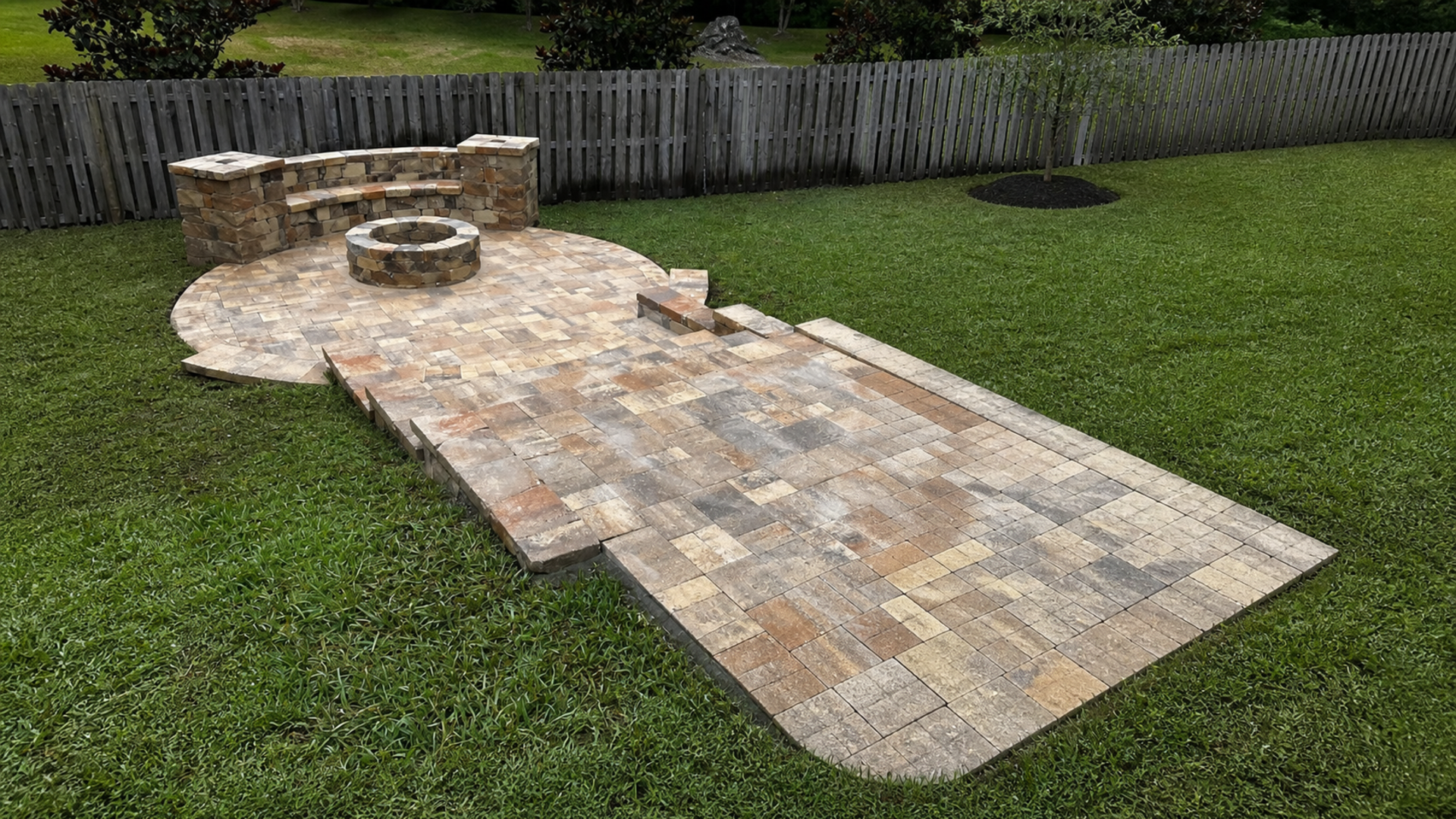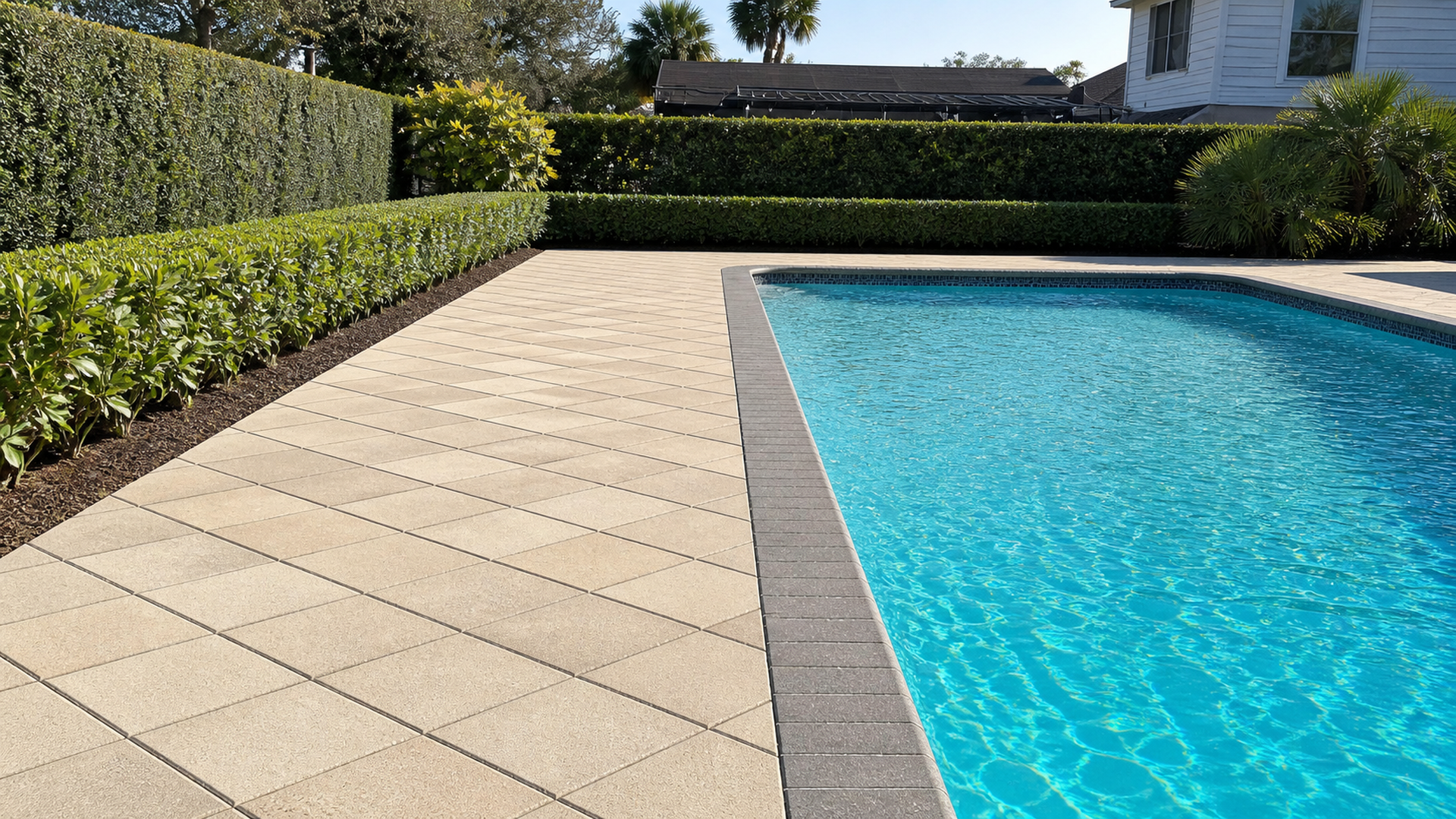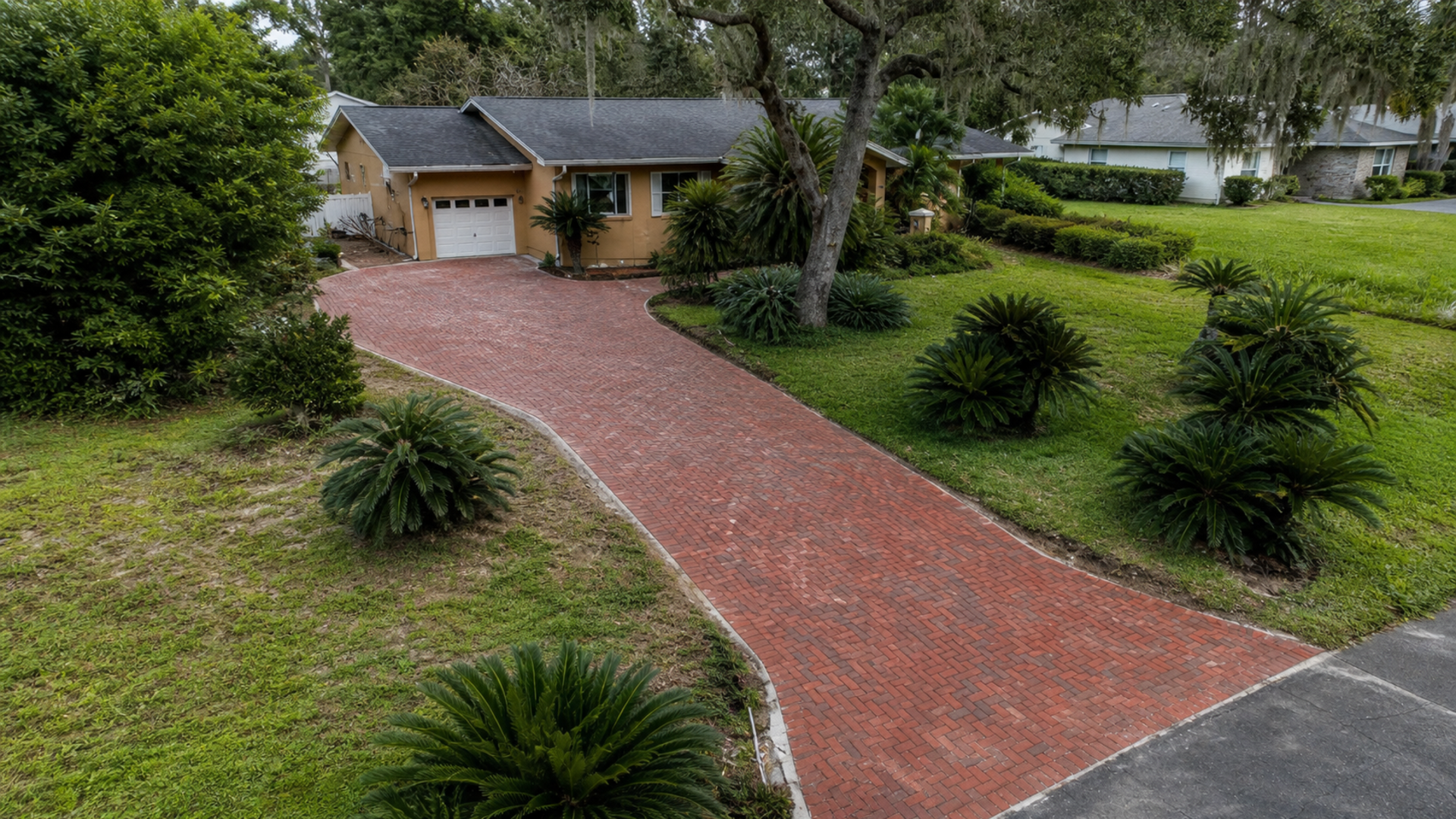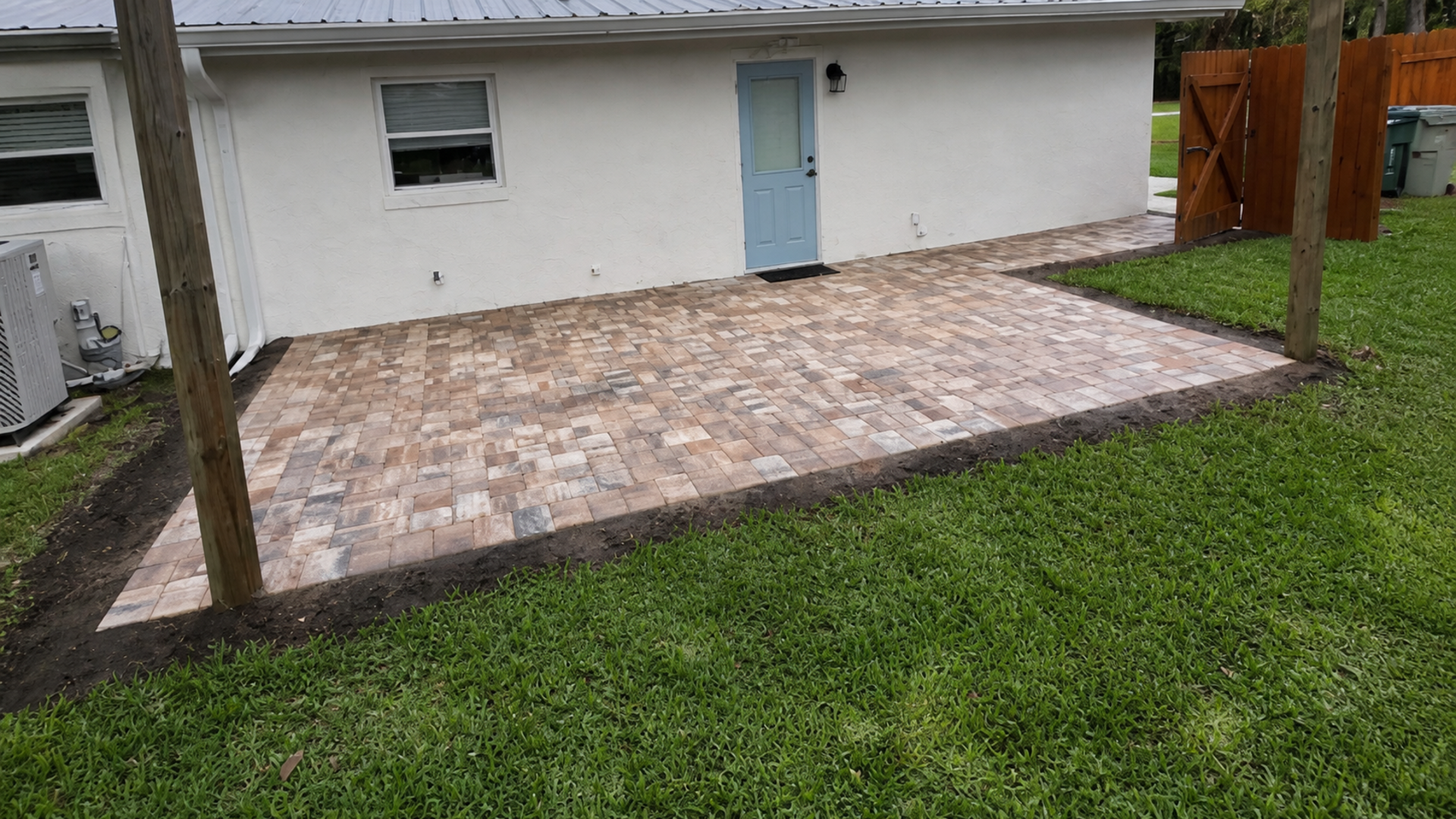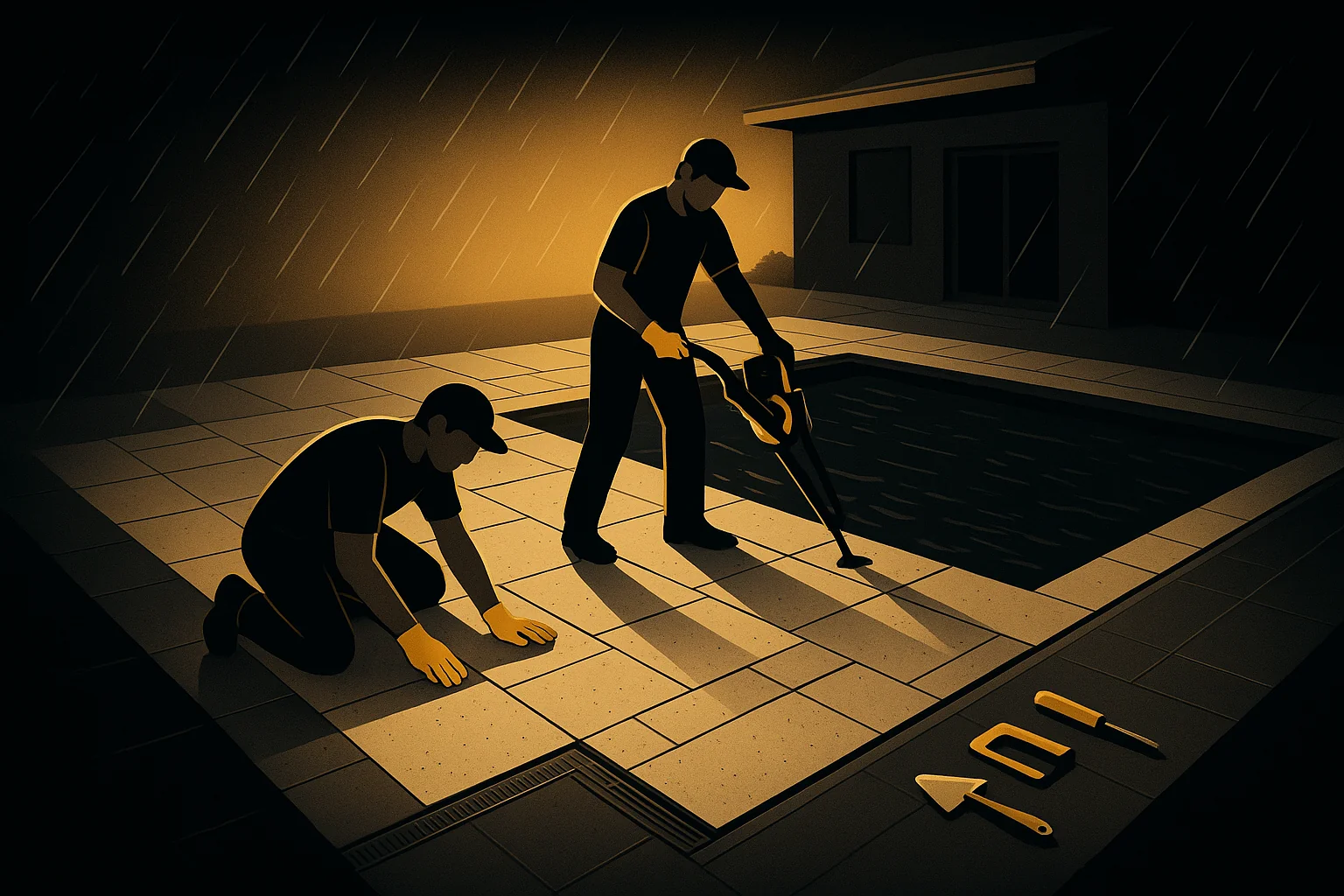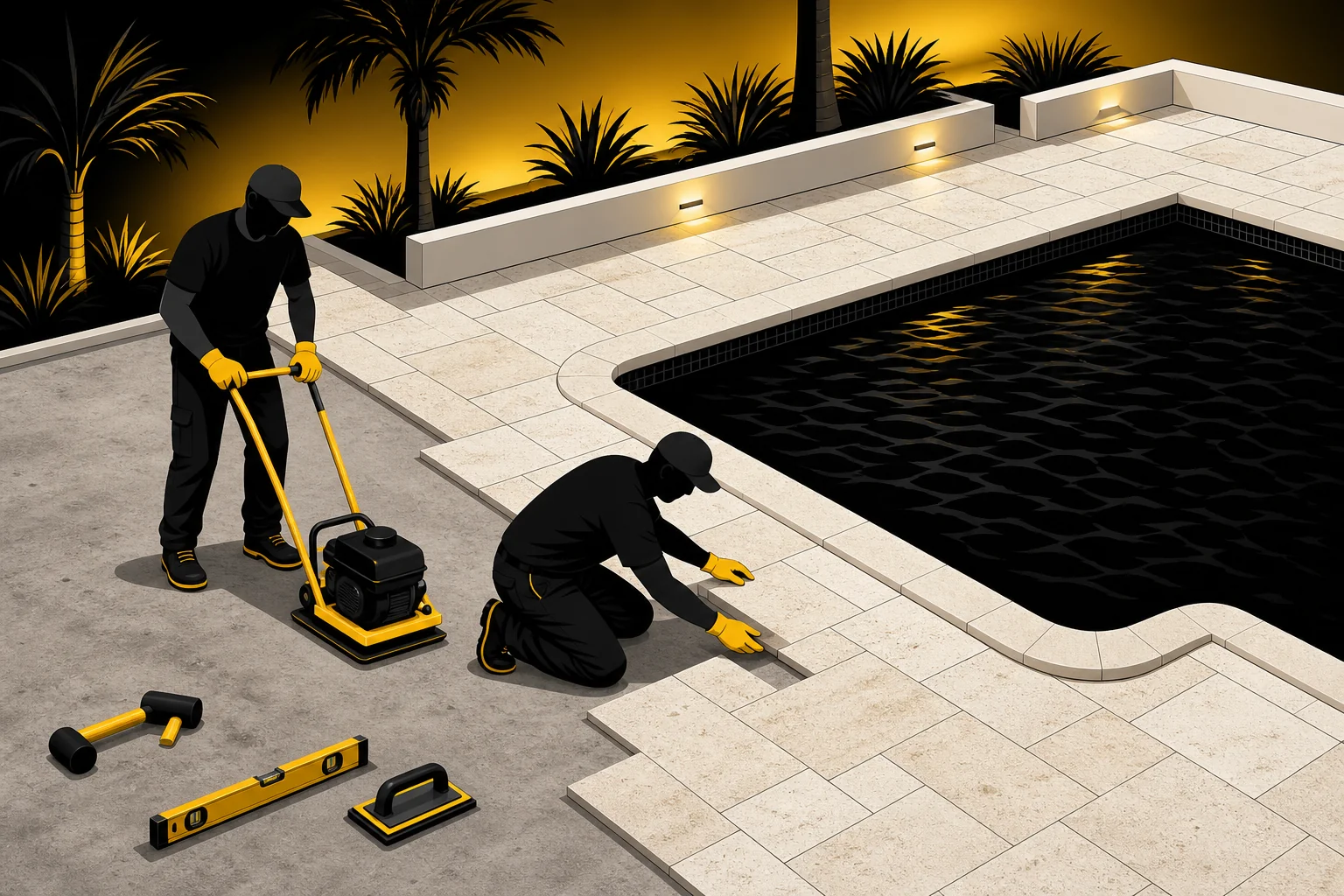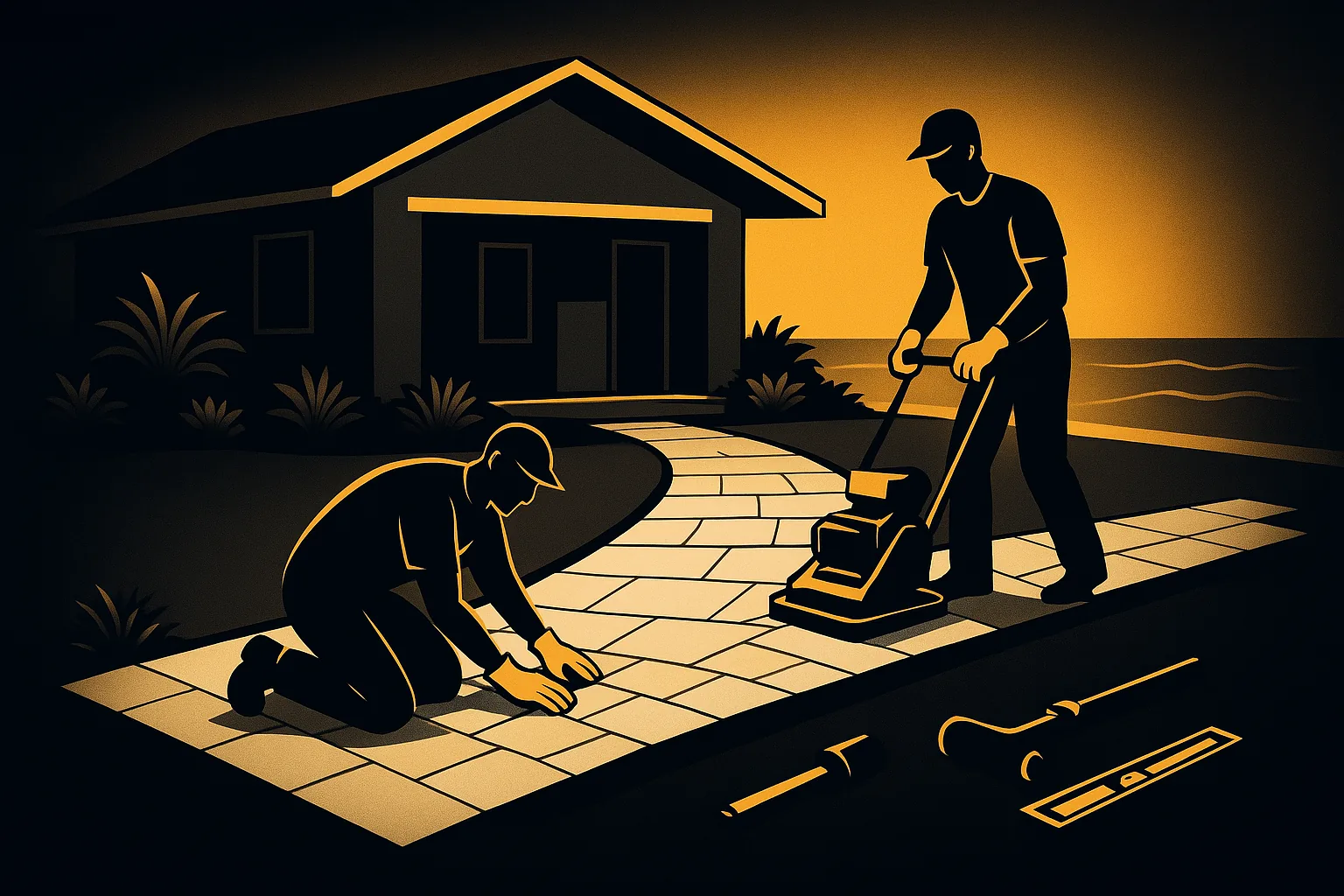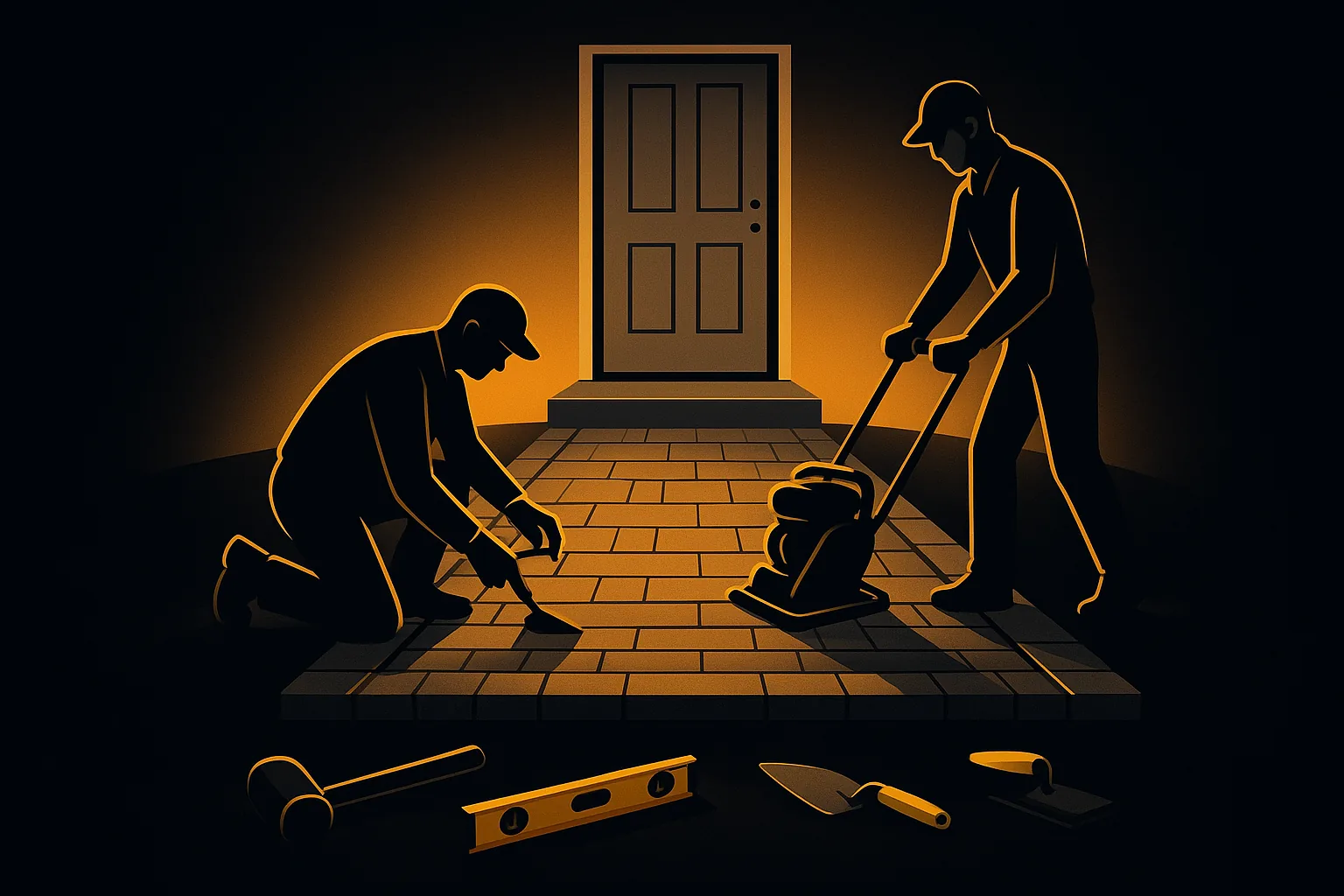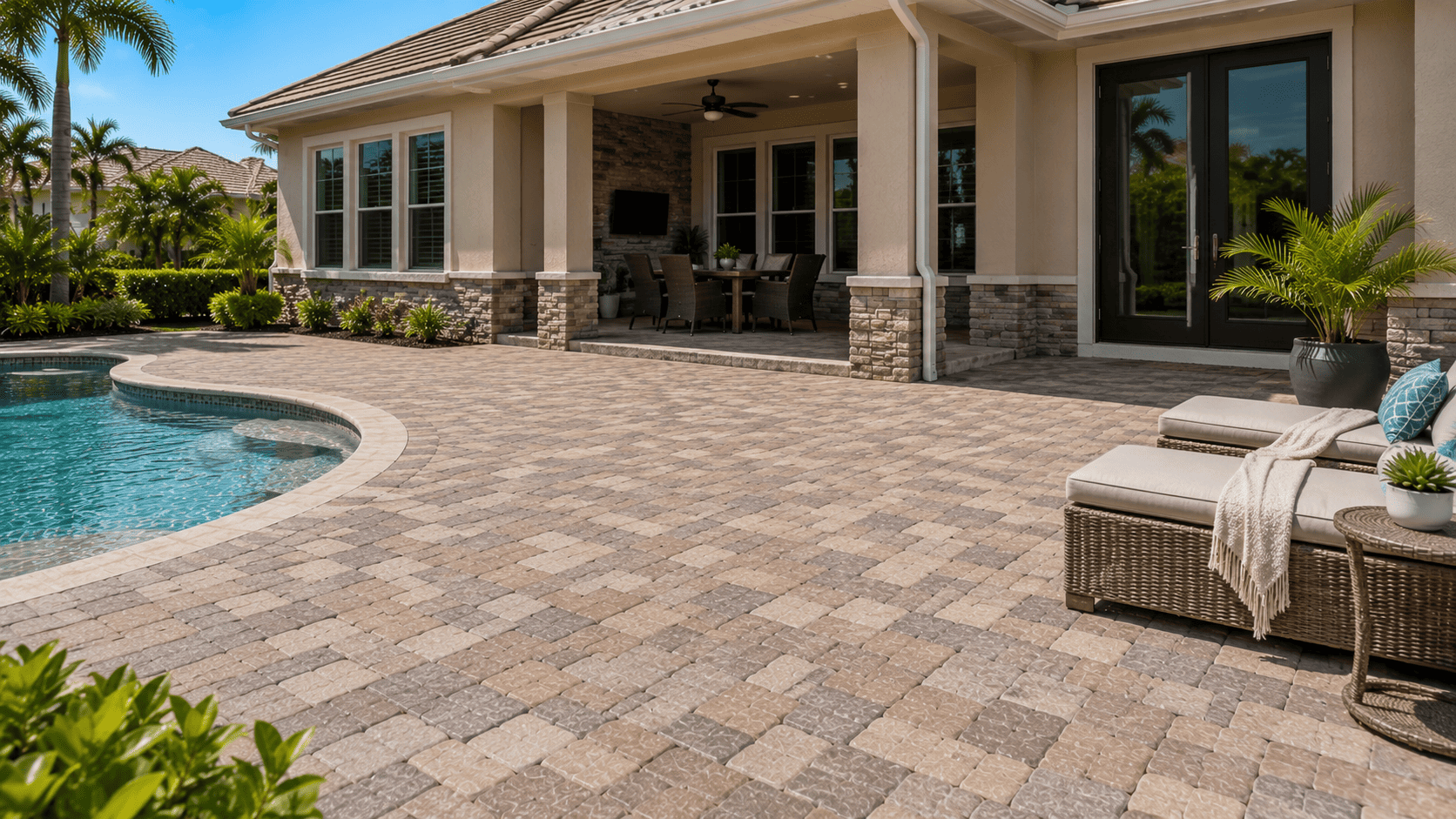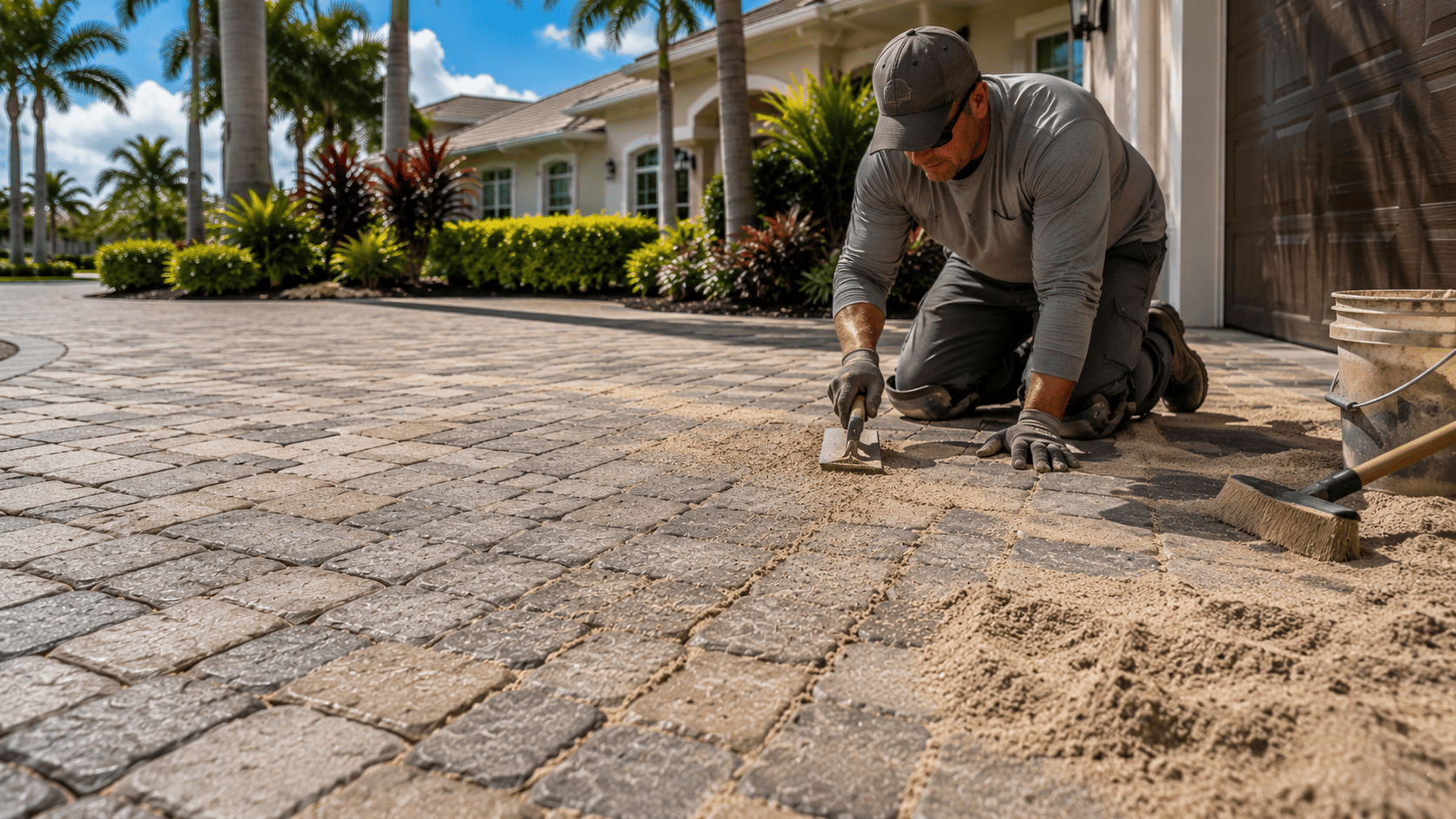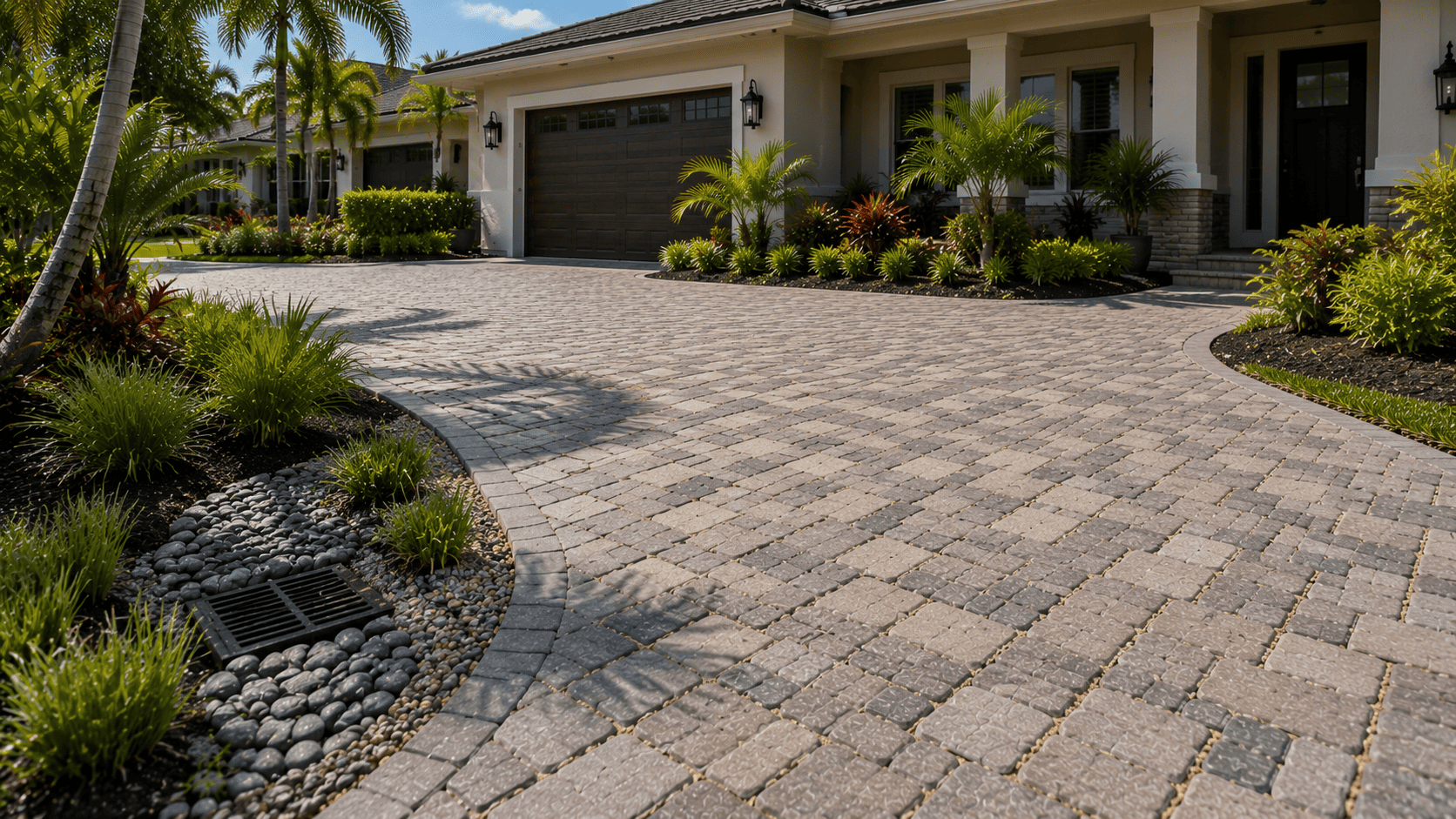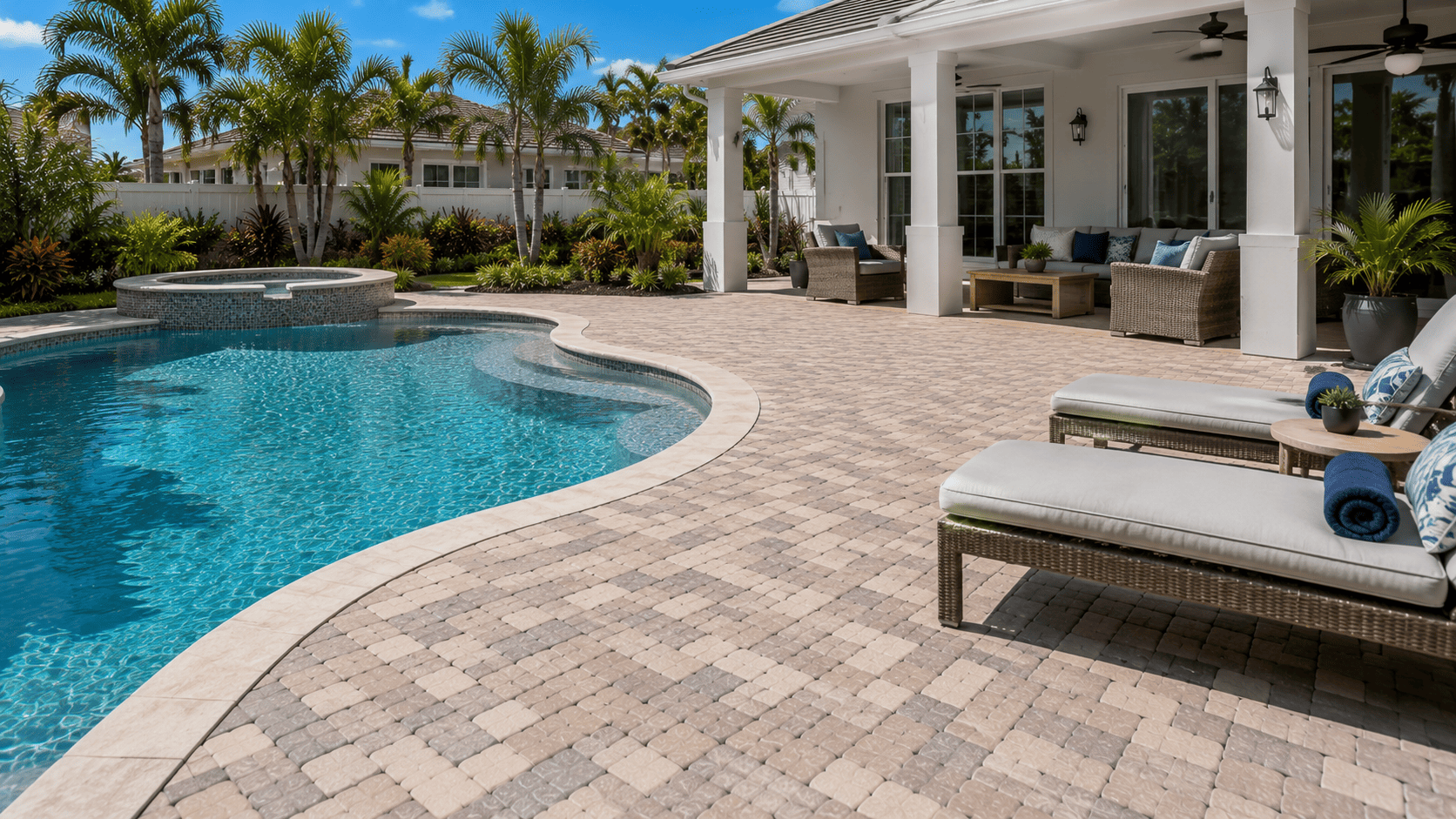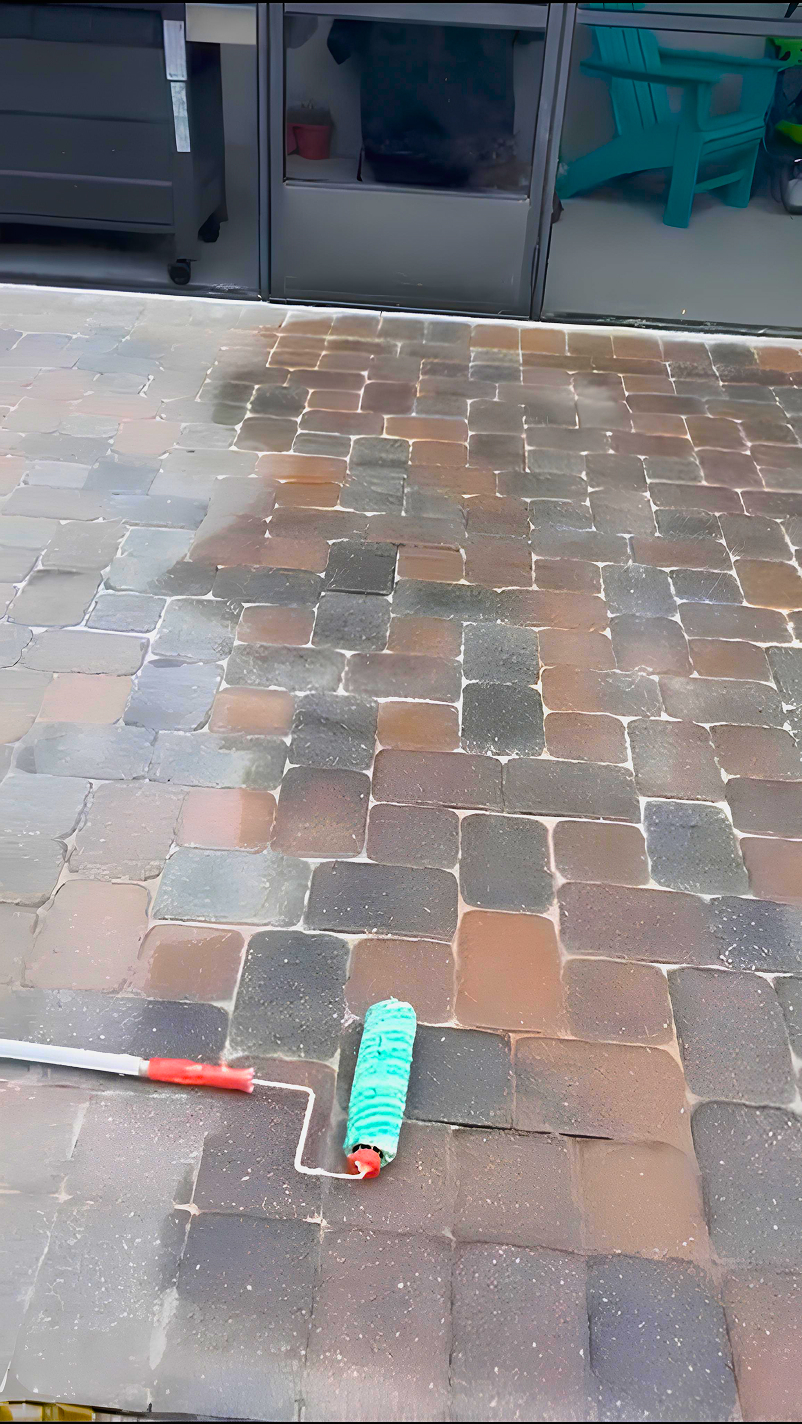

Outdoor kitchen pavers in Largo, FL face demands that standard patio surfaces never encounter — direct heat from grills and burners, grease splatter, heavy foot traffic, and Florida’s relentless combination of sun, humidity, and rain. Choosing the wrong material or skipping proper base preparation turns a beautiful outdoor cooking space into a maintenance problem within a few seasons. This guide covers everything Largo homeowners need to know about selecting materials, planning layouts, and ensuring a professional installation that holds up year after year.
Why Outdoor Kitchen Pavers in Largo Require Special Consideration
Outdoor kitchen pavers in Largo deal with a unique combination of stressors that most patio surfaces never face. Heat from a built-in grill can radiate outward and stress the surface material directly beneath and around the cooking zone. Grease and food byproducts penetrate unsealed surfaces and cause permanent staining. Furthermore, the weight of heavy kitchen structures — stone countertops, built-in refrigerators, and masonry bases — requires a reinforced substrate capable of handling concentrated loads without settling.
Florida’s climate adds additional pressure. Largo’s intense UV exposure fades and degrades lower-quality materials within a few years. The rainy season introduces significant moisture volume that the surface and base must drain effectively to prevent erosion and shifting. As a result, outdoor kitchen installations in Largo demand higher material standards and more precise base preparation than a standard backyard patio project.
The Heat Factor
Surface temperature is a critical performance variable for outdoor kitchen pavers. Dark-colored concrete pavers in direct sun can reach surface temperatures that make the cooking zone uncomfortable to stand on for extended periods. Lighter natural stone materials — particularly travertine — reflect heat rather than absorbing it, keeping the surface noticeably cooler underfoot even during Florida’s peak summer months.
Additionally, the area immediately surrounding a built-in grill experiences radiant heat that accelerates surface degradation in lower-grade materials. High-density pavers with a minimum compressive strength of 8,000 PSI handle this thermal stress reliably. Therefore, specifying material grade — not just material type — matters significantly when selecting pavers for an outdoor kitchen zone.
Grease and Staining Resistance
Grease is the most common source of permanent staining on outdoor kitchen surfaces. Unsealed pavers absorb cooking oils rapidly, and once the stain penetrates the joint sand and paver body, removal becomes extremely difficult. Sealing the entire surface — including the paver faces and joint sand — creates a barrier that prevents absorption and makes routine cleanup straightforward.
Moreover, the type of sealer matters for kitchen applications. A wet-look or high-gloss acrylic sealer provides stronger stain resistance than a penetrating sealer alone. However, it requires reapplication every one to two years in Florida’s climate. In contrast, a penetrating sealer with a topcoat hybrid offers longer-lasting protection with moderate maintenance intervals. A knowledgeable local contractor can recommend the right sealer system based on your specific material and use intensity.
Best Paver Materials for Outdoor Kitchens in Largo FL
Material selection for outdoor kitchen pavers in Largo should balance heat performance, stain resistance, slip safety, and visual character. Three materials consistently perform well in this application — each with distinct trade-offs that affect the final decision based on budget and design goals.
Travertine Pavers
Travertine is the top-performing material for outdoor kitchen surfaces in Largo. Its natural porosity — when sealed correctly — creates a surface that stays cool, provides traction when wet, and ages gracefully without looking worn. The ivory, walnut, and silver travertine tones available in Florida complement virtually every home exterior and outdoor furniture style.
Furthermore, travertine’s thermal properties make the cooking zone genuinely comfortable to stand in barefoot — a meaningful advantage in a space where you spend extended time preparing and serving food. The material does require consistent sealing maintenance, but homeowners who follow a two to three year resealing schedule report excellent surface condition after a decade or more of heavy use. For a deeper look at travertine performance in Florida outdoor applications, the travertine pool decks Florida guide covers the same material properties relevant to kitchen surfaces.
Concrete Pavers
High-density concrete pavers offer a cost-effective and highly durable option for outdoor kitchen surfaces. Manufactured to ASTM C936 standards, quality concrete pavers resist thermal cycling, UV degradation, and heavy load without cracking. They are available in a wide range of colors, sizes, and textures — giving designers significant flexibility in creating a kitchen surface that complements the surrounding patio area.
However, concrete pavers in darker tones absorb significantly more heat than lighter options. In a cooking zone where surface temperature already runs high from grill radiation, selecting a lighter color palette reduces heat accumulation meaningfully. Additionally, concrete pavers require the same sealing regimen as travertine to resist grease penetration effectively.
Porcelain Pavers
Porcelain pavers are an increasingly popular choice for outdoor kitchen applications in Largo due to their near-zero porosity. Unlike natural stone or concrete, porcelain does not absorb grease, moisture, or staining agents — making it the most maintenance-efficient surface for high-use cooking zones. Its hard, dense surface wipes clean with standard household cleaners and requires no sealing.
On the other hand, porcelain carries a higher material cost and requires specialized cutting equipment during installation. Moreover, its smooth surface can become slippery when wet if a low-grip finish is selected. For outdoor kitchen applications, always specify a textured or matte-finish porcelain rated for exterior use with an appropriate slip coefficient. When installed correctly by an experienced contractor, porcelain delivers one of the best long-term performance profiles of any outdoor kitchen surface material available in the Largo market.
Outdoor Kitchen Paver Layout Strategies for Largo Homes
Layout planning for outdoor kitchen pavers goes beyond choosing a pattern. The spatial relationship between the cooking structure, the dining zone, the circulation path, and the surrounding patio determines how the entire space functions on a daily basis. Getting this right at the design stage prevents costly changes during or after installation.
Zoning the Cooking and Dining Areas
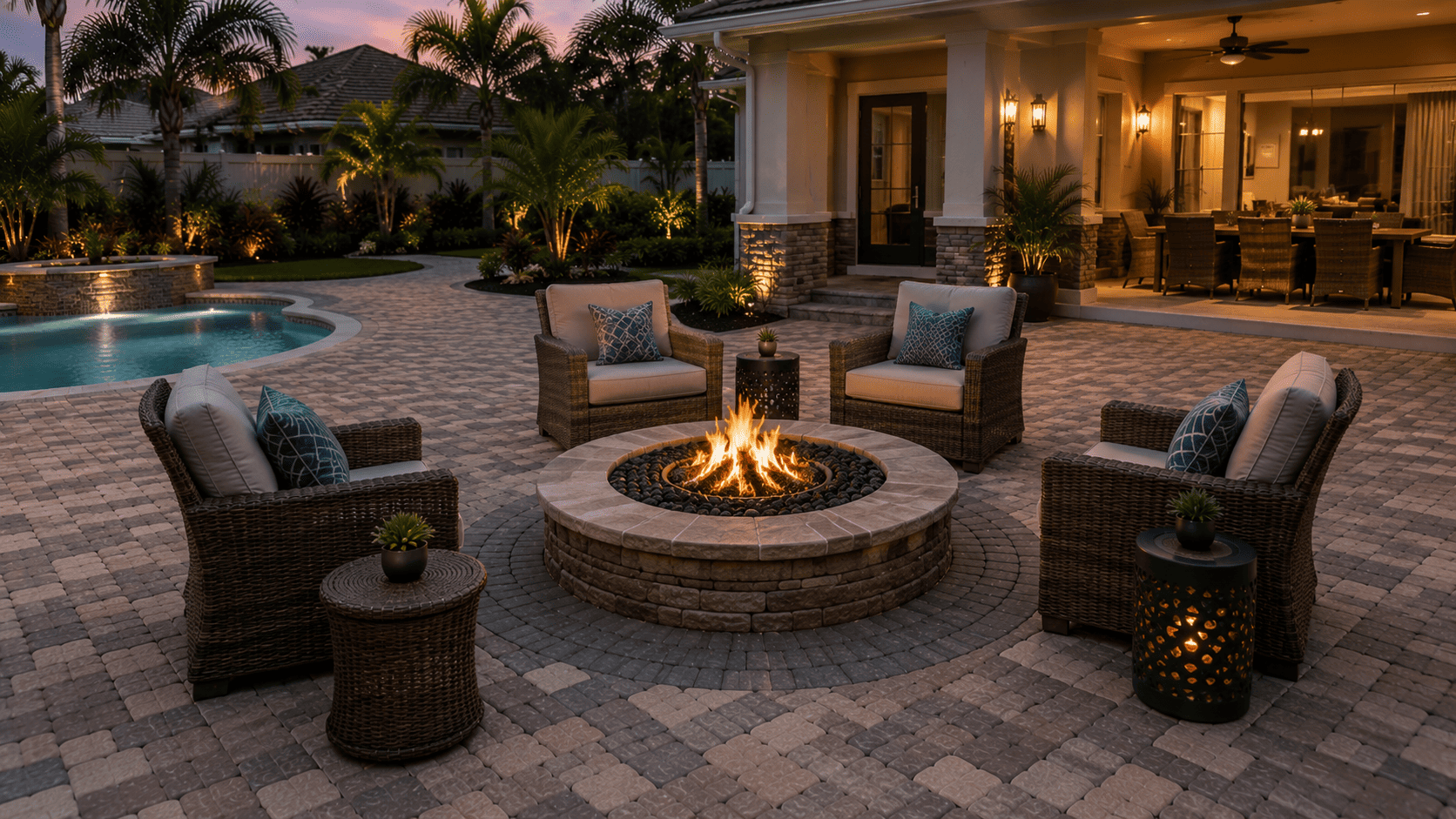
The most effective outdoor kitchen layouts in Largo use distinct paver zones to separate the cooking area from the dining and lounge areas. A contrasting border, a change in paver size, or a shift in pattern direction signals the transition between zones naturally. This approach creates visual organization without requiring physical barriers, keeping the space open while maintaining functional clarity.
For example, a herringbone pattern in the cooking zone paired with a running bond pattern in the dining area creates a clear visual hierarchy. Furthermore, using the same base material in both zones with only pattern variation maintains visual cohesion — preventing the design from feeling fragmented. Most importantly, this approach works within a single material budget rather than requiring two separate material specifications.
Clearance and Circulation
Functional clearance around the kitchen structure is a non-negotiable layout requirement. A minimum of 42 inches between the grill face and any seating or dining furniture allows safe movement during cooking. In contrast, cramped layouts — where the designer prioritizes surface area over clearance — create hazardous conditions and frustrating daily use.
Additionally, the path from the house to the kitchen should be direct and unobstructed. A paver walkway connecting the indoor kitchen or dining room to the outdoor cooking zone eliminates the grass-and-mud crossing that makes outdoor kitchens less convenient to use during and after rain. This circulation connection is a small addition that dramatically increases how often homeowners actually use the space.
Integrating the Kitchen Base with the Paver Surface
The kitchen structure itself — the masonry base that supports the grill, countertop, and appliances — sits directly on or adjacent to the paver surface. Coordinating the kitchen base material with the paver field creates a unified, custom look. Using the same paver units as a veneer on the kitchen base exterior is a common technique that ties the cooking structure visually to the surrounding surface.
However, the base structure requires its own reinforced concrete footing poured below the paver surface level. This footing carries the concentrated weight of the kitchen independently, preventing differential settlement between the structure and the surrounding paver field. Therefore, outdoor kitchen installations should always involve a contractor experienced in both paver work and masonry construction — not just one or the other.
Base Preparation for Outdoor Kitchen Paver Surfaces
Base preparation for outdoor kitchen paver surfaces requires a higher standard than a standard residential patio. The concentrated weight of kitchen structures, appliances, and the frequent heavy foot traffic of an active cooking zone demand a base that resists settlement under load across years of use. Skipping or shortcutting base preparation is the most common cause of premature surface failure in outdoor kitchen installations across Florida.
Excavation and Compaction Depth
A properly built outdoor kitchen paver base in Largo requires excavation to a minimum depth of 8 to 10 inches below the finished surface level for the kitchen zone — deeper than a standard patio. This depth accommodates a compacted gravel base layer of at least 6 inches, a one-inch sand setting bed, and the paver unit itself. The gravel base must be compacted in lifts — typically two or three passes with a plate compactor — to achieve the density that prevents settlement under load.
In addition, Largo’s sandy native soil requires careful base transition management. Sandy soil compacts differently than clay-based soil and can shift under repeated heavy loading if the base aggregate gradation is not specified correctly. Consequently, experienced local contractors select crushed concrete or compactable gravel specifically rated for Florida soil conditions rather than using generic fill material.
Drainage Integration
An outdoor kitchen surface accumulates water from cooking runoff, cleaning, and Florida’s heavy rain simultaneously. Integrating a linear drain channel along the kitchen base perimeter captures this water before it saturates the joint sand and base layers. This drainage feature is particularly important directly in front of the grill station, where cleaning water and grease runoff concentrate.
Furthermore, the overall paver surface must slope away from the kitchen structure at a minimum grade of one percent — approximately one-eighth inch per foot — to direct surface water toward the yard or a designated drainage outlet. Without this slope, water pools at the kitchen base and accelerates base erosion and joint sand washout over time. Therefore, drainage grading should be specified in the design drawings, not determined informally during installation.
Maintenance Requirements for Outdoor Kitchen Pavers in Largo
Maintaining outdoor kitchen pavers in Largo follows a straightforward schedule that most homeowners can manage with minimal effort. Consistent maintenance prevents the buildup of organic material, grease, and joint sand erosion that shortens surface lifespan and degrades appearance over time.
Routine Cleaning
Weekly sweeping removes food debris and organic matter before it breaks down into the joint sand. Monthly rinsing with a standard garden hose keeps the surface clear of accumulated dust and pollen — a significant consideration in Florida’s high-pollen spring season. After grilling sessions, wiping down the paver surface around the cooking zone with a degreasing cleaner prevents oil accumulation from building up between deeper cleaning cycles.
Additionally, annual professional pressure washing removes the biological growth — algae, mold, and mildew — that develops on any exterior surface in Largo’s humid climate. Pressure washing should always use appropriate pressure settings for the paver material to avoid surface erosion or joint sand displacement. A contractor experienced in pressure washing and sealing services in Largo understands the correct approach for each material type.
Sealing Schedule
Sealing outdoor kitchen pavers every two to three years maintains the protective barrier against grease, moisture, and UV degradation. The kitchen zone specifically — the area immediately surrounding the grill and countertop — benefits from more frequent inspection and potential spot resealing due to its higher exposure to cooking byproducts. Resealing after pressure washing, while the surface is clean and the pores are open, maximizes sealer penetration and effectiveness.
Moreover, joint sand stabilization — using polymeric sand that hardens when wet — prevents ant intrusion, weed growth, and joint erosion. Outdoor kitchen zones are particularly prone to joint disruption from cleaning water and foot traffic concentration. Inspecting and refreshing the joint sand during each sealing cycle keeps the surface structurally cohesive and visually clean between major maintenance events.
Outdoor Kitchen Pavers Largo FL — Choosing the Right Contractor
Outdoor kitchen paver projects in Largo require a contractor with combined expertise in paver installation and masonry construction. Not every paver specialist has experience coordinating the kitchen structure footing, appliance rough-ins, and gas or electrical connections that a functional outdoor kitchen demands. As a result, the contractor selection process for this project type deserves more scrutiny than a standard patio job.
What to Look for in a Local Largo Contractor
First, ask for completed outdoor kitchen project photos from Largo or Pinellas County specifically. Local project references confirm that the contractor understands regional soil conditions, permitting requirements, and material availability. Second, verify that the contractor carries both liability insurance and workers’ compensation coverage. Third, request a detailed written quote that specifies base depth, compaction method, material grade, and drainage provisions separately — not just a lump-sum total.
Furthermore, confirm whether the contractor handles permit applications for outdoor kitchen structures. Largo requires permits for permanent outdoor kitchen builds that include gas lines or electrical connections. A contractor who dismisses the permitting requirement — rather than managing it — creates compliance risk for the homeowner. Therefore, permit handling should be a clearly defined scope item in the contract before work begins.
For homeowners who want to explore completed outdoor kitchen and paver projects before scheduling a consultation, the JaxTeller project gallery showcases finished installations across Largo and the surrounding area — giving you a realistic sense of design possibilities, material combinations, and scale at different budget levels.
The National Association of Home Builders (NAHB) publishes guidelines on outdoor kitchen construction standards and contractor qualification expectations that apply directly to residential projects in Florida. Reviewing their outdoor living construction resources gives homeowners a useful benchmark for evaluating proposals and understanding what a professionally built outdoor kitchen installation should include from foundation to finished surface.
Conclusion
Outdoor kitchen pavers in Largo, FL require more than a beautiful finish — they demand the right material, a properly engineered base, effective drainage, and consistent maintenance to perform reliably through Florida’s demanding climate. Whether you choose travertine for its heat-reflective properties, high-density concrete for its versatility, or porcelain for its near-zero maintenance requirements, the foundation beneath the surface determines how long the result lasts. Working with an experienced local contractor who understands Largo’s conditions from the ground up is the single most important decision you make for this project.
Ready to elevate your outdoor living space? 🏡 Contact JaxTeller Brick Pavers to schedule your free consultation and on-site estimate for your outdoor kitchen paver project in Largo. Browse our completed projects gallery to see real installations across Pinellas County. Follow us on Instagram and Facebook for design inspiration and project updates. Send us a message on WhatsApp for a fast response, or find us on Google Maps at 616 9th St NW, Largo, FL 33770. Contact JaxTeller Brick Pavers at +1 407-907-8308 or jaxtellerbrickpavers@gmail.com for your free estimate!